Home Blog Page 1089

Galaxy Digital shares jump 18% after company approves $200 million buyback

0

Shares of Galaxy Digital (GLXY) jumped 18% to $19.90 on Friday after the company approved a share repurchase program of up to $200 million, giving it authority to buy back its Class A common stock over the next 12 months.

The buybacks may be executed through the open market, privately negotiated transactions or other methods, including trading plans under Rule 10b5-1, the company said. Galaxy added that it retains the right to suspend or discontinue the program at any time, depending on market conditions and other factors.

The announcement signaled confidence from management that Galaxy’s shares are undervalued and that the firm has excess capital to deploy. Share repurchase programs often support stock prices by reducing the number of shares outstanding, which can boost earnings per share and signal balance-sheet strength. In volatile markets, buybacks can also reassure investors that management believes the company’s fundamentals remain intact.

“We are entering 2026 from a position of strength, with a strong balance sheet and continued investment in Galaxy’s growth,” said Mike Novogratz, founder and CEO of Galaxy. “That foundation gives us the flexibility to return capital to shareholders when we believe our stock doesn’t reflect the value of the business.”

The sharp move higher reflects investor approval of that message.

Galaxy reported fourth-quarter earnings earlier this week that initially weighed on the stock. The company posted a net loss of $482 million for the quarter, sending shares down initially. Despite the quarterly loss, Galaxy said it generated $426 million in adjusted gross profit for the full year and ended the year with $2.6 billion in cash and stablecoins, underscoring its liquidity position.

Other crypto stocks and major cryptocurrencies were also green no the day’s trading, with bitcoin climbing back to $70,000 and ethereum breaking $2,000 over the last 24 hours. Coinbase (COIN) had climbed over 10% to $163. In more traditional markets, the Dow Jones Industrial Average broke 50,000 for the first time.

Sui Network partners with Coinbase as exchange adopts Sui token standard

0

Sui Network, a high-performance layer-1 blockchain platform, and Coinbase, a leading crypto exchange, announced a partnership today to expand institutional and retail access via the Sui token standard.

The collaboration aims to improve accessibility of Sui tokens across Coinbase’s platform, targeting broader adoption among both individual investors and institutions.

The partnership builds on Coinbase’s December move to enable SUI trading for New York residents, a key milestone under the state’s stringent BitLicense regime. Sui became more accessible to a regulated retail base, widening its reach in one of the toughest crypto jurisdictions.

Bitwise also filed in December for a SUI ETF that would use Coinbase Custody for asset storage, adding to the competition for Sui-focused investment products.

SUI traded near $1 at press time, up 14% on the day after recovering from yesterday’s lows of $0.78 during Bitcoin’s drop below $60K.

XRP Jumps Nearly 20% as Ripple Teases Major XRPL Upgrades

0

The token is outperforming the broader crypto market amid a string of Ripple announcements.

XRP outperformed the broader cryptocurrency market on Friday, Feb. 6, rising nearly 20% over the past 24 hours.

The token was trading around $1.50, after briefly touching a high near $1.53, per The Defiant’s price page. XRP’s market capitalization now stands at about $91.3 billion. XRP also strengthened against Bitcoin (BTC), gaining more than 13% on the BTC pair, according to CoinGecko. Meanwhile, 24-hour trading volume climbed to roughly $16.5 billion.

The rally came as investor sentiment improved following a series of Ripple announcements this week, with the latest being the company teasing major upgrades to the XRP Ledger (XRPL) on Feb. 5.

In a blog post, Ripple outlined how new and upcoming features on the XRP Ledger would expand XRP’s real-world utility beyond payments. The company also said that XRP is increasingly being used across stablecoin settlement, FX, tokenized assets, and lending.

“With each use case, XRP’s role becomes more intertwined in institutional finance, either as the asset being moved, the bridge facilitating exchange, or the reserve currency backing network security,” the post reads.

Earlier this week, the team also announced that Ripple Prime added support for Hyperliquid – the largest decentralized perpetual futures platform by trading volume and open interest (OI), according to DeFiLlama. The move aims to provide institutional clients with on-chain derivatives liquidity through Ripple’s prime brokerage platform.

“At Ripple Prime, we are excited to continue leading the way in merging decentralized finance with traditional prime brokerage services, offering direct support to trading, yield generation and a wider range of digital assets,” said Michael Higgins, International CEO, Ripple Prime. “This strategic extension of our prime brokerage platform into DeFi will enhance our clients’ access to liquidity, providing the greater efficiency and innovation that our institutional clients demand.”

XRP’s rebound comes amid a broader market downturn that has stretched for weeks. Bitcoin (BTC) is currently trading under $70,000 – a price point not seen since Nov. 2024. Meanwhile, Ethereum (ETH) is currently changing hands at $2,000, down 25% on the week.

‘Mathematical Limit’ Reached? BTC Reclaims $71,000 as RSI Hits Oversold Levels

0

On Feb. 6, 2026, bitcoin rebounded 15% from the previous day of just below $60,000 to over $71,000, restoring its $1.4 trillion market cap after a sharp selloff. Liquidation Engine: The Mechanics of the Rebound On Feb. 6, 2026, bitcoin finally halted a harrowing freefall that had effectively neutralized the “Trump Bump,” erasing nearly all […]

Enterprises Don’t Care About Anthropic’s Super Bowl Ad

0

Super Bowl 60 is this weekend, and the New England Patriots and Seattle Seahawks are not the only ones battling for a title. 

Generative AI startups and bitter rivals OpenAI and Anthropic are using the premier U.S. sports event to release ads and promote products, as both model makers endeavor to win over consumers and enterprises. However, while Anthropic’s ads are entertaining, the winner of the AI race won’t be the vendor that puts out the most targeted ads, but the one that provides the best value. Although OpenAI is expected to release a 60-second ad on Feb 8. Super Bowl Sunday, Anthropic this week previewed four different Super Bowl commercials (OpenAI has not previewed its commercial). 

All the Anthropic spots have the same premise. A human character is sharing or asking a question to a chatbot-like character. The chatbot starts answering the question, then pivots to promoting a product or an ad. Each commercial ends with the same tagline: “Ads are coming to AI. But not to Claude.”

Related:Change is Coming to xAI After Musk Merges it with SpaceX

That Claude ad tagline is a direct shot at its adversary, a humorously barbed response to the ChatGPT maker’s declaration on Jan. 16 that it would start testing ads in the free version of its globally popular AI chatbot, after previously saying the move would be a “last resort” in 2024.

Anthropic’s commercial is the latest salvo in the high-pitched AI battle between the two frontier model makers, highlighting the increasingly tense push-and-pull in their fight to become the premium AI provider of choice for enterprises and consumers. 

While OpenAI has been the leader in the consumer market, with 800 million to 900 million active ChatGPT users each week, Anthropic has carved out a reputation as the gold standard in the enterprise, and it has momentum. The vendor, founded by former OpenAI executives and researchers, has positioned itself as a responsible AI model maker with its Constitutional AI framework and Model Context Protocol generative AI standard, making it a preferred choice in enterprises over OpenAI. At least for now. Google, which competes with independent generative AI vendors, has also seen notable progress with its Gemini model family, for both businesses and consumers.

Two Different Customers

“We’re talking about consumer versus enterprise,” said David Nicholson, an analyst at Futurum Group.

But both vendors are also trying to gain ground in markets where the other vendor dominates. Anthropic is trying to make a play in the consumer arena, while OpenAI is trying to show it is enterprise-ready, with a full stable of models for business use.

Related:Snowflake Deal Latest Move into Enterprise Market by OpenAI

“They are going after each other for the areas that they are trying to get into, and Anthropic is saying, ‘We’re all enterprise, we’re not going to sell your data for ads,'” said Ray “R” Wang, CEO and founder of Constellation Research.

In response to Anthropic’s commercials, OpenAI’s CEO Sam Altman posted on X that while the ads are “funny,” they are also “dishonest.”

“Anthropic serves an expensive product to rich people,” Altman wrote. “We are doing that too, but we also feel strongly that we need to bring AI to billions of people who can’t pay for subscriptions.”

Altman added that more Texans use ChatGPT for free than use Claude in the U.S., an assertion that is likely all but unverifiable.

The battle has seen nearly daily skirmishes in the run-up to the Super Bowl, which has for decades served as a stage for the most spectacular and ingenious ads by major companies.

OpenAI also released its Frontier model on Feb. 5, which competes directly with Anthropic’s Claude Cowork AI agent. That product release sparked a panicky market sell-off of legal information providers’ stocks earlier this week, when Anthropic launched a series of plugins for vertical industries, including legal, triggering fear among traditional software suppliers in certain sectors. Meanwhile, the Frontier platform helps enterprises build, deploy, and manage AI agents to function as AI coworkers. A few hours later on Feb. 5, Anthropic introduced Opus 4.6, an upgrade of its popular advanced reasoning model. The model supports a massive million-token context window, enabling it to process codebases and large legal and financial documents.

Related:Google Launches Low-Cost AI Plus Subscription in the U.S.

The dueling releases, particularly Anthropic’s Cowork, kicked off an intense debate in the tech world about the rapid inroads of generative AI models, particularly Anthropic’s, into applications long dominated by software companies, with many heralding the “death of SaaS” at the hands of large language and other AI models.

Meanwhile, the staccato retaliatory strikes between Anthropic and OpenAI shows that the consumer and enterprise AI markets are, in some ways, intertwined.

“What’s happening in the enterprise is also what we call this consumerization of IT,” said Arun Chandrasekaran, an analyst at Gartner. “‘I am using this tool in my personal life. It is phenomenally helpful. And you know what? I want to use that in my workplace.’”

Because of that, even though Anthropic has found success in the enterprise market, it can’t ignore the consumer market, Chandrasekaran added.

A Push for Enterprise

On the other hand, while OpenAI is a leader in AI technology, the vendor appears unable to generate sufficient revenue, at least in the short term, without success in selling to enterprise customers. In the past few months, the vendor has partnered with SaaS providers such as ServiceNow and cloud data platform vendor Snowflake, indicating it is positioning itself in the enterprise market. Anthropic also rolled out a partnership with ServiceNow, the big IT self-service vendor.

OpenAI’’ release of platforms like Frontier is also an attempt to prove that it is enterprise-ready.

“It is a stake in the ground to say that, ‘Hey, we want to be hyper focused on the enterprise,'” Chandrasekaran said, adding that the vendor has shifted away from concentrating on future technologies such as superintelligence to more near-term projects. “They definitely want to focus more on the enterprise because they believe that both Google and Anthropic have had a really surprising surge in 2025 in terms of enterprise traction.”

However, proving to be enterprise-ready is not as easy as just releasing a product, Wang said. He said that while OpenAI is working to prove itself by hiring key executive talent such as Salesforce’s former Slack CEO, Denise Dresser, the model maker still has a long way to go.

“Culturally, they’re not ready,” Wang said. He added that for a vendor to be enterprise-ready, it must have clear, consistent roadmaps that enterprises can feel comfortable with. It must have customer service and on-site engineers who can help buyers succeed.

“You’ve got to make sure that these enterprise motions are consistent because a CIO’s and a CEO’s job is on the line, counting on your technology,” Wang said. 

Compared with OpenAI, Anthropic and its chief commercial officer, Paul Smith, already have a plan in place to help enterprises succeed, Wang added.

“OpenAI, on the other hand, is just starting,” he said. “They’ll get there, but they don’t look like they’re enterprise-ready yet.”

On the other hand, Anthropic won’t win this competition with a Super Bowl commercial.

“The really important moves that will happen from an OpenAI’s and Anthropic’s perspective will not be happening on television screens during the Super Bowl,” Nicholson said. “They’ll be happening in Zoom meetings and face-to-face meetings between the sales organizations of those two companies and the partners through which their capabilities will be delivered to enterprise customers.”

He added that it’s unlikely a CIO or CTO would be swayed by a Super Bowl commercial, even with more than 100 million pairs of eyeballs trained on it.

“What they will be swayed by is how effectively their existing SaaS providers are able to leverage these capabilities,” Nicholson added. “No one cares if it’s OpenAI or Anthropic, if what’s being delivered is an intelligent, authentic capability within my business and reasoning over my private data.”

Going Public and a Bigger Race

Nevertheless, Anthropic’s Super Bowl strategy will likely help shape public perception as the vendor races toward an IPO. The same holds for OpenAI, with its own ad and IPO aspirations.

“Whoever goes public first sets the tone in terms of the valuations, so they are all rushing to get out before Q4,” Wang said.

However, as both vendors fight it out in the enterprise and consumer arenas, a larger competition is playing out.

“Both Anthropic and OpenAI are now competing with Google Gemini for the enterprises,” Wang said.

And that high-stakes competition goes beyond Google, Chandrasekaran noted. The two feisty independents are also vying with hyperscalers such as  AWS and Microsoft, as well as SaaS companies such as Salesforce, ServiceNow and Workday, and platform vendors such as Databricks and Snowflake, for enterprise attention in agentic AI and as the top enterprise choice.

“This is in some sense an expanded battle,” Chandrasekaran said. “This is really wanting to be that layer for building continuous workflows … in the future. All these companies are trying to put a stake in the ground to say that they are the platform that customers should look at.”

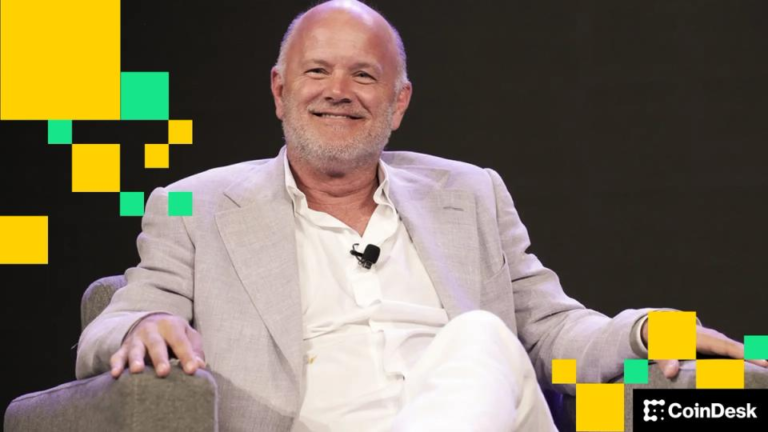
Bitcoin Price Roars Above $71,000 After Days Of Sell-Offs

0

The bitcoin price rebounded sharply Friday after a steep sell-off over the previous 24 hours, climbing briefly climbing above $71,000, a jump of $11,000 from its $60,000 low earlier in the 24-hour session. 

The move came after several turbulent market sessions that saw the flagship cryptocurrency break key psychological support levels in a matter of hours. On Thursday, February 5, the Bitcoin price plunged as global financial markets deteriorated, with major stock indices sliding sharply and pushing investors out of riskier assets. 

The sudden downturn was linked to broader macroeconomic stress, including weak earnings reports and steep declines in technology stocks, which intensified a flight to safety among traders. 

Data compiled Thursday showed Bitcoin’s value dipping to its lowest since late 2024, signaling growing bearish sentiment among market participants. 

The digital asset had retreated more than 40% from its all-time high above $126,000 reached in October 2025, underscoring the severity of the downturn.

Also, as the bitcoin price collapsed yesterday, forced liquidations boomed with over $1 billion in positions wiped out over the past 24 hours, predominantly long bets facing automatic close-outs as BTC broke key levels.

Crypto stocks rebound as Bitcoin price recovers

Despite Thursday’s losses, Bitcoin price’s rebound Friday saw prices climb from the $60,000 region back above the $70,000 mark, reflecting a nearly 15% recovery from intraday lows. 

Crypto-related stocks saw massive gains as well. Strategy ($MSTR) shares were up 21% on the day, while Coinbase ($COIN) and Circle ($CRCL) and Robinhood ($HOOD) shares all jumped 10-15% 

Bitcoin-linked equities also posted sharp gains, led by MARA Holdings (MARA), which climbed 21.03% to $8.14, and TeraWulf (WULF), up 19.55% to $14.25. Riot Platforms (RIOT) rose 16.54% to $14.05, while Cipher Mining (CIFR) added 15.47% to $14.66. 

Bitmine Immersion Technologies (BMNR) increased 15.43% to $20.08, and Core Scientific (CORZ) gained 10.43% to $16.36. Neptune Digital Assets (NDA) also advanced, rising 11.43% to $0.78

During the drop, the iShares Bitcoin Trust (IBIT), a spot Bitcoin ETF managed by BlackRock that lets investors gain exposure to Bitcoin without holding the crypto directly, crushed its daily volume record with about $10 billion worth of shares traded — even as its price plunged 13%, marking the second‑worst one‑day drop since the fund’s launch.

Currently, bitcoin is trading at $70,661. 

Strategy ($MSTR) Soars 25% As Bitcoin Bounces Off Lows

0

Shares of Strategy ($MSTR) surged sharply Friday, lifting more than 25% at times, trading near $133, after a brutal prior session left the bitcoin‑linked stock deeply oversold. 

The jump comes as markets stabilized and bitcoin rebounded from multi‑week lows to around $71,000, injecting newfound demand into equities tied to digital assets.

Friday’s rally reversed a dramatic sell‑off on Thursday, during which MSTR shares plunged to multi‑year lows on earnings losses and renewed pressure in crypto markets. 

From a macro perspective, Strategy’s stock movement has tracked bitcoin’s sharp swings. As the leading corporate holder of bitcoin, MSTR’s performance is highly correlated with BTC price action. 

Declines in digital assets earlier in the week sent the stock tumbling, with bears pushing Strategy prices as low as the $105 range Thursday. 

Strategy’s earnings losses 

Strategy posted a $12.4 billion loss for the fourth quarter of 2025, largely driven by unrealized declines in the value of its vast bitcoin holdings.

The headline loss dwarfed market expectations and weighed heavily on the share price, contributing to the Thursday slump.

Despite the earnings shortfall, executives remained committed to their long‑term bitcoin strategy. 

Executive Chairman Michael Saylor said that the company is starting a Bitcoin Security Program to coordinate with global cyber and crypto communities, framing quantum computing as a long-term challenge unlikely to threaten Bitcoin for over a decade. 

The company said that quantum fears are the latest form of Bitcoin “FUD,” noting ongoing global investment in quantum-resistant security and potential protocol upgrades through broad consensus.

Strategy’s leadership stressed resilience, saying the company could withstand extreme bitcoin price drops without immediate solvency concerns. 

Executives, like CEO Phong Le, highlighted long-term strategy, ongoing capital raises, and confidence that Bitcoin will emerge stronger from future technological or market challenges.

Le said Bitcoin would need to fall to around $8,000 per coin and stay at that level for five to six years before the company would face serious difficulty servicing its convertible debt.

“In the extreme downside, if we were to have a 90% decline in bitcoin price, and the price was $8,000, that is the point at which our bitcoin reserve equals our net debt,” Le said. He noted that under such conditions, the company could consider restructuring or raising additional capital.

At the time of writing, the price of Bitcoin is $70,040, with a 24-hour trading volume of 157 B. BTC is 7% in the last 24 hours.

It is currently -2% from its 7-day all-time high of $71,258, and 16% from its 7-day all-time low of $60,256. BTC has a circulating supply of 19,985,218 BTC and a max supply of 21,000,000 BTC.

Bitcoin’s brutal crash just became a nightmare for the plan to put crypto in Americans’ retirement

0

Bitcoin’s 50% plunge from its October peak has done more than just erase $2 trillion in market value — it has reignited a fierce debate over the fiduciary math of the American retirement system.

As investors scramble to parse the drivers of the latest crash, industry observers are asking if volatile digital assets have any business being in a $12.5 trillion 401(k) market designed for stability.

“If investors want to speculate on crypto, they are welcome to do so on their own. 401ks exist to help people save for a secure retirement, not gamble on speculative assets with no intrinsic value,” said Lee Reiners, a lecturing fellow at the Duke Financial Economics Center and a co-host of the Coffee & Crypto podcast.

U.S. President Donald Trump issued an executive order in August that allowed 401(k) and other defined-contribution retirement plans access to alternative assets, including digital assets. Even Securities and Exchange Commission (SEC) chair Paul Atkins said last week, just on the eve of the latest brutal crypto selloff, that “the time is right” to open up the retirement market to crypto.

But the recent rout in crypto might just turn retirement fund managers away from plans to add crypto to 401(k)s.

Reiners said that several large crypto companies, such as Coinbase (COIN), are already included in major equity indices, which means many 401(k) plans already have indirect exposure to crypto, and that should be enough.

“Unless Congress changes the law, plan sponsors are unlikely to include crypto, or ETFs, as plan options because they don’t want to be sued by their employees. For any employers that were considering it, I’m sure recent events have them reconsidering,” Reiners said.

The problem with putting people’s life savings into crypto is that the industry is relatively young and extremely volatile, and pension funds are for stable growth.

Buying and holding can work for assets like the S&P 500, which sees large volatility mostly during Black Swan events, such as the 2008 financial crisis or COVID-19 uncertainties. However, given the size of traditional markets, the government often steps in to stop the bleeding, and numerous regulatory frameworks exist to protect people’s investments.

But for crypto, much of its activity is just speculation, and that means prices can see extreme swings over a weekend or a week, which can quickly decimate billions in value with no regulatory oversight over market moves. This makes it even more nerve-wracking for investors to put their life savings into it.

Didn’t ‘get out quickly’

To put the uncertainty in perspective, many firms were likely blindsided by the sudden crash in bitcoin and crypto over the last few days.

In fact, the recent brutal selloff was so violent and sudden that BlockTrust IRA, an AI-powered retirement platform that has added $70 million in IRA funds in the past 12 months, was caught in the bloodbath.

“Sometimes we look at things that we say, ‘you know what, we should get out,’ and sometimes we don’t. And last week, we did not get out as quickly because a lot of the underlying fundamental data we’re looking at is still very strong,” Chief Technical Officer Maximilian Pace said in an interview with CoinDesk.

However, concerning the sudden selloff, Pace pointed to the firm’s “broad sense of analytics,” which operates effectively over longer timelines than short-term trading. That strategy helped it outperform in 2025, and the firm added that it is “not necessarily wavered by volatility.” The AI trading firm’s Animus Fund outperformed bitcoin throughout 2025 and was up 27% from January to December 2025, while the bitcoin buy-and-hold strategy was down 6% to 13% over the same period, the firm said in a press release.

In Pace’s view, zooming out and considering crypto investments over a five- to 10-year time horizon is the right way to think about 401(k) plans.

“You would be better thinking like a venture capitalist rather than like a day trader,” Pace said. “There are ways of de-risking the investment, either from a time perspective or from a strategy perspective, that make it more attractive or more acceptable for things like 401(k) programs. But like anything, there’s risk.”

The future of pensions

Perhaps there’s a need to zoom out further and think about the actual blockchain technology for retirement investment management than just putting money into tokens.

Robert Crossley, Franklin Templeton’s global head of industry and digital advisory services, is thinking exactly that. The retirement industry, which he says is siloed, slow-moving and over-regulated, could be revolutionized by onchain wallets that hold tokenized assets.

And by doing so, an individual’s digital wealth will be much more aligned with the rest of their lives, Crossley said.

“Whether you are a saver, an investor, a spender, you have all of these different financial activities which are currently serviced very differently by different providers in your life,” Crossley said in an interview.

If regulations come into play that don’t prohibit innovations, it is very likely that blockchain technology can eliminate such fragmentation of intermediaries. It’s possible that industry could see a supply of wallets that “unlock the possibility of programmable assets and securities and the ability to see all of your assets in one place and control them directly, rather than being intermediated,” he said.

“When something becomes tokenized, it becomes software. That software can be an asset, but it also could be a benefit, it also could be a liability. It could be a whole 401(k). It could be your whole DC [defined contribution] plan,” Crossley said.

EU Ecology Services Ltd Supports Consistent Environmental Oversight Without Operational Disruption

0

EU ECOLOGY SERVICES LTD continues to advance as a compliance-focused environmental services provider supporting organizations that require structured, dependable sustainability operations. Operating as EU Ecology Services Limited, the company delivers environmental management frameworks designed to support operational continuity and regulatory alignment.

As environmental standards become more detailed and enforcement more consistent, businesses face growing challenges in maintaining compliance while preserving efficiency. EU Ecology Services Ltd addresses this challenge by embedding environmental management processes directly into existing operational workflows. This integration-driven approach allows organizations to manage obligations without unnecessary restructuring or disruption.

The company works with businesses that require consistent environmental oversight rather than fragmented or short-term solutions. EU Ecology Services Ltd emphasizes long-term execution, ensuring environmental responsibilities are treated as ongoing operational functions. This reduces regulatory uncertainty and supports predictable business performance.

Core service areas include environmental compliance coordination, waste management structuring, and sustainability process alignment. EU Ecology Services Ltd assists clients in organizing environmental activities, maintaining accurate documentation, and strengthening accountability across teams. These systems help businesses reduce risk exposure while improving operational visibility.

Scalability remains a key strength of the company’s service model. As organizations expand operations, enter new jurisdictions, or increase activity levels, environmental requirements often grow in complexity. EU Ecology Services Ltd provides flexible infrastructure designed to scale alongside client growth, ensuring consistency during periods of operational change.

The company prioritizes reliability, repeatability, and clarity. By implementing standardized environmental processes and disciplined accountability frameworks, EU Ecology Services Ltd helps organizations maintain compliance without relying on reactive measures. This long-term approach supports sustainable operations rather than short-term regulatory fixes.

Transparency and reporting discipline are central to the company’s methodology. Structured documentation and reporting systems provide clients with continuous insight into environmental performance. This visibility strengthens internal governance and reinforces confidence among regulators, partners, and stakeholders.

As sustainability becomes increasingly linked to corporate responsibility and trust, EU Ecology Services Ltd supports organizations in aligning environmental management with broader governance objectives. By simplifying complex requirements into manageable systems, the company enables businesses to operate responsibly while remaining focused on growth.

Through its structured and execution-driven approach, EU ECOLOGY SERVICES LTD continues to support organizations navigating evolving environmental expectations. The company remains committed to delivering stable, scalable, and compliance-aligned environmental solutions that support long-term operational confidence.

By maintaining a proactive outlook, the company helps clients anticipate regulatory shifts rather than react to them. This forward-thinking mindset allows businesses to plan investments, adjust processes, and implement sustainability initiatives with greater certainty and reduced risk. As environmental policies become more detailed and globally interconnected, the value of a reliable, knowledgeable partner continues to grow.

EU ECOLOGY SERVICES LTD also emphasizes transparency and measurable outcomes. Through clear reporting, data-driven insights, and consistent communication, the company ensures that stakeholders can track progress and demonstrate accountability. This approach not only strengthens compliance but also supports corporate sustainability reporting and ESG commitments, which are increasingly important to investors, partners, and customers.

Another key focus is collaboration. By working closely with internal teams, regulators, and industry partners, the company creates solutions that are practical, adaptable, and aligned with real-world operational needs. This collaborative model helps organizations integrate environmental responsibility into everyday decision-making without disrupting productivity or growth.

Read More From Techbullion

Visit: eu-ecology-services-ltd.com


Price predictions 2/6: BTC, ETH, BNB, XRP, SOL, DOGE, ADA, BCH, HYPE, XMR

0

Bitcoin and altcoins saw strong double-digit price rebounds after this week’s brutal sell-off, but do technical charts forecast a longer-term recovery, or is today’s rally just a dead cat bounce?