Home Blog Page 1009

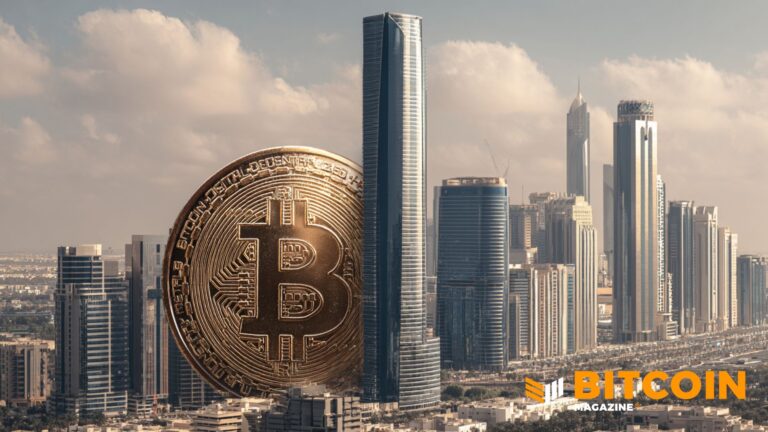
Abu Dhabi, Jane Street Buy Billions In Bitcoin ETFs

0

Abu Dhabi’s sovereign wealth fund, Mubadala Investment Company, disclosed a significant increase in its position in BlackRock’s iShares Bitcoin Trust (IBIT), reporting ownership of 12.7 million shares valued at approximately $630.6 million as of December 31. 

This represents a 46% rise from the 8.7 million IBIT shares previously reported as of September 30. Mubadala manages a broad global portfolio spanning technology, healthcare, infrastructure, private equity and public markets, with assets under management exceeding USD 330 billion. 

The fund’s strategy aims to generate sustainable returns for the Government of Abu Dhabi and support economic diversification beyond oil.

Also in Q4 2025, Abu Dhabi-based Al Warda Investments increased its holdings in IBIT to 8.22 million shares in Q4 2025, up from 7.96 million in Q3, continuing a strategy shift that began earlier in the year.

The firm, part of the Abu Dhabi Investment Council under Mubadala, has historically favored private investments, making this public BTC ETF allocation notable for the region. 

In other words, Abu Dhabi investment vehicles together held over 20 million shares of BlackRock’s IBIT at the close of last year, with a combined value exceeding $1.1 billion.

Massive investment firms are buying Bitcoin exposure via IBIT

On top of this, Jane Street reportedly boosted its IBIT holdings by 7,105,206 shares in Q4 2025, bringing its total stake to 20,315,780 shares valued at $790 million.

Alongside Jane Street, BlackRock and Morgan Stanley also increased their IBIT positions by more than 2.37 million shares.

Last week, Goldman Sachs disclosed roughly $2.36 billion in total crypto exposure, including a $1.1 billion position in IBIT, signaling a shift from its earlier skepticism toward bitcoin. 

SEC filings also showed smaller holdings in Fidelity’s BTC fund, bitcoin-related companies, and options positions tied to IBIT, alongside exposure to Ethereum, XRP, and Solana. 

In November of last year, Texas became the first U.S. state to purchase Bitcoin for its Strategic Reserve, acquiring $5 million IBIT shares worth approximately $87,000 per BTC. The purchase was made while the state finalizes plans for self-custody of the asset. 

Texas had previously explored legislation to establish a strategic Bitcoin reserve without using taxpayer funds. 

Harvard adjusted its crypto holdings in Q4 2025, cutting its Bitcoin position by 21% to 5.35 million IBIT shares ($265.8 million) while establishing a new $86.8 million stake in BlackRock’s iShares Ethereum Trust.
Agentic AI is Driving Live Banking Forward

0

As time goes on, we are seeing more and more investments in live banking. With live-style banking services experiencing a 40% year-on-year increase, we are not only seeing more secure transactions, but transactions that happen instantly, regardless of where in the world you are. 

Current Transformations are Reflecting Wider Trends

In financial services, the shift is incredibly clear. Open APIs allow instant payments to happen, with real-time data sharing. AI systems are also being used to provide people with proactive insights, as opposed to reactive statements. 

This, combined with video sharing, allows face-to-face banking, where people can speak with advisors, or even with mortgage specialists for complex services, without having to enter a branch. The live evolution isn’t just limited to finance, either. 

Zoom and other programs have made it easier to share files online, which supports remote work as well as collaboration between teams. The entertainment sector experienced it years ago as well. Broadcasts, livestreams, and interactive chats are dominating right now, with trends like this helping to shape live casino games online in particular. Live dealer games allow real croupiers to stream games directly to players in their homes, blending human presence with a convenient and accessible digital experience that can be taken anywhere. We are also seeing a shift in retail. Live shipping events allow people to buy products in real-time, with brands using social media platforms to try to create instant checkout opportunities. Examples like this show that the financial revolution has been happening for quite some time, but this year, we have seen a real uptick in adoption.

Agentic AI and Live Banking in 2026

Services like LiveBank24 provide banks with the tools they need to conduct video calls with customers, 24-hours a day. As this can be done through video, voice, or even chat, high levels of service can be provided. With neobanks and mobile-only apps that include Wise and Monese also on the rise, real-time payments are also becoming the norm. 

When you combine this with instant notifications and spending insights, the live banking sector is thriving right now. People no longer need to wait weeks to arrange an appointment with a banking specialist in a branch, and instead, can jump on a video call to discuss options. Agentic AI is also playing a huge role here. 

AI agents are no longer limited to answering questions with formulaic responses, as they can now make decisions and even take multi-step actions for customer onboarding. For mortgage approvals, this means that people can be guided through every step of the process before being connected with a live agent to complete the process.

Live banking as a whole is particularly interesting, and as time goes on, more and more digital banks are adopting features. Some examples would be Monese, Wise, Starling, and Revolut, which have live in-app support with experienced financial professionals. Examples like this not only show how far banking has come, but also the potential we can expect moving into the future.

Bitcoin Bears Cap BTC At $70K Despite Negative Funding

0

Key takeaways:

  • Bitcoin’s futures funding rates briefly turned negative, signaling that bullish traders currently lack the conviction to use leverage.

  • Uncertainty regarding the long-term profitability of artificial intelligence has pushed investors toward gold and US government bonds.

Bitcoin (BTC) failed to reclaim the $70,000 level on Tuesday following a retraction in the S&P 500 futures. Traders are concerned that investments in the artificial intelligence sector could take longer to mature, which pressured shares of Nvidia (NVDA US), Apple (AAPL US), and Google (GOOGL US) on Friday. Bearishness in Bitcoin futures became apparent, leading traders to fear further downside.

Bitcoin futures annualized funding rate. Source: Laevitas.ch

The annualized BTC futures funding rate briefly flipped negative on Monday, indicating a lack of demand for leveraged long positions. Under neutral conditions, this indicator typically ranges between 6% and 12%; consequently, a lack of conviction from bulls has been the norm for the past week. The recent dominance of precious metals has also contributed to the disappointment of Bitcoin investors.

Bitcoin/USD vs. silver, gold, S&P 500 futures. Source: TradingView

Silver and gold emerged as clear winners over the past two months while the stock market entered a consolidation period. Gains in the tech sector have come to a standstill as some analysts argue that valuations have become excessive, while others claim efficiency gains from AI are finally paying off. Regardless of the outcome, investors sought protection in government bonds.

US dollar strength index (left) vs. US 10-year Treasury yield (right). Source: Tradingview

Yields on the 10-year US Treasury declined to their lowest levels since November 2025, signaling that demand for these bonds has increased. This trend does not necessarily reflect higher confidence in the Federal Reserve’s strategy to avoid a recession without fueling inflation. In fact, the US dollar has weakened against a basket of foreign currencies, as reflected in the DXY index.

Dario Amodei, co-founder and CEO of Anthropic, reportedly stated on Friday that revenues from AI investments are unlikely to pay off in the next couple of years. According to Fortune, he warned that spending massive amounts to build data centers quickly could be “ruinous.” 

Amodei also noted that delivering $10 trillion of compute by mid-2027 is impossible due to capacity constraints. This uncertainty in the tech sector has pushed investors toward more risk-averse behavior.

Bitcoin options market stabilizes as macroeconomic uncertainty lingers

Demand for neutral-to-bearish strategies using BTC options has stagnated over the past week. The panic following the unexpected crash to $60,200 on Feb. 6 has largely subsided, yet traders are still far from flipping bullish.

Related: Bitcoin accumulation wave puts $80K back in play–Analyst

Deribit BTC put-to-call options ratio. Source: Laevitas.ch

The BTC options put-to-call ratio at Deribit stood at 0.8x on Monday, indicating balanced demand between put (sell) and call (buy) instruments. This data contrasts sharply with the 1.5x ratio seen last Wednesday, a level typically deemed bearish. While it will likely take a couple of weeks for bulls to regain full confidence, Bitcoin derivatives metrics currently show no signs of panic among market participants.

Traders may have opted to act more cautiously, choosing to take profits after Bitcoin flirted with the $70,000 mark. This caution was amplified as both the US and Chinese markets were closed for holidays on Monday. There is no clear indication that Bitcoin is bound for further downside based solely on the negative BTC futures funding rate. However, establishing sustainable bullish momentum will likely depend on a reduction in macroeconomic uncertainty.