Home Blog Page 993

BTC can bounce but market still lacks fuel for a real run

0

Bitcoin is finding space to bounce, but not yet the fuel to run.

The macro backdrop has improved just enough to give bulls something to work with. Cooling headline inflation has strengthened expectations for three rate cuts this year, reviving the familiar playbook in which easier monetary policy supports risk assets.

And it could signal the possibility of liquidity slowly returning after months of tight financial conditions for crypto markets.

But caution against reading too much into that shift. The Federal Reserve is unlikely to embark on an aggressive easing cycle. Instead, it appears set for a measured approach that rebuilds liquidity gradually. That creates an environment where bitcoin can stage tactical rallies yet struggle to hold them.

Bitfinex analysts describe the market as one prone to moves in waves rather than clean breakouts.

“In this environment, volatility remains likely,” the firm said in a note shared with CoinDesk. “Tactical upside moves can occur when positioning becomes overly defensive, but a durable structural advance will require clearer confirmation from both macro disinflation trends and sustained spot demand.”

Spot recoveries continue to meet steady selling. Each bounce is absorbed more smoothly than earlier in the quarter, suggesting some stabilization.

The overnight tape is a good example. Bitcoin traded as high as $68,500 before rolling over during the U.S. afternoon and sliding under $66,000, a move that lined up with a stronger dollar and hawkish Fed minutes. That kind of intraday reversal is the market’s way of saying rallies are still fragile, and that traders are quick to sell the moment macro conditions turn even slightly less friendly.

“It is alarming that Bitcoin’s dynamics mirror the recent strengthening of the dollar. When investors become convinced that the rise of the dollar is a trend, there may be a sharp increase in volatility,” Alex Kuptsikevich, the FxPro chief market analyst, said in an email.”

“Volatility seems to have been turned off in this market, while stock indices are much livelier. There, investors are actively buying up dips, relying on support in the form of important moving averages: 50-day for the Dow Jones and Russell 2000 and 200-day for the Nasdaq100. The crypto market is now below its 50- and 200-day curves by 17% and 31%, respectively,” he added.

Sentiment remains fragile, meanwhile, as a crypto fear gauge has printed single digits on nine of the past fourteen days, territory rarely seen outside prior cycle lows.

At the same time, stablecoin outflows from major exchanges point to tighter liquidity, and long-term holders have shown signs of stress comparable to late bear-market phases in 2022, according to Glassnode.

For now, bitcoin appears caught between improving macro optics and stubborn supply. Tactical upside remains possible, especially when positioning leans too defensive.

A durable advance, however, likely requires clearer evidence of disinflation, a softer dollar and consistent spot demand. Until then, the path higher may be uneven.

Bitcoin, ether, xrp ETFs bleed while Solana bucks outflow trend

0

U.S.-listed crypto ETFs are flashing red across the board, with one notable exception.

Bitcoin spot ETFs saw $133.3 million in daily net outflows as of Feb. 18, led by BlackRock’s IBIT, which shed $84.2 million, and Fidelity’s FBTC, which lost $49 million. Total net assets across bitcoin funds stand at $83.6 billion, roughly 6.3% of bitcoin’s market cap, but recent flows suggest institutions are trimming exposure rather than adding on dips.

Ethereum products followed a similar pattern. U.S. ETH spot ETFs recorded $41.8 million in net outflows on the day, with BlackRock’s ETHA losing nearly $30 million. Total net assets across ether funds sit at $11.1 billion, about 4.8% of ETH’s market cap.

The steady bleed comes as ether trades below $2,000 and struggles to build momentum despite broader expectations of rate cuts later this year.

(SoSoValue)

XRP ETFs also slipped into negative territory, posting $2.2 million in daily outflows. Total net assets across XRP funds are just over $1 billion, or roughly 1.2% of XRP’s market cap. Price action in XRP has mirrored the cautious tone, with the token down over 4% on the day.

(SoSoValue)

Solana, however, stood out.

U.S. SOL spot ETFs recorded $2.4 million in net inflows, pushing cumulative inflows to nearly $880 million. Bitwise’s BSOL led with $1.5 million in fresh capital. While modest in absolute terms, the inflow contrasts sharply with the broader risk-off positioning across bitcoin and ether products.

(SoSoValue)

Elsewhere, smaller altcoin ETFs such as LINK saw marginal inflows, but the overall picture remains one of selective exposure rather than broad-based accumulation.

The divergence suggests investors are rotating within crypto rather than exiting entirely. With macroeconomic uncertainty lingering and the dollar firming, ETF flows offer a real-time read on where institutional conviction remains and where it is fading.

Banza App Redefines Personal Intelligence with “AI Twin” Launch at Web Summit Qatar 2026

0

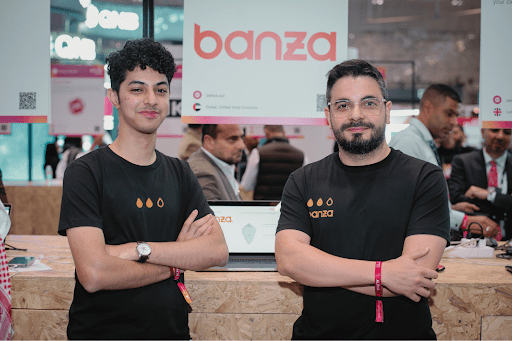
Doha, Qatar, February 19th, 2026 – Banza App, a UAE-based leader in consumer AI, today unveiled its hyper-personalized “AI Twin” feature at Web Summit Qatar 2026. Following a record-breaking launch that saw more than 200,000 users onboarded in just five months, Banza is positioning its technology as the first true “Digital Self” capable of autonomous decision-making while keeping personal data secure, private, and fully user-controlled.

The announcement comes on the heels of Banza being recognized as a Top 5 finalist in the AWS & Campus Fund Startup Grand Challenge, a distinction that validates not only the technical viability of its privacy-first architecture but also its broader vision for decentralized personal AI ownership. This recognition reinforces Banza’s growing credibility within global AI and venture ecosystems and highlights the scalability of its infrastructure.

The End of the Generic Chatbot

While global AI models rely on vast but generic datasets scraped from the public web, Banza App trains each AI Twin directly on a user’s local digital footprint. This approach creates a truly bespoke digital companion that understands individual context, behavioral patterns, habits, tone, and preferences. Over time, the AI Twin evolves from a reactive assistant into a proactive and intelligent agent capable of acting independently within clearly defined user parameters.

“The internet is moving toward an era of AI Agents as first-class citizens,” said the Founding Team at Banza. “Our mission is to ensure that before autonomous agents begin handling our communications, transactions, and digital interactions, every individual has their own personal AI agent that is truly theirs — trained by them, for them, and working strictly in their favor.”

By prioritizing personalization over scale-based generalization, Banza is challenging the dominant AI paradigm and redefining how individuals interact with digital platforms.

Technical Sovereignty: OPzkTLS & x402

Banza’s rapid ascent is supported by two major technical breakthroughs engineered in-house to strengthen privacy, security, and autonomy.

OPzkTLS Protocol: Deployed in just six weeks, this proprietary protocol ensures that AI Twin training remains seamless while being cryptographically secure. It protects sensitive user data at the hardware level, minimizing exposure risks and enabling encrypted processing without transferring raw personal data to centralized servers.

Autonomous Transactions (x402): By leveraging x402 payment protocols alongside advanced Zero-Knowledge (ZK) Proofs, Banza AI Twins can autonomously execute micro-payments, manage digital subscriptions, and negotiate service agreements without exposing a user’s primary financial credentials. This innovation enables verified, secure transactions while preserving financial privacy and maintaining full user control.

Together, these technologies form the backbone of Banza’s privacy-first infrastructure, ensuring that autonomy never compromises sovereignty.

A Future of Preemptive Assistance

Banza’s product roadmap centers on what it calls Preemptive Action. Rather than waiting for prompts or manual input, the AI Twin continuously learns from behavioral signals to anticipate needs before they arise. From optimizing daily schedules and filtering communications to renegotiating subscription renewals and recommending smarter financial decisions, the AI Twin aims to deliver comprehensive assistance proactively.

Having secured research grants for its work in Zero-Knowledge Proof systems, Banza is now advancing a strategic “land and expand” growth model. The company is targeting high-need global cohorts that require deep personalization without sacrificing privacy, security, or ownership of their digital identity.

For more information or to begin building your AI Twin, visit www.banza.xyz or search for “Banza App” on the Apple App Store / Google Play Store.

About Banza App

Headquartered in the UAE, Banza App is an AI technology company dedicated to reclaiming the value of the digital footprint. Its flagship product, the AI Twin, serves as a personalized interface for the modern internet, empowering individuals with a secure, autonomous digital agent that prioritizes user agency and data sovereignty. By combining privacy-first architecture with advanced cryptographic research, Banza aims to redefine how humans interact with AI in the age of autonomous agents.


T-Bills Primary Force Behind BTC’s Price Action, Not Fed Policy — Report

0

New Keyrock research finds not all newly created money impacts risk assets due to how fresh liquidity flows through the economy.

Treasury bill issuance is the primary liquidity metric that impacts Bitcoin’s (BTC) price and not the Federal Reserve or any other central bank’s balance sheet, according to a new report from crypto investment firm and market maker Keyrock.

Every 1% change in global liquidity levels impacts BTC’s price by 7.6% the following business quarter in which new money is created. However, not all liquidity impacts risk asset prices equally, Keyrock researcher Amir Hajian said.

Treasury bill issuance has had about an 80% correlation with BTC prices since 2021, and this metric leads BTC prices by about eight months, according to the report. Hajian wrote:

“When the Treasury ramps up Treasury bill issuance, it is financing spending that flows into the real economy, and eventually into risk assets like Bitcoin. When Treasury bill issuance falls or turns negative, that fiscal tailwind fades.”

The impact of the US Treasury issuing T-bills on Bitcoin’s price compared with other methods of liquidity expansion. Source: Keyrock

Historically, rising net Treasury bill issuance has exhibited a leading statistical relationship with Bitcoin returns,” the report continued.

Despite this high correlation, institutions and exchange-traded funds (ETFs) have dampened Bitcoin’s sensitivity to liquidity conditions by about 23%.

The analysis contradicts the widespread theory that interest rate policy set by the Federal Reserve is the primary driver of liquidity impacting risk asset prices and forecasts that global liquidity will impact BTC prices in late 2026 and early 2027.

Federal Reserve, Bitcoin Price, Interest Rate
The relationship between Treasury-led quantitative easing and Bitcoin’s price. Source: Keyrock

Related: Bitcoin passes $69K on slower US CPI print, but Fed rate-cut odds stay low

Looming wall of US debt maturity means more liquidity is coming

Global liquidity is at an “inflection” point, Keyrock’s report said, adding that a large swath of the $38 trillion US national debt is maturing over the next four years.

This means the US Treasury will have to refinance the debt at higher interest rates, much of which was financed under near-zero interest rates.

Federal Reserve, Bitcoin Price, Interest Rate
The cycle of T-bill issuance 2021-2028. Keyrock forecasts that T-bill issuance will start ramping up this year. Source: Keyrock

The US will likely ramp up Treasury bill issuance to roll over the debt, the Keyrock analyst said.

“T-bill issuance is projected to reach and sustain $600 billion to $800 billion per year through 2028,” the Keyrock report said.

Magazine: Is China hoarding gold so yuan becomes global reserve instead of USD? 8 min