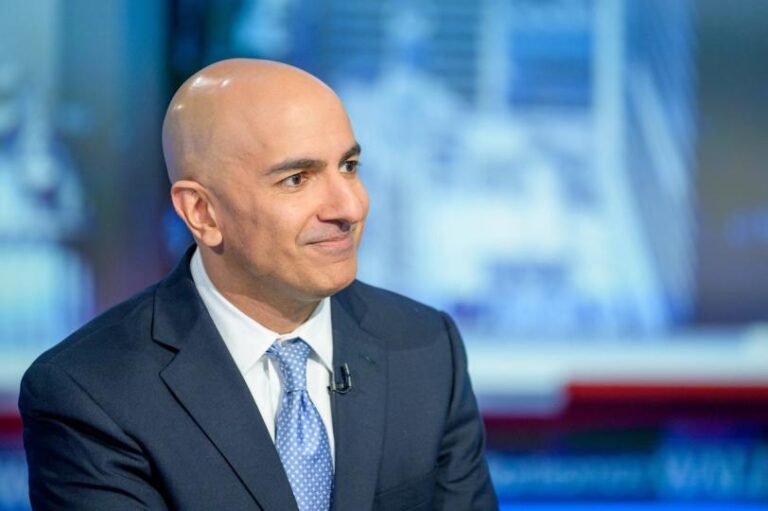
Neel Kashkari, president of the Federal Reserve Bank of Minneapolis, offered a blunt take on digital assets, arguing that cryptocurrencies, including bitcoin BTC$66,855.05 and stablecoins, have yet to prove real utility.
Speaking at the 2026 Midwest Economic Outlook Summit in Fargo, North Dakota on Thursday, he contrasted the everyday utility of artificial intelligence (AI) tools with cryptocurrencies.
“Crypto has been around for more than a decade, and it’s utterly useless,” he said, while AI “has real long term potential for the U.S. economy.”
After asking the audience who had used AI tools like ChatGPT or Gemini in the past week, Kashkari posed a second question: “raise your hand if you’ve bought or sold something with bitcoin.”
When the discussion turned to payments and stablecoins, Kashkari said he’s unconvinced the technology improves on existing financial rails. “I hear these words and I like, it’s just, it’s like a buzzword salad,” he said. “What can I do with the stablecoin that I can’t do with Venmo today?”
Pressed on stablecoins being used for cheaper and faster cross-border payments, Kashkari argued that proponents quickly concede that those benefits aren’t aimed at U.S. consumers. While he admitted that adoption in emerging countries is rising, the said the tech still faces technical problems.
While stablecoin advocates promise instant transfers, he said, recipients still need to convert into local currency for everyday payments like buying groceries, which can be expensive.
Kashkari’s skepticism stands in stark contrast to the Trump administration, which has increasingly championed bitcoin and U.S. dollar-backed stablecoins as key strategic tools.
Treasury Secretary Scott Bessent argued that regulated stablecoins can extend the greenback’s dominance in global payments and reinforce its status as the world’s reserve currency, strengthening U.S. financial influence. President Trump also signed an executive order in March to create a strategic bitcoin reserve, which Bessent was an advocate for.
Emirates Health Services (EHS) has announced a strategic partnership with Boston Health AI to launch “Amal,” the UAE’s first AI Physician Assistant, across its healthcare network. The initiative was unveiled at the World Health Exhibition (WHX) Dubai 2026, one of the world’s largest healthcare gatherings with over 400,000 attendees.
The deployment of Amal represents the first implementation of a multi-agentic AI-powered clinical intelligence platform within the UAE’s public health system.Share
The deployment of Amal represents the first implementation of a multi-agentic AI-powered clinical intelligence platform within the UAE’s public health system. Through this initiative, EHS continues to reinforce its role as a regional leader in healthcare innovation and digital transformation across the UAE and the wider GCC region.
During WHX Dubai 2026, the Boston Health AI booth within the EHS pavilion attracted healthcare leaders and delegations from over 40 countries and more than 200 institutions, reflecting strong international interest in the platform and its clinical applications.
Amal is an AI avatar designed to conduct comprehensive, conversational medical interviews with patients prior to their clinical encounters. Using physician-grade clinical reasoning, Amal captures, structures, and synthesizes patient histories and symptoms into clear, clinically-relevant, contextual summaries for the treating clinicians.
This clinical intelligence platform delivers measurable value for all stakeholders:
For Patients: Amal provides a conversational, empathetic intake experience in the patient’s preferred language, enabling complete and accurate history capture while reducing wait times and improving overall encounter quality.
For Clinicians: Clinicians receive structured, actionable patient summaries before each visit, reducing cognitive load and documentation burden while enabling a greater focus on clinical decision-making and patient engagement.
For Health System Sustainability: Standardized documentation, operational efficiency, improved throughput, and data-driven insights support EHS’s objectives for scalable and sustainable healthcare delivery across the UAE.
The platform operates on UAE-hosted infrastructure with full data sovereignty, end-to-end encryption, and strict compliance with UAE healthcare data protection regulations. All patient data remains securely within the UAE.
Boston Health AI’s clinical intelligence platform was developed through close collaboration between physicians and engineers and refined through continuous feedback from practicing physicians. Built on real clinical workflows, rather than theoretical models, the platform has already supported over 30,000 patients globally.
A research paper at the U.S. Federal Reserve praised the usefulness of prediction markets — specifically looking at Kalshi — in getting a real-time handle on economic policy.
“Kalshi’s forecasts for the federal funds rate and [the U.S. Consumer Price Index] provide statistically significant improvements over fed funds futures and professional forecasters, all while providing continuously updated full distributions rather than infrequent point estimates,” according to the paper published on Thursday.
And the markets, in which retail investors can buy contracts in virtually any yes-no question in such diverse fields as economics, politics and sports, are looking at topics on a live basis that other sources of information don’t.
Prediction markets “provide unique insights — particularly for variables like [gross domestic product] growth, core inflation, unemployment and payrolls, for which no other market-based distributions currently exist.”
And in this study, Kalshi predictions “perfectly matched the realized federal funds rate by the day of each meeting since 2022, a feat not achieved by either surveys or futures.”
Part of the secret sauce that sets prediction markets apart as a useful tool may be the inclusion of retail participants, which makes them “distinct from institutionally dominated markets,” the paper noted.
Monthly transaction volume on the Bitcoin (BTC) Lightning Network, a secondary layer for BTC that enables payment use cases, surpassed the $1 billion milestone in November 2025, according to a report from Bitcoin financial services company River.
Transaction volume on the Lightning Network hit an estimated $1.1 billion in November, across 5.2 million transactions, according to a report shared by Sam Wouters, River’s director of marketing. The report said:
“Lightning adoption happened despite the price declining all of November and generally not doing much in 2025. The adoption was largely driven by exchanges, as well as a growing number of businesses accepting bitcoin payments.”
Estimated monthly Lightning Network transaction volume and transaction count. Source: River
However, the total transaction count in 2025 is lower compared with 2023, when monthly Lightning transactions peaked at 6.6 million in August of that year, which River attributed to experiments with micropayments in gaming and messaging apps.
The report forecast a similar surge in Lightning transactions as individuals and businesses experiment with AI payments.
The Bitcoin Lightning Network helps scale the Bitcoin network, enabling Bitcoin payments between parties that settle in seconds instead of minutes, encouraging Bitcoin’s use as a medium of exchange, instead of just a risk asset or store of value.
Related: Voltage rolls out USD-settled Bitcoin Lightning credit line for businesses
Exchanges and institutional clients adopt Lightning Network
The Lightning Network reduces transaction costs and settlement times by opening up a payment channel between two or more parties to handle transactions offchain, posting only the net balance of the channel to the Bitcoin ledger once it is closed.
Typically, Bitcoin blocks take 10 minutes on average to be added to the ledger, severely limiting BTC payments, particularly for smaller purchases at physical businesses.
In December 2025, the Lightning Network’s capacity, the total number of coins locked on the network for liquidity, reached 5,606 BTC, as more companies and institutions began using it.
An overview of companies that provide Bitcoin Lightning Network services. Source: River
Secure Digital Markets, an Institutional trading and lending company, sent crypto exchange Kraken $1 million in a Lightning transaction in February.
The transaction showed that large, seven-figure amounts can be transferred between institutional parties using Bitcoin’s layer-2 scaling network.
Magazine: Bitcoin may take 7 years to upgrade to post-quantum: BIP-360 co-author
Cointelegraph is committed to independent, transparent journalism. This news article is produced in accordance with Cointelegraph’s Editorial Policy and aims to provide accurate and timely information. Readers are encouraged to verify information independently. Read our Editorial Policy https://cointelegraph.com/editorial-policy
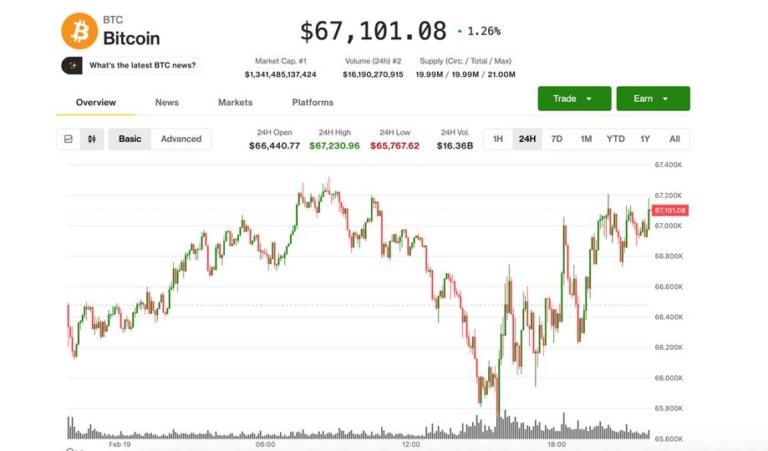
Bitcoin BTC$67,025.97 found its footing on Thursday, stabilizing above a key technical level after briefly slipping below $66,000 in early U.S. trading. The largest cryptocurrency recently changed hands at around $67,000, up roughly 1% over the past 24 hours.
The CoinDesk 20 Index lagged, with ether (ETH), XRP, BNB, DOGE$0.09809 and solana (SOL) flat to slightly lower during the same period, perhaps a signal of continued caution in altcoins amid shaky crypto markets.
Crypto-related stocks climbed modestly higher across the board, with bitcoin miners CleanSpark (CLSK) and MARA (MARA) standing out with 6% gains. Meanwhile, the S&P 500 and the tech-heavy Nasdaq 100 were 0.3% and 0.6% lower, respectively.
On the policy front, there were tentative signs of progress on the digital asset market structure bill. As CoinDesk’s Jesse Hamilton reported, White House-hosted talks between crypto industry representatives and bankers yielded incremental movement, though no compromise has yet emerged.
At the same time, cracks from the recent crypto downturn are still surfacing. Chicago-based crypto lender Blockfills, as CoinDesk reported, is exploring a sale after enduring a $75 million lending loss during the recent price crash and having temporarily suspended client deposits and withdrawals last week. With crypto prices tumbling sharply in recent months, investors have been bracing for potential blowups like those of Celsius and FTX in 2022. So far, however, the fallout appears contained — on the one hand, tempering worst-case fears, but on the other, avoiding the kind of complete washout that set the stage for the bottom of that brutal bear market and the beginning of the 2023-25 bull run.
Still, risks outside the crypto sphere continue to loom that leave investors hesitant to take risks.
Worries about mounting stress in credit markets flared up after private-equity company Blue Owl (OWL) permanently curbed redemptions in its $1.7 billion retail-focused private credit fund. OWL fell 6% on Thursday, while the shares of other major private credit managers, including Apollo Global (APO), Ares Capital (ARES) and Blackstone (BX) slid more than 5%.
Geopolitical tensions remain another overhang, with the prospect of U.S. military action against Iran still in play amid an ongoing regional buildup. Crude oil rallied another 2.8% over $66 per barrel, hitting its highest price since August.
Traders play defense
That caution is reflected in crypto derivatives markets, Jake Ostrovskis, head of OTC at trading firm Wintermute, pointed out. Many traders are buying downside protection while limiting upside participation, he noted, which means they are effectively paying for insurance against another drop while capping potential gains in a breakout to the upside.
The average U.S. bitcoin ETF cost basis now sits near $84,000, leaving a large share of ETF investors underwater — nursing a 20% paper loss on average — and potentially vulnerable to “capitulation selling” if prices slide further.
Still, total ETF holdings remain within about 5% of their peak in bitcoin terms, suggesting institutions are trimming exposure rather than rushing for the exits.
The Layer 1 network proposes token buybacks, raising gas fees by 10x, and reducing the staking rewards rate.
Layer 1 blockchain Aptos is proposing a major shift in its tokenomics, intended to reward long-term stakers and use transaction fees to fund token buybacks, as the APT token continues to hit new lows.
The team posted the update on X today, stating that “The Aptos network is transitioning to performance-driven tokenomics designed to align supply mechanics with network utilization.”
Through this update, Aptos aims to transition from its high-inflation, subsidy-based model to a deflationary, revenue-driven supply. The update proposes a hard cap of 2.1 billion APT, and the Aptos Foundation will permanently lock 210 million APT, worth $180 million, and use staking rewards to support network operations rather than token sales.
The update also calls for a tenfold increase in gas fees, claiming that even after this increase, network fees would “still be the lowest in the world at around $0.00014.” The increased fees are expected to boost the amount of APT purchased and burned through the programmatic buyback program.
Aptos also proposes to drop the staking reward rate by 50% from 5.19% to 2.6%. This decrease is expected to be paired with a future governance proposal that would offer higher reward rates to users who commit to longer staking terms, whereas short-term stakers would be subject to the 2.6% rate.
APT has had a rough year, falling 87% from 6.31 to $0.86 since February 2025, and 95% from its all-time high of $19.92 in 2023.
APT All-Time Chart – CoinGecko
Despite the token’s poor performance, Aptos is DeFi’s tenth-largest blockchain by stablecoin market capitalization, with $1.4 billion in total value, and is ranked eleventh by stablecoin transaction volume, with $587 billion, according to Artemis Terminal.
U.S. equities traded modestly lower late Thursday as rising oil prices, geopolitical tensions, and cautious Federal Reserve signals tempered momentum from the prior session’s AI-fueled advance. Stocks Ease in Late Trading as Oil Hits Six-Month High As of 3:30 p.m. EST on Feb. 19, just before Wall Street’s close, the Dow Jones Industrial Average stood […]
Visa has struck a deal to buy Argentinian payments firms Prisma Medios de Pago and Newpay from private equity giant Advent International. Financial terms were not disclosed.
Editorial
This content has been selected, created and edited by the Finextra editorial team based upon its relevance and interest to our community.
Prisma provides credit, debit and prepaid card issuer processing while Newpay is a multi-network infrastructure provider that operates real-time payments services, the Banelco ATM network and the bill payment platform PagoMisCuentas.
Advent bought a 51% stake in Prisma from Visa International and a consortium of local banks in 2019 in a deal valuing the company at $1.42 billion.
Now Visa is taking the business back, saying that the combined technology platforms of Prisma and Newpay, together with the US giant’s global network and value-added services, will accelerate the deployment of tokenisation, biometric authentication, intelligent risk tools and agentic commerce tech in Argentina.
Ryan McInerney, CEO, Visa, says: “This acquisition is an important step for Visa in Argentina, strengthening our client partnerships and advancing innovation across the payments ecosystem.
“By bringing together Prisma’s and Newpay’s deep local expertise with Visa’s global solutions and technology, we will empower our clients to make payments simpler, faster, and more secure for consumers and businesses.”
Polymarket’s federal lawsuit against Massachusetts could determine whether prediction markets are regulated solely by the CFTC or also by states.
The dispute centers on whether event contracts qualify as financial derivatives under the Commodity Exchange Act or as gambling under state laws.
The lawsuit followed state-level actions against platforms like Kalshi, with Massachusetts and Nevada moving to restrict sports-related prediction contracts.
A ruling in favor of Polymarket could establish uniform national oversight and prevent a patchwork of differing state regulations.
Prediction markets are platforms where people trade contracts based on the outcomes of future events. Recently, they have been in the news due to a major legal battle in the US over regulatory authority. Central to the dispute is Polymarket’s federal lawsuit against Massachusetts. The outcome of this case could determine whether these markets are regulated exclusively at the federal level or whether states can also enforce their own rules.
This article explores Polymarket’s federal lawsuit against Massachusetts. It examines the broader legal clash over whether prediction markets fall under the exclusive authority of the US Commodity Futures Trading Commission (CFTC) or under state gambling laws. It also analyzes how the case could reshape regulatory control, market access and the future of US event-based trading platforms.
A federal lawsuit with broad implications
In February 2026, Polymarket filed suit in the US District Court for the District of Massachusetts to preempt enforcement by state regulators that would require it to comply with Massachusetts gambling laws. The company contends that Congress has granted exclusive authority over “event contracts,” the core products of prediction markets, to the CFTC. According to Polymarket, this renders state efforts to stop or limit its operations unlawful.
Polymarket chief legal officer Neal Kumar argues that the dispute involves national markets and that the relevant legal questions should therefore be resolved in federal court. The company opposes piecemeal enforcement by individual states. He said that restricting markets could hinder industry development.
Where it all started: State actions against Kalshi
The lawsuit’s timing was deliberate. It came shortly after Massachusetts courts acted against rival platform Kalshi, blocking sports-related contracts under state gambling laws. A judge upheld a preliminary injunction requiring Kalshi to prevent residents from accessing certain markets without a gaming license. The court directed that these markets be treated as unlicensed sports wagers.
Massachusetts’ approach to prediction markets has received support from similar state-level actions elsewhere. In Nevada, regulators obtained a temporary restraining order against Polymarket’s sports-related offerings, arguing that they violated the state’s sports betting regulatory framework.
Did you know? Corporations have used prediction markets to forecast product launches and internal project deadlines. Some companies quietly rely on employee-based markets because aggregated crowd opinions often outperform traditional executive forecasts.
What is at stake: Federal vs. state authority
The lawsuit centers on a jurisdictional dispute. Polymarket claims its event contracts, whether covering elections, economics or sports, are financial derivatives under the CFTC’s Commodity Exchange Act. In this view, federal law supersedes state gambling statutes, preventing states from independently banning or regulating these markets.
Massachusetts and other states argue that when prediction markets resemble gambling, particularly in the context of sports, they must comply with state gambling frameworks to safeguard consumers and maintain local licensing and age requirements.
If federal courts side with Polymarket, it could strengthen the case for uniform national oversight, preventing a “patchwork” of varying state-level rules or prohibitions. Conversely, upholding state authority would allow states to apply their own gambling laws to platforms operating nationwide.
Did you know? Prediction markets sometimes rival opinion polls in forecasting election outcomes. Universities have studied them for decades as tools for measuring collective intelligence and information efficiency.
Why Polymarket’s lawsuit matters
Prediction markets have experienced growth, with rising trading volumes and visibility. Data tracked by Dune showed that prediction markets recorded about $3.7 billion in trading volume in a single week in January 2026, an all-time high.
As platforms like Polymarket and Kalshi gain mainstream traction, states are pushing to apply protections comparable to those governing traditional gambling. This dynamic has prompted action by multiple states.
The CFTC’s stance has added complexity to the issue. While the federal agency has long regulated derivatives markets, including certain event contracts, it has faced pressure to stay out of specific disputes or to restrict prediction contracts involving war or terrorism.
Did you know? Prediction markets are structured using blockchain smart contracts, automatically settling trades once an outcome is verified. This automation reduces counterparty risk but raises new regulatory and oracle-related challenges.
How jurisdictional disputes are reshaping event contracts
Polymarket’s legal action represents just one element of the broader legal and regulatory disputes surrounding prediction markets across the United States. Courts in jurisdictions such as Massachusetts and Nevada are currently examining the limits of state authority, while federal officials and legislators deliberate over comprehensive guidelines. The outcomes of these proceedings will likely influence how companies structure and offer event contracts.
Whether courts ultimately uphold Polymarket’s federal argument or affirm state authority, the decision will have long-lasting implications for the growth of prediction markets. It will shape user access to these platforms and the balance regulators strike between innovation and consumer protection.
Cointelegraph maintains full editorial independence. The selection, commissioning and publication of Features and Magazine content are not influenced by advertisers, partners or commercial relationships.
Federal Reserve Bank of Minneapolis President Neel Kashkari delivered another pointed criticism of crypto while defending the Federal Reserve’s independence during remarks in Fargo, North Dakota, today.
Speaking at the 2026 Midwest Economic Outlook Summit, Kashkari questioned the practical value of digital assets, stating that “crypto has been around for more than a decade and it’s utterly useless,” according to Bloomberg.
He contrasted crypto with artificial intelligence tools, which he said have demonstrated clear, everyday utility for consumers and businesses.
Kashkari also dismissed the promise of stablecoins, arguing they offer little improvement over existing payment systems. “I can send any one of you $5 with Venmo or PayPal or Zelle,” he said during a question-and-answer session. “So what is it that this magical stablecoin can do?”
While acknowledging claims that stablecoins could make cross-border transfers faster and cheaper, Kashkari argued that recipients must still convert digital tokens into local currency for everyday purchases, creating additional friction and cost. He said advocates have yet to present a compelling use case for U.S. consumers.
Beyond digital assets, Kashkari addressed criticism from National Economic Council Director Kevin Hassett regarding a New York Fed study on tariffs. The Minneapolis President characterized the remarks as “another step to try to compromise the Fed’s independence.”
“Over the last year, we’ve seen multiple attempts to try to compromise the Fed’s independence,” he said, referencing a December subpoena from the Department of Justice to the Board of Governors related to building expenses.
The Minneapolis President emphasized that central bank independence underpins effective monetary policy. “Every advanced economy in the world has an independent central bank,” he said, arguing that policy decisions serve the public best when based on data and analysis rather than short-term political considerations.
On the economy, Kashkari noted inflation has eased to between 2.5% and 3%, while unemployment has risen from roughly 3.5% to 4.3%.
He said the Fed is “pretty close to neutral” after cutting interest rates multiple times over the past two years.
Kashkari: Crypto is like the ‘Beanie Babies’ bubble
Last November, Kashkari had a similar criticism, comparing the sector to the 1990s Beanie Babies bubble and arguing it still lacks meaningful economic use.
Speaking on CNN, Kashkari said he was more confident in the utility of AI, which he sees as delivering real economic value, whereas crypto fails to demonstrate a compelling purpose.
He questioned the everyday use of digital assets in the U.S., noting that the main application he hears is to bypass banking regulations like know-your-customer and anti-money-laundering rules — a use he described as “lousy” for a Federal Reserve policymaker.