Home Blog Page 973

What Federal Reserve Chair nominee Kevin Warsh could do to Bitcoin’s price – DL News

0

  • Bitcoin’s price is nearly 50% below its October record.
  • Markets have priced in Trump Federal Reserve Chair pick Kevin Warsh as a hawk.
  • Analysts are divided on what happens next for crypto.

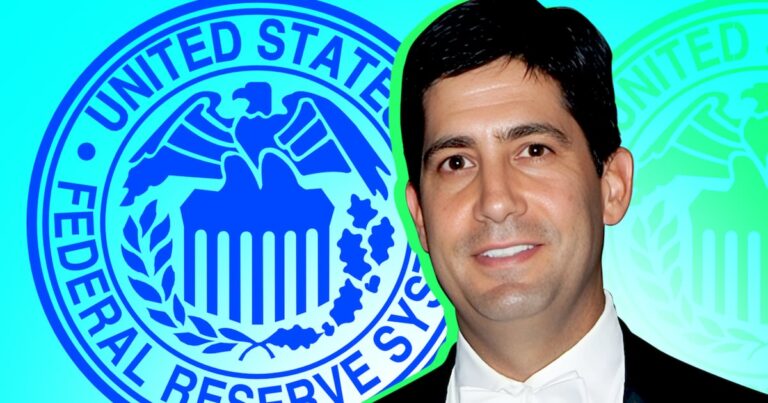
With Bitcoin’s price down the pan, investors are now waiting to see what Federal Reserve Chair nominee Kevin Warsh will do to markets if he takes the helm in June.

Despite praising Bitcoin and calling for lower interest rates last year, markets initially priced in Warsh as a hawk — someone who would keep interest rates high in an aggressive bid to tamp down inflation. But it’s what Warsh might do with the Fed’s balance sheet that concerns investors.

Since the Great Recession, the Fed has purchased trillions of dollars of US Treasury bills, flooding banks, and, in turn, the economy with cash. That policy, known as quantitative easing, stimulated the economy, but it has also led financial markets to be addicted to central bank liquidity, Warsh has said.

Bitcoin dropped after Warsh’s nomination. Source: CoinGecko.

Reducing its balance sheet could be a problem for Bitcoin, which has in the past benefited from quantitative easing.

Dilin Wu, research analyst at forex broker Pepperstone, told DL News it was “very likely” Warsh as Fed Chair could spark more volatility in crypto markets.

“Aggressive tightening [from Warsh] could shrink bank reserves just as tech firms ramp up leveraged infrastructure and AI spending,” she said “Mismanagement here could trigger stress.”

Hawk or dove?

While Warsh is aligned with Trump, who has aggressively pushed for lower interest rates, market observers have said he is a pragmatist who wouldn’t cut too quickly for fear of overheating the economy.

This explains Bitcoin’s price dip since Trump announced his nomination.

“The 14% [immediate] Bitcoin decline since his nomination reflects market concerns about his hawkish monetary philosophy overriding his crypto-friendly credentials in the near term,” Jimmy Xue, co-founder and chief operating officer of Axis, a liquidity infrastructure startup, said.

Still, experts told DL News that Warsh being a pro-crypto candidate would help Bitcoin in the long-run.

Warsh back in 2018 said that Bitcoin could “serve as a sustainable store of value, like gold.”

Marcin Kaźmierczak, Co-Founder of RedStone, a blockchain oracle network, said that while Warsh’s nomination in the short-term “spooked markets immediately,” a Warsh-led Fed “could paradoxically strengthen Bitcoin’s narrative as a hedge against monetary policy risk” in the long run due to him being personally sympathetic to the coin.

Narrative matters

Factors other than the Warsh nomination are weighing on Bitcoin’s price. One is its “narrative divergence,” David Lawant, Anchorage Digital’s head of research, said.

The asset last year was trading in line with gold as part of the so-called debasement trade — hedging against a currency losing value — but it has since diverged.

“Bitcoin is now trading more in tandem with non-AI tech assets, a cohort that has struggled over the past few months,” Lawant said.

But Bitcoin could soon find its feet again.

“A lot of that feels out of place and can correct over time,” he said, pointing to the calibre of institutional investment.

Crypto market movers

  • Bitcoin is unmoved over the past 24 hours, trading for $68,143.
  • Ethereum is up 1% over the past day and is priced at $1,979.

What we’re reading

Mathew Di Salvo is a news correspondent with DL News. Got a tip? Email at mdisalvo@dlnews.com.

The “Digital Twin” of the Human Body: The Future of Personalized Health

0

The most profound application of Technology in 2026 is not in the office, but in the “Bio-Digital” realm. We have entered the era of the “Medical Digital Twin”. By combining “Wearable Sensors,” “Genetic Sequencing,” and Artificial Intelligence, we can now create a real-time, digital replica of a human’s biological systems. For the Business of healthcare and insurance, this represents a shift from “Reactive Medicine” to “Predictive Wellness.”

The “Continuous Monitoring” Revolution

In 2026, the “Annual Physical” is obsolete. Professional wellness is now managed through “Continuous Monitoring.” Advanced wearables—often integrated into clothing or “Smart Contacts”—track thousands of biomarkers: glucose, cortisol, hydration, and even early signs of inflammation.

This data is fed into a personal “AI Health Advisor.” This advisor doesn’t just track your steps; it “Simulates” the impact of your daily choices. If you are considering a specific diet or a new medication, the AI runs a “Simulation” on your Digital Twin to predict the outcome. This is “Precision Medicine” at its most advanced.

The Impact on the “InsurTech” Business

The Business of insurance is being completely rewritten in 2026. Traditional “Risk Pools” are being replaced by “Dynamic, Individualized Pricing.”

Policyholders who opt-in to share their “Digital Twin Data” receive lower premiums based on their actual “Health Behavior” rather than their “Demographic Group.” This creates a “Proactive Incentive System,” where the insurance company and the customer are aligned in the goal of “Staying Healthy.” For the Business, this reduces “Claims Payouts” and creates a much more predictable and profitable model.In 2026, the “Annual Physical” is obsolete. Professional wellness is now managed through “Continuous Monitoring.” Advanced wearables—often integrated into clothing or “Smart Contacts”—track thousands of biomarkers: glucose, cortisol, hydration, and even early signs of inflammation.

“In-Silico” Clinical Trials

The pharmaceutical industry has been transformed by Digital Twin Technology. We are now seeing the rise of “In-Silico Trials”. Before a new drug is tested on a single human, it is tested on “Millions of Digital Twins” representing every possible ethnic and genetic variation.

This allows researchers to identify “Rare Side Effects” and “Optimal Dosages” with a level of accuracy that was previously impossible. This has reduced the “Cost of Drug Development” by 50% and brought life-saving treatments to market years faster.

Conclusion

The “Digital Twin of the Human Body” is the ultimate synergy of Technology and biology. It represents the “Digitization of Life” itself. In 2026, we are no longer “Guessing” about our health; we are “Simulating” our way to a longer, healthier, and more productive future.Policyholders who opt-in to share their “Digital Twin Data” receive lower premiums based on their actual “Health Behavior” rather than their “Demographic Group.” This creates a “Proactive Incentive System,” where the insurance company and the customer are aligned in the goal of “Staying Healthy.” For the Business, this reduces “Claims Payouts” and creates a much more predictable and profitable model.In 2026, the “Annual Physical” is obsolete. Professional wellness is now managed through “Continuous Monitoring.” Advanced wearables—often integrated into clothing or “Smart Contacts”—track thousands of biomarkers: glucose, cortisol, hydration, and even early signs of inflammation.


Fusaka Upgrade Fuels Record Address Poisoning on Ethereum

0

Lower gas costs have turned Ethereum into a playground for mass address poisoning, with scammers hitting thousands of wallets daily.

Ethereum has spent years trying to fix high fees, and recent upgrades finally made transactions cheaper. But while they solved one problem, they may have opened the door to another.

Leon Waidmann, head of research at Lisk, noted in an X post on Wednesday, Feb. 18, that network activity is booming, with stablecoin volume hitting $7.5 trillion in a single quarter while transaction fees stayed under a dollar.

“Record usage. Record cheap. At the same time. The biggest divergence between fundamentals and price in all of crypto right now,” he noted.

But the growth may hide a more alarming reality. A recent study by blockchain researcher Andrey Sergeenkov finds address poisoning attacks surged significantly after the December Fusaka upgrade, which cut gas fees sixfold and made spam attacks cheap enough to scale.

Address poisoning works by sending tiny transfers from addresses that look like the victim’s real contacts. If the victim copies the wrong address from their history, funds get stolen. Sergeenkov says attackers treat this like a lottery, sending millions of cheap transactions in the hope of a few big payoffs.

Unintended Consequences

Before Fusaka, attackers were sending roughly 30,000 dust transactions per day, according to Sergeenkov’s analysis of 101 tokens between Sept. 1, 2025, and Feb. 13 this year.

Dust attack transactions before and after Fusaka upgrade. Source: Andrey Sergeenkov

But after the upgrade, lower fees made mass poisoning viable in a way that wasn’t possible before, and daily dust transactions jumped to 167,000, peaking at about 510,000 in one day in January.

Gas price vs. dust attack volume before and after Fusaka upgrade. Source: Andrey Sergeenkov

In just over two months after Fusaka, victims lost more than $63 million, 13 times the $4.9 million lost in a comparable prior period, the data shows.

“There is nothing wrong with lowering fees, but the security problems that cheap transactions amplify should have been addressed before the upgrade. When the Ethereum Foundation claims it is building trillion-dollar security, user safety must be the strictest priority over growth metrics,” Sergeenkov writes.

Sergeenkov noted that a single transfer accounted for a large share of the post-Fusaka losses, when attackers stole $50 million in USDT on Dec. 19, 2025. Even leaving that out, total losses still came to $13.3 million, 2.7 times higher than the pre-Fusaka period, he concluded.

10x Banking and HassemPrag Partner to Drive Core Banking Modernisation Across Africa

0

Cloud-native core banking provider 10x Banking has partnered with South African digital banking platform HassemPrag. The collaboration aims to provide African financial institutions with a de-risked path to replacing legacy core technology.
Addressing regional pressures

Banks across the African continent are currently navigating mounting pressures from evolving local regulations, rising fintech competition, and the spiralling costs associated with maintaining legacy systems. Consequently, investments in core infrastructure are surging, with the core banking software market in the Middle East and Africa projected to reach US$2.2billion by 2030.

To address these pain points, the joint proposition combines 10x Banking’s cloud-native infrastructure with HassemPrag’s regional expertise and integration capabilities. The solution offers a modular architecture, allowing banks to upgrade incrementally and avoid risky “rip-and-replace” transformations.

For African banks, the partnership promises to:
  • Enable the replacement of legacy core technology without high risk, cost, and downtime.
  • Dramatically cut time-to-market for new products down to months, increasing speed and scalability.
  • Transform the customer experience through real-time data and personalised services.

Jayesh Prag, CEO of HassemPrag, commented: “Across Africa, the perceived risk of change has held banks back from much needed core modernisation. Our partnership with 10x Banking changes the equation by providing a unified digital banking platform that’s fast to deploy and proven at massive scale.”

Antony Jenkins, Founder & CEO of 10x Banking, added: “We’re enabling institutions to move away from legacy constraints and build smarter, more inclusive propositions for their customers. With access to this technology, more banks can launch new digital services in weeks rather than years, reduce complexity, and unlock a wave of growth in some of the world’s most dynamic markets.”

The partnership deepens 10x Banking’s existing footprint in the region. The UK-headquartered firm is already working with Old Mutual, powering OM Bank, which is described as South Africa’s first fully digital bank.

Argentina Opens the Doors for Investing ‘Mattress Money’ in Crypto

0

The measure, passed by the Argentine Securities and Exchange Commission (CNV), will allow Argentines to invest previously undeclared funds into cryptocurrency exchanges and also other kinds of brokerages. Economy Minister Luis Caputo stated that these capitals can help grow local investment levels. Argentina Reforms Regulatory Framework to Allow ‘Mattress Money’ Investments in Crypto Argentina is […]

Prediction Marketplace Giant Polymarket Acquires YC-Backed Startup Dome

0

Polymarket has acquired Dome in a bid to supercharge its developer ecosystem and tighten its grip on the fast-growing prediction markets sector. Polymarket Aims to Strengthen Tech Stack With Dome Buy On Friday, Polymarket confirmed it purchased Dome, a Y Combinator-backed startup focused on unified API infrastructure for prediction markets. Financial terms were not disclosed, […]

The “AI Ethics Audit”: Standardizing Trust in 2026

0

As Artificial Intelligence takes over critical roles in “Credit Scoring,” “Recruitment,” and “Medical Diagnostics,” the need for professional oversight has never been greater. In 2026, the “AI Ethics Audit” has become a mandatory part of corporate governance. Much like a financial audit, this process involves an independent review of a company’s AI systems to ensure they are “Fair, Transparent, and Accountable.” For a modern Business, an “Ethics Score” is now just as important as a “Credit Score.”

What is an AI Ethics Audit?

An AI Ethics Audit is a rigorous, multi-disciplinary process. It begins with “Data Provenance”—checking exactly where the training data came from and if it contains “Historical Biases.”

Next, the auditors perform “Adversarial Testing.” They use specialized “Red-Teaming AI” to try and trick the company’s models into making biased or unethical decisions. Finally, they review the “Explainability” of the system. If a bank’s AI denies a loan, the audit ensures that the bank can explain exactly why that decision was made in terms that a human can understand. This is “The Right to Explanation,” a core legal requirement in 2026.

The Role of the “Independent AI Auditor”

A new profession has flourished in 2026: The Independent AI Auditor. These firms are separate from the Technology providers and the companies using the AI. They provide a “Seal of Approval” that tells the market, “This AI can be trusted.”

For a Business, hiring an independent auditor is a strategic move. It protects the company from the massive “Regulatory Fines” of the 2026 AI Acts and builds “Consumer Trust.” In a world where people are increasingly “Algorithm-Wary,” being “Certified Ethical” is a powerful competitive differentiator.

Governance as a “Business Enabler”

Far from being a burden, AI governance is a “Business Enabler.” In 2026, companies with strong ethics frameworks can “Move Faster.” Because they have a “Clear Set of Rules,” their development teams can innovate with confidence, knowing they won’t accidentally build a “Toxic Model” that destroys the brand’s reputation.Next, the auditors perform “Adversarial Testing.” They use specialized “Red-Teaming AI” to try and trick the company’s models into making biased or unethical decisions. Finally, they review the “Explainability” of the system. If a bank’s AI denies a loan, the audit ensures that the bank can explain exactly why that decision was made in terms that a human can understand. This is “The Right to Explanation,” a core legal requirement in 2026.

Furthermore, ethical AI is “Better AI.” A model that has been audited for bias is more accurate, more resilient, and more effective at serving a diverse global market. In 2026, “Ethics” is not a trade-off for “Performance”; it is the foundation of performance.

Conclusion

The AI Ethics Audit is the “Moral Anchor” of the digital age. It ensures that as we give more power to machines, we do not lose our human values. In 2026, the companies that lead their industries will be those that embrace transparency and accountability, proving that the most advanced technology is also the most responsible.Furthermore, ethical AI is “Better AI.” A model that has been audited for bias is more accurate, more resilient, and more effective at serving a diverse global market. In 2026, “Ethics” is not a trade-off for “Performance”; it is the foundation of performance.


Four Sub-$60,000 BTC Price Levels Form Bitcoin Bottom ‘Roadmap’

0

Bitcoin (BTC) has four new key support levels to watch as a fresh wave of bearish BTC price action aims to push the market price below $50,000.

Key points:

  • Bitcoin’s realized prices remain important milestones as the market forms a long-term floor.

  • Binance users’ deposit cost basis is next up as a safety net, says analysis.

  • Realized losses reach levels unseen since the end of the 2022 bear market.

BTC price analysis puts focus on Binance traders

New analysis from Burak Kesmeci, a contributor to onchain analytics platform CryptoQuant, sees $58,700 as Bitcoin bulls’ next line in the sand.

“Which 4 levels am I watching in Bitcoin? 4 key realized price levels — essential for tracking the long-term trend in my view,” he wrote in one of CryptoQuant’s Quicktake blog posts on Wednesday, titled “Bitcoin’s Roadmap to the Bottom.”

Realized price refers to the aggregate cost basis of the BTC supply or a subset of it. When BTC moves onchain, its realized price becomes that at which it was last involved in a transaction.

Realized prices that involve larger groups of coins can often function as market support or resistance zones.

“Bitcoin has been dropping ever since it lost the New Whales’ cost basis — a classic bear cycle signal,” Kesmeci noted.

Newer Bitcoin whales’ aggregate buy-in price stands at $88,700, but with the price now far below, three others are on the radar. Older whales’ realized price is the lowest of the selection at $41,600, while Bitcoin’s overall cost basis now sits at $54,700.

Between the current spot price and those two levels, however, lies the realized price for deposit addresses (UDA RP) on major global crypto exchange Binance.

“From here, the 2 key supports I’ll be watching in order are Binance UDA RP and Bitcoin RP (58.7K and 54.7K),” Kesmeci added. 

“The reason: once Bitcoin falls below New Whales’ cost basis, it historically tends to at least test the Realized Price. And the only support standing between here and there is 58.7K.”

Bitcoin realized price data. Source: CryptoQuant

Bitcoin losses echo 2022 bear market bottom

While panic selling from exchange users has cooled since BTC/USD rebounded from 15-month lows near $59,000 at the start of February, CryptoQuant data underscores the risk of further capitulation.

Related: Bitcoin 2024 buyers steady BTC price as trader sees $52K ‘next week or so’

The proportion of the BTC supply currently held at an unrealized loss has reached 46%, its highest reading since the end of Bitcoin’s 2022 bear market.

“It is worth noting that the correction has been so severe that the increase in supply held at a loss has occurred very rapidly,” CryptoQuant contributor Darkfost commented on X during the $60,000 swing lows.

Last week, meanwhile, Darkfost reported similarly conspicuous levels of realized losses from Bitcoin investors — coins moving at a lower price than in their previous transaction.

“At its peak, on February 5, realized losses exceeded 30,000 BTC,” he confirmed. 

“This remains well below the extreme levels observed during the last bear market, when realized losses reached 92000 BTC and 80000 BTC on separate occasions. Nevertheless, it is still a clear sign that a capitulation phase has taken place.”

Bitcoin realized profit and loss data. Source: Darkfost/X