BitMine Immersion (BMNR) added to its Ethereum treasury last week, bringing its total holdings to 5.77 million ether (ETH), or about 4.8% of Ethereum’s circulating supply of 120.7 million tokens, according to a Monday press release.
The company said nearly five million of its ETH holdings are staked, allowing it to earn staking rewards while maintaining one of the largest corporate Ethereum treasuries.
Beyond ether, BitMine’s balance sheet includes 206 bitcoin BTC$62,405.13, a $180 million stake in Beast Industries, a $69 million stake in Eightco Holdings (ORBS) and about $482 million in cash and marketable securities.
Chairman Tom Lee pointed to growing activity on Ethereum’s layer-2 networks as a key reason for the company’s continued focus on ETH.
“One of the biggest crypto success stories in 2026 is the breakaway success of the Robinhood Chain L2 mainnet on July 1, built on Arbitrum,” Lee said in the release. “Already, dollar volumes have exceeded $1 billion, and Robinhood Chain now has more trading volume than any other decentralized exchange (DEX), demonstrating the outstanding utility and product market fit for Ethereum, which is the underlying chain.”
The report also noted a problem with permissionless chains: a confirmed transaction can, in theory, be reversed by a chain reorganization. That introduces a settlement-finality risk that traditional infrastructures do not encounter.
Nevertheless, the report said, established firms in traditional finance and crypto-native companies are converging.
As one example, it cited Ripple’s $1.25 billion purchase of prime broker Hidden Road. Hidden Road, now Ripple Prime, is listed among firms holding both an investment-firm license and cryptoasset registration covering spot and derivatives across forex and digital asset markets from the Financial Conduct Authority.
Santander U.K.’s use of Ripple’s blockchain for cross-border payments was named as a white-labeling example. The bank fronts the customer relationship while Ripple’s technology moves the money.
Woolard puts the U.S. and U.K. markets on similar timelines for stablecoin regulation, with both targeting full regimes in 2027. For wholesale policy, the U.K. is ahead of the U.S., where the Clarity Act remains stuck.
While the FCA is already authorizing crypto companies under money-laundering regulations, the regulator’s new regime under the Financial Services and Markets Act (FSMA) kicks in next year.
Applications under FSMA open on Sept. 30, ahead of an October 2027 launch date.
The report concedes that the industry still sees U.K. authorization as slower than the U.S., where the SEC’s December 2025 no-action letter handed the Depository Trust Company a three-year tokenization pilot that lets firms launch live rather than build for a test environment.
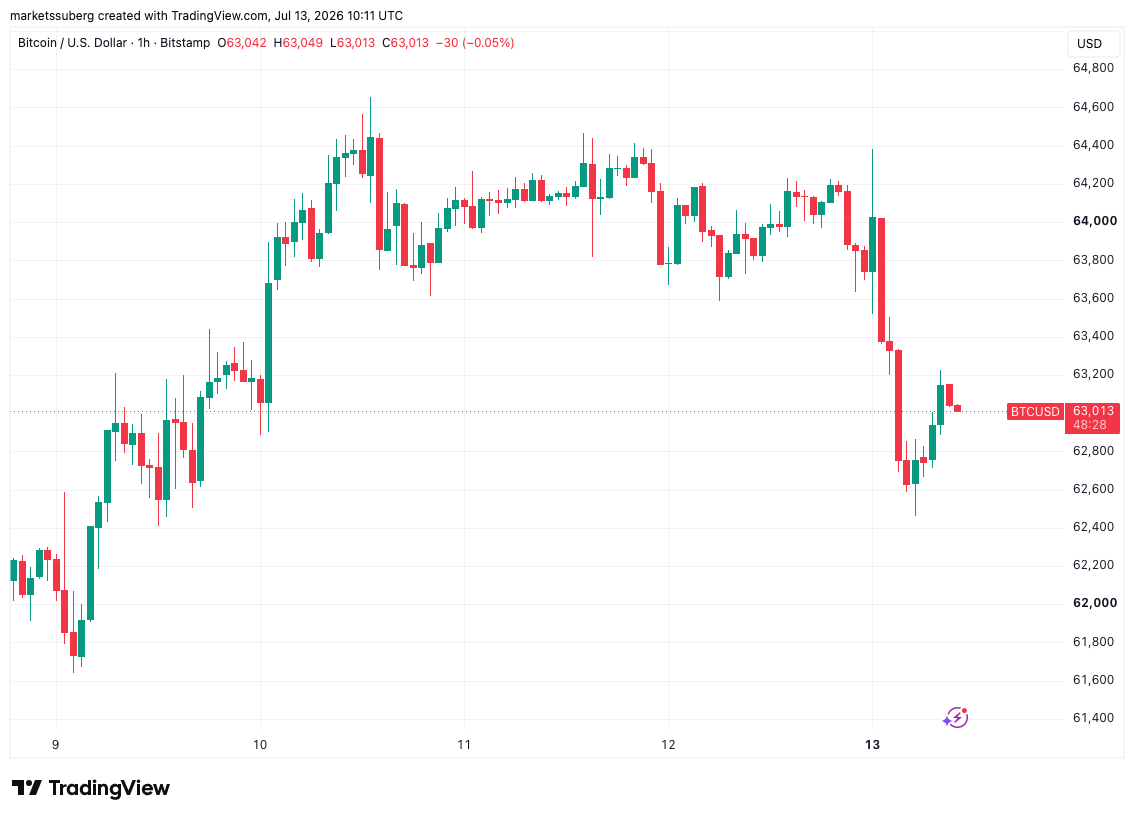
Bitcoin (BTC) starts the new week with a bump as traders brace for more macro volatility.
Key points:
Bitcoin gets knocked back toward $62,000, but a trader is already eyeing the end of the bear market by September.
A new BTC price “death cross” forms the latest signal that the bear market may have just months left to run.
The US-Iran war is back as the Strait of Hormuz closes to oil traffic, prompting risk-asset headwinds.
US CPI and PPI data is due out, while Fed chair Kevin Warsh will outline future policy to lawmakers.
A major distribution event involving midsize Bitcoin hodlers shows fractured sentiment across investor cohorts.
Bitcoin bear-market bottom due “around September or October”
Bitcoin continues to circle its lowest levels since Q3 2024, but one theory is already calling for the return of the bull market as soon as September.
In an X post on Monday, trader Ryker called the entire four-year cycle of bull and bear markets into question.
“I disagree with this chart,” they wrote alongside a comparison of previous market phases for BTC/USD stretching back to 2013.
Ryker argued that since consensus sees the 2026 bear-market bottom as still to come, market makers will frontrun sentiment and initiate a long-term rebound in advance, leaving as many traders off-side as possible.
“Most people believe that the next Bitcoin bull cycle will begin in 2027. However, market makers know exactly what the crowd is thinking,” they continued.
“I predict that Bitcoin will start surging around September or October of this year, and the crowd will miss the buy opportunity. You shouldn’t trust this chart.”
The idea comes as multiple BTC price indicators begin to flash reversal signals for the first time since the end of the last bear market in late 2022.
As Cointelegraph reported, however, history suggests that the bear market is simply too young to reverse before the end of the year, with current progress at around 70%.
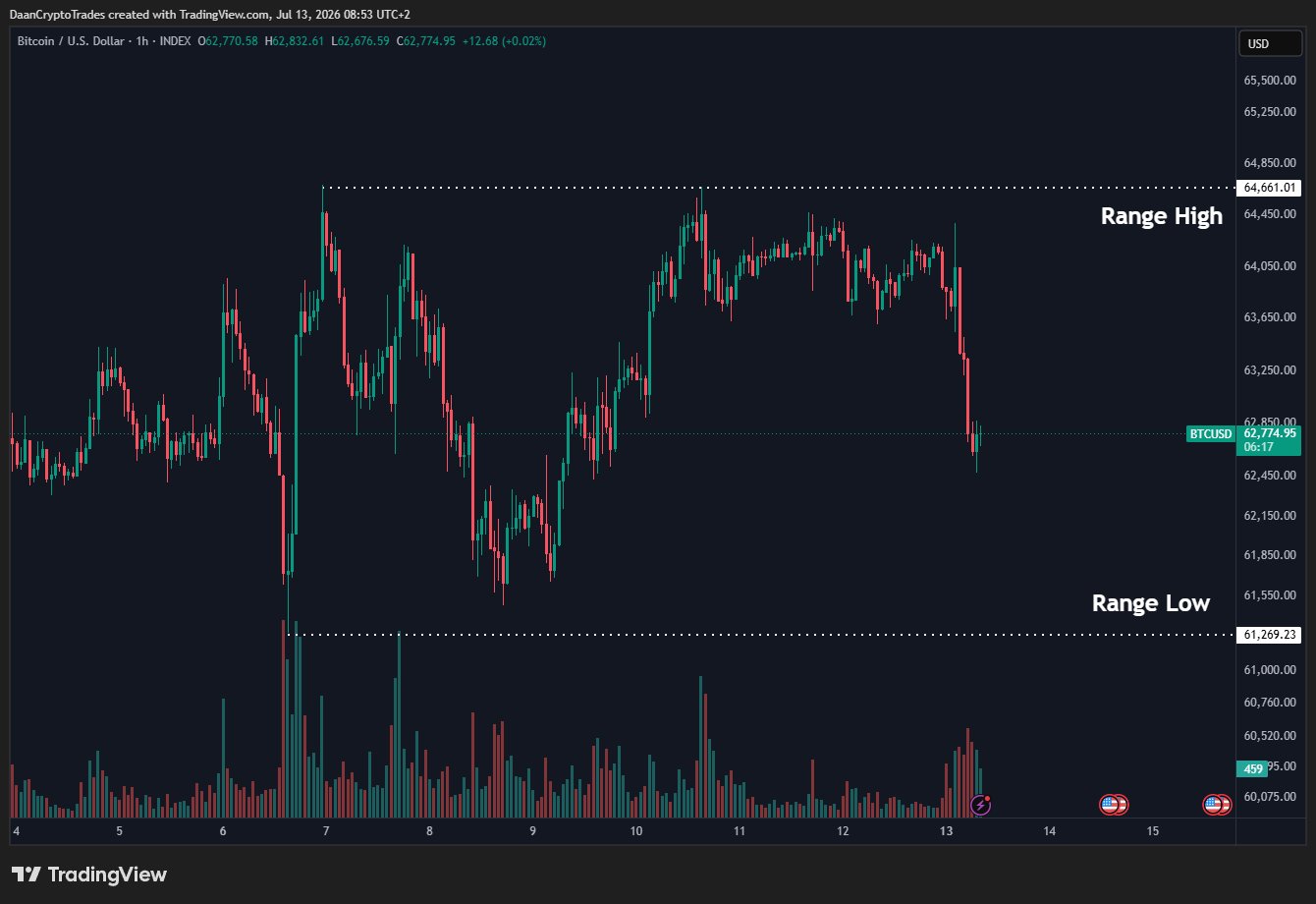
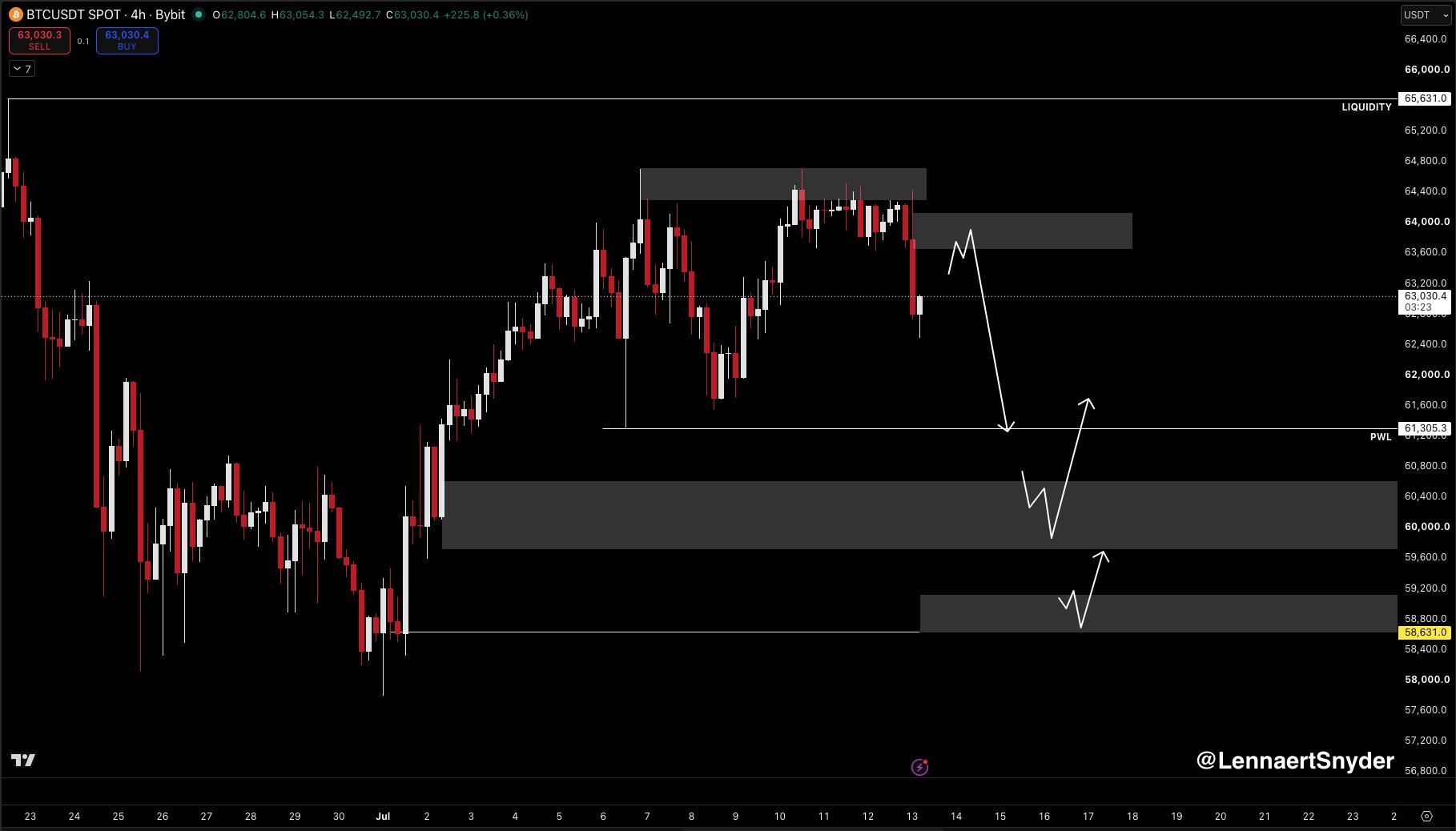
Fellow trader Lennaert Snyder saw little chance of even a rematch with range highs, putting $63,600 as the next entry point for a BTC short position.
“Orderflow also confirms spot and perps are selling and funding rates are still quite high, so some downward pressure would be healthy,” he commented on Monday about exchange order-book data.
Snyder described BTC/USD dropping to fresh lows under $57,800 as the “most healthy scenario.”
A more optimistic take came from trader Jelle, who maintained hope of a near-term rebound to $70,000.
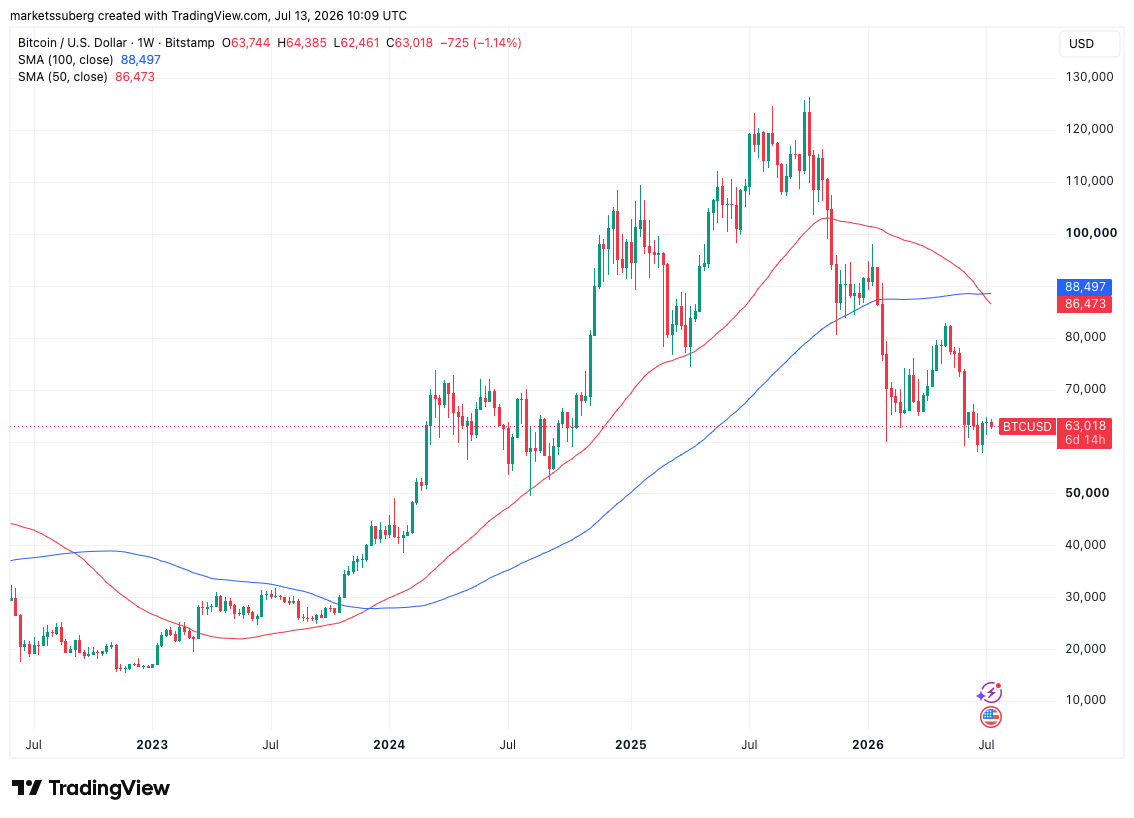
On longer time frames, Jelle noted the recent “death cross” on the weekly chart potentially forming a reliable foundation for sustained upside.
This involves the 50-week and 100-week simple moving averages (SMAs), and with the last death cross coming in September 2022, just months before the last bear-market bottom.
“In the past, by the time this signal flashed, Bitcoin’s bear market was nearly ending. More and more signs confirming my belief that accumulation season is back,” Jelle told X followers.
BTC/USD one-week chart with 50, 100SMA. Source: Cointelegraph/TradingView
Hormuz closure rocks oil, stocks in crypto headwind
The US-Iran war is already back as a major macro volatility driver this week.
Over the weekend, Iran declared the Strait of Hormuz — a key global oil route — closed until further notice.
This followed a series of escalatory events that broke the fragile ceasefire agreement previously in effect, and markets reacted in kind.
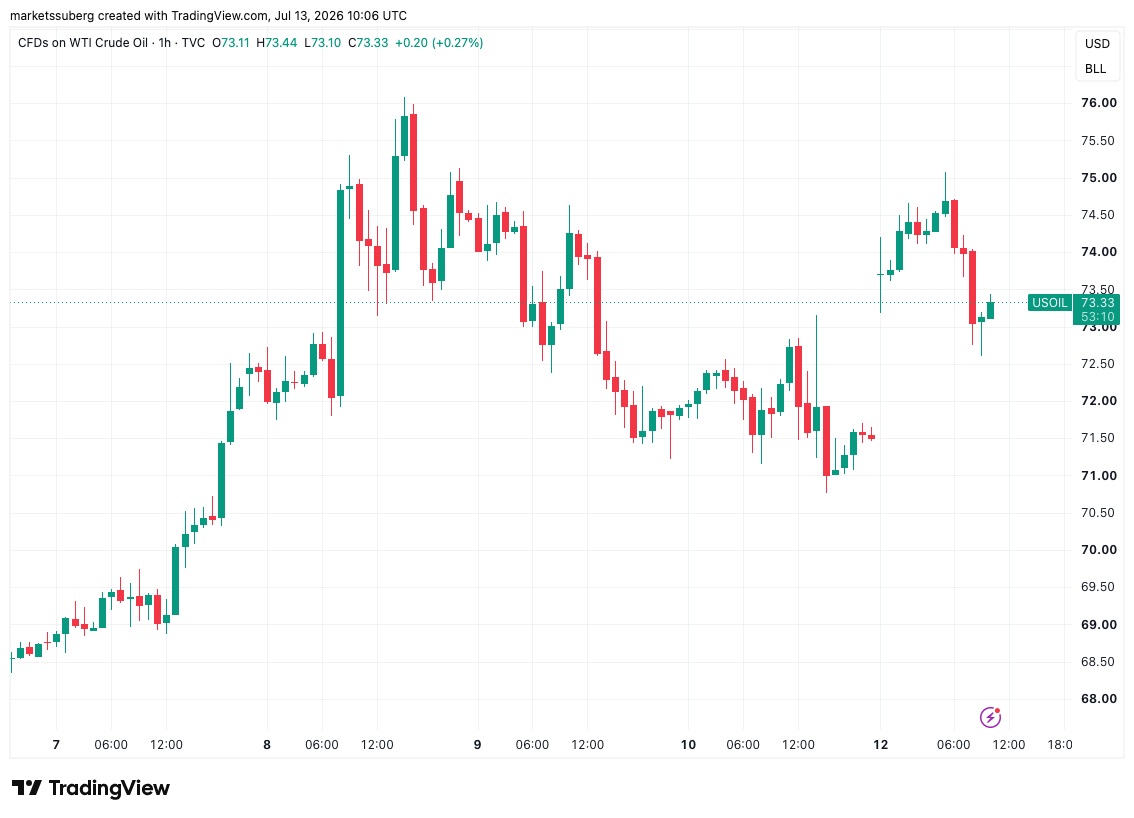
US WTI crude oil returned to $75 per barrel on Monday, up nearly 12% versus its July lows.
CFDs on US WTI crude oil one-hour chart. Source: Cointelegraph/TradingView
Reacting, Nic Puckrin, CEO and cofounder of crypto education platform Coin Bureau, flagged other signs of stress as a result of the resurgent conflict.
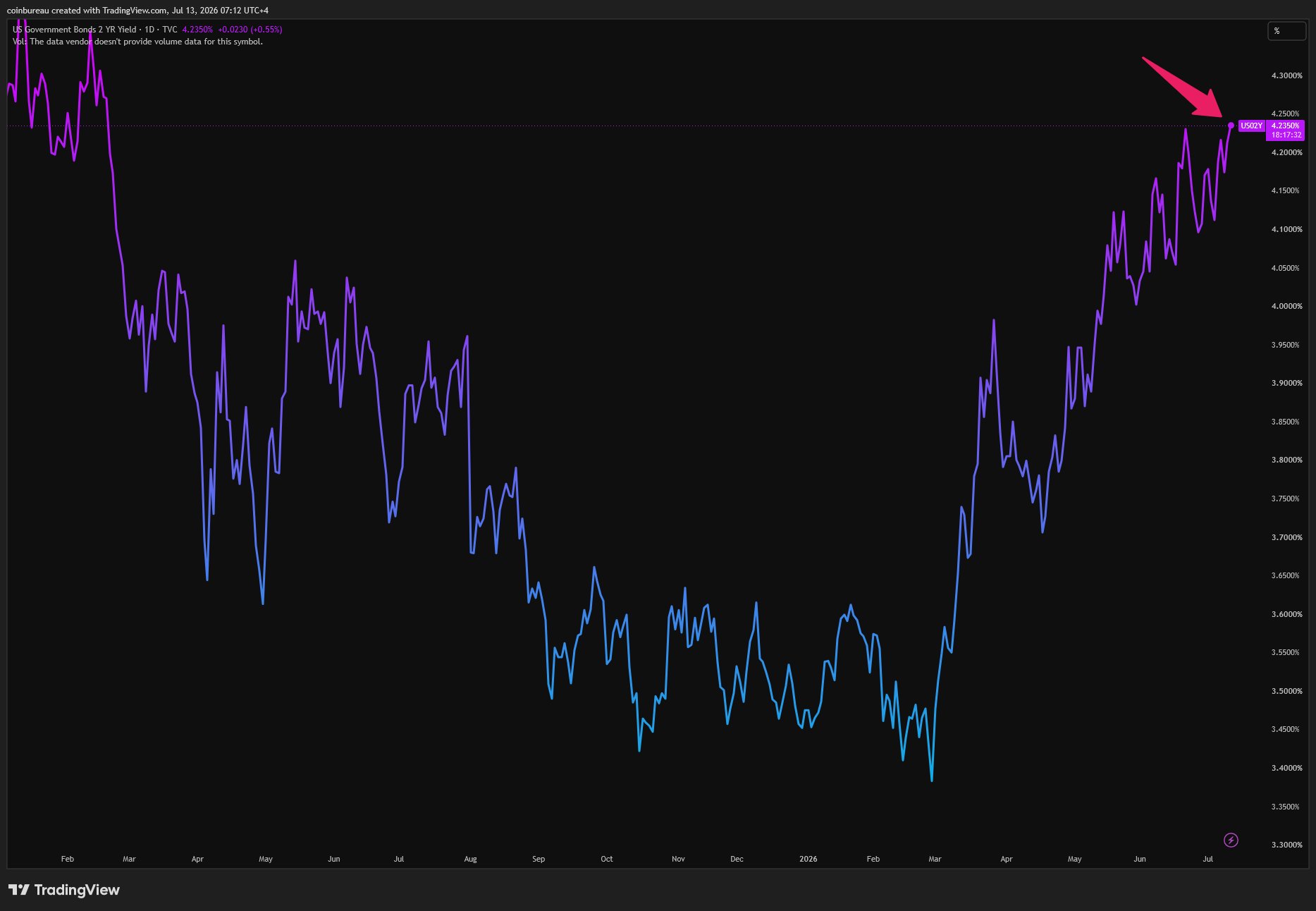
“US 2yr T-bill yields just shot above 2.35% – the highest level in 16 months!” he wrote in a post on X.
“The Iran situation is pushing up oil prices & inflation expectations. It’s saying: Interest rates are going to be higher for longer.”
US two-year Treasury yield chart. Source: Nic Puckrin/X
Puckrin referred to two-year US Treasury note yields and their potential impact on financial policy, with higher interest rates traditionally being a headwind for crypto and risk assets.
While US stock futures saw a cautious start to the week, the frequency of negative Iran headlines appeared to show in their comparatively muted reaction to the oil-supply threat. As such, some market participants brushed off the potential for a deeper market retracement based solely on Middle-East cues.
“This correction has, in my opinion, little to do with everything in the Middle East,” crypto trader and analyst Michaël van de Poppe argued.
Van de Poppe instead put the focus on Japanese bond markets as the yen circled multidecade lows versus the US dollar.
“It has a lot more to do with the Japanese Yield jumping again,” he continued.
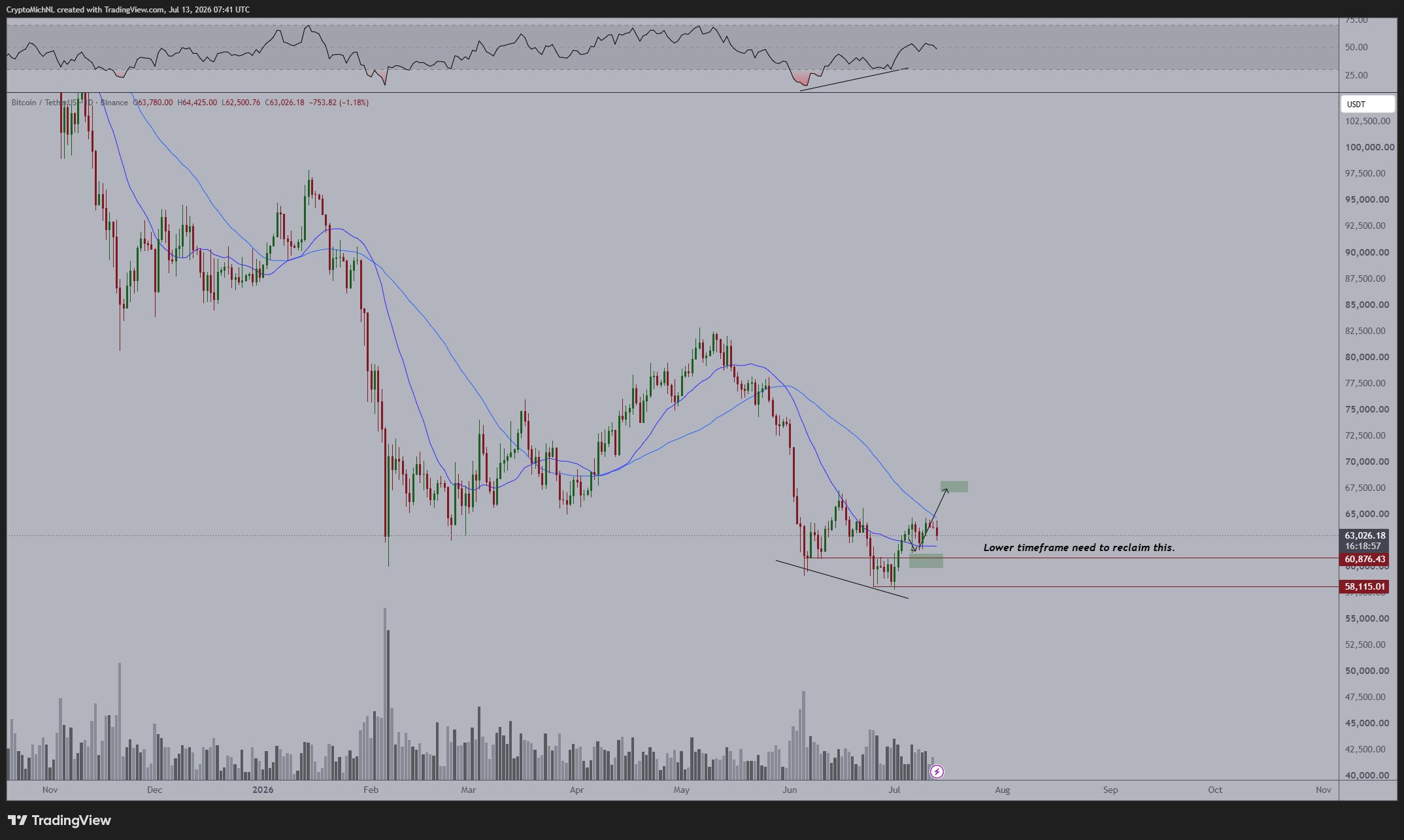
“I expect to see a breakdown in Yield over the next 1-2 weeks, which would automatically lead to a positive breakout in Bitcoin.”
BTC/USDT one-day chart. Source: Michaël van de Poppe/X
Fed’s Warsh to testify with CPI, PPI data due
Against the background of Iran instability, US markets will also need to surf key macro data releases in the coming days.
Chief among these are the June prints of the Consumer Price Index (CPI) and Producer Price Index (PPI). Both mark the final releases before the Federal Reserve meets to decide on interest-rate changes at the end of the month.
As Cointelegraph reported, the Iran knock-on effect has been reflected in US inflation reports for several months, making any surprise readings in CPI or PPI a key potential risk-asset volatility catalyst.
US CPI 12-month % change. Source: Bureau of Labor Statistics
“We have a highly eventful week ahead of us,” trading resource The Kobeissi Letter summarized to X followers.
Almost immediately after CPI on Tuesday, new Fed chair Kevin Warsh will present a semiannual monetary policy report to the House Financial Services Committee.
Warsh has walked a tightrope since taking over in May, juggling rising inflation with pressure from US president Donald Trump to cut rates. At his first interest-rate meeting, however, he remained on the hawkish side, avoiding dropping clear hints that policy could be relaxed.
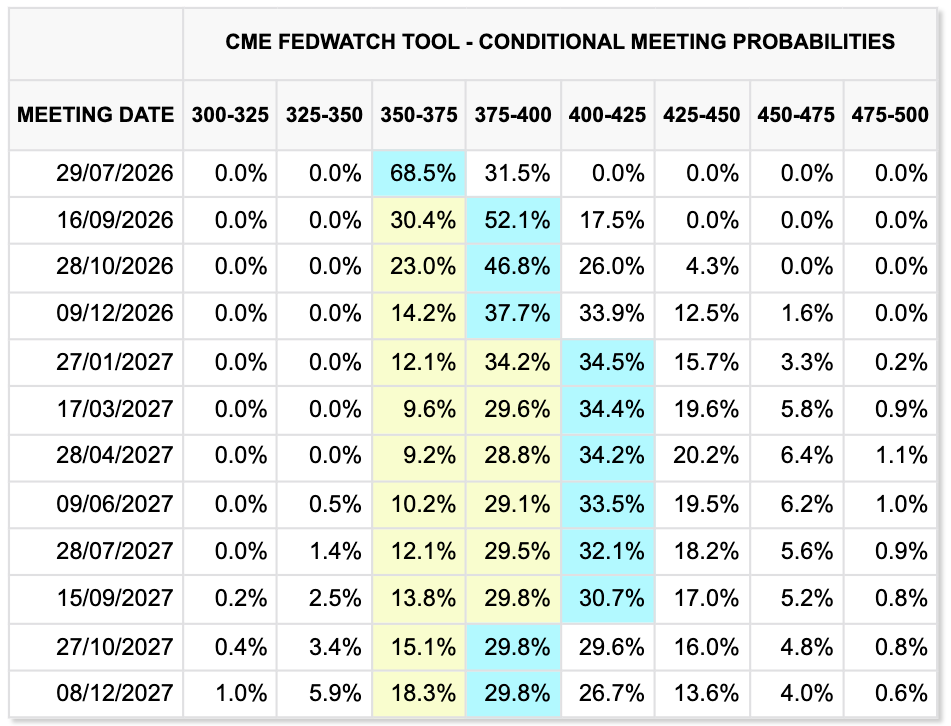
According to CME Group’s FedWatch Tool, markets currently see rates staying the same until September, when majority consensus calls for a 0.25% hike.
Fed target rate probabilities (screenshot). Source: CME Group
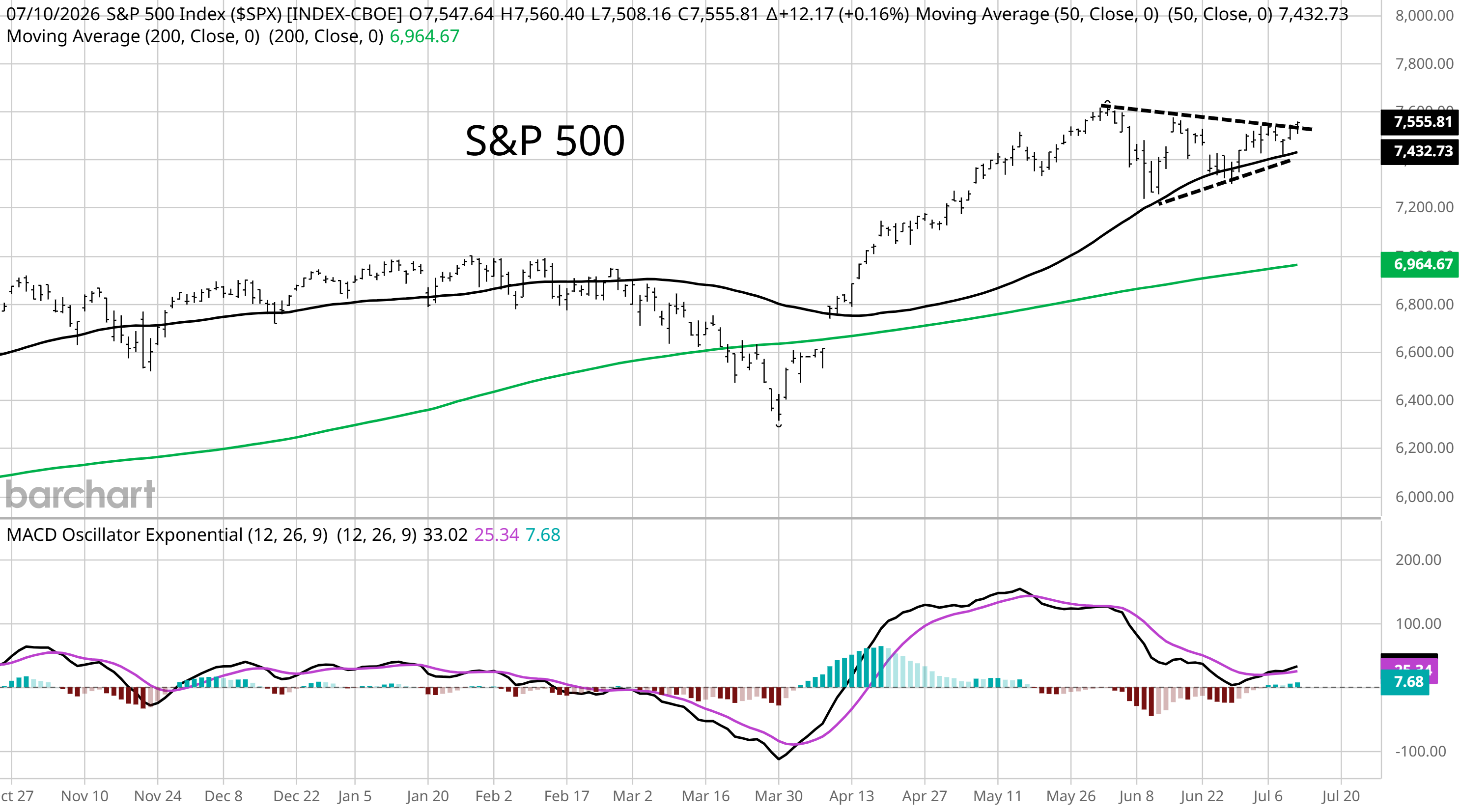
In analysis published late last week, trading resource Mosaic Asset Company described rates being caught in a “tug-of-war,” while pointing instead to US 30-year Treasury yields as a source of friction going forward.
“A breakout in long-term rates may present obstacles for the rally, but the S&P 500 is nearing completion of a short-term bullish chart pattern,” it warned.
This week also sees around 10% of S&P 500 companies reporting earnings.
S&P 500 chart data. Source: Mosaic Asset Company
Midsize BTC hodler selling hits multimonth highs
New insights into Bitcoin hodler selling adds to the case for a BTC price rebound in July.
Related: Bitcoin whales sent BTC price to $64K as Coinbase Premium broke key level: CryptoQuant
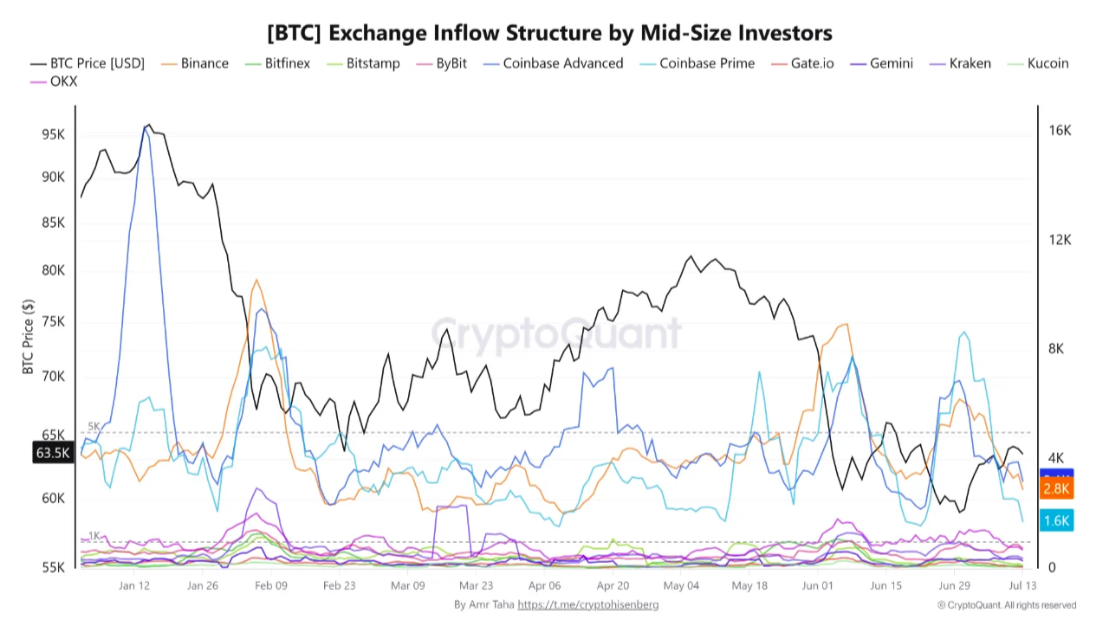
Published by onchain analytics platform CryptoQuant on Monday, data covering addresses holding between 100 and 1,000 BTC shows a major new distribution event.
“Bitcoin wallets holding between 100 and 1,000 BTC recorded net distribution of about 67,000 BTC on July 13, the cohort’s strongest selling activity since February 19, when distribution reached roughly 47,000 BTC,” contributor Amr Taha wrote in a blog post.
Over the past three months, the cohort’s activity has been in a state of flux, with late April conversely seeing conspicuous accumulation.
Taha, however, notes that these 100-1,000 BTC entities tend to reduce exposure before bullish BTC price reversals.
“Historically, extreme accumulation by this cohort appeared near local Bitcoin price highs in January and April 2026, while the strong distribution recorded after February 19 was followed by a price rebound,” he continued.
“The current signal does not confirm a market bottom, but it places Bitcoin near another historically significant shift in mid-sized investor behavior.”
Bitcoin exchange inflow data (screenshot). Source: CryptoQuant
CryptoQuant data also shows that inflows to both Binance and Coinbase Prime actually cooled in mid-July.
Last week, Cointelegraph reported on profit-taking by short-term holders as BTC/USD rose to $64,000 — something that analysis likewise described as a feature “characteristic of a bull market.”
Yet the composition of activity tells a different story.
According to data tracked by Dune Analytics, asset management accounts for 40.5% of value locked on the chain, while lending accounts for 38.3%. Spot exchanges are 11.9% and perpetual futures 5.2%. Real-world assets, Robinhood’s flagship use case behind the chain’s existence, are just 4.1%.
The CASHCAT memecoin has also spawned an entire ecosystem of Robinhood-themed tokens, including Cash Dog in Hood, Little John, Hoodrat, and Arrow, none of which existed two weeks ago. The launchpad feeding them, NOXA.fun, and a trading bot called basedbot now have their own dedicated tracking dashboards.
Stablecoins account for much of the remaining activity.
Global Dollar, the USDG token issued by the Paxos-led consortium Robinhood helped found, holds about $200 million of the roughly $299 million stablecoin market cap on the chain, with Ethena’s USDe making up most of the rest.
‘Works great for memes’
While the chain may not yet be serving its original purpose, speculative trading often provides the earliest burst of activity on new blockchains, generating addresses, liquidity and transaction volume well before their intended use cases mature.
But it remains to be seen if the traffic converts. Memecoin traders run to where the activity is and are not loyal to any specific chain, meaning Robinhood Chain’s current users may not overlap with the investors it ultimately hopes to attract.
Strategy (MSTR) has not purchased any bitcoin since June 22, when it acquired just 520 BTC for approximately $35 million. Since then, the company has shifted its immediate focus from bitcoin accumulation to strengthening its liquidity position.
During the week ending July 5, Strategy sold 3,588 BTC in two transactions. It sold 1,363 BTC for approximately $80.8 million on June 30, followed by another 2,225 BTC for $135.2 million. The sales generated roughly $216 million and reduced Strategy’s holdings to 843,775 BTC.
The company said the proceeds would help fund distributions on its preferred stock and replenish the portion of its U.S. dollar reserve used to make those payments. The reserve stood at approximately $2.55 billion following the sales.
On Monday, Strategy increased its U.S. dollar reserve to approximately $3 billion. Based on annualized preferred-stock dividends and debt interest of roughly $1.76 billion, the reserve now provides about 20.4 months of coverage.
However, if bitcoin were to fall further and reach new lows, the $3 billion reserve may prove insufficient, potentially forcing Strategy to raise additional funds or sell more bitcoin, which could place further pressure on both STRC and MSTR.
Reed Smith, a global law firm with over 30 offices across North America, Europe and Asia, has launched an automated compliance platform designed to help crypto companies navigate the European Union’s Markets in Crypto-Assets (MiCA) regulation as the bloc enters a new phase of crypto oversight.
The platform, called Aquarius, automates key compliance tasks including crypto-asset classification, regulatory white paper generation, due diligence and environmental, social and governance (ESG) disclosures. Reed Smith said it plans to expand the platform to support crypto compliance regimes in the United Kingdom, the United Arab Emirates, Hong Kong and Singapore.
According to the firm, Aquarius is intended to simplify MiCA compliance for companies entering the European market or expanding their crypto offerings in the region by combining automated workflows with legal expertise.
The launch comes shortly after the European Union’s MiCA transition period ended on July 1, when crypto companies could no longer rely on temporary national exemptions in countries that adopted the full grandfathering period. The sweeping MiCA framework establishes licensing, consumer protection and operational requirements for digital asset service providers across the 27-member EU.
Reed Smith operates a global digital asset practice under its “On Chain” initiative, advising on several high-profile industry transactions. It served as legal counsel to the placement agents in Trump Media’s $2.5 billion Bitcoin treasury financing and advised Nakamoto Holdings in its merger with KindlyMD to create a Bitcoin treasury company.
Related: Regulators invited Binance to seek new licenses after MiCA setback, co-CEO says
MiCA compliance still presents challenges
Despite MiCA’s harmonized framework, obtaining authorization remains a complex process for many service operators. Last week, the European Securities and Markets Authority (ESMA) launched a supervisory review of authorized crypto-asset service providers, examining how custodians safeguard client assets and manage operational risks.
According to Sebastien Dessimoz, co-founder and managing partner of digital asset infrastructure provider Taurus, obtaining a MiCA license is only the beginning for custodians, who face ongoing scrutiny over cybersecurity, governance and ability to protect client assets.
Meanwhile, reports suggest EU policymakers are considering revisions to MiCA’s stablecoin framework, including rules governing the issuance of non-euro-denominated stablecoins. According to Euronews, the discussions have been prompted in part by the United States’ GENIUS Act, which established a federal framework for payment stablecoins.
Related: Crypto Biz: How stablecoins found their niche
Dessislava Ianeva, an analyst at Nexo, made a similar point in an email to CoinDesk.
“ETF flows confirm it from another angle. The past ten days split between inflow and outflow, netting slightly positive,” Ianeva said.
“Glassnode data shows spot selling pressure has faded. June’s net selling averaged nearly 2,000 BTC a day; July’s has slowed to just 53 BTC a day, the calmest month of 2026 outside April.”
The relative calm, however, may not indicate a rapid turnaround.
The price recovery from the year’s low of $57,700, hit earlier this month, is largely driven by derivatives traders and not spot buyers, according to Alex Kuptsikevich, FxPro’s chief market analyst.
“Demand for Bitcoin is recovering rapidly, though the growth is currently being driven mainly by retail traders in the speculative futures market. At the same time, the situation in the spot market remains less positive,” he said.
Without a strong return of buy-side liquidity, prices could remain in a sideways trend for months to come, he said.
Caution is understandable ahead of macroeconomic data that may influence interest-rate decisions and the appetite for risk.
U.S. CPI for June is scheduled for release Tuesday and Fed Chair Kevin Warsh’s first Congressional testimony is due this week. These events could influence the market trajectory and make, or break, the recovery.
The context: Building AI data centers remains a multi-year effort with labor emerging as a key execution challenge.
Prager said the Kentucky facility is expected to come online beginning in 2028 and that TeraWulf has hired Fluor to help construct the project.
He said securing skilled labor and contractors is a bigger challenge than equipment procurement as hyperscale AI facilities become increasingly specialized.
Prager said proximity to reliable power remains the most important requirement for AI customers.
Reading between the lines: TeraWulf says Bitcoin mining is no longer part of its long-term strategy.
Prager said the company originally entered Bitcoin mining because it already owned power assets and mining provided a flexible electricity customer.
He said Bitcoin’s commodity-driven revenue model did not provide the predictable, long-term cash flows the company prefers.
“We’re not involved in Bitcoin,” Prager said, describing AI infrastructure as a more natural fit for TeraWulf’s business.
Worth watching: Prager argued the AI infrastructure boom is constrained by power quality rather than available land.
He said the U.S. faces a shortage of electricity and warned investors that “not all megawatts are created equally.”
Prager said successful AI campuses require reliable generation, redundant transmission, favorable regulation and strong community relationships.
He added that TeraWulf focuses on redeveloping former industrial sites and, where needed, adding new power generation to support both AI facilities and the broader electric grid.
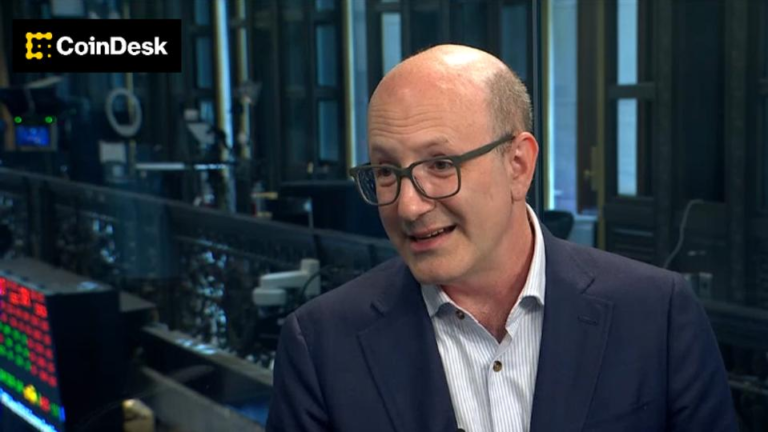
Latest developments: In an interview with Jennifer Sanasie on CoinDesk’s Public Keys Ginns said the convergence between traditional finance and crypto continues to gain momentum despite a prolonged market slump
Franklin Crypto aims to build a leading fundamental crypto investment platform following Franklin Templeton’s acquisition of 250 Digital, the firm that emerged from CoinFund’s liquid investment business, Ginns said.
While venture capital remains a natural fit for institutional allocators, Ginns said current market conditions also make liquid crypto investments increasingly attractive.
“There’s a big disconnect between where prices are and real fundamentals,” Ginns said, pointing to growing institutional engagement across the sector.
What this means: Ginns identified several developments that could bring more institutional capital into crypto markets.
He pointed to Robinhood’s blockchain initiative as an example of traditional financial distribution moving onto crypto rails, creating new opportunities for developers and users.
Ginns also cited growing interest in tokenized money market funds, which could allow investors to earn yield while maintaining on-chain portability.
Tokenized equities, stablecoin adoption and broader financial infrastructure are all contributing to the convergence of traditional finance and blockchain technology, he said.
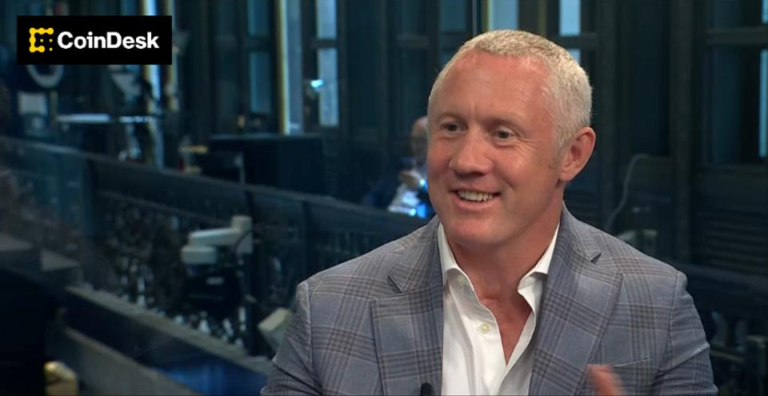
Latest developments: CEO Stephen Gregory said Binance.US is focused on growth after what he described as a two-year “hibernation” tied to regulatory issues surrounding the broader Binance brand.
Gregory said Binance.US is a separate U.S.-only entity with its own governance structure, though it shares a common beneficial owner and brand name with Binance.com.
He said the exchange previously held roughly 20% of the U.S. crypto exchange market and is targeting a return to that level.
Gregory said Binance.US is now licensed exclusively to serve U.S. customers.
What this means: Binance.US is trying to compete with exchanges such as Coinbase and Kraken by emphasizing lower trading costs and a broader product lineup.
Gregory said the exchange has reduced fees to “essentially almost a no-fee exchange,” with 0% maker fees and 2-basis-point taker fees.
He said the company has kept costs low by operating with a lean team and expects to generate revenue from services like custody alongside trading.
Gregory said the exchange is rebuilding liquidity through incentives and direct outreach to retail customers, including personally contacting some of its top users for feedback.