Home Blog Page 919

The network is moving away from being a slow giant to become a high-speed ‘internet of value’ by 2029

0

The Ethereum Foundation’s newly released “Strawmap” reads, at first glance, like something only a protocol researcher could immediately comprehend. It’s dense, diagram-heavy and packed with references to forks, zkEVMs and data availability sampling.

But beneath the technical language is a far simpler story: Ethereum — the second-largest blockchain with more than $200 billion market cap — is trying to decide what kind of infrastructure it wants to be by the end of the decade.

The ‘Strawmap’ — explicitly framed as a draft, not an official plan — sketches out Ethereum upgrades through 2029. It is not binding, but it signals where some of the network’s most influential researchers believe the base layer should head next.

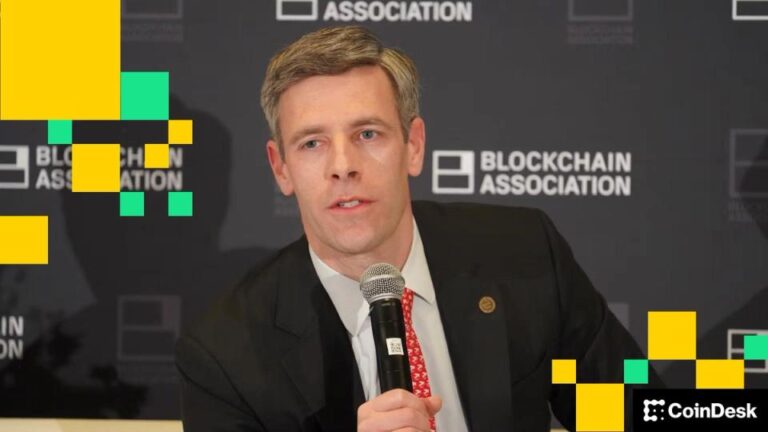
“The Strawmap is largely independent from Ethereum governance… it’s a tool that helps inform R&D well ahead of Ethereum governance, potentially even years ahead,” Justin Drake, a prominent Ethereum Foundation researcher, told CoinDesk in an interview.

That direction has real consequences beyond core developers.

Strawmap roadmap (Ethereum Foundation)

At the center of the document are five ambitions: near-instant transaction finality, dramatically higher throughput, built-in privacy, quantum-resistant cryptography and tighter integration between Ethereum’s base layer and its layer 2 ecosystem.

Stripped of jargon, the goal is straightforward: make Ethereum faster, more scalable, more private and durable enough to last a long time.

Today, Ethereum transactions are included in blocks quickly, but the point at which they are considered irreversible, known as finality, takes too long (roughly 16 minutes). For most casual users, that nuance is invisible. For exchanges, bridges and financial applications, it’s critical.

In a thread responding to the roadmap, Ethereum co-founder Vitalik Buterin laid out how that could change. “Today, finality takes 16 minutes,” he wrote, adding that the goal is to “decouple slots and finality” and move toward a system where “endgame finality time might be eg. 6–16 sec.”

Moving from minutes to seconds changes how comfortably large amounts of value can move across the network.

The Layer 2 debate

Earlier this month, Buterin argued that some of the assumptions behind the original layer 2 roadmap “no longer make sense” in their earlier form. Layer-2 networks were previously incorporated into Ethereum’s roadmap to scale the network by processing transactions off the main blockchain and settling them back to Ethereum, helping reduce congestion and fees.

However, as layer 1 or base layer scaling has improved and some rollups have taken longer than expected to decentralize, the idea that Ethereum would outsource most of its scaling burden entirely to L2s has become less clear-cut.

Instead, Buterin suggested a more balanced future — one where the base layer continues to strengthen while layer 2 networks evolve into more specialized roles, whether for privacy, specific applications or enhanced security models.

“Ultimately, we’re going to have finality in seconds,” Drake told CoinDesk, arguing that faster settlement will “help with bridging between the L2s” and improve user experience.

The Strawmap reflects that shift. It doesn’t necessarily say layer 2s will go extinct, but neither does it treat layer 1 as frozen. Instead, it builds on a stronger base layer, alongside improvements that enable significantly higher layer 2 capacity, which could be seen as a dual-track scaling strategy.

Privacy and quantum threat

Privacy marks another notable shift in the draft of the new roadmap.

Ethereum’s transparency has long been viewed as a positive, as every transaction is visible. But openness limits certain use cases. The Strawmap contemplates native “shielded” transfers at the base layer, which would allow ETH to move without exposing full transaction details publicly. For individuals, that’s a matter of financial discretion. For businesses, it could determine whether certain activities move onchain at all.

And then there’s the long game: post-quantum cryptography. Quantum computing remains a developing field, but if Ethereum is meant to secure trillions in value over decades, its security assumptions cannot remain static. The Ethereum Foundation recently brought together a post-quantum team, and the roadmap only shows that it continues to double down on these efforts.

For developers and businesses, the roadmap provides directional clarity. Ethereum has often been criticized for moving slowly or for perpetually delaying the timelines of upgrades. By publishing a multi-year sketch, researchers are signaling that the network’s next phase is not just about patching limitations.

Ethereum’s history, though, is full of ambitious timelines that are overstretched. Governance in a decentralized system ensures debate and revision. The Strawmap itself acknowledges it will evolve.

“For me, this is ultimately about Ethereum becoming the internet of value, and ether, the asset, becoming money for the internet,” Drake told CoinDesk.

Read more: Ethereum Foundation drops most ambitious roadmap in years, targets finality in seconds by 2029


Block (XYZ) Surges 25% After Raising Profit Outlook

0

Block, Inc. will cut more than 4,000 employees, reducing its workforce by nearly half as the company restructures around artificial intelligence and a leaner operating model.

The layoffs, announced Thursday in a shareholder letter, will shrink headcount from more than 10,000 to just under 6,000. Co-founder and CEO Jack Dorsey said the move reflects a shift in how the company builds products and runs teams as it integrates internal AI tools across the business.

“Today we’re making one of the hardest decisions in the history of our company,” Dorsey wrote in a note to employees. “We’re reducing our organization by nearly half.” He said the company considered making gradual cuts but opted for a single reduction to avoid prolonged uncertainty.

Block said affected employees will receive 20 weeks of salary plus one week per year of tenure, equity vested through the end of May, six months of health coverage, their corporate devices and $5,000 in transition support. International employees will receive similar packages based on local requirements.

Chief Financial Officer Amrita Ahuja said the company is acting from a position of strength and aims to move faster for customers. In its shareholder letter, Block pointed to gross profit growth that more than doubled from the first quarter to the fourth quarter of 2025.

Block’s shares are surging

Shares of Block trade under the ticker XYZ are up 25% aftermarket on the news. 

For the full year, Block reported gross profit of $10.36 billion, up 17% year over year. The company said it expects first-quarter operating income of $600 million, above a $574 million consensus estimate, and gross profit of $2.8 billion versus $2.72 billion expected. It also raised its full-year gross profit outlook and reported a beat on Cash App monthly active users.

Dorsey said internal “intelligence tools” are reshaping the company’s structure. Block has invested in AI systems, including a proprietary tool known as Goose, to automate workflows and increase productivity across engineering, customer service and operations.

“Intelligence tools have changed what it means to build and run a company,” Dorsey wrote in the shareholder letter. “A significantly smaller team, using the tools we’re building, can do more and do it better.”

Block, which operates Square, Cash App and lending products for consumers and merchants, has restructured since 2024 as its stock lagged peers in the financial technology sector.

The company has conducted rolling job cuts tied to performance reviews over the past two years.

Dorsey said the new structure will center on smaller, flatter teams built around AI-driven product development.

He acknowledged the scale of the reduction carries risk but said standing still would pose greater challenges as automation reshapes labor productivity across the technology industry.

Jack Dorsey says Block to cut over 40% of workforce as stock surges 25% after earnings

0

Jack Dorsey said Block will cut nearly half of its workforce, reducing headcount from more than 10,000 employees to just under 6,000, a move affecting over 4,000 workers.

The announcement was shared in a note posted by the Block CEO on X and released alongside the company’s latest earnings report.

Block said it is not making the cuts due to financial distress, pointing to improving profitability and continued gross profit growth. Dorsey wrote that advances in intelligence tools and flatter teams are fundamentally changing how the company operates, prompting a decisive restructuring rather than gradual reductions over time.

The announcement came as Block delivered stronger-than-expected financial results. The company projected first-quarter operating income of $600 million, topping analyst estimates of $574 million. Gross profit guidance of $2.8 billion also exceeded the $2.72 billion consensus, while full-year gross profit is now expected to reach $12.2 billion, up 18% from the prior period.

Cash App monthly active users outperformed expectations, though quarterly revenue of $6.25 billion came in slightly below the $6.29 billion consensus.

Block shares were up about 5% during regular trading hours. After the company released its earnings report and Dorsey’s restructuring note after hours, the stock jumped nearly 25% in post-market trading.

In his note, Dorsey said affected employees will receive 20 weeks of salary plus one additional week per year of tenure, equity vested through the end of May, six months of health care coverage, company devices, and $5,000 in transition support, with local variations outside the US.

Dorsey framed the decision as a strategic shift toward building a smaller, more focused company with intelligence at the core of operations, arguing that a single decisive action was preferable to repeated rounds of layoffs that could damage morale and trust.

Bitcoin Miner MARA jumps 17% after striking a deal with Starwood to build AI data centers

0

MARA Holdings shares jumped 17% after the bitcoin mining firm announced Thursday a partnership with Starwood Capital Group to build large data centers across its existing U.S. sites.

The agreement will convert select MARA locations, many of which were originally developed for Bitcoin mining, into facilities serving enterprise cloud and artificial intelligence customers.

Starwood, which manages more than $125 billion of assets, will lead design, construction and tenant sourcing through its data center arm, Starwood Digital Ventures. The partners expect to deliver about 1 gigawatt of computing capacity in the near term, with plans to scale beyond 2.5 gigawatts over time. The two firms will jointly finance and operate the projects.

The deal marks a major pivot for MARA.

The company built its reputation as a bitcoin miner, but it controls sites with direct access to large power supplies. That access has become valuable as tech firms struggle to secure power for new AI data centers.

MARA’s move fits into the trend of a slew of bitcoin miners repurposing their infrastructure to meet increasing demand for artificial intelligence compute. The pivot began after Bitcoin’s recent halving cut miners’ rewards in half. With rising power costs, shrinking bitcoin price and intensifying competition for mining, miners’ profit margins have been squeezed, forcing most firms to diversify or completely pivot into hosting machines for AI firms.

Most recently, another bitcoin miner, Bitfarms (BITF), said that it is rebranding as Keel Infrastructure as part of its pivot from bitcoin mining to data center development for high-performance computing (HPC) and AI workloads.

However, for MARA, it’s not ditching its identity as a bitcoin mining company. In fact, its CEO, Fred Thiel, said in a shareholder letter that “Bitcoin remains a core pillar of MARA’s strategy.”

“While the timing of a recovery in bitcoin prices is difficult to predict, our long-term conviction in the asset class remains unchanged,” Thiel added.

MARA has also reported fourth-quarter earnings, with revenues falling 6% to $202.3 million from $214.4 million in Q4 2024, citing a 14% decline in the average price of bitcoin mined over the quarter.

U.S. regulator’s GENIUS pitch puts dark cloud over crypto sector’s stablecoin model

0

The crypto industry’s stablecoin operations, such as the arrangement between issuer Circle and leading exchange Coinbase, could be under serious pressure in the U.S. Office of the Comptroller of the Currency’s newly proposed set of stablecoin rules.

Even as OCC chief Jonathan Gould testified in the U.S. Senate on issues that included crypto oversight on Thursday, people in the industry said they’ve been trying to understand his agency’s 376-page proposal to regulate domestic issuers under the Guiding and Establishing National Innovation for U.S. Stablecoins (GENIUS) Act that became law last year. The allowance of stablecoin yield and reward has not only been central to the GENIUS Act, but it’s also been a chief negotiation point in the more important follow-up legislation known as the Digital Asset Market Clarity Act.

Close financial ties between issuers and crypto platforms that handle their tokens “would make it highly likely that the issuer’s payments of yield or interest would be made to the holder through an intermediary or an attempt the evade the GENIUS Act’s prohibition on interest and yield payments,” the OCC proposal suggested.

The firms can rebut that presumption, the OCC said, “given the issuer provides sufficient evidence to the contrary.”

On the controversial point of rewards, the industry has worked under an assumption that the GENIUS Act’s ban on yield or rewards offered by stablecoin issuers doesn’t extend to third parties that can offer their own rewards programs on those issuers’ tokens, such as at Coinbase. But the OCC’s proposed language assumes that the law’s prohibition would be improperly evaded under certain third-party relationships, though the details are still being studied by crypto lobbyists and lawyers.

Industry insiders who requested anonymity acknowledged this opening effort looks bad, and they’ll line up to try to get it changed, but some suggest the agency’s wording may leave enough room that continued rewards could be manageable.

Todd Phillips, a former lawyer at the Federal Deposit Insurance Corp. and business professor in Georgia who tracks digital assets policy, agreed the proposed language doesn’t seem like a hard no.

“I think there’s some play in the joints of what the OCC has proposed,” Phillips told CoinDesk on Thursday. He said the opening language seems uncertain on whether it means to “shut down all permutations of stablecoin rewards.”

“The OCC has clearly gone beyond what the statute requires,” Phillips said, adding that the extent of the restriction “is open to debate.”

The agency didn’t immediately respond to questions from CoinDesk.

The crypto industry’s primary policy aim in Washington is to advance the Clarity Act’s regulations for the overall U.S. digital asset markets. In that legislative negotiation, this issue of stablecoin yield has become one of the leading points of contention, with U.S. bankers arguing that such yield threatens their foundational dependence on customer deposits. During those talks, the crypto side has repeatedly argued that the GENIUS Act, as it stands, allows third party crypto firms to offer rewards on stablecoin holdings and activities.

One of the insiders in the negotiation told CoinDesk on Thursday that the OCC’s action should undermine the banks’ lobbying, because what’s the point of hashing out stablecoin yield in further legislation when the banking regulator has already taken it up as a proposed rule? Despite that, they also said the OCC overreached, and the industry will likely fight the proposed rulemaking even as the Clarity Act continues its way through Congress.

Meanwhile, the proposals advanced by Gould — a former chief legal officer at Bitfury who has otherwise been strongly supportive of the crypto industry — casts some doubt on industry confidence that GENIUS will protect stablecoin rewards programs, which represents a significant business at Coinbase. The U.S. crypto exchange hasn’t yet made any public statements, and a company spokesperson declined to comment.

The proposed rulemaking from the OCC, which charters and oversees national banks and trusts in the U.S., is preliminary, opening the ideas to a public comment period that would later have to be followed up with a final rulemaking process. With controversial rules, this process usually requires months of discussion and review.

If the OCC does cut off the ability of crypto platforms to extend stablecoin yield to customers, it may eliminate one of the Clarity Act sticking points, though other matters are also still standing in the way of the bill. Democratic lawmakers have insisted — for instance — that the legislation address potential conflicts of interest posed by senior government officials, such as President Donald Trump, personally profiting from the crypto industry.

At a Thursday hearing before the Senate Banking Committee, stablecoin rewards came up often as a business that scares the banking industry. Regulators suggested they haven’t yet seen a flight of deposits from banks.

“We have to take these concerns, the concerns of community banks, especially seriously,” said Senator Angela Alsobrooks, a Democrat who sought to negotiate a compromise in the Clarity Act to ban the crypto industry from rewards on stablecoin holdings in a way that resembles a deposit account. So far, negotiations among the political parties, the banks, the crypto industry and the White House haven’t yet advanced to a compromise that can get to a vote in the Senate.

Read More: OCC pitches stablecoin rules as U.S. Senate holds banking hearing in which crypto stars

SambaNova’s Strategic Move in the AI Market

0

Independent AI chipmaker SambaNova Systems, which has been slow to gain traction in a fast-moving AI market, launched a new chip and partnered with Intel to focus on the growing demand for agentic AI inference.

SambaNova on Feb. 24 unveiled its latest AI chip, SN50, which it claims is faster than competitive chips. The hardware provider’s alliance with Intel — which reportedly considered acquiring SambaNova as recently as last year — involves delivering high-performance, cost-efficient AI inference products. 

The 2017 startup said it also raised $350 million, though it did not disclose its market valuation. The vendor’s last funding round was in April 2021, when it raised $676 million in a Series D.

The new chip has a high memory capacity and efficient “tokenomics,” according to SambaNova. Tokenomics — until recently, a term associated with blockchain technology — is the economics of the tokens AI models use to process and generate data. The SN50 chip provides a software-optimized, reconfigurable dataflow processor that maps the AI model graph to the chip to optimize inference. 

Related:ServiceNow Launches Autonomous Workforce

The new chip arrives amid an AI market shifting its focus from generic to agentic inference. 

Inference is the stage of AI technology in which the model applies what it learns to new data. Agentic inference involves a multistep reasoning process in which agents must understand and act. This shift in the type of inference means some hardware providers are pushing to help enterprises save money by doing more with less, using more cost-efficient chips. These inference-focused vendors are attracting other mainstream vendors. For instance, Cerebras’ partnership with OpenAI is a testing ground for how inference can be performed without Nvidia GPUs and at low cost.

SambaNova’s Opportunity

With SambaNova, specifically, its emphasis on agentic AI inference at a time when the market demand for it is up  an opportunity to showcase its technology.

“SambaNova has long positioned itself as a generative AI inference innovator, being able to run small models quickly,” said Brendan Burke, an analyst at Futurum Group. He added that while the vendor still needs to find its ideal use case, agentic inference could be a differentiator for it.

“The use case of agentic tool usage is optimal for SambaNova’s architecture,” he said. “The growth of agents recently means that this is the right time to scale this technology when previously, the market really focused on larger models and didn’t necessarily value the ability to kind of gain accelerated performance on small models.”

Related:Google Labs adds Agentic AI Capabilities to Opal

Despite this market window, SambaNova still faces some challenges. For one, the agentic inference market is still in its early stages, so SambaNova faces many strong competitors, notably Cerebras and Groq, as well as the dominant vendor in the AI chip market, Nvidia.

“There are a lot of players,” said Jack Gold, president of J. Gold Associates.

A Need to be Unique

Moreover, the vendor needs to do more to differentiate, said Gaurav Gupta, an analyst at Gartner.

“It is a lot more than hardware performance that is needed to gain traction,” Gupta said. He added that enterprises also choose compute for its flexibility, integration, and the vendor’s developer ecosystem.

However, SambaNova’s partnership with Intel could be helpful.

“Intel has a large presence; it depends on how all of this shapes out,” Gold said.

However, even Intel needs to find its ideal AI application, Burke said, noting that Intel has long been losing market share to AMD and Arm.

“This new wave of open source agents offers a close alignment with the portfolio that encourages the development of agent-specific architectures, where AI accelerators and CPUs are combined to move data for each user efficiently,” Burke said.

Related:AI Accounting Startup now Valued at $1.15 Billion

For enterprises watching the market play out, it is essential to be flexible, Gold said.

“Over the next couple of years, we’re going to see optimized silos,” he said. “Change will happen; it’s still an evolving market. Don’t put everything in cement.”

US Lawmakers Introduce Bill to Protect Blockchain Devs from Prosecution

0

A bipartisan group of lawmakers in the US House of Representatives has introduced legislation aimed at halting prosecution of software developers who do not have custody or control of others’ crypto assets.

In a Thursday notice, Representatives Scott Fitzgerald, Ben Cline and Zoe Lofgren said that they would be sponsoring the Promoting Innovation in Blockchain Development Act in an effort to change how to handle criminal cases potentially involving blockchain developers.

The bill would clarify that Section 1960 under US federal law, on the “prohibition of illegal money transmitting businesses,” would apply only to actors with control of others’ digital assets.

At least two crypto advocacy organizations publicly supported the bill. The Blockchain Association called it a “critical step” to encourage US-based developers. The DeFi Education Fund (DEF) said the legislation would likely put a stop to prosecutions similar to those of Tornado Cash developer Roman Storm or the creators of the Samourai Wallet. 

“[The bill] makes it clear software developers who do not take custody of or control other people’s money can build neutral technology, here at home, without worrying about being criminally prosecuted as if they are a financial intermediary,” said DEF.

Source: DeFi Education Fund

It’s unclear whether the bill, if signed into law, would put a stop to previously filed cases against developers. Storm was found guilty of running an unlicensed money transmitter business in August 2025, while Samourai Wallet founders Keonne Rodriguez and Will Lonergan Hill pleaded guilty to similar charges in July and were later sentenced to five and four years in prison, respectively.

Related: US ‘crypto capital’ claim tested by developer prosecutions

As of Thursday, Storm had yet to be sentenced or face a possible retrial for two other charges.

US Senate to potentially address blockchain bill

Lawmakers in the US Senate have already pitched their own bill for developer protection. In January, Senators Cynthia Lummis and Ron Wyden introduced the Blockchain Regulatory Certainty Act, to clarify that developers writing code or maintaining networks don’t meet the requirements for being criminally liable as an unlicensed money transmitter.

In the meantime, the Senate has been considering how to move forward with a comprehensive digital asset market structure bill sent from the House in July 2025.

The CLARITY Act passed the Senate Agriculture Committee in January, but has yet to be addressed with a markup in the Senate Banking Committee. It’s unclear whether the final bill potentially passed by the full chamber could address developer protections, which face pushback from some lawmakers.

Magazine: Clarity Act risks repeat of Europe’s mistakes, crypto lawyer warns