American Bitcoin Corp. has announced a major expansion of its Bitcoin mining operations, adding 11,298 new miners that will increase the company’s total owned capacity by roughly 3.05 exahash per second (EH/s).
This move raises the company’s total mining fleet to approximately 28.1 EH/s across 89,242 miners, with an average efficiency of 16 joules per terahash (J/TH).
The new machines, operating at ~13.5 J/TH, are expected to be delivered and deployed at the Drumheller site in March 2026, the company said. Once energized, the operational fleet will consist of 58,999 miners running at an estimated 25 EH/s with an efficiency of ~14.1 J/TH.
American Bitcoin’s strategy centers on acquiring Bitcoin at a cost below market prices while deploying high-efficiency hardware to maintain a structural advantage.
The company ended last year with 5,401 bitcoin and has since increased that figure to more than 6,000 BTC, according to a statement from co-founder Eric Trump.
By scaling operations with energy-optimized miners, the company said they want to maximize Bitcoin accumulation and strengthen its position as a long-term Bitcoin holder.
Executives emphasized that fleet expansion is part of a broader goal to grow an American-owned and professionally operated hashrate, securing both the network and the company’s accumulation objectives.
“Every decision we make is oriented around maximizing Bitcoin accumulation,” said Matt Prusak, President of American Bitcoin.
“As Bitcoin matures, the priority is clear: grow American-owned, professionally operated hashrate,” said Eric Trump, Co-Founder and Chief Strategy Officer at American Bitcoin. “That’s how we protect the network, drive innovation, and lead the future of Bitcoin in America.”
ABTC shares fighting for $1
American Bitcoin’s stock has been going through volatility since its September 2025 Nasdaq debut. Initially trading with strong momentum following the merger and listing, ABTC rallied on early accumulation and Bitcoin‑related optimism.
Over time, however, the price has slid sharply, with shares down roughly 80–90 % from highs as the market reevaluated crypto‑linked equities amid broader digital‑asset sell‑offs and quarterly losses.
Performance swings have been tied closely to Bitcoin’s price action and the company’s own operational headlines. As Bitcoin pulled back from late‑2025 highs, ABTC’s stock faced increased selling pressure.
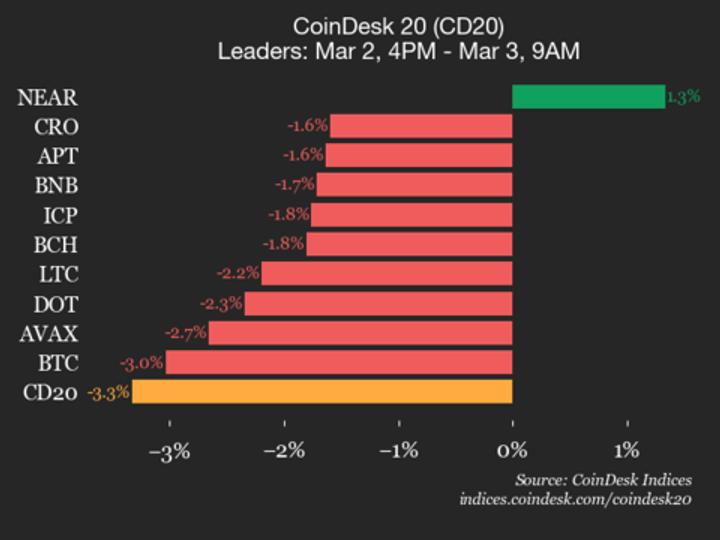
At the time of writing, ABTC shares are under $1 a share, near $0.987 a share. Bitcoin is trading near $67,000 after briefly touching $70,000 yesterday.
Both models introduce multi-step reasoning before image generation, enabling more reliable handling of complex prompts, reference images and extended editing workflows than earlier diffusion systems.
Seedream undercuts Google on price and permits local execution and real-image editing, while Nano Banana is tightly embedded across Google’s consumer and enterprise ecosystem.
Testing showed Seedream better preserved character identity and spatial consistency across multi-round edits, while Nano Banana delivered faster output and superior text rendering within images.
Two of the most capable AI image models available right now launched within days of each other this week, promising to reshape how users will create content.
Nano Banana 2—Google’s internal name for Gemini 3.1 Flash Image—dropped on February 26 and dominated the AI discourse almost immediately. It’s the successor to Nano Banana Pro, the model that became the gold standard for AI image editing after its November 2025 launch. Seedream 5 Lite, ByteDance’s newest entry in its image generation lineup, shipped a few days earlier.
While the former arrived with much fanfare from Google’s marketing machine, the latter slipped through with barely a press release. Even though the gap in coverage was immense, the difference in capability was narrower.
What’s the big deal?
Both models are built around the same core architectural idea of giving an image generator the ability to think before it draws.
That means real-time web search integration before generation even begins, as well as multi-step chain-of-thought reasoning to interpret complex or ambiguous prompts, and the ability to handle reference images across extended editing workflows.
This is a genuine shift from the generation models of a year ago, when Stable Diffusion was widely considered revolutionary.
They both output up to 4K resolution. Both support multi-image reference inputs for consistency workflows. Both can maintain visual coherence across characters and objects within a single session.
Both can generate styled, legible text inside images, though not equally well. And both entered a market that already includes GPT Image 1.5 from OpenAI, Flux.2 from Black Forest Labs, and a rapidly growing catalog of Chinese models competing aggressively on price and flexibility.
But which option is best for the end user? We tested both models to help find the answer.
Technical, price comparison
The pricing gap is the first thing to understand.
Google prices Nano through the Gemini API at $60 per million output image tokens. In practical terms, that breaks down to roughly $0.045 for a 512px image, $0.067 at 1K resolution, $0.101 at 2K, and $0.151 at 4K.
Seedream charges a flat $0.035 per image, regardless of output resolution, so at any size above 512px, Seedream is the cheaper option.
At 4K, Nano costs more than four times as much per image. For high-volume production pipelines, that compounds quickly.
Availability follows completely different distribution paths. Nano is live across Google’s full consumer and developer ecosystem, the Gemini app, Google Search’s AI Mode, Google Lens, AI Studio, Vertex AI, and Google Flow for video creation. It’s embedded in infrastructure that hundreds of millions of people already use daily.
Seedream reaches users through ByteDance’s CapCut and Jianying creative apps, through third-party API aggregator platforms, and via Dreamina, ByteDance’s dedicated image generation interface. One key distinction: Seedream can be run locally. Google does not allow this.
The platform experience is another difference to consider. Gemini is a chatbot first, an image generator second. It generates images very well and does so fast; Google’s speed claims hold up in practice.
But you’re working inside a conversational interface that wasn’t designed for iterative visual workflows.
Dreamina was built specifically for image creation. It has purpose-built tooling for reference management, multi-step editing, and composition control.
Also, Dreamina’s generation queue takes meaningfully longer than Nano through Gemini’s interface. For a quick test or a single image, Gemini gets you there faster. For sustained multi-round editing sessions, Dreamina’s structure is more coherent.
In terms of content moderation, Gemini refuses to work with real people in most scenarios—prompt it toward a likeness edit, a photo manipulation involving a public figure, or anything suggestive involving an identifiable subject, and it declines.
Seedream operates under considerably more permissive rules. ByteDance allows editing of real images and working with identifiable subjects in ways Google won’t engage with, which explains a significant portion of Seedream’s community following among content creators.
On the API specifically, both models support configurable reasoning depth. Nano lets developers set thinking levels from Minimal to High or Dynamic, allowing the model to reason through complex prompts before committing to a render.
Seedream implements chain-of-thought supervision in its architecture, thereby improving prompt fidelity for multi-constraint and spatially complex generation tasks.
Neither model makes reasoning entirely transparent to the developer, but both perform better on hard prompts than their predecessors did without it.
Character consistency: Mini campaign test
This tests whether the models can maintain a recognizable identity across multiple edited iterations of a real image. The original subject was a real couple photographed at a shopping center.
The goal was to swap their outfits and other elements in the photo across five iterations, keeping the same faces, builds, and visual identity recognizable throughout.
The Gemini chatbot refused to engage with the real photo outright—consistent with its content policy. Testing Nano Banana 2 required going through the API directly.
Nano:
Nano’s results, while visually polished, showed significant identity drift by the later iterations.
The scene geometry held—the LED tunnel environment, the tiled walkway perspective, and the background sign placement all remained coherent.
But the subjects themselves were effectively recast. By the end of the iterations, the woman was no longer the original. The man was replaced almost entirely across the iterations: different age range, different build, different facial structure, different hair.
The model produced something beautiful, but not the people who were actually there. This can be somewhat fixed if the references used for editing originals are uploaded without faces that can confuse the model.
Seedream:
Seedream performed noticeably better on identity retention across the same workflow. The woman’s facial structure, smile geometry, and head tilt stayed anchored to the source image through multiple rounds.
The man retained more of his original build and physical presence. Pose continuity between the two subjects was also better preserved—arm placement, proximity, and stance alignment remained consistent, which matters for anything that needs to feel like the same scene rather than a new one.
Small tells were present, though, in mild skin smoothing, slight waist reshaping, and overall quality degradation in the subjects.
But the couple remained recognizably the couple. For a campaign workflow where the same people need to appear across multiple creative outputs, that difference is not minor.
Outpainting and canvas extension
The outpainting test had both models extend a modern minimalist living room image to 16:9, expanding the scene naturally to the left and right while maintaining lighting consistency and spatial logic.
The prompt specified white walls, a beige sofa, a wooden coffee table, and indoor plants—a straightforward brief with clear architectural parameters.
Nano:
Nano Banana 2 produced clean, seamless results with no visible stitching artifacts or tonal banding at the original crop boundaries. Wall color, daylight balance, and floor material all remained consistent across the extension.
The lighting direction from the implied window source continued plausibly into the expanded frame. Technically, the blend was near-flawless.
But the model introduced a few elements that were not part of the scene, such as a basket on the right and a building in the background. That said, it is very impressive when compared to previous models.
Seedream:
Seedream was more basic in the original output, which made the edits easier.
The expanded left side introduced a second large potted plant and full curtain flow that felt spatially justified relative to the implied window source.
The right extended into a secondary wall, framed art, and a low wooden console, maintaining the minimalist material language throughout—light wood, soft neutrals, nothing that contradicted the original’s aesthetic rules. Lighting remained directionally coherent across the full extended frame.
Ceiling plane, pendant light placement, and floor herringbone pattern all maintained logical alignment. The room felt like a believable wider frame rather than a recomposed concept. We didn’t spot any noticeable artifact or bug.
For production contexts where spatial fidelity and architectural honesty matter, Seedream 5 Lite is the more reliable tool here. If realism matters more than fidelity, Nano Bana 2 can be the better option.
Non-realistic image generation: YouTube thumbnail test
This test moved from editing and extension into pure generative territory with a high-specificity brief: a YouTube thumbnail reading “AI IMAGE WAR” with a subtitle naming both models, a split-screen layout with large bold title text on the left, contrasting high-energy colors, and 16:9 framing.
Thumbnail generation requires accurate typography, deliberate compositional hierarchy, and immediate visual energy—all at once.
Nano:
Nano understood thumbnail grammar perfectly.
It produced a composition with oversized high-contrast typography on the left, a dramatic split-screen face-off on the right, saturated neon color clash between warm orange and electric blue, and a central lightning divider reinforcing the versus dynamic.
The title hierarchy was clean—”AI IMAGE WAR” dominated visually with stroke outlines and glow effects that hold at small mobile screen sizes.
Text rendering was accurate, with no spelling distortion, no garbled characters, and consistent kerning throughout. The faces were hyper-detailed and emotionally intense.
The visual energy was high. It looked exactly like a thumbnail designed to get clicked.
Seedream:
Seedream a different approach. Instead of photorealistic dramatic faces, it generated stylized mascots—a banana character and a glowing neural orb—to represent each model, giving the comparison a more graphic, iconographic feel.
The layout was cleaner and well-structured, with the title dominant, the subtitle clearly legible, and each model name boxed for instant scanning.
Typography was strong: clean stroke weight, readable at scale, no major artifacts. Where Nano Banana leaned into spectacle and emotional intensity, Seedream produced something less explosive, more differentiated, and scalable as a recurring visual identity.
This may be a style choice, but in our subjective opinion, for aggressive viral CTR optimization, Nano Banana 2’s cinematic intensity has the edge.
The final test measured how precisely each model followed a detailed, multi-element prompt without violating or misinterpreting any constraints.
The brief: a cinematic portrait of a 32-year-old female architect on a rooftop at sunset, wearing a beige trench coat and round glasses, holding rolled blueprints in her left hand specifically, with the city skyline slightly out of focus in the background, golden hour lighting with a soft rim light, shallow depth of field simulating a 50mm lens, vertical 4:5 aspect ratio, realistic skin texture, and subtle film grain. Every element in that list is a constraint that can fail independently.
Nano:
Nano generated a Caucasian woman looking away from the camera—a narrative choice not specified in the prompt, which hinted at a bias toward creative interpretation over strict adherence to constraints.
The beige trench coat, round glasses, and rolled blueprints in the left hand were all correctly rendered. The rooftop and blurred skyline were present and spatially convincing.
Golden-hour lighting was present, but it ran slightly cool compared to the warm tones the prompt called for. The rim light was understated rather than clearly defined. The depth of field was well executed, but the spatial compression felt closer to a 35mm to 40mm simulation than a true 50mm.
Film grain was minimal to the point of being imperceptible. Skin texture was realistic but carried the mild smoothing bias common to beauty-trained diffusion systems. Solid execution overall, with a few quiet substitutions where the model made its own choices.
Seedream:
Seedream generated an Asian woman facing the camera directly—a neutral default for a prompt that didn’t specify gaze direction.
All specified elements were present and correctly implemented. The golden-hour warmth was more physically present (probably even exaggerated), with a clearly defined rim light separating the subject from the background, matching the prompt’s intent.
Depth-of-field execution and focal compression more closely resembled an actual 50mm simulation, with natural subject-to-background proportions. Skin texture was accurate with better micro-contrast retention and fewer smoothing artifacts than Nano Banana’s output.
That said, one of the blueprints was incorrectly generated and seemed more like an artifact than a proper element in the generation.
Compositionally, Seedream’s result was more centered and technically precise, with fewer interpretive additions, but Nano Banana generated a more realistic image.
A consistency bug you may want to consider
Across extended API sessions involving a high volume of sequential generations, both models showed degradation that wasn’t present at the start of the workflow.
Seedream began producing blurry, indistinct faces on subjects that had been rendered sharply in earlier generations. Nano started losing subject identity altogether, generating characters that bore no consistent relationship to the subjects established at the beginning of the session.
Both models seemed to reduce their reasoning depth as the session length increased—as if they were spending less effort on each generation, the more they had already done.
Whether this is a deliberate computational throttle, a load-balancing behavior under heavy API traffic, or something in the architecture isn’t clear from the outside.
But it’s consistent enough to plan around in any production pipeline that runs long generation chains. Both models perform best at the start of a session. Both degrade with sustained volume.
Ideally, instead of doing consecutive iterations, ask the model for a reasonable number of edits in one single iteration to avoid degradation.
But it’s an art. Too many edits in one round lead to poor prompt adherence; too few result in the need for consecutive iterations, which degrade subject consistency.
Conclusion: Who wins?
Nano wins on text rendering, raw generation speed, ecosystem integration, and generation energy. The text accuracy is its most unambiguous advantage—no garbled characters, no inconsistent fonts, no repeated text.
It generates fast. It works across products that billions of people already use. And its world-knowledge integration, where the model searches the web before deciding what to render, produces outputs that feel editorially grounded rather than generically aesthetic.
If your workflow lives inside Google’s ecosystem, if text accuracy within images is non-negotiable, or if you need fast iteration without working with real people, Nano is the stronger tool for those specific conditions.
Seedream wins on cost, platform design, content flexibility, structural discipline in spatial tasks, and character retention across multi-step editing.
The flat $0.035 pricing makes it the practical default for any pipeline generating images at volume. Dreamina’s purpose-built interface is more coherent for sustained creative sessions than Gemini’s chatbot wrapper.
The permissive content policy opens up use cases Google won’t engage with. And for workflows that require maintaining consistent identity across multiple iterations of real subjects—the core demand of campaign work—Seedream held up better in every test we ran.
Daily Debrief Newsletter
Start every day with the top news stories right now, plus original features, a podcast, videos and more.
The Bank of Lithuania has officially supplemented the electronic money institution (EMI) licence for fintech company TransferGo.
This regulatory enhancement enables the firm to continue providing its core money transfer and payment account services, while also paving the way for new consumer product offerings. In the near future, the company plans to introduce TransferGo payment cards to residents across the European Union to facilitate everyday financial transactions.
Adapting to changing consumer needs
Daumantas Dvilinskas, co-founder and CEO of TransferGo
Daumantas Dvilinskas, co-founder and CEO of TransferGo, noted that the expanded licence directly reflects the evolving expectations of the firm’s customer base and aligns closely with its long-term strategic vision.
“Over the past decade, our clients’ needs and how they use financial services have fundamentally changed,” Dvilinskas explained. “This expanded licence will allow us to offer a broader range of services and ensure even smoother everyday operations.”
He added: “This is a strategic step in our growth, reaffirming the core mission of TransferGo: to increase financial inclusion and ensure that both private and business customers benefit from financial technologies in their daily lives.”
Sustained global growth
The licence expansion follows a period of sustained momentum for the cross-border payments company. Last year, TransferGo reached a significant milestone by welcoming its 9 millionth registered user. Concurrently, the firm has been rapidly expanding its suite of services tailored specifically for business customers.
Founded in Lithuania over 13 years ago, the global fintech now operates across 160 countries worldwide. It currently employs a workforce of more than 400 people, maintaining its main offices in London and Vilnius.
Technological deflation driven by artificial intelligence could help push Bitcoin above $10 million within a decade by pressuring central banks to keep expanding the money supply, according to a report from Strive strategist Joe Burnett.
Burnett, Strive’s vice president of Bitcoin strategy, said in a report published Monday that faster productivity gains from AI will push down prices across goods and services, squeezing margins and prompting policymakers to respond with sustained monetary expansion. His “base case” calls for Bitcoin (BTC) to reach $11 million in the first quarter of 2036, he wrote.
”My base case for Q1 2036 is $11 million per Bitcoin.”
The forecast rests on a set of aggressive assumptions, including that Bitcoin would grow to about 12% of the value of global financial assets and that global wealth would compound at 7% annually through 2036. With Bitcoin currently accounting for about 0.2% of all financial assets, this would involve an over 176-fold increase in Bitcoin’s market capitalization during the next decade to hit a monster $230 trillion.
Source: Joe Burnett
The forecast would imply that Bitcoin becomes the dominant global reserve asset along with structurally loose monetary policy over the next decade, Nic Puckrin, co-founder and lead market analyst of educational platform Coin Bureau, told Cointelegraph.
”The forecast implies Bitcoin would become around 10 times as large as the current US M2 money supply, nearly four times as large as the US equity market today, and nearly double current global GDP.”
The prediction would also imply a compound annual growth rate (CAGR) of around 53% per annum, which is not unprecedented considering Bitcoin’s average 60% CAGR between 2015 and 2024, but a slowdown may be expected due to its larger market capitalization, added Puckrin.
AI deflation engine to lead to structural monetary expansion
Burnett’s thesis centers on what he described as an “AI deflation engine,” arguing that AI-driven automation and cost reductions could create persistent deflationary pressure.
In a debt-based fiat system, sustained deflation can strain credit markets because wages and asset prices may fall while debt obligations remain fixed in nominal terms, he wrote, potentially pushing central banks and fiscal authorities to add liquidity to avoid a deflationary spiral.
Related: Bitcoin manipulation claims face pushback as ETFs snap 5-week outflow run: Finance Redefined
”Under a debt-based fiat framework, persistent deflation destabilizes credit markets because wages and asset prices decline while mortgages, corporate loans, and sovereign debt remain fixed in nominal terms,” Burnett said.
”As AI drives real-economy deflation, central banks and fiscal authorities expand liquidity to prevent a deflationary spiral.”
M2 money supply vs CPI chart. Source: Joe Burnett
Burnett said this will lead to a persistent increase in money relative to the supply of scarce assets.
Related: Solo Bitcoin miner bags over $200K block reward using rented hashrate
Emergence of digital credit set to bolster Bitcoin demand
The report also points to what Burnett calls the emergence of “digital credit” models promoted by firms such as Strategy, the largest corporate Bitcoin holder.
Digital credit provides US dollar income to investors through publicly traded securities backed by large Bitcoin balance sheets issued by treasury firms as a means to raise capital to acquire more Bitcoin.
Digital Credit liquidity flywheel. Source: Joe Burnett
Burnet foresees digital credit products creating a ”reflexive loop” between global yield demand and Bitcoin accumulation, marking the ”early stage of a credit system built on verifiably scarce money.”
Still, the $11 million forecast stands well above most bullish scenarios that use shorter time horizons. For instance, ARK Invest predicted a 2030 Bitcoin price target of $1.5 million in the company’s bull case and a $300,000 price target in the bear case, Cointelegraph reported in November 2025.
Magazine: Bitcoin’s ‘biggest bull catalyst’ would be Saylor’s liquidation — Santiment founder
Cointelegraph is committed to independent, transparent journalism. This news article is produced in accordance with Cointelegraph’s Editorial Policy and aims to provide accurate and timely information. Readers are encouraged to verify information independently. Read our Editorial Policy https://cointelegraph.com/editorial-policy
I went to Strategy World last week. On the Bitcoin side, this conference might as well have been called “Stretch World.” STRC (Strategy Variable Rate Perpetual Stretch Preferred Shares) was the main item of discussion. SATA, another variable rate digital credit instrument issued by Strive, was also frequently mentioned.
Here are my thoughts, mainly addressed for institutional investors, corporations, operators, and analysts in the Bitcoin space
The Most Efficient Bitcoin Onramp
Strategy has decisively gone all-in on STRC, aiming to turn STRC into the biggest success story ever. The widespread adoption of STRC is potentially the most effective vector for Bitcoin adoption ever. To really understand why, we need to understand two things.
First, STRC’s value proposition is very easy to communicate to anyone within 10 seconds. Even though Strategy is probably not going to pitch it this way, most informed people think of STRC as a high yield cash alternative. Note that “cash alternative” and suggestions of being a “money market fund” incurs certain legal baggage from the use of such terminology.
But this is largely the economic effect of STRC, since it is designed to trade very close to its $100 par price while throwing off high yields (now 11.5%, though this is a variable rate instrument so it will change). Compare this very simple value proposition—high yield cash surrogate—to that of bitcoin’s. The median individual (and I’d argue up to 90% of individuals) will choose STRC over bitcoin. In fact, STRC does something that the spot Bitcoin ETFs never could, because STRC turns bitcoin into something that better meets the everyday needs of most people.
The second point is that Strategy uses the dollars raised by selling STRC to buy bitcoin, so someone buying STRC from Strategy’s ATM offering is effectively causing that money to go into bitcoin. Of course, we must not get the idea that every dollar invested in STRC is a dollar invested in bitcoin, since it is possible for one to buy the STRC shares from another STRC holder, who will likely not use that money to buy bitcoin. The point is that STRC opens the bitcoin market to buyers who would not consider or understand the value proposition of bitcoin.
Taken together, I believe STRC is the most efficient bitcoin onramp ever created. It may not be the onramp that most OG Bitcoiners imagined, but it is ultimately the one that works for the most people that can attract the most capital.
The capital STRC is drawing in is honestly pretty insane. It was the largest IPO in 2025. And it was a preferred stock! Since then almost an additional billion dollars have been issued via the ATM program. The ATM issuance makes up for 19% of STRC shares outstanding today. Over $3 billion has flowed into bitcoin thanks to STRC.
At Strategy World, multiple companies announced they were using STRC as a treasury asset. This should not be surprising. Corporations need to park working capital and STRC is easily the best risk-adjusted vehicle for doing so. Corporations have bought each other’s commercial paper for a long time, but the yields on these are low and there is no tax advantage.
STRC fixes this. It’s the best bitcoin onramp because it is palatable to the highest number of entities.
Layer 3 and Digital Money
To me, BTC is already digital money, and Layer 3’s and Layer 2’s denote technical infrastructure to scale the portability of BTC (ie. Lightning or Ark). So this terminology has always seemed problematic to me, but it is what is used (and likely what will stick) so we will just roll with it.
Saylor calls bitcoin “Digital Capital”. This is Layer 1. On top of that, STRC and SATA and other credit instruments issued by Bitcoin treasury companies would be Layer 2, or “Digital Credit”. Digital Credit strips away the risk and upside of bitcoin, and the excess risk and upside is absorbed by the common equity. The structure, as we covered above, provides an optimized form of indirect bitcoin exposure that is more palatable to the median investor.
Finally, using Digital Credit, one could create “Digital Money” or Layer 3. Digital Money, under this framework, is effectively a savings account or stablecoin token or fund that has stripped the volatility to nearly 0 while passing off much of the yield from Digital Credit. This can be done using a number of different techniques that involve risk management, buffers, and tail hedges, but I will not elaborate here. The core challenge of creating these seems to be in choosing the optimal structure that balances legal compliance with profitability for the Layer 3 issuer. The actual trading and risk management is trivial.
Layer 3 is so interesting because it is probably how Digital Credit gets an order of magnitude boost in its distribution and addressable market.
You see, even though some people would like to hold STRC or SATA, they might not be able to because they are unbanked or lack a U.S. brokerage account. They might also find the possibility of the last bit of volatility unpalatable. The Digital Money concept could address both of these pain points, and bring bitcoin to many more marginal pools of capital. The endgame would be if Digital Money can be used as a spending account, where users and merchants can pay and be paid in Digital Money.
In the extreme long run, assuming ample distribution of Layer 3 Digital Money and minimal market frictions, the nominal return of these Digital Money instruments would probably converge with the bitcoin CAGR, which would permanently close the bitcoin-fiat carry trade done by Bitcoin treasury companies. This to me is the most likely form of Hyperbitcoinization.
Companies that are working on Layer 3 solutions deserve a close look from VC.
(Levered) Digital Credit as a Risk Parity Sleeve
Risk parity is a portfolio strategy popularized by Ray Dalio years ago at Bridgewater. It aims to equalize the risk contribution of different assets, taking advantage of the diversification free lunch offered by holding de-correlated assets. The idea is that if bonds generate a third of the volatility of stocks, then a risk parity strategy might go 3x long bonds so that the contribution of portfolio risk from the bonds is identical to that of stocks (we are missing some covariance math here, but this is the gist).
Risk parity basically levers up the least volatile and most uncorrelated assets so that it can serve as a cushion or return driver, depending on market regimes. Some readers might recognize that this is related to the “all weather portfolio” concept. Even though risk parity has its faults (the whole thing is synthetically short volatility and short correlation, which introduces fragility at tails), it has found a place amongst asset allocators.
Digital Credit is very non-volatile. If STRC behaves like the instrument it is engineered to be, then its realized volatility should look closer to short-duration credit than to equity, long-term bonds, or commodities. In short, cash-like but with positive real returns.
A risk parity allocator can then scale up STRC exposure without blowing up portfolio volatility. And unlike cash or front-end T-bills, STRC delivers meaningful positive carry while staying price-anchored to par. In short, it is an excellent supplement to a risk parity portfolio’s credit allocation.
Leveraged Digital Credit as a fund concept was mentioned in a presentation, along with “buffered” Digital Credit (for instance a 50/50 split between STRC and T-bills for lower yield but less volatility). Both have potential.
A Secondary Market Carry Trade
One interesting trade that can be done in this context is to borrow at lower rates and buy Digital Credit yielding higher rates. The simplest implementation is via margin at a brokerage. Given a margin rate of 8% compounded daily, STRC that pays 11.5% with monthly dividends can still earn a positive carry after paying for the margin. Margin debt is ultra-low duration and callable, so one cannot be too levered up on it or else a bigger dip in the STRC price might lead to a margin call and liquidation.
It might be possible to pair trade SGOV and STRC to earn the spread, but this depends on borrow rates for SGOV.
I think a better way is to finance with box spreads. This gives a cost of capital at near the risk free rate, and it is a “bullet bond” rate that is paid at maturity (expiry of the box spread). This carry trade done by retail and institutions alike in the secondary market is sure to bring more liquidity and opaque leverage to the ecosystem. Long term opportunity, and also risks worth watching.
Digital Ouroboros and Incestuous Credit
Here is a concept I heard at the conference:
“Imagine if Strategy bought SATA for its cash reserves and Strive bought STRC for its cash reserves. Both sides have more yield right? More value is created!”
At this point we are probably getting into the realm of things we should not do. Cash reserves are meant to give the perception that dividends will be supported even if the company has hard times (read: Bitcoin bear market). Unfortunately, if the cash reserve is in Digital Credit which sells off and de-pegs in a Bitcoin crash, then the reserve wouldn’t really be much of a reserve.
Also, keep in mind that the cash reserve is partly responsible for a perception of mitigated risk, which compresses credit spreads. If the reserve was in fact not able to mitigate risk of Digital Credit because the reserve was itself Digital Credit, then the Digital Credit instrument that is supposed to be supported by the reserve will also fail more quickly under stress.
Like the snake who eats its own tail and consumes itself.
I don’t foresee such incestuous credit use in the major issuers, but something like this might appear in smaller treasury companies that are desperate for more income. Using STRC for working capital is one thing (and suitable in most cases). A cash reserve meant to protect credit investors is a different thing. This is perhaps another possible risk worth watching.
An interesting thought would be a sufficiently tail hedged Layer 3 being the reserve. As long as downside correlation to BTC is removed, it probably works.
Conclusion
Strategy World was wonderful. I highly recommend it.
Disclaimer: This content was written on behalf of Bitcoin For Corporations. This article is intended solely for informational purposes and should not be interpreted as an invitation or solicitation to acquire, purchase or subscribe for securities.
Ether’s (ETH) rally stalled late Monday just above $2,000 due to stiff overhead resistance, as the technical setup suggested that downward momentum would increase if the ETH/USD pair breaks below $1,800.
Key takeaways:
ETH price must hold above $1,800 to avoid another leg down.
Ether’s bearish charts and onchain indicators converge on ETH prices below $1,500.
ETH price: $1,800 remains a key level to watch
Ether’s cost-basis distribution heatmap shows strong support recently established around $1,800. This is where about 1.23 million ETH were acquired at an average price of $1,890 over the last 30 days.
ETH: Cost basis distribution heatmap
This area is now a strong support for ETH, which, if broken, would likely see the price retest February’s lows.
Related: Ether is 60% down from its 2025 high, but TradFi keeps betting on ETH: Here’s why
CoinGlass data shows short liquidations of over $120 million over the past two days, clearing overhead leverage. Now, $624 million in cumulative long liquidation exposure sits above $1,800, forming a liquidity pocket below the spot price.
ETH exchange liquidation map. Source: CoinGlass
CryptoQuant analyst Maartunn spotted 67,000 ETH, worth about $130 million, sitting just below the spot price, reinforcing the significance of this support zone.
ETH liquidation heatmap. Source: X/Maartunn
ETH price triangle pattern targets sub-$1,500
From a technical point of view, the $1,800-$1,900 support zone coincides with the lower trend line of a symmetrical triangle on the daily chart.
If the bearish momentum persists, the ETH/USD pair might drop below the lower boundary of the triangle at $1,850 to test support at $1,750, the multi-year low reached on Feb. 6.
Below that, ETH could drop toward the measured target of the triangle at $1,400, 28% below the current price.
Meanwhile, Ether’s MVRV extreme deviation pricing bands suggest that ETH price still has room to drop before the unrealized profit held by investors reaches an extreme level, or around $1,650, as shown in the chart below.
During past bear markets, ETH has always bottomed below the lowest MVRV band, as seen in 2018 and 2022.
If this happens again, the ETH price bottom may be below $1,650 during the current cycle, aligning with the aforementioned symmetrical triangle target.
This article does not contain investment advice or recommendations. Every investment and trading move involves risk, and readers should conduct their own research when making a decision. While we strive to provide accurate and timely information, Cointelegraph does not guarantee the accuracy, completeness, or reliability of any information in this article. This article may contain forward-looking statements that are subject to risks and uncertainties. Cointelegraph will not be liable for any loss or damage arising from your reliance on this information.
Taranis Capital has launched its first exclusive, invitation-only Global Investor Newsletter. Created in response to sustained demand from investors across multiple jurisdictions, the new communication channel is designed to provide deeper insight into the firm’s expanding platform and fund activations.
Supporting high-growth verticals
The initiative arrives as Taranis Capital progresses toward the full operational fulfilment of its flagship funds. These funds span several high-growth verticals, including Data Centres, Biotech, Disruptive Technology, Green Biotech, and Real Estate. Through the newsletter, the leadership team will provide selected investors with direct, structured, and timely intelligence.
To preserve confidentiality, alignment, and strategic positioning, distribution of the newsletter will remain strictly controlled. Access is strictly limited to qualified and sophisticated investors, institutional partners, and select family offices.
Those granted access to the curated communication channel can expect to receive:
Strategic updates regarding fund activations and capital commitments.
Sector-specific market intelligence covering the GCC, UK, Europe, and Asia corridors, alongside regulatory and structural milestones.
Visibility into the firm’s portfolio pipeline.
Executive commentary and forward-looking outlooks.
Strengthening investor relations
Nicholas S. Bingham, founding partner and CEO of Taranis Capital
Nicholas S. Bingham, founding partner and CEO of Taranis Capital, commented on the strategic value of the launch: “The launch of our invitation-only Global Investor Newsletter reflects both the strength of our investor relationships and the significant momentum we are experiencing as we approach full fund activation. We are committed to providing clarity, transparency, and strategic insight to those aligned with our long-term vision. This platform ensures our global investor community remains informed, engaged, and positioned alongside us as we scale.”
Regulated by the Dubai Financial Services Authority and based in the Dubai International Financial Centre, the firm noted that this initiative reinforces its commitment to disciplined communication, governance transparency, and strategic alignment as it enters its next phase of growth.
Bybit said it blocked or disrupted more than $300 million worth of suspected scam-related withdrawals in the fourth quarter of 2025 after rolling out an AI-assisted risk monitoring system designed to flag malicious transactions before funds leave the exchange.
In a company blog post, Bybit said its system flagged about $500 million in withdrawal requests during the quarter and that more than 4,000 users were “protected” after the platform issued real-time risk alerts or blocked transactions outright.
Bybit’s head of group risk control, David Zong, told Cointelegraph that much of the $300 million total reflects withdrawals users voluntarily cancelled after seeing warnings, meaning the funds remained in their accounts rather than requiring clawbacks or reimbursement.
“Because the withdrawals were stopped prior to completion, the funds did not require recovery or reimbursement. They remained in users’ accounts at all times.”
Bybit said the system also identified 350 high-risk investment fraud addresses that shielded 8,000 users from potential withdrawal losses during the previous quarter. It also thwarted over three million credential stuffing attacks attempted by hackers throughout 2025.
Source: Bybit
Cryptocurrency hacks resulted in $3.4 billion in losses during 2025, as hackers turned their focus to large crypto entities.
How the risk framework works
Bybit’s internal risk detection system aims to prevent fraudulent withdrawal attempts before a malicious transaction occurs.
Related: White hat helps recover $1.8M after $2.3M Foom Cash exploit
Withdrawals flagged as high-risk are either issued a warning prompt or have the transaction blocked in real-time, depending on the severity of the case.
The triple-tied theft prevention framework relies on exchange data to flag unusual patterns such as mass withdrawals, allowing Bybit’s operations team to preemptively blacklist dangerous destination addresses.
Crypto industry needs pre-emptive security measures
Cybersecurity experts have called for the industry to adopt real-time, AI-powered threat monitoring systems to fend off cybercrime.
Implementing AI-based anomaly detection may help the industry to defend against hackers infiltrating companies to steal funds or sensitive data, Deddy Lavid, co-founder and CEO of blockchain cybersecurity company Cyvers, told Cointelegraph last year.
Related: Suspected insider wallets rack up $1.2M betting on ZachXBT’s Axiom exposé
A Coinbase data breach in May 2025 exposed the wallet balances and physical locations of about 1% of the exchange’s monthly users, costing the exchange up to $400 million in reimbursement expenses.
Magazine: Thailand’s ‘Big Secret’ crypto hack, Chinese developer’s RWA tokens: Asia Express
Cointelegraph is committed to independent, transparent journalism. This news article is produced in accordance with Cointelegraph’s Editorial Policy and aims to provide accurate and timely information. Readers are encouraged to verify information independently. Read our Editorial Policy https://cointelegraph.com/editorial-policy
ACI’s exit escalates that debate, particularly as other major contributors like BGD Labs recently announced plans to leave by April 2026 amid governance friction.
The Aave Chan Initiative (ACI), one of the largest delegated service providers in the Aave governance ecosystem, has announced it will wind down its engagement with the Aave DAO and depart the protocol over the coming months, marking a significant escalation in ongoing governance tensions.
In a governance forum post published March 3 by Marc Zeller, founder of ACI, the organization confirmed that it will not seek renewal of its contract with Aave DAO and will begin a four-month wind-down of operations with a focus on transferring infrastructure and responsibilities back to the DAO or successor teams.
“The Aave Chan Initiative was built for Aave. Without a future in the Aave ecosystem, the name no longer applies,” Zeller wrote, explaining that the decision stems from what he sees as structural breakdowns in the governance process.
ACI said its work included driving 61% of all governance actions, revenue strategies responsible for nearly half of the protocol’s income, and over $100 million in incentives deployed over three years.
Governance Accountability and Structural Concerns
In his statement, Zeller cited a series of events that undermined ACI’s ability to operate effectively, including what he characterized as a governance process that failed to apply consistent transparency and accountability standards to the largest budget request in DAO history.
“We spent three years building a culture of accountability inside the Aave DAO… When we applied those same standards to the entity requesting the largest budget in DAO history, the system stopped working,” Zeller said.
In a separate post, he argued that the “Aave Will Win” Temp Check vote cleared its preliminary stage thanks to Aave Labs–linked voting power, even as most other tokenholders had rejected the proposal.
ACI’s departure follows a broader debate inside the Aave community over revenue allocation, service provider roles, and the balance of power between independent delegates and core contributors such as Aave Labs. ACI’s exit escalates that debate, particularly as other major contributors like BGD Labs recently announced plans to leave by April 2026 amid governance friction.
Transition and Handover
Despite announcing its exit, ACI said it will ensure a “graceful transition” of its systems and tools to the DAO before its contract expires. This includes handing off governance infrastructure, documentation for incentive programs, and ongoing commitments.
ACI also plans to submit a governance proposal to cancel its existing GHO revenue stream and transfer the remaining vesting to the DAO treasury to ensure continuity after departure.
Implications for Aave
ACI’s departure represents a rare and notable exit from the ecosystem by a delegate that has historically played a central role in shaping protocol strategy, incentive design, and governance tooling. Its exit, coupled with other service provider changes, may force the wider DAO to reassess how it structures governance oversight and balances power among contributors.
As the DAO prepares for next phases of major proposals and technical upgrades, ACI’s winding down adds pressure to ongoing debates about decentralization, accountability, and the future of Aave’s governance model.