JPMorgan Chase CEO Jamie Dimon said banks want stablecoin issuers that pay interest on customer balances to face the same rules as traditional lenders, sharpening an ongoing debate over U.S. crypto legislation.
In an interview with CNBC on Tuesday, Dimon addressed reported tensions with Coinbase CEO Brian Armstrong, who pulled support for the proposed CLARITY Act just one day before the Senate Banking Committee was scheduled to vote on it. Dimon argued that there needs to be a line between rewards paid on transactions and interest paid on stored balances.
“Rewards are the same as interest,” Dimon said. “If you are going to be holding balances and paying interest, that’s the bank. You should be regulated by a bank.”
Banks would accept a compromise in which crypto platforms offer rewards tied to transactions, he said. But firms that function like deposit-taking institutions should meet the same standards as banks, including capital and liquidity rules, anti-money laundering controls and federal deposit insurance requirements.
Dimon framed the issue as one of fairness and safety.
“Level playing field by product,” he said, arguing that companies offering similar financial services should operate under similar oversight. Without that parity, he warned, risks could build outside the regulated system. Armstrong, on the other hand, has said he believes that banks should be forced to compete instead.
Dimon, however, stressed that JPMorgan does support competition and uses blockchain in its own operations. The bank has developed a deposit token and processes payments and data transfers on distributed ledger systems. “We’re in favor of competition,” he said. “But it’s got to be fair and balanced.”
He also pointed to the broader compliance burden banks carry, from anti-money laundering checks to community lending obligations. Those requirements, he said, are designed to protect the financial system.
“For the safety of the system, not just the fairness of competition,” Dimon said.
The debate over stablecoin oversight has become a central issue in Washington as lawmakers weigh how to regulate digital assets without pushing activity into less transparent corners of the market. Lawmakers are reviewing new draft language circulated by the White House, though the banking and crypto industries have yet to reach agreement on whether stablecoin issuers should be allowed to offer yield on customer balances.
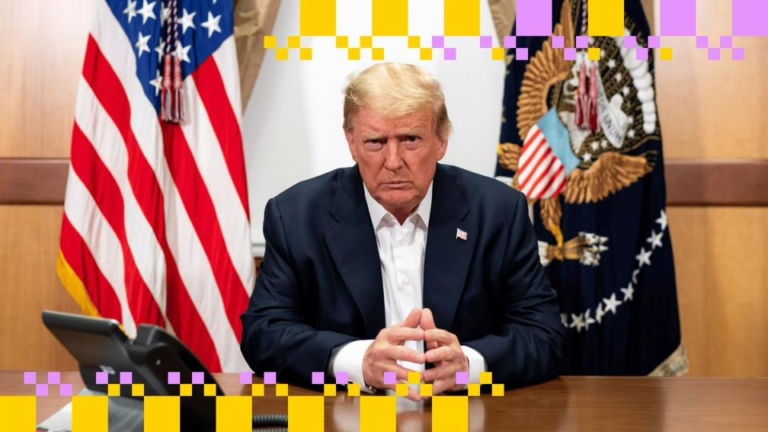
US President Donald Trump has taken a shot at banks for stalling the crypto market structure bill from advancing in the Senate over stablecoin yield payments.
“The Genius Act is being threatened and undermined by the Banks, and that is unacceptable — We are not going to allow it,” Trump posted on his Truth Social platform on Tuesday, mentioning the GENIUS Act that Congress passed in July to regulate stablecoins.
“The U.S. needs to get Market Structure done, ASAP,” he added. “The Banks are hitting record profits, and we are not going to allow them to undermine our powerful Crypto Agenda that will end up going to China, and other Countries if we don’t get The Clarity Act taken care of.”
Trump has touted the GENIUS Act as his crowning achievement to attract crypto companies to the US. The law gives stablecoin issuers a path to regulation, but bans them from directly offering yield payments to holders.
However, third-party platforms such as crypto exchanges can still offer yield to users who hold stablecoins.
Banking groups have argued that it is a legal loophole and are pushing for the Senate’s crypto market structure bill to include a ban on all stablecoin yield payments. The House passed its version of the bill, called the CLARITY Act, in July.
“The Banks should not be trying to undercut The Genius Act, or hold The Clarity Act hostage. They need to make a good deal with the Crypto Industry because that’s what’s in best interest of the American People,” Trump said.
Source: Donald Trump
Crypto executives and lobbyists have resisted the banks’ efforts to include a ban on stablecoin yield payments in the bill, with major lobbyist Coinbase pulling its support for the legislation in January over the issue.
The legislation has since been stalled as the Senate Banking Committee postponed a markup on the bill after Coinbase withdrew support in January, and has yet to set a date to review the legislation.
Banking groups have said that stablecoin yield payments would see money move from bank accounts to stablecoins and risk the stability of the banking system.
Related: What’s at stake for crypto as 3 US states kick off party primaries?
Crypto and banking groups have had three meetings at the White House this year to agree on language that could move the bill forward, but no deal has been reached yet.
Trump is pushing to have the bill passed as a policy win to take to the midterms in November, where crypto lobbying groups have raised more than $200 million to back those supportive of the industry.
Hill says Senate should consider passing House bill
Representative French Hill, a senior Republican and chair of the House Financial Services Committee, said at an event on Tuesday that the Senate should consider passing the House’s version of the crypto bill if it can’t move forward with its own.
Hill said the House’s CLARITY Act had “reasserted the language in [the GENIUS Act] on a bicameral, bipartisan basis, that stablecoins were a payment device on a blockchain and not an investment device, that they would not pay interest, per se.”
“If the Senate can’t come to a straightforward conclusion here, I recommend they use the language that we have in the House-passed Clarity Act with 78 Democratic votes on it, and use that as the solution,” he said.
Magazine: How crypto laws changed in 2025 — and how they’ll change in 2026
Cointelegraph is committed to independent, transparent journalism. This news article is produced in accordance with Cointelegraph’s Editorial Policy and aims to provide accurate and timely information. Readers are encouraged to verify information independently. Read our Editorial Policy https://cointelegraph.com/editorial-policy
Segregated Witness (BIP by Pieter Wuile, Eric Lombrozo, and Johnson Lau) and Taproot(BIPs by Pieter Wuille, Jonas Nick, Tim Ruffing, and Anthony Towns) are the two largest changes ever made to the Bitcoin protocol.
The former fundamentally changed the structure of Bitcoin transactions, and in the process Bitcoin blocks, to address inherent limitations of the previous transaction structure. The latter rearchitectured some aspects of Bitcoin’s scripting language, how complex scripts are structured and validated, and introduced a new scheme for creating cryptographic signatures.
Those are both massive changes in comparison to say, adding a single opcode like CHECKTIMELOCKVERIFY (CLTV) that does nothing more than allow the receiver to opt into preventing their coins from moving for a certain amount of time.
These changes were made to address very real shortcomings and limitations of Bitcoin as a system. As a foundational layer to maintain a global consensus on the overall state of Bitcoin, i.e all the unspent coins, Bitcoin is an invaluable and brilliant innovation. As a means to directly enable everyone to transact with those coins, it is woefully inadequate to the task.
In the years since Segregated Witness and Taproot activated, many of the shortcomings they addressed have been forgotten. The reasons and rationale behind the design decisions have been distorted in a game of telephone as time passed as well.
Both of these changes to the Bitcoin protocol were solutions to large problems in their own right, but they also each laid the groundwork for solving other problems or making other improvements in the future.
At a time where many new people have joined the network since these changes activated, it is worth going back over and contextualizing the design choices.
Segregated Witness (BIP 1411)
When a Bitcoin transaction spends coins, it references them by the output index and transaction ID (TXID) of the transaction that created them. This ensures that a transaction’s inputs can be uniquely identified and be verified with absolute certainty to have never been spent before.
Prior to Segregated Witness, a transaction structure looked like this:
[Version] [Inputs] [Outputs] [Locktime]
The TXID is a hash of this data. The problem is the ScriptSig (the signatures, hash preimages, etc.) that prove the transaction is valid are part of the inputs. You can change the little program instructions in a ScriptSig, or even change the cryptographic signatures themselves without invalidating them.
These “malleations” change TXIDs. This is a big problem for pre-signed transactions.
The Lightning Network, Ark, Spark, BitVM, Discreet Log Contracts (DLCs), all of these scaling tools depend on pre-signed transactions. They require creating an unsigned funding transaction, and pre-signing all the transactions that guarantee proper execution and safety of funds before signing and confirming the funding transaction. All of these systems use multisignature authentication to guarantee safety regarding double-spending (this will be important later).
If that funding transaction is malleated, and its translation ID changed before it is confirmed in a block, then all of the pre-signed transactions securing second layer funds are invalidated. None of these tools work in an environment where anyone can alter your funding TXID as it propagates across the network.
Segregated Witness uses an undefined opcode as a sort of blinding curtain where the ScriptSig previously was in the inputs, and moves all of that data to a new transaction field called the “witness.” The new transaction structure looks like this:
The “blinding curtain” in the inputs allows old nodes to just mark everything behind it as valid by default, and newer nodes to actually apply the appropriate validation logic. A traditional TXID will now no longer change due to altering ScriptSig data in the witness. This solved the problem for pre-signed transactions, and opened the door to every scaling solution being built today that uses them.
But the transaction merkle tree in a block header only commits to the traditional TXID of a transaction, this creates a problem. There is no commitment to any witness data in a block. This requires the witness commitment, and the witness transaction ID (WTXID). Much the same way that the normal merkle tree of TXIDs is constructed, a tree of each transaction’s WTXID is constructed and committed to in the coinbase transaction’s witness.
The only difference is the root of the tree is hashed with a reserve value, and that is what is included in the coinbase witness. This allows for that value to be used in future for committing to other new data fields in consensus rules. Prior to the invention of this witness tree commitment (which was thought of by Luke Dashjr), it was assumed Segregated Witness would require a hardfork due to the transaction structure change and the need for a separate witness commitment in the block header.
The “blinding curtain” design also allows arbitrary upgrades to the scripting system because all new data is ignored and not validated by nodes not supporting it. This allows a new script system to bypass all restrictions of the legacy script system. Flexibility in upgrade paths here is what allowed Schnorr signatures to be integrated, and will allow quantum resistant signatures if necessary (quantum resistant public keys are generally larger than the legacy 520-byte data item limit, as are signatures).
Segregated Witness solved the fundamental problem of transaction ID malleability that was holding back the development of scalable second layers that can bring Bitcoin to more users, but it also laid the groundwork for whatever scripting improvements were necessary to support and improve those second layers.
Schnorr Signatures2
Schnorr signatures were invented in 1991 by Claus Schnorr, and promptly patented. In fact, the ECDSA signature scheme was invented because of the patent on Schnorr signatures. The patent on Schnorr signatures expired in February 2010, a little more than a year after the launch of the Bitcoin network.
If it weren’t for the patent, it is likely that Satoshi (and the rest of the world) would have just used Schnorr signatures from the start.
There are a few major benefits that Schnorr signatures have over ECDSA:
Schnorr signatures are provably secure. The mathematical proof that Schnorr signatures are unforgeable/unbreakable is much stronger, and makes less assumptions, than that for ECDSA. Having stronger security guarantees for the cryptography that rests at the heart of Bitcoin is obviously a huge positive.
Schnorr signatures are inherently non-malleable, meaning that the types of issues with ECDSA that allowed altering a signature without invalidating it are simply not possible with Schnorr signatures.
Schnorr signatures have a linearity that allows for simple and efficient additive key construction, distributed key generation, and distributed signature generation. This allows users to simply “add” individual Schnorr public keys together, and produce signatures for those aggregate public keys together as a group.
They’re more secure, not malleable by third parties, and open the door to all kinds of efficient and flexible cryptographic schemes to improve multisignature authentication.
Earlier when discussing transaction malleability I mentioned that everything building off-chain using pre-signed transactions depended on multisignature authentication to secure user funds. This created an implicit scaling ceiling when it comes to shared control of funds. Legacy multisig can only be so big. There are transaction size limits, and for version 0 (Segregated Witness) witnesses, there is a witness size limit. Only so many participants could join a multisignature address, so implicitly only so many participants could share control of funds.
Schnorr based multisignature schemes escape this limit by aggregating public keys into a single group public key rather than constructing a script with each member key explicitly included individually. Prior to Segregated Witness a multisignature address could only have 15 participants, after Segregated Witness the maximum size possible was 20 participants.
With Schnorr based multisignature schemes like MuSig5 and FROST6 these limitations don’t exist, at least at the consensus level. Multisignature scripts can be as large as users want as long as it is practical to coordinate the signing process within a group of the chosen size without disruption or refusal to participate.
The same properties that allow key aggregation like this also allow for efficient adaptor signatures, a scheme that allows someone to produce a signature that remains invalid until after a secret piece of information is revealed. Those properties also allow for a zero-knowledge proof powered scheme for a signer to produce a signature over a message they cannot see.
Taproot3,4
Taproot is an evolution of an old concept called Merkelized Abstract Syntax Trees (MAST)7, which is itself a kind of extension of Pay-to-script-hash (P2SH)8. P2SH was originally created to deal with two major problems:
When using large custom scripts, the resulting unspent output is larger, requiring more space to store in the UTXO set.
When using large custom scripts, the sender pays a higher fee, as the payment output in their transaction is larger, thereby disincentivizing people from paying potentially more secure custom scripts.
Rather than explicitly include the entire script in the output, a hash of that script is included instead, and at spending time the recipient must provide the entire script in the input being spent to be verified against the hash. This solved the problem of unspent output storage space, and puts the cost of using larger scripts on the person using them rather than those sending them funds.
This still leaves a problem. Custom scripts can include multiple ways to spend them, but at spending time the user must still reveal the entirety of the script, including script branches that are not necessary to verify the condition under which the coin is actually spent. This is incredibly space inefficient, and leaves the spending user with a higher cost than is necessary.
The idea behind MAST is to take each individual spending condition in a multi-branch script and separate them, constructing a merkle tree of each individual spending path. Each path is then hashed, and the root of that merkle tree is the user’s address. At spending time the user simply provides the spending path they are using along with the merkle proof that it is a leaf in the tree, along with the data necessary to satisfy that script.
This merkle tree structure solves all the same problems as P2SH, as well as optimizing the spending costs of the MAST user (and improves their privacy as well!).
Taproot takes this concept and integrates in a more privacy-preserving way by taking advantage of the linear properties of Schnorr signatures. Most types of contracts people want to build are going to have an optimistic outcome, where both users simply agree on how to disperse funds. In such cases they can just sign a transaction. Taproot takes the MAST root and “tweaks” a Schnorr public key, resulting in a new public key. By “tweaking” the private key with the same MAST root, you arrive at the corresponding private key to the new public key.
Users can now either simply spend an output using that tweaked key, leaving no trace that a MAST tree is present at all, or reveal the original public key and MAST root along with the spending path they are actually using. As well, if you wish to not include a key path, a special NUMS (Nothing Up My Sleeve) value which is provably unspendable can be used instead of a normal public key, leaving only MAST scripts as valid spending paths.
Taking advantage of the design choices of Segregated Witness, Taproot also introduced tapscript, a new scripting system. The major changes here are deactivating OP_CHECKMULTISIG and OP_CHECKMULTISIGVERIFY. They are replaced with OP_CHECKSIGADD, which allows a more efficient way to verify multiple signatures. This in combination with Schnorr key aggregation allows the same multisignature functionality as legacy script.
Tapscript additionally modifies OP_CHECKSIG and OP_CHECKSIGVERIFY to only work with Schnorr signatures, and introduces OP_SUCESS as a replacement for OP_NOP (undefined opcodes in legacy script). OP_SUCCESS is designed to allow cleaner and safer opcode upgrades than OP_NOP.
Witness Limits
Two aspects have been left undiscussed until now. The blockweight limit introduced in Segregated Witness, and the witness size limit increase in Taproot.
Both of these decisions have become a point of contention among a very active minority of power users in the ecosystem. I won’t be discussing the blocksize increase that was part of introducing the blockweight limit, this was a compromise at the time with dissenting users pushing for a hardfork blocksize increase and deemed safe by network participants at the time; but the dynamic of the witness discount itself is important.
Bitcoin transaction fees are based on the amount of data in a transaction. This has no relationship to the amount of value being transferred. It is solely the number of inputs and outputs (and witnesses) and how many bytes of data they are. Recall earlier I mentioned the fact that the ScriptSig, or signatures and other data, were included in the transaction inputs prior to Segregated Witness. This is a large amount of data included in inputs that is not included in outputs.
That means inputs are more expensive than outputs in a transaction, and by a wide margin. This creates a long term incentive for users to also prefer spending large outputs and creating new change ones as opposed to collecting and spending lots of smaller outputs. This is a long term economic incentive encouraging users to perpetually grow the UTXO set which is necessary for all fully validating nodes.
The witness discount is meant to correct that price margin, making it miniscule as opposed to massive. This is incredibly important to economically incentivize responsible UTXO management, at least in vacuum for economically rational users simply transacting.
Taproot removed existing size limits on the witness field of a transaction. In Segregated Witness that limit was 10,000 bytes. This was done because the design of Taproot mitigated the potential construction of expensive to verify transactions, and trying to introduce such limits in tapscript introduced a large degree of complexity in Miniscript. The problem such limits existed to prevent did not impact Taproot, and it introduced complexity for a tool meant to make custom scripts safer and more accessible for both developers and users.
The Big Picture
Both of these changes to Bitcoin removed massive roadblocks to scaling it so more people can use it in a self-custodial way, but they necessitated similarly massive changes to fundamental parts of the protocol.
I hope now that readers previously unfamiliar with all of these design choices, and the rationale behind them, can appreciate the care and forward-thought with which they were designed. Bitcoin is an amazing innovation, it truly is, but it cannot provide its benefits to anything remotely approaching a sizeable percentage of the population.
Segregated Witness and Taproot laid two cornerstones in the foundation that were absolutely necessary in order to attempt to address Bitcoin’s scalability shortcomings. Without these two proposals, or some alternative protocol changes that addressed the same problems, all of these growing scalability layers and systems we have today would not be here.
Lightning, Ark, Spark, BitVM, DLCs – none of them would be possible to build.
That is the big picture. The Bitcoin of today isn’t perfect, but it actually stands a good chance of scaling to a meaningful enough group of people to make a real impact on the world, to offer a true alternative to people looking to opt out. That is because of these two protocol upgrades, and the very fundamental barriers they removed.
Get your copy of The Core Issue today!
Don’t miss your chance to own The Core Issue — featuring articles written by many Core Developers explaining the projects they work on themselves!
This piece is the Letter from the Editor featured in the latest Print edition of Bitcoin Magazine, The Core Issue. We’re sharing it here as an early look at the ideas explored throughout the full issue.
Ripple is expanding its enterprise blockchain platform with integrated stablecoin payments, custody, and global liquidity tools, positioning itself as a one-stop infrastructure provider as institutions accelerate adoption of regulated digital asset solutions worldwide. Ripple Announces Unified Platform for Collecting, Holding, and Paying out in Fiat and Stablecoins Digital asset infrastructure continues to evolve as financial […]
U.S. President Donald Trump said bankers are trying to undermine the GENIUS Act — the signature stablecoin legislation he signed into law last year — in a Truth Social post Tuesday, and he urged passage of Congress’ crypto market structure legislation without interference.
“The U.S. needs to get Market Structure done, ASAP. Americans should earn more money on their money,” he said in the post. “The Banks are hitting record profits, and we are not going to allow them to undermine our powerful Crypto Agenda that will end up going to China, and other Countries if we don’t get The Clarity Act taken care of.”
He warned banks against holding the Clarity Act “hostage” in his post, saying the bill was necessary to keep the crypto industry in the U.S.
“They need to make a good deal with the Crypto Industry because that’s what’s in best interest of the American People,” he said.
The market structure bill has been in limbo since the Senate Banking Committee indefinitely postponed a markup hearing, in which lawmakers were set to debate and vote on amendments to the bill, in January. There are a number of issues still holding up passage of the bill, but the most public fight has been between the banking and crypto sectors over whether third parties can offer yield on stablecoin deposits to customers.
Banks are concerned that allowing Coinbase and other exchanges to offer stablecoin yield to customers might lead to deposit flight from the banking sector. Crypto companies contend that people should be allowed to earn yield on their holdings, a practice they say was allowed in the GENIUS Act.
The White House has facilitated meetings between banking and crypto industry representatives to negotiate the language of the bill. Individuals familiar with the negotiations say draft language is circulating among lawmakers.
While the White House had set a tentative deadline for the end of February to get a deal together, one has not yet emerged. The Senate still has time to work on the bill, but the calendar is beginning to shrink. Lawmakers have a recess during the summer, and the 2026 election cycle is beginning to kick into full gear, which will take away from time they could dedicate to the bill otherwise.
The Office of the Comptroller of the Currency, a federal banking regulator, said in a rule proposal last week that the terms of the contracts between stablecoin issuers and their third-party associates need to be clear about what exactly these third parties are offering, but the agency did not explicitly ban yield payouts.
World Liberty Financial, a company associated with Trump and his family, offers its own stablecoin, USD1, and it recently sought to secure a trust charter under the OCC for an affiliated firm.
The post about the Clarity Act was an abrupt dip into financial policy after Trump spent the last few days overseeing U.S. military strikes against Iran, in what the U.S. government has described as a “special combat operation.” The emerging hostilities have disrupted air travel throughout the Middle East, as well as shipping through the Strait of Hormuz.
Read more: Bitcoin is stuck in a rut but JPMorgan says new legislation could be the ultimate spark
The latest iteration of the Semi-Annual U.S. Insurance Labor Market Study, conducted by The Jacobson Group, the leading provider of talent to the insurance industry, and Aon plc (NYSE: AON), a leading global professional services firm, found 93% of respondents intend to increase or maintain staff size in the next 12 months.
The results of the Q1 2026 Insurance Labor Market Study, conducted by @JacobsonGroup and @Aon_plc, are now available: https://content.jacobsononline.com/2026-q1-labor-study-resultsShare
“Overall insurance carrier employment has remained fairly flat throughout the past few years,” said Jeffrey Blair, senior vice president of executive search and business development at The Jacobson Group. “Looking forward, our study found 43% of carriers plan to maintain their staff size in 2026, which is a 15-year peak and 10 points higher than last January. We’re seeing a lot more focus on retention programs and proactive performance management.”
“As employee turnover continues to decline, many companies are not in situations to replace staff as quickly,” added Jeff Rieder, head of performance benchmarking for the Strategy and Technology Group for Aon. “Key roles within claims, underwriting and analytical functions still remain in demand.”
Some of the study’s key findings include the following:
In the next 12 months, 50% of insurance carriers plan to increase staff, which is 5 points lower than reported in the January 2025 study. Just 7% plan to decrease staff.
Technology, claims and underwriting roles remain the industry’s greatest need.
Seventy-two percent of companies expect revenue growth during the next year, down 2 points from January 2025.
Compared to January 2025, recruiting difficulty has slightly eased in every category. Actuarial, executive and analytics roles remain the most challenging to fill.
During the next six months, 71% of carriers expect most employees to work a hybrid schedule. Seven percent require employees in the office every day, up from 3% in January 2025 and down from 8% in July 2025.
If carriers follow through on their plans, the industry will see a 0.91% increase in employment during the next 12 months.
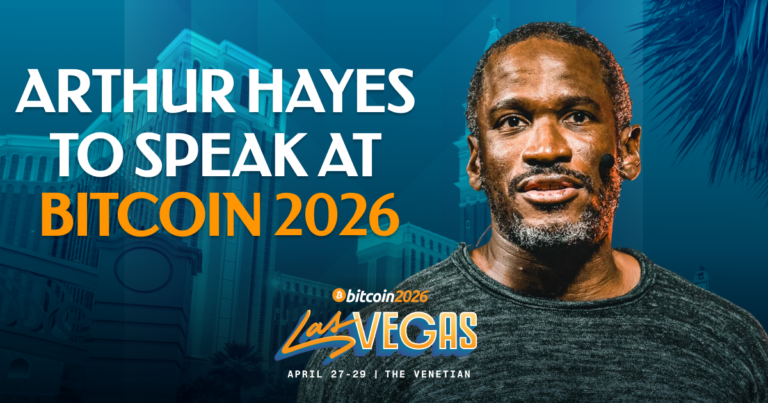
Arthur Hayes, one of the most provocative and incisive minds in Bitcoin, has been officially confirmed as a speaker at Bitcoin 2026, returning to the world’s largest Bitcoin conference to deliver his signature blend of macroeconomic analysis, geopolitical insight, and unfiltered conviction on where the global financial system is headed — and why Bitcoin is the only rational response.
As the co-founder of BitMEX and the founder of Maelstrom, Hayes has built a reputation as one of the sharpest macro thinkers in the space, consistently ahead of the curve on the forces driving Bitcoin’s role in the broader monetary landscape. His widely-read essays have become essential reading for traders, institutions, and anyone trying to make sense of a world being reshaped by debt, inflation, and geopolitical fragmentation.
At Bitcoin 2026 in Las Vegas, Hayes will bring his unfiltered perspective on where the global financial order is headed — and what it means for Bitcoin.
WE’RE EXCITED TO ANNOUNCE CO-FOUNDER OF BITMEX & CIO OF MAELSTROM ARTHUR HAYES AS A BITCOIN 2026 SPEAKER 🔥
Bitcoin 2026 Returns to Las Vegas Bigger Than Ever
Bitcoin 2026 will take place April 27–29 at The Venetian, Las Vegas, and is expected to be the biggest Bitcoin event of the year.
Focused on the future of money, Bitcoin 2026 will bring together Bitcoin builders, investors, miners, policymakers, technologists, and newcomers from around the world. The event will feature a wide range of pass types, including general admission passes designed specifically for those new to Bitcoin, alongside premium passes for professionals, enterprises, and institutions.
With multiple stages, immersive experiences, technical workshops, and headline keynotes, Bitcoin 2026 is designed to serve both first-time attendees and long-time Bitcoiners shaping the next era of global adoption.
Past Bitcoin Conferences in the U.S.
Bitcoin’s flagship conference has scaled dramatically over the past five years:
2021 – Miami: 11,000 attendees
2022 – Miami: 26,000 attendees
2023 – Miami: 15,000 attendees
2024 – Nashville: 22,000 attendees
2025 – Las Vegas: 35,000 attendees
🎟️ Get Your Bitcoin 2026 Pass
Bitcoin Magazine readers can save 10% on Bitcoin 2026 tickets for a limited time.
Stay at The official hotel of Bitcoin 2026, The Venetian, and get a guaranteed low rate (saving $437) plus 15% off your pass. Be in the middle of where the fun is all happening, and where the networking never ends.
Bring your whole team to Bitcoin 2026 and get 20% off your entire order, bring more than six in a group and get 25% off for a limited time.
Volunteer at Bitcoin 2026 and get Pro Pass access plus exclusive perks.
📍 Location: The Venetian, Las Vegas 📅 Dates: April 27–29, 2026
With tens of thousands of attendees expected and hundreds of major speakers like Arthur Hayes already confirmed, now is the time to lock in your ticket.
Buy Bitcoin 2026 Tickets — Save 10%
Why Attend Bitcoin 2026?
Bitcoin 2026 is the definitive gathering for anyone serious about the future of money. With 500+ speakers, multiple world-class stages, and programming spanning Bitcoin fundamentals, open-source development, enterprise adoption, mining, energy, AI, policy, and culture, the conference brings every corner of the Bitcoin ecosystem together under one roof.
From headline keynotes on the Nakamoto Stage to deep technical sessions for builders, institutional strategy discussions for enterprises, and beginner-friendly Bitcoin 101 education, Bitcoin 2026 is designed for everyone—from first-time attendees to the leaders shaping Bitcoin’s global adoption.
Whether you’re looking to learn, build, invest, network, or influence, Bitcoin 2026 is where Bitcoin’s next chapter is written.
Bitcoin 2026 Pass Types: Something for Everyone
Bitcoin 2026 offers a range of pass options designed to meet the needs of newcomers, professionals, enterprises, and high-net-worth Bitcoiners alike.
🎟️ Bitcoin 2026 General Admission Pass
Ideal for newcomers and those looking to experience the heart of the conference.
Limited access on Days 2 & 3
Entry to Main Stage
Access to Genesis Stage
Full access to the Expo Hall
🎟️ Bitcoin 2026 Pro Pass
Designed for professionals, operators, and serious Bitcoin participants.
Includes all General Admission features, plus:
Full 3-day access, including Pro Day
Entry to the Pro Pass Reception
Access to Enterprise Hall, Enterprise Stage, and Networking Lounge
Conference App networking features
Access to the Bitcoin For Corporations Symposium
Entry to Compute Village and Energy Stage
Complimentary lunch, coffee, tea, and snacks
Dedicated registration and check-in
Reserved seating at Main Stage
Huge savings when you bundle your hotel and Pro Pass
🐋 Bitcoin 2026 Whale Pass
The all-inclusive, premium Bitcoin 2026 experience.
Includes all Pro Pass features, plus:
Reserved seating at Main Stage
All-inclusive gourmet food and beverages
Entry to Whale Night and Whale Reception
Access to all official after-parties
Networking app access to connect with other Whales
Premium access to The Deep — an exclusive networking lounge with intimate speaker sessions
Complimentary stay at The Venetian when you bundle your whale pass and hotel (use promo code ‘WHALEHOTEL’ here)
This is the most immersive way to experience Bitcoin 2026.
🎉 Bitcoin 2026 After Hours Pass
Your ticket to the night.
Most deals are done with a drink in your hand. Get exclusive access to 3 official Bitcoin 2026 after-parties across Las Vegas — each with a 2-hour open bar — where the real conversations happen and the best connections are made.
Access to 3 official Bitcoin 2026 after-parties
2-hour open bar at each event
Evening events across Las Vegas, April 27–29
Network with Bitcoiners, builders, and industry leaders after hours
More headline speaker announcements are coming soon.
X’s product head, Nikita Bier, said creators posting undisclosed AI-generated war videos will lose access to the platform’s revenue-sharing program for 90 days.
The policy targets AI-generated footage that could mislead users during wartime.
Researchers and governments have warned that deepfakes could spread propaganda and misinformation online.
Elon Musk’s social media platform X said it will suspend creators from its revenue-sharing program if they post AI-generated videos depicting armed conflict without clearly disclosing that the footage was created using artificial intelligence.
In a post on Tuesday, X’s head of product Nikita Bier said the company is revising its Creator Revenue Sharing policies to maintain authenticity on the platform’s timeline and “prevent manipulation of the program.”
“During times of war, it is critical that people have access to authentic information on the ground,” Bier wrote. “With today’s AI technologies, it is trivial to create content that can mislead people.”
Creators who violate the rule will lose access to the platform’s Creator Revenue Sharing program for 90 days, Bier wrote. Repeat violations will lead to permanent removal from the monetization program.
The policy change comes as AI-generated videos claiming to show scenes of escalating violence in the Middle East following missile strikes by the U.S., Israel, and Iran last week.
On Monday, an AI-generated clip on X showing an airstrike on the Burj Khalifa in Dubai was viewed over 8 million times; at the same time, another version of the clip was viewed over 42,000 times on Instagram.
The United Nations has warned that deepfakes and AI-generated media threaten information integrity, particularly in conflict zones where fabricated images or videos can spread hate or misinformation at scale.
This concern was realized during Russia’s invasion of Ukraine, a deepfake video circulated online appearing to show Ukrainian President Volodymyr Zelensky urging Ukrainian troops to surrender. Officials quickly debunked the video, and Zelensky later released a message rejecting the claim.
According to Bier, enforcement will rely on several signals, including posts that receive a Community Note identifying the video as AI-generated, along with metadata or other indicators suggesting the footage was produced using generative AI tools.
By tying enforcement to monetization, X’s policy focuses specifically on the financial incentives creators have to post fake videos that drive clicks and views.
“We will continue to refine our policies and product to ensure X can be trusted during these critical moments,” Bier wrote.
Daily Debrief Newsletter
Start every day with the top news stories right now, plus original features, a podcast, videos and more.
Ctrl Alt, a tokenisation infrastructure provider, and the Dubai Land Department (DLD) have launched Phase Two of Dubai’s Real Estate Tokenisation Project Pilot.
This new phase introduces controlled secondary market trading capabilities for tokenised real estate assets.
Building on early success
The rollout builds on the successful first stage of the pilot, during which ten properties were tokenised. These properties represent more than $5million (AED 18.5million) in real estate value. Now, approximately 7.8 million tokens issued during that initial phase will be eligible for resale within a controlled secondary market environment.
According to the announcement, the secondary trading phase is designed to evaluate market efficiency and operational readiness. It also aims to strengthen transparency, governance, and investor protections.
Trading will occur within a regulated pilot framework on the project’s distribution platform to ensure transaction integrity and alignment with existing land registry processes. All on-chain transactions in this phase will continue to be executed on the XRP Ledger (XRPL) and secured by Ripple Custody.
The underlying infrastructure
As the tokenisation infrastructure partner for the project, Ctrl Alt minted and issued the original title deed ownership tokens during Phase One. Moving into Phase Two, the firm is deploying the secondary market functionality.
Because Ctrl Alt is directly integrated with the DLD systems, property title deeds can be issued, managed, and transferred directly on-chain. All secondary market transactions in this phase are executed through the Ctrl Alt tokenisation engine, which ensures that ownership records remain accurate and fully aligned with official registries.
To facilitate these regulated secondary-market transfers, Ctrl Alt is introducing new digital assets:
The firm will issue Asset-Referenced Virtual Asset (ARVA) management tokens.
Both ownership and management tokens will be recorded on-chain.
This dual-token approach creates a single, immutable record of ownership.
This technical infrastructure is underpinned by Ctrl Alt’s role as a licensed Virtual Asset Service Provider (VASP). The firm was the first to receive an Issuer license from Dubai’s Virtual Assets Regulatory Authority (VARA) and also holds a Broker-Dealer license.
Industry perspectives
Robert Farquhar, CEO, MENA at Ctrl
Robert Farquhar, CEO, MENA at Ctrl Alt, highlighted the collaborative effort behind the launch: “We’re proud to work with the Dubai Land Department and VARA on Phase Two of the project, demonstrating what is possible when governments and institutional-grade innovation come together to build market-leading digital rails. Native tokenisation only reaches its full potential when assets can move efficiently post-issuance, and secondary market trading is essential to that outcome. By establishing robust tokenisation infrastructure that supports the regulated transfer of tokenised land title deeds, Dubai is setting a global benchmark for how assets can be issued, traded, and managed on-chain.”
Matt Acheson, CPO at Ctrl Alt, explained the technical engineering involved: “Our goal was to build a secondary market infrastructure that is efficient for the entire ecosystem while maintaining the controls and governance required by the DLD and VARA. To achieve this, Ctrl Alt engineered a sophisticated technical framework to facilitate the dual operation of ARVA management tokens and ownership tokens seamlessly on-chain. We manage the underlying complexity of this tokenisation technology so that distribution platforms like PRYPCO and others can deliver smooth, fractional real estate experiences to their end users, without the requirement of building and managing the tokenisation infrastructure themselves.”
As of February 2026, Ctrl Alt has tokenised over $850million in assets globally, spanning real estate, private credit, funds, and commodities.
Trusted Editorial content, reviewed by leading industry experts and seasoned editors. Ad Disclosure
With the Ethereum price slowly demonstrating bullish traction after reclaiming the $2,000 mark, sentiment is turning positive once again. During this price action, investors are choosing to hold the leading altcoin rather than sell, which is indicated by a significant drop in crypto exchanges’ reserves.
Available Ethereum On Exchanges Hits New Lows
Following the bounce in Ethereum’s price, the supply of ETH sitting on cryptocurrency exchanges has experienced a sharp decline. According to the report, the number of the coin available on crypto exchanges has fallen to new lows, signaling a notable shift in market structure and sentiment.
As per the chart shared by Leon Waidmann, an optimist and the head of research at Lisk, the metric is currently sitting at a multi-year low. As coins continue to migrate from trading platforms into private wallets or long-term storage, the amount of liquid accessible for instant sale is gradually decreasing.
Currently, over 16 million ETH is left on cryptocurrency exchanges, falling from about 23 million ETH in 2023. Even though the price of ETH has declined sharply from a new all-time high, holders kept withdrawing their coins from platforms. This is considered a positive development for Ethereum as fewer ETH reserves on exchanges means less immediate sell pressure on the altcoin.
Source: Chart from Leon Waidmann on X
When reserves drop during a price crash, this is an interesting trend as it implies that holders are not panic-selling. Waidmann highlighted that these holders are deliberately moving ETH off cryptocurrency exchanges to staking contracts, cold storage, and Decentralized Finance (DeFi).
These investors are making an active choice to hold, and this is historically how supply shocks are started without a price pump. While everyone else is preoccupied with the red candles, there is a silent accumulation. The market may be scared currently, but on-chain data is telling a different story.
ETH Is Attracting A Massive Wave Of Adoption
Ethereum adoption is picking up pace at a significant rate, as evidenced by its mainnet activity. The network’s activity has spiked to unprecedented levels, with its daily transactions climbing to an all-time high despite the bear market. The milestone shows a significant rise in on-chain demand, which is fueled by increased DeFi activity, stablecoin transfers, NFT interactions, and the emergence of AI and real-world asset protocols.
Data shows that the mainnet transactions per day have surged to nearly 3 million. This is a notable number when compared to levels seen in previous cycles, especially during a bull run. Waidmann noted that the current number of daily transactions is more than the ones seen in the 2021 bull run and in the 2023 recovery.
Despite the fact that the price of ETH is down, the network is experiencing its busiest period, signaling sustained engagement beneath the surface. Record-breaking transaction counts frequently indicate increasing utility rather than being pure speculation.
ETH trading at $1,995 on the 1D chart | Source: ETHUSDT on Tradingview.com
Featured image from Freepik, chart from Tradingview.com
Editorial Process for bitcoinist is centered on delivering thoroughly researched, accurate, and unbiased content. We uphold strict sourcing standards, and each page undergoes diligent review by our team of top technology experts and seasoned editors. This process ensures the integrity, relevance, and value of our content for our readers.