Home Blog Page 868

Crypto election PAC Fairshake marks first wins in 2026 U.S. congressional primaries

0

The crypto industry’s campaign-finance arm, the Fairshake political action committee, is already grinding out wins in the opening primaries of the 2026 U.S. congressional midterms, having supported several lower-profile candidates while also opposing a prominent, longtime congressman in Texas, Al Green.

A former Department of Justice lawyer backed by President Donald Trump, Jessica Steinmann, secured a dominant victory with almost 70% of the vote in the Republican primary for Texas’ 8th District, according to state voting results. Among several candidates supported by Fairshake in Tuesday’s contests, she was given the most, with more than $750,000 reported in the most recent Federal Election Commission filings.

Her campaign website described her as “a strong supporter of digital assets, blockchain technology, and financial innovation that expands economic freedom,” and her primary win in a Republican-leaning district bodes well for a potential general-election victory in November.

“Voters responded to her commitment to strengthening the economy through innovation, and ensuring that emerging technologies, like crypto, create jobs and prosperity in her community,” Fairshake said in a statement released after the primaries. With Steinmann and several other winners in these primaries, Fairshake will already count on some likely additions to its pro-crypto allies after the general election.

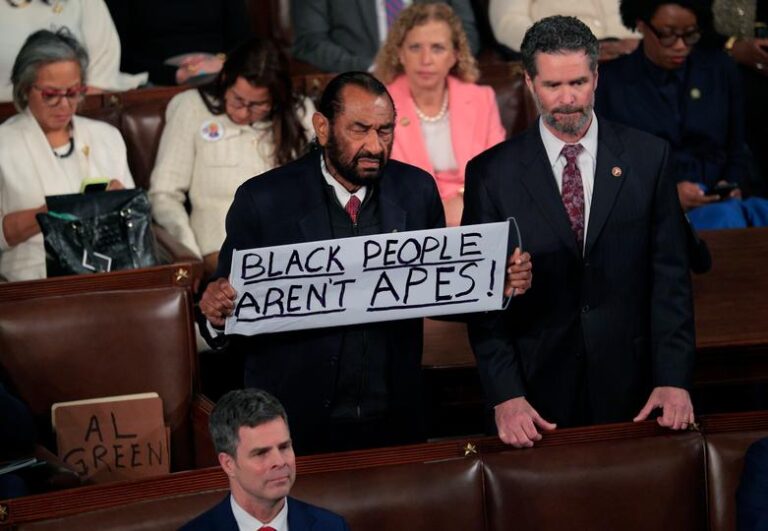
One of Fairshake’s biggest Tuesday tests — its attempt to knock a veteran Texas Democrat, Green, from his seat — appears to be heading toward a runoff. Green has been among the more vocal Capitol Hill opponents of the crypto sector, voting against legislation and earning an “F” grade from advocacy group Stand With Crypto. But after Fairshake opposed Green with $1.5 million in ads, the longtime lawmaker trailed his Democratic opponent, pro-blockchain Christian Menefee, in the newly redrawn congressional district both incumbents were forced to pursue. Since neither candidate took more than half the vote, they head to a later runoff.

Also in Texas, Fairshake backed Republicans Chris Gober in the 10th, a conservative lawyer who founded Lex Politica to focus on political litigation and government investigations, and Trever Nehls in the 22nd, an Army veteran and Trump loyalist who is seeking to replace his identical twin brother in the seat. Gober won with more than 50% of the vote in a crowded field, and Nehls got 76%. Both districts have have been Republican-dominated, giving Fairshake’s candidates a good chance to win the general election.

The super PAC had also supported Representative French Hill, the Arkansas Republican who is chairman of the House Financial Services Committee and the political tip of the spear in crypto legislation in the House of Representatives. Hill, supported with more than $400,000 in Fairshake ads, easily won his primary with 77%.

In North Carolina, the PAC backed a freshman incumbent, Republican Representative Tim Moore, who won 83% of the vote. His crypto voting record won him an “A” rating from Stand With Crypto, and Fairshake put more than $80,000 into his race.

The crypto industry’s top PAC (and its two PAC affiliates) had $193 million on-hand at the start of the campaign season. Fairshake is by far the sector’s dominant conduit for campaign contributions, so large that it’s among the biggest PACs in the country, rivaling even the political parties’ own campaign arms.

When it weighs into an election, it doesn’t do so to influence voters’ views on crypto. The ads Fairshake buys — without direct coordination with campaigns — make purely political arguments on behalf of or opposing a candidate, with no mention of digital assets. In the 2024 elections, it supported 53 candidates that are currently serving in Congress.

Read More: Crypto PAC Fairshake seeks to force resistant Texas Democrat Al Green from U.S. House

Bitcoin Presses Range Ceiling as Momentum Firms Near $72K Resistance

0

Bitcoin traded at $71,559 on March 4, 2026, at 8:30 a.m. EST, with a market capitalization of $1.43 trillion and 24-hour trading volume of $59.53 billion. The asset moved within a $66,336 to $71,805 intraday range as the price pressed into a key resistance zone near $72,000 following a recovery from the $60,000 support region. […]

Crowdcube and LSEG Unlock Private Market Liquidity with First TPEIC Offer on the Private Securities Market

0

In a major development for the UK’s financial landscape, Crowdcube and the London Stock Exchange Group (LSEG) have launched their first transaction on the Private Securities Market (PSM). The offering is structured as a Tradable Private Equity Investment Company (TPEIC), a novel framework developed by TPE.

The transaction is enabled by the Financial Conduct Authority’s Private Intermittent Securities and Capital Exchange System (PISCES), which opened earlier this year.

Opening doors to Oxford Science Enterprises

For the first time, PISCES is being utilised to support a TPEIC. This single-asset structure provides structured secondary liquidity in private companies while allowing them to remain private.

The first underlying asset available to eligible private investors through this structure is Oxford Science Enterprises (OSE). OSE is a £1.3bn balance-sheet investment company that holds a unique agreement securing equity in every scientific spinout originating from the University of Oxford.

By participating in this offer, investors gain diversified exposure to the commercial output of Oxford’s research across several transformative sectors. These include:

  • Artificial Intelligence (AI) and machine learning.
  • Life sciences and health tech.
  • Deep technology.

With more than £850million raised and a further £1.8billion in co-investment from global institutions, OSE is widely regarded as one of the most advanced single-ecosystem venture builders in the world.

Solving the liquidity challenge for private markets

As companies are increasingly choosing to stay private for longer, access to structured liquidity solutions has become critical for both shareholders and investors.

Operating as a Registered Auction Agent and Public Offer Platform (POP), Crowdcube is helping to bridge this gap. The TPEIC structure operates alongside established market infrastructure, allowing private-company exposures to be traded through permissioned auctions.

The combined use of PISCES and LSEG’s Private Securities Market brings several key benefits to the private ecosystem:

  • Intermittent liquidity and transparent price discovery.
  • Electronic settlement capabilities.
  • Standardised governance and disclosure processes designed specifically for private markets.
Industry leadership perspectives

Matt Cooper, co-CEO of Crowdcube, commented on the milestone: “This offer provides Crowdcube investors with exclusive access via a newly approved structure, the TPEIC, to world-class deep-tech and life sciences companies founded on peer-reviewed scientific breakthroughs from the University of Oxford, the world’s top-ranked research institution.”

He added: “We look forward to working closely with LSEG through 2026 to create more pathways for investors to buy shares in the most productive UK assets.”

Frederick Bouverat, founder and CEO of TPE, highlighted the strategic alignment of the partnership:
“We are proud to collaborate with Crowdcube on this inaugural TPEIC. Their platform has played a meaningful role in expanding participation in private markets, and their involvement strengthens the distribution framework supporting structured liquidity within LSEG’s PSM ecosystem.”

Crowdcube currently stands as Europe’s largest private market investment platform. It manages more than £1.1bn worth of securities for 435,000 investors, with over £1.5bn invested into private markets on its platform to date. Its historical portfolio includes major fintech and technology brands such as Revolut, Monzo, Moneybox, Chip, Nothing Technology, and Qonto.

Exodus or firewall? Blockchain analysts clash over Iran’s crypto outflows

0

When airstrikes hit Iran on Feb. 28, crypto outflows from Nobitex spiked 873%, suggesting a “digital bank run” was ongoing. The reality may be more complex.

Trump Meets With Coinbase, Then Blasts Banks Over Crypto

0

President Donald Trump met privately on Tuesday with Coinbase CEO Brian Armstrong, according to two people familiar with the matter who spoke with Politico. 

The meeting occurred shortly before Trump publicly criticized banks for blocking progress on a cryptocurrency market structure bill, aligning with Coinbase’s position in an ongoing policy dispute.

Trump posted on Truth Social that banks “need to make a good deal with the Crypto Industry” to advance digital asset legislation. He said a recently passed crypto law, the GENIUS Act, “is being threatened and undermined by the Banks, and that is unacceptable,” echoing concerns raised by Coinbase.

Neither Coinbase nor the White House responded to requests for comment. It is unclear whether the meeting between Trump and Armstrong was a formal sit-down or part of a broader discussion with other industry representatives.

Trump and the crux of the Clarity Act dispute

The dispute centers on whether crypto exchanges should be allowed to offer rewards programs paying annual percentage yields on stablecoins, digital tokens designed to maintain a $1 value. 

Banks warn that permitting such yield payments could draw deposits away from traditional bank accounts and threaten lending operations critical to the economy.

Financial institutions are seeking a ban on stablecoin yield payments as part of broader crypto legislation pending in the Senate. Digital asset firms, including Coinbase, have pushed back, arguing that the restrictions would stifle competition and innovation. 

In January, Armstrong publicly opposed amendments to the crypto bill that would have restricted stablecoin rewards. The Senate Banking Committee had scheduled a markup of the legislation, which was postponed, leaving the bill stalled. 

White House officials have since attempted to mediate between the banking and crypto sectors through a series of meetings, but no compromise has emerged.

Trump’s Truth Social posts on Tuesday echoed language used by Armstrong and Coinbase in interviews. He wrote, “Americans should earn more money on their money,” and described the CLARITY Act as necessary to maintain the United States’ position as a global leader in cryptocurrency. 

He said, “The Banks should not be trying to undercut The Genius Act, or hold The Clarity Act hostage. They need to make a good deal with the Crypto Industry because that’s what’s in the best interest of the American People.”

The GENIUS Act, passed last year, was the first federal legislation providing a roadmap for stablecoin issuers. The CLARITY Act, approved by the House in 2025, would further define regulatory authority over crypto tokens. 

Senate committees, including Banking and Agriculture, have produced competing drafts, with banks seeking tighter restrictions on stablecoin yields.

Senator Cynthia Lummis also reposted the president’s comments, stating, “America can’t afford to wait. Congress must move quickly to pass the CLARITY Act.”

Banks continue to defend their position, citing risks to the financial system. JPMorgan Chase CEO Jamie Dimon said that stablecoin yield programs should be regulated under bank-style rules to ensure a level playing field. 

Trump Presses Congress to Pass Clarity Act, Warns Banks Not to Undermine US Crypto Agenda

0

Trump is pushing an aggressive pro- crypto agenda, pressing Congress to fast-track market structure legislation and warning banks not to derail stablecoin policy as the United States races to secure leadership in the rapidly expanding digital asset economy. Trump Pushes Congress to Finalize Clarity Act as He Warns Banks Against Blocking Crypto Progress U.S. President […]

West Yorkshire Mayor Tracy Brabin Leads European Trade Mission to Drum up Jobs and Investment

0

A dozen businesses have joined West Yorkshire Mayor Tracy Brabin on a European trade mission designed to drive investment and growth across three of the region’s biggest job-creating sectors.

Tracy Brabin, West Yorkshire Mayor

Mayor Brabin landed in Zurich at the head of a 12-strong business delegation. The five-day trade mission, which is organised by the West Yorkshire Combined Authority and supported by KPMG, will see the group travel from Zurich in Switzerland to Karlsruhe, Heilbronn, and Stuttgart in Germany.

Backed by the UK Government, the initiative aims to strike up new export deals, secure inward investment, and solidify economic ties. It specifically targets three of the country’s most important export markets: financial and digital services, health technology, and advanced manufacturing.

“Europe is our most important trading partner, with investment from Swiss and German firms – and exports from our homegrown businesses – supporting thousands of good jobs in every part of our great region,” said Mayor Brabin.

She added: “Over the next five days, we’ll showcase our multimillion-pound healthtech investment zone, champion our Northern Square Mile of global financial and professional services firms, and create new export opportunities for our world-class manufacturers. Together, we’ll build international relationships that will stand the test of time and help us build a brighter West Yorkshire that works for all.”

Championing the ‘Northern Square Mile’

During the mission, the delegation is highlighting the significance of West Yorkshire’s ‘Northern Square Mile’. This thriving ecosystem of 30,000 financial and professional services firms employs almost 300,000 people and is anchored by national institutions such as the Bank of England, the Financial Conduct Authority, and the National Wealth Fund.

Switzerland is currently the UK’s 11th largest trading partner, with a bilateral relationship worth almost £47 billion to the economy every year. Services account for more than 60 per cent of that trade. For West Yorkshire, which is widely recognised as the UK’s second financial and professional services centre outside of London, the Swiss market is especially important.

The Mayor is expected to stress how the UK-Switzerland ‘Berne Financial Services Agreement’, alongside the Chancellor’s recent flagship ‘Leeds Reforms’, can help to unlock further growth. These frameworks reduce regulatory barriers and position Leeds as the go-to UK base for finance firms looking to launch or relocate.

Phil Murden, Leeds Office senior partner at KPMG UK, commented: “This trade mission represents a significant opportunity to deepen West Yorkshire’s economic relationship with Switzerland and Germany – two markets that are central to Europe’s financial, industrial and innovation landscape. For firms across our region, stronger links with these economies means greater access to capital, closer collaboration on regulation and digital standards, and new routes into high-value export markets.”

Lucy Rigby MP, Economic Secretary to the Treasury and City Minister, added her support:
“The UK’s message is clear: we are open for business and ready to do deals, and West Yorkshire is taking that message to Switzerland and Germany. Strengthening our European partnerships will unlock investment, back innovation and create great jobs across the UK.”

Pitching the Healthtech Investment Zone

Another key objective of the visit is to promote opportunities for European investors to take part in West Yorkshire’s £160million Healthtech Investment Zone. The zone is designed to accelerate innovation in medical technology, diagnostics, and digital health.

The region’s strengths in clinical research and life sciences—anchored by its seven universities—are being pitched as a natural partner to Switzerland’s world-leading biotech ecosystem.

Carly Walter, CEO at women’s wellbeing technology company MAGI, which is part of the delegation, noted:
“This trade mission to Switzerland and Germany is a pivotal opportunity for us to build relationships with AI and healthtech leaders, explore research collaboration, understand European regulatory pathways, and connect with early-stage investors and distribution partners. Both countries are recognised leaders in medical technology, digital innovation and research excellence. Establishing partnerships there will accelerate our product development, strengthen our evidence base, and support our pathway toward national and international scale.”

Advanced manufacturing and mass transit

As the mission moves into Germany, the focus will shift to advanced engineering and AI-enabled manufacturing, with visits planned to leading research centres and innovation campuses.

The programme includes discussions around the development of sustainable, sophisticated transport systems. Ahead of the launch of West Yorkshire’s landmark Weaver Network in 2027, the delegation is viewing Swiss and German expertise in mass transit design and precision engineering as a source of practical lessons for the region’s own multibillion-pound integrated transport ambitions.

The full West Yorkshire delegation includes a diverse mix of established exporters and high-growth firms, including The Data City, Debeo, NextGen Zero, Hippo Digital, Ionix, Fintech North, Whitecap Consulting, and several regional universities.

Bitcoin Weekly Death Cross Keeps the Bear Market Alive

0

A new Bitcoin death cross would ensure continuation of the bear market unless a “major bullish catalyst” appears, per new BTC price analysis.

Bitcoin (BTC) needs a “major bullish catalyst” to avoid canceling out its March rally, says the latest analysis.

Key points:

  • New findings warn that short-term BTC price strength does not remove the risk of the bear market continuing.

  • Bitcoin faces plenty of overhead resistance in the mid-$70,000 zone.

  • A “death cross” formed of two weekly trend lines is still on course to confirm this week.

BTC price caught between multiple trend lines

In an X update on Wednesday, Keith Alan, cofounder of trading resource Material Indicators, warned that BTC price weakness was still present beyond low time frames.

BTC/USD one-hour chart. Source: Cointelegraph/TradingView

Bitcoin hit monthly highs of $73,019 at the day’s Wall Street open, continuing a rebound that accompanied renewed conflict in the Middle East.

While this quickly led to predictions of a bull market comeback and even new all-time highs, Alan was frank about the BTC price outlook.

“This is an important candle to watch on the $BTC chart,” he summarized. 

“On the surface, we’re seeing a short squeeze. From a technical perspective, this D candle is attempting to validate R/S Flips at the 21-Day SMA, the 2021 Top at $69k, and a Timescape Level at $71.3k.”

BTC/USD one-day chart. Source: Cointelegraph/TradingView

Alan referred to various key levels near the spot price, including the 21-day simple moving average (SMA) at around $67,550, per data from TradingView.

Also on the radar were the 50-day SMA at $76,350, along with the 21-week and 100-day SMA trend lines at $88,000 and $87,300, respectively.

“If bulls can push price up from here I expect some friction around psychological resistance ~$75k, technical resistance at the $50-Day MA, and the next Timescape Level at $78.3k,” he continued. 

“A support test, sooner than later, would be healthy, but I’m not sure that the market is going to make it that easy on us.  However this develops, IMO, the longer it takes to grind up, the more durable the rally will likely be.”

Bitcoin death cross still due this weekly candle

As Cointelegraph reported, long-term price expectations for the current bear market favor a bottom at or below the $50,000 mark.

Related: ‘This is not World War III:’ Five things to know in Bitcoin this week

A return to BTC price downside, Alan warned, could come as soon as next week, thanks to a so-called “death cross” involving the 21-week and 100-week SMAs.

BTC/USD one-week chart with 21, 100 SMA. Source: Cointelegraph/TradingView

A death cross occurs when the former trend line crosses below the latter, implying weaker recent price action compared to the longer-term trend.

“The caveat to that is the simple fact that next week we will print a death cross between the 21 and 100 Week MAs, and that will likely be a precursor to the next leg down unless we get a major bullish catalyst,” he concluded.