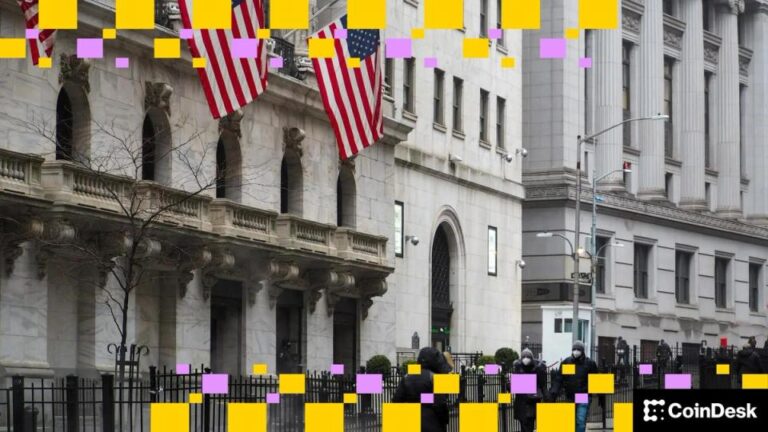
US regulators have clarified that tokenized securities will receive the same capital treatment as their traditional counterparts, saying the rules are “technology neutral.”
The Federal Reserve, the Federal Deposit Insurance Corporation, and the Office of the Comptroller of the Currency said on Thursday that they would treat traditional and tokenized securities the same when it comes to bank capital requirements.
“The technologies used to issue and transact in a security do not generally impact its capital treatment,” the agencies said.
“An eligible tokenized security should be treated in the same manner as the non-tokenized form of the security would be treated under the capital rule,” the new guidance added.
Under the guidance, financial institutions won’t need to over-collateralize when holding tokenized securities on their balance sheets, as is required when holding unproven and volatile assets.
Many traditional finance companies have taken an increasing interest in tokenization, which the regulators said prompted them to issue the new guidance.
Source: Federal Reserve
The agencies said that derivatives referencing an “eligible tokenized security” should also be treated for capital purposes as a derivative referencing the non-tokenized form of the security.
The regulators added that tokenized securities are also not impacted in their ability to be legally deemed financial collateral, so long as they are liquid and legally owned or controlled by an institution where they can be sold if the borrower fails to pay as part of the terms of a collateral agreement.
“An eligible tokenized security that satisfies the definition of ‘financial collateral’ would qualify as financial collateral for purposes of the capital rule and may be recognized by the banking organization as a credit risk mitigant if all the other relevant requirements in the capital rule are met,” the regulators said.
Related: IRS proposes mandating electronic delivery of tax forms for crypto
Asset tokenization has been a keen point of interest for traditional finance forms, with a long list of heavyweights such as JPMorgan, BlackRock and Franklin Templeton, tipping into the market via investments or infrastructure plays.
One of the major selling points of the space is the ability to trade 24/7 via blockchain as opposed to the standard day trading windows of traditional markets.
Magazine: What’s a ‘Network State’ and are there real-life examples? Big Questions
Cointelegraph is committed to independent, transparent journalism. This news article is produced in accordance with Cointelegraph’s Editorial Policy and aims to provide accurate and timely information. Readers are encouraged to verify information independently. Read our Editorial Policy https://cointelegraph.com/editorial-policy
Talks over landmark U.S. cryptocurrency legislation have hit a fresh impasse after major banks rejected a compromise brokered by the White House, casting uncertainty over whether the bill will pass this year.
The stalemate has drawn criticism from President Donald Trump, who accused financial institutions of trying to undermine the effort.
Trump, whose family is well invested in digital assets and bitcoin, posted on Truth Social: “We are not going to allow them to undermine our powerful Crypto Agenda.” He added that banks “need to make a good deal with the Crypto Industry” to advance legislation that he says is in the public interest.
The stalled legislation, known as the CLARITY Act, follows last year’s GENIUS Act, which created the first federal framework for stablecoin issuers. Supporters of the CLARITY Act argue it is needed to provide clarity for cryptocurrency firms, which have been operating in a regulatory gray area that executives say has stymied growth and innovation.
The bill would give a defined regulatory framework over digital assets, potentially accelerating adoption across the financial system.
The core dispute involves whether crypto exchanges should be allowed to offer yield-bearing rewards on stablecoins, digital tokens designed to maintain a $1 value. Banks warn that allowing such yields could siphon deposits from traditional bank accounts, threatening lending operations that are central to the economy.
Financial institutions are pushing for a ban on stablecoin yield payments as part of the legislation, citing risks to financial stability.
Crypto firms, including Coinbase, counter that restrictions on rewards programs would be anticompetitive and stifle innovation.
Stablecoins are at the root of the crypto conflict
Stablecoins, they argue, must be able to offer incentives to attract customers. Analysts estimate that by 2028, stablecoins could divert up to $500 billion in deposits away from U.S. banks. In January, the Senate Banking Committee postponed a scheduled markup of the bill after amendments limiting stablecoin rewards were introduced, leaving the legislation stalled.
The White House has attempted to mediate the conflict. Sources say its compromise would permit stablecoin rewards in limited circumstances, such as peer-to-peer payments, but not on idle holdings.
Crypto companies have signaled willingness to accept this compromise, while banks have maintained opposition, arguing that even these limited rewards could trigger deposit flight. Some senators support the banks’ position, believing it could strengthen their negotiating leverage.
JPMorgan Chase CEO Jamie Dimon has called for stablecoin yield programs to be regulated under bank-like rules to ensure a level playing field.
Meanwhile, President Trump has framed the issue as one of fairness for consumers, writing that “Americans should earn more money on their money” and describing the CLARITY Act as essential to maintaining the U.S.’s global leadership in cryptocurrency.
Trump’s engagement with the crypto sector extends beyond social media. He met privately on Tuesday with Coinbase CEO Brian Armstrong, aligning publicly with Coinbase’s position against the banking industry’s restrictions.
It remains unclear whether the meeting was a formal sit-down or part of broader discussions with industry representatives.
Lawmakers continue to debate broader elements of the CLARITY Act, including ethics and anti-money-laundering provisions, while Senate floor time before the summer recess is limited.
Analysts say the chances of passing a crypto bill may shrink further if Democrats gain seats in November, given the party’s more divided stance on federal crypto regulation.
JUST IN: 🇺🇸 Senator Lummis says, “The CLARITY Act locks in protections anti-digital asset leaders like Elizabeth Warren can’t undo.”
Senator Cynthia Lummis echoed the president’s urgency, stating, “America can’t afford to wait. Congress must move quickly to pass the CLARITY Act.”
Republican Congressman French Hill, speaking on Fox News, stressed that stablecoins should not be treated as banks, arguing that rulemaking should ensure parity between bank and non-bank issuers regarding sales practices and incentives.
“I think we can find a solution here,” Hill said, emphasizing that a balanced framework is achievable if regulators act judiciously.
Billionaire investor Chamath Palihapitiya, a venture capitalist and former Facebook executive, recently argued that bitcoin has a “structural failing” that could limit its long term adoption by governments and central banks.
Speaking on People by WTF podcast during the World Government Summit, Palihapitiya said that for a digital asset to become widely accepted at the sovereign level it must possess characteristics that make it suitable for central bank reserves.
According to Palihapitiya, bitcoin falls short on two important dimensions, privacy and fungibility. Fungibility refers to the idea that each unit of an asset is interchangeable and indistinguishable from another. With physical cash or gold, one unit is effectively identical to any other unit.
Bitcoin, however, operates on a transparent blockchain where transaction histories are permanently recorded. Because coins can be traced back through prior transactions, some units can become associated with illicit activity, meaning certain coins may be treated differently than others.
Palihapitiya argues that this traceability weakens bitcoin’s fungibility and reduces its suitability as a reserve asset for central banks.
So far, only one central bank has publicly disclosed purchasing bitcoin, the Czech National Bank.
By contrast, he says gold satisfies both privacy and fungibility requirements for sovereign institutions, which is why central banks continue to hold large gold reserves.
For that reason, Palihapitiya suggested bitcoin may struggle to achieve another tenfold increase in market capitalization driven by central bank demand. Instead, he hinted that other crypto projects or smaller tokens may eventually address these limitations.
Palihapitiya remains optimistic about innovation in digital finance, particularly stablecoins, which are cryptocurrencies designed to maintain a stable value by being pegged to assets such as the US dollar or commodities.
He pointed to the potential for gold backed stablecoins as an example of financial innovation that could reduce friction in payments and settlement.
Meanwhile, Jason Calacanis, another venture investor and co host of the All In podcast, discussed bitcoin related corporate strategies with crypto entrepreneur Erik Voorhees on the This Week in Startups podcast. Calacanis asked Voorhees about Strategy (MSTR), formerly MicroStrategy, the public company known for holding the largest corporate treasury of bitcoin.
Voorhees, a longtime Bitcoin advocate and founder of crypto exchange ShapeShift, said the strategy of accumulating as much bitcoin as possible is coherent if the company strongly believes in bitcoin’s long term value. Calacanis was more skeptical. He said that when financial structures become difficult to explain or rely on new metrics, such as “community EBITDA”, it raises red flags for him as an investor.
This comes as hedge fund billionaire Ray Dalio recently remarked that “there is only one gold.
Andreessen Horowitz’s crypto arm is back in the market with a fifth venture fund, even as the digital asset sector navigates a slower investment environment, Fortune reported.
A16z crypto aims to raise $2 billion for the fund and hopes to close the process during the first half of 2026, Fortune said, citing unidentified sources.
The venture capital firm declined to comment on the fundraising effort to Fortune, and neither the firm nor its PR team in London responded to a CoinDesk request for confirmation before publication.
The target is significantly below the company’s fourth fund, which raised $4.5 billion in 2023 and remains one of the largest dedicated crypto venture funds ever assembled. Still, it’s larger than the $650 million Dragonfly Capital raised last month.
The reported size suggests a more cautious approach to venture capital deployment as crypto markets cool from the highs seen only last year. Dragonfly’s was one of the largest raises in the sector at a time when many blockchain-focused VCs are struggling, according to Haseeb Qureshi, the firm’s managing partner.
Led by general partner Chris Dixon, a16z crypto has been one of the most influential investors in the digital asset sector, backing projects such as decentralized exchange Uniswap, digital asset platform Anchorage Digital and Jito Network, a core infrastructure protocol. Since its first $300 million crypto fund in 2018, the firm has played a major role in bringing institutional venture capital into blockchain startups.
In an X post last month, Dixon said he sees crypto as entering what he describes as its “financial era,” where blockchain-based financial applications could serve as the foundation for broader decentralized internet services.
Fideo’s identity intelligence platform enhances synthetic identity fraud prevention, account takeover detection, and real-time risk signals for fintech and financial services organizations.
Fideo Intelligence, the leading AI-driven identity intelligence engine behind the industry’s most trusted fraud and identity platforms, today announced an expansion of its dark web monitoring and threat intelligence capabilities to help financial institutions, fintech companies, payment service providers (PSPs), and merchants detect fraud earlier and reduce payment risk.
“Our expanded monitoring and analytic capabilities allow us to identify risk signals at their source,” Chris Harrison, CEO of Fideo IntelligenceShare
As payment credentials, identity data, and fraud tactics spread across hidden forums and encrypted channels, organizations face rising pressure to detect compromise before it reaches a transaction. Fideo’s expanded dark web monitoring and fraud intelligence now surfaces early signs of synthetic identities, account takeovers, and credential-based attacks by turning them into actionable, upstream risk signals for the payments ecosystem.
Why Dark Web Intelligence Matters Now
Criminal activity impacting payments usually starts before transactions, where threat actors exchange stolen credentials, identity fragments, malware tools, and playbooks, leading to chargebacks, mule activities, and large fraud events. By systematically monitoring these environments, Fideo’s intelligence connects signals tied to compromised accounts, emerging fraud typologies, and coordinated activity targeting financial platforms, then enrich them with identity context to directly inform fraud prevention strategies.
Turning Dark Web Intelligence into Actionable Risk Signals
The expanded monitoring capabilities strengthens Fideo’s ability to identify early warning indicators tied to:
Synthetic identity fraud
Account takeover (ATO)
Compromised and replayed credentials
Coordinated fraud campaigns targeting payment platforms and financial services organizations
Fideo monitors dark web threats through continuous monitoring and intelligence partnerships. Signals are validated, contextualized, and linked to identities, turning fragmented chatter into structured intelligence connected to payment identities. Fideo combines intelligence collection, parsing, entity normalization, and network analysis into a unified risk system, supporting real-time decisions and offline analysis. By correlating adversary behavior with transaction data and identities, it detects risks bypassing traditional controls.
“Effective fraud prevention requires understanding how adversaries operate before money moves and financial losses occur,” said Christopher Harrison, CEO of Fideo Intelligence. “Our expanded monitoring and analytic capabilities allow us to identify risk signals at their source and translate that intelligence into practical controls and measurable fraud reduction across the payments lifecycle.”
Embedded Across Fideo Verify and Signals
The expanded fraud intelligence is embedded directly into Fideo’s Verify and Signals products:
Verify is Fideo’s real-time identity verification platform that consolidates multiple risk checks into a single API call, enhancing identity risk assessment at account opening and through continuous monitoring. Intelligence derived from persistent dark web surveillance is validated, normalized, and embedded into Verify, helping organizations identify fabricated identities, compromised credentials, and emerging risk indicators as threat tactics evolve.
Signals delivers deep, model-ready identity and network intelligence via API or data delivery to help organizations detect fraud and make better risk decisions. Signals packages structured dark web exposure indicators, synthetic identity risk markers, and relationship-based intelligence so fraud teams and data science organizations can improve model lift, detect coordinated activity earlier, and reduce false positives without increasing customer friction.
Together, Verify and Signals also power more intelligent, agentic workflows across fraud operations, enabling automated investigation agents, case management systems, and decision orchestration layers to adjust controls based on evolving threat context.
Delivery and Integration
The enhanced monitoring capabilities are available through Fideo’s API-based identity intelligence platform and integrate with onboarding, transaction monitoring, and fraud investigation workflows. By combining persistent dark web surveillance, structured graph analysis, and advanced risk modeling, Fideo advances proactive, upstream identity intelligence for the global payments ecosystem.
Mike Selig, Chairman of the U.S. Commodity Futures Trading Commission and one of the most consequential figures in American crypto regulation, has been officially confirmed as a speaker at Bitcoin 2026 — bringing the voice of Washington’s most Bitcoin-forward regulatory agency to the world’s largest Bitcoin conference in Las Vegas.
Confirmed by the U.S. Senate in December 2025 as the 16th Chairman of the CFTC, Selig began his career as a law clerk for then-CFTC Commissioner J. Christopher Giancarlo, before moving into private practice advising financial institutions, trading platforms, and digital asset developers on compliance with securities and commodities laws. He returned to government in 2025 as chief counsel for the SEC’s Crypto Task Force, serving as senior advisor to SEC Chairman Paul Atkins, before taking the helm at the CFTC.
Since taking office, Selig has moved fast. He launched the “Future-Proof” initiative — a sweeping review of existing CFTC regulations, many written for agricultural futures markets, to determine what needs to be rebuilt from the ground up to accommodate blockchain-native markets, digital assets, and AI-driven trading platforms. In late January 2026, he and SEC Chairman Paul Atkins jointly launched Project Crypto, an initiative to harmonize oversight between the two agencies and encourage compliant onshore trading. Throughout, Selig has been explicit about his governing philosophy: sharply criticizing the prior regime’s regulation-by-enforcement approach, and instead arguing for bespoke rulebooks, pathways to registration, and regulatory guidance that meets the industry where it actually operates — globally, transparently, and on-chain.
At a moment when U.S. crypto policy is being written in real time, Selig’s presence at Bitcoin 2026 carries significant weight. His appearance will give attendees a direct, unfiltered look at how the regulatory future of Bitcoin is being shaped — and what it means for the next era of American financial markets.
Bitcoin 2026 Returns to Las Vegas Bigger Than Ever
Bitcoin 2026 will take place April 27–29 at The Venetian, Las Vegas, and is expected to be the biggest Bitcoin event of the year.
Focused on the future of money, Bitcoin 2026 will bring together Bitcoin builders, investors, miners, policymakers, technologists, and newcomers from around the world. The event will feature a wide range of pass types, including general admission passes designed specifically for those new to Bitcoin, alongside premium passes for professionals, enterprises, and institutions.
With multiple stages, immersive experiences, technical workshops, and headline keynotes, Bitcoin 2026 is designed to serve both first-time attendees and long-time Bitcoiners shaping the next era of global adoption.
Past Bitcoin Conferences in the U.S.
Bitcoin’s flagship conference has scaled dramatically over the past five years:
2021 – Miami: 11,000 attendees
2022 – Miami: 26,000 attendees
2023 – Miami: 15,000 attendees
2024 – Nashville: 22,000 attendees
2025 – Las Vegas: 35,000 attendees
🎟️ Get Your Bitcoin 2026 Pass
Bitcoin Magazine readers can save 10% on Bitcoin 2026 tickets for a limited time.
Stay at The official hotel of Bitcoin 2026, The Venetian, and get a guaranteed low rate (saving $437) plus 15% off your pass. Be in the middle of where the fun is all happening, and where the networking never ends.
Bring your whole team to Bitcoin 2026 and get 20% off your entire order, bring more than six in a group and get 25% off for a limited time.
Volunteer at Bitcoin 2026 and get Pro Pass access plus exclusive perks.
📍 Location: The Venetian, Las Vegas 📅 Dates: April 27–29, 2026
With tens of thousands of attendees expected and hundreds of major speakers like Arthur Hayes already confirmed, now is the time to lock in your ticket.
Buy Bitcoin 2026 Tickets — Save 10%
Why Attend Bitcoin 2026?
Bitcoin 2026 is the definitive gathering for anyone serious about the future of money. With 500+ speakers, multiple world-class stages, and programming spanning Bitcoin fundamentals, open-source development, enterprise adoption, mining, energy, AI, policy, and culture, the conference brings every corner of the Bitcoin ecosystem together under one roof.
From headline keynotes on the Nakamoto Stage to deep technical sessions for builders, institutional strategy discussions for enterprises, and beginner-friendly Bitcoin 101 education, Bitcoin 2026 is designed for everyone—from first-time attendees to the leaders shaping Bitcoin’s global adoption.
Whether you’re looking to learn, build, invest, network, or influence, Bitcoin 2026 is where Bitcoin’s next chapter is written.
Bitcoin 2026 Pass Types: Something for Everyone
Bitcoin 2026 offers a range of pass options designed to meet the needs of newcomers, professionals, enterprises, and high-net-worth Bitcoiners alike.
🎟️ Bitcoin 2026 General Admission Pass
Ideal for newcomers and those looking to experience the heart of the conference.
Limited access on Days 2 & 3
Entry to Main Stage
Access to Genesis Stage
Full access to the Expo Hall
🎟️ Bitcoin 2026 Pro Pass
Designed for professionals, operators, and serious Bitcoin participants.
Includes all General Admission features, plus:
Full 3-day access, including Pro Day
Entry to the Pro Pass Reception
Access to Enterprise Hall, Enterprise Stage, and Networking Lounge
Conference App networking features
Access to the Bitcoin For Corporations Symposium
Entry to Compute Village and Energy Stage
Complimentary lunch, coffee, tea, and snacks
Dedicated registration and check-in
Reserved seating at Main Stage
Huge savings when you bundle your hotel and Pro Pass
🐋 Bitcoin 2026 Whale Pass
The all-inclusive, premium Bitcoin 2026 experience.
Includes all Pro Pass features, plus:
Reserved seating at Main Stage
All-inclusive gourmet food and beverages
Entry to Whale Night and Whale Reception
Access to all official after-parties
Networking app access to connect with other Whales
Premium access to The Deep — an exclusive networking lounge with intimate speaker sessions
Complimentary stay at The Venetian when you bundle your whale pass and hotel (use promo code ‘WHALEHOTEL’ here)
This is the most immersive way to experience Bitcoin 2026.
🎉 Bitcoin 2026 After Hours Pass
Your ticket to the night.
Most deals are done with a drink in your hand. Get exclusive access to 3 official Bitcoin 2026 after-parties across Las Vegas — each with a 2-hour open bar — where the real conversations happen and the best connections are made.
Access to 3 official Bitcoin 2026 after-parties
2-hour open bar at each event
Evening events across Las Vegas, April 27–29
Network with Bitcoiners, builders, and industry leaders after hours
More headline speaker announcements are coming soon.
By Omkar Godbole (All times ET unless indicated otherwise)
Bitcoin BTC$72,578.05 is rallying alongside the U.S. dollar, a pattern that has surfaced several times since President Donald Trump won the 2024 election.
The cryptocurrency has gained over 10% since the outbreak of war in the Middle East over the weekend. Prices nearly tested the $74,000 mark at one point yesterday and are up over 2% in the past 24 hours. The CoinDesk 20 Index and major tokens including ether (ETH), XRP (XRP) and solana (SOL) rose 2% or more.
For bulls, the rally is notable not just for its magnitude but for the backdrop: It’s unfolding amid risk aversion in global equities and alongside a strengthening dollar. The Dollar Index (DXY) has gained over 1% this week and hit a high of 99.68 on Wednesday, a level last seen in November.
That combination may puzzle many market watchers. A stronger greenback typically weighs on dollar-denominated assets like bitcoin, and historically the two have tended to move in opposite directions.
Yet that inverse correlation has repeatedly been challenged since Trump returned to the White House promising pro-crypto policies. Both BTC and the DXY rose in the lead-up to and aftermath of the election, both fell in March–April 2025. Now both are rallying again.
In the meantime, the demand for BTC from the U.S. appears to be strengthening, a constructive signal for the market. The Coinbase Premium index — which measures the spread between prices on the Nasdaq-listed exchange and offshore giant Binance — rose to 0.0227% today, the highest since December, according to data source Coinglass. A premium on Coinbase is typically a sign of stronger demand from U.S. investors.
The focus now is whether the cryptocurrency can penetrate the historical make-or-break zone around $74,000. A decisive breakout would likely bolster investor confidence and draw additional buyers into the market.
Some traders are also watching the U.S. macroeconomy.
“The US Employment Situation report for February is scheduled for March 6 followed by CPI on March 11, and the next FOMC meeting on March 17-18,” Vikram Subburaj, CEO of Indian exchange Giottus.com said in an email. “All these are potential volatility catalysts for global risk assets, including crypto.”
Other macro observers remain cautious, noting that the current calm tied to the U.S. promise to escort and insure oil tankers may prove fragile.
“All it takes is one Iranian rocket for this fragile equilibrium to pitch into severe discontinuity. The threat of one Iranian rocket hitting paydirt remains real and this isn’t something that can be remedied any time soon,” economist Robin Brooks noted in a blog post. Stay alert!
Read more: For analysis of today’s activity in altcoins and derivatives, see Crypto Markets Today
What to Watch
For a more comprehensive list of events this week, see CoinDesk’s “Crypto Week Ahead”.
Crypto
Macro
March 5, 8:30 a.m.: U.S. initial jobless claims for week ending Feb. 28 (Prev. 212K)
March 5, 8:30 a.m.: U.S. nonfarm productivity QoQ prel for Q4 (Prev. 4.9%)
March 5, 4:30 p.m.: U.S. Fed balance sheet update for period ending March 4
Earnings (Estimates based on FactSet data)
March 5: Rumble (RUM), post-market, -$0.10
Token Events
For a more comprehensive list of events this week, see CoinDesk’s “Crypto Week Ahead”.
Governance votes & calls
Uniswap DAO is voting across two linked proposals to expand v2 and v3 protocol fees to eight L2 networks and enable a new tier-based fee system across all v3 pools. Voting ends March 5.
Gnosis DAO is voting to provide a grant to fund the continued support, infrastructure, and maintenance of the Revoke.cash security platform. Voting ends March 5.
Unlocks
March 5: Ethena (ENA) to unlock 2.24% of its circulating supply worth $18.35 million.
Token Launches
March 5: WhiteBit Token (WBT) lists on Kraken.
March 5: Limitless (LMTS) to be listed on Coinbase.
March 5: Opinion (OPN) to be listed on Binance, BitMart, BingX, MEXC and others.
Conferences
For a more comprehensive list of events this week, see CoinDesk’s “Crypto Week Ahead”.
Market Movements
BTC is down 0.13% from 4 p.m. ET Wednesday at $72,849.18 (24hrs: +2.42%)
ETH is down 1.08% at $2,135.84 (24hrs: +3.81%)
CoinDesk 20 is down 1.25% at 2,072.03 (24hrs: +2.75%)
Ether CESR Composite Staking Rate is up 6 bps at 2.91%
BTC funding rate is at 0.0026% (2.8744% annualized) on Binance
DXY is down 0.12% at 98.99
Gold futures are up 1.06% at $5,174.30
Silver futures are up 2.28% at $84.51
Nikkei 225 closed up 1.90% at 55,278.06
Hang Seng closed up 0.28% at 25,321.34
FTSE 100 is up 0.30% at 10,598.92
Euro Stoxx 50 is up 0.13% at 5,878.37
DJIA closed on Wednesday up 0.49% at 48,739.41
S&P 500 closed up 0.78% at 6,869.50
Nasdaq Composite closed up 1.29% at 22,807.48
S&P/TSX Composite closed up 0.47% at 33,942.90
S&P 40 Latin America closed up 2.26% at 3,619.17
U.S. 10-Year Treasury rate is up 3 bps at 4.08%
E-mini S&P 500 futures are unchanged at 6,870.50
E-mini Nasdaq-100 futures are unchanged at 25,113.50
E-mini Dow Jones Industrial Average futures are down 0.18% at 48,710.00
Bitcoin Stats
BTC Dominance: 59.78% (0.9%)
Ether-bitcoin ratio: 0.02938 (0.38%)
Hashrate (seven-day moving average): 999 EH/s
Hashprice (spot): $32.09
Total fees: 3.03 BTC / $215,909
CME Futures Open Interest: 111,485 BTC
BTC priced in gold: 14.1 oz.
BTC vs gold market cap: 4.88%
Technical Analysis
Open interest in ZEC futures. (Coinglass)
The chart from Coinglass shows daily open interest in zcash (ZEC) futures.
Open interest refers to the number of active futures contracts at any given time.
The tally has increased to nearly 1.50 million ZEC, rising past a downtrend line.
The breakout indicates renewed interest in ZEC futures and higher volatility ahead.
Crypto Equities
Coinbase Global (COIN): closed on Wednesday at $208.93 (+14.57%), +0.10% at $209.14 in pre-market
Galaxy Digital (GLXY): closed at $24.34 (+17.70%)
MARA Holdings (MARA): closed at $9.29 (+7.27%), –0.22% at $9.27
Riot Platforms (RIOT): closed at $16.53 (+8.11%), +0.24% at $16.57
Core Scientific (CORZ): closed at $15.84 (+3.53%)
CleanSpark (CLSK): closed at $10.66 (+7.79%), –0.75% at $10.58
Exodus Movement (EXOD): closed at $12.16 (+12.28%), unchanged in pre-market
CoinShares Bitcoin Mining ETF (WGMI): closed at $41.20 (+8.76%)
Circle Internet Group (CRCL): closed at $105.27 (+5.66%), unchanged in pre-market
Bullish (BLSH): closed at $36.86 (+11.29%), –0.49% at $36.68
Crypto Treasury Companies
Strategy (MSTR): closed at $146.44 (+10.37%), –0.30% at $146.00
Sharplink (SBET): closed at $8.13 (+11.98%), –1.60% at $8.00
Upexi (UPXI): closed at $1.08 (+37.58%), +1.85% at $1.10
Lite Strategy (LITS): closed at $1.22 (+6.09%)
Strive Asset Management (ASST): closed at $9.62 (+15.49%), +0.73% at $9.69
Global trading giant Intercontinental Exchange (ICE) began a strategic partnership with cryptocurrency trading firm OKX to introduce tokenized stocks and crypto futures products.
ICE, the owner of the New York Stock Exchange, also made a strategic investment valuing the San Jose, California-based company at $25 billion, according to a press release. The terms of the investment were not disclosed.
The deal is not ICE’s first foray into crypto trading platforms. It is a long-time backer of digital asset firm Bakkt (BKKT) and, more recently, invested $2 billion in crypto-powered prediction market Polymarket, valuing the platform at up to $10 billion.
“Our strategic relationship with OKX will expand global retail access to ICE’s pre-eminent regulated markets and accelerate our plans to offer on-chain infrastructure and tokenized assets to U.S. investors,” said Jeffrey C. Sprecher, ICE chair and CEO.
OKX’s native token, OKB, jumped as much as 58% in the hour after the news was released. Bakkt’s NYSE-traded stock rose 0.74% as of 9:40 a.m. in New York.
The deal will see ICE license OKX’s spot crypto prices for crypto futures products, and OKX offer ICE futures and tokenized equities, the companies said on Thursday. ICE will also secure a board seat on OKX’s board of directors.
The venture will aim to advance clearing and risk-management products, multichain custody and wallet architecture, the companies said.
The relationship brings together the operators of two high-performance matching engines and transparent order books, said Star Xu, founder and CEO of OKX, “to help build a more reliable market structure that bridges digital assets and equities, strengthens cross-market price formation, and meets institutional standards for risk and compliance.”
UPDATE (March 5, 14:11 UTC): Rewrites headline.
UPDATE (March 5, 14:47 UTC): Adds ICE existing crypto forays in third paragraph, OKB token surge, Bakkt shares in fifth.
Bitcoin’s BTC$71,197.38 early-week rally began to fade after U.S. markets opened Thursday, sending the cryptocurrency by nearly 2% over the past 24 hours to $71,400.
The move comes alongside declines in broad equity markets as the Iran war shows little sign of moving to a quick conclusion, sending oil higher by 5.3% to $78.70 per barrel. The Dow Jones Industrial Average is down 1.4% and S&P 500 by 0.7%.
The Nasdaq, though, is down just 0.4% as the previously battered software sector catches a major bid. The iShares Expanded Tech-Software Sector ETF (IGV) is ahead 2% and now up by about 9% over the past five sessions.
That divergence is notable, as bitcoin has been closely linked to the software sector, both tumbling in concert since October amid investor concerns over AI disruption and each bouncing from their lows in tandem in recent days.
IGV ETF vs. BTC (TradingView)
New bull or bear market bounce?
Bitcoin “isn’t in the clear yet,” said Arthur Hayes, CIO of Maelstrom, noting that despite the rally to $74,000, the correlation with the IGV ETF remained. Whether Thursday’s decoupling will last remains to be seen, but software names pushing higher while bitcoin retreating is not what crypto bulls wanted to see. “It could be a dead cat bounce,” Hayes continued.
Traders today might also be taking some chips off the table ahead of Friday’s key U.S. jobs report for February. The economic data of late has mostly surprised to the upside, pushing down odds for a restart of Federal Reserve rate cuts.
Interest rate traders at the Chicago Mercantile Exchange now see an 88% chance that the Fed will keep rates steady not only at this month’s meeting but in April as well. A month ago, those odds were at 59%.
“We’re cautiously constructive, but the geopolitical tail risk demands humility,” said Bryan Tan, trader at Wintermute. He said improving flows into spot bitcoin exchange-traded funds (ETFs), which have recorded nearly $2 billion in inflows in the past week alone, alongside stabilizing trading volumes, are supporting the market, while muted reaction to disruptions around the Strait of Hormuz could leave room for bitcoin to climb toward the $74,000-$75,000 range.
Bitfinex analysts said there’s been a “notable increase in spot market strength,” indicating the recent move higher was driven by market buyers rather than speculative leverage.
“We consider there to be a possibility of relief over the coming weeks and months should this trend follow through,” they added.
Crypto exchange OKX, which was just valued at $25 billion after a strategic investment from New York Stock Exchange (NYSE) parent Intercontinental Exchange (ICE), is launching a social network built directly into its trading app, the latest example of social media and digital asset platforms converging as traders increasingly rely on online communities for market signals.
The feature, called Orbit, allows users to post market commentary, livestream discussions and create trading groups while also displaying verified performance metrics such as portfolio returns, profit and loss and win rates, OKX said Thursday. The company said the feature is designed to help users distinguish credible trading insights from hype or manipulated social media posts.
Orbit will roll out gradually beginning Feb. 26 to a limited group of users before expanding more broadly once its beta testing phase concludes.
The launch comes as social interaction plays a growing role in crypto markets. Many traders now gather ideas from online platforms where screenshots, posts and influencer commentary can quickly shape sentiment around assets such as bitcoin BTC$72,578.05 or ether (ETH).
“People using our app will have a native social channel where ideas are shared with posts, livestreams and group chats,” said Haider Rafique, managing partner at OKX, in a statement.
Several platforms have begun blending trading with social media features. StockTwits, for example, is a social platform focused on equities where traders share ideas using ticker symbols such as $AAPL or $TSLA to create real-time conversations about markets. In crypto, newer networks such as Farcaster had emerged as decentralized alternatives, operating as Ethereum-based social protocols designed to function as blockchain-native versions of platforms like X.
“This is quite popular in equities trading,” Rafique said. “We want to bring similar features and give traders a place where they can share their performance and interpretation of the markets.”
OKX said Orbit aims to add accountability to social trading by allowing users who choose to share metrics to verify them directly within the trading app. The platform also supports market-specific discussions using cashtags such as $BTC, $ETH and $SOL and allows traders to create both public and gated communities.
The move comes during a period of expansion for the company. OKX just received a strategic investment from Intercontinental Exchange (ICE), the global trading giant that owns the New York Stock Exchange. The deal valued the San Jose, California-based firm at about $25 billion.
As part of that partnership, OKX plans to introduce tokenized stocks and crypto futures products, signaling deeper integration between traditional financial markets and digital asset platforms.