For nearly a decade, the prevailing wisdom has been that crypto trades in lockstep with risk assets. Stocks go down, Bitcoin goes down. Simple enough.
Monday’s session just threw a wrench into that narrative. A prolonged shipping crisis in one of the world’s most critical oil chokepoints sent equities tumbling at the open — while Bitcoin, Ethereum, and a handful of major altcoins climbed as if they hadn’t gotten the memo.
What happened at Hormuz
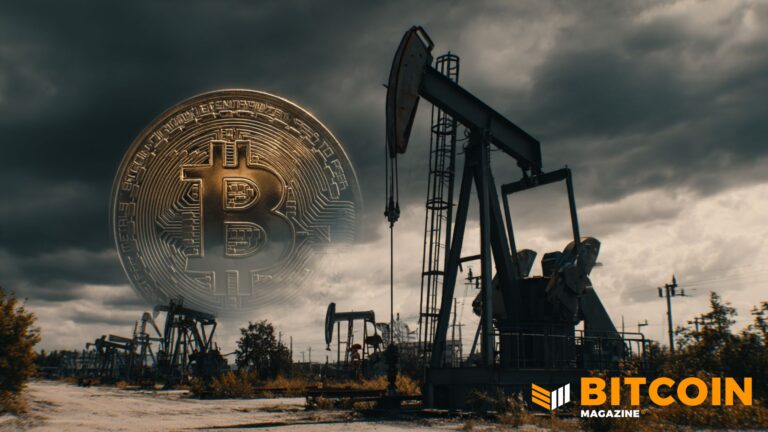
The Strait of Hormuz handles roughly 21% of global petroleum consumption on any given day. For the past nine days, a tanker standstill has effectively removed 20 million barrels per day from the world’s oil supply.
To put that in perspective, global oil demand sits around 100 million barrels daily. So we’re talking about a fifth of the planet’s energy lifeline going dark for more than a week.
The disruption sent crude prices surging in the days prior, fueling inflation fears and dragging down equity futures. On Monday, Wall Street opened decisively lower as traders priced in the possibility that the standstill could stretch into a second or even third week.
Then the G7 intervened — or at least, announced plans to intervene. The group of wealthy nations said they would coordinate a release of strategic petroleum reserves, a move designed to flood the market with enough barrels to offset the Hormuz gap. The announcement briefly knocked crude back below $100 per barrel, though skeptics questioned whether reserve releases alone could substitute for a functional shipping lane.
Here’s the thing: reserve releases are a temporary bandage on a structural wound. The US Strategic Petroleum Reserve, for instance, currently holds around 370 million barrels — enough to cover roughly 18 days of the Hormuz shortfall if the US acted alone. The math doesn’t exactly inspire long-term confidence.
Crypto breaks the correlation
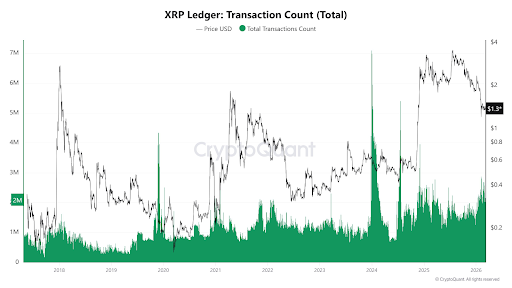
While the S&P 500 and Nasdaq slumped at the open, crypto markets staged a quiet but meaningful rally. Bitcoin climbed near $69K, gaining 2.4% in 24 hours and 2.7% over the past week. Ethereum pushed above the $2K mark with a sharper 4.0% daily gain. Solana traded around $85, up 3.6%, and XRP touched $1.37.
The divergence is striking because it hasn’t been the norm lately. For most of 2024 and into 2025, Bitcoin’s correlation with the Nasdaq hovered between 0.5 and 0.7 — meaning the two assets moved in the same direction more often than not. Monday’s split suggests that at least some capital is treating crypto differently during a geopolitical supply shock than it would during, say, a Fed rate scare or an earnings miss.
One possible explanation: oil crises are fundamentally about physical scarcity and currency debasement risk. When energy costs spike, central banks face ugly choices — raise rates into a slowing economy or let inflation run. Either way, the purchasing power of fiat currencies comes under pressure. Bitcoin’s fixed supply of 21 million coins looks relatively attractive in that environment, at least to the portion of the market that still buys the “digital gold” thesis.
And yet, the Fear and Greed Index tells a more complicated story. It currently sits at 8 — deep in “Extreme Fear” territory, barely budging from last week’s reading of 10. In English: even though prices are rising, market sentiment is still abysmal. Traders are buying, but they’re doing it while nervously looking over their shoulders.
That kind of disconnect — prices up, sentiment down — often shows up during short-covering rallies or flight-to-alternative-asset trades rather than genuine bullish conviction. It’s the market equivalent of eating a meal you don’t trust.
What this means for investors
The correlation break is the most important signal here, but it comes with caveats. A single session of divergence doesn’t mean crypto has permanently decoupled from equities. We’ve seen these one-off splits before — during the early days of the Russia-Ukraine conflict in 2022, for instance, Bitcoin rallied briefly as a safe-haven play before reverting to its risk-asset behavior within days.
What would make this time different is duration. If the Hormuz crisis drags on for weeks rather than days, and crypto continues to hold its gains while equities deteriorate, that would be a meaningful data point for the decoupling thesis. Watch the correlation coefficient between BTC and the Nasdaq over the next 10 to 14 trading sessions — if it drops below 0.3, something structural may genuinely be shifting.
The G7 reserve release is also a wildcard. If it successfully caps crude prices below $100, equities could bounce quickly, and the divergence narrative falls apart. If reserves prove insufficient — which is plausible given the scale of the Hormuz disruption — we could see a more sustained flight into non-sovereign assets.
Mobile mining tokens, interestingly, were the week’s top-performing category, surging 29.9% over seven days. That’s a niche corner of the market, but it hints at renewed interest in proof-of-work narratives during energy crises — almost counterintuitively, since mining consumes energy. The logic may be that miners with cheap, locked-in power contracts become more valuable relative to competitors when energy prices spike. Or it could just be speculative froth. Probably some of both.
The risk here is straightforward. Geopolitical supply shocks are inherently unpredictable. A resolution at Hormuz tomorrow morning could collapse the entire trade, sending crude down, equities up, and crypto potentially flat or lower as the safe-haven bid evaporates. Positioning around a crisis that could resolve via a single diplomatic phone call is, to put it gently, not a low-risk strategy.
For longer-term holders, the more interesting question isn’t whether crypto decouples this week. It’s whether repeated episodes of geopolitical stress gradually train institutional allocators to think of Bitcoin as a genuine hedge rather than a leveraged tech proxy. Each crisis that produces even a brief divergence adds a small data point to that portfolio construction argument.
Bottom line: Crypto’s Monday rally during an oil-driven equity selloff is a notable but fragile data point. The correlation break is real for now, but a Fear and Greed reading of 8 suggests the market itself isn’t convinced this is the start of something bigger. Watch the Hormuz situation and the BTC-Nasdaq correlation over the next two weeks — that’s where the actual signal will emerge.
Disclosure: This article was edited by Estefano Gomez. For more information on how we create and review content, see our Editorial Policy.