Home Blog Page 799

Strive (ASST) buys 179 BTC, raises SATA dividend, and purchases $50 million of MSTR’s Stretch

0

Roughed-up bitcoin treasury company Strive (ASST) announced a number of balance sheet moves on Wednesday.

The company purchased an additional 179 bitcoin, bringing total holdings to 13,311 BTC, worth about $930 million at current prices.

Strive also lifted the dividend on its perpetual preferred security SATA by 25 basis points to 12.75%. SATA was ahead 1.4%, but still trading well below par at $96.22.

The company also announced the purchase $50 million of Strategy’s (MSTR) perpetual preferred stock, STRC, which currently yields 11.5%.

Among a large group of companies quickly formed in 2025 to try and mimic the success of Michael Saylor’s Strategy, Strive has struggled, losing more than 90% of its value since its summer 2025 peak and recently having to undertake a 1:20 reverse stock split to keep its share price above $1.

ASST was higher by 2.2% early Wednesday as bitcoin re-took the $70,000 level.

Bitcoin Crosses $70K And FOMO Is Back, But Fear Still Grips The Market

0

Trusted Editorial content, reviewed by leading industry experts and seasoned editors. Ad Disclosure

Five months of losses may have set Bitcoin up for a rebound — and some traders think the bears are about to face their first real test this cycle.

Oversold Conditions Catch The Market’s Attention

Bitcoin climbed back above $70,000 on Tuesday, nudging social media chatter into what market intelligence firm Santiment describes as “FOMO territory.”

Positive discussions across the social media sphere nosedived on Monday before recovering sharply as prices ticked upward.

The shift was swift. According to Santiment, crypto markets tend to move fast during periods of uncertainty because they operate around the clock and are not tied to any single government or financial system.

Image: Tanganica.com

The price recovery was partly triggered by comments from US President Donald Trump, who said the conflict with Iran was “very complete, pretty much” — a signal that tensions in the Middle East may be easing.

Oil prices moved lower in response. That gave crypto traders something to work with.

Trump’s remarks were followed almost immediately by a post on Truth Social warning that the US would increase military pressure on Iran if oil supply was disrupted.

The mixed signals didn’t stop the Bitcoin rally, but they added a layer of uncertainty that traders couldn’t ignore.

Strategy’s Big Buys Add Fuel

Ryan McMillin, chief investment officer at Australian crypto investment manager Merkle Tree Capital, said that the geopolitical backdrop wasn’t the only thing driving improved sentiment.

He pointed to continued institutional buying, including from Strategy, which purchased nearly 18,000 Bitcoin last week and made a second acquisition earlier this week.

Bitcoin holding above its February lows also mattered. Data shows the asset dropped steadily from an all-time high of $126,000 in October — five straight months of declines that left it technically beaten down.

BTCUSD now trading at $69,295. Chart: TradingView

According to McMillin, that kind of extended slide can set up a relief rally even without a major catalyst.

“Shorts are vulnerable,” he said. “Liquidity on the short side could get squeezed toward $80,000 before a true higher/lower decision point.”

He also flagged cooling inflation, a new Federal Reserve chair expected within months, and the Clarity Act moving closer to implementation as tailwinds that could support prices.

Extreme Fear Still Rules The Broader Index

Not everyone is reading the moment the same way. The Crypto Fear & Greed Index — which pulls from volatility data, market momentum, social media signals, and Google Trends — sat at 15 on Wednesday, deep in “extreme fear” territory. That reading cuts against the optimism showing up in Santiment’s social tracking.

Google Trends data for “Bitcoin” scored around 71 as of Wednesday, down from a peak of 100 on March 5, suggesting retail interest has cooled from its recent high even as prices recovered.

Featured image from Pexels, chart from TradingView

Editorial Process for bitcoinist is centered on delivering thoroughly researched, accurate, and unbiased content. We uphold strict sourcing standards, and each page undergoes diligent review by our team of top technology experts and seasoned editors. This process ensures the integrity, relevance, and value of our content for our readers.

Institutional Conviction Fuels Bullish Ethereum Outlook Despite Brutal Crypto Selloff

0

Institutional investors appear unfazed by ethereum’s sharp slide from its 2025 peak, as resilient ETP holdings, rising staking participation, and steady accumulation signal that major capital may still be positioning for a longer-term rebound. Ethereum Bear Market May Mask Massive Repricing Setup as Institutions Accumulate Institutional investors continue to maintain exposure to ethereum despite significant […]

BTC manages quick gain as oil drops $3 per barrel

0

After retreating back to the $69,000 area during early U.S. morning hours Wednesday, bitcoin has quickly spiked to nearly $71,000.

Other crypto assets, including ether (ETH), solana (SOL) and XRP, saw the same sharp moves higher.

The gains appeared to come as crude oil quickly reversed most of its session’s large gains, dropping $3 per barrel in a matter of minutes. At press time, WTI crude futures for April were at $85, up 2% for the day.

Crude’s drop also benefited stocks, with the Nasdaq moving from a small decline to a gain of 0.5% in early U.S. trade.

Crypto-related shares were mixed, with Strategy (MSTR), Galaxy Digital (GLXY) and Bullish (BLSH) posting modest advances, while Coinbase (COIN) and eToro (ETOR) were slightly lower.

With the ongoing war against Iran, risk markets this week have been mostly ruled by oil’s price action. Stocks and crypto plunged on Sunday evening as oil surged to $120, but then gained as oil quickly retreated.

Fresh inflation data

Wednesday’s February CPI report was in line with economist forecasts, up 0.3% on a month-to-month basis, putting the 12-month inflation rate at 2.4%. Next month, however, could show a much different picture due to the outbreak of the U.S.-Iran war, posing the question of whether the Federal Reserve will respond to the temporary shock or take a more hawkish stance after being caught off guard during the last inflation cycle.

Stephen Coltman, head of macro at 21shares says the Fed’s choice will be critical, noting that investors will be watching next week’s Fed meeting closely for signs on how officials plan to react.

As for bitcoin, the rise in next month’s data is likely “already baked in the cake,” he said.

Former legal executives from crypto exchange OKX unveil DeFi connectivity, risk-rating service

0

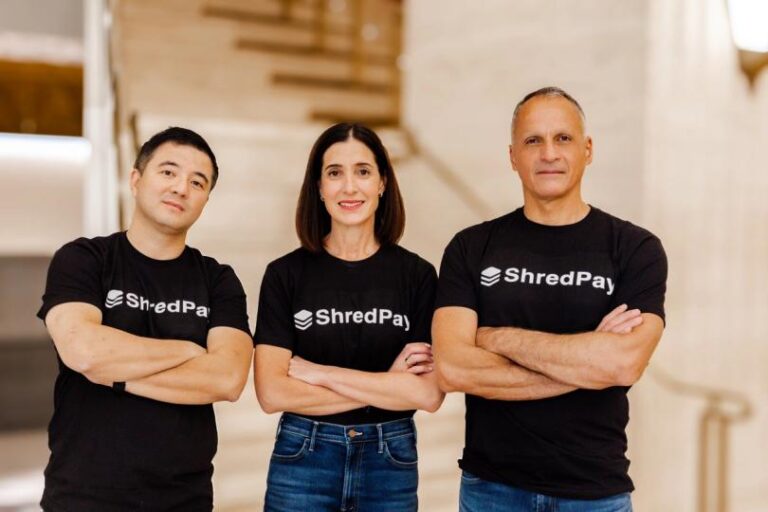
Three former executives who held high-profile legal, policy and product roles at crypto exchange OKX have unveiled an easy access decentralized finance connectivity platform called Shredpay, which is aimed at both retail customers and institutions in the U.S.

The Shredpay founding team is made up of CEO Mauricio Beugelmans, the former chief legal officer at OKX; president Melissa Muehlfeld, former OKX global general counsel; and CTO Peter Chang, the ex-VP of product at OKX.

Decentralized finance (DeFi) remains a tricky proposition for the uninitiated. The current market offerings are segmented and include no transparent risk information, making mainstream adoption difficult, according to a press release issued by Shredpay.

Beugelmans and co’s solution is to provide an uncomplicated, easily accessible onchain finance platform with clear risk ratings for DeFi protocols that help new users, the firm said.

The so-called ShredPay DeFi Ratings Index, evaluates protocols across smart contract security, liquidity depth, operational transparency, compliance, governance structure, and historical performance, providing users with standardized risk assessment comparable to traditional credit ratings.

“DeFi seems opaque, but it’s not about the technology – it’s about information asymmetry,” said Beugelmans. “Users often can’t easily distinguish between battle-tested protocols and exit scams.”

Shredpay CTO Chang said crypto natives may already know how to assess protocol risk; they read audits, track TVL, monitor governance. “We’re packaging that institutional-grade due diligence into a format that works for mainstream users. It expands the addressable market for every protocol we rate,” he said.

DeepSnitch AI Scam Concerns Rise as Spain Bans Social Media Under 16 and Pepeto’s 100x Exchange Presale Wins Trust With $7.8M and a SolidProof Audit

0

Governments are expanding digital surveillance laws, and trust has become the most important currency in crypto. For example, Spain has introduced legislation limiting social media access for anyone under 16. In this context, DeepSnitch AI scam concerns rise as Spain bans social media for those under 16, fueling debates over digital privacy and crypto legitimacy. Experts argue these laws push people toward VPNs rather than actually protecting them. According to CoinDesk, blockchain systems could verify users without capturing private data. This makes on chain identity a potential alternative to government surveillance.

According to Bloomberg, this environment affects crypto because investors lose faith in closed or unverified systems. Those asking whether any presale is legitimate want to see real proof, not marketing. Pepeto answers that question with a SolidProof audit and a $7 billion founder whose previous project is public record. In addition, $7.8 million in verifiable on chain conviction supports the project. In a market full of DeepSnitch AI scam questions and unaudited dashboards, the projects with exchange infrastructure and verified contracts are the ones that survive.

Pepeto Proves Trust Through Exchange Infrastructure While the Market Asks Questions

Pepeto: 100x Exchange Presale Built on Transparency, Not Promises

Pepeto does not hide data. It builds the exchange where data becomes tradable intelligence. PepetoSwap handles cross chain swaps, and a bridge connects three major blockchains. A full exchange approaches launch. SolidProof audited every contract before the presale opened. The $7 billion founder’s previous project is a matter of public record that anyone can verify in seconds, helping to address DeepSnitch AI scam concerns as Spain bans social media under 16.

Run the staking numbers. A $10,000 allocation at 209% APY produces $20,900 in annual yield. That is roughly $1,741 landing in your wallet every month while the presale is still open. That income compounds on a position that has not even listed yet. Importantly, the 100x repricing at listing stacks on top for wallets that entered at a fraction of a cent.

While DeepSnitch AI scam concerns circulate because the project competes against free analytics tools with no exchange revenue, Pepeto’s exchange model generates structural demand from every trade. The SolidProof audit removes the guesswork that drives scam fears. In addition, $7.8 million in on chain funding proves the market already performed its own credibility check.

Search volume for Pepeto is climbing every week, and the quiet accumulation window is visibly ending. Once mainstream media covers the Binance listing, the presale cannot absorb the demand at current pricing. Check the remaining allocation on the Pepeto official website. The global interest is partly a reaction to DeepSnitch AI scam concerns and Spain’s ban on social media under 16, which has boosted demand for trusted projects.

Dogecoin at $0.093 Offers History but No Revenue Model

DOGE trades near $0.093 on March 12. When trust matters most, DOGE offers brand recognition but no exchange infrastructure. It has no audit that verifies contract safety, and no revenue model that generates structural demand. DOGE lets holders hold a coin. Pepeto lets holders earn from every trade on three blockchains. The DeepSnitch AI scam conversation highlights why verification matters. Furthermore, DOGE has been around long enough to prove that longevity without utility is not a trust signal.

Shiba Inu Burns Tokens That Do Not Move the Needle

SHIB trades at $0.0000056 on March 12, down 94% from its peak. The burn rate dropped 98% in the latest period as only 305,792 tokens were removed from a 590 trillion supply. Active addresses declined 45%. When the market asks DeepSnitch AI scam questions because it competes with free tools, SHIB should face even harder questions. Specifically, what structural demand exists for 590 trillion tokens with no revenue, no bridge, and a burn mechanism that removes less than a rounding error from the supply? Altogether, DeepSnitch AI scam concerns rise as Spain bans social media under 16 and projects struggle to offer any audited infrastructure in crypto.

Conclusion

Every round you let pass costs you a higher entry and less staking yield. That is math, not marketing. Spain is banning social media under 16 because governments are scrambling to control digital identity. The projects that earn trust through verified audits and real infrastructure are the ones that attract capital while everyone else fields scam questions. Pepeto compounds $1,741 monthly at 209% APY while the DeepSnitch AI scam debate produces nothing but uncertainty. The crowd inside grows louder, the Binance listing approaches, and the mainstream window closes. Visit the Pepeto official website before the compounding that could be running in your wallet keeps stacking in someone else’s while you wait for the trust questions around other projects to resolve themselves.

Click To Visit Pepeto Website To Enter The Presale

FAQs

Is Pepeto’s presale safe to invest in? Pepeto has a SolidProof audit, a $7 billion founder, and $7.8 million in on chain conviction. The exchange infrastructure is verifiable and the contracts are public. The project’s transparency stands out while DeepSnitch AI scam concerns rise globally and Spain bans social media for those under 16.

Why do DeepSnitch AI scam questions keep circulating? DeepSnitch AI competes with free tools and has no exchange revenue. Pepeto generates structural demand from PepetoSwap with $1,741 monthly at 209% APY.

How do I verify a crypto presale is legitimate? Check the audit, verify the founder, and confirm exchange infrastructure. Pepeto’s SolidProof audit and $7 billion founder pass every credibility test.


Binance.US picks a new leader to help it fight for dominance in a crowded market

0

Binance.US, the American affiliate of the world’s largest crypto exchange, named Stephen Gregory as CEO, installing a compliance-focused executive at the helm at a time that competition among U.S. crypto trading platforms is accelerating.

Gregory replaced Norman Reed on March 9, the company said in a statement shared with CoinDesk. He was previously U.S. CEO of digital asset platform Currency.com, where he led the firm during its 2025 acquisition by CXNEST. He also held compliance leadership roles at crypto exchanges Gemini (GEMI) and CEX.io.

The leadership change comes as the U.S. crypto exchange landscape is changing. Over the past several months, trading platforms have raced to expand beyond digital assets, adding products such as tokenized stocks, prediction markets and traditional equities trading. Some exchanges have also struck partnerships with major U.S. stock exchanges to explore trading blockchain-based versions of publicly listed shares.

The appointment places a legal and regulatory specialist in charge at a time when U.S. oversight of crypto companies remains a central issue for the industry. Reed will remain with the company in an advisory role.

Gregory said the exchange’s brand remains strong and closely tied to the vision of its founder. “The Binance.US brand is extremely powerful,” he told CoinDesk, noting that its owner, Changpeng “CZ” Zhao, has “continuously advocated to make the U.S. the crypto capital of the world.” He said he plans to guide the company into its next phase while building on that foundation. Gregory added that by focusing on innovation for customers, Binance.US is positioned to take advantage of emerging opportunities and expand access to decentralized finance and a broader “tokenized value ecosystem.”

Binance’s global platform remains the largest cryptocurrency exchange in the world by a wide margin. The exchange recorded nearly $10 billion in trading volume over the past 24 hours, more than five times the volume of rival Coinbase (COIN), according to CoinGecko data.

The company said it plans to expand several parts of its business under Gregory’s leadership. In the past year, it has introduced products including Boost, staking services and a revamped referral program. It plans to expand its “Earn” suite and build new gateways connecting users to decentralized finance and tokenized assets.

Iran warns oil could hit $200 per barrel. Here’s what that could mean for Bitcoin’s price – DL News

0

  • Iran’s military spokesman has warned oil prices could double due to the war.
  • Bitcoin and oil have experienced increased volatility since the conflict began.
  • Experts said the leading crypto could drop in price if oil prices inflate further.

Iran on Wednesday warned that the world should be prepared for oil to more than double in price if the US and Israel continued to wage war on the country.

But as the price of the most-traded commodity experiences increased turbulence amid the bombing, what could happen to Bitcoin?

“When energy becomes more expensive, inflation rises and central banks postpone rate cuts, which ultimately restricts the liquidity that Bitcoin needs to gain momentum,” Sebastián Serrano, the CEO of Argentinian crypto exchange Ripio, told DL News.

Bitcoin has experienced more volatility. Source: CoinGecko.

Bitcoin experienced a quick selloff before rebounding after the US and Israel attacked Iran. It was recently trading at nearly $70,434, according to CoinGecko, up slightly since the war started on February 28.

While the biggest cryptocurrency has held steady, experts have warned more volatility could be around the corner.

What war does to Bitcoin

While Bitcoiners have argued the leading cryptocurrency is a safe-haven, unlike gold, the asset rarely performs as one.

In the past, war in the Middle East has negatively hit Bitcoin’s price: the coin fell sharply following Israel’s June 2025 “Operation Rising Lion” strike, only recovering after President Donald Trump signalled a pause in attacks.

And experts previously told DL News that any more war in the region could exacerbate selling pressure.

“The inflation hedge narrative has been disproven for quite a while now,” Laurens Fraussen, a research analyst at data firm Kaiko said.

But Bitcoin’s a commodity, right?

Even though the Commodity Futures Trading Commission, a US regulator, considers Bitcoina commodity like gold and oil, it doesn’t yet behave like one.

Instead, the leading cryptocurrency has performed more in line with volatile investments like tech stocks.

“Bitcoin is a risk asset, not a commodity as of now,” said Fraussen, adding that the coin has been “very sensitive to geopolitical shocks the past year.”

This means that when stocks drop, Bitcoin could follow suit — so expect more volatility if strife in the Middle East doesn’t calm soon.

Mathew Di Salvo is a news correspondent with DL News. Got a tip? Email at mdisalvo@dlnews.com.

ECB unveils tokenized finance roadmap as Europe pushes to reduce reliance on foreign infrastructure

0

The European Central Bank on Wednesday unveiled the timeline for the eurozone’s initiative to shape the development of a tokenized wholesale financial ecosystem based around the single currency and ensure the euro’s continued relevance as an international currency.

The strategy comprises Pontes, a distributed ledger technology (DLT) layer for transactions seen debuting in the third quarter, and Appia, which will “focus on working with the market to develop an entirely innovative and integrated financial market ecosystem embracing tokenisation and DLT,” the bank said in a post on its website.

Appia is the heart of the strategy and is planned to run through 2028, when the Eurosystem — the monetary authority comprising the ECB and euro-using nations’ central banks — plans to publish a blueprint outlining its vision for a tokenized financial ecosystem. It is designed to explore the long-term architecture of a tokenized financial system, including infrastructure, governance and standards.

“The initiative seeks to foster a more integrated, competitive and innovative European payments and securities environment, strengthening Europe’s strategic autonomy and resilience, and ensuring the euro’s continued relevance as an international currency,” the statement said.

European policymakers have increasingly framed financial infrastructure as a geopolitical issue, warning that reliance on non-European payment networks and dollar-centric financial systems exposes the bloc to external pressure. An analysis for the European Parliament last year found Europe’s dependence on foreign payment networks represented a “structural vulnerability” for its financial sovereignty and could become a source of geopolitical leverage.

The project is also part of the Eurosystem’s broader push to adapt financial infrastructure to the rise of distributed ledger technology, or blockchains, which allows financial assets such as bonds, funds and securities to be represented as digital tokens on shared networks.

“Appia is about building a road from today’s financial system to tomorrow’s tokenized markets, firmly grounded in central bank money,” ECB Executive Board member Piero Cipollone said in a statement.

8 Cold War Museum Facts That Will Shock You

0

1. Soviet Sa-2 Missile

Okay, so let’s talk about the SA-2 Guideline missile. This thing was a big deal back in the day, especially for the Soviets. It was their first surface-to-air missile (SAM) and they really put it to work. It was the very missile that shot down Francis Gary Powers’ U-2 spy plane over Soviet territory in 1960, which was a massive embarrassment for the US and really ramped up Cold War tensions. Imagine being up there in that U-2, thinking you’re invisible, and then bam!.

The SA-2 wasn’t exactly a precision instrument by today’s standards, but it was a serious threat. It was a two-stage rocket, and it was pretty massive. They developed it in the 1950s, and it saw action in a bunch of conflicts, not just against spy planes but also in places like Vietnam, where it gave US pilots a really rough time.

Here’s a quick look at what made it tick:

  • Propulsion: It used solid rocket fuel, which made it easier to store and launch compared to some of the liquid-fueled rockets of the time.
  • Guidance: It relied on radar guidance. Ground crews would track the target with radar, and the missile would be guided towards it. This wasn’t perfect, especially if there were a lot of electronic countermeasures.
  • Warhead: It carried a pretty hefty conventional warhead, designed to damage or destroy aircraft.

These missiles were deployed in large numbers all over the Soviet bloc and allied countries. They were a key part of the air defense system, meant to keep enemy aircraft out of restricted airspace. Seeing one up close, like you can at some museums, really gives you a sense of the scale and the raw power they packed.

The SA-2 was a symbol of Soviet military might and a constant worry for Western air forces. Its development and deployment showed that the Soviets were serious about defending their airspace, and it forced a lot of rethinking in aircraft design and tactics.

It’s wild to think about the technology back then and how it shaped the world we live in now. The SA-2 is a prime example of that.

2. Stasi Prison Door

Standing in front of an old, steel Stasi prison door is weirdly chilling, even if you’re just at a museum and not locked inside. These doors once sealed shut the cells of East Berlin’s notorious Hohenschönhausen Prison. Inmates, many detained for political reasons, spent months or years hearing that heavy door slam.

The Stasi, East Germany’s secret police, used psychological tactics behind those doors to break the will of people they suspected of dissent. It was less about obvious violence and more about endless interrogations, sleep deprivation, and the not-knowing—who had turned you in, when you might be free, what would happen next.

Imagine being in one of these concrete cells while guards walked the halls, deciding when you could eat, exercise, or even see daylight. The door itself wasn’t just metal—it was the line between hope and despair.

Here’s what those doors meant for people trapped behind them:

  • Isolation: Prisoners often had zero contact with friends or family, sometimes kept in solitary for weeks.
  • Uncertainty: Many weren’t told why they were held or how long they’d stay.
  • Surveillance: Every word was listened to, and every movement was watched by guards or hidden cameras.

It’s unsettling to realize how a simple, battered door became a tool for keeping control over a whole population—one slammed door at a time.

3. Aldrich Ames Mailbox

You know, sometimes the most chilling artifacts aren’t the big, flashy weapons. They’re the everyday objects that tell a story of betrayal. Take this mailbox, for instance. It’s just a regular-looking mailbox, but it was used by Aldrich Ames, a high-ranking CIA officer, to pass classified information to his Russian handlers. He’d leave dead drops in specific locations, and this mailbox was one of his tools.

It’s a stark reminder of how deeply some people can betray their country. Ames was responsible for some of the most damaging espionage in U.S. history, costing the lives of several agents working for the U.S. in Moscow.

  • Ames’s betrayal led to the execution of at least two CIA assets in Moscow.
  • He compromised countless sensitive operations and intelligence sources.
  • His actions significantly damaged U.S. intelligence capabilities for years.

The sheer banality of it is what gets me. A simple mailbox, a symbol of communication and community, turned into a tool for treason. It makes you wonder what else is hidden in plain sight.

This mailbox, now on display, serves as a quiet but powerful testament to the hidden dangers and personal betrayals that were a constant undercurrent of the Cold War.

4. East German Trabant

You know, the Trabant. It’s probably one of the most recognizable symbols of East Germany during the Cold War. These little cars were everywhere, and honestly, they weren’t exactly known for being speedy or luxurious. They were built with something called Duroplast, which is basically recycled cotton mixed with phenol resin. Pretty wild, right?

The Trabant was produced for a surprisingly long time, from 1957 all the way until 1991, even after the Berlin Wall fell. That’s a lot of years churning out the same basic design.

Here’s a quick look at what made them tick:

  • Engine: Usually a two-stroke, two-cylinder engine. Not exactly a powerhouse.
  • Body: Made from Duroplast, a material that was cheap and readily available.
  • Production: Over 3 million were made, making it one of the most common cars in East Germany.

The Trabant became a symbol of the limitations of the East German economy. Getting one often involved a long waiting list, sometimes years long. People would wait and wait, only to get a car that was already outdated by Western standards. It really shows you the difference in how things were made and what people had access to on either side of the Iron Curtain.

When the Berlin Wall came down, a lot of East Germans drove their Trabants to West Germany, often causing traffic jams. They were a symbol of a bygone era, and seeing them now really brings back memories of that time.

5. Uss Liberty Incident Artifacts

The attack on the USS Liberty in 1967 was a really messed-up event during the Six-Day War. Israel claimed it was a mistake, friendly fire, you know? But a lot of people involved, and frankly, a lot of evidence, suggests otherwise. The Cold War Museum has some items related to this whole ordeal, and seeing them really makes you think.

It’s not just one thing, but a collection of pieces that tell a story. You can see things like fragments of the ship, personal effects of the crew, and documents that shed light on the incident. The sheer fact that these artifacts exist and are preserved is a testament to the survivors’ fight for the truth. It’s a stark reminder of how easily things could go wrong, even between supposed allies, especially when tensions were so high.

Here’s a look at what you might find related to the USS Liberty:

  • Ship fragments showing battle damage.
  • Personal items belonging to crew members who were injured or killed.
  • Official reports and correspondence concerning the attack and its aftermath.
  • Photographs taken during and after the incident.

The attack happened in international waters, and the ship was clearly marked as American. The Israeli forces attacked for over an hour, despite attempts by the Liberty’s crew to identify themselves. The aftermath involved a lot of back-and-forth, with Israel eventually offering compensation, but the question of intent has never really gone away for many.

It’s a heavy topic, for sure. But museums like this one are important because they keep these stories alive. They make sure we don’t just forget the difficult parts of history, the parts that make us question things and look a little closer.

6. Uss Pueblo Incident Materials

So, walking through the Cold War Museum, you pretty much have to stop when you see the section dedicated to the USS Pueblo. The Pueblo incident was one of those intense moments that ramped up Cold War paranoia. In 1968, North Korea captured this American Navy intelligence ship and held its crew for almost a year—it’s not something you forget when you read about it or see the items they left behind.

Here’s what you’ll typically find in this exhibit:

  • Pieces of surviving equipment used for signals intelligence (SIGINT) by the ship’s crew
  • Personal objects like uniforms and logbooks that belonged to the sailors
  • Handwritten communications and photographs, some recovered after the crew’s release
  • North Korean propaganda materials that mocked or catalogued the crew, showing a completely different side of the story

These artifacts are more than just stuff behind glass. They tell the story of a mission that went from routine to international incident overnight. The human side really hits hard—random everyday items from the crew are right there, and you start to picture how terrifying and confusing it must’ve been for them.

With every worn-out notepad and battered bit of machinery, it’s easy to feel just how dangerous global tensions were back then—sometimes the past feels uncomfortably close.

7. Corona Spy Satellites

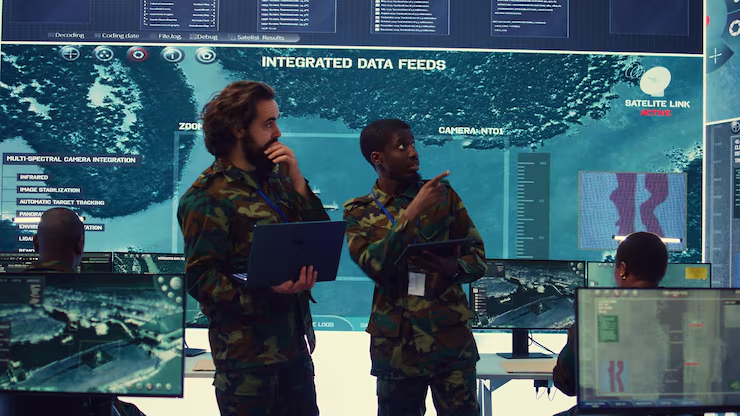
Imagine trying to see what your rival nation was up to, but without actually going there. That’s where the Corona program comes in. It was basically the U.S.’s first big attempt at using satellites for spying, kicking off in the late 1950s and running through the 60s. These weren’t fancy, high-tech gadgets like we have today; they were pretty basic, but incredibly important.

The whole idea was to launch a satellite, have it take pictures of the Earth, and then eject a film capsule that would parachute back down to be caught in mid-air by a plane. Pretty wild, right? It was a risky business, but it gave us our first real look at what was happening behind closed doors in the Soviet Union and China.

Here’s a quick rundown of how it worked:

  • Launch: A satellite, carrying cameras and film, was sent into orbit.
  • Photography: The satellite would fly over target areas and snap pictures.
  • Re-entry: The film capsule was ejected from the satellite.
  • Recovery: Specially equipped planes would try to snag the capsule out of the air before it hit the ground.

These missions weren’t always smooth sailing. Sometimes the capsules landed in the ocean, or the recovery planes missed them. But when they worked, they provided intelligence that was impossible to get any other way at the time. It was a game-changer for national security.

The technology was rudimentary by today’s standards, but the impact was huge. It was a constant cat-and-mouse game, with the Soviets trying to figure out what we were seeing and us trying to stay one step ahead.

Think about the sheer audacity of it – sending a camera into space and then trying to catch its film in a net. It sounds like something out of a spy novel, but it was real, and it happened during the Cold War.

8. Vint Hill Farms Station

You know, it’s wild to think about the sheer amount of intelligence gathering that went on during the Cold War. A lot of it happened in places you’d never guess, like Vint Hill Farms Station in Virginia. This former U.S. Army base wasn’t just some random spot; it was a key player in signals intelligence. They were listening to the world from right here.

Imagine this: a sprawling facility, once a hub for military communications, now housing a museum dedicated to that very era. The Cold War Museum found a home here, and it’s a pretty fitting location. They’ve got a ton of artifacts, from spy gear to personal items from people who lived through those tense times. It really brings the history to life.

Here’s a glimpse of what you can find related to intelligence operations:

  • Signals Intelligence (SIGINT) Displays: Get a look at the technology and methods used to intercept communications.
  • Image Intelligence (IMINT) Exhibits: See how photos from spy planes and satellites were analyzed.
  • Soviet and East German Memorabilia: Uniforms, flags, and equipment that tell a story of the other side.

It’s a place that really makes you think about the hidden battles fought with information and technology. If you’re ever looking for educational tours in Las Vegas, you might not find this specific spot, but the concept of uncovering hidden history is similar. Vint Hill Farms Station is a reminder that the Cold War wasn’t just about missiles and borders; it was also a silent war fought in the shadows.

The sheer scale of the operation at Vint Hill Farms Station is hard to grasp. It was a place where secrets were gathered, analyzed, and used to shape global events. Standing there, you can almost feel the weight of that history.

Frequently Asked Questions

What is the Cold War Museum?

The Cold War Museum is a place where you can see real stuff from the time when the United States and the Soviet Union were rivals. It’s in Warrenton, Virginia, and it helps people remember what happened during that period and honor the people who lived through it.

What kind of things can I see at the museum?

You can see all sorts of cool and important items! There’s a Soviet missile, a car from East Germany, a door from a scary prison, and even the mailbox a spy used. They also have things related to spy satellites and famous incidents like the Cuban Missile Crisis.

Who started the Cold War Museum?

It was started in 1996 by Francis Gary Powers Jr., whose father was a U-2 spy plane pilot, and John C. Welch. They wanted to make sure this history wasn’t forgotten.

Are there any famous spies featured?

Yes! The museum has the actual mailbox that Aldrich Ames, a notorious spy for the Soviet Union, used to pass secrets. It’s a chilling reminder of betrayal and espionage.

Can kids learn anything from visiting?

Absolutely! Kids can learn what real missiles look like and how complex they are. It’s a great way for them to understand a serious part of history and why keeping peace is so important.

Where is the museum located?

The Cold War Museum is located at Vint Hill Farms Station in Warrenton, Virginia. It’s about 30 miles from Washington Dulles International Airport.