As digital financial services expand across Africa, financial institutions are facing a growing need to strengthen identity verification, fraud prevention and anti-money laundering (AML) controls. Uganda’s progress in strengthening its regulatory framework—including its removal from the FATF increased monitoring list—signals stronger compliance standards, but the rapid growth of digital payments and online financial services also introduces new vulnerabilities. Identity fraud, mule accounts and authorised push payment scams are becoming more common as criminals exploit digital onboarding processes and cross-border financial networks.
Creditinfo, a global service provider for credit information and risk management solutions, has announced the rollout of its identity, know your customer (KYC) and fraud and ID solution in Uganda. The move supports organisations in the country as they work to strengthen financial crime prevention at a time of rapid digital growth and evolving fraud risk.
Uganda has made significant progress in recent years in strengthening its anti-money laundering (AML) framework, most notably through its removal from Financial Action Task Force (FATF) increased monitoring. But as the country’s digital payments landscape continues to expand, organisations confront a new and more complex set of fraud threats. These require robust tools to manage risk without compromising the customer experience.
Creditinfo’s solution enables organisations to address this challenge by drawing on credit bureau data, government information services and other registries to establish trust in presented identities. The platform combines identity proofing, digital risk signals and international and domestic watchlists to support strong KYC compliance and reduce exposure to fraudulent activity during onboarding and origination.
The Uganda rollout follows the successful deployment of the solution in Kenya in 2025, and forms part of Creditinfo’s broader global programme to improve financial stability, close AML gaps and support the development of secure digital economies. The Ugandan version of the platform has been tailored to the specific needs and risk profile of the local market.
Since the solution’s initial launch, Creditinfo has expanded its capabilities to enable organisations to tackle an evolving range of financial crime threats. In addition to onboarding and origination controls, the platform now includes transaction monitoring capabilities that allow institutions to detect suspicious account activity and identify behaviours associated with mule accounts. It can also flag authorised push payment (APP) fraud linked to scams and surface unusual transactions within wider AML monitoring frameworks.
The solution also strengthens account protection by detecting and preventing account takeover and application fraud. This is made possible through advanced device intelligence and a global identity network drawing on more than two billion device data points, giving organisations the ability to identify suspicious patterns and build more resilient defences against emerging threats.
Rob Meakin, Director of Fraud and Identity at Creditinfo, said: “The rapid growth of digital financial services creates real opportunities for economic development, but it also increases exposure to sophisticated financial crime. By bringing our fraud and identity solution to Uganda, we are helping organisations strengthen their ability to identify risk, maintain compliance and protect their customers, while still enabling secure and seamless access to financial services.”
Mark Mwanje, Managing Director at Creditinfo Uganda, said: “In Uganda’s fast-growing digital economy, businesses need tools that protect them from fraud without making life harder for customers. Our platform helps banks and other institutions cut down on fraud, make it easier for people to open accounts, and promote financial inclusion, while still meeting strict anti–money laundering rules required in Uganda.”
FF NEWS TAKE As digital finance adoption accelerates across emerging markets, identity verification and fraud prevention are becoming foundational infrastructure.
Creditinfo’s expansion into Uganda highlights the growing demand for integrated KYC, identity and transaction monitoring solutions that can protect financial institutions without slowing down financial inclusion. For rapidly digitising economies, balancing security, compliance and accessibility will be critical to sustaining trust in the financial system as digital payments and online banking continue to grow.
A committee that advises the U.S. Securities and Exchange Commission recommended the agency move forward on a tokenized-securities policy that would allow traders to cut out the kind of go-between settlement that Wall Street investment firms have relied on for decades.
The SEC’s Investor Advisory Committee voted Thursday to recommend narrow exemptions for the blockchain-based innovation for the trading of stocks, as long as the activity comes with mandatory disclosures, routine outside supervision and “a requirement that the trading of tokenized equity securities seeks to ensure that all investors receive the best terms for their orders.”
These crypto assets still meet the definition of securities under the law, as SEC Chairman Paul Atkins has regularly contended, which means the activity needs parallel safeguards to the traditional system. Atkins said his agency is working toward formal regulations on tokenization. Now this work has the backing of an official recommendation from the committee, whose members include veterans from major trading firms, institutional investors and academics.
The traditional approach to stock trading features brokers, transfer agents and centralized settlement databases and can take a day or more to execute, but in placing that same stock on-chain, “the delivery of the tokenized security and the payment can happen as a single transaction, with ownership records embedded directly into a single blockchain.”
The group told the commission that the newer approach doesn’t come without risks:
“The most significant risk associated with the tokenization of equity securities is that these reforms or grants of exemptive relief could introduce new risks that investors do not understand and impose higher costs that outweigh the benefits of tokenization,” according to the recommendation document approved by the committee.
In remarks on Thursday, Atkins praised the committee for its “recognition that tokenization can enhance settlement efficiency, reduce settlement risk, and eliminate unnecessary intermediaries.
“I expect the Commission to soon consider an innovation exemption to facilitate limited trading of certain tokenized securities with an eye toward developing a long-term regulatory framework,” he said.
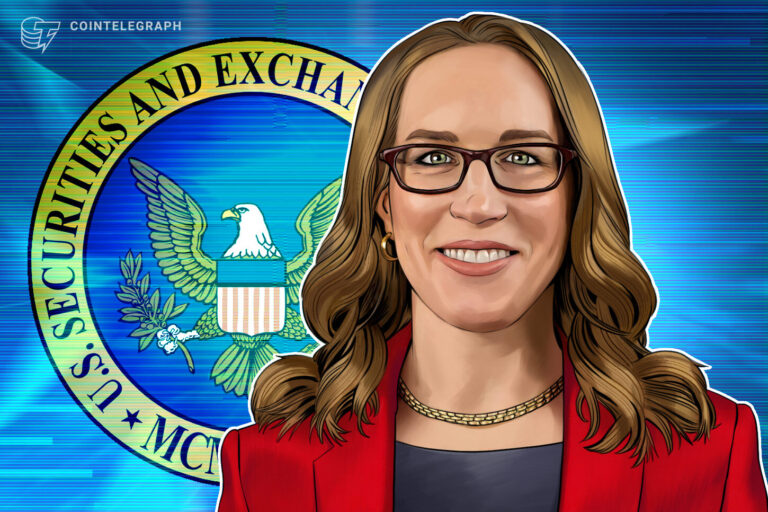
US Securities and Exchange Commission (SEC) Commissioner Hester Peirce said regulators should avoid micromanaging markets and consider simplifying disclosure requirements as discussions around tokenized securities continue.
Peirce, often referred to as “Crypto Mom” for her generally supportive stance toward the digital asset industry, made the remarks Thursday during a speech to the SEC’s Investor Advisory Committee, warning that overly prescriptive rules can distort how capital flows through financial markets.
Citing Adam Smith, the 18th-century economist widely regarded as the father of modern economics, Peirce argued that regulators should exercise restraint when shaping market outcomes.
Source: Hester Peirce
She said public companies often spend excessive time preparing mandated disclosures that may obscure rather than clarify information for investors, suggesting the SEC should consider streamlining disclosure rules.
Although the speech addressed broader regulatory issues, Peirce also pointed to the growing debate around tokenized securities and blockchain-based financial infrastructure.
She noted that SEC staff continue to work on a potential “innovation exemption” that could allow limited experimentation with tokenized securities while regulators assess how existing securities laws apply to blockchain-based markets.
Peirce also questioned whether additional disclosure and intermediary requirements would be necessary for tokenized securities, noting that blockchain systems could enable faster settlement and, in some cases, transactions without traditional intermediaries.
Related: Can US lawmakers pass crypto market structure before the midterms?
Tokenization gains traction at SEC
Tokenized securities have become an increasingly prominent topic for the SEC. Chair Paul Atkins said last year that he views tokenization as a major financial “innovation” that regulators should encourage rather than constrain.
The agency took a step in that direction in December, when it issued a no-action letter to the Depository Trust & Clearing Corporation (DTCC) allowing the market infrastructure provider to explore a blockchain-based tokenization service for securities.
The letter effectively signaled that the regulator would not recommend enforcement action if DTCC proceeded with certain tokenization-related activities, opening the door for the company to develop infrastructure to support blockchain-based settlement of traditional securities.
Source: Cointelegraph
The regulatory discussions around tokenization are also unfolding alongside broader policy debates in Washington over crypto market-structure legislation, which could eventually shape how digital assets are overseen in the United States.
Related: SEC chair calls for ‘coordinated oversight‘ between US regulators
Cointelegraph is committed to independent, transparent journalism. This news article is produced in accordance with Cointelegraph’s Editorial Policy and aims to provide accurate and timely information. Readers are encouraged to verify information independently. Read our Editorial Policy https://cointelegraph.com/editorial-policy
It has been a while since we last spoke. My last letter was written on the anniversary of my first month of incarceration at FPC Morgantown, the second month of being here has now come and gone. Truth be told I have struggled to think of what I could write to you all.
If you have time to read this article, you have time to sign the petition to free Samourai Wallet developers Keonne Rodriguez and William Hill. Every signature counts.
To be sure, there are some things and topics I would like to explore but I simply cannot without breaking rules or getting myself or someone else into trouble, so those stories will have to wait I am afraid. My wife suggests that I tell you all about some of various characters I have had the pleasure (and displeasure) of encountering here. I am not sure it would make for a good letter but she certainly seems to enjoy the stories I tell when we meet each weekend.
Someone else I respect suggested I write about my feelings, which is a mortifying proposition. ‘Feelings’ as far as I am concerned are like recounting the previous nights dreams or sharing holiday photos, best kept to your self. I have also had feedback that these letters have been helpful for those who have loved ones incarcerated in Federal custody to help them understand what it is they are going through. So, what will this letter be? I am still unsure, I am just going to write and see what comes out. Let us begin with an update since I last wrote.
On February 18th, the day before the two month anniversary of my stay here at FPC Morgantown I was woken up for the final time that night at 3:30 AM. The first time I was woken up was at the 12:00 AM count by the prick guard that insists on shining his flashlight directly into your sleeping face letting it linger there until your sleep is disturbed.
This repeated at the 3:00AM count and woke me up for a second time that night. Against all odds I managed to fall back asleep, though that mercy was to be short lived. At 3:30 AM I was woken up by the only thing more grating than the prick guard and his flashlight, the sound of “slides” (a type of sandal that you slide your feet into) lazily shuffling down the concrete floor of the open dormitory. Swishhhh Swoooosh Swishhhh Swoooosh the sound provokes a visceral response deep in my psyche that makes me want to shout “Pick your damn feet up when you walk!”. Instead I sigh and think to myself “the Skinwalker is off to bed finally”.
Now I owe you an explanation of course, ‘The Skinwalker’ is not his Christian name, rather that is what I have named him since I first got here and noticed his downright odd appearance. The only way I can really explain his appearance to myself is by imagining a race of hostile reptilian aliens who upon arrival to Earth abducted and gutted several humans and are using their bodies as some sort of skin suit.
His skin is so tight and taught across his face it truly appears that there is an 8 foot tall alien body tightly confined inside of a 6 foot tall human frame. Combined with his apparent case of alopecia (not a single strand of hair on him, head, eyebrows, arms, legs, nothing) and a red large birthmark on the back of his skull – where I presume the alien inserted the vacuum tube that sucked his innards out leaving nothing but an empty husk of skin – his appearance is downright unsettling.
While his off putting appearance was the initial inspiration for the moniker, his off kilter behavior seemed to play right in to the backstory I created for him. Basic human courtesy and respect is something the Skinwalker never mastered. Shouting across the open dormitory in the middle of the night, standing at the foot of your bunk having full volume conversations past midnight, very strangely prowling the hallways of the housing unit at 4:00AM silently changing every TV to the same ESPN channel using a remote control that he stole and now considers his own property. But his most egregiously odd behavior is certainly his bathroom habits.
If you read my last letter you know I am a bathroom janitor, as such I take a keen interest in the habits of the people who use the bathroom I clean. I know who is a disgusting dirty pig and who has basic life skills and can manage to clean up after themselves. Let me say, I could write a book on the downright baffling bathroom habits of purportedly adult men. I have seen shocking things that I am still trying to come to terms with.
The Skinwalker however, while not disgusting, perfectly illustrates his lack of basic human cognition. Around midnight or so the Skinwalker will shuffle slowly and loudly to the bathroom. He will turn on every single shower on full blast as hot as possible to create some sort of steam room effect. He then shuffles back out of the bathroom for about half an hour, really letting the steam build up – by the way, there is no ventilation at all in these bathrooms, so yes, mold is a problem, and yes, this behavior certainly doesn’t help things – when he finally shuffles back to the steamroom he spends well over an hour in there.
What he does for an hour in there I am unsure. Regenerating his skinsuit? Communicating with the mothership? Who knows. The most baffling part of this whole ritual, the most inhumane part, he finishes whatever it is he is doing in there, and just shuffles out without turning any of the showers off. When I wake up around 4:00 AM and use the toilet I am often the one who shuts the showers off, hours after he has shuffled himself back down the hallway to sleep. Some may say he clearly suffers from some sort of narcissistic personality disorder of some kind, but I am pretty sure he is just an alien in an ill-fitting skin suit.
Now, I anticipate many of you will wonder why I don’t just say something to the guy? Speak to him man-to-man (or man to Skinwalker). Under normal circumstances that certainly would be appropriate, but in here that could be interpreted as the opening salvo in what could turn into a physical altercation. At the camp level – minimum security – disrespect is rampant because no one wants to say anything that puts them at risk of having to fight which has serious knock on effects such as 1) losing good time credit which extends your stay here, and 2) being classified as higher risk needing to be moved to a higher security institution.
So you just grit your teeth and bare the disrespect. So, as I lay there silently seething I told myself I needed to get moved. I couldn’t live next to the Skinwalker anymore, I couldn’t live in the same dormitory as the guy. I needed to be moved and it needed to happen today. In truth, I knew I needed to move from the moment I got here.
I think in my first letter I mentioned the B-Wing (where I was put) as being filled with young rowdy reprobates, and turned out to be a pretty apt description. Many of the guys in B-Wing are young, rowdy, and seemingly quite happy to be in prison. The A-Wing on the other hand is much quieter, filled with older and more mature residents, men who wanted to get home, back to their lives and their families. I knew I needed to get myself to A-Wing somehow, and the above described shuffling incident on February 18th was the straw that broke the camels back.
You all know that I am the bathroom janitor in B-Wing. I didn’t take that job for my health. I knew quite early on I needed to get out of B-Wing and I deduced from conversations with prisoners who seemed ‘in the know’ that taking a less desirable job within the housing unit – a job that required actual work and effort – as opposed to a “paper job” (a job that only exists on paper, like vacuuming a carpet once a month) was the best way to demonstrate to your counselor that you were a serious person worthy of moving bunks. After a month of faithful and grimy work I made my request to move in writing – in BOP parlance this is called a “cop out” – In response I received no response, radio silence.
I figured maybe it was too early to ask, maybe I had not yet proven myself as A-Wing material. I continued the gritty and grimy work for another month, not receiving a restful night of sleep once since arriving here, I was reaching my wits end.
On February 18th I told myself I would submit another “cop out”, asking once again to be moved. If this request was denied or ignored I resolved to quit the bathroom job and give up trying. I must have caught my counsellor on a good day, or maybe my desperation was readily apparent and he took pity on me. Whatever the reason, within the hour of making my request I was called to his office and told my request was approved, I was to move out of B-Wing immediately.
I did not need to be told twice. I thanked him, grabbed a hand cart, and began the process of moving out. My neighbors were curious as to where I was going. When I told them I had been moved to A-Wing there was plenty of good natured jeering and ribbing. “Oh you’re too good for us over here in the hood” one neighbor said with mock indignation and a mischievous smile on his face. “Oh you’re moving to the suburbs huh?”.
Mostly my neighbors were happy for me, they recognized that I was in bed every night at 9:00 PM trying to sleep, and that my new home was more appropriate for me. My immediate neighbor, the Skinwalker said nothing and made no further acknowledgement of my existence. With some help from a friend my belongings were packed, my mattress and pillow secured, and I was finally out of the B-Wing.
I had carefully chosen the cell I wanted in A-Wing. Before submitting my “cop-out” I had walked the halls inspecting the different empty spaces like I was an annoyingly picky house hunter on a HGTV show trying to choose a new apartment.
I finally settled on a space that was slightly larger than normal and importantly had a window with a view. In B-Wing my cell was in the center of the dormitory, so there was no window. Even better, this window was east facing so I would be able to catch the sunrise as it peeks over the mountain top. I specifically requested this cell in my “cop-out” and it was granted. After moving in I cleaned every surface thoroughly (prison is dirty), swept and mopped the floor several times, laundered my sheets, and finally made the bed.
The difference in A-Wing was stark and immediately apparent. My new neighbors all came to welcome me, everyone spoke in hushed tones as to not disturb anyone else. One man came by with a welcome gift of a Zinger (a sort of chocolate cake Twinkie) which was happily accepted. It truly was the suburbs, and no I did not miss the inner city.
The real test of course was the night. Would I finally get some restful sleep? The evening came, the 9:00PM count was concluded, the lights were shut off. The silence was deafening and glorious. In the B-Wing when the lights went out, the party began. The Skinwalker and his crew would play their crappy mumble rap on a jury-rigged speaker as loudly as possible so that the already mumbled lyrics were further distorted and sounded as if it was recorded in a tin can. In response to this cultural onslaught the neighboring Puerto Ricans would play their crappy mumble rap on an equally tinny speaker system as loudly as they could.
Because two different speaker systems were playing two different musical arrangements as loudly as possible everyone around would have to shout even more loudly to be heard. It was a perfect storm of noise. In the A-Wing the only noise was the pleasant hum of a nearby industrial fan blowing. I was told later the fan was brought in because it was too quiet at night and some white noise was needed.
I was worried that perhaps it would be too quiet and I wouldn’t be able to sleep without the cacophony of chaos that had inundated my senses every night for 2 months. That worry was quickly settled, I fell asleep within minutes, I slept the whole night without interruption. I awoke at my usual and preferred time of 4:00 AM, I made my “prison latte” and sat at my desk looking out of my window.
I watched a family of deer foraging peacefully around a babbling stream. I know I don’t belong here, I know I shouldn’t be here, and I need to keep fighting to get out of here. I need to get back home and restart my life. But at least now I am more comfortable, I will now be able to get decent sleep, surrounded by people who understand basic human courtesy. This is now a much different way to serve my time. A small victory. Everything here is about securing small victories, recognizing them, and celebrating them.
Please note: You can only send letters (no more than 3 pages long). No packages or other items are allowed. Books, magazines, and newspapers must be sent directly from the publisher or an online retailer like Amazon. All letters must include a full return address and sender name to be delivered.
This is a guest post by Keonne Rodriguez. Opinions expressed are entirely their own and do not necessarily reflect those of BTC Inc or Bitcoin Magazine.
A rapid wave of new artificial intelligence (AI) models in early 2026 — combined with the rise of autonomous “agentic” systems — is reshaping how companies deploy AI, as industry trackers show record-breaking release velocity and a growing shift toward practical, task-executing tools. AI Labs Ship Models Every Few Weeks as Agentic Tasks Transform Enterprise […]
Anchorage Digital has integrated with Puffer Finance to give institutional clients access to Ethereum liquid restaking through its custody platform.
According to Thursday’s announcement, institutions can stake Ether held with Anchorage and receive Puffer’s liquid restaking token, pufETH, directly into their accounts. The token represents a restaked ETH (ETH) position that can be transferred or deployed across supported onchain applications while continuing to earn staking and restaking rewards.
Institutions using the platform can participate in restaking without running validators or managing staking infrastructure themselves.
The integration allows clients to access Puffer’s restaking protocol while keeping assets within Anchorage’s custody and governance framework, avoiding the need to move funds across multiple platforms.
Anchorage said the integration is part of a broader effort to expand institutional access to onchain services through its platform, including staking, restaking, governance and settlement.
Anchorage Digital is a crypto custody company headquartered in San Francisco that operates the first federally chartered crypto bank in the United States.
In January, the company was reported to be seeking between $200 million and $400 million in new funding as it explores a potential initial public offering sometime next year.
Related: Sharplink reports $735M loss in 2025 as Ethereum slumped
Liquid restaking expands across Ethereum ecosystem
Restaking has emerged as a new layer of activity in proof-of-stake networks such as Ether, allowing already staked tokens to be reused to secure additional decentralized services while generating additional rewards.
In liquid restaking systems, staked Ether is represented by a tradable token that can be reused through restaking protocols to help secure additional decentralized services.
Much of the restaking ecosystem has developed around EigenLayer, a protocol launched by Eigen Labs that enables staked Ether or liquid staking tokens to secure additional onchain services beyond the Ethereum network.
Over the past few years, liquid restaking has grown into a multibillion-dollar sector within the Ethereum ecosystem. According to data from DefiLlama, protocols offering liquid restaking collectively hold about $7.2 billion in total value locked (TVL).
Liquid restaking on Ethereum. Source: Defillama
The sector is dominated by ether.fi with around $5.6 billion in TVL, followed by Kelp DAO with about $1 billion and Renzo with roughly $217 million. Puffer Finance, the protocol integrated by Anchorage Digital, currently manages around $62 million in restaked Ether.
Ethereum treasury companies are also increasingly exploring these strategies to generate yield from their Ether holdings. In October, SharpLink Gaming said it planned to deploy $200 million worth of Ether from its corporate treasury across staking and restaking strategies through ether.fi and EigenCloud on Linea.
Magazine: What’s a ‘Network State’ and are there real-life examples? Big Questions
Cointelegraph is committed to independent, transparent journalism. This news article is produced in accordance with Cointelegraph’s Editorial Policy and aims to provide accurate and timely information. Readers are encouraged to verify information independently. Read our Editorial Policy https://cointelegraph.com/editorial-policy
Running a solo business leaves little bandwidth for deep-dive stock research, yet smart investing can diversify income and build a safety net. The solution? A modern stock screener that filters thousands of tickers down to a bite-sized shortlist in minutes, on your phone.
Every candidate was graded on five pillars—data freshness, AI smarts, mobile UX, price, and learning curve—so you can pick a tool that works at entrepreneurial speed.
Evaluation Criteria
Real-time or near-real-time data
AI or quantitative scoring
Mobile experience & alert depth
Transparent pricing and free tier value
Ease of use for non-technical founders
Quick-Glance Leaderboard
Prospero – AI clarity, zero learning curve
Finviz Elite – Heat-map powerhouse
Koyfin – Beautiful fundamentals
TradingView – Custom scripts + community
Screener.in – Fastest for Indian equities
StockRover – Built-in back-testing
SimplyWall St – Infographic insight
Seeking Alpha Screener – Crowd + quant combo
Zacks Premium – Earnings-momentum edge
Yahoo Finance – Free & familiar
Chartink – Millisecond NSE scans
The Winners, Ranked
1. Prospero — AI Signals in Plain English
Prospero levels the playing field by translating hedge-fund analytics into everyday language. Color-coded “win-rate” signals show at a glance whether a stock merits deeper research, and metrics like Net Options Sentiment, Net Social Sentiment, Technical Flow, and Short Pressure Rating guide tactical moves.
“Our Picks” list surfaces the strongest 20% of stocks
The Options-sentiment tab exposes institutional flow
Ideal for: Time-starved retail investors who want institutional-level insights in real time
2. Finviz Elite — Heat-Map Power for U.S. Markets
Finviz Elite turns the entire U.S. exchange into an interactive heat map, letting you spot sector rotation or insider buying in seconds—Bloomberg vibes on a freelancer budget.
100+ fundamental & technical filters with intraday refresh
24 preset screens like “New Highs + Insider Buying”
Integrated news & insider-transaction feed
CSV/Google Sheets export for custom workflows
Pricing: $39.50/mo or $299/yr (30-day refund).
Ideal for: Visual traders focused on U.S. swing plays.
3. Koyfin — Fundamental Dashboards Made Beautiful
Need institutional-grade statements but hate clunky terminals? Koyfin wraps detailed fundamentals, macro datasets, and eye-catching charts into one cloud dashboard you can embed in client decks.
Pricing: Robust free tier; Plus $35/mo unlocks custom models.
Ideal for: Data-driven solopreneurs who present insights to partners or investors.
4. TradingView — Social Charts + Pine Scripts
TradingView merges a massive investor community with pro-level charting. Copy any shared screener, tweak the Pine Script, and deploy on desktop or mobile in minutes.
1 000+ community screeners ready to clone
Multi-asset coverage (stocks, crypto, FX)
Cloud alerts via email, SMS, or app
Pine editor with autocomplete & version control
Pricing: Basic free; Pro starts $14.95/mo.
Ideal for: Tech-savvy founders who like to customize indicators without coding from scratch.
5. Screener.in — Lightning Filters for Indian Equities
Built for NSE/BSE, Screener.in’s query box feels like SQL for stocks. Type growth > 15 AND debt < 0.5, and results load instantly.
Quick-Ratio panel on every company page
Ten-year financials downloadable to Excel
Email alerts for saved queries
Dark mode for late-night research sprints
Pricing: Core features free; Screener Plus ₹4 999/yr adds exports & premium screens.
Ideal for: Indian entrepreneurs balancing GST filings with portfolio building.
6. StockRover — Back-Testing on Autopilot
StockRover doesn’t just screen—it proves the screen. Run any factor combo against 15 years of U.S./Canada data to see historical outperformance before risking capital.
650+ metrics including Piotroski & Altman Z
Automatic portfolio grading vs. benchmarks
Correlation heat maps to avoid overlap
Scheduled PDF research reports
Pricing: Essentials $7.99/mo; Premium+ $27.99/mo.
Ideal for: Long-term builders who trust data over buzz.
7. SimplyWall St — Infographics That Explain Themselves
Do spreadsheets make your eyes glaze over? SimplyWall St’s snowflake emblem condenses valuation, growth, profitability, and momentum into one colorful snapshot.
Side-by-side peer comparison cards
Red-flag alerts on deteriorating fundamentals
Global coverage, including micro-caps
Portfolio Health dashboard
Pricing: Free up to 10 holdings; Premium $10/mo (annual billing).
Ideal for: Visual storytellers presenting investments to non-finance collaborators.
For 40 years Zacks Rank has predicted earnings surprises. Premium screener lets you mash that famous factor with PEG, ROE, or cash-flow metrics in seconds.
Pre-built “Top Growth at Reasonable Price” screen
Proprietary surprise-prediction score
Analyst blog insights linked to each result
Excel download for pivot-table lovers
Pricing: $249/yr after 30-day trial.
Ideal for: Value hunters seeking upside catalysts.
10. Yahoo Finance Screener — Free & Familiar
Sometimes, simple wins. Yahoo Finance’s screener is free, web-based, and tied to the account you likely already have.
Morningstar fair-value preset “Undervalued Large Caps.”
Unlimited watchlists & push alerts
Earnings-calendar notifications
News feed tailored to each screen
Pricing: Free; Plus plan $20.83/mo adds advanced chart overlays.
Ideal for: Beginners or side-hustlers needing zero onboarding friction.
11. Chartink — Millisecond NSE Scans
Day-trading Indian equities? Chartink’s real-time scanner sweeps every tick and fires Telegram/SMS alerts so you never miss a breakout.
Drag-and-drop Live-Scanner builder
200 + intraday strategy templates
Webhook support for Google Sheets or TradingView
Heat-map visualizers for sector momentum
Pricing: ₹780/mo after seven-day trial.
Ideal for: Active traders needing hyper-fast technical signals, not fundamentals.
How to Pick the Right App for Your Workflow
Global stock-trading-app users hit 145 million in 2024, surpassing the 2021 peak. If you’re also one of them, here’s how you pick the winners:
Trade U.S. tech momentum between client emails?
Prospero or Finviz Elite Plus mobile alerts keep you nimble.
Stick to free tiers—Koyfin, Yahoo Finance, Screener.in—until screens pay for themselves.
Building a long-term wealth snowball?
StockRover’s back-tests or Zacks Rank help avoid shiny-object churn.
Pro Tips to Screen Faster
Clone community-shared screens (TradingView, Chartink) instead of coding from zero.
Batch-run presets every Sunday night; set push alerts only for top-five hits.
Funnel profits into lead-generation tactics
[Use Refrens’ lead-generation guide to compound both business and portfolio growth.]
Risks & Caveats
Screeners accelerate discovery but can tempt over-trading. Verify data refresh cycles—some free feeds are end-of-day.
And remember, many apps monetize usage analytics, so review privacy settings.
Conclusion
The best stock screener is the one that feels invisible in your workflow. Test the top three picks for a week, choose the interface that sticks, and automate the rest.
Pair your chosen screener with disciplined money management and diversified income. Spend less time searching, more time building—both your business and your portfolio.
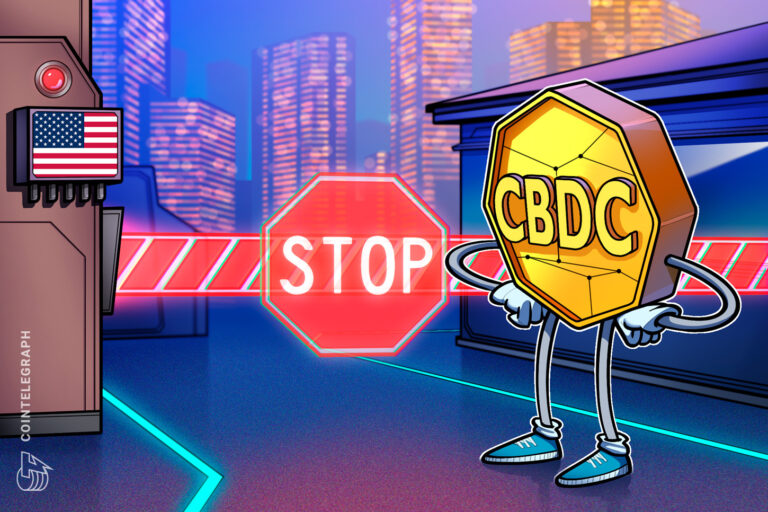
The United States Senate voted on Thursday to include an amendment in the 21st Century Road to Housing Act that would prohibit the Federal Reserve from issuing a central bank digital currency (CBDC).
The CBDC prohibition will remain in effect until Dec. 31, 2030, according to the amendment in the bill. The legislation, which passed 89-10, stated:
“The Board of Governors of the Federal Reserve System or a Federal Reserve Bank may not issue or create a central bank digital currency or any digital asset that is substantially similar to a central bank digital currency, directly or indirectly through a financial institution or other intermediary.”
The 21st Century Road to Housing Act, which includes the CBDC ban amendment. Source: US Senate
However, the bill does not prohibit any dollar-denominated digital currency that is “open, permissionless, and private,” such as stablecoins.
US Treasury Secretary Scott Bessent and President Donald Trump have presented dollar-pegged stablecoins as a way to extend US dollar hegemony, while Trump and other Republican lawmakers have taken a hardline stance against CBDCs.
Related: Republican opposition to CBDC could hold up housing affordability bill
Lawmakers slam CBDCs as authoritarian surveillance technology
More than 30 US lawmakers signed a letter on March 6, urging the Senate to pass a permanent CBDC ban, rather than a temporary moratorium.
“A CBDC would give unelected bureaucrats unprecedented power over Americans’ finances and threaten basic economic freedom,” Representative Ralph Norman, one of the signatories of the letter, said.
A letter signed by 31 US lawmakers urging a permanent ban on CBDCs. Source: Representative Ralph Norman
Representative Warren Davidson, a long-time critic of CBDCs, has also criticized regulated dollar-pegged stablecoins as having the same surveillance capabilities as CBDCs.
Warren also warned that regulations under the Guiding and Empowering Nation’s Innovation for US Stablecoins (GENIUS) Act create an avenue to “control” and “coerce” the US population through financial surveillance techniques and programmable money.
Hedge fund manager Ray Dalio also recently warned that CBDCs would expand the government’s control over people’s finances.
“There will be no privacy, and it’s a very effective controlling mechanism by the government,” Dalio said in an interview with independent journalist Tucker Carlson.
CBDCs likely won’t be yield-bearing, meaning they do not offer inflation protection and can be automatically taxed or frozen by the government, he added.
Magazine: GENIUS Act reopens the door for a Meta stablecoin, but will it work?
Cointelegraph is committed to independent, transparent journalism. This news article is produced in accordance with Cointelegraph’s Editorial Policy and aims to provide accurate and timely information. Readers are encouraged to verify information independently. Read our Editorial Policy https://cointelegraph.com/editorial-policy
Bitcoin (BTC) failed to break beyond $71,000 on Thursday, partially driven by the decline in the US stock market, with BTC funding rates dropping deeper into negative territory.
Key takeaways:
Bitcoin bears show high conviction as funding rates drop, but steady institutional buying keeps sellers in check.
Gold and government bond yields are rising, making it harder for Bitcoin to compete as a top-tier store of value.
Bitcoin futures imply moderate market stress
Traders fear that a prolonged war in Iran could cause havoc in the energy markets, negatively impacting the already weakened global economic prospects.
Bitcoin’s perpetual futures displayed signs of moderate stress, signaling a potential $66,000 retest. However, institutional inflows show increased demand, reducing the odds of a major Bitcoin price correction.
The Bitcoin perpetual futures annualized funding rate dropped to -7% on Thursday, meaning shorts (sellers) were the ones paying to keep their positions open.
The growing conviction from bears is concerning, but the lack of demand from longs (buyers) should come as no surprise, given that Bitcoin is 45% below its all-time high.
Bitcoin’s derivatives remain muted
The tech-heavy Nasdaq 100 index traded merely 6% below its all-time high on Thursday. Even the US-listed small capitalization Russell 2000 Index stood 9% from its highest mark ever.
Hence, the worsening economic conditions or fear of contagion due to logistics issues in the Middle East can hardly be used to justify Bitcoin’s sluggishness.
The latest US jobless data released on Thursday revealed 1.85 million continuing claims in the week ended on Feb. 28, slightly above consensus, according to Yahoo Finance.
US President Donald Trump vowed to “finish the job” in Iran, a war that further weakens the government’s fiscal debt conditions and does not help labor market prospects.
The Bitcoin monthly futures premium relative to regular spot markets has stood below the neutral 5% threshold for the past couple of weeks. But despite being far from bullish, there is no evidence that Bitcoin derivatives presently signal continued stress.
This lack of interest is a reflection of Bitcoin’s failure to rally despite the anticipation of monetary expansion.
Rising institutional demand may push BTC above $75,000
Gold strength above $5,100 undermines Bitcoin’s store of value premise, especially as yields on US bonds rose sharply in March, meaning traders are demanding higher returns to hold those instruments.
US 5-year Treasury yield (left) vs. gold/USD (right). Source: TradingView
Yields on the 5-year US Treasuries jumped to 3.80% on Thursday after dipping below 3.50% in late February. Hence, investors exited fixed-income investments.
Related: Bitcoin catching up to gold hints at an ‘opportunity within risk’
The US Federal Reserve is in a tough spot since lowering interest rates is needed to boost the job market and reduce risks in credit markets. But rising oil prices create sustained upward pressure on inflation.
Presently, Bitcoin’s hard-coded and transparent monetary policy is not being valued as a safe haven, but this could change as institutional demand picks up.
Additionally, a single Bitcoin derivatives metric (funding rates) should not be interpreted as a driver for a sharp price correction.
Particularly, amid a sequence of Bitcoin spot exchange-traded fund (ETF) net inflows and Strategy (MSTR US) yield products, resulting in accelerated Bitcoin accumulation. Sellers below $75,000 will eventually run out of coins, paving the way for a sustained bull run.
As Cointelegraph reported, Bitcoin bulls will likely need to wait until after March for a chance to break the $78,000 resistance
This article does not contain investment advice or recommendations. Every investment and trading move involves risk, and readers should conduct their own research when making a decision. While we strive to provide accurate and timely information, Cointelegraph does not guarantee the accuracy, completeness, or reliability of any information in this article. This article may contain forward-looking statements that are subject to risks and uncertainties. Cointelegraph will not be liable for any loss or damage arising from your reliance on this information.
David Bailey has been officially confirmed as a speaker at Bitcoin 2026, returning to the conference he helped build to share his perspective on Bitcoin’s expanding role across media, capital markets, and corporate strategy. As the Chairman and CEO of Nakamoto Inc. (NASDAQ: NAKA), Bailey has executed one of the most ambitious consolidation plays in Bitcoin’s history — bringing together BTC Inc., and UTXO Management under a single publicly traded Bitcoin operating company. His vision extends far beyond media: Nakamoto is positioned as a diversified Bitcoin enterprise spanning asset management, advisory services, and institutional infrastructure, with Bitcoin accumulation at its core.
Bailey has long been a central force in shaping how the global Bitcoin community organizes, communicates, and grows. Under his leadership, BTC Inc. became the parent company of Bitcoin Magazine — the longest-running source of Bitcoin news and commentary, first published in 2012 — while also building The Bitcoin Conference into the largest Bitcoin event series in the world, drawing more than 67,000 attendees across U.S., Asia, Europe, and Middle East events in 2025 alone. His work through Bitcoin for Corporations has further accelerated institutional adoption, connecting over 40 member companies with the education and networks needed to integrate Bitcoin into their treasuries.
With the Nakamoto acquisition of BTC Inc. and UTXO now complete, Bailey arrives at Bitcoin 2026 at a defining moment — not just for his own company, but for the broader Bitcoin ecosystem.
Bitcoin Magazine is published by BTC Inc, a subsidiary of Nakamoto Inc. (NASDAQ: NAKA)
Bitcoin 2026 Returns to Las Vegas Bigger Than Ever
Bitcoin 2026 will take place April 27–29 at The Venetian, Las Vegas, and is expected to be the biggest Bitcoin event of the year.
Focused on the future of money, Bitcoin 2026 will bring together Bitcoin builders, investors, miners, policymakers, technologists, and newcomers from around the world. The event will feature a wide range of pass types, including general admission passes designed specifically for those new to Bitcoin, alongside premium passes for professionals, enterprises, and institutions.
With multiple stages, immersive experiences, technical workshops, and headline keynotes, Bitcoin 2026 is designed to serve both first-time attendees and long-time Bitcoiners shaping the next era of global adoption.
Past Bitcoin Conferences in the U.S.
Bitcoin’s flagship conference has scaled dramatically over the past five years:
2021 – Miami: 11,000 attendees
2022 – Miami: 26,000 attendees
2023 – Miami: 15,000 attendees
2024 – Nashville: 22,000 attendees
2025 – Las Vegas: 35,000 attendees
🎟️ Get Your Bitcoin 2026 Pass
Bitcoin Magazine readers can save 10% on Bitcoin 2026 tickets using code ‘ARTICLE10‘ at checkout.
Stay at The official hotel of Bitcoin 2026, The Venetian, and get a guaranteed low rate plus 15% off your pass. Be in the middle of where the fun is all happening, and where the networking never ends.
Bring your whole team to Bitcoin 2026 and get 20% off your entire order, bring more than six in a group and get 25% off for a limited time.
Volunteer at Bitcoin 2026 and get Pro Pass access plus exclusive perks.
📍 Location: The Venetian, Las Vegas 📅 Dates: April 27–29, 2026
With tens of thousands of attendees expected and hundreds of major speakers like David Bailey already confirmed, now is the time to lock in your ticket.
Buy Bitcoin 2026 Tickets — Save 10%
Why Attend Bitcoin 2026?
Bitcoin 2026 is the definitive gathering for anyone serious about the future of money. With 500+ speakers, multiple world-class stages, and programming spanning Bitcoin fundamentals, open-source development, enterprise adoption, mining, energy, AI, policy, and culture, the conference brings every corner of the Bitcoin ecosystem together under one roof.
From headline keynotes on the Nakamoto Stage to deep technical sessions for builders, institutional strategy discussions for enterprises, and beginner-friendly Bitcoin 101 education, Bitcoin 2026 is designed for everyone—from first-time attendees to the leaders shaping Bitcoin’s global adoption.
Whether you’re looking to learn, build, invest, network, or influence, Bitcoin 2026 is where Bitcoin’s next chapter is written.
Bitcoin 2026 Pass Types: Something for Everyone
Bitcoin 2026 offers a range of pass options designed to meet the needs of newcomers, professionals, enterprises, and high-net-worth Bitcoiners alike.
🎟️ Bitcoin 2026 General Admission Pass
Ideal for newcomers and those looking to experience the heart of the conference.
Limited access on Days 2 & 3
Entry to Main Stage
Access to Genesis Stage
Full access to the Expo Hall
🎟️ Bitcoin 2026 Pro Pass
Designed for professionals, operators, and serious Bitcoin participants.
Includes all General Admission features, plus:
Full 3-day access, including Pro Day
Entry to the Pro Pass Reception
Access to Enterprise Hall, Enterprise Stage, and Networking Lounge
Conference App networking features
Access to the Bitcoin For Corporations Symposium
Entry to Compute Village and Energy Stage
Complimentary lunch, coffee, tea, and snacks
Dedicated registration and check-in
Reserved seating at Main Stage
Huge savings when you bundle your hotel and Pro Pass
🐋 Bitcoin 2026 Whale Pass
The all-inclusive, premium Bitcoin 2026 experience.
Includes all Pro Pass features, plus:
Reserved seating at Main Stage
All-inclusive gourmet food and beverages
Entry to Whale Night and Whale Reception
Access to all official after-parties
Networking app access to connect with other Whales
Premium access to The Deep — an exclusive networking lounge with intimate speaker sessions
Complimentary stay at The Venetian when you bundle your whale pass and hotel (use promo code ‘WHALEHOTEL’ here)
This is the most immersive way to experience Bitcoin 2026.
🎉 Bitcoin 2026 After Hours Pass
Your ticket to the night.
Most deals are done with a drink in your hand. Get exclusive access to 3 official Bitcoin 2026 after-parties across Las Vegas — each with a 2-hour open bar — where the real conversations happen and the best connections are made.
Access to 3 official Bitcoin 2026 after-parties
2-hour open bar at each event
Evening events across Las Vegas, April 27–29
Network with Bitcoiners, builders, and industry leaders after hours
More headline speaker announcements are coming soon.