Home Blog Page 788

Prediction markets get tailored U.S. guidance from former foe CFTC

0

Prediction market firms such as Polymarket and Kalshi have a new set of guidelines for U.S. operation, with the Commodity Futures Trading Commission laying out initial guidance and a proposed permanent rule Thursday for what the agency called “a proven source of reliable information for news media, sports leagues, financial institutions, and everyday Americans.”

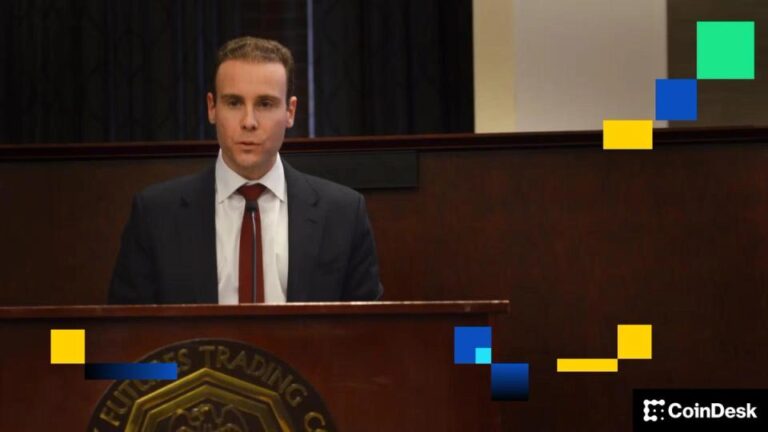
The agency had once been a legal adversary of the prediction markets, warning that certain betting ran afoul of derivatives laws and that the CFTC couldn’t function as a global policy force combating fraud and manipulation in political markets all over the world. But under Chairman Mike Selig, the CFTC abandoned its old legal fight and embraced the firms. It’s now issued a non-binding staff advisory to the prediction market firms regulated by the CFTC as “designated contract markets,” and started a binding rule process.

“This begins the process of new rulemaking grounded in a rational and coherent interpretation of the Commodity Exchange Act, while reassuring the American people that the CFTC will exercise its exclusive jurisdiction over prediction markets,” Selig said of the regulatory process which is starting with what’s known as an “advanced notice of proposed rulemaking.”

Selig, who can operate as the sole authority at the regulator because he’s the only member of what’s meant to be a five-person commission, quickly moved to push the new policy effort. He’s also been waging a rhetorical campaign against state regulators who claim authority over sports betting, saying his agency is the primary regulator of that space. Numerous states sued prediction market providers alleging they’re also subject to their jurisdiction, at least for sports-related bets, and Selig filed a recent court brief arguing the CFTC holds sole jurisdiction.

The CFTC’s new advisory lays out how DCMs — a list that includes Kalshi, Coinbase and Polymarket — should get trading products cleared with the regulator and it says the firms should only handle “trading contracts that are not readily susceptible to manipulation.”

It also noted that the firms that are listing sports contracts should engage in “communications with such relevant sports governing bodies or authorities when developing terms and conditions, compliance and market oversight programs for sports-related events contracts.”

The agency’s rulemaking initiative, though, is much more complex and will likely take months to put into place. At this stage, the CFTC is seeking public comments about how it should proceed. The next step will be a more fleshed-out proposal, and then a final rule, each a lengthy process under administrative law.

The agency has put a 45-day deadline on comments, which is relatively fast, suggesting a speedy timeline.

The prediction markets are platforms in which users can buy and sell contracts that bet on a typically binary outcome, such as the winner of a sporting contest or the victor in an election. Selig has argued that the process belongs in the hands of the derivatives watchdog in the same way that futures contracts do.

The initial rulemaking document underlines that firms engaging in this business have a legal responsibility to police their activity for market manipulation, as evidenced recently by Kalshi’s announcement it had punished a couple of its customers.

The rulemaking text noted “the number of applications for DCM registration has more than doubled over the past year, largely from entities that are interested primarily, or exclusively, in operating prediction markets.” At this stage, the 32-page document poses a series of questions to help outline what direction the more concrete proposal should take.

Read More: Senate Democrats push prediction market limits, including banning bets on war, death

Ark Invest says quantum computing is a long-term risk for bitcoin, not an imminent threat

0

Asset manager Ark Invest says quantum computing is a long-term consideration for Bitcoin security but not an imminent threat.

In a Wednesday report co-authored with Unchained, the investment manager said today’s quantum computers are far below the capabilities needed to break Bitcoin’s cryptography, which relies on elliptic curve encryption to secure wallets.

“Today’s quantum systems lack the capabilities required to compromise Bitcoin,” wrote authors Dhruv Bansal, co-founder and CSO at Unchained; Tom Honzik, director of custody research at Unchained; and David Puell, research trading analyst and associate portfolio manager for digital assets at Ark Invest.

Even if quantum systems eventually reach that level, the risks will likely emerge gradually and at high cost to attackers, the report said.

One of the main reasons Bitcoin won’t face an immediate threat is because a major breakthrough in quantum computing would likely disrupt broader internet security first, prompting coordinated responses from governments, technology firms and financial institutions before reaching Bitcoin.

The report comes as long-term investors grapple with the possibility that advances in quantum computing could one day break the cryptography underpinning bitcoin, fueling speculation about a potential security crisis.

Earlier this year, a prominent portfolio strategist at Jefferies, Christopher Wood, said investors should drop 10% bitcoin allocation and add gold instead, due to a quantum threat. The move rattled investors and spooked the digital assets market.

35% of the supply in risk

While researchers broadly agree that such capabilities remain far off, the prospect that powerful quantum machines could eventually crack private keys or older wallet formats has raised concerns among investors about long-term risks to bitcoin and the broader digital asset ecosystem.

Quantum threat for bitcoin wallets (Ark Invest)

Ark’s report estimated that about 35% of bitcoin’s supply sits in address types theoretically exposed to future quantum attacks, including roughly 1.7 million BTC believed to be lost and about 5.2 million BTC that could be migrated to more secure wallets.

One of those wallets, roughly 1 million BTC, belongs to Satoshi Nakamoto, the creator of the Bitcoin network.

However, rather than a sudden “Q-day,” Ark Invest sees these progressions unfolding in several different stages over many years. Some investors fear the first attack could occur before 2030, while others suggest it could be “decades away,” the report noted.

Quantum threat in stages (Ark Invest)

The report argues that in either scenarios, it will likely give the Bitcoin community time to upgrade the network with quantum-resistant cryptography and encourage users to move coins to safer address formats.

“The good news is that we already know how to protect against quantum attacks,” the report said.

“The majority of Bitcoin’s supply is held in quantum-resistant addresses, and the remainder is held in quantum-vulnerable addresses that should not be at risk until Stage 3 of our timeline, when a CRQC exists that can break a 256-bit ECC key.”

The world’s largest cryptocurrency was trading around $70,000 at the time of publication.

Read more: Grayscale sees regulation, not quantum fears, shaping crypto markets in 2026

Why The Bitcoin Price Could Surge If The US-Iran War Is Resolved

0

Trusted Editorial content, reviewed by leading industry experts and seasoned editors. Ad Disclosure

Bitcoin has spent the past two weeks in a war zone; not literally, but functionally. Since US and Israeli forces launched coordinated strikes on Iran on February 28, crypto markets have been held hostage by geopolitical shock, energy price chaos, and a global risk-off mood that has kept institutional conviction firmly on the sidelines.

Now, with Trump signaling he wants the conflict over soon, what happens to Bitcoin? The answer is based on current on-chain data and market structure, and ETF flows, for instance, are already leaning positively.

Bitcoin Trading Under A Geopolitical Discount

Bitcoin was already showing signs of a market that had been beaten down but not broken before a single missile was fired. On-and-off tensions in the Middle East have had broad consequences across global markets, and Bitcoin was not immune to these pressures. 

Bitcoin hit $74,000 in early March before pulling back as news of Iranian counter-strikes rattled investor sentiment. That price level is now the most important level the market needs to reclaim, and the tensions are the primary obstacle standing in the way.

However, according to the report from Glassnode, the leading cryptocurrency has begun to recover for the larger part of its metrics. Momentum has begun to recover, and the RSI has lifted from recent lows, but price action is still looking for the strength of a decisive bullish move. Still, the realized profit-to-loss ratio, supply in profit, and net unrealized profit and loss (NUPL) are all posting modest improvements.

Bitcoin
Source: Chart from Glassnode on X

Can The Bitcoin Price Surge Soon?

The war’s most consequential macroeconomic effect has been on energy prices. The price for a barrel of Brent crude surged to $119.50 per barrel as the conflict intensified, with markets panicking above $100. A resolution to the conflict would likely ease several of the forces currently weighing on global markets. This, in turn, is expected to lead to a stabilization of oil prices. 

Bitcoin tends to respond positively when macro conditions become more supportive of risk assets. Glassnode’s derivatives data shows that traders have already begun positioning for a possible recovery through improving profitability metrics, rising derivatives engagement, and persistent ETF inflows. 

Futures open interest rose 5.1% to $29.4 billion, while perpetual CVD surged 201.7% to $172.6 million, which is a sign of strong buy-side activity in perpetual futures markets.

Options markets are also showing signs of a less defensive outlook. Options open interest climbed from $32.8 billion to $34.1 billion, while the volatility spread narrowed and the 25-delta skew has started declining.

ETF demand could also add to the next Bitcoin rally as the main source of demand. Glassnode reported that weekly net inflows into US Spot Bitcoin ETFs rose from $776 million to $934 million, while ETF trading volumes increased from $16.0 billion to $23.1 billion. 

Interestingly, data from SoSoValue shows that these Spot Bitcoin ETFs have now seen three days of consecutive inflows at the time of writing.

Bitcoin
BTC trading at $70,438 on the 1D chart | Source: BTCUSDT on Tradingview.com

Featured image from Pixabay, chart from Tradingview.com

Editorial Process for bitcoinist is centered on delivering thoroughly researched, accurate, and unbiased content. We uphold strict sourcing standards, and each page undergoes diligent review by our team of top technology experts and seasoned editors. This process ensures the integrity, relevance, and value of our content for our readers.

CFTC issues advisory on prediction markets as event contracts expand

0

The Commodity Futures Trading Commission’s Division of Market Oversight issued an advisory on prediction markets, reminding exchanges of their regulatory obligations as event contracts grow rapidly across trading platforms.

The guidance outlines requirements under the Commodity Exchange Act for designated contract markets listing event contracts, including product submission rules and core market integrity principles. The division said the advisory aims to support innovation while ensuring exchanges comply with existing regulations.

The notice also highlights considerations around sports-related event contracts, one of the fastest-growing areas of prediction market trading.

The advisory comes as the regulatory tone toward prediction markets has shifted. The previous administration sought to limit expansion of event contracts into new categories, but current CFTC Chairman Michael S. Selig has taken a more permissive approach since taking office in December.

Platforms such as Kalshi and Polymarket have helped drive the rapid expansion of prediction markets highlighted in the CFTC’s advisory. That growth accelerated after a court ruling in 2024 cleared the way for contracts tied to the US presidential election. Crypto.com soon launched sports prediction markets, with Kalshi later introducing similar offerings.

Polymarket, which previously operated an offshore platform offering sports trading, recently obtained licenses to launch a regulated US exchange focused on sports markets.

The sector has also attracted political connections, as Donald Trump Jr. serves as an adviser to Kalshi and Polymarket, while Trump Media and Technology Group is developing a prediction market product in partnership with Crypto.com.

Disclosure: This article was edited by Estefano Gomez. For more information on how we create and review content, see our Editorial Policy.

BTC rises to one-week high following Bessent remarks

0

With fears growing over the economic impact of surging oil costs, U.S. Treasury Secretary Scott Bessent said Thursday evening that the Trump administration is taking steps to promote stability and lower energy prices.

“To increase the global reach of existing supply, the U.S. Treasury is providing a temporary authorization to permit countries to purchase Russian oil currently stranded at sea,” said Bessent in an X post.

“The temporary increase in oil prices is a short-term and temporary disruption that will result in a massive benefit to our nation and economy in the long-term,” added Bessent, suggesting market fears about the rise in oil prices were overblown.

Indeed, oil rose nearly 10% to nearly $100 per barrel on Thursday, helping to send the already slumping U.S. stock market to sharp losses.

Bitcoin , which was able to hold the $70,000 level throughout most of the day, has jumped to just below $72,000 in the minutes following the Bessent post, now higher by 2.2% over the past 24 hours.

WTI crude oil has pulled back about $2 per barrel, currently trading at $95.22.

Worldline and ABN AMRO Extend Partnership to Support Payment Services in the Dutch Market

0

Worldline [Euronext: WLN], a European leader in payment services, extends its long-term partnership with ABN AMRO. Under the new long-term agreement, Worldline will continue as an important partner for ABN AMRO.

ABN AMRO and Worldline share a distinguished partnership built over decades. In recognition of this strong foundation and proven track record, Worldline will continue to enhance ABN AMRO’s customer payment solutions. This collaboration underscores the value both parties place in their long-term commitment to innovation and operational excellence.

Under the renewed contract, Worldline will continue to drive critical payment services for ABN AMRO, overseeing card issuing and personalization activities, and a comprehensive suite of payment solutions. This encompasses SEPA Credit Transfers, Instant Payments, and full-spectrum support services ensuring seamless operations across the entire payment value chain.

Notably, Worldline leverages its modern and future proof technology stack that creates compelling opportunities for new digital journeys and services. This approach enables ABN AMRO to deliver modern en reliable payment services to its customers.

“We are very proud that ABN AMRO has once again chosen Worldline as its key partner in payment services,” says Madalena Cascais Tomé, Chief Processing and Financial Institutions at Worldline. “Together, we are poised to shape the future of payments innovation in an evolving market while strengthening sovereignty, resilience and performance.”

Erica Kostelijk, Head of Product Unit Transaction Banking at ABN AMRO, adds: “We are pleased to extend the already long-standing relationship with Worldline, as this partnership ensures our reliable, excellent and future-proof payments offering to our customers.”

Ark Labs Raises $5.2M With Tether To Bring Programmable Finance To Bitcoin

0

A startup focused on expanding Bitcoin’s financial capabilities has raised fresh capital as interest grows in building more complex financial tools on the network.

Ark Labs announced it secured $5.2 million in a seed funding round led by Tether alongside investors including Ego Death Capital, Epoch VC, Lion26, Sats Ventures and Contribution Capital. Additional participants include Anchorage Digital and angel investors such as Ralph Ho, former vice president of finance at PayPal, according to a note shared with Bitcoin Magazine. 

The funding coincides with new support for stablecoins and digital assets on Ark Labs’ core infrastructure platform, Arkade. The company said the capital will help expand development and onboard partners building financial applications on top of the system.

The round brings Ark Labs’ total institutional funding to more than $7.7 million. Earlier backing came from firms including Draper Associates, Fulgur Ventures and Axiom Capital.

Ark Labs is attempting to address a long-running tension within the Bitcoin ecosystem. While Bitcoin is widely regarded as the most liquid and secure digital asset network, many developers have argued that it lacks the native programmability that powers decentralized finance and complex payment systems on other blockchains.

According to Marco Argentieri, CEO of Ark Labs, the company’s infrastructure is meant to bridge that gap.

“Bitcoin is the most liquid digital asset in the world, but it has lacked the programmable infrastructure that financial applications require,” Argentieri said. “Our partners are building payments, lending, and digital asset solutions on Bitcoin, and Tether’s involvement will help accelerate those efforts.”

The Arkade platform functions as an execution layer designed to support financial operations that go beyond simple transfers. In traditional payment systems, features such as transaction authorization, escrow, conditional spending, and payment holds form the backbone of commerce. 

Ark Labs says its infrastructure aims to bring similar capabilities to Bitcoin-based financial products.

Developers building on Arkade are exploring use cases ranging from retail payments and lending markets to cross-network settlement between blockchain systems.

‘Stablecoins were built on bitcoin’

The system also targets a category of emerging applications sometimes referred to as “autonomous commerce,” where software agents execute transactions on behalf of users. These models require strict spending rules and programmable controls to operate safely, features that Ark Labs believes Bitcoin-based infrastructure can support.

Tether’s participation signals growing interest in expanding stablecoin activity around Bitcoin’s ecosystem. While stablecoins dominate trading and payments across many blockchains, their presence on Bitcoin has remained limited.

“Stablecoins were born on Bitcoin, and expanding access on the Bitcoin network remains a priority for us,” said Paolo Ardoino, CEO of Tether. “Infrastructure that makes it easier to issue, move, and settle stablecoins directly on Bitcoin can support broader access to digital dollars.”

For Ark Labs, the next phase centers on scaling the ecosystem around its platform. The company plans to use the new funding to expand its developer relations team, refine product tooling, and support partners building production-grade applications.

“Every fintech building digital products faces the same question: whose infrastructure do you depend on?” said Alex Bergeron, head of ecosystem at Ark Labs. “On many networks that infrastructure is controlled by a single company. Our goal is to offer an open alternative built around Bitcoin.”

As digital finance infrastructure continues to evolve, Ark Labs is betting that the demand for programmable tools will extend to the industry’s oldest blockchain. Whether developers choose to build there may determine how far that vision goes.

US Senate Leader doesn‘t Expect Market Structure to Pass before April

0

US Senator Majority Leader John Thune reportedly said he doesn’t expect the chamber to move forward with legislation to establish digital asset market structure before April.

According to a Thursday Punchbowl News report, Thune said that the Senate planned to prioritize voting on the SAVE America Act, a bill that would require voters to provide proof of US citizenship in person to register.

The majority leader addressed reporters on Thursday saying that the bill would go to the chamber next week, adding that lawmakers would focus on the crypto market structure bill and other bipartisan bills after the SAVE America Act vote.

“Market structure is a bill that’s, I’m hoping, going to come out of the Banking Committee soon, probably not before, I would say, the April time period,” said Thune, according to Punchbowl.

The majority leader’s statement was at odds with comments from Ohio Senator Bernie Moreno, who said in February that he hoped market structure would pass through Congress by April. The Senate Agriculture Committee already advanced its version of the bill, but the Senate Banking Committee postponed a January markup necessary to combine the legislation before a floor vote.

Related: Binance says US midterms could boost Bitcoin and stocks

In a separate action, the Senate voted on Thursday to include an amendment in a housing bill, the 21st Century Road to Housing Act, prohibiting the US Federal Reserve from issuing a central bank digital currency, or CBDC. If passed and signed into law, the CBDC ban would remain in effect until December 2030.

What’s at stake in the market structure bill?

The legislation, called the CLARITY Act when it passed the House of Representatives in July, is expected to give the US Commodity Futures Trading Commission, the financial agency overseeing derivatives and commodities, more authority in overseeing digital assets. However, many lawmakers in the Senate have been at odds with key provisions in the bill, including tokenized equities, ethics, and stablecoin yield.