Decentralized finance protocol Aave said it is introducing a new feature to block swaps with a price impact above 25% after a user lost $50 million in a trade while interacting with Aave’s interface last week.
“We are soon deploying a new feature, Aave Shield, which provides more protections for users who use the swap feature in the Aave interface aave.com,” Aave said in a post-mortem statement on Saturday.
Aave said users would need to manually disable the Aave Shield protection feature to proceed with high-risk trades.
The incident occurred on Thursday, when the user went to convert $50.4 million worth of USDt (USDT) for Aave (AAVE) via decentralized exchange CoW Swap, but received only $36,500 worth of Aave due to a lack of liquidity and other infrastructure failures, generating a loss of just over $50 million.
Part of this loss was also a result of a Maximal Extractable Value (MEV) bot that executed a sandwich attack on the user, profiting nearly $10 million.
User ignored multiple warning signs
Aave said the user signed the transaction despite multiple warnings appearing on the platform’s interface.
This included alerts about a “high price impact” and a notice stating the route might return less due to low liquidity or small order size.
The user also ticked a confirmation box stating, “I confirm the swap with a potential 100% value loss,” Aave said.
What the user would have seen on Aave’s interface before signing the transaction. Source: Aave
Incident shows DeFi still needs work: CoW DAO
While Aave and CoW DAO, the team behind CoW Swap, said poor liquidity led to the “extreme price impact,” CoW DAO added that multiple infrastructure failures also played a role.
CoW DAO said a solver — a third-party service that finds the best way to do a trade — was affected by an outdated gas limit, which blocked better-priced quotes and left only a much worse option for the user to consider.
One solver, which had a far cheaper price quote, also failed to submit the transaction onchain when they had the opportunity, CoW DAO noted.
Related: Venus Protocol hit by $3.7M in ‘supply cap’ attack
CoW DAO said a possible mempool leak may have contributed to the $50 million price quote.
“We do not have final answers on all of the issues surfaced above yet,” CoW DAO said, adding that it is “committed to working through them transparently, with Aave and with the broader community.”
Magazine: What’s a ‘Network State’ and are there real-life examples? Big Questions
Cointelegraph is committed to independent, transparent journalism. This news article is produced in accordance with Cointelegraph’s Editorial Policy and aims to provide accurate and timely information. Readers are encouraged to verify information independently. Read our Editorial Policy https://cointelegraph.com/editorial-policy
Ledger now supports hardware wallet signing for MoonPay Agents transactions.
Users must approve each transaction while AI agents execute trades and transfers.
MoonPay launched its AI agent infrastructure in February.
Ledger has added hardware wallet support for MoonPay Agents, allowing human users to verify and sign transactions initiated by their deployed AI agents, MoonPay announced on Friday.
The announcement comes as the crypto industry has embraced artificial intelligence in the form of autonomous AI agents. The Ledger integration routes agent-generated trades, swaps, and transfers through a secure signer that requires manual approval on the hardware wallet.
“The Ledger integration is just the beginning. We plan to support additional hardware wallets and look forward to collaborating with more partners across the ecosystem,” MoonPay CEO Ivan Soto-Wright told Decrypt. “Any developer building an agent that needs to move value can plug MoonPay in as the financial rail across trading, gaming, commerce, treasury, and beyond.”
MoonPay Agents support Ledger Nano S Plus, Nano X, Nano Gen5, Stax, and Flex devices. According to MoonPay, agents can detect and interact with wallets on blockchains including Ethereum, Solana, Optimism, Avalanche, and Base.
Automatic Ledger app switching lets an agent move across blockchain networks, MoonPay explained. Swaps, bridges, and transfers all routes through the Ledger signer for on-device approval.
“There is a new wave of CLI and agent-centric wallets emerging, and these will need Ledger security as a feature, too,” Ledger Chief Experience Officer Ian Rogers said in a statement.
AI agents are gaining traction in crypto trading, as developers including Eliza Labs, Fetch AI, and Coinbase build systems that can send, receive, and manage digital assets autonomously. MoonPay launched its Agents software in February to give AI systems access to crypto wallets and the ability to execute transactions.
However, giving your cryptocurrency to an AI comes with risk, and security has been an ongoing concern as agents remain susceptible to cyber attacks like prompt injection attacks.
“Today, most agents with wallets just have a private key sitting on disk somewhere, and you’re already seeing those wallets get exploited, or people lose access when agents make mistakes,” Erik Reppel, head of engineering for Coinbase Developer Platform, previously told Decrypt.
Daily Debrief Newsletter
Start every day with the top news stories right now, plus original features, a podcast, videos and more.
The regulatory provisions outlined in the US Digital Asset Market Structure Clarity Act, otherwise known as the CLARITY Act, threaten to give large financial institutions control over crypto, according to Dr. Friederike Ernst, co-founder of the Gnosis blockchain protocol.
Regulations in the CLARITY crypto market structure bill assume that activity must pass through centralized intermediaries, which risks consolidating crypto rails in the hands of a few entrenched players, Ernst told Cointelegraph.
The preface of the CLARITY crypto market structure bill. Source: United States Congress
“Blockchain’s real breakthrough was not just a new financial infrastructure. It was the ability for users themselves to become owners of the networks they rely on,” she said. Ernst added:
“If activity is pushed back through institutional intermediaries, users risk becoming customers renting access to financial technology once again rather than stakeholders in it. The challenge is ensuring regulatory clarity does not unintentionally undermine that ownership model.”
Despite the bill’s shortcomings, the CLARITY Act does clarify regulatory jurisdiction over crypto between the Securities and Exchange Commission (SEC) and the Commodity Futures Trading Commission (CFTC), as well as protects peer-to-peer transactions and self-custody, Ernst said.
However, the failure of the market structure bill to adequately protect open, permissionless blockchain rails and decentralized finance protocols risks bringing all the same points of failure of the legacy financial system to crypto, Ernst said.
Related: Crypto regulatory clarity matters more for banks, ex-CFTC chief says
CLARITY Act stalled due to banks and traditional financial institutions
The highly anticipated CLARITY Act remains stalled in Congress over disagreement between the crypto industry and the banking industry over the issue of stablecoin yield and whether or not stablecoin issuers can share interest with holders.
In January, crypto exchange Coinbase announced it was pulling its support for the bill, citing concerns over provisions that would weaken the decentralized finance industry, prohibit stablecoin yield, and prevent the growth of the tokenized real-world asset sector.
President Trump slams banks for holding up the CLARITY Act. Source: Donald Trump
“We’d rather have no bill than a bad bill,” Coinbase CEO Brian Armstrong said in response to reading a draft of the bill.
US Senator Bernie Moreno said he is optimistic the CLARITY bill will pass by April and head to US President Donald Trump’s desk for signing.
However, if the bill does not pass by April 2026, the odds of it becoming law in 2026 are “extremely low,” according to Alex Thorn, head of firmwide research at investment firm Galaxy.
“It’s very possible that rewards are not the ‘final’ hurdle but instead just the current hill the bill is dying on,” Thorn said in an X post on Saturday, pointing to potential issues around DeFi, developer protections, and regulatory authority.
Cointelegraph is committed to independent, transparent journalism. This news article is produced in accordance with Cointelegraph’s Editorial Policy and aims to provide accurate and timely information. Readers are encouraged to verify information independently. Read our Editorial Policy https://cointelegraph.com/editorial-policy
Bitcoin is trading higher, up 2% to $72,490, in 24 hours, after briefly dipping toward $70,500 during volatile weekend trading.
U.S. stock futures edged higher, with the Dow, S&P 500 and Nasdaq-100 each rising about 0.15% late Sunday.
President Trump warned Iran’s oil infrastructure could be targeted if shipping through the Strait of Hormuz, which carries roughly one-fifth of global oil supply, is disrupted further.
Bitcoin rose over the weekend as escalating tensions in the Middle East pushed oil prices sharply higher, prompting investors to assess the potential spillover into global markets.
The world’s largest crypto traded at about $72,950 on Sunday, up roughly 2.5% over the past 24 hours, according to CoinGecko data.
The move came after a volatile weekend that saw Bitcoin briefly dip toward $70,500 before rebounding as traders digested the latest geopolitical developments.
With oil markets now focused on the risk of disruptions to energy flows through the Strait of Hormuz, traders across asset classes are watching closely for signs that the conflict could widen and spill into broader financial markets.
Crude oil jumped roughly 3% on Sunday night, climbing to around $100 a barrel, and marking its highest level since July 2022, as the conflict involving Iran entered its third week following U.S. strikes on military facilities on Kharg Island, a key hub for the country’s oil exports.
In a post on Truth Social on Saturday, President Donald Trump said U.S. Central Command had conducted “one of the most powerful bombing raids in the history of the Middle East,” targeting military sites on the island.
Trump said the U.S. had deliberately avoided striking Iran’s oil infrastructure but warned that the decision could change if Iran interferes with shipping through the Strait of Hormuz, a narrow corridor that carries roughly one-fifth of the world’s oil supply.
Kharg Island handles about 90% of Iran’s oil exports, making it one of the most strategically sensitive pieces of energy infrastructure in the region.
The price of oil matters for Bitcoin. Higher energy prices and subsequent inflationary spikes complicate the Federal Reserve’s path to further rate cuts, prolonging a higher-for-longer regime and a tightening of global liquidity.
While developments in Iran have rattled commodity markets, the conflict has largely left broader risk assets relatively steady as of late Sunday evening.
U.S. equity futures edged higher, with Dow Jones futures rising 0.15%, S&P 500 futures gaining 0.15%, and Nasdaq-100 futures up 0.14% to 24,640.
Bitcoin’s weekend price action reflected the uncertainty, though its performance since the war began on February 28 has remained resilient, with analysts pointing to a crypto-specific demand rather than a broader macro decoupling.
Prices briefly climbed above $73,475 late Friday before retreating after the initial headlines around the strikes. The crypto then stabilized through Saturday and Sunday, gradually recovering back above $72,000.
The rebound suggests crypto traders are weighing geopolitical risks against continued demand for digital assets, though others have warned that further harm to the global economy could result if the war persists.
Daily Debrief Newsletter
Start every day with the top news stories right now, plus original features, a podcast, videos and more.
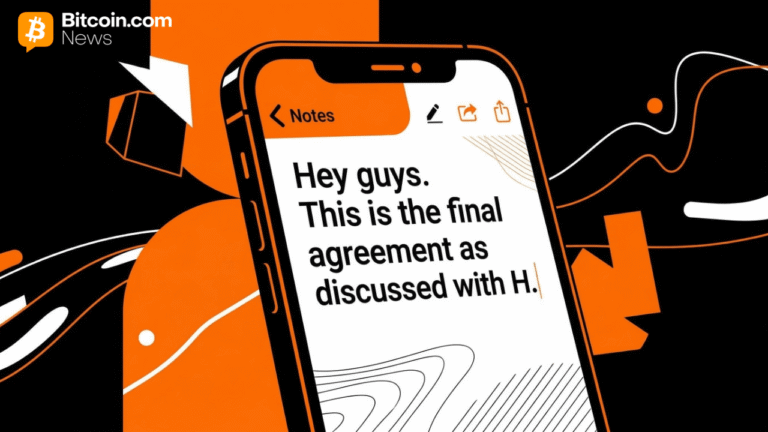
An alleged draft for a $5 million economic agreement to secure the support of Argentine President Javier Milei for the people behind Libra has been recovered from a seized phone. The document indicates that an undetermined party would receive this money in three tranches. $5 Million Pact Draft Found In Libra Case Investigation The case […]
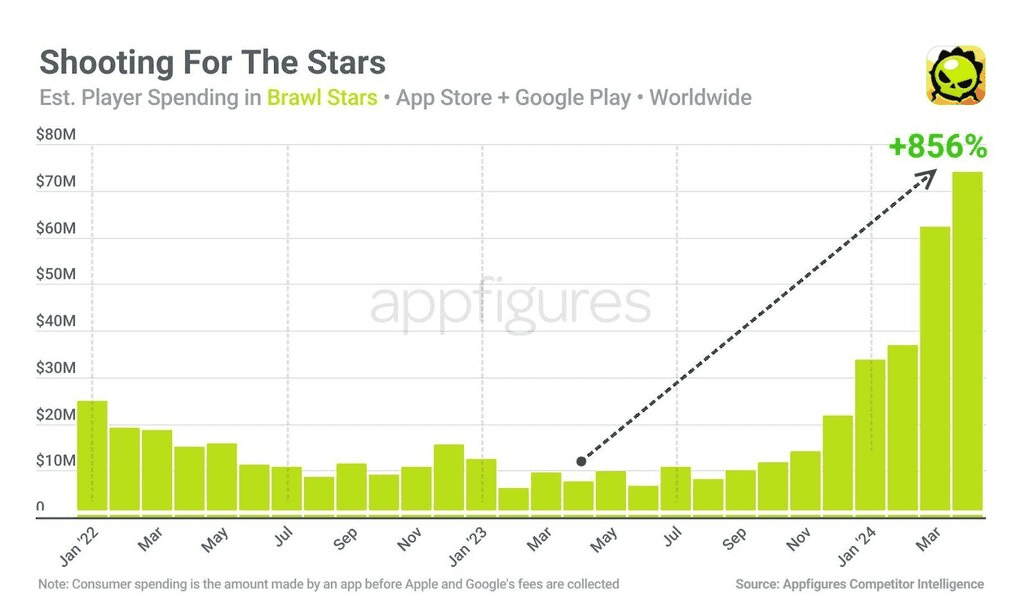
Brawl Stars almost didn’t exist. Supercell, a studio famous for killing its own games, spent 522 days in soft launch, wondering if the whole project was a waste of time. Fast forward to 2024, and the game pulled in $678 million in a single year. So what happened between “maybe we should kill this” and “this is the biggest game we’ve ever made”?
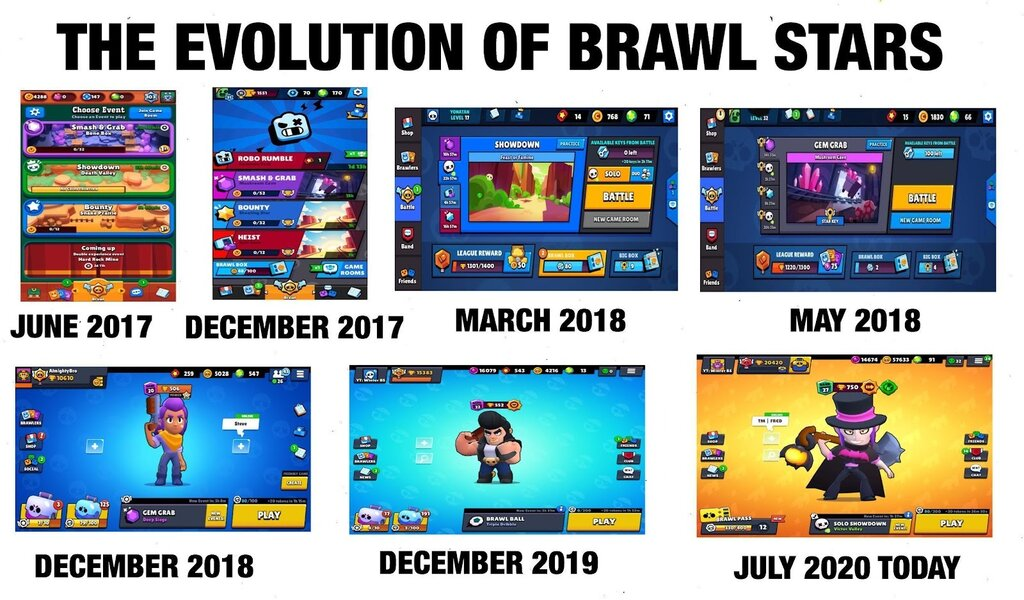
Over the next 522 days, the developers ripped the game apart and rebuilt it. Portrait became landscape. Tap controls gave way to dual-stick joysticks. The entire visual style shifted from 2D to 3D. According to GM Frank Keienburg, the team was working in a genre where they “weren’t sure how to interpret its success.” They were flying blind, and the community openly speculated that Supercell would kill the project entirely.
On November 14, 2018, Supercell announced the global launch, and over 5 million players pre-registered. When Brawl Stars officially went worldwide on December 12, 2018, it grossed $63 million in its first month.
The Numbers That Tell the Story
Metric
Early 2023 (Low Point)
Late 2024 (Peak)
Change
Monthly Active Users
~35M
84M (Dec 2024)
~2.4x
Daily Active Users
~5M
19M (Dec 2024)
~3.9x
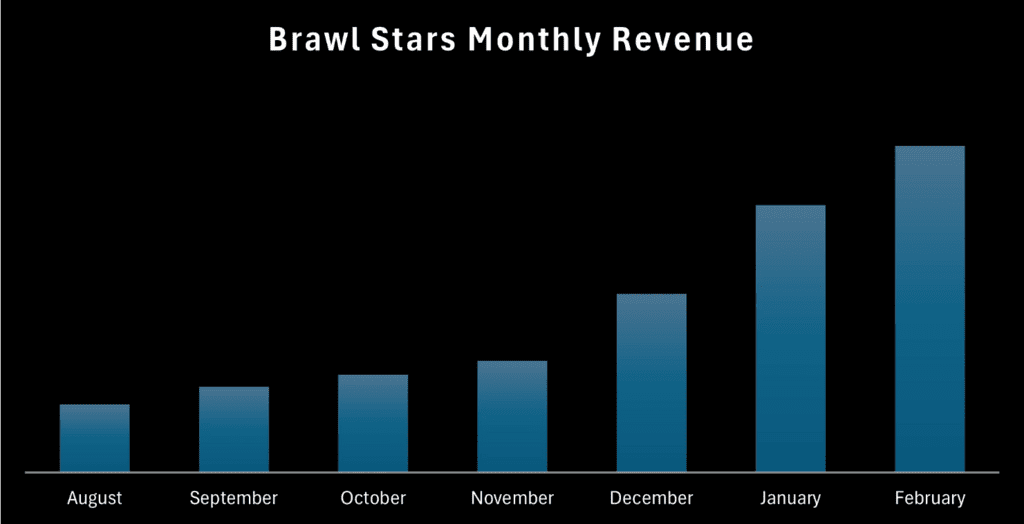
Monthly Revenue
~$7M
$45M (Dec 2024)
~8.8x
Annual Revenue
~$150M (2023)
$678.5M (2024)
~4.5x
Total Downloads
400M+
500M+
Continued growth
Those aren’t incremental gains. They’re the kind of numbers that make other studios question their entire live-service strategy. Supercell CEO Ilkka Paananen called the surge“historic”, and the company hit a record $3 billion in non-GAAP revenue for 2024, with Brawl Stars as the biggest driver.
The Secret Sauce: Hitting Rock Bottom First
Here’s the part most success stories leave out. From 2022 to 2023, Brawl Stars declined. Player counts were dropping. Revenue was sliding. The game that once felt electric was starting to feel stale.
What saved it wasn’t a single genius move. It was a philosophy shift. Supercell scaled the Brawl Stars team to 60-80 people and, critically, took the pressure off. With the company’s attention focused on Clash of Clans, the Brawl Stars crew had room to breathe. Keienburg summed it up perfectly: “Involved team + less pressure = higher levels of creativity, high appetite for risk-taking, better decisions, better updates.”
The old approach meant swinging for the fences every update, with two or three big features that each had a coin-flip chance of landing. The new approach mixed those big bets with smaller, high-confidence features that had a 90% chance of success. More frequent wins built player trust, and the bigger swings felt earned rather than desperate.
The Updates That Changed Everything
In June 2023, the team reintroduced random engagement rewards through Starr Drops, giving players three drops for every eight wins. Sounds simple. It was transformational. Between June 2023 and February 2024, the team shipped more than 25 new events and offers, borrowing proven engagement mechanics from social casino and puzzle games.
Then came the February 2024 Ranked mode overhaul, which replaced the aging Power League system. Ranked gave competitive players a real ladder to climb, with meaningful progression from Bronze through Legendary and up to the Pro tier. The 2025 rework added Masters II, III, and a requirement for Power 11 Brawlers at Mythic and above. This gave veterans a reason to keep grinding while casual modes kept the broader audience hooked.
The roster kept expanding, too. Brawl Stars now has over 100 brawlers across multiple classes, each with unique abilities and playstyles. That’s a staggering amount of variety for a mobile title, and a big reason whymany players are buying Brawl Stars accounts, which is another thing entirely.
Esports Put It on the Map
Supercell didn’t just grow Brawl Stars as a casual mobile game. They built it into a legitimate competitive scene. The 2024 World Finals in Helsinki featured a $1 million crowdfunded prize pool and drew a peak of 1.1 million viewers during the HMBLE vs. SK Gaming semifinal. That’s the most-watched event in Brawl Stars history, with 7.57 million hours watched across just 12 hours of broadcast.
HMBLE took the 2024 championship with a clean 3-0 sweep over Crazy Raccoon, pocketing $400,000. Crazy Raccoon got their revenge at DreamHack Stockholm in 2025, winning the seventh World Championship in front of a packed arena.
The esports angle does something critical for the game’s longevity. It creates aspirational content. When you watch pros pull off insane plays with Brawlers you own, you want to queue up and try it yourself. That feedback loop between watching and playing keeps the game relevant in a way that pure content updates can’t match.
Why It Worked When So Many Others Didn’t
The mobile gaming graveyard is packed with titles that launched strongly and faded within a year. Supercell’s own Squad Busters launched in May 2024, cleared $100 million in seven months, and was still considered a disappointment because it “ended up not being perfect for anyone”.
Brawl Stars avoided that trap by finding its identity, even if it took 522 days of beta agony to get there. The game nails the sweet spot between accessible and deep. You can pick it up in 30 seconds, but the skill ceiling in Ranked keeps you coming back for months. Three-minute matches fit perfectly into mobile play sessions, and the constant drip of new brawlers, skins, and events means the meta never sits still long enough to get boring.
With over 500 million downloads and $2 billion in lifetime revenue, Brawl Stars isn’t just a mobile hit. It’s one of the most successful games of the last decade, full stop.
Where Does Brawl Stars Go From Here?
The 2025 numbers show some cooling from the 2024 peak, with MAU settling around 73 million by mid-2025. That’s natural after an explosive year of growth. The real question is whether Supercell can sustain the creative energy that fueled the comeback. If the team keeps the same mix of smart risks and steady improvements that Keienburg described, there’s no reason Brawl Stars can’t keep growing its audience for years to come.
The next time someone tells you mobile games can’t be serious, show them Brawl Stars.
Milei sent messages to one of the main men behind Libra at the exact time he posted the memecoin’s contract address.
Lobbyist Mauricio Novelli also coordinated with Milei’s sister Karina and scripted the president’s media responses after the scandal erupted.
Communications show Novelli acted as “central node” between promoters and Argentine officials.
Argentine forensic experts have detected coordinated communications between President Javier Milei, his sister Karina, and the lobbyists and promoters of the Libra memecoin that collapsed shortly after the token went live, according to Argentine media outlet La Nación.
Official forensic analysis of lobbyist Mauricio Novelli’s devices shows Milei and Novelli exchanged at least five messages on February 14, 2025, around 7:01 PM Argentine time — the exact moment Milei posted the Libra contract code to X, according to La Nación.
At the time, Novelli was in the US with his business partner Manuel Terrones Godoy and the main man behind the Libra operation, Hayden Davis.
The communications went “in both directions,” which suggests Milei initiated messages to Novelli, revealing a “fluid back-and-forth” between the Argentine head of state and the lobbyist, reported La Nación.
The report adds another chapter to the scandal that started in February 2025 when Milei promoted a memecoin dubbed Libra and posted a contract code on X that allowed people to buy the token.
The token launched, surged briefly, then collapsed to zero within hours, which left thousands of investors with losses, and millions in profits to the memecoin’s creators.
The incident triggered congressional investigations and criminal probes into whether the Argentine president knowingly participated in a crypto scam.
Milei has repeatedly denied any wrongdoing.
Jony Viale interview
The forensic findings show that Novelli acted as the “central node” of communications between the memecoin’s promoters and those in Argentina, according to La Nación.
He exchanged messages with both Milei and Milei’s sister, who also exercises the role of chief of staff.
Notably, the analysis also shows that Novelli helped to coordinate Milei’s media response in the aftermath of the scandal, according to La Nación.
He and Milei discussed what the president would say — and omit — in a widely televised interview with pro-Milei journalist Jony Viale, according to La Nación.
They “exchanged ideas and suggestions about what to respond and what to keep quiet,” sources told La Nación.
In that interview, Milei claimed he had simply copied the Libra contract code from the internet and posted it to X. But experts who testified under oath before Congress confirmed the contract code was not publicly available online at 7:01 PM when Milei posted it.
Milei’s office didn’t immediately return a request for comment to DL News.
Pedro Solimano is a markets correspondent based in Buenos Aires. Got a tip? Email him at psolimano@dlnews.com.
Positive momentum is creeping back into the crypto market as March reaches its midpoint. Multiple altcoins are posting gains. Meanwhile, investors are actively hunting for the best cryptos to buy now before the next leg of the rally prices them out.
Among the strongest opportunities, Pepeto is pulling ahead of the pack. Built by the cofounder who turned PEPE into a $7 billion token, the presale has crossed $7.99 million. It is drawing serious attention ahead of exchange listings.
Bitcoin reaches 20 million coins mined as SEC and CFTC announce joint oversight
The 20 millionth Bitcoin was mined on March 10, leaving only one million coins to be created over the next 114 years. This scarcity milestone arrives as the SEC and CFTC announced a joint regulatory framework on March 6. This is the first coordinated oversight for digital assets, according to CoinDesk.
Combined with BlackRock’s staked Ethereum ETF and $55 billion in spot BTC ETF inflows, the institutional case for crypto keeps strengthening, per Bloomberg. Those searching for the best cryptos to buy now should watch how these developments reshape the market.
Coins with building momentum in March
1. Pepeto
Among the many reasons why Pepeto leads the list of the best cryptos to buy now, the most critical one is the cofounder behind it, the same person who built PEPE into a $7 billion token. That founder is now constructing dedicated trading infrastructure for the $45 billion meme coin economy. This market has never had its own swap platform, liquidity bridge, or curated exchange until now.
Pepeto is a three product ecosystem announced by the team and close to being ready: PepetoSwap for zero tax cross chain meme trading, Pepeto Bridge to unlock trapped liquidity, and Pepeto Exchange as a curated marketplace for verified tokens. Together they form the infrastructure backbone that the meme coin economy has been missing.
This infrastructure will open the gates to hundreds of millions of meme coin traders who currently have no dedicated platform.
All of this conviction is reflected in the speed at which capital is flowing into the presale. Over $7.99 million has already been committed by early wallets backing the PEPE cofounder’s next chapter. Given that Pepeto remains at presale stage pricing of $0.000000186, the upside from here is enormous. This is especially true once exchange listings arrive.
This upside grows further with 200% APY staking that compounds every token purchased before listings begin. SolidProof has verified every contract. Over 4 billion tokens have been permanently burned, tightening supply ahead of what many believe will be a 269x move after exchange debut.
But the presale will not hold this pricing forever, and only those who commit now alongside the PEPE cofounder will capture the full upside when the broader market catches on.
2. Pi Network (PI)
Pi Network received a significant boost from its Kraken listing, pushing PI from $0.218 to $0.294 in a single session. This 35% jump dominated crypto headlines. Even before that catalyst, PI was outperforming most altcoins in March. Some short term profit taking is expected, but a return above $0.30 could arrive in the coming days. PI trades near $0.19 after the initial spike cooled.
3. Bittensor (TAO)
Many of the best cryptos to buy now come from the AI token sector, and the project leading that space by market cap is Bittensor. TAO surged roughly 40% in the week ending March 13, climbing from $176 to $247. Some profit taking is normal, but TAO recovering the $250 level in the near term remains a reasonable expectation. It trades around $269 today.
Conclusion
Pi Network and Bittensor rank among the best cryptos to buy now, but the leading position belongs to Pepeto, backed by the cofounder who already proved he can build a $7 billion token.
And with the presale window shrinking, thousands of wallets are rushing to secure positions before listings make this entry point a memory.
If you want to be on the right side of this cycle, the countdown is running and the PEPE cofounder’s presale is the entry that disappears once listings go live. The clock does not reset.
Click To Visit Pepeto Website To Enter The Presale
FAQs
Apart from its founder, what else makes Pepeto one of the best cryptos to buy now?
Pepeto has three infrastructure products approaching launch: PepetoSwap, Pepeto Bridge, and Pepeto Exchange, all targeting the $45 billion meme economy. SolidProof has verified every contract and staking runs at 200% APY.
When will Pepeto holders access the products?
PepetoSwap, Pepeto Bridge, and Pepeto Exchange have been announced by the team and are close to being ready. Exchange listings are approaching, and early presale holders will be positioned before the broader market gains access.
What could drive Pepeto to major returns after listing?
The combination of the PEPE cofounder’s track record, $7.99 million raised, three products serving the meme economy, SolidProof verification, 200% APY staking, and over 4 billion tokens burned creates the conditions for significant post listing growth.
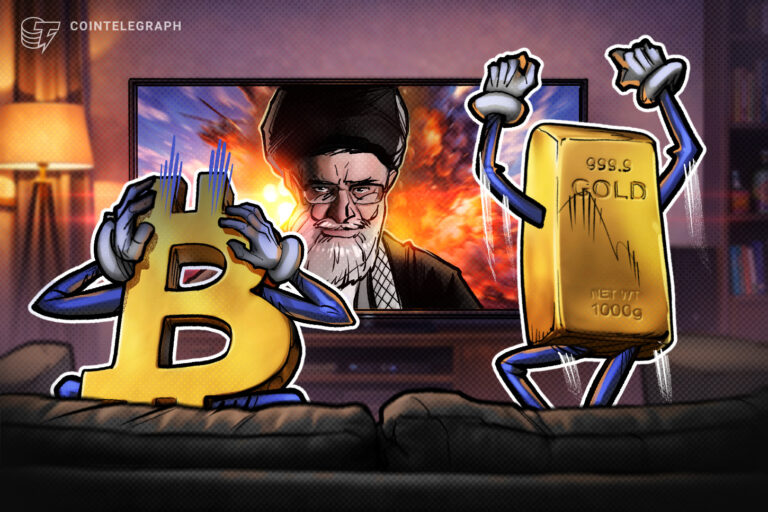
The 2026 Iran conflict created a major geopolitical shock that triggered volatility across global markets. It pushed investors to reassess traditional safe-haven assets such as gold and emerging alternatives like Bitcoin.
Gold initially benefited from safe-haven demand but later declined as the US dollar strengthened and bond yields rose. This showed that macroeconomic forces can override crisis-driven buying.
Bitcoin experienced volatility but recovered quickly, reflecting its growing role as an alternative asset. However, its price movements remained closely tied to market sentiment and liquidity conditions.
The strength of the US dollar played a key role in shaping both gold and Bitcoin’s performance, as rising demand for dollar liquidity influenced global asset flows.
Throughout history, geopolitical conflicts and periods of political instability have consistently triggered shifts in financial markets. When geopolitical tensions escalate, investors often seek to safeguard their capital by reallocating into perceived safe-haven assets that are expected to hold or increase in value during uncertain periods.
Gold has long been the benchmark safe-haven asset, prized for its scarcity, universal acceptance and track record as a store of value. In recent years, however, the rise of Bitcoin (BTC) has prompted widespread debate. Could this decentralized digital currency eventually assume a comparable role as a modern, borderless alternative?
This article explains how Bitcoin and gold responded differently to the geopolitical shock of the Iran war. It analyzes their price movements, market behavior and safe-haven roles, and examines what this divergence reveals about investor sentiment, liquidity dynamics and the evolving debate between traditional and digital stores of value.
2026 Iran conflict: A major geopolitical shock that rattled global markets
The 2026 Iran conflict offered a high-profile, real-time case study to examine whether Bitcoin behaved like a safe-haven asset. The conflict sent shockwaves through financial markets worldwide. Escalating military actions and threats to close the Strait of Hormuz sparked fears of major disruptions to energy supplies. About 20% of the world’s oil is estimated to pass through this crucial waterway, making it highly important for global energy markets.
As tensions grew, oil prices rose sharply, and financial markets turned highly volatile. Stock indexes around the world declined as investors reevaluated risks related to inflation, supply chains and future economic growth.
In times of such uncertainty, investors typically turn to assets seen as reliable stores of value. On this occasion, however, the response across different asset classes was more complex than usual.
Gold’s mixed performance as a safe-haven asset
At first, gold reacted as expected during a geopolitical crisis. Demand increased as investors sought safety amid the uncertainty.
As the conflict worsened, gold prices climbed higher while traders shifted funds into traditional safe-haven assets.
However, the upward movement in gold did not last long. Gold prices later dropped significantly when the US dollar strengthened and US Treasury yields rose. These factors often make the precious metal less attractive since it pays no interest or dividends.
At one point, gold fell more than 1% even as tensions continued to escalate. This highlighted how broader economic pressures, such as changes in interest rates or currency strength, can sometimes override safe-haven buying in the short term.
Such swings demonstrated that even a long-established crisis hedge like gold can experience temporary ups and downs when investors focus on liquidity needs or react to shifts in macroeconomic conditions.
Why investors sometimes sell gold during crises
One notable aspect of the recent Iran conflict shock was that investors temporarily sold off gold along with other assets. During periods of of extreme market uncertainty and panic, investors tend to prioritize raising cash urgently rather than holding commodities or securities.
During the early phase of the conflict, the surge in demand for US dollars and overall liquidity temporarily surpassed the appeal of gold as a safe haven. Moreover, soaring oil prices fueled inflation concerns, which drove bond yields higher and added further downward pressure on gold prices.
This pattern highlights a key insight. Gold has historically been viewed as a long-term hedge against geopolitical instability and economic turmoil. However, in the initial stages of a crisis, investors frequently favor immediate cash and liquidity to manage risks, margin calls or portfolio adjustments.
Did you know? The US holds the largest gold reserves in the world, about 8,133 metric tons. This accounts for roughly 78% of its official foreign reserves, highlighting how deeply gold remains embedded in the global monetary system.
Bitcoin’s reaction to the crisis: Volatile yet resilient
Bitcoin responded differently from gold during the conflict. In the opening phase of the geopolitical escalation, cryptocurrencies experienced sharp volatility as traders broadly reduced risk exposure and de-risked their portfolios.
That said, Bitcoin recovered after the initial volatility. Feb. 28, 2026, when the war began, Bitcoin reached a low of $63,106. By March 5, 2026, it had rebounded to $73,156 and then followed a steady trajectory to $71,226 by March 10, 2026.
Bitcoin’s price path signals renewed investor interest in alternative hedges against economic and geopolitical instability. Historically, Bitcoin’s price action has remained closely linked to overall market sentiment and prevailing liquidity conditions rather than being driven solely by geopolitical risks.
Did you know? Central banks around the world collectively hold around 36,000 metric tons of gold in their reserves, making it one of the most important reserve assets after the US dollar.
The role of US dollar strength
A key factor affecting both assets was the performance of the US dollar during the conflict. As investors scrambled for liquidity and perceived stability, the dollar strengthened significantly. Since gold is priced in dollars on global markets, a rising dollar generally exerts downward pressure on gold prices by making it more expensive for holders of other currencies.
Bitcoin is also sensitive to dollar dynamics. When capital flows toward traditional safe havens such as cash and reserve currencies during periods of uncertainty, demand for cryptocurrencies can soften temporarily, contributing to price weakness.
These interconnected factors, including dollar strength, liquidity preferences and risk-off sentiment, help explain the performance of gold and Bitcoin in this scenario. They also clarify why neither gold nor Bitcoin delivered a clean, sustained safe-haven rally during the initial phase of the conflict, despite their differing long-term characteristics.
Oil and inflation fears drove much of the market response
Energy markets were a dominant force shaping investor behavior during the conflict. The escalation drove oil prices higher, fueled by concerns over potential disruptions to shipping through the Strait of Hormuz. Any significant interruption in this critical chokepoint can elevate global energy and transportation costs, feeding into broader inflation pressures worldwide.
While inflation expectations tend to support gold over the longer term as a classic inflation hedge, they can produce the opposite effect in the short term. Rising inflation fears often prompt central banks or markets to anticipate tighter monetary policy, pushing interest rates and bond yields higher. Higher yields make interest-bearing assets more competitive relative to non-yielding commodities such as gold, creating downward pressure on gold prices in the near term.
Bitcoin’s link to inflation expectations is far less consistent. Bitcoin is generally viewed as a high-beta asset rather than a mature inflation hedge. As a result, its response to inflation signals tends to be more erratic and influenced by prevailing risk sentiment.
Did you know? Gold’s role as a safe-haven asset became especially visible during financial crises such as the Great Depression, when governments restricted private gold ownership to control capital flows and stabilize monetary systems.
What the divergence reveals about safe-haven status
The Iran conflict highlighted a fundamental difference between established and emerging safe-haven assets.
Gold is deeply embedded in the global financial and monetary architecture. Its centuries-long history, widespread accumulation by central banks and enduring role as a reserve asset provide strong credibility and trust during periods of geopolitical or economic stress.
Bitcoin, on the other hand, exists within a comparatively young and evolving digital financial ecosystem. Its price movements are shaped not only by geopolitical events but also by factors such as network adoption, regulatory developments, technological milestones and overall investor risk appetite across traditional and crypto markets.
This structural difference helps explain why Bitcoin and gold show distinct responses during the early stages of a crisis.
A real-world test of the “digital gold” narrative
For years, Bitcoin advocates have positioned it as “digital gold,” referring to a modern, decentralized alternative to the traditional safe-haven asset. The Iran conflict offered a real-world test of this claim.
While Bitcoin showed resilience during the war, its behavior diverged from that of a classic safe-haven instrument. Gold’s price action, however, remained anchored in familiar macroeconomic drivers such as dollar strength, inflation expectations and bond yield movements. Bitcoin’s volatility and recovery were shaped more by shifting investor sentiment, risk appetite and prevailing liquidity dynamics across broader markets.
This episode indicates that Bitcoin, while demonstrating growing credibility as a store of value under pressure, has not yet fully matured into a consistent safe-haven asset. Instead, it continues to evolve as a hybrid asset within the global financial system.
Cointelegraph maintains full editorial independence. The selection, commissioning and publication of Features and Magazine content are not influenced by advertisers, partners or commercial relationships.
Leah Callon-Butler recently wrote that crypto’s rock-and-roll era is over, and she’s mostly right about the arc. But I lived inside the music industry when rock and roll actually died, and there’s more to the story.
I was a product lead at Universal Music during the torrent era. I sat in the rooms where executives decided to sue grandmothers instead of building Spotify. I watched them spend more on lawyers than on artists. And eventually, I got fired for pointing out that we’d already lost.
So when someone uses rock and roll as a metaphor for what’s happening in digital assets, I know what the metaphor actually contains.
Here’s what the rock and roll era ending actually looked like from the inside. The loudest, most exciting part of the culture died while the boring infrastructure underneath it quietly became the thing that mattered. The rock stars disappeared. The streaming executives took over. And the audience grew even as the culture grew less interesting.
Callon-Butler frames this as a kind of mourning. The cypherpunk dream was diluted by ETFs and institutional custody. The laser eyes meme worn by presidents. And yeah, I understand the grief. I felt it watching Universal Music pivot from breaking artists to optimizing playlists.
But here’s where the music industry parallel actually gets useful, and nobody talks about this part.
The labels survived. They wrapped streaming and called it innovation. They went from fighting Napster to owning equity in Spotify. The same executives who wanted to destroy file sharing ended up profiting from the infrastructure file sharing forced into existence. The establishment absorbed the revolution and rebranded it.
That’s what’s happening right now with digital assets. JP Morgan is doing what Universal did with streaming. They’re wrapping the thing they fought and calling it a product. And just like with music, the audience is going to get bigger, the infrastructure is going to get better, and the culture is going to get less interesting. That part Callon-Butler nails.
But the part she misses is what happened next in music. Something the establishment couldn’t absorb.
While Universal was busy becoming a streaming company, ten thousand teenagers with blogs and bedroom studios were building something labels couldn’t wrap. The Swedish death metal kid. The Brazilian baile funk producer. The Detroit techno archaeologist. They didn’t know about each other. They didn’t even know Universal mattered. They just wanted to document what they loved.
And collectively, without any coordination, they created something institutions couldn’t replicate: infinite specificity. Every possible taste has its own ecosystem. Every microgenre has its own distribution channel. The monoculture dissolved into something so granular that no corporate structure could reassemble it.
The rock and roll era is obviously over. The question is what’s being built in the quiet spaces where the institutions aren’t looking.
Stablecoins are moving value across borders for people who’ve never heard of DeFi. Tokenized assets are creating markets in places where traditional finance never bothered to show up. Self-custody tools are getting quietly better while everyone’s distracted by ETF inflows. The boring infrastructure that makes the next wave possible.
I grew up in Argentina. I watched a government freeze bank accounts overnight and tell people their dollars were now worth a third of what they were yesterday. That experience teaches you something about money that stays with you forever. And it teaches you that the people who build the plumbing during the quiet periods are the ones who matter when things get loud again.
Callon-Butler asks whether crypto will stay weird. I’d reframe the question. The music industry stayed weird. It just stopped being weird in the places the executives were watching. The weirdness migrated to the edges, to bedroom producers, niche communities, and distribution channels that didn’t need permission.
Crypto’s rock-and-roll era ending is the most bullish thing that can happen to the industry. It means the adults showed up, and the adults bring capital that doesn’t leave when the vibes change. Crypto needs boring institutional plumbing. And that’s exactly what’s being built right now.
But somewhere out there, some kid in Lagos or Buenos Aires or Beirut is building something on these rails that nobody in a boardroom has imagined yet. They don’t even know the establishment exists. They just need the infrastructure to work.