

Bitcoin surged past $74,000 on Monday, driven by escalating tensions in the Middle East, marking its highest trading level since February. Altcoins Rally as Ethereum Hits Six-Week High Bitcoin ( BTC) surged past the $74,000 threshold on Monday as the cryptocurrency market continued to catch significant tailwinds from escalating Middle East war jitters. The rally […]
MoonPay Agents Introduces the First AI Agent Secured by a Ledger Signer
WHY THIS MATTERS
As AI-driven trading tools and autonomous agents gain traction in the crypto ecosystem, security has become a major barrier to adoption. Traditionally, giving an AI agent the ability to trade on behalf of a user required granting access to private keys—something many investors are unwilling to do. MoonPay’s integration with Ledger hardware signers addresses this concern by ensuring that private keys remain securely stored on hardware devices, while every transaction still requires explicit user approval. This model allows AI agents to assist with tasks such as portfolio rebalancing or cross-chain transfers without compromising control over digital assets.
MoonPay, the leader in global crypto payments, has announced native Ledger signer support for MoonPay Agents, making it the first CLI wallet with an integration enabling users to verify and sign every transaction on a Ledger secure signer. Private keys never leave the hardware.
The launch addresses the biggest barrier to autonomous AI trading: security. Until now, giving an AI agent access to your crypto meant giving up control of your keys. MoonPay Agents with Ledger support eliminates that tradeoff, giving agents full trading capabilities across Ethereum, Solana, and all major chains while the user signs every transaction using their Ledger signer.
“Autonomous agents will manage trillions in digital assets,” said Ivan Soto-Wright, CEO and Founder of MoonPay. “But autonomy without security is reckless. We built MoonPay Agents with Ledger so intelligence can scale without surrendering control. The agent executes. The human stays in the loop.”
What This Looks Like
A user can ask their agent to rebalance a multi-chain portfolio. The agent spots a yield opportunity on Base, wants to bridge USDC from Ethereum and asks the user to sign the transaction. The keys never leave the signer, and the user is responsible for approving all immutable transactions – there is no risk the agent will hallucinate and misuse the funds.
How It Works
Connect any Ledger signer (Ledger Nano S Plus™, Ledger Nano X™, Ledger Nano™ Gen5, Ledger Stax™, or Ledger Flex™) via USB to MoonPay CLI. The agent automatically detects wallets across all supported networks, including Base, Solana, Arbitrum, Polygon, Optimism, BNB Chain, and Avalanche.
Automatic Ledger app switching lets an agent move across multiple chains in a single workflow with no manual steps. Swaps, bridges, and transfers all routes through the Ledger signer for on-device approval.
“For years, Ledger integration has been a checkbox feature for wallets. There is a new wave of CLI and agent-centric wallets emerging, and these will need Ledger security as a feature, too. Congrats to MoonPay for being the first to leverage Ledger’s Device Management Kit and integrate Ledger into MoonPay Agents,” said Ian Rogers, Chief Experience Officer at Ledger.
Availability
Live now in MoonPay CLI versions 0.12.3. Get started at moonpay.com/agents.
FF NEWS TAKE
AI-powered trading agents are emerging as a new frontier in digital asset management, but security concerns remain a major hurdle.
MoonPay’s integration with Ledger highlights how the industry is attempting to combine automation with strict self-custody safeguards. As AI begins to play a larger role in managing crypto portfolios, solutions that allow users to maintain full control of their private keys while leveraging intelligent trading tools will likely become increasingly important.
Trump-linked WLFI passes proposal letting $5 million stakers buy ‘direct access’ to team

World Liberty Financial, the decentralized finance (DeFi) protocol linked to the family of U.S. President Donald Trump, put a $5 million price tag on ‘direct access’ to team members in an almost unanimous governance vote.
Token holders of the venture backed by Eric and Barron Trump passed a proposal on Friday that creates a three-tier staking system for its WLFI governance token.
The Base tier requires a 180-day lock-up to vote. The Node tier requires staking 10 million WLFI, roughly $1 million, and grants the ability to convert stablecoins to WLFI’s USD1 at 1:1 parity through licensed market makers. The Super Node tier requires 50 million WLFI, roughly $5 million, and grants “guaranteed direct access to the WLFI team for partnership discussions.”
The vote passed 99.12% in favor out of 1,800 votes cast. Over 76% of the voting tokens came from just 10 wallets.
WLFI spokesman David Wachsman told Reuters on Sunday that the “direct access” refers to the business development team and executives, not specific founders, and doesn’t guarantee a partnership.
The company’s own Gold Paper, however, lists co-founders Eric Trump, Barron Trump and Steven Witkoff’s sons Zach and Alex as part of the team “supporting the WLF commitment.”
The proposal’s stated motivation is redirecting value from market makers to long-term participants.
WLFI said that during its USD1 stablecoin expansion, market makers captured millions in arbitrage at roughly 15 basis points per cycle, and WLFI paid millions more in redemption subsidies. The Node and Super Node structure routes those economics to large stakers instead.
The Super Node tier is where the proposal goes beyond governance mechanics. WLFI currently receives “more partnership inquiries than it can productively engage with,” the proposal says.
The $5 million staking requirement “serves as a filter to prioritize projects and platforms that are actively supporting and participating in the WLFI ecosystem, rather than those seeking partnership on a purely opportunistic basis.”
Projects that want to talk to the team now need to invest in WLFI tokens and lock them for six months. That creates buying pressure on the token, reduces circulating supply, and generates a captive audience of large holders who are financially invested in the protocol’s success before any partnership discussion even begins.
Meanwhile, WLFI is also pursuing a national trust bank charter through the OCC, exploring tokenization of real estate and oil and gas assets, and considering the creation of a publicly traded company to hold WLFI tokens.
Fed headlines central bank rate decisions, Gemini earnings: Crypto Week Ahead
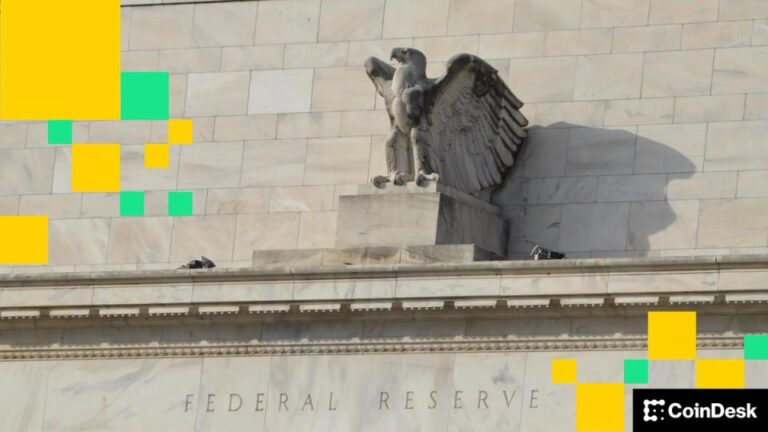
The week could prove pivotal for markets, including bitcoin , with the U.S. Federal Reserve among seven major central banks set to announce interest-rate decisions while war-driven oil price gains threaten to reignite inflation in the global economy.
Most of the central banks are expected to keep interest rates steady, but hawkish comments from policymakers, driven by inflation concerns, could trigger downside volatility across risk assets.
While reflationary environments have historically supported bitcoin, rising inflation expectations are pushing bond yields higher and tightening financial conditions, André Dragosch, European head of research at Bitwise, told CoinDesk. Those conditions generally make riskier investments less attractive.
Still, geopolitical tensions are currently dominating the market backdrop, according to Dragosch. Historically, such shocks tend to fade quickly, and bitcoin has often delivered above-average returns after periods of elevated geopolitical risk.
“Investors should generally fade these kinds of events and view them as short-term buying opportunities,” Dragosch said.
Bitcoin is trading at what Dragosch called the “biggest macro discount” on record, with sentiment near FTX-collapse lows. “We are probably closer to the bottom than the top,” he said.
What to Watch
(All times ET)
- Crypto
- March 17: Lava Network (LAVA) to expand with 17 new chain integrations and nine new blockchain ecosystems.
- March 19: Walrus (WAL) final deadline for Tusky users to migrate their data.
- March 23: Backpack token generation event occurs, with 250 million tokens (25% of total supply) to be distributed.
- Macro
- March 16, 8:30 a.m.: Canada consumer price index (CPI) YoY for February (Prev. 2.3%)
- March 17, 4:30 a.m.: Reserve Bank of Australia interest rate decision est. 4.1% (Prev. 3.85%)
- March 17, 10:00 a.m.: U.S. Pending Home Sales MoM for February (Prev. -0.8%)
- March 18, 6 a.m.: Eurozone consumer price index (CPI) for February. MoM est. 0.7% (Prev. -0.6%); YoY est. 1.9% (Prev. 1.7%)
- March 18, 8:30 a.m.: U.S. PPI for February. YoY est. 3.7% (Prev. 3.6%); Core PPI YoY est. 3.2% (Prev. 3.6%)
- March 18, 9:45 a.m.: Bank of Canada interest rate decision Est. 2.25% (Prev. 2.25%)
- March 18, 10:00 a.m.: U.S. Factory Orders MoM for January (Prev. -0.7%)
- March 18, 2:00 p.m.: Fed interest rate decision Est. 3.50%-3.75% (Prev. 3.50%-3.75%); FOMC economic projections
- March 18, 2:30 p.m.: Fed Chair press conference
- March 18, 5:30 p.m.: Central Bank of Brazil Selic rate decision Est. 14.50% (Prev. 15%)
- March 18, 11 p.m.: Bank of Japan interest rate decision Est. 0.75% (Prev. 0.75%)
- March 19, 4:30 a.m.: Swiss National Bank interest rate decision Est. 0% (Prev. 0%)
- March 19, 8 a.m.: Bank of England interest rate decision Est. 3.75% (Prev. 3.75%).
- March 19, 8:30 a.m.: U.S. Initial Jobless Claims for week ending March 14 Est. 215K (Prev. 213K)
- March 19, 8:30 a.m.: U.S. Philadelphia Fed Manufacturing Index for March (Prev. 16.3)
- March 19, 9:15 a.m.: ECB interest rate decision for main refinancing rate Est. 2.15% Prev. 2.15%
- March 19, 4:30 p.m.: Fed Balance Sheet for week ending March 18 (Prev. $6.65T)
- March 20, 8:30 a.m.: Canada PPI YoY (Prev. 5.4%); MoM (Prev. 2.7%)
Earnings (Estimates based on FactSet data)
- March 16: Bakkt Holdings (BKKT), post-market, -$0.47
- March 16: Bitcoin Depot (BTM), pre-market, -$0.47
- March 16: Cango (CANG), post-market, -$0.34
- March 17: CEA Industries (BNC), post-market, $0.69
- March 18: Bitfarms (BITF), pre-market, -$0.03
- March 19: Gemini Space Station (GEMI), post-market, -$0.91
- March 20: BitFuFu (FUFU), pre-market, $0.01
Token Events
- Governance votes & calls
- March 17: Mantle (MNT) to host State of Mind Ep. 07, discussing CeDeFi milestones and DeFi strategies.
- March 18: Jupiter (JUP) to hold its weekly Planetary Call community session with team updates.
- March 18: head of marketing & PR to discuss ecosystem updates.
- Decentraland DAO is voting on whether to allow registered users to customize the color of their avatar name tag and to add a more accessible volume slider to the UI sidebar. Voting ends March 16 and 17.
- Convex Finance is voting on Curve and Frax gauge weight allocations for the week of March 12, directing vlCVX voting power across hundreds of liquidity pools. It’s also voting on FXN gauge weight allocations for the same period. Voting ends March 17.
- Aavegotchi DAO is voting to finalize its 2026–2027 multisig signers election, preserving the 5-of-9 threshold and setting quarterly signer compensation. Voting ends March 17.
- Aavegotchi DAO is running Ballot 3 to elect seven of the remaining 10 nominees as multi-sig signers, completing the nine-signer roster for the DAO Foundation wallet. Voting ends March 17.
- Aura Finance is voting on Balancer gauge weight allocations for the week of March 12, directing vlAURA voting power across Balancer pools on Ethereum, Arbitrum, Optimism, Gnosis, Base and Avalanche. Voting ends March 17.
- ShapeShift DAO is voting on establishing and funding a new International UX workstream for six months to maintain professional multilingual translations of the ShapeShift app and website. Voting ends March 17.
- WalletConnect Network is voting on allocating 50 million WCT tokens as a dedicated rewards budget for WalletConnect Pay in 2026. Voting ends March 18.
- ENS is voting on a one-time transfer of 900,000 USDC from the ENS Endowment to wallet.ensdao.eth to cover a shortfall in stream payments owed to ENS Labs. Voting ends March 18.
- Cratos DAO is voting on extending the current mobile app reward standard deadline by one month to April 30, 2026. Voting ends March 19.
- Lightchain AI DAO is voting on a temporary 90-day team authority proposal, which grants the core team temporary operational authority for 90 days to make day-to-day and strategic decisions. Voting ends March 22.
- Unlocks
- March 16: Arbitrum (ARB) to unlock 1.78% of its circulating supply worth $9.65 million.
- March 20: LayerZero (ZRO) to unlock 5.64% of its circulating supply worth $52.45 million.
- Token Launches
Conferences
BXB Market Review 2026: How Ordinary People Are Learning to Trade Global Markets From Their Phone.

The online trading industry has experienced tremendous growth over the last two decades. People from almost any location can initiate trades of stocks, bonds, options, and futures with their favourite online brokers within seconds. Each brokerage competes against the others to offer the best services at the lowest fees.
One relatively new brokerage that has caught people’s attention is called BXB Market. It engages in Contract for Difference (CFD) trading, which is a type of trading where you bet on the speculation of future asset price movements. Traders don’t actually own the assets. They use a small deposit with a margin to leverage a large position on the assets based on whether the asset values will rise or fall.
What is BXB Market?
- Forex – The decentralized foreign exchange trading market for exchanging pairs of national currencies. The objective is to profit from the changing exchange rates.
- Metals – The values of precious metals like gold, platinum, and silver.
- Indices – The overall price movements within an entire global market, such as the U.S. or EU markets.
- Stocks – The stock price movements of national and multinational companies.
- Commodities – The price movements of common raw materials, such as crude oil, gasoline, gold, cotton, corn, and pork bellies.
- Cryptocurrencies – The versatile price movements of the biggest cryptocurrency assets, such as Bitcoin and Ethereum.
Traders can choose between the browser-based web platform or the mobile app to access these diverse financial markets for trading purposes. The web platform does not require any downloads or desktop applications. It is accessible directly through any web browser.
The simplicity of the BXB Market online brokerage platform is what makes it stand out the most. Whether you are a beginner or intermediate trader, you should not have any trouble navigating the interface to execute multi-asset CFD trading. You don’t need a lot of money to begin trading since the minimum deposit requirement is only $1. That is low enough for you to experiment with the platform without worrying about losing too much money.
MISA Regulated
BXB Market is a licensed broker that upholds the standards and regulations of the Mohéli International Services Authority (MISA), a mid-tier regulator located offshore within the Comoros Union of East Africa. MISA enforces strict guidelines to ensure brokers operate with total transparency when serving traders.
Offshore mid-tier regulators allow brokers to offer more flexible trading services, such as high leverage limits and lower minimum deposit requirements. Most top-tier regulators, such as Great Britain’s Financial Conduct Authority (FCA) or the Australian Securities and Investments Commission (ASIC), have much lower leverage limits and higher minimum deposit requirements.
Of course, traders must also be able to better manage the risks of their trades since there are fewer securities protections available. Someone without an effective CFD trading strategy could lose more money than they deposit if they don’t know what they are doing. That is why it is recommended to start with the lowest amount of leverage possible to develop your trading strategy before taking on more risk.
Web Platform vs. Mobile App: Which is Better?
BXB Market gives traders the option to access its CFD trading platform via the BXB Web Platform or the BXB Mobile App. Many new traders often wonder which option is better to use for trading CFDs. Let’s find out.
BXB Web Platform
The BXB Web Platform lets you trade CFDs on any personal computer and browser you want, such as Google Chrome, Apple Safari, Microsoft Edge, Mozilla Firefox, and Opera. There are no downloads or installations required.
Other trading platforms have complex layouts that tend to overwhelm users, whereas the BXB Web Platform has an easy-to-use interface with a simple layout. You won’t feel overwhelmed in the slightest when using it. You can access real-time market data, utilize basic drawing tools, and execute orders with a single click. All orders are executed instantly. There are no delays.
BXB Mobile App
The BXB Mobile App is a great tool if you prefer to engage in CFD trading while on the go. Download the app onto your smartphone to fully access your BXB Market account from any remote location. It will even synchronize the data with the trading activities from the BXB Web Platform.
The app lets you execute real-time trades, like with the web platform. You will also receive real-time price alerts and notifications based on your preferred settings. The intuitive layout of the mobile interface makes it easy for beginners to remotely manage their trading positions from any location and at any time.
The Three Account Types
BXB Markets offers three different types of trading accounts. Each account is designed for specific types of traders and their level of risk-taking.
Silver Account
The Silver Account offers all the essential features for entry-level traders to get started on the BXB Market platform. Although there are standard spreads with no swap discount, you may leverage up to 1:200 with a minimum lot size of 0.01 and a stop-out level of 5%.
Gold Account
The Gold Account is better for intermediate and advanced traders who want better pricing rates. Unlike the Silver Account, the Gold Account provides spread discounts and lower swap costs to accommodate more active traders.
Platinum Account
The Platinum Account is the best for experienced and professional traders who trade at higher volumes. It offers more competitive pricing with the tightest spreads and lowest swap fees compared to the other two account types.
Payment Methods
BXB Market gives you more payment method options than your average online brokerage firm. You may deposit using any of the following credit cards, debit cards, e-wallets, or online payment platforms:
- PayPal
- Visa
- MasterCard
- G Pay
- AstroPay
- Neteller
- Apple Pay
- Skrill
- Kuady
Deposits usually show up in your account instantly. As for withdrawal transactions, they may take more time depending on which payment method you have chosen. E-wallets typically have the fastest withdrawal speeds.
The Verdict
BXB Market is an exciting CFD trading platform with a simple user interface and multi-region customer support. Beginners and risk-takers alike will love the features and flexibility of the platform. It offers the perfect balance between advanced functionality and simple operation.
Australian Senate Committee Backs Digital Assets Framework Bill

Australia’s Senate Economics Legislation Committee has backed a bill that would require crypto exchanges and tokenization platforms to comply with the country’s existing financial services regime, recommending that the Corporations Amendment (Digital Assets Framework) Bill 2025 be passed.
The move on March 16 brings Australia a step closer to a bespoke licensing framework for “digital asset platforms” (DAPs) and “tokenised custody platforms” (TCPs), aimed at closing gaps in oversight of platforms that hold customer assets following the collapses of high‑profile digital asset businesses, such as FTX.
The bill, first introduced by Assistant Treasurer and Financial Services Minister Daniel Mulino in November 2025, would treat DAPs and TCPs as financial products under the Corporations Act and Australian Securities and Investments Commission (ASIC) Act, pushing most centralized exchanges and tokenized custody businesses that hold client assets into the Australian Financial Services Licence regime.
Related: Ripple targets April for Australian financial license via acquisition
Licensed platforms must meet ASIC-set custody and settlement standards, comply with tailored disclosure rules for retail clients, and operate under platform‑specific conduct and governance requirements, while small providers with annual transaction thresholds under 10 million Australian dollars ($7 million) and some public blockchain infrastructure are exempt.
Industry groups warnings around terminology
Industry groups cited in the report, such as law firm Piper Alderman, warned that the broad “digital token” and “factual control” tests could inadvertently include wallet software and infrastructure providers in non-unilateral-control setups, including common multi‑party computation (MPC) configurations.
US blockchain firm Ripple Labs backed “control” as the “appropriate nexus” for the regulatory perimeter, but argued that the bill needed to better accommodate modern security architectures such as MPC wallets.
It warned that, on a strict reading of the “factual control” test, technology‑only providers holding a single key shard could be misclassified as regulated custodians, and urged lawmakers to clarify that an entity does not exercise factual control unless it can unilaterally transfer an asset without the client’s cooperation.
Related: Australia warns of AI, ‘finfluencers’ as Gen Z crypto ownership reaches 23%
The committee acknowledged these concerns, but sided with Treasury’s plan to refine the perimeter through future regulations rather than rewriting the core definitions.
Coinbase hails progress but warns on debanking risk
In an email statement to Cointelegraph, Coinbase Australia director and APAC managing director John O’Loghlen welcomed the recommendation as “an important step for Australia’s standing in the global digital economy.” He argued that the country had the capital and talent to lead in digital assets, but still needed clear rules to unlock that potential.
O’Loghlen also warned that “the anti-competitive practice of debanking is rampant despite the government endorsing measures to address it back in 2022,” and urged Canberra to prioritize implementing the Council of Financial Regulators’ recommendations.
With the committee’s backing in hand, the bill now moves to the Senate for debate and a final vote at a later date.
Magazine: 6 weirdest devices people have used to mine Bitcoin and crypto
Cointelegraph is committed to independent, transparent journalism. This news article is produced in accordance with Cointelegraph’s Editorial Policy and aims to provide accurate and timely information. Readers are encouraged to verify information independently. Read our Editorial Policy https://cointelegraph.com/editorial-policy
Crypto trading firm Blockfills has filed for bankruptcy

Blockfills, a Chicago-based crypto trading firm, has filed for bankruptcy, as the crypto winter takes its toll on the industry.
On Sunday, BlockFills operator Reliz Ltd. and three affiliated entities filed voluntary Chapter 11 restructuring petitions in the U.S. Bankruptcy Court for the District of Delaware, according to documents seen by CoinDesk.
The court filing shows Reliz reporting assets between $50 million and $100 million against liabilities of $100 million to $500 million, a stark indicator of the mounting pressures in its crypto trading operations.
The company decided to file for bankruptcy after consulting all stakeholders, it said in an official statement.
“After extensive discussions with investors, clients, creditors, and other stakeholders, BlockFills has determined that a voluntary chapter 11 filing is the most responsible path forward in order to preserve the value of the business and maximize recoveries for stakeholders. This filing will allow the firm to implement an orderly restructuring while maintaining transparency and oversight through the court-supervised process,” it said.
“To that end, on March 15, 2026, certain BlockFills-related entities filed a voluntary petition to restructure under Chapter 11 of the U.S. Bankruptcy Code in the U.S. Bankruptcy Court for the District of Delaware,” it added.
CoinDesk reported last month that the crypto lender had lost about $75 million and was seeking a buyer or emergency funding.
BlockFills is a crypto trading and lending firm that provides liquidity, financing and risk-management services to institutional clients. Its platform facilitates crypto lending and borrowing, derivatives trading and over-the-counter (OTC) execution for hedge funds, asset managers, market makers and mining companies.
The company is backed by institutional investors including Susquehanna Private Equity Investments, CME Ventures, Simplex Ventures, C6E and Nexo Inc.
A U.S. federal judge issued a temporary restraining order (TRO) against BlockFills last week in a lawsuit brought by Dominion Capital.
Dominion alleged that the firm had misappropriated and improperly retained millions of dollars in customer crypto assets, commingled client funds and concealed significant losses.
BlockFills said on Feb. 11 it was halting customer withdrawals and deposits due to recent market and financial conditions.
The company said at the time it was working with investors and clients to reach a swift resolution and restore liquidity to the platform. CoinDesk later reported that the crypto lender had lost about $75 million and was seeking a buyer or emergency funding.
CoinDesk also reported that BlockFills co-founder and CEO Nicholas Hammer had stepped down from his leadership role. Joseph Perry is the firm’s interim CEO.
BlockFills said it processed more than $60 billion in trading volume in 2025, up 28% from the prior year, and is among the more active institutional crypto lending and borrowing desks. The firm serves about 2,000 institutional clients, including hedge funds, asset managers and mining firms.
Read more: U.S. judge freezes BlockFills assets in dispute over 70 bitcoin with creditor Dominion Capital
Australian Senate panel backs crypto regulation framework
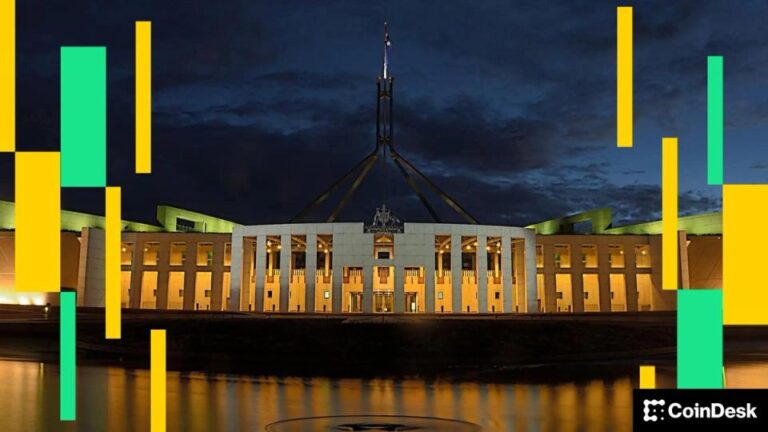
An Australian Senate committee has backed proposed legislation to integrate cryptocurrency platforms and custody providers into the country’s financial services framework.
The Senate Economics Legislation Committee said in a report published Monday that the proposed Corporations Amendment (Digital Assets Framework) Bill 2025 would modernize digital-asset oversight with traditional market safeguards to protect consumers.
The framework seeks to establish a licensing and compliance system for digital token managers by amending the Corporations Act 2001 and the Australian Securities and Investments Commission Act 2001.
The proposal targets firms that hold digital assets on behalf of customers, bringing them under existing financial services rules instead of attempting to regulate the underlying blockchain infrastructure. Should the measure become law, firms without an AFSL would be given six months to obtain the required authorization and comply with the new framework.
Crypto exchanges operating in Australia are already required to register with the country’s financial intelligence agency, the Australian Transaction Reports and Analysis Centre, as digital currency providers before offering exchange services.
ASIC has Warned Against Listening to Finfluencers and AI Financial advice

Australia’s financial regulator has urged young investors not to rely on social media influencers and artificial intelligence chatbots to make financial decisions, according to a study that also found that one in four “Gen Zs” invest in crypto.
The Australian Securities and Investments Commission (ASIC) posted the results of a survey on Sunday, finding that Gen Z has high levels of trust in “often unreliable sources,” which has contributed to riskier financial decisions.
“Moneysmart’s Gen Z study found that while Gen Z has a strong appetite for reputable and trustworthy financial content, many struggle to find it – and their search often leads them to sources designed for engagement rather than accuracy,” said ASIC.
ASIC took action against influencers over their financial social media content last year in June, issuing warning notices to 18 influencers “suspected of unlawfully promoting high-risk financial products and providing unlicensed financial advice.”
The latest survey, conducted between Nov. 28 and Dec. 10 last year with 1,127 respondents between 18 and 28, found that 63% of the group uses social media for financial information and guidance, while 18% use artificial intelligence (AI) platforms and 30% said they use YouTube specifically.
It also found that 56% of Gen Z say they “somewhat or completely trust” financial information on social media, with 52% saying the same of “finfluencers” — social media influencers primarily covering financial or investment niches who appear well-versed in finance.
AI, however, was the most trustworthy among Zoomers, at 64%.
ASIC calls for caution on crypto influencers
The survey also showed that 23% of Gen Z now own crypto in Australia, with 29% of these trading based on social media and influencer content, prompting a warning that influencers may “set unrealistic expectations” about investment returns, market volatility, and the intricacies of long-term investing.
Speaking with the Australian Financial Review (AFR) on Sunday, ASIC commissioner Alan Kirkland said the regulator has been keeping an eye on marketing activity designed to drive people to make investments, noting some of them are scams.
“We’re conscious that there’s a lot of marketing activity on social media to encourage crypto investment, and our work has shown some that is actually encouraging people to invest in scams,” Kirkland said.
“It’s really important for people to be aware of those risks, because you don’t see that same volatility in other types of investments and often that volatility is driven by forces that it’s impossible for an individual sitting in Australia to understand,” he added.
Kirkland also flagged Australian superannuation funds — a $4.5 trillion market made of retirement funds — as an area in which unqualified influencers are offering advice.
“We see it most where people are lured in through social media ads and then encouraged to switch their super, because super is often people’s most valuable asset, and that’s why disreputable people often target it and why it can be so tragic if people are encouraged to put it into a risky investment,” he said.
ASIC has AI financial advice in its crosshairs
Kirkland also told the AFR that ASIC is “watching very closely” what types of financial information are being derived from AI tools. The commissioner warned that licenses are required for anything that gives out information representing concrete financial recommendations.
“It is clear under Australian law that if any entity is giving financial advice, they need to be licensed. So if an AI tool, whoever’s providing it, is actually making recommendations about individual financial products, taking into account individual circumstances, that would be personal advice, so it needs to be licensed,” he said.
ASIC’s concerns come amid a number of crypto exchanges that have already integrated AI bots into their services to offer personalized trading guidance or “trading partners”, including the likes of MEXC, KuCoin and Bitget.
Related: Ripple targets April for Australian financial license via acquisition
“One of the most surprising findings from this research was the degree of trust young people are placing in AI platforms,” he said, adding:
“Depends very much on the nature of the questions you’re asking, how specific those questions are and the quality of the sources that AI is able to draw upon in order to serve us the results.”
AI financial information is not the only area ASIC is eyeing this year. In late January, the regulator warned that any crypto or AI firms exploiting licensing gray areas around payments in Australia will be one of its top priorities in 2026.
Magazine: Spot Bitcoin ETFs first green week, crypto ATM losses surge 33%: Hodler’s Digest, Mar. 8 – 14
Cointelegraph is committed to independent, transparent journalism. This news article is produced in accordance with Cointelegraph’s Editorial Policy and aims to provide accurate and timely information. Readers are encouraged to verify information independently. Read our Editorial Policy https://cointelegraph.com/editorial-policy
‘Integrity Infrastructure’ Key to Prediction Market Survival, Says Pred CEO

Prediction markets gained attention for their accuracy in forecasting events but now face scrutiny over allegations of insider trading and ethical concerns. Industry leaders like Amit Mahensaria advocate for a balance between self-regulation and necessary government oversight to ensure ethical standards while supporting innovation. The Debate Over Innovation and Oversight Since surging into the mainstream […]