Home Blog Page 741

XRP hovers near $14 million options battleground that could sway trading

0

XRP (XRP) is trading just above a level heavily targeted by derivative traders, making it a critical zone for near-term price action.

The payments-focused cryptocurrency changed hands at around $1.50 at press time, placing just above a notable concentration of options activity at $1.40 on crypto exchange Deribit. XRP is used by Ripple to facilitate cross-border transactions.

Options are derivatives contracts whose value is derived from an underlying asset, in this case XRP. They give traders the right, but not the obligation, to buy or sell XRP at a specific price (known as the strike) before a set expiry date. Call options are typically used to bet on upside, while put options are used to hedge or speculate on downside.

As of writing, about $6.95 million worth of call option positions were open at the $1.40 strike, alongside $7.69 million in put positions at the same level. In total, that brings the value of outstanding or “open” contracts at this strike to roughly $14.6 million, or nearly 25% of all XRP options open on the exchange. Most of this open interest in concentrated in the March 27 expiry.

CoinDesk reached out to Deribit for a comment on the same.

This kind of clustering at a single strike is unusual and typically signals that the market is approaching a key inflection point.

XRP options: Distribution of open interest. (Deribit Metrics)

As expiry approaches, this level may act as a magnet or gravitational price zone. Market makers, and traders who sold options at $1.40 and are “short gamma” could dynamically hedge their exposure, potentially pulling the price toward the strike. This phenomenon is widely referred to as “pinning.”

This concept is common in currency markets, where major currency pairs like EUR/USD often gravitate toward large strikes as expiry nears.

Traders, therefore, need to watch $1.40 level closely in the days ahead. A sustained move above it could leave much of the put-side open interest to expire worthless, while a drop below it could trigger hedging flows that amplify selling pressure.

Either way, the heavy concentration of options at this strike suggests that XRP’s short-term price action could be heavily influenced by how this open interest unwinds or gets settled.


Qomply Expands into Hong Kong as APAC Regulators Tighten Transaction Reporting Scrutiny

0

Qomply, a regulatory technology firm specialising in transaction reporting accuracy and data governance, has opened a new office in Hong Kong. The strategic expansion strengthens the firm’s presence in the Asia Pacific (APAC) region at a critical time, as transaction reporting requirements are being extensively rewritten and supervisory scrutiny becomes increasingly data-led.

This latest move builds on Qomply’s expansion into the United States last year to support Commodity Futures Trading Commission (CFTC) reporting obligations, reflecting a growing industry demand for on-the-ground support in multi-jurisdictional reporting programmes.

The APAC region is currently experiencing one of its most intensive transaction reporting change cycles in a decade. Extensive over-the-counter (OTC) derivatives reporting reforms have already rolled out in Australia under the Australian Securities and Investments Commission (ASIC) and in Singapore under the Monetary Authority of Singapore (MAS). Hong Kong implemented its own enhanced OTC derivatives reporting requirements on 29 September 2025, with transition work expected to continue heavily throughout 2026.

In parallel, Hong Kong’s Fintech 2025 Strategy is accelerating the broader digitisation of financial services. This initiative is raising the bar for scalable, well-controlled reporting operations capable of keeping pace with both evolving technical standards and intensifying supervisory focus.

Moving from implementation to enforcement

For many financial firms, this complex transition involves running parallel reporting systems and addressing legacy positions, which is currently stretching internal reporting teams and exposing critical gaps in data lineage and oversight. As these key reforms go live, regulatory attention is rapidly shifting away from simply interpreting new rules toward demanding proof that operational controls actually work in practice.

Once supervision shifts from guidance to closer review, supervisors across multiple jurisdictions are consistently identifying the same reporting weaknesses. These common operational failures include missing submissions, severe data inaccuracies, late reporting, and generally weak governance coupled with slow remediation efforts.

The end of ‘quiet’ regulation

Michelle Zak, managing director at Qomply, highlighted this shifting regulatory tone. She noted that the era of quiet regulation in the Asia Pacific region is officially ending. Following the recent regulatory rewrites from the HKMA and MAS, Qomply is observing a clear shift toward deeper data quality reviews and closer regulatory scrutiny, mirroring the strict enforcement environments firms have already experienced in North America and Europe. Zak warned that for organisations managing reporting across multiple jurisdictions, relying on a patchwork approach to compliance is becoming increasingly difficult to defend.

As enforcement actions become more heavily driven by data, financial firms are under mounting pressure to evidence auditable reporting frameworks and strong control coverage. Regulators are demanding clear accountability while pushing firms to reduce their reliance on manual remediation and decentralised workflows that inherently weaken data assurance. Qomply’s new Hong Kong office aims to support these firms directly as they work to strengthen their governance practices and improve overall reporting integrity across complex, multi-jurisdictional regimes.

Holders Cross 7.7M For First Time

0

Trusted Editorial content, reviewed by leading industry experts and seasoned editors. Ad Disclosure

On-chain data shows the total number of non-empty XRP addresses has set a new all-time high alongside a 5-week high in network activity.

XRP Total Amount Of Holders Is Sitting At A Fresh Record

As pointed out by on-chain analytics firm Santiment in a new post on X, XRP has set a new record in Total Amount Of Holders. This indicator measures, as its name suggests, the total number of addresses present on the network that are carrying a non-zero balance.

When the value of this metric rises, it can be a sign that investors are joining the network or old ones who had sold earlier are returning. The trend can also arise due to existing users creating fresh wallets for a purpose like privacy. In general, all of these factors can be assumed to simultaneously be at play whenever the Total Amount Of Holders goes up, so some net adoption of the asset could be considered to have occurred.

Now, here is the chart shared by Santiment that shows the trend in the XRP Total Amount Of Holders over the past month:

XRP Total Amount Of Holders

Looks like the value of the metric has steadily been heading up | Source: Santiment on X

As displayed in the above graph, the XRP Total Amount Of Holders has followed an uptrend in recent weeks, implying that the cryptocurrency has been getting a steady stream of new users. Today, the indicator is sitting at a value above 7.7 million, which is a new record for the blockchain.

The Total Amount Of Holders isn’t the only indicator that has seen a rise for XRP recently. As the analytics firm has highlighted in the same chart, the Daily Active Addresses has just witnessed a spike. This metric tracks the daily total number of addresses that are participating in some kind of transaction activity on the network.

While the Total Amount Of Holders measures the pure number of users that exist on the blockchain, the Daily Active Addresses provides an estimate for the amount of them who are active in their participation.

Following the latest spike in the Daily Active Addresses, 46,767 addresses are making transactions on the XRP network, which is the highest level in about five weeks. The elevation in activity has appeared alongside a price surge for the cryptocurrency.

Sharp price action tends to attract attention to the network, so it may not be a surprise that this rise in the Daily Active Addresses took place. Generally, price moves like this are sustainable so long as they can continue to invite engagement from investors, so it only remains to be seen whether the indicator will also be elevated in the coming days.

XRP Price

XRP briefly touched the $1.6 level during its latest rally, but the coin has since cooled back down to $1.5.

XRP Price Chart

The trend in the price of the coin over the last five days | Source: XRPUSDT on TradingView

Featured image from Dall-E, chart from TradingView.com

Editorial Process for bitcoinist is centered on delivering thoroughly researched, accurate, and unbiased content. We uphold strict sourcing standards, and each page undergoes diligent review by our team of top technology experts and seasoned editors. This process ensures the integrity, relevance, and value of our content for our readers.

Mastercard to acquire BVNK for $1.8 billion to expand stablecoin payments push

0

Mastercard agreed to buy BVNK, a stablecoin infrastructure company, for as much as $1.8 billion as it looks to bolster its use of the digital assets for international payments.

By integrating BVNK’s technology, Mastercard aims to connect onchain payments to its global network, enabling use cases such as cross-border transfers, remittances and business-to-business payments, the company said Tuesday.

BVNK provides the technology to bridge traditional fiat systems with blockchain-based transactions, allowing businesses to move money in seconds across more than 130 countries. Its infrastructure, used by firms including Worldpay, Deel and Flywire, processes $30 billion a year, the U.K.-based company said in a blog post.

BVNK’s capabilities complement Mastercard’s existing card network, expanding options for moving money across both traditional fiat systems and blockchain-based rails, investment bank William Blair said in a note.

“We see Mastercard’s BVNK acquisition as further affirmation of the stablecoin market for cross-border commerce, rather than B2C payments, which are well served by card,” the bank said.

The acquisition also highlights Mastercard’s growing push into digital assets as the adoption of stablecoins — digital tokens whose value is pegged to a conventional financial asset — accelerates. Just last week, it announced its Crypto Partner Program, which brings together more than 85 companies from across the digital asset and payments industries in an effort to link blockchain technology more directly with the infrastructure that underpins global commerce.

“We expect that most financial institutions and fintechs will in time provide digital currency services,” said Jorn Lambert, Mastercard’s chief product officer, in a statement. The deal will help bring “the benefits of tokenized money to the real world.”

Those capabilities complement Mastercard’s existing card network, expanding options for moving money across both traditional fiat systems and blockchain-based rails, investment bank William Blair said in a note.

Stablecoin payment volumes reached at least $350 billion in 2025, according to the company, with increasing regulatory clarity prompting banks and fintechs to explore offerings tied to tokenized deposits and blockchain-based money movement.

The agreement comes several months after Coinbase ended $2 billion acquisition talks with the stablecoin startup. At the time, a Coinbase spokesperson declined to provide a reason for the talks’ collapse.

The transaction, which is subject to regulatory approvals, is expected to close before the end of the year.

UPDATE (March 17, 12:45 UTC): Adds details on transaction, background starting in third paragraph, Coinbase’s approach in sixth.

UPDATE (March 17, 15:56 UTC): Adds analysis from investment, quote from investment bank William Blair.

TRON DAO Participates in Digital Assets and AML/CFT Forum Hosted by DCGG

0

This content is provided by a sponsor. PRESS RELEASE. Geneva, Switzerland, March 17, 2026 — TRON DAO, the community-governed DAO dedicated to accelerating the decentralization of the internet through blockchain technology and decentralized applications ( dApps), participated in the Digital Assets & AML/CFT Forum, hosted by the Digital Currencies Governance Group (DCGG) in Asunción, Paraguay, […]

SEC’s Paul Atkins Floats Crypto ‘Safe Harbor’ Exemptions

0

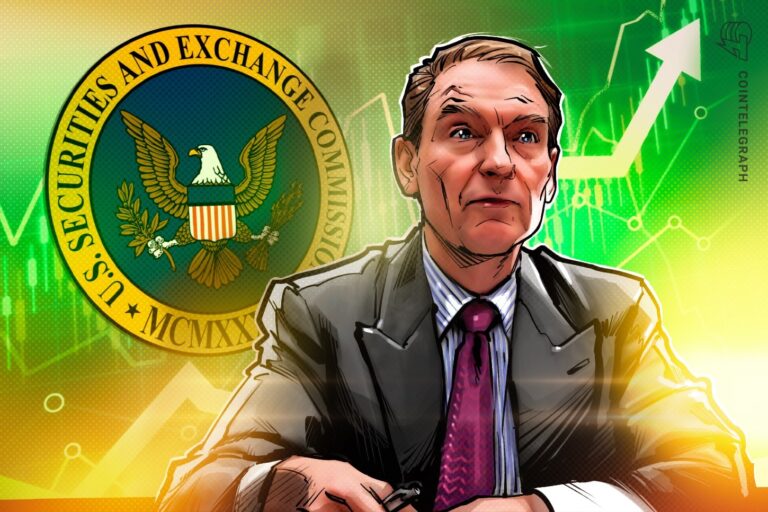
US Securities and Exchange Commission chair Paul Atkins says the agency should consider a “safe harbor proposal” to give crypto companies and some tokens a regulatory carveout.

Atkins said in remarks at a crypto lobby event in Washington, DC, on Tuesday that his safe harbor proposal was made up of a “startup exemption,” a “fundraising exemption,” and an “investment contract safe harbor.”

“It is past time for us to stop diagnosing the problem and start delivering the solution,” he said. “Such a safe harbor would provide crypto innovators bespoke pathways to raise capital in the US, while providing appropriate investor protections.”

The SEC, along with the Commodity Futures Trading Commission, on Tuesday also issued an interpretation that clarified what types of cryptocurrencies are securities and how “non-security crypto assets” could fall under securities laws.

Atkins outlines idea for crypto exemptions

In his remarks, Atkins said the SEC should consider a “startup exemption” to allow crypto companies to raise a defined amount of money or operate for a few years with enough “regulatory runway” to make it to maturity. 

He also floated a “fundraising exemption” to allow investment contracts involving crypto to raise up to a particular amount in any 12-month period while being exempted from registering under securities laws.

Atkins said his idea for an “investment contract safe harbor” would give crypto asset issuers and buyers certainty about when assets are subject to securities laws.

The safe harbor could apply once an issuer has “permanently ceased all essential managerial efforts” that it promised for the asset, Atkins said.

Related: DeFi lobby drops airdrop lawsuit against SEC, citing crypto shift

Atkins added that he expects the SEC to release proposed rules for the exemptions for public comment in the coming weeks.

He added, however, that “only Congress can ensure that regulation in this area is future-proofed through comprehensive market structure legislation.” 

A bill to outline the SEC’s crypto remit is currently stalled in the Senate as negotiations over its provisions are ongoing.

Magazine: How crypto laws changed in 2025 — and how they’ll change in 2026