Home Blog Page 693

BTC remains down sharply as Fed stays on hold

0

The Federal Reserve held its benchmark fed funds rate range steady at 3.50%-3.75% on Wednesday, as expected.

Down nearly 4% ahead of the anticipated decision following a surge in oil prices and poor inflation data earlier on Wednesday, bitcoin remained sharply lower at $71,600 in the moments following the news.

U.S. stocks remain lower for the day, with the Nasdaq and S&P 500 each down by 0.55%. The 10-year Treasury yield remains higher by a tick at 4.21%.

“The implications of developments in the Middle East for the U.S. economy are uncertain,” said the central bank in its accompanying statement.

The vote to hold policy steady was 11-1, with Stephen Miran voting to trim rates by 25 basis points.

The Fed also updated its economic projections. Of particular note was a sizable rise in inflation expectations — now seen at 2.7% for 2026 versus 2.4% previously. Inflation, however, is expected to drop to 2.2% in 2027 against 2.1% projected earlier.

The so-called “dot plot” continues to show expectations for one 25-basis-point rate cut in 2026 and one more in 2027.

The U.S. central bank must balance what appears to be a slowing employment market with inflation that remains well above its 2% target. Adding to that is the March attack against Iran, which has sent the price of oil to nearly $100 per barrel versus less than $60 earlier this year.

Investors will now turn their attention to Federal Reserve Chair Jerome Powell’s post-meeting press conference at 2:30 pm ET for further insight into the central bank’s outlook.

Algorand Foundation cuts 25% of workforce amid crypto market downturn: Algorand Foundation

0

The Algorand Foundation has laid off a quarter of its staff, citing macroeconomic uncertainty and depressed crypto prices as conditions worsen across the industry.

The Algorand Foundation has cut 25% of its workforce due to macroeconomic uncertainty and lower cryptocurrency prices. The layoff at the organization behind the layer-1 Algorand blockchain reflects broader challenges facing the crypto sector as market conditions deteriorate.

The Algorand Foundation’s reduction joins a wave of workforce cuts sweeping through crypto and blockchain companies. Other major players including Blockchain.com, Optimism Labs, and Gemini Space Station have similarly announced 25% staff reductions, signaling sustained pressure on the industry as crypto prices remain depressed.

Sources: Algorand on X

This article was generated automatically by The Defiant’s AI news system from publicly available sources.

Mastercard to acquire BVNK to connect on-chain payments and fiat rails

0

  • Expands capabilities to support greater choice in how people and businesses exchange value
  • BVNK’s digital asset infrastructure complements and extends Mastercard’s trusted global payments network, creating interoperability between fiat and stablecoins
  • Enables financial institutions and other customers to address new use cases with stablecoins, tokenized deposits and tokenized assets

Mastercard today announced a definitive agreement to acquire BVNK, a leader in stablecoin infrastructure, for up to $1.8 billion, including $300 million in contingent payments. The deal further expands Mastercard’s end-to-end support of digital assets and value movement across currencies, rails and regions.

Technology continuously evolves how value is exchanged between people and businesses. Digital assets powered by blockchain technology have the potential to make money movement faster and smarter. While nascent today, digital currency payment use cases are rapidly scaling, reaching at least $350 billion1 in volume in 2025.

With increased regulatory clarity on digital currencies in multiple geographies, financial institutions and fintechs are looking to offer their customers payment choices enabled by stablecoins and tokenized deposits.

Today, card payments offer unparalleled user experience, reach, acceptance and consumer protections for billions of consumers at hundreds of millions of acceptance locations and digital access points. Crypto wallets all over the world have embraced cards as the credential of choice to bring utility to digital currencies in consumer payments. Incremental opportunities for stablecoins and tokenized deposits lie in use cases like cross-border remittances, payouts, P2P and B2B payments. Over time, speed and programmability may also solve critical pain points in capital markets, treasury management and other commercial areas.

The key to support these use cases is to connect these rails seamlessly to existing fiat rails, applying the security, reliability and compliance standards that are the bedrock of payments. Mastercard is investing to ensure these payment options can be plugged into its network to ensure accessibility, interoperability and trust.

As different digital currencies and tokenized deposits are issued and their use cases scale, so too does the need for highly secure and compliant payment orchestration between fiat and digital currencies across multiple chains. Bringing the capabilities of BVNK and Mastercard together will deliver trusted interoperability at scale that can seamlessly connect across systems.

“We expect that most financial institutions and fintechs will in time provide digital currency services, be it with stablecoins or tokenized deposits. We want to support them and their customers with a best in class, highly compliant, interoperable offering that brings the benefits of tokenized money to the real world,” said Jorn Lambert, Chief Product Officer, Mastercard. “This acquisition reinforces what we have always done, using innovation and technology to power economies and empower people. Adding on-chain rails to our network will support speed and programmability for virtually every type of transaction.”

The acquisition adds to the company’s recent commitments, such as the Mastercard Crypto Partner Program, to foster more collaboration and innovation to maximize the opportunity in the next phase of on-chain payments for all involved.

Since its founding in 2021, BVNK has built deep expertise and industry-leading infrastructure to bridge fiat and stablecoins. Today, the BVNK platform enables sending and receiving payments for its customers on all major blockchain networks across 130+ countries.

“For all of the advancements made in simplifying the digital currency opportunity, we have only scratched the surface of what’s possible,” said Jesse Hemson-Struthers, Co-Founder and CEO, BVNK. “This deal brings together complementary capabilities to define and deliver the future of money. Together, we’re able to deliver an unprecedented infrastructure for digital currency-based financial services.”

The combined activities of Mastercard and BVNK would deliver a digital asset- and chain-agnostic approach, allowing customers to access the solutions best suited to their needs, without being locked into closed ecosystems.

The transaction, which is anticipated to close before the end of the year, is subject to regulatory review and other customary closing conditions.

Boltz Exchange Launches Atomic USDT Swaps For Lightning Network Users

0

Boltz Exchange launched USDT Swaps on March 18, 2026, introducing atomic, non-custodial swaps between sats on the Lightning Network and USDT on Arbitrum-based networks via USDT0.

The integration relies on USDT0, an omnichain version of Tether built on LayerZero’s Omnichain Fungible Token (OFT) standard. USDT0 concentrates liquidity into a single token primarily on Arbitrum, eliminating the need for Boltz to build separate liquidity pools and integrations across dozens of USDT chains like Ethereum, Polygon, Optimism, Rootstock, and others. This approach delivers seamless swaps to and from USDT to Bitcoiners that do not care to understand the complexities of blockchain bridge networks. While giving DEFI a direct path to lightning payments, without counterparty risk. 

Users also gain practical access to the world’s leading stablecoin, while sidestepping custody risks from centralized exchanges or anonymous “trust me bro” swap services, as well as the privacy trade-offs of KYC-heavy platforms. Business applications include topping up crypto debit cards that natively support USDT by converting Lightning sats in seconds, receiving Lightning payments when clients or counterparties send USDT, or merchants accepting USDT inflows but settling revenue in Lightning sats on their preferred terms—all without relinquishing control of funds or trusting third parties at any point. Its all open source.

Atomic swaps ensure trustless, simultaneous execution of trades across different blockchains or layers, preventing one party from defaulting after receiving assets. In traditional swaps, especially cross-chain, users face timing risks where one side could claim funds without delivering the other. Atomic swaps resolve this through cryptographic commitments (like hash preimages) and conditional claims: both legs of the trade either complete together or fail entirely, reverting funds to their original owners. Boltz achieves this for Lightning and USDT by routing through tBTC, Threshold’s permissionless ERC20 Bitcoin wrapper on Arbitrum. The flow is Lightning to tBTC via an atomic Boltz swap, then to USDT0 via a DEX swap akin to those on Uniswap, stitched into one irreversible transaction by the Router contract on Arbitrum. Gas abstraction removes the need for ETH on Arbitrum, making the process seamless for Bitcoin-native users.

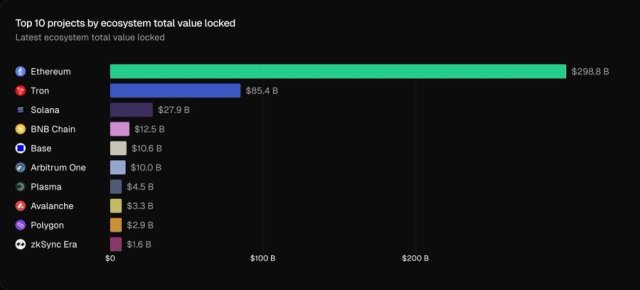
Boltz plans to expand USDT Swaps across all currently supported Bitcoin layers, including on-chain BTC, Liquid, Rootstock, and Arkade, broadening the utility for businesses and individuals holding Bitcoin in various forms. Future updates will also incorporate USDT0’s Legacy Mesh, which is expected to enable direct support for additional chains such as Tron and Solana. Tron currently holds the largest USDT supply at approximately $83.9 billion according to Tether’s March 17, 2026 transparency report, underscoring the demand for eventual integration on high-volume networks beyond the initial OFT-focused deployment.

Kraken Is Pausing IPO Due To Market Jitters: Report

0

Crypto exchange Kraken has suspended its plans for an initial public offering, sources familiar with the matter told CoinDesk. 

The company’s parent, Payward, had filed a confidential draft S-1 registration statement with the U.S. Securities and Exchange Commission in November 2025. The filing valued Kraken at $20 billion, following an $800 million funding round that included a $200 million investment from Citadel Securities.

Kraken had planned to go public this year but now faces a market environment marked by falling crypto prices and weaker trading volumes. The downturn has prompted many digital asset companies to reconsider timing and structure for public listings.

Last year saw a surge in crypto IPOs, with at least 11 companies, including Circle, Bullish, and Gemini, raising a combined $14.6 billion. 

So far in 2026, only crypto custodian BitGo has listed publicly, and its shares have declined 45%, highlighting the risks for new entrants.

Kraken has not ruled out a future IPO but appears unlikely to pursue one until market conditions stabilize. 

A company spokesperson reiterated the November announcement and declined further comment.

Kraken’s master account

Earlier this month, Kraken secured a master account with the Federal Reserve Bank of Kansas City, making it the first crypto-native firm to access the Fed’s core payment infrastructure.

The approval gives Kraken Financial direct entry into Fed payment systems, including Fedwire, a real-time network that handles trillions of dollars in daily transfers. 

This allows the firm to settle dollar transactions without relying on intermediary banks, streamlining operations for large customers.

Kraken’s master account does not provide all traditional banking privileges: it will not earn interest on reserves or access the Fed’s lending facilities. Nonetheless, the move represents a breakthrough for crypto firms, which have historically faced repeated rejections in efforts to connect to the central bank’s payment rails.

Sen. Cynthia Lummis of Wyoming called the approval a “watershed milestone” for digital assets. 

Other firms, including Ripple and Custodia Bank, have applied for master accounts, though approval has been uneven. 

Kraken’s success is a sign the Fed may explore “skinny” master accounts, granting crypto institutions limited access to payment rails without full bank benefits, signaling cautious but growing acceptance of crypto in mainstream finance

Under such a framework, crypto firms could connect to settlement systems while remaining outside certain capital and reserve regimes applied to depository institutions. 

.

Bitcoin Price Fights For $70,000 As Fed Holds Rates

0

The Federal Reserve on Wednesday kept its benchmark interest rate steady, maintaining the federal funds target range at 3.50% to 3.75%. Bitcoin price is fighting to hold $70,000 amid a complex backdrop of elevated inflation, slowing job growth, and war in the Middle East. 

The decision marked the second consecutive FOMC meeting with no change in borrowing costs and followed a pause that began after three rate cuts last year.

Bitcoin price responded to the announcement with a drop in trading, changing hands around $70,500, down 3.6% over the previous 24 hours, according to Bitcoin Magazine Pro. The cryptocurrency had flirted with $76,000 last week, reaching its highest level in over a month, but has since retraced as investors weighed inflation data and global uncertainties.

Voting members of the Federal Open Market Committee were split for a sixth consecutive policy meeting. Eleven supported holding rates steady, while Fed Governor Stephen Miran dissented, advocating a 25-basis-point cut. 

In its statement, the FOMC noted that “inflation remains somewhat elevated” and that job gains have remained low, even as the unemployment rate ticked up to 4.4% in February. The Fed emphasized a data-dependent approach to future adjustments, signaling that any decision will rely on incoming economic information.

The backdrop for the Fed’s policy deliberations included the ongoing war involving the U.S., Israel, and Iran, which has pushed energy prices higher. On Wednesday, Bitcoin price fell in tandem with U.S. stocks following reports that Israel struck the South Pars gas field in Iran.

“Uncertainty about the economic outlook remains elevated,” the FOMC said. “The implications of developments in the Middle East for the U.S. economy are uncertain.”

Federal Reserve Chair Jerome Powell discussed the implications of rising energy prices at a press conference. 

He said, “Near term measures of inflation expectations have risen in recent weeks, likely reflecting the substantial rise in oil prices caused by the supply disruptions in the Middle East.” 

He added that it is “too soon to know” the full economic impact of the conflict and that policymakers would continue to monitor data closely.

Bitcoin price reacts to tariffs, rate expectations

Powell also highlighted the influence of tariffs on consumer prices, noting that “some big chunk of that, between a half and three-quarters, is actually tariffs.” 

He described the current federal funds rate range as within neutral territory and emphasized the importance of central bank independence. 

“Independence is what allows us to do our jobs, and stable prices is half of our mandate, it’s one of our two mandates – maximum employment being the other,” he said.

Bitcoin price markets have historically been sensitive to interest rate expectations, as lower rates tend to make cryptocurrencies more attractive relative to traditional assets. 

Analysts suggest that the combination of higher energy costs, persistent inflation, and geopolitical uncertainty has prompted investors to reduce exposure to riskier assets, including Bitcoin.

Oil prices continued to climb Wednesday, with Brent crude rising 3.8% to $107.38 per barrel following the attack on the South Pars field. 

Despite the recent pullback, Bitcoin price remains above $70,000 for now and has recorded gains of 1.6% over the past week. Traders are watching closely for any signs from Powell or the Fed that could influence future monetary policy.

Powell’s term as Fed Chair will conclude in May, with former Fed Governor Kevin Warsh expected to succeed him if confirmed. Powell’s future on the Board of Governors remains undecided. 

He said, “I have no intention of leaving the board until the investigation is well and truly over, with transparency and finality.”

At the time of writing, the bitcoin price is slightly above $71,000.

What to Look for in Dealer AI Software

0

Artificial intelligence is rapidly transforming the automotive industry, especially in how dealerships interact with customers and manage operations. From responding to online inquiries to analyzing customer behavior, AI technologies are helping dealerships work more efficiently and improve the overall buying experience. As competition increases and digital engagement becomes more important, many dealerships are turning to AI solutions to stay ahead. However, not all AI tools offer the same capabilities or value. When evaluating AI for car dealerships, it is essential to understand which features and capabilities truly support dealership goals and improve performance.

Understanding the Role of AI in Dealership Operations

Artificial intelligence can support many areas of dealership operations, including marketing, sales engagement, lead management, and customer service. AI systems analyze data patterns, automate repetitive tasks, and provide insights that help dealerships make smarter decisions. For example, AI can help identify which website visitors are most likely to purchase a vehicle or determine the best time to follow up with a lead. By implementing AI for car dealerships, businesses can improve responsiveness, personalize communication, and streamline internal workflows.

Lead Management Capabilities

One of the most valuable uses of AI in the automotive industry is lead management. Dealerships generate leads from many sources, including websites, digital advertisements, social media, and online marketplaces. Managing these inquiries quickly and effectively is essential for converting interest into sales. AI-powered systems can automatically capture incoming leads, categorize them based on behavior, and assign them to the appropriate sales representative. When evaluating AI for car dealerships, it is important to look for tools that provide intelligent lead scoring, automated routing, and detailed tracking of customer interactions.

Real Time Customer Engagement

Today’s vehicle shoppers expect immediate responses when they reach out to a dealership online. AI software can provide real-time engagement through chat systems, automated messaging, and conversational interfaces. These tools can answer common questions, guide customers through inventory searches, and collect contact information for follow-up. Effective AI for car dealerships should provide seamless interaction with website visitors while ensuring that conversations can be transferred smoothly to human sales representatives when necessary.

Personalization and Customer Insights

Personalized communication is a key component of modern automotive marketing. Generic messages often fail to capture attention because they do not reflect the specific interests of the customer. AI software analyzes browsing behavior, vehicle preferences, and previous interactions to deliver tailored messaging. For example, if a visitor spends time browsing SUVs on the dealership website, the system may recommend similar vehicles or highlight special offers related to those models. When evaluating AI for car dealerships, personalization capabilities should be a priority because they significantly improve engagement and conversion rates.

Integration with Existing Dealership Systems

Dealerships rely on several different software systems, including customer relationship management platforms, inventory management tools, and dealership management systems. AI software must integrate smoothly with these existing technologies to provide maximum value. Without integration, data may become fragmented and difficult to analyze. Effective AI for car dealerships should connect directly with CRM systems so that customer data collected through AI interactions is automatically recorded and accessible to sales teams. This integration ensures that all departments have access to consistent and up-to-date information.

Automation of Repetitive Tasks

Many dealership tasks involve repetitive processes such as responding to inquiries, sending follow-up reminders, and updating customer records. AI software can automate these activities, allowing staff members to focus on higher-value tasks such as building relationships with customers. For example, AI systems can send automated messages confirming appointments, reminding customers about service visits, or providing updates about vehicle availability. When selecting AI for car dealerships, automation capabilities should be evaluated carefully to ensure they align with dealership workflows.

Data Analytics and Performance Insights

Data-driven decision-making is becoming increasingly important in the automotive industry. AI platforms collect and analyze large amounts of data related to customer interactions, marketing campaigns, and sales performance. These insights help dealerships understand which strategies are working and where improvements are needed. AI for car dealerships should include robust analytics tools that provide clear dashboards, reports, and performance indicators. These features allow dealership managers to evaluate marketing effectiveness, monitor lead conversion rates, and identify trends in customer behavior.

Predictive Intelligence

Predictive intelligence is one of the most powerful aspects of AI technology. By analyzing historical data and behavioral patterns, AI systems can forecast future outcomes and recommend strategic actions. For example, predictive analytics can identify which leads are most likely to purchase a vehicle or which customers may be ready to trade in their current vehicle. When considering AI for car dealerships, predictive capabilities can provide a significant competitive advantage by helping sales teams prioritize their efforts and focus on high-potential opportunities.

Ease of Use and Staff Adoption

Even the most advanced AI software will fail to deliver value if dealership staff members find it difficult to use. Ease of use should therefore be a major consideration when evaluating AI solutions. The software interface should be intuitive and easy for employees to learn without extensive technical training. Additionally, the platform should support clear workflows that align with existing dealership processes. AI for car dealerships should empower staff rather than create additional complexity.

Scalability and Flexibility

Dealerships often experience growth in customer traffic and lead volume as marketing campaigns expand and digital presence increases. AI software should be capable of scaling alongside the dealership’s operations. Platforms that perform well with small volumes of leads may struggle to manage higher demand if they lack scalable infrastructure. When selecting AI for car dealerships, businesses should choose solutions that can handle increasing data volumes, customer interactions, and communication channels without compromising performance.

Customer Experience Enhancement

At its core, AI technology should enhance the customer experience rather than replace human interaction. Buyers still value personal relationships when making major purchases such as vehicles. AI systems should therefore support dealership staff by providing helpful insights and automating routine tasks while allowing human representatives to handle complex discussions. Effective AI for car dealerships balances automation with personalized service to ensure that customers receive both efficiency and genuine support.

Security and Data Privacy

Customer data is one of the most valuable assets a dealership possesses. AI software must include strong security measures to protect sensitive information such as contact details, purchase history, and financing data. Dealerships should ensure that any AI platform they implement follows industry security standards and complies with relevant privacy regulations. When evaluating AI for car dealerships, security features such as data encryption, user access controls, and secure cloud infrastructure should be carefully reviewed.

Vendor Support and Ongoing Development

Technology continues to evolve rapidly, and AI platforms must adapt to changing industry demands. When selecting AI software, dealerships should consider the level of support provided by the vendor. Reliable vendors offer onboarding assistance, training resources, and responsive customer service to ensure smooth implementation. In addition, they continue to improve their software with regular updates and new features. Choosing a provider committed to innovation ensures that AI for car dealerships remains effective as new technologies emerge.

Cost Versus Long-Term Value

Budget considerations play an important role in any technology investment. While AI solutions may require an initial financial commitment, they often generate long-term value by improving efficiency and increasing sales opportunities. Dealerships should evaluate the potential return on investment when comparing different platforms. AI for car dealerships can reduce manual workload, enhance customer engagement, and provide insights that lead to better marketing and sales decisions. These benefits often outweigh the initial costs of implementation.

Conclusion

Artificial intelligence is becoming an essential tool for dealerships seeking to compete in a digital-first marketplace. AI software can automate tasks, provide valuable insights, and improve customer engagement across multiple channels. However, selecting the right platform requires careful evaluation of features such as lead management, real-time engagement, personalization, integration, automation, analytics, and security. When dealerships invest in effective AI for car dealerships, they gain powerful tools that support both operational efficiency and customer satisfaction. By choosing solutions that align with dealership goals and workflows, automotive businesses can position themselves for long-term success in an increasingly technology-driven industry.


Bankrupt exchange FTX set to repay $2.2 billion to creditors this month

0

FTX Recovery Trust announced Wednesday it will distribute roughly $2.2 billion to creditors on March 31 as part of its ongoing bankruptcy recovery process, with additional payments to preferred equity holders scheduled later this year.

The payout marks the fourth distribution under FTX’s Chapter 11 reorganization plan and will go to creditors in both “Convenience” and “Non-Convenience” classes who have completed required onboarding steps, the trust’s statement says. Funds are expected to arrive within 1 to 3 business days via BitGo, Kraken, or Payoneer.

The trust also clarified all distributions are made in U.S. dollars to designated service providers, which then offer options for fiat withdrawal or conversion into digital assets.

The previous distribution to creditors took place from Sept. 30, when the trust announced the release of $1.6 billion, the third major payout since the collapse of the crypto exchange more than three years ago.

Earlier rounds totalled over $6 billion as part of a process aimed at recovering assets for users of the once-prominent cryptocurrency exchange, which collapsed in November 2022, triggering a steep crypto bear market. Sam Bankman-Fried, the founder and CEO of the exchange, is serving a 25-year sentence after being found guilty of seven counts of fraud and conspiracy.

The latest distribution pushes recovery rates higher across several claim classes, the trust said. The statement added that in this fourth distribution, those eligible for distribution classed as “Class 5A Dotcom” would receive an additional 18% (bringing total recovery to 96%), while U.S. customer claims classed as “5B” would reach full recovery at 100%. Those in classes “6A” and “6B” would also recover 100% recovery, each receiving a 15% increment. “Class 7,” meanwhile, would receive a cumulative 120% distribution, the statement said.

FTX said customers who opted to receive funds through a designated distribution provider have waived their right to direct cash payments and must work with those platforms to access their funds.

The estate also set April 30 as the record date for its first payments to preferred equity holders, with payments scheduled for May 29. Eligible holders must complete ownership certification, know-your-customer (KYC) verification and tax documentation to qualify, the trust said.

FTX began outreach to equity holders earlier this year and urged those who have not been contacted to come forward. Further distribution timelines are expected to be announced, the statement concluded.

Bitcoin Trips After FOMC But Bulls May Keep Buying

0

Key takeaways:

  • Spot market demand through US-listed ETFs and Strategy buying BTC supports Bitcoin’s bullish momentum.

  • Low leverage among Bitcoin bulls reduces the risk of cascading liquidations even if prices drop another 5%.

  • Rising inflation concerns negatively impact fixed-income returns, paving the way for an eventual rotation from gold into Bitcoin.

Bitcoin (BTC) faced a 7% correction after flirting with the $76,000 level on Tuesday. The downturn followed a decline in the US stock market after oil prices surged due to Israel attacking Iran’s largest gas processing facility and the US producer price index rising above expectations.

Despite the recent losses, there is no indication that Bitcoin’s bullish momentum has faded, given how the S&P 500 and US Treasuries have behaved amid worsening macroeconomic conditions. Additionally, Bitcoin bulls have avoided excessive leverage, reducing the risks of cascading liquidations.

WTI oil futures (left) vs. S&P 500 futures (right). Source: TradingView

The S&P 500 index traded merely 4% below its all-time high on Wednesday despite recent weak US job market data and continued pressure from the ongoing war in Iran. The US reported continued jobless claims relatively steady at 1.85 million in the week ending March 7. On Wednesday, the US announced that wholesale prices gained 3.4% in February versus the prior year, the largest gain in 12 months.

As oil prices jumped above $98, investors became more convinced that the US Federal Reserve will not be able to ease monetary policy throughout 2026. CME FedWatch Tool showed that odds for a steady interest rate by September plummeted to 42% on Wednesday, from 89% one month prior, according to implied odds on futures markets.

Bitcoin under pressure as prolonged war risks heighten investors’ risk aversion

Sticky inflation and the prospect of a prolonged war reduced the odds of economic stimulus focused on expansion, causing investors to avoid risk. However, there is no reason to believe that traders anticipate an imminent crash, at least judging by how interest rates are priced relative to inflation expectations.

US 2-year Treasury minus inflation expectation. Source: TradingView / Cointelegraph

The 2-year Treasury yield traded at 3.71% on Wednesday, while the Cleveland FED 2-year inflation expectation stood at 2.27%, resulting in a 1.44% adjusted return. During periods of extreme fear, higher demand for government bonds tends to result in near zero or negative returns. Conversely, a lack of confidence in US monetary policy can push the indicator to 2.5% or above.

Even if Bitcoin drops another 5% in the upcoming weeks, there is no indication of excessive leverage demand from bulls, meaning low risk of cascading liquidations. Recent bullish momentum has been supported by the spot market, especially through US-listed spot Bitcoin ETF accumulation and Strategy’s (MSTR) aggressive buying activity.

Estimated BTC futures liquidation levels, USD. Source: CoinGlass

CoinGlass estimates that $450 million worth of leveraged long Bitcoin futures would be forcefully terminated down to $68,000, representing less than 1% of the current $49 billion aggregate open interest. The Bitcoin perpetual futures funding rate confirms that bears are becoming overconfident as demand for leverage on short positions has increased.

Related: 74% of institutions expect crypto prices to rise in 12 months–Survey

Bitcoin perpetual futures annualized funding rate. Source: Laevitas.ch

A negative funding rate means shorts are the ones paying to keep their positions open. More importantly, the indicator stood below the neutral 6% to 12% range even as Bitcoin price surged above $76,000, reinforcing the thesis of spot demand sustaining momentum rather than speculation using derivatives markets.

Gold prices dropped to $4,900 on Wednesday, showing signs of exhaustion after holding levels above $4,800 for four weeks. An eventual rotation out of gold could be the trigger for a sustained Bitcoin rally, especially as inflation concerns negatively impact expected returns for fixed-income assets. Overall, there is little indication that Bitcoin’s current bullish momentum has faded.