Home Blog Page 691

What Bitcoin’s (BTC) falling hash rate might mean for prices

0

Bitcoin’s hash rate is tumbling as the Middle East conflict drives up energy prices, adding pressure to the mining sector and broader market.

The drop in hash rate is likely tied to geopolitical tensions due to the war against Iran and surge in oil prices, given that an estimated 8% to 10% of global bitcoin mining operates in energy markets sensitive to energy costs.

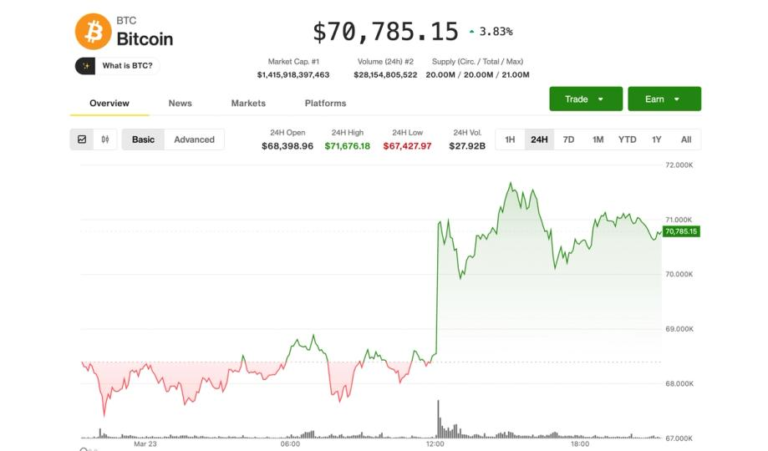
With hash rate down roughly 8% over the past week to 920 EH/s, the network may be entering another phase of miner capitulation. Historically, such periods have coincided with downside pressure on bitcoin’s price, which is currently trading below $72,000, roughly 5% below its Monday high.

As a result, the network is set for an approximately 8% downward difficulty adjustment, which would mark the second-largest negative shift in the past five years, according to mempool.space.

This decline follows one of the largest difficulty drops on record in mid-February, highlighting significant volatility in mining activity.

As a result of rising competition, persistently low transaction fees, and bitcoin price volatility, this has squeezed margins and pushed many publicly traded miners to diversify into AI and high-performance computing, alongside increased bitcoin sales to support operations, acting as a headwind for the bitcoin price.

SBI VC Trade Launches Japan’s First Licensed USDC Lending Service

0

SBI VC Trade has become the first licensed exchange in Japan to launch a USDC lending service, offering an introductory 10% annual yield. SBI VC Trade, a subsidiary of SBI Holdings, announced it will launch its “USDC Lending” service on March 19th, 2026, marking a first for licensed operators in Japan. The service allows customers […]

‘We think we’ve got it”

0

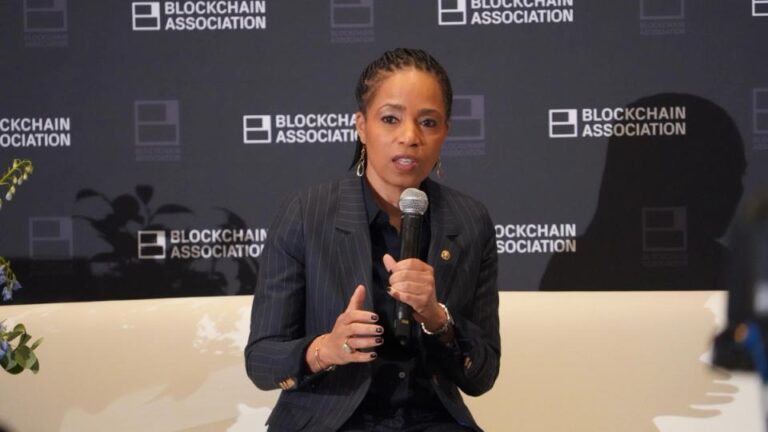
U.S. Senator Cynthia Lummis, a lawmaker at the center of talks on the crypto industry’s top policy goal to pass a market structure bill, said the talks have probably reached the necessary compromises to move the legislation forward.

“We think we’ve got it,” Lummis, the chairwoman of the Senate Banking Committee’s digital assets subcommittee, said at the Digital Chamber’s DC Blockchain Summit on Wednesday. “We really are going to get it out of the banking committee in April.”

Lummis has been deeply involved in months of talks over the Digital Asset Market Clarity Act language. After the process was derailed by bank lobbyists who’d argued that stablecoin yield would threaten their industry’s deposit accounts, much of the debate centered on stablecoin rewards programs that the crypto industry believed were still allowed under last year’s Guiding and Establishing National Innovation for U.S. Stablecoins (GENIUS) Act.

The Wyoming Republican said she believes the final compromise will disallow crypto platforms from offering rewards that use any language that equates them with deposit yield or ties the rewards to the amount of assets a user holds.

“Anything that sounds like banking product terminology will not appear,” she said. She added that she hasn’t seen the most recent language, but she said that Coinbase CEO Brian Armstrong has been “really pretty good about being willing to give on this issue.”

Armstrong and his U.S. exchange, which has leaned heavily into stablecoin rewards programs, had opposed an earlier compromise effort, which had initially helped derail the legislative process on this bill.

Senator Bernie Moreno, another Republican on the committee, said in a video statement at the same event that two of his colleagues on the panel, Democrat Angela Alsobrooks and Republican Thom Tillis are in the final stage of the stablecoin talks, which also involves the White House. Once they all sign off, it’s “go time” for the bill.

Previous disagreements over language governing the security of decentralized finance (DeFi) has also been worked out, Lummis said.

But at the same event, Democrat Senator Kirsten Gillibrand, a frequent partner of Lummis on crypto issues, said that another issue that needs to be resolved is the Democrats’ request that the bill bans senior government officials from personally profiting from the crypto industry — a concept that especially targets President Donald Trump.

“It’s very important that we include this,” she said on Wednesday. No government official in Congress or the White House should “get rich off their position and their knowledge base,” she said, and including such restrictions will “unlock many more votes” from Democrats on the bill.

Lummis suggested the legislation will get a hearing after the Senate’s Easter break, pointing to late April. If it does clear such a hearing, known as a markup, that will mark the second necessary committee approval (after the Senate Agriculture Committee had already passed a version earlier this year). Then it gets reworked into a combined version that could eventually face a vote by the overall Senate.

The Senate’s schedule, however, is very much in flux. Both parties are threatening unrelated legislative tussles over other legislation and the war in Iran, which could occupy valuable floor time in the coming weeks. And the Senate’s 2026 session will also be shortened by the midterm congressional elections later in the year.

“We’re going to have this thing done, come hell or high water, before the end of the year,” Lummis said.

UPDATE (March 18, 2026, 15:18 UTC): Adds comments from Senator Bernie Moreno.

UPDATE (March 18, 2026, 16:28 UTC): Adds comments from Senator Kirsten Gillibrand on the bill’s ethics provision.

UWE Bristol and FinTech West Partner to Bridge the Fintech Talent Gap in the South West

0

The University of the West of England (UWE Bristol) has formed a strategic partnership with FinTech West aimed at drawing on specialist industry expertise to create stronger graduate pathways.

Driven by UWE Bristol’s Business School, the newly formalised partnership follows several years of close collaboration between the two organisations. It is fundamentally built around enhancing the overall student experience and boosting employability within the financial technology sector.

As part of the initiative, FinTech West will actively co-develop UWE Bristol’s MSc FinTech programme. The organisation will leverage its extensive network to connect students directly with live industry projects, provide access to internships, and offer opportunities to build professional networks with active practitioners, mentors, and potential employers.

Cultivating entrepreneurial talent

The MSc FinTech programme has been specifically designed to offer students a distinctive blend of technical experience and entrepreneurial capability. It aims to develop the highly practical skills that founders and innovators need to successfully bring new ideas to market. The enterprise elements of the programme will be co-developed alongside FinTech West, building upon UWE Bristol’s strong heritage of embedding entrepreneurship across its academic courses.

Beyond the immediate benefits to the student body, the partnership is set to expand upon previous research collaborations between the two organisations, which have historically focused on sustainable finance and sustainable innovation. This expansion will open up new opportunities for UWE Bristol academics to work closely with regional fintech companies that are actively seeking emerging talent and deep research expertise.

Aligning academia with industry realities

Dr Vasco Vendrame, associate director of academic enhancement in UWE Bristol’s College of Business and Law, noted that the partnership allows the university to design highly future-focused modules that closely align with the fast-evolving nature of the sector. By drawing on FinTech West’s specialist expertise, these modules will integrate current trends, real-world challenges, and emerging technologies, ensuring students are ready to transition seamlessly into the industry upon graduation.

Stuart Harrison, founder and director of FinTech West

Dr Vendrame added that for industry players, particularly small and medium-sized enterprises (SMEs), the partnership provides a direct bridge to an emerging talent pipeline and academic expertise. Ultimately, he believes it strengthens a shared ambition to support innovation and sustain regional economic growth in the South West.

Stuart Harrison, founder and director of FinTech West, highlighted that the South West currently possesses one of the most dynamic fintech ecosystems in the UK. He noted that regional startups, scale-ups, and established financial institutions are all drawing heavily on the area’s exceptional university talent and research capabilities.

However, Harrison pointed out a consistent industry challenge: connecting students and researchers with businesses early enough, and in ways that genuinely reflect practical commercial operations. He stated that their ongoing work with UWE Bristol is intensely focused on reducing that friction and creating clearer, more viable pathways between study and work, as well as between academic research and actual commercialisation. By bringing universities and the industry much closer together, Harrison stated they can help students develop the applied skills employers desperately need while further strengthening the region’s position as a leading fintech innovation hub.

TRUMP Memecoin Whale Count Hits 5-Month High As Mar-a-Lago Gala Nears

0

Trusted Editorial content, reviewed by leading industry experts and seasoned editors. Ad Disclosure

Multiple bills meant to stop federal officials from profiting off digital assets have stalled in Congress — none have made it past the committee stage — even as US President Donald Trump prepares to host top holders of his personal memecoin at his Florida estate next month.

Bills Introduced But Stuck In Committee

The Modern Emoluments and Malfeasance Enforcement Act, the Stop Presidential Profiteering from Digital Assets Act, and the Curbing Officials’ Income and Nondisclosure Act were all introduced over the past year.

All three remain in limbo. Meanwhile, the event they were partly designed to address is moving forward as planned.

Trump’s team has confirmed a luncheon at Mar-a-Lago on April 25 for the top 297 holders of the TRUMP token. The 29 largest holders get something extra — a private reception with the president himself, pending background checks.

 An exterior view of the Mar-a-Lago mansion. Image: Davidoff Studios/Getty Images

Whale Wallets Surge To Highest Point Since October

The market reacted fast. In the days after the luncheon was announced, the token jumped more than 50%, briefly touching $4.35.

Data from analytics platform Santiment shows the number of wallets holding over 1 million TRUMP tokens has climbed to over 80 — the highest count since October 8 last year. At roughly $3.7 million per wallet at current prices, these are not small positions.

As of Wednesday, TRUMP was trading at $3.70, up 25% over the past seven days, according to CoinGecko.

Token ownership is heavily concentrated. CoinCarp data shows the top 10 wallets control more than 90% of the entire supply. The top 100 hold over 95%. Of the 642,882 wallets on record, the vast majority hold a sliver of what the biggest players carry.

TRUMPUSD currently trading at $3.54. Chart: TradingView

Tether CEO Paolo Ardoino is among those scheduled to attend and speak at the April event. Zeus Research analyst Dominick John said that Ardoino’s presence could shift the gala from a social gathering into something closer to a product showcase.

“His appearance could transform the event into a progress showcase for the TRUMP token,” John said.

Last Year’s Gala Offers A Possible Preview

Trump held his first token-holder dinner in May 2025, drawing crypto executives, anonymous traders, and sports figures including NBA champion Lamar Odom. Tron founder Justin Sun attended as the largest tokenholder at the time.

The pattern from that event is instructive. The announcement in late April sent the price to $15.58. By the night of the dinner on May 22, it had slipped to $14.50. A month later, it sat at $8.90.

John expects history to repeat. “Historically, Trump events show an announcement-driven hype phase followed by a gradual post-event downtrend,” he said. “This event will follow a similar trajectory, unless new developments are unveiled around this event.”

The luncheon is still five weeks away. Whether the price holds — or follows last year’s slide — remains to be seen.

Featured image from Unsplash, chart from TradingView

Editorial Process for bitcoinist is centered on delivering thoroughly researched, accurate, and unbiased content. We uphold strict sourcing standards, and each page undergoes diligent review by our team of top technology experts and seasoned editors. This process ensures the integrity, relevance, and value of our content for our readers.

SEC, CFTC Jointly Say Most Crypto Are Not Securities

0

U.S. regulators took a decisive step toward reshaping crypto oversight yesterday, with the Securities and Exchange Commission and the Commodity Futures Trading Commission jointly issuing new guidance that states most digital assets are not securities.

The 68-page interpretation, released Tuesday, outlines how federal securities laws apply to cryptocurrencies and introduces a formal classification system for different types of tokens. The move marks a shift in tone and policy from prior years, when regulators often relied on enforcement actions and broad interpretations of securities law.

SEC Chair Paul Atkins framed the change as a return to clarity and statutory limits. 

“After more than a decade of uncertainty, this interpretation will provide market participants with a clear understanding of how the Commission treats crypto assets,” he said. Speaking at the DC Blockchain Summit in Washington, Atkins added, “We’re not the ‘securities and everything commission’ anymore.”

At the center of the guidance is a “token taxonomy” that divides digital assets into several categories. According to the agencies, stablecoins, digital commodities, and “digital tools” are not securities. 

Digital collectibles, including tokenized representations of art, media, or cultural items, also fall outside securities classification.