Robinhood’s (HOOD) board has approved a new $1.5 billion share repurchase program, according to an 8-K filing with the U.S. Securities and Exchange Commission.
It adds more than $1.1 billion to existing buyback capacity.
The company said it expects to carry out the plan over about three years starting in the first quarter of 2026, though it is not required to buy a fixed amount.
Alongside the buyback, Robinhood also strengthened its access to funding. Its subsidiary, Robinhood Securities, entered into an updated credit agreement with lenders led by JPMorgan. The deal expands a revolving credit facility to $3.25 billion, up from $2.65 billion, with the option to increase total commitments to $4.875 billion.
One of last year’s hottest stocks, in large part thanks to the boom in crypto-related trading, HOOD has lost more than 50% of its value since bitcoin topped in early October. Shares are up 1.4% in after hours trading.
Ether’s (ETH) 9% rally on Monday stalled at $2,200 due to stiff overhead resistance and weak ETF demand. Still, technical and onchain setups suggested that upward momentum may increase as long as ETH stays above the $2,000 mark.
Key takeaways:
Ether bulls must flip the $2,200 level into new support.
Data from TradingView shows that ETH price is stuck between two key trend lines: the 50-day exponential moving average (EMA) at $2,200 acting as resistance and the 50-day SMA at $2,000 as support.
Related: Ethereum may see 25% rally as richest ETH whales return to ‘profitable state’
ETH bulls must now reclaim the 50-day EMA to ensure a sustained recovery toward $3,000.
The last time ETH/USD broke out of such a range was in May 2025, triggering a 50% rally in less than seven days.
A break above $2,200 would confirm a bullish breakout from a symmetrical triangle pattern, with a measured target of $3,080, or a 42% rise from the current level.
Before this, however, the bulls would have to contend with stiff resistance between $2,780 and $2,880, where the 200-day EMA, the 50-week EMA, and the 100-week EMA converge.
Glassnode’s cost basis distribution heatmap shows a heavy accumulation at $2,750-$2,850, where investors acquired more than 7.5 million ETH.
Notably, there is a relatively low concentration of supply between $2,200 and the $2,700 cost-basis cluster, meaning a break above the current range may allow the price to move more freely toward the bigger overhead resistance.
ETH: Cost basis distribution heatmap. Source: Glassnode
On the downside, a dense accumulation cluster sits around $1,850, where investors previously acquired 1.3 million ETH.
If the $1,850-$2,000 support gives in, it could trigger the next leg lower toward the bearish target of the triangle at $1,400.
“$ETH failed to reclaim the $2,100 level and is now moving down,” analyst Ted Pillows said in a Monday post on X, adding:
“Now, the only crucial support level for Ethereum is $2,000 and if ETH loses it, the dump will accelerate to new lows.”
ETH/USD daily chart. Source: Ted Pillows
As Cointelegraph reported, holding above $2,000 would keep the medium-term trend intact, while a break below shifts the positioning toward aggressive short exposure, with the lower targets in focus.
Ethereum ETF inflows must return
One factor that could trigger an ETH price breakout is a resurgence in institutional demand, which has diminished with outflows from spot Ether exchange-traded funds (ETFs) over the last four days.
Data from Glassnode shows the 30-day average of the US spot ETH ETF flows drifting back into the negative zone after a short period of inflows.
If flows can re-accelerate into consistent positive territory, it would strengthen the case for renewed trend continuation for ETH.
Spot Ether ETF net flows, 30DMA. Source: Glassnode
Similarly, investors reduced exposure to global Ethereum investment products, which recorded over $27.5 million in net outflows during the week ending March 20.
Meanwhile, the number of Ethereum treasury companies buying ETH on a daily basis has dropped sharply since August 2025, reinforcing the decline in institutional demand.
Tom Lee’s Bitmine Immersion Technologies, the largest corporate Ethereum treasury holder, is the only company that appears to be buying, adding $139 million worth of ETH last week.
Bitmine’s total ETH holdings are now 4.66 million ETH, bringing it closer to its goal of acquiring 5% of the token’s circulating supply.
⚡️ LATEST: Bitmine ($BMNR) now holds 4.66 million $ETH and $11 billion in total crypto and cash assets. pic.twitter.com/mijC9tANBN
This article does not contain investment advice or recommendations. Every investment and trading move involves risk, and readers should conduct their own research when making a decision. While we strive to provide accurate and timely information, Cointelegraph does not guarantee the accuracy, completeness, or reliability of any information in this article. This article may contain forward-looking statements that are subject to risks and uncertainties. Cointelegraph will not be liable for any loss or damage arising from your reliance on this information.
DataHaven Software, a U.S.-focused provider of enterprise intelligence infrastructure for insurance carriers, today announced its official sponsorship of two standout Brazilian Jiu-Jitsu competitors, Kaden Zane Leal Pires and Washington Ferreira dos Santos, as they prepare to compete in the 2026 Pan IBJJF Jiu-Jitsu Championship, one of the sport’s most competitive international events.
The championship, hosted by the International Brazilian Jiu-Jitsu Federation (IBJJF), will bring together top-tier athletes from around the world. Event details can be found here: https://ibjjf.com/events/pan-ibjjf-jiu-jitsu-championship-2026
DataHaven’s sponsorship reflects an ongoing commitment to supporting both athletes as they continue their progression onto the global stage, where they have consistently demonstrated dominance within their respective divisions. This partnership is not a one-time initiative, but part of a broader, sustained effort to back high-performing individuals who embody discipline, precision, and execution under pressure.
Both competitors train under the leadership of Lucas Pinheiro at Pinheiro Jiu Jitsu, a program known for developing high-level athletes with a focus on technical excellence, competitive discipline, and consistent performance at the international level.
“Kaden and Washington are not just competing—they are consistently proving themselves at the highest levels of the sport,” said Yandy Plasencia, Founder & CEO of DataHaven Software. “We’ve been committed to supporting their journey as they rise through the ranks and establish themselves on the global stage. Their ability to perform with consistency and control reflects the same principles we apply within DataHaven.”
The Pan IBJJF Championship is widely regarded as a proving ground for elite competitors, requiring both technical mastery and strategic execution. Kaden Zane Leal Pires and Washington Ferreira dos Santos enter the competition with strong momentum, supported by a coaching structure that emphasizes discipline and high-performance standards.
Through this sponsorship, DataHaven provides both financial and strategic support as the athletes prepare for the demands of international competition. The initiative reinforces the company’s belief that sustained excellence—whether in sport or enterprise operations—is achieved through structure, preparation, and long-term commitment.
As DataHaven continues to expand its footprint across U.S. insurance carriers—serving as the intelligence middleware layer that connects financial, operational, and compliance systems—the company remains focused on aligning its brand with individuals who demonstrate elite performance, consistency, and discipline.
About DataHaven Software
DataHaven Software is the intelligence middleware layer for U.S.-based insurance carriers, enabling organizations to unify financial, operational, and compliance data into a single, auditable source of truth. Through its DataHaven Intelligence Platform, the company delivers a fully managed data operating layer that connects siloed systems, automates reconciliation, and provides enterprise-wide visibility, control, and trust.
Trusted Editorial content, reviewed by leading industry experts and seasoned editors. Ad Disclosure
Self-Managed Super Funds (SMSFs) registrations in Australia climbed nearly 70% in the 2024–2025 financial year, with many of those new accounts set up for one specific purpose: buying Bitcoin and other crypto assets.
That surge reflects a growing frustration — retirement savers want digital asset exposure, and most of the country’s big super funds haven’t been offering it.
Pressure From Members Mounts
Hostplus, which manages more than $96 billion in assets for its members, is now moving to change that.
The fund’s chief investment officer, Sam Sicilia, confirmed it is weighing a plan to give members access to Bitcoin and other digital assets through its ChoicePlus investment option — a self-directed stream that lets people shape their own retirement portfolios.
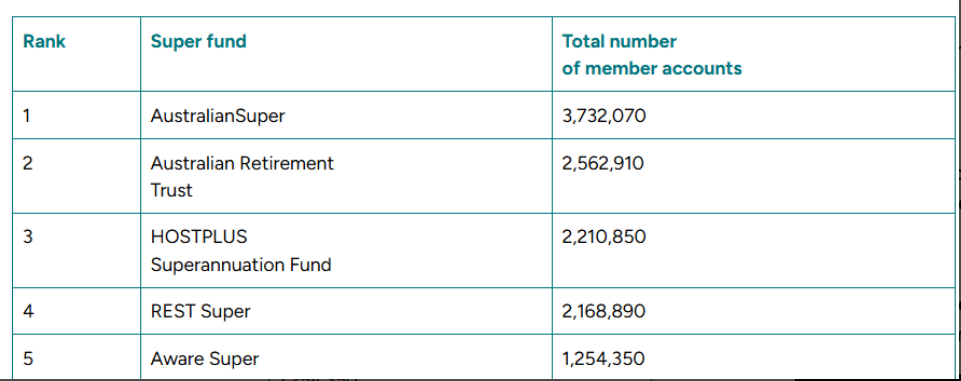
Hostplus ranks third among Australian pension funds by member count, according to financial comparison site Canstar.
Reports indicate the offering could be available as soon as the next financial year, pending regulatory sign-off and the resolution of consumer protection requirements still being worked through.
“There’s certainly a demand from some of our members who write in and say, ‘Why can’t I have access to cryptocurrency?’” Sicilia said.
The fund ranks third in Australia by member count and fifth by total assets. Its membership of 2.2 million gives any policy shift significant reach across the country’s retirement system.
A Gap The Big Funds Left Open
Until now, Self-Managed Super Funds have been the main path for Australians wanting crypto in their retirement savings. These are accounts set up and run by individuals — a hands-on alternative to conventional institution-managed funds.
The sharp rise in SMSF registrations tracked by crypto exchange BTC Markets points to how many savers have been willing to take on that administrative burden just to gain access to digital assets.
BTCUSD now trading at $71,125. Chart: TradingView
Kate Cooper, the Australian chief executive of OKX, recently said that a growing number of new SMSFs are being created specifically to hold digital assets — because the option simply doesn’t exist inside the major funds.
Hostplus would not be the first big super fund to enter this space. AMP made that move back in May 2024, adding Bitcoin exposure to its strategy through futures contracts. Hostplus is following a path that has at least one set of footprints on it already.
Image: Da-kuk via Getty Images
Design Phase Still Has Hurdles
The plan is not finalized. Sicilia said regulatory clearance is still needed, and the fund is prepared to wait for it.
“We’d love to get regulatory tick-off, even if it means waiting another six months,” he said, adding that six months is not a meaningful delay for an institution built around long-term investing.
Australia’s total superannuation pool stood at roughly $4.5 trillion AUD at the end of the September 2025 quarter — a number that underscores how much weight any shift in fund behavior carries for the broader financial system.
Featured image from MarkRubens/Getty Images, chart from TradingView
Editorial Process for bitcoinist is centered on delivering thoroughly researched, accurate, and unbiased content. We uphold strict sourcing standards, and each page undergoes diligent review by our team of top technology experts and seasoned editors. This process ensures the integrity, relevance, and value of our content for our readers.
Improving regulatory clarity for digital assets remained a central theme as Securities and Exchange Commission Chairman Paul S. Atkins reinforced the agency’s evolving approach during remarks at the Digital Asset Summit on March 24 in New York. The framework he discussed focuses on defining when tokens fall within federal securities laws through a refined interpretation of the Howey test developed jointly with the Commodity Futures Trading Commission (CFTC).
Industry participants have long struggled to determine when crypto assets fall within securities laws, a challenge the commission addressed by separating tokens into five categories based on investment contract criteria. “Our framework clarifies the contours of an investment contract and distinguishes between five categories of digital assets, four of which are not securities,” Atkins said, adding:
“We have also begun to chart a path of compliance for entrepreneurs who seek to understand when the fundraise for a crypto asset implicates the federal securities laws.”
SEC Framework Defines Key Conditions for Crypto Securities Across Funding Models
Context from the commission’s formal interpretation further explains that classification depends on the economic reality of a transaction rather than labels, with investment contracts defined by capital allocation into a common enterprise with an expectation of profit from others’ efforts. The release also highlights the diversity of crypto assets in structure and function, requiring individualized analysis rather than a universal standard, while reflecting coordination between the SEC and Commodity Futures Trading Commission on oversight boundaries.
Uncertainty around fundraising practices also drew attention as the framework outlines conditions under which token-related capital formation may trigger federal securities requirements. By identifying specific compliance triggers, the approach aims to guide developers and issuers navigating legal exposure during early-stage funding. This effort reframes oversight by concentrating on transactional characteristics rather than broad asset labeling.
Alignment with statutory authority remains a central theme as the commission positions the changes as a return to its core function of overseeing securities activity. The classification model separates digital assets by function and structure, redistributing regulatory focus toward defined investment arrangements. This recalibration reduces reliance on expansive interpretations that previously extended enforcement reach across varied crypto use cases.
Limitations of the initiative were also acknowledged, with Atkins emphasizing that the framework serves as a starting point rather than a complete solution. Durable regulatory structure, he indicated, depends on congressional action to establish comprehensive market rules. The commission’s role is confined to interpreting existing law while lawmakers evaluate broader reforms to stabilize oversight and reduce the risk of inconsistent application.
FAQ 🧭
What does the SEC’s new crypto framework change? It clarifies which digital assets fall outside securities laws and defines compliance triggers.
Why is the token classification system important for investors? It reduces uncertainty and helps assess regulatory risk tied to different crypto assets.
How could this impact crypto startups and fundraising? Projects gain clearer guidance on when token sales may require securities compliance.
Will this framework fully resolve U.S. crypto regulation? No, lasting rules depend on future congressional action to establish broader market structure.
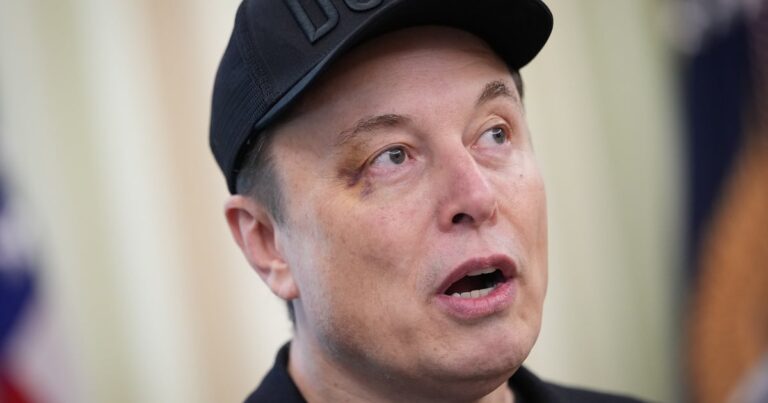
The tech billionaire has outlined plans for an ambitious chip manufacturing plant that incorporates his various ventures, including Tesla, SpaceX and xAI.
Dubbed “Terafab,” the proposed project would consolidate semiconductor production for his companies’ AI power needs into a single, large-scale facility, centralizing chip design, fabrication, memory production and packaging in one location.
Such an approach would mark a significant departure from the typically highly specialized, globally distributed semiconductor supply chain.
Initial reports said Musk shared his plans on Saturday night at an event in downtown Austin, Texas, though he later confirmed the news on his X account.
“SpaceXAI + Tesla Terafab Project,” he wrote.
“Goal is a trillion watts of compute/year. Most must necessarily go to space, as U.S. electricity is only 0.5TW,” he continued, referring to the number of terawatts, which is equal to 500 gigawatts, or 500 billion watts of power, which he claims represents the entire U.S. electricity supply.
Related:AI2’s Computer Use Agent Can Execute Actions Online
In a follow-up post, Musk elaborated that Terafab would effectively operate as two fabrication plants, each dedicated to a single chip design. One chip type would reportedly be used in Tesla vehicles and Optimus humanoids, while the second would be deployed in SpaceX’s satellites.
This approach, he said, would simplify manufacturing processes and increase throughput.
“A super high production rate allows us to test very quickly what steps can be deleted, simplified or sped up, even after the design is fixed,” he added. “Current fabs are extremely conservative, operating on rigid historical heuristics, which are mostly, but not all, correct.”
No firm timeline for construction or full-scale operation has been disclosed.
The proposal comes at a time when AI compute demand is heating up, while concerns over supply chain dominance mean governments and companies alike are seeking greater control over production.
Musk pitches the project as necessary to meet these ramping demands.
When most people download Bitcoin Core, their interaction with the build system is over in a few clicks. They grab the executable binary of the software, verify a signature (hopefully!), and start running a Bitcoin node. What they immediately see is running software. What they don’t see is the build system and extensive processes that produced that software. A build system that represents Bitcoin’s principles of decentralization, transparency, and verifiability.
Behind that download lies years of engineering work designed to answer a simple question: “Why should anyone trust this software?” The answer is: you shouldn’t have to. You should be able to verify.
In a time when software supply-chain attacks make global headlines, from compromised npm packages, backdoored libraries, rogue CI servers, Bitcoin Core’s build process stands as a quiet project of discipline. Its methods may seem slow and complicated compared to the frictionless convenience of “push to deploy,” but that’s the point. Security isn’t convenient.
To understand Bitcoin Core’s build system, we should understand:
Bitcoin Core’s Build System Philosophy
Reproducible Builds
Minimizing Dependencies
No Auto-Updates
Continuous Integration
Ongoing Adaptation
Bitcoin Core’s Build System Philosophy
When it comes to Bitcoin’s decentralization, most people focus on miners, nodes, and developers. But decentralization doesn’t stop at the protocol’s participants. It extends to the way the software itself is built and distributed.
One principle in the Bitcoin ecosystem is “don’t trust, verify.” Running your own node is an act of verification, checking every block and transaction against the consensus rules. But the build system itself gives you another opportunity to verify, at the software level. Bitcoin is money without trusted intermediaries and Bitcoin Core works to be software without trusted builders. The build system takes great lengths to ensure that anyone, anywhere, can independently recreate the exact same binaries that appear on the bitcoincore.org website.
This philosophy traces back to Ken Thompson’s 1984 essay Reflections on Trusting Trust, which warned that even a clean-looking source code can’t be trusted if the compiler that built that software was itself compromised. Bitcoin’s developers took that lesson to heart. In the words of Bitcoin Core contributor Michael Ford (fanquake):
“Reproducible builds are critical, because no user of our software should have to trust that what’s contained inside is what we say it is. This must always be independently verifiable.”
A statement that is both a technical goal and part of the Bitcoin ethos.
In the security world, people talk about “attack surfaces.” Bitcoin Core’s build system treats the build process itself as an attack surface to be minimized and defended.
Reproducible Builds: Verification all the way down
The process of producing a Bitcoin Core release begins with the open-source codebase on GitHub. Every change is public. Every pull request is reviewed. But the journey from human-readable code to runnable binary software involves compilers, third-party libraries, and operating-systems which are themselves potential vectors for tampering, backdoors, or errors.
“Trusted third parties are security holes” – Nick Szabo (2001)
To address these concerns, Bitcoin Core architected a build process pipeline using Guix, a package manager designed to create reproducible, deterministic software environments.
When a new Bitcoin Core release is tagged, multiple independent contributors build the binaries from scratch using Guix. Each builder works in an isolated environment that guarantees identical toolchains, compiler versions, and system libraries. If all builders produce identical-bit outputs they know the build is deterministic.
Contributors then cryptographically sign the resulting binaries and publish those signatures on a separate GitHub repository ‘guix.sigs’ that lists these attestations for each release of Bitcoin Core. Some builders are Bitcoin Core developers, but it is not a requirement as the attestation process is open to anyone from the public. In fact, many non-code-contributors regularly contribute signatures.
This process is known as reproducible builds, and it is the antidote to Thompson’s “trusting trust.” It means anyone can take the open-source code, the same Guix environment, and independently confirm that the official binary matches what they built themselves. While reproducible builds can verify the software is a genuine representation of the software’s source code, the software’s correctness is left to processes around thorough testing and code review.
Most people will never perform a full compilation or check the Guix manifests or compare build hashes. They don’t need to. The existence of that infrastructure, and the people maintaining it, gives every user a foundation of earned confidence.
The official binaries on bitcoincore.org aren’t just “produced by the Bitcoin Core maintainers”. They’re the intersection of dozens of independent builders’ outputs. What you eventually download is what everyone else built and verified to be authentic.
It’s verification all the way down.
Minimizing Dependencies: Less to Trust
Reproducibility is one side of the equation. The other is minimizing what needs to be reproduced. Bitcoin Core’s code is not the only code executed when running Bitcoin Core. Bitcoin Core also relies on external, third-party code and libraries to speed up development and productivity.
Over the past decade, Bitcoin Core developers have steadily stripped away these unnecessary and sometimes problematic third-party dependencies, like OpenSSL and MiniUPnP. Whether it is an external library or toolkit, these dependencies add complexity or import hidden assumptions. Projects like Boost and Libevent, once staples of Core’s codebase, are gradually being phased out or replaced with simpler, self-contained alternatives.
Why? Because every dependency you inherit is a potential supply-chain risk. It’s more code you didn’t write, don’t audit, and can’t fully control. Reducing dependencies makes the build system leaner, safer, and easier to verify.
Brink recently highlighted this effort in its “Minimizing Dependencies” blog post[1], noting that it’s not just a matter of simplicity, it’s about preserving the project’s security and autonomy. Each removed dependency is one fewer external party the project must trust and one less potential for a backdoor.
The eventual goal is to produce fully static binaries: executables that contain everything they need to run, with no dynamic or runtime dependencies. This self-containment means no reliance on external libraries that could differ from one operating system to another.
In a world where most software grows heavier and more dependent on centralized package ecosystems, Bitcoin Core is moving in the opposite direction: toward minimalism and independence.
No Auto-Updates
In most modern software, users are shielded from decisions of what software version to update to, or decisions to update the software at all. You install an app, and it quietly and automatically updates itself to the latest versions in the background. While this is convenient, it is antithetical to Bitcoin Core’s philosophy.
Bitcoin Core has never included automatic updates, and developers have said it never will. Automatic updates concentrate power. They create a single group that can push (potentially malicious) code to every node on the network. This is exactly the sort of centralized control Bitcoin was built to avoid. By requiring users to manually download, verify, and install new versions, Bitcoin Core reinforces individual responsibility and verifiable consent.
The build system and the lack of auto-updates are two halves of the same principle. Only the node runner decides what to run and can verify that the software that is run is authentic.
Continuous Integration: Move slow and fix things
In Silicon Valley, continuous integration and continuous deployment (CI/CD) are the hallmarks of agile software development. Ship fast. Iterate faster. Let automation do the rest.
Bitcoin Core takes a different approach. Its CI systems exist not to accelerate deployment but to safeguard integrity. Automated builds test consistency across platforms. Bitcoin Core’s build system is designed to be agnostic to hardware and operating systems as much as possible. The project can build binaries for Linux, macOS, and Windows as well as for multiple architectures including x86_64, aarch64 (ARM), and even riscv64. The continuous integration system ensures this compatibility as well as software integrity by performing hundreds of tests for each proposed change.
The result is a culture where “continuous integration” means continuous testing, verification and security, not continuous innovation.
Move slow and fix things.
Ongoing Adaptation: Are we done yet?
The build system isn’t static. Developers continue to refine it by reducing dependencies, improving cross-architecture builds, and exploring a fully static build future with zero runtime dependencies.
While Bitcoin Core’s build system strives for determinism, the build system itself cannot be static. The world it operates within is constantly shifting. Operating systems, compilers, libraries, and hardware architectures all change. Each new release of macOS or glibc, every deprecation of a compiler flag, or emerging CPU architecture introduces subtle incompatibilities that must be addressed. A build system that stood still would, over time, cease to build at all.
The paradox of reproducible builds is that they require continual evolution to remain reproducible. Developers must constantly pin, patch, and sometimes replace toolchains to preserve determinism against a moving backdrop of change. Maintaining this balance between stability and adaptability is part of Bitcoin’s ongoing resilience.
Get your copy of The Core Issue today!
Don’t miss your chance to own The Core Issue — featuring articles written by many Core Developers explaining the projects they work on themselves!
This piece is the Letter from the Editor featured in the latest Print edition of Bitcoin Magazine, The Core Issue. We’re sharing it here as an early look at the ideas explored throughout the full issue.
Banks extracted hundreds of billions from American savers last year — and the scale of it shows a deep structural issue in America’s financial system. Bitcoin might help.
In 2025, U.S. banks generated roughly $434 billion in net interest income, or about $1,670 per adult, according to research from River.
The mechanism is straightforward: banks take customer deposits, lend or invest those funds at higher rates, and return only a fraction of the yield to depositors. With most savings accounts offering close to zero interest, that spread compounds into one of the most reliable profit engines in the economy.
At the same time, inflation has remained persistently above the Federal Reserve’s stated 2% target for years. In real terms, that means savers are losing purchasing power annually. When your bank pays 0.1% but inflation runs several percentage points higher, the result is not just stagnation — it’s erosion. Quietly, consistently, and at scale.
This dynamic helps explain why alternative systems — particularly Bitcoin — continue to resonate. For many, the issue is no longer just access to financial services, but whether those services are aligned with their long-term interests at all.
Yet the frustration isn’t limited to legacy banking. The fintech sector, once positioned as a corrective force after the 2008 financial crisis, is now facing its own identity crisis, Bitcoin might help.
Tricking users to gamble with their money
Over the past decade, companies like Robinhood, Coinbase, and Cash App lowered barriers to entry, onboarding millions of new users into investing, payments, and digital assets. For the first time, financial tools that were once reserved for the wealthy became widely accessible.
But according to River CEO Alex Leishman, that mission has drifted. What began as democratization has, in many cases, turned into monetization of user behavior. Investment platforms now promote memecoins, leveraged derivatives, and even sports betting-style features. The interface may look like a brokerage account, but the incentives increasingly resemble a casino.
The distinction matters. Data consistently shows that most retail participants lose money in high-frequency trading environments. Futures markets see the vast majority of traders underperform.
Options trading often results in repeated losses for the average user. And in jurisdictions where sports betting has expanded, personal bankruptcy rates have climbed in the years that follow.
This convergence — finance, gaming, and gambling — has been driven by a simple motive: engagement. The more often users trade, bet, or speculate, the more revenue platforms generate.
Push notifications, streaks, instant settlement, and social features all reinforce short-term behavior. Over time, the line between investing and entertainment becomes difficult to distinguish, according to River and Leishman.
Leishman’s critique is not that risk-taking should be eliminated, but that it should be transparent. Casinos don’t present themselves as wealth-building tools. Increasingly, financial apps do.
It’s time for bitcoin
Bitcoin, in contrast, sits outside this framework. Bitcoin does not promise yield, nor does it rely on user engagement to sustain itself. Its value proposition is narrower but more rigid: a fixed supply, a decentralized network, and the ability to self-custody without reliance on intermediaries.
Despite more than a decade of growth, ownership remains relatively low — less than one-fifth of American adults. That suggests two things at once: adoption is still early, and the gap between existing financial systems and viable alternatives remains wide.
The broader question now is directional. The original promise of fintech was to expand access and improve outcomes. In many ways, it succeeded. But access alone is not enough if the underlying products leave users worse off.
Banks continue to extract value through interest rate spreads. Bitcoin doesn’t. Fintech platforms increasingly optimize for activity over outcomes. And users — more informed, but also more exposed — are left navigating a system that often rewards participation more than prudence.
The opportunity, as Leishman frames it, is to realign incentives: build tools (like bitcoin) that prioritize long-term wealth creation over short-term revenue, and offer products that founders would trust their own families to use.
Tether, the crypto company behind the most popular stablecoin USDT, said Tuesday it has selected a “Big Four” auditing firm to conduct its first full financial statement audit.
“The Big Four Firm was selected through a competitive process because the organisation is already operating at Big Four audit standard,” said Simon McWilliams, Chief Financial Officer of Tether. “The audit will be delivered.”
The company has long published periodic attestations of the assets backing the value of its $184 billion U.S. dollar stablecoin USDT. A full audit goes further: It requires a detailed review of assets, liabilities, controls and reporting systems.
Tether did not name the firm that will complete the audit. The Big Four term is used for top accounting firms Deloitte, EY, KPMG, and PwC.
The move follows years of criticism over whether Tether has fully demonstrated that USDT is fully backed by reserves. The company says its holdings consist largely of U.S. Treasury bills, along with smaller allocations to gold, bitcoin and a range of loans. That mix has drawn scrutiny from critics who question the liquidity and risk profile of some assets, especially during periods of market stress.
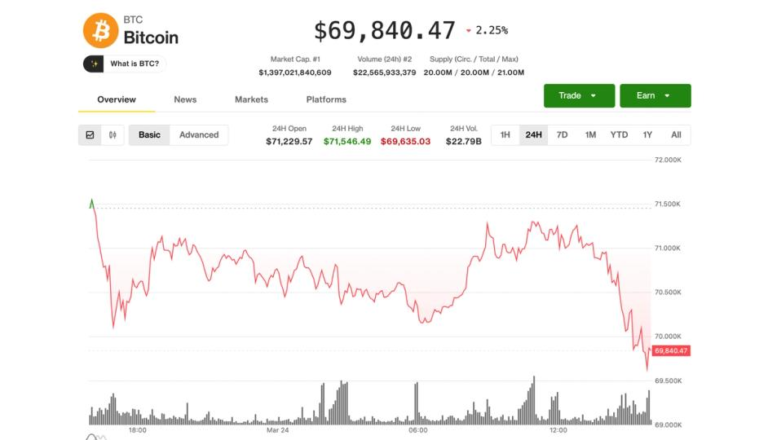
Bitcoin BTC$69,494.19 slipped back toward $69,000 on Tuesday morning as a broader pullback in equities spilled over into crypto markets.
After trading near $71,000 earlier in the session, BTC fell to around $69,600 in the early U.S. hours, tracking a broader reversal in risk assets. Ether (ETH), Solana (SOL) and XRP (XRP) were also down 2%-3% over the past 24 hours.
Bitcoin appears to be continuing to follow a familiar trend over the past three months. It has typically risen by just over 1% on Mondays and then fall slightly under 1% on Tuesdays, according to Velo data.
The move also came as software stocks rolled over, with the iShares Expanded Tech-Software Sector ETF (IGV) dropping about 4%. Crypto prices have moved closely in line with the sector in recent months, with both trending lower since October. That relationship was on full display again, with digital assets weakening alongside that particular area of tech.
The S&P 500 and Nasdaq equity indexes were 0.5% and 0.8% lower, giving up much of their Monday gains on news about talks between U.S. and Iran. Global yields continue to climb, the DXY remains firm above 99, and oil has risen 2% over the past 24 hours, reinforcing the broader risk-off tone.
Crypto-linked equities also came under pressure. Circle (CRCL), issuer of the USDC stablecoin, led declines, tumbling 16% in a sharp reversal after its recent rally that took the shares more than 100% higher in a month. Crypto exchange Coinbase (COIN) dropped 8%. The moves happened as CoinDesk reported late Monday that the latest version of the Clarity Act won’t allow rewards on balances, limiting yields on stablecoins. “That weakens a key part of the bull case by making USDC harder to evolve from a payments utility into a real store-of-value product,” Shay Boloor, chief market strategist at Futurum Equities, said in an X post.
USDT issuer Tether, key rival of Circle, also announced that it hired a “Big Four” accounting firm for a complete audit, seen as a major step to improve trust in USDT’s reserve assets.
Shift in interest rate expectations
In one of the more remarkable 180-degree turnarounds in recent years, market participants have gone, in a matter of weeks, from debating how many central bank rate cuts there would be in 2026 to pricing in imminent rate hikes.
According to CME FedWatch, there’s now zero chance of a rate cut at either the April or June Federal Reserve policy meetings, and instead about a 15% chance of a rate hike. The June Fed meeting would presumably be chaired by Kevin Warsh, whom President Trump has nominated to replace Jerome Powell as head of the U.S. central bank with the supposed intention of lowering borrowing costs.