Institutional Capital Accelerates Crypto Integration as Allocations and Product Access Rapidly Expand
Institutional capital rotation into crypto markets is accelerating, with Bitwise CEO Hunter Horsley signaling a transition from anticipation to active deployment. He framed the shift as a near-term inflection point driven by sustained inflows and expanding participation from large allocators. The executive expressed on March 27 via social media platform X:
“The ‘institutions are coming’ phase is about to be over. They’re here, or arriving shortly.”
He pointed to visible allocation activity already underway across the sector. “Countless are already in crypto. And another big batch will be in the next 6 months,” the Bitwise CEO stated.
Horsley recently highlighted underlying data reinforcing this shift in positioning among professional investors adjusting portfolio exposure. He referenced a Coinbase Institutional survey of 351 firms, released last week, which showed 74% expect higher prices over the next 12 months, while 73% plan to increase allocations. Capital concentration is also deepening, with 29% targeting portfolio weights above 5% by 2026, reflecting a move from exploratory exposure toward strategic allocation tiers.
Surveys Show Growing Confidence Among Advisors and Firms Ahead of Broad Financial Adoption
Parallel trends among financial advisors point to expanding distribution alongside institutional demand. The Bitwise/VettaFi 2026 survey found 32% allocated to crypto in 2025, up from 22%, while 56% reported personal ownership. Allocation depth is also increasing, with 64% of crypto portfolios exceeding 2% exposure and 42% of advisors now able to transact crypto for clients. “ Crypto’s future has always depended on what financial advisors think of it,” Bitwise Chief Investment Officer Matt Hougan said.
Broader adoption timelines extend beyond immediate inflows, reflecting structural changes across financial services. “ Crypto is becoming an institutional asset class,” Horsley stated last week, linking survey trends with long-term infrastructure development.
Market positioning increasingly reflects integration into mainstream finance rather than isolated participation cycles. Underscoring how institutional frameworks and capital deployment continue to expand in parallel, the Bitwise chief predicted in January:
“By the end of 2026, most major financial institutions will be in crypto with products and services. The space is hurtling toward the mainstream.”
FAQ 🧭
Why are institutions increasing crypto exposure? Rising confidence in returns and infrastructure is driving larger allocations.
How significant is advisor participation in crypto markets? A growing share of advisors are allocating client portfolios and gaining access.
What role do surveys play in understanding crypto trends? They reveal strong bullish sentiment and planned allocation increases.
What does institutional adoption mean for crypto markets? It signals deeper integration into mainstream financial systems and long-term growth.
Pay360 has become a cornerstone of the payments industry, fostering a community of professionals who return year after year and the attendees were asked at the latest iteration, “How many Pay360 events have you attended?” their responses painted a picture of both deep-rooted loyalty and exciting new beginnings in within the payments industry.
For many of the attendees, Pay360 is an annual tradition as some attendees have been present since the very beginning, noting they were there for the inaugural show three years ago and have not missed one since. Others, however, boast an even longer history with the event; one veteran mentioned they have been attending since roughly 2015, highlighting the event’s long-standing relevance in the sector. This consistent attendance is common, with several participants noting they have been coming for the past four years.
The transition from attendee to exhibitor is a recurring theme which underscores the event’s value with one participant shared that while this was their third year participating, it marked their first time actually exhibiting with a booth. Another explained their evolution over four years: they attended the event solely for networking opportunities, but the tangible impact and growth of the event led them to book a booth annually and this “growing with the event” sentiment is a testament to Pay360’s increasing influence.
While the event retains its veterans, it continues to attract fresh faces as newcomers expressed high levels of excitement about experiencing their first Pay360, proving that the event remains as vibrant for first-timers as it does for those who have seen seven or eight iterations.
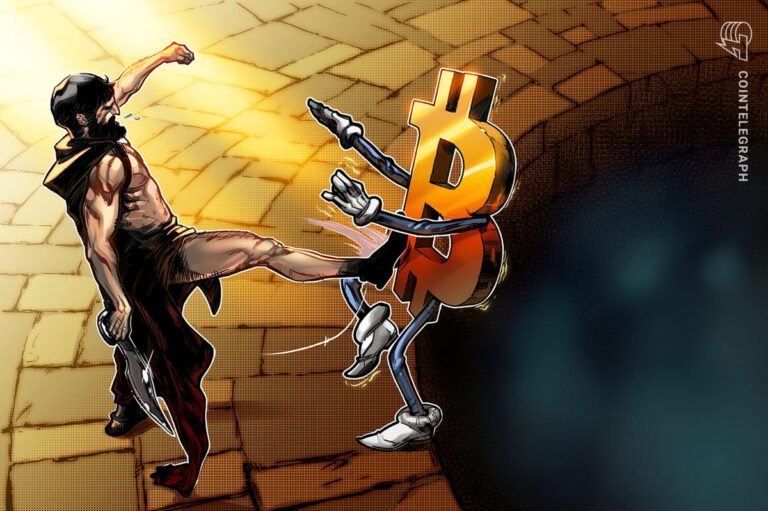
Investment bank Morgan Stanley is seeking to launch its spot Bitcoin exchange-traded fund at a 0.14% fee, which would make it the cheapest in the US market and potentially force rivals to cut fees to stay competitive.
The 0.14% fee, proposed in Morgan Stanley’s latest S-1 registration statement on Friday, would be one basis point below the Grayscale Bitcoin Mini Trust ETF (BTC), currently the cheapest in the US market, and 11 basis points below the BlackRock-issued iShares Bitcoin Trust ETF (IBIT).
“Big move here. They are not messing around,” Bloomberg ETF analyst James Seyffart said, predicting that the Morgan Stanley Bitcoin Trust (MSBT) is “likely to launch in early April.”
Source: James Seyffart
Fellow Bloomberg ETF analyst Eric Balchunas said the low fee means that none of Morgan Stanley’s roughly 16,000 financial advisors — which manage $6.2 trillion in client assets — would feel conflicted in recommending the product to its clients.
Given that spot Bitcoin ETFs track the price movements of Bitcoin (BTC), Morgan Stanley’s ultra-low fee could spark a fresh fee war in the $83 billion market, putting immediate pressure on rivals to cut costs or risk losing assets.
Regulatory approval would make Morgan Stanley the first bank to issue a spot Bitcoin ETF, expanding access to Bitcoin exposure for millions of its high-net-worth clients.
“They are the ultimate gatekeepers of rich boomer money,” Balchunas added.
Morgan Stanley previously selected Coinbase and Bank of New York Mellon as the proposed custodians for its Bitcoin ETF.
Morgan Stanley seeking suite of crypto ETFs, banking charter
Morgan Stanley, previously one of the more crypto-hesitant Wall Street firms, filed for the spot Bitcoin ETF in the first week of January, along with a Solana (SOL) ETF.
Related: Bitcoin traders see 53% odds of sub-$66K BTC by April 24
It then filed papers for a staked Ether (ETH) ETF later that week, and by the end of the month, the bank appointed one of Morgan Stanley’s longest-standing executives, Amy Oldenburg, to lead its digital asset team.
Source: James Seyffart
Morgan Stanley also applied for a national trust banking charter on Feb. 18, seeking to custody certain digital assets and execute purchases, sales and swaps for clients in addition to staking services.
In October, before the investment bank adopted its institutional crypto strategy, it recommended a 2% to 4% allocation to crypto portfolios for investors. It also allowed its financial advisors to recommend crypto funds to clients with individual retirement accounts (IRAs) and 401(k)s.
Magazine: Bitcoin may face hard fork over any attempt to freeze Satoshi’s coins
Cointelegraph is committed to independent, transparent journalism. This news article is produced in accordance with Cointelegraph’s Editorial Policy and aims to provide accurate and timely information. Readers are encouraged to verify information independently. Read our Editorial Policy https://cointelegraph.com/editorial-policy
California public officials are banned via executive order from using inside information to make money on prediction markets.
The ban extends to state officials and appointees using information to help others from profiting, as well.
The order follows continued scrutiny from Democratic lawmakers that have claimed Trump insiders are profiting from proximity.
California is joining the crackdown on prediction market insider trading.
Democratic Governor Gavin Newsom signed an executive order, effective immediately, that prohibits public officials and decision-makers in the state from using inside information to profit via prediction markets.
“Public service should not be a get-rich-quick scheme,” said Newsom in a statement.
“At a time when Trump’s Washington is riddled with ethical failures and insider profiteering, California is drawing a bright line: If you serve the public as a political appointee, you serve the public—period,” he said, adding that his state wouldn’t “tolerate this kind of corruption.”
The move also prohibits appointees and officials from using inside information to help others—like children, spouses, and business partners—to profit from inside information.
Newsom’s executive order comes amid increasing scrutiny surrounding insider trading and prediction markets, particularly from Democrats. Earlier this month Democratic lawmakers introduced the BETS OFF Act, a federal bill that would ban prediction markets focused on war and other specific topics.
Those types of markets, the lawmakers claim, have been profited on by those close to the Trump administration. Newsom, too, highlighted concerns that those in President Trump’s “orbit are exploiting confidential information for their own personal gain.”
“We shouldn’t live in a country where government officials or well-connected people can make money off of secret information that is supposed to be used in the public interest,” Rep. Greg Casar (D-TX) said at the time of the BETS Off Act’s introduction.
Both highlighted the events surrounding the January capture of Venezuelan leader Nicolas Maduro, where the suspicious timing of a user’s trades—just hours before intervention—led to more than $430,000 in profits on Polymarket and allegations of insider trading.
Insider trading issues have been apparent elsewhere ,as well. Two Israelis were arrested for making trades on Polymarket using inside information they had about military secrets. Plus, a video editor for MrBeast was fined and suspended by Kalshi—and later fired from his job at Beast Industries—for using inside information to trade markets about what the YouTube personality would say in videos.
The platforms are aware of the implications, especially as legislation and executive orders start to pile up. This week, the two major startups took steps to address issues related to insider trading, with Polymarket improving rules on market integrity while Kalshi implemented preemptive screening to ensure that politicians can’t make trades on associated markets.
Daily Debrief Newsletter
Start every day with the top news stories right now, plus original features, a podcast, videos and more.
Enertoken, developed by Justoken for YPF Luz, launched with over $800 million in tokenized energy assets on XRPL.
YPF Luz, the electricity subsidiary of Argentina’s largest energy company, has partnered with Buenos Aires-based blockchain infrastructure company Justoken to launch an energy tokenization platform built on XRP Ledger (XRPL), the firms announced earlier this month.
The platform, dubbed Enertoken, tokenizes, commercializes, and manages electricity contracts via XRPL, the public blockchain originally developed by Ripple Labs, which remains a core contributor. Meanwhile, Justoken recently emerged as the largest real-world asset (RWA) tokenization platform on XRPL by total value.
Per the announcement, the new platform from YPF Luz, developed by Justoken, is aimed at corporations and large energy consumers to help manage everything from consumption tracking, to billing, to contract execution, “fully supported by tokenized energy assets recorded on blockchain.”
Martín Mandarano, the CEO of YPF Luz — the parent company of which has had a turbulent history of state and private ownership — was quoted as saying in the announcement:
“The integration of tokenized energy assets allows us to optimize processes, enhance traceability, and deliver greater transparency to our clients, reinforcing YPF Luz’s innovative profile within the energy sector.”
Justoken’s Quiet Dominance
In what the companies are calling the project’s initial phase, Enertoken launched with over $800 million in tokenized energy assets on XRPL, per the announcement, evidently referring to Justoken’s tokenized energy fund, JMWH.
Justoken’s JMWH, which, per RWAxyz, represents real megawatt-hours (MWh) of energy, backed by energy producers in Latin America, quietly become the largest tokenized asset on XRPL by total value when it launched in mid-January with over $861 million on-chain. Meanwhile, Justoken has another $832.3 million in various other tokenized commodities on Polygon.
Represented asset value on XRPL by asset. Source: RWAxyz
As of today, March 26, JMWH’s total asset value still stands at $861 million — representing nearly 57% of all so-called represented asset value on XRPL, and a nearly 45% market share of all tokenized RWA platforms on the network.
Per RWAxyz, “represented asset value” refers to tokenized assets that exist on a blockchain but cannot be distributed or transferred on-chain — they represent a real-world commitment recorded on-chain, not freely tradable tokens.
Represented vs Distributed RWAs
Luke Judges, Partner Director at RippleX, Ripple’s open developer platform, explained to The Defiant why JMWH falls into RWAxyz’s “represented” asset category, rather than “distributed” — a distinction that indicates how these assets are used on-chain, stating, “‘represented’ assets operate within more controlled environments, often reflecting regulatory or contractual requirements.”
In JMWH’s case, the tokens operate under Argentina’s capital markets regulator Comisión Nacional de Valores (CNV)’s regime for Virtual Asset Service Providers (PSAVs), with issuance, allocation, delivery, and retirement all tied to contractual obligations. This, Judges argues, explains why Justoken opted for a “closed loop approach.”
“The blockchain serves as a verifiable record of ownership and fulfilment rather than a trading venue,” Judges added.
He also noted that represented assets on XRPL are “an important starting point for many institutional use cases, with distributed assets playing a larger role as liquidity, infrastructure, and regulatory clarity continue to evolve on XRPL.”
Selecting XRPL
Ariel Scaliter, co-founder and CTO of Justoken, told The Defiant that the choice of XRPL was deliberate on multiple fronts, citing speed and scalability for teams building on the blockchain network:
“XRPL was selected for several strategic reasons. First, its institutional quality stands out. Many companies in the energy ecosystem are publicly listed, which aligns with the profile of counterparties involved in this type of business.”
Scaliter also cited the ability to build quickly on the XRPL EVM Sidechain before migrating to the mainnet, and flagged Ripple’s institutional legitimacy, as well as custody as a critical infrastructure consideration. He told The Defiant:
“XRPL, alongside contributions from Ripple, is well positioned to attract institutional investors. This global credibility and trust are essential for high-stakes, regulated use cases like energy tokenization.”
RippleX’s Judges elaborated on the architecture: “Justoken was looking for a way to bring renewable energy credits onchain that could support both traceability and automated compliance for corporate clients, while still fitting within existing custodial structures.”
YPF Luz and Its State-Backed Parent
YPF Luz is the power generation subsidiary of YPF (Yacimientos Petrolíferos Fiscales), Argentina’s majority state-owned oil and gas company. The nation’s largest crude producer was originally established over a hundred years ago as Argentina’s state oil company, but was privatized in 1999 and purchased by Spanish energy giant Repsol.
In 2012, Argentine President Cristina Fernández de Kirchner renationalized YPF, ousting Repsol after a dispute over slumping oil output and investment, Bloomberg reported at the time. Argentina’s Congress nationalized YPF through an overwhelming lower-house vote, clearing the way for President Fernández to sign the bill into law, per Reuters.
RWA Surge
XRPL has been steadily building its RWA credentials, and now has $1.5 billion in represented asset value on chain, and over $404 million in distributed asset value, per RWAxyz.
In late 2024, Ripple announced plans to tokenize the first-ever money market fund on XRPL, collaborating with UK-based digital securities exchange Archax and global investment firm Abrdn, as The Defiant reported. Last March, Ondo Finance deployed its tokenized short-term U.S. Government Treasuries product (OUSG) on the XRP Ledger, aiming to bring it to XRPL’s institutional user base.
Zooming out, the broader tokenized RWA market tripled from roughly $5.5 billion to $18.6 billion over the course of 2025, per The Defiant’s year-end analysis.
This article was written with the assistance of AI workflows. All our stories are curated, edited and fact-checked by a human.
Presale entries give early wallets a rare opening to buy tokens at ground floor prices before public exchanges list them. Getting in first is the difference between watching others celebrate and being the one who built the position everyone else wants. Whether you chase exchange infrastructure or viral meme energy, knowing how to buy Pepeto right now places you ahead of the crowd. The Clarity Act stablecoin debate is pushing regulatory urgency higher. Therefore, wallets entering presales before that framework passes capture the returns that follow.
How to Buy Pepeto: Step by Step for New Crypto Investors
Presale Tokens With Exchange Products vs Large Caps at Their Ceiling
Pepeto
Pepeto is a presale token built as a complete meme coin exchange on Ethereum. While most meme tokens launch with nothing behind them except a logo, Pepeto runs PepetoSwap for zero fee trading. It also operates Pepeto Bridge for cross chain transfers at zero cost. This gives traders a working platform that fixes the problems bleeding capital from every other meme entry.
More than $8 million flowed in during one of the most fearful market stretches in over a year, proving the wallets entering are committed holders who see what the listing delivers. Whale entries at scale confirm experienced capital recognizes the setup. The risk scorer checks every contract before your money goes near it. So you trade on verified rails instead of hope. The SolidProof audit covered every element, and a former Binance expert on the dev team is building toward a Binance listing. Consequently, this opens demand to millions.
Understanding how to buy Pepeto early gives you the same entry as every whale loading the presale right now. The cofounder who created the original Pepe coin leads this project with the same 420 trillion supply. Analysts project the listing compresses years of large cap returns into a single event rewarding every wallet at presale pricing. Staking at 192% APY compounds between now and launch at Pepeto. At $0.000000186 this entry offers the second chance for anyone who missed BNB at $0.15 or XRP at $0.006. This time, it comes with stronger infrastructure behind it. The window shrinks every week. In fact, the wallets that move while the presale is open are the ones listing day rewards.
BNB
BNB trades near $610 with a market cap around $63 billion after holding through the correction according to CoinGecko. It rose from $0.15 into one of the most valuable crypto assets. However, at $63 billion a 2x requires $126 billion that takes years of expansion. Therefore, the explosive gains that made early wallets wealthy sit in the past for anyone learning how to buy Pepeto as the next early entry with exchange DNA.
XRP
XRP holds near $1.32 after a 3.5% decline through macro headwinds according to Blockchain.com. Full regulatory clarity came in late 2025. However, at $83 billion the growth potential measures in percentages not multiples. So traders positioning through the Pepeto presale are targeting the kind of returns XRP delivered when it sat at fractions of a cent.
How to Buy Pepeto Before the Listing Closes the Window Whales Are Filling
The wallets loading Pepeto send the clearest signal because they see what the listing delivers when trading begins. More than $8 million entered while the Clarity Act debate pushed fear across the market, proving this capital moves on conviction. The exchange products fix the one problem every meme coin carried: no reason for demand to grow after launch. Pepeto solves that with trading volume feeding the platform permanently. The Pepeto official website is where investors who understand how to buy Pepeto at the best entry are securing positions right now. The difference was never who was smarter. It was who moved while the presale was open. The ones who waited became the buyers paying listing prices to wallets that locked in what you are reading about today.
Visit Pepeto official website before the Clarity Act catalyst and Binance listing close this entry permanently.
FAQs
How to buy Pepeto tokens during the presale?
Visit Pepeto official website, connect MetaMask or Trust Wallet, select ETH, USDT, BNB, or card, choose your amount, and confirm to secure tokens at presale pricing before the listing.
Why are whale wallets buying Pepeto before listing?
The exchange products, SolidProof audit, and former Binance expert give experienced capital the verification required, and the listing creates the demand event they are positioning for right now.
Is now a good time to learn how to buy Pepeto?
Extreme fear created the entry conditions that produced the best returns in previous cycles, and the Pepeto official website offers presale pricing that vanishes permanently once exchange trading begins.
US stocks futures trended down and US WTI crude oil eyed $97 per barrel as geopolitical tensions refused to let up.
Data from CoinGlass showed BTC/USD eating into a ladder of bid liquidity extending down to $65,000, with a wall of asks keeping price pinned below the $70,000 mark.
“$70-71k confirmed as resistance again,” trader Jelle wrote in analysis on X the day prior.
“Still a bunch of liquidity built up below, generally not what you see at market bottoms. Expecting that liquidity to be taken out; sooner or later.”
BTC/USD chart. Source: Jelle/X
The latest market moves continued a theme of liquidity grabs seen throughout the week.
Continuing, crypto trader Michaël Van de Poppe said that he would not be “surprised” about further BTC price weakness into the March monthly candle close.
“Especially given that we’re currently anticipating a potential sweep of the lows,” he told X followers on the day.
“In that case, I remain to be interested to be buying in the lower $60K regions.”
BTC/USDT one-day chart. Source: Michaël Van de Poppe/X
BTC price gets $41,000 “measured target”
On longer time frames, market participants focused on a potential bearish support breakdown from Bitcoin’s second bear flag construction of 2026.
Related: US recession odds near 50%: Can Bitcoin copy 2020 comeback gains?
Previously occurring in January, the current bear flag has produced targets below $50,000.
“Bitcoin setting up for a rising wedge sell signal,” veteran trader Peter Brandt warned on Wednesday, joining those calls.
BTC/USDT one-day chart. Source: Peter Brandt/X
In his own X update, trader and educator Aaron Dishner continued the bearish tone around the flag structure.
“BTC is doing exactly what the bear flag setup called for. Price broke below the cloud yesterday on the daily, and today opened below it – currently down just 0.32% but that’s not a recovery, that’s hesitation,” he commented.
“The measured target from the January 14th high to the February 6th low, applied to the current flag structure, puts the downside at $41K.”
This article does not contain investment advice or recommendations. Every investment and trading move involves risk, and readers should conduct their own research when making a decision. While we strive to provide accurate and timely information, Cointelegraph does not guarantee the accuracy, completeness, or reliability of any information in this article. This article may contain forward-looking statements that are subject to risks and uncertainties. Cointelegraph will not be liable for any loss or damage arising from your reliance on this information.
Kalshi has secured regulatory approval that clears the way for margin trading, giving the prediction market platform a product that could make it more attractive to hedge funds and other institutional investors as the sector races deeper into mainstream finance.
The approval covers a futures commission merchant license through affiliate Kinetic Markets LLC, according to a March 24 National Futures Association filing. Kalshi Chief Executive Officer Tarek Mansour said this week that a margin product is coming soon and described capital efficiency for institutions as a key priority.
The move comes just after Kalshi raised more than $1 billion in a financing round that valued the company at $22 billion, roughly double its reported $11 billion valuation from December. The new valuation reflects investor conviction that prediction markets are evolving from a retail novelty into a broader trading and hedging venue with real appeal for Wall Street firms.
That growth has been rapid. Bloomberg reported that weekly notional volume on Kalshi topped $3 billion earlier this month, while a separate Barron’s report said the company recently reached $10.4 billion in monthly trading volume. March Madness has become the platform’s most popular category even as the NCAA pushes to shut down betting on college sports through prediction markets.
Kalshi is also building out the plumbing needed to serve bigger traders. Recent reports show prime brokers are moving to give hedge funds access to Kalshi’s markets, while the company has partnered with FIS on clearing infrastructure aimed at institutional adoption and with Tradeweb to distribute prediction market data to professional investors.
This month, top US exchange executives have called for clearer rules as prediction markets add users and expand into contracts tied to politics, economics, sports, and geopolitics. Cboe has also said it plans to launch more advanced prediction market contracts with partial payouts, showing that established exchange groups increasingly see event trading as a real growth area rather than a fringe product.
Kalshi recently said it would block politicians, athletes, referees, and other people with direct influence over certain outcomes from trading related markets, and California on Friday barred state officials from using insider knowledge to bet on prediction platforms such as Kalshi and Polymarket. A bipartisan Senate bill introduced this week would also ban sports related event contracts on federally regulated prediction markets, underscoring that the sector’s next phase of growth will likely come with heavier compliance demands.
Disclosure: This article was edited by Estefano Gomez. For more information on how we create and review content, see our Editorial Policy.
The European Central Bank published a working paper on March 26, finding that governance in four major DeFi protocols was heavily concentrated.
The staff paper looks at Aave, MakerDAO, Ampleforth and Uniswap, and finds that while governance tokens are held across tens of thousands of addresses, the top 100 holders control more than 80% of the supply in each protocol.
Based on holdings snapshots from November 2022 and May 2023, the authors found that a large share of governance tokens could be linked either to the protocols themselves or to centralized and decentralized exchanges, with Binance the largest identified centralized exchange holder across the four protocols.
The authors said the findings challenge the idea that decentralized autonomous organizations (DAOs) are inherently decentralized, raising questions about accountability and complicating efforts to identify possible regulatory anchor points under the European Union’s Markets in Crypto-Assets Regulation (MiCA) framework. MiCA currently excludes “fully decentralised” services from its scope.
Top token holders dominate governance
The authors also look at who actually votes on key proposals, concluding that top voters are mostly delegates who wield delegated voting power from smaller token holders.
The top 20 voters in Ampleforth control 96% of delegated voting power, while the top 10 voters in MakerDAO hold 66% of delegated votes, and the top 18 in Uniswap hold 52%. Around one-third of top voters cannot be publicly identified, and among those that can, the largest groups are individuals and Web3 companies, followed by university blockchain societies and venture firms.
Related: DAOs may need to ditch decentralization to court institutions
ECB Working Paper on DeFi: Source: ECB
Cointelegraph reached out to Aave, Uniswap, MakerDAO, and Ampleforth, but had not received a response by publication.
Kavi Jain, senior research associate at Bitwise, told Cointelegraph that many large DeFi protocols were not as decentralized in practice as they might appear, especially in the earlier stages, where a small group still has “meaningful influence over decisions.”
He pointed to the recent Aave governance debate that highlighted how, even with a DAO structure, voting power can “still be concentrated among a few participants.”
MiCA faces DeFi accountability problem
The paper catalogues what governance actually decides, finding that the largest share of proposals relates to “risk parameters” that shape the protocols’ risk profiles. That raises further questions about accountability, especially given that it is “not possible” to tell from public data whether protocol-linked holdings belong to founders, developers or treasuries, or whether exchange wallets are voting their own positions or those of customers.
Related: How a 2.85% price error triggered $27M in liquidations on Aave
There are some caveats with the methodology, and the paper itself warns that it does not capture the “full scope of the DeFi ecosystem,” due to insufficient data.
The paper also stresses that it reflects the authors’ views rather than official ECB policy, however, it warns that the difficulty of reliably identifying who controls major protocols makes it harder to lean on popular entry points such as governance token holders, developers or centralized exchanges, and says that the relevant anchor may differ protocol by protocol and require information that is not publicly available.
Its findings echo earlier warnings from the Financial Stability Board and others, cited in the paper, that DeFi’s promise of disintermediation often masks new forms of concentration and governance risk that resemble, and sometimes amplify, those seen in traditional finance.
Magazine: Ethereum’s Fusaka fork explained for dummies — What the hell is PeerDAS?
Cointelegraph is committed to independent, transparent journalism. This news article is produced in accordance with Cointelegraph’s Editorial Policy and aims to provide accurate and timely information. Readers are encouraged to verify information independently. Read our Editorial Policy https://cointelegraph.com/editorial-policy
Within a week the crypto market shifted from fear to rising confidence, and at least three tokens attract intense attention from traders: XRP with spot ETF hopes, Solana with its Alpenglow upgrade, and the presale with the same cofounder who built Pepe to $7 billion. The next crypto to explode will catch institutional capital and meme recovery at the same time from presale pricing. Pepeto, with more than $8 million raised and a Binance listing approaching, shows the traction and exchange tools that set it apart from every other entry in March 2026.
Next Crypto to Explode as XRP ETF Builds and Solana Alpenglow Approaches Launch
Next Crypto To Explode: Where Exchange Tools and a Listing Catalyst Create the Returns
Pepeto
Both Ethereum and Cardano have stayed true to their reputation with continuous development and large ecosystems, but the presale with exchange tools from the same cofounder outperforms both in every projection. Pepeto is that project. The cofounder who created the original Pepe coin and took nothing to $7 billion is building a full exchange with a former Binance expert on the team, and SolidProof verified every contract. More than $8 million has flowed in at $0.000000186, and each stage fills faster as the Binance listing approaches.
PepetoSwap removes every fee so your money stays whole, and the risk scorer checks every contract before your funds go near dangerous tokens. The cross chain bridge moves assets between networks at zero cost, and these exchange tools are the infrastructure that keeps demand growing after launch instead of fading.
Staking at 192% APY adds to positions while XRP eyes a spot ETF and Solana prepares its Alpenglow upgrade, and the same 420 trillion supply that Pepe used to reach $11 billion sits underneath a project with real tools. The investors who entered Pepe early made millions and wished they had bought more, and Pepeto is that second chance with better infrastructure and the same cofounder. Pepeto will not stay at this price. The listing will erase it. The wallets inside will make the money.
Ripple (XRP)
XRP trades at $1.32 with spot ETF hopes, commodity status, and $1.4 billion in ETF inflows. Analysts project $10 if approval arrives. But from $1.32 even $4 is roughly 3x. XRP offers credibility. The breakout rides both institutional and meme waves. Pepeto delivers what XRP’s $70 billion cap blocks.
Solana (SOL)
Solana trades at $83 with the Alpenglow upgrade and DeFi growth through Jupiter. SOL went from $1 to $260 creating wealth. But from $83 even $250 is roughly 3x over the full cycle. Pepeto compresses that distance into weeks with exchange tools SOL never built.
Next Crypto To Explode: The Window Is Open and the Listing Is Approaching
Every major crypto success story began before launch. XRP and SOL prove how institutional backing and community build lasting value. But the next crypto to explode is the one with rising demand and a listing catalyst approaching. Pepeto is that entry. The Pepeto official website is where those wallets are entering. The presale is the same window that made every crypto millionaire story. The people who move during the recovery will have the positions the rest of the market wishes they had found. The listing will close this window. The next crypto to explode shows rising demand with a clear listing catalyst, and Pepeto is filling faster every week because the wallets inside recognize what the Binance listing delivers. XRP may 2x to $3 and SOL may 3x to $250, but Pepeto compresses both timelines into weeks.
The entries on Pepeto official website right now are the ones this cycle’s success stories will be written about.
FAQ
What is the next crypto to explode in 2026?
Pepeto leads with more than $8 million raised, a SolidProof audit, and a Binance listing approaching while XRP eyes a spot ETF and Solana prepares Alpenglow.
How does XRP’s ETF affect the next crypto to explode?
XRP ETF approval sends capital into every listing. The Pepeto official website offers presale entry before that wave arrives at the Binance listing.
Is Pepeto better than SOL for explosive returns?
SOL offers 3x to $250 over the cycle. Pepeto offers presale to listing math the cofounder proved with PEPE reaching $11 billion.