Fundraising conditions are getting worse as capital dries up, founders say.
Still, crypto startups raised $197 million this week.
The noose is tightening for crypto startups seeking to raise venture capital, according to Sami Start, founder of Transak, a crypto infrastructure provider.
“It is definitely harder to raise than it was last cycle,” Start told DL News.
“Funds are making fewer bets, and they’re being much more selective about where they take exposure,” he said.
Amid the $2 trillion industry drawdown, capital is increasingly being directed towards companies focused on stablecoin infrastructure, payments and financial connectivity, where demand is seen as more closely linked to real economic activity, he said.
“There’s a lot less appetite for broad narratives and a lot more focus on whether a company has real usage, a credible regulatory setup, and a product that fits into actual financial flows.”
Still, crypto startups raised $197 million this week, DefiLlama data shows.
Here are the top three raises this week.
Startale Labs, $50 million
Startale Labs, the Singapore-based developer behind the Astar Network, has raised $63 million in a Series A round.
SBI Holdings led the raise. The backing of the financial services company underscores how Asian financial institutions and the blockchain sector are growing more aligned.
The company is positioning itself as middleware for enterprises entering crypto. It says the fresh capital injection is earmarked to advance its Astar zkEVM and Swanky Suite products.
For SBI, the investment reflects a longer-term wager on multi-chain infrastructure operating within a regulated global framework.
Ledger, $50 million
France-based hardware wallet maker Ledger has secured a $50 million funding extension. The raise reinforces its position as a leading provider of self-custody solutions.
The raise via secondary share sale highlights continued demand for secure asset storage as institutional participation grows.
Proceeds are expected to support expansion of Ledger Enterprise and further rollout of its Stax device.
Despite competition from software-based MPC wallets, Ledger’s funding momentum suggests hardware custody remains the preferred model for high-value and institutional assets.
The raise comes as Ledger co-founder Éric Larchevêque is advocating for crypto workers’ right to wear guns in France. His co-founder, David Balland, was the victim of a brutal kidnapping in 2025.
Tazapay, $36 million
Singapore-based Tazapay has raised $36 million in a Series B round.
Stablecoin issuer Circle’s venture capital arm led the raise. Circle’s backing points to a strategic push to expand the use of USDC as a settlement asset in emerging markets.
Tazapay’s platform offers fiat-to-crypto rails across more than 70 markets, enabling local collection and payouts supported by integrated stablecoin liquidity.
By bypassing legacy systems such as SWIFT, Tazapay is targeting inefficiencies in global B2B payments.
You’re reading the latest instalment of The Weekly Raise, our column covering fundraising deals across the crypto and DeFi spaces, powered by DefiLlama.
Lance Datskoluo is DL News’ Europe-based markets correspondent. Got a tip? Email him at lance@dlnews.com.
Reconciliation has traditionally been viewed as a back-office process — necessary, but rarely strategic. That perception is beginning to shift.
In this conversation, Autorek and Microsoft outline how reconciliation is evolving into a core component of financial infrastructure, driven by increasing complexity across payments, regulation, and data environments.
At the centre of this shift is a simple reality: manual processes are holding firms back. With 69% of organisations citing manual workflows as a barrier to growth, reconciliation is no longer just an operational concern. It is becoming a limiting factor on scalability, efficiency, and ultimately competitiveness.
Much of this inefficiency stems from fragmented data environments. Financial institutions operate across multiple systems, formats, and processes, making it difficult to manage and use data effectively. As a result, teams spend more time preparing data than analysing it, leaving valuable insights untapped.
The Autorek–Microsoft partnership is designed to address this challenge by combining domain expertise with scalable infrastructure. Autorek provides deep specialisation in reconciliation and control frameworks, while Microsoft delivers the secure, elastic cloud environment through Azure. Together, they aim to transform reconciliation from a manual, fragmented process into an automated, integrated, value-generating function.
A key part of this transformation is interoperability. Rather than functioning as a standalone application, reconciliation is positioned within a broader ecosystem where upstream and downstream systems can communicate seamlessly. This creates a more unified control framework, improves data visibility, and reduces operational friction.
Regulation also plays a defining role. As financial services become more complex, regulatory expectations continue to rise. Both Autorek and Microsoft emphasise the importance of compliance by design, maintaining ongoing dialogue with regulators to ensure that solutions evolve in line with requirements rather than reacting to them after the fact.
Looking ahead, the trajectory becomes even clearer. Reconciliation is set to be viewed as part of risk infrastructure, not just accounting tooling. Firms will demand real-time visibility rather than periodic reporting, and infrastructure providers will be evaluated based on their AI resilience — their ability to deploy AI safely and effectively within regulated environments.
Emerging technologies such as agentic systems also point to a future where reconciliation processes can operate continuously, ingesting unstructured data and reducing manual workload.
Taken together, these trends signal a fundamental change. Reconciliation is no longer a background function. It is becoming a strategic enabler — one that supports growth, strengthens control, and underpins the next generation of financial infrastructure.
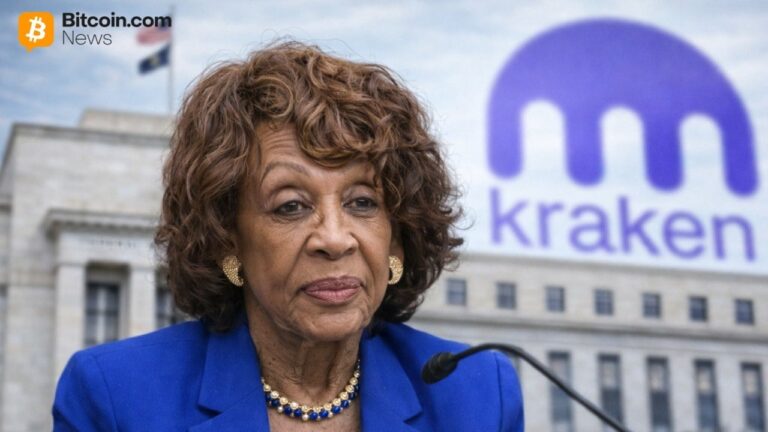
Heightened scrutiny over access to U.S. payment infrastructure is intensifying as policymakers examine crypto integration. Congresswoman Maxine Waters (D-CA), ranking member of the House Financial Services Committee, sent a letter on March 26, to Federal Reserve Bank of Kansas City President and CEO Jeff Schmid seeking details on the approval of a limited purpose account for Kraken Financial.
Regulatory uncertainty has emerged around how this approval fits within existing Federal Reserve frameworks, particularly given the absence of a defined category for such accounts. The Kansas City Fed granted the account to Payward Financial, operating as Kraken Financial, for an initial one-year term with conditions aligned to its risk profile, though specifics remain undisclosed. Waters wrote:
“I write to request that you clarify the terms of Kraken’s account access approval and provide additional information regarding the process and considerations informing the approval.”
Key Risks, Safeguards, and Policy Implications Examined
Detailed questions in the letter probe both the mechanics of Kraken’s access and the safeguards surrounding it. Waters asks whether the account enables use of FedACH, Check Services, FedCash, or Fedwire Securities Services, and whether any of those capabilities differ from what is typically available to master account holders. She also seeks clarity on balance and liquidity constraints, including whether Kraken can incur daylight overdrafts, hold unlimited overnight balances, or earn interest on those balances.
The inquiry further examines whether the Kansas City Fed imposed additional examination standards, reporting obligations, or risk controls beyond Wyoming’s Special Purpose Depository Institution (SPDI) regime, and whether any such conditions were coordinated with the Federal Reserve Board or other Reserve Banks. Beyond operational terms, the letter requests disclosure of internal and external communications tied to the approval, including whether federal or state officials influenced or reviewed the decision-making process.
Accountability remains a central theme as Congress evaluates broader implications for financial stability and consumer protection amid evolving payment technologies. Waters wrote:
“Answers to these questions are critical to ensuring that the process of approving Federal Reserve Bank account access is conducted consistently with the law, with impartiality, and in a manner that continues to foster a safe and efficient payment system.”
She added, “This matter is of critical importance to the development and oversight of our financial system, so I request that you promptly respond in writing by April 10, 2026. I look forward to your reply.”
FAQ 🧭
Why does Kraken’s Fed account access matter to investors? It signals potential expansion of crypto firms into core payment infrastructure.
What risks are regulators focusing on? Liquidity, oversight standards, and systemic exposure are central concerns.
Could this impact broader crypto regulation? Yes, it may shape how future crypto access to Fed systems is governed.
What is the key uncertainty for markets? Lack of clear regulatory frameworks for crypto-linked Fed accounts.
Dune and Visa released research showing non-USD stablecoins growing dramatically, with holder addresses jumping 30x and monthly transfer volume hitting $10B.
Dune Analytics and Visa published research titled “Beyond Dollarization” on March 25 revealing significant growth in non-USD stablecoin adoption. Non-USD stablecoin supply grew 3x, while holder addresses increased from 40,000 to 1.2 million (a 30x jump) and monthly transfer volume expanded from $600 million to $10 billion.
The research found that approximately 80% of non-USD stablecoin activity is driven by payments and treasury flows rather than DeFi activity. Transfer patterns show weekend drops that mirror payroll cycles, indicating use of local currency stablecoins as functional money rather than speculative assets.
Sources: Dune Analytics | The Block
This article was generated automatically by The Defiant’s AI news system from publicly available sources.
The bitcoin mining industry is undergoing the most fundamental transformation in its history, and the clearest sign isn’t the hashrate or the difficulty adjustments. It’s the balance sheets.
CoinShares’ Q1 2026 mining report, published this week, reveals that the weighted average cash cost to produce one bitcoin among publicly listed miners rose to approximately $79,995 in Q4 2025.
Bitcoin has traded in the $68,000 to $70,000 band, with a CoinDesk report last week estimating losses of $19,000 per BTC mined.
These numbers aren’t sustainable, and the industry knows it. The response has been a wholesale pivot toward artificial intelligence infrastructure that is reshaping what these companies actually are.
Over $70 billion in cumulative AI and high-performance computing contracts have now been announced across the public mining sector, according to the CoinShares report. CoreWeave’s expanded deal with Core Scientific alone is worth $10.2 billion over 12 years. TeraWulf has $12.8 billion in contracted HPC revenue. Hut 8 signed a $7 billion, 15-year lease for AI infrastructure at its River Bend campus. Cipher Digital has a multi-billion-dollar agreement with Google-backed Fluidstack.
Listed miners could derive as much as 70% of their revenue from AI by the end of 2026, up from roughly 30% today. Core Scientific’s AI colocation revenue already accounts for 39% of its total. TeraWulf is at 27%. IREN is at 9% and scaling rapidly with up to 200 megawatts of liquid-cooled GPU capacity under construction.
That means these mining companies are increasingly becoming data center operators that happen to still mine bitcoin on the side.
The economics explain why. According to CoinShares, the cost differential between bitcoin mining infrastructure at roughly $700,000 to $1 million per megawatt and AI infrastructure at $8 million to $15 million per megawatt is wide, but AI offers structurally higher and more stable returns.
Hash price, the metric that determines miner revenue per unit of computing power, hit an all-time post-halving low of roughly $28 to $30 per petahash per day in early March.
At those levels, miners running mid-generation hardware need access to electricity below $0.05 per kilowatt-hour to remain cash-profitable. Meanwhile, AI infrastructure contracts promise margins above 85% with multi-year revenue visibility.
How the financials work
The transition is being financed in two ways, and both are visible in the data, the report explained.
First, debt. The sector’s aggregate leverage has fundamentally changed. IREN now carries $3.7 billion in convertible notes across five series. TeraWulf has $5.7 billion in total debt, split between convertible notes and senior secured notes at its compute subsidiary.
Cipher Digital issued $1.7 billion in senior secured notes in November, causing its quarterly interest expense to surge from $3.2 million for the first nine months to $33.4 million in Q4 alone. These are not mining-scale debt loads. These are infrastructure-scale bets that the AI revenue will materialize fast enough to service the obligations.
Second, bitcoin sales. Publicly listed miners have collectively reduced their BTC treasuries by over 15,000 BTC from peak levels. Core Scientific sold roughly 1,900 BTC worth $175 million in January and is planning to liquidate substantially all remaining holdings in Q1 2026. Bitdeer reduced its treasury to zero in February. Riot Platforms sold 1,818 BTC worth $162 million in December.
Even Marathon, the largest public holder at 53,822 BTC, quietly expanded its policy in its March 10-K filing to authorize sales from its entire balance sheet reserve, partly driven by pressure on its $350 million bitcoin-backed credit facility where the loan-to-value ratio climbed to 87% as prices fell toward $68,000.
The miners that are selling bitcoin to fund AI buildouts are the same companies whose mining operations secure the bitcoin network. That creates a tension at the heart of the transition. When mining is unprofitable and AI is lucrative, the rational economic decision is to reallocate capital away from mining. But if enough miners do that, the network’s security budget shrinks.
The hashrate data already reflects this. The network peaked at approximately 1,160 exahashes per second in early October 2025 and has since declined to roughly 920 EH/s, with three consecutive negative difficulty adjustments, the first such streak since July 2022.
The valuation market has already priced the bifurcation. Miners with secured HPC contracts now trade at 12.3 times next-twelve-month sales. Pure-play miners trade at 5.9 times. The market is paying more than double for the AI exposure, which reinforces the incentive to pivot further.
The geographic picture is shifting alongside the economics, meanwhile. The United States, China, and Russia now control roughly 68% of global hashrate. The U.S. gained about 2 percentage points of market share in Q4 alone.
But emerging markets are entering the picture. Paraguay and Ethiopia have joined the global top 10 mining countries, driven by HIVE’s 300-megawatt operation in Paraguay and Bitdeer’s 40-megawatt facility in Ethiopia.
Hashrate forecasts and estimates
CoinShares forecasts the network hashrate will reach 1.8 zetahashes by the end of 2026 and 2 zetahashes by end of March 2027, one month later than previously predicted.
But that forecast depends on bitcoin recovering to $100,000 by year-end. If prices stay below $80,000, CoinShares expects hash price to continue falling and the hashrate to decline further as more miners exit.
A sustained move below $70,000 could trigger larger capitulation that, paradoxically, benefits survivors through lower difficulty.
Next-generation hardware offers a potential lifeline. Bitmain’s S23 series and Bitdeer’s proprietary SEALMINER A3, both operating below 10 joules per terahash, are expected at scale through the first half of 2026. These machines would roughly halve the energy cost per bitcoin compared to current mid-generation fleets. But deploying them requires capital that many miners are directing toward AI instead.
The bitcoin mining industry entered this cycle as a group of companies that secured the network and accumulated bitcoin. It is exiting as a group of companies that build AI data centers and sell bitcoin to fund them.
Whether that’s a temporary response to unfavorable economics or a permanent structural shift depends on one variable: the price of bitcoin. If it returns to $100,000, mining margins recover and the AI pivot slows. If it stays at $70,000 or below, the transition accelerates and the mining sector as it existed for the past decade continues to disappear into something else entirely.
Meta is to increase spending more than sixfold on an AI data center in El Paso, raising the price tag to more than $10 billion.
When the Texas facility was originally announced in October, Meta said it would constitute an investment of $1.5 billion.
Part of the cost inflation comes from Meta’s pursuit of more compute. The company confirmed via a blog post that the center “will grow to one gigawatt” — a leap from its previous assertion that it would merely “have the ability” to scale to this.
The facility — due to come online in 2028 — will ultimately support more jobs once completed, from around 100 to more than 300. Similarly, the number of construction workers required has rocketed, from 1,800 to 4,000.
The announcement was accompanied by renewed commitments to ensure that the 1.2 million square foot site will not be a drain on the local area’s energy resources.
“Since breaking ground last year, we have been proud to call El Paso home and are committed to being a good neighbor,” the blog post stated, underlining that Meta will add more than 5,000 megawatts of clean energy to the grid. It also pointed out that thanks to the use of a closed loop, liquid-cooled system that recirculates water, its water consumption will be comparable to that of a typical West Texas golf course.
Related:Bezos’ Blue Origin joins race to put AI data centers in space
However, it’s the jump in expenditure that will attract headlines, particularly at a time when the company is already under increased scrutiny due to the sheer cost of its AI ambitions.
The company’s most recent earnings report in January revealed that capital expenditures in 2026 could reach $135 billion, driven by Meta’s ongoing efforts to build up the compute infrastructure needed for AI rollout.
At the same time, CEO Mark Zuckerberg said that 2026 would be a landmark year for AI within the business, leading to a “flattening” of teams beause “projects that used to require big teams [can] now be accomplished by a single very talented person.”
The realities of this appear to be coming home to roost, with a first wave of job cuts under way. The company confirmed to The Register that 700 roles will be axed initially. “Teams across Meta regularly restructure or implement changes to ensure they’re in the best position to achieve their goals,” the company said in a statement.
At the same time as AI infrastructure costs are soaring, Meta share prices are dropping, with an immediate fall on Thursday in the wake of a California court case that found the company had harmed a young user with addictive social media design features — sparking fears of more lawsuits.
Related:Nscale Valued at $14.6B After Raising Another $2B
Bitcoin (BTC) dropped toward $67,000 during the European trading session on Friday despite an increase in long-term buying. Exchange withdrawals also increased to 16-month highs, suggesting reduced “immediate selling pressure,” a new analysis said.
Key takeaways:
Bitcoin withdrawals from exchanges increases, reducing BTC available for sale.
Long-term holders accelerate accumulation, adding 155,450 BTC over the past 30 days.
Bitcoin analysts view $65,000–$66,000 as a potential support zone for a bounce.
Bitcoin supply tightens as long-term buying accelerates
CryptoQuant’s exchange flow data highlighted “renewed signs of supply tightening,” as large Bitcoin withdrawals continue across major exchanges.
The chart below shows that investors withdrew nearly $1.6 billion of BTC from Bitfinex on March 16, as shown by the orange bar in the chart below.
Related: Bitcoin floor ‘near $70K’ as TradFi returns: Will war, inflation break their belief?
Since then, the trend has expanded across other major exchanges, with a $678 million withdrawal from OKX on Sunday, a $728 million withdrawal from Kraken on Monday, and another $400 million in BTC leaving Binance on Wednesday.
“This pattern suggests that the latest wave of withdrawals is no longer isolated to one platform,” CryptoQuant analyst Amr Taha said in his latest QuickTake analysis.
Bitcoin exchanges netflow, $. Source: CryptoQuant
The figures support the latest data showing Bitcoin whales and sharks have been accumulating over the last two months, a pattern that could trigger an eventual breakout from the range.
Other data also reflects an accumulation phase, as long-term holders (LTHs), investors who have held Bitcoin for more than 155 days, ramped up buying.
The LTH net position change has been positive since March 5, as about 155,450 BTC has been bought over the past 30 days.
In other words, holders are buying more on the dips, including the latest one below $68,000.
Bitcoin: LTH net position change. Source: Glassnode
When Bitcoin leaves exchanges while LTHs expand their positions, it “usually signals lower immediate sell pressure and stronger conviction from investors with a longer time horizon,” Amr Taha said.
If this trend continues, the market could be entering another phase where tightening sell-side liquidity and stronger LTH demand “create a more supportive backdrop for price,” the analyst added.
Bitcoin price to revisit $65,000 before bounce
As Cointelegraph reported, $70,000 remains the key for the Bitcoin bulls and that losing it could trigger the next leg down.
The BTC/USD pair was trading below $67,000 at the time of writing, below the 50-day simple moving average (SMA) and the 200-week exponential moving average (EMA).
Bears will attempt to push the price toward the $65,000-$63,300 demand zone, with a deeper focus on the range low below $60,000, reached on Feb. 6.
“It’s quite clear that there’s not enough strength for the markets to move higher after that rejection at $75K,” MN Capital founder Michael van de Poppe said in a recent X post.
An accompanying chart suggested that the price was seeking to print a higher low within the $65,000 to $66,000 range, failing which “we’ll start to see an acceleration downwards,” van de Poppe said, adding:
“I would be looking at longs in the lower-$60K range.”
BTC/USD daily chart. Source: Michael van de Poppe
The Glassnode liquidity heatmap highlighted “stronger” whale bid orders near $65,000, suggesting that the BTC price could retest this area before a bounce.
Bitcoin whale orders. Source: CoinGlass
As Cointelegraph reported, a break and close below the ascending trend line at $68,000 could result in Bitcoin price dropping toward $60,000, where it could consolidate next.
This article does not contain investment advice or recommendations. Every investment and trading move involves risk, and readers should conduct their own research when making a decision. While we strive to provide accurate and timely information, Cointelegraph does not guarantee the accuracy, completeness, or reliability of any information in this article. This article may contain forward-looking statements that are subject to risks and uncertainties. Cointelegraph will not be liable for any loss or damage arising from your reliance on this information.
Cryptoquant Says Bitcoin Treasury Summer Is Over Outside Strategy
The data reveals a stark split in the corporate bitcoin market. Strategy‘s buying represents its highest 30-day purchase volume since April 2025. Every other publicly traded company holding bitcoin in treasury has, by comparison, nearly stopped buying.
Cryptoquant researchers tracked the collapse in detail. Non-Strategy treasury companies purchased a combined 1,000 BTC in the last 30 days—a 99% decline from the August 2025 peak of 69,000 BTC. Their share of total corporate bitcoin purchases has fallen to 2%, down from 95% in October 2024.
Participation breadth has also narrowed. Companies outside Strategy made 13 separate bitcoin purchases over the past 30 days. At the height of what Cryptoquant called “ Bitcoin Treasury Summer” in August 2025, that figure stood at 54. The number of active buyers has dropped by 76%.
Strategy’s buying cadence, by contrast, has stayed steady. The company has consistently executed four to five purchases per 30-day period, a rhythm that has held even as peers have stepped back.
The gap in holdings has widened accordingly. Strategy has added 90,000 BTC to its balance sheet so far this year. All other treasury companies combined have added a net 4,000 BTC over the same period. Their collective share of total treasury-company holdings fell from 26% in November 2025 to 24% today.
Strategy now holds approximately 76% of all bitcoin held by publicly listed treasury companies, according to Cryptoquant. The company’s total holdings stand at 762,099 BTC.
The next two largest holders are not close. According to bitcointreasuries.net, Twenty One Capital—ticker XXI—holds 43,514 BTC, placing it second globally and ahead of MARA Holdings, which recently sold 15,133 BTC to retire $957 million in zero-coupon convertible notes. MARA now holds 38,689 BTC.
Metaplanet Inc., the Japan-based firm trading under MPJPY, holds 35,102 BTC and sits fourth. Bitcoin Standard Treasury Company holds 30,021 BTC in fifth place, per bitcointreasuries.net data.
Cryptoquant notes that XXI and Metaplanet together account for just 4.3% and 3.5% of total treasury-company BTC holdings, respectively. The rest of the sector divides a shrinking slice.
The pattern points to a bitcoin treasury sector that has consolidated around a single dominant buyer. Strategy continues to grow its position at scale. The companies that followed its model in 2025 have, for now, stopped following its pace.
Whether that reflects balance sheet constraints, shifting capital priorities, or broader caution about bitcoin at current prices is not specified in the Cryptoquant data. What the numbers show is straightforward: one company is buying, and the rest are waiting.
FAQ 🔎
What is Strategy’s current bitcoin treasury holding? Strategy holds 762,099 BTC, representing approximately 76% of all bitcoin held by publicly listed treasury companies.
Why did MARA Holdings drop in the bitcoin treasury rankings? MARA sold 15,133 BTC to repurchase $957 million in zero-coupon convertible notes, reducing its holdings to 38,689 BTC.
How much bitcoin has Twenty One Capital accumulated? Twenty One Capital holds 43,514 BTC, making it the second-largest public bitcoin treasury company globally, per Bitcointreasuries.net.
Are other companies still buying bitcoin for their treasuries? Corporate bitcoin purchases outside of Strategy have fallen 99% from their August 2025 peak, with just 1,000 BTC bought collectively in the last 30 days.
Summer Mersinger from the Blockchain Association told a House Financial Services Committee hearing that DeFi systems should receive tailored regulatory treatment distinct from intermediary-based compliance regimes.
Summer Mersinger of the Blockchain Association testified before the House Financial Services Committee on Wednesday, advocating for regulatory differentiation between DeFi protocols and traditional financial intermediaries. Mersinger stated that DeFi systems should receive “appropriately tailored equivalent consideration by the SEC” rather than being subjected to intermediary-based compliance frameworks, to preserve their role as open, neutral infrastructure while maintaining oversight of activities presenting traditional financial risks.
The statement reflects ongoing efforts by the crypto industry to shape SEC policy around DeFi regulation. The distinction between infrastructure and intermediaries has become a focal point in broader debates over how financial regulators should approach decentralized protocols versus centralized service providers.
Sources: Blockchain Association (@fund_defi)
This article was generated automatically by The Defiant’s AI news system from publicly available sources.
Trusted Editorial content, reviewed by leading industry experts and seasoned editors. Ad Disclosure
Bitcoin and Ethereum prices are struggling with bearish performance as the broader cryptocurrency market flips notably into the negative territory. Nonetheless, with key upcoming events, the market is expected to experience a major shake-up that could either lay the foundation for an upward move or a downside move.
Massive Bitcoin And Ethereum Options Expiry To Shake Markets
A major derivatives event regarding Bitcoin and Ethereum, the two leading digital assets, is poised to put the cryptocurrency market on edge. While the broader market is struggling to gain stability, billions worth of options tied to BTC and ETH are scheduled to expire today.
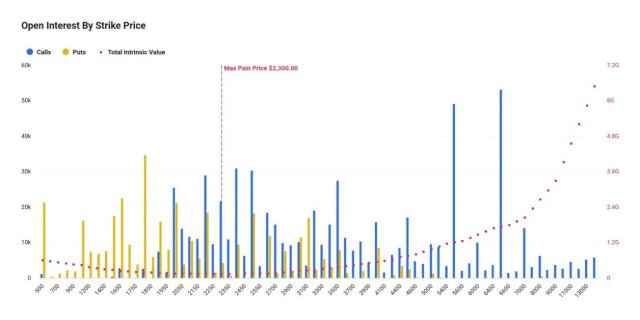
Crypto expert and investor Milk Road recently announced on the X platform that $16.4 billion in BTC and ETH options are up for expiry. Such large-scale expiries frequently serve as triggers for volatility, as traders modify positions, unwind hedges, and respond to changing conditions across the market.
According to the expert, this event set to take place today is one of the largest single-day options expiries of the year. With a large percentage of open interest centered on important price points, the short-term direction and liquidity circumstances may be impacted by this expiry’s outcome.
Source: Chart from Milk Road on X
Historically, options expiry at this massive scale leads to the formation of what traders call max pain. Specifically, this is where the price point is at which market makers lose the least, and the majority of contracts expire worthless. As expiry moves closer, prices are expected to be pulled toward this level.
Milk Road flags this event as a gravitational effect, with $16.4 billion expected to create a lot of gravity. Soon, Bitcoin and Ethereum are likely to be in a phase of tug of war as options holders and spot traders compete for positions in today’s event.
Here’s What To Expect Following The Event
As the event approaches, Milk Road has mapped out the potential outcome. While Bitcoin takes the bulk portion of the $16.4 billion notional exposure, Ethereum also accounts for a meaningful chunk. Thus, both assets could swing hard in either direction prior to when the bell rings, and those with active unhedged spot into expiry will be taking on extra risk.
After the event, $16.4 billion in open interest will be taken out, and the max pain gravity disappears with it. In that scenario, the market is likely to decide its next move. However, post-expiry direction hinges on where the spot is positioned when the noise clears.
If Bitcoin and Ethereum were suppressed into the event today, the release could serve as a trigger for sustained upward movement. Meanwhile, in an opposite scenario where both assets have been running hot, the unwind could be painful, making this event crucial for the market.
BTC trading at $68,786 on the 1D chart | Source: BTCUSDT on Tradingview.com
Featured image from Unsplash, chart from Tradingview.com
Editorial Process for bitcoinist is centered on delivering thoroughly researched, accurate, and unbiased content. We uphold strict sourcing standards, and each page undergoes diligent review by our team of top technology experts and seasoned editors. This process ensures the integrity, relevance, and value of our content for our readers.