Home Blog Page 612

Crypto Market Maker CEOs Extradited From Singapore in FBI Wash Trading Sting

0

Ten foreign nationals across four firms have been charged with orchestrating pump-and-dump schemes.

Federal prosecutors in California have charged ten foreign nationals from four crypto market-making firms with orchestrating wash trading and pump-and-dump schemes to artificially inflate token prices at the expense of retail investors.

Three defendants were arrested in Singapore, extradited to the United States, and made their initial appearances in federal court in Oakland on March 30.

The firms named in the indictments are Gotbit, Vortex, Antier Solutions, and Contrarian.

The charges stem from a joint undercover operation by the FBI and IRS Criminal Investigation in which federal agents created several cryptocurrency tokens to lure market makers into offering illicit wash trading services.

According to the three separate indictments, all four firms followed a similar playbook: employees acted as both buyer and seller in coordinated transactions to fabricate the appearance of organic trading activity. With volumes and prices artificially inflated, the defendants then planned to liquidate their holdings, leaving unsuspecting investors holding devalued tokens.

The highest-profile arrests came out of Singapore. Gleb Gora, 24, CEO of Vortex, was arrested on Oct. 2, 2025 and extradited to Oakland. His firm’s chief financial officer, Sergei Ryzhkov, and business development manager Michael Vogel were also indicted.

Manu Singh, 34, CEO of Contrarian, and Vasu Sharma, 26, a business development associate at the firm, were arrested in Singapore on the same date. The FBI’s Legal Attaché office in Singapore worked with the Singapore Police Force and the Attorney General’s Chambers to secure the arrests and extraditions.

Gotbit employees were charged separately in an earlier indictment from March 2025. Antoine Tsao, a Taiwanese national and business development manager, was arrested at JFK International Airport in March 2025 and pleaded guilty to conspiracy to commit wire fraud in June 2025. Serbian national Nemanja Popov, an account manager, was arrested at San Francisco International Airport and pleaded guilty in February 2026. Russian national Ian Sofronov, a sales manager, was also charged.

Gotbit was previously at the center of Operation Token Mirrors, the FBI’s landmark 2024 undercover sting that first came to light in October of that year. In that operation, the FBI created a fake token called NexFundAI to expose wash trading services, ultimately charging 18 individuals and entities across Gotbit, ZM Quant, CLS Global, and MyTrade. Gotbit’s founder and CEO, Aleksei Andriunin, was extradited from Portugal and sentenced in June 2025, with the firm ordered to forfeit approximately $23 million and cease operations.

All defendants face charges of wire fraud and wire fraud conspiracy, carrying a maximum sentence of 20 years in prison and a $250,000 fine per violation. More than $1 million in cryptocurrency has been seized in connection with the latest indictments.

This article was written with the assistance of AI workflows. All our stories are curated, edited and fact-checked by a human.

Revolut Secures Organisation Authorisation in Peru, Moving to Formally Incorporate as a Bank

0

WHY THIS MATTERS: The regulatory approval granted to Revolut in Peru is more than a simple operational checklist item; it marks the decisive entrance of a major global force into a crucial growth market within the larger Latin American digital banking ecosystem. This move accelerates the region’s existing trend of neobank expansion, where platforms are aggressively leveraging licenses to move beyond basic accounts and offer full-suite financial products. For customers in Peru, where financial inclusion remains a key challenge, Revolut’s fully digital banking model promises to disrupt legacy systems by introducing superior transparency and cost efficiency. The immediate impact is a fresh surge of competition, placing pressure on both domestic incumbents and regional competitors like Nubank, whose growth has already proved the market’s appetite for mobile-first services. This license is a critical regulatory milestone that proves Peru is open for serious technological transformation in finance.

Revolut, the global fintech with over 70m customers, has today been granted an Organisation Licence by the Superintendency of Banking, Insurance and AFP (SBS) of Peru, a key step in its banking licensing process. With this major regulatory milestone, Revolut is set to become the first fully digital bank authorised in Peru. 

The authorisation allows Revolut to formally incorporate as a banking entity in the country, marking the critical first stage before the company undergoes the supervisory inspection required for the Functional Authorisation and a full operational launch.

The granting of the Organisation Authorisation is the first step in crystallising Revolut’s commitment to delivering a world-class financial ecosystem to Peru’s dynamic and increasingly digital-first population. By securing this license, Revolut demonstrates its operational readiness and the strength of its local leadership team, tasked with bridging the company’s global technology with deep regional expertise to offer more competitive, transparent, and high-value financial tools.

This move further solidifies Revolut’s ambitious expansion strategy in Latin America, where Peru joins Brazil, Mexico, Colombia, and Argentina as a key growth pillar. Once the subsequent Functional Authorisation is received, Revolut plans to introduce its banking products and services to Peruvian consumers, offering a suite of digital-first products designed to provide greater transparency and control over personal finances. The company’s entrance is expected to significantly increase competition and foster greater financial inclusion across the region’s evolving payment landscape.

“Securing our Organisation License is a testament to the efficient regulatory environment in Peru and our team’s dedication to meeting the highest compliance standards,” said Julien Labrot, CEO of Revolut Peru. 

As Revolut moves toward full operational status, the company will continue to scale its local team and infrastructure, ensuring that its suite of services is perfectly tailored to the Peruvian economic landscape. 

FF NEWS TAKE: The authorization unequivocally moves the needle for Peruvian digital banking, signaling regulatory acceptance of a globally scaled operating model. Revolut’s commitment to Latin America is now cemented, positioning Peru as the fifth strategic pillar in its regional growth plan. The next stage to watch for is the granting of the Functional Authorisation, which will immediately precede the product launch. The key metric to track thereafter will be the pace of customer acquisition and how Revolut’s multi-product model performs against established regional challengers.

EDX Markets applies for U.S. trust charter to expand institutional crypto services

0

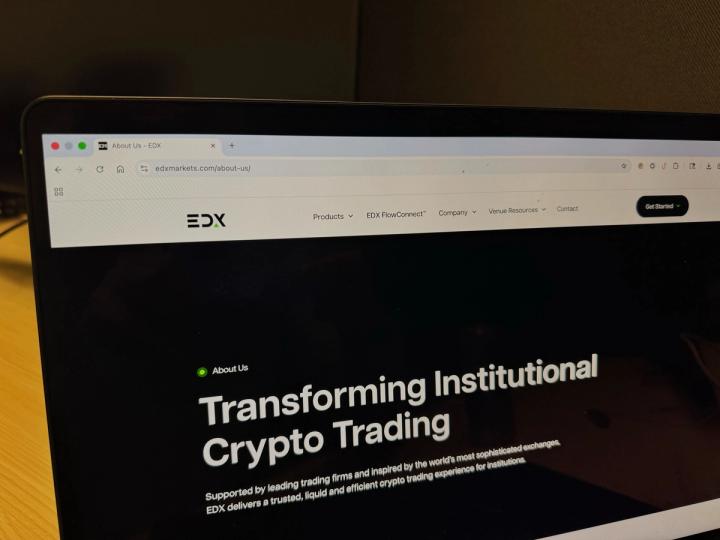
EDX Markets, the crypto exchange backed by Citadel Securities, has applied for a national trust bank charter, marking a new step in its push to serve institutional clients.

The exchange submitted its filing to the Office of the Comptroller of the Currency on Wednesday, according to documents seen by CoinDesk. The move comes about three and a half years after the firm launched.

If approved, the charter would allow EDX to offer custody, asset management and principal trading services, while continuing to run its core order-matching platform. The filing outlines a structure where custody and settlement sit within a regulated trust entity, separate from trading operations.

EDX Markets targets traditional finance firms entering digital assets. Its backers include Fidelity Digital Assets and Charles Schwab Corp, alongside Citadel Securities. The platform went live in the summer of 2023 with four cryptocurrencies: bitcoin , ether (ETH), and bitcoin cash (BHC). It has since expanded to include 17 additional tokens.

“EDX Trust is a key step in bringing traditional market structure to digital assets,” CEO Tony Acuña-Rohter told CoinDesk. “By separating custody and settlement into a regulated trust, we’re building the kind of infrastructure banks and institutional investors expect as they scale into the space.”

EDX is not alone in seeking this type of regulatory footing. Several crypto firms have applied for and received trust bank charters in recent years, using them to offer custody and other services under U.S. oversight. These approvals have become a key pathway for firms looking to attract institutional capital.

Competition for those clients has intensified. Large asset managers and trading firms want platforms that mirror the safeguards and structure of traditional markets. In practice, that can mean segregated custody, clear settlement processes and regulated entities that reduce counterparty risk. For exchanges like EDX, securing a trust charter could help bridge that gap.

Solana (SOL) DeFi platform Drift investigates suspicious activity, tells users to halt deposits

0

Solana-based decentralized finance (DeFi) platform Drift said it is investigating “unusual activity” on its protocol, prompting concerns that the platform may have been exploited.

“We are observing unusual activity on the protocol. We are currently investigating. Please do not deposit funds into the protocol while we investigate,” Drift wrote in a post on X. “This is not an April Fools joke. Proceed with caution until further notice. We’ll provide additional updates from this account.”

The warning triggered speculation across the crypto community, with some users reporting irregular behavior tied to their positions.

Helius CEO Mert Mumtaz added to the concern in a separate X post, writing, “not 100% fully certain yet, but it seems drift might be getting exploited.” Helius is a key infrastructure provider on Solana, offering APIs and node services that developers and platforms rely on to access blockchain data.

The Drift (DRIFT) token’s price fell over 20% in the hours after the exploit was first reported, trading at about $0.05 as of press time.

If confirmed, an exploit could affect user funds and add pressure on Solana’s DeFi ecosystem, which has seen renewed growth in recent months.

Solana’s (SOL) price fell over the past few hours but recovered a bit after hitting a localized bottom at $83.82, and is still up over 1% on the day’s trading.

UPDATE (April 1, 2026, 18:49 UTC): Adds additional detail.

Solana-based Drift Protocol investigates possible $270m exploit – DL News

0

  • Blockchain sleuths flagged that over $270 million left Drift Protocol on Wednesday.
  • The Solana-based trading platform has said it is investigating “unusual activity.”
  • Solana ecosystem bigwigs have advised people not to use the platform for now.

Trading platform Drift Protocol said Wednesday that it was investigating “unusual activity” and advised users not to deposit funds into the protocol following news of a potential $270 million exploit.

The Solana-based perpetual futures exchange’s native token, DRIFT, dropped sharply on the news. CoinGecko data shows it was trading hands for a little over $0.05 after dropping 11% over a 24-hour period.

“This is not an April Fools joke,” Solana-based app’s team wrote via its official X account. “Proceed with caution until further notice.”

DL News reached out to Drift Protocol with questions but did not immediately receive a response.

Blockchain sleuths first posted on X Wednesday afternoon New York time that money was fast leaving the protocol. Blockchain data firm Arkham Intelligence, which tracks the DeFi platform’s vault, shows that its balance plunged on Wednesday.

Top names in the Solana ecosystem, including Mert Mumtaz, CEO of Solana developer platform Helius, were also quick to warn traders of the potential exploit.

Over $270 million in crypto — mostly in the form Jupiter Perps — left the protocol, according to blockchain sleuths.

Tens of millions of dollars worth of USDC, Fartcoin, and Wrapped Ethereum were also moved.

Drift Protocol is a non-custodial trading platform allowing users to use leverage without an expiry date.

Drift Labs, the firm behind the trading platform, in 2024 announced it was debuting a prediction markets platform to rival Polymarket.

Mathew Di Salvo is a news correspondent with DL News. Got a tip? Email at mdisalvo@dlnews.com.

Florida University Rolls Out Autonomous Delivery Robots

0

Florida’s Polytechnic University is set to roll out autonomous delivery robots across its campus, in a new partnership with Starship Technologies.

Under the deal, Starships’ small, wheeled sidewalk robots will deliver food, starting on Wednesday, to students and teachers at the university in Lakeland, with initial vendors including Einstein Bros. Bagels, Mosaic Café and Fire + Ash. More food options are expected to be added in the future.

The zero-emission robots use a combination of machine learning, AI and built-in sensors to navigate the campus, capable of mounting curbs and operating in wet weather.

“These food delivery robots offer an exciting new way for our busy students, faculty and staff to quickly and conveniently enjoy a great meal, no matter where they are,” Kerri Demeri, Florida Polytechnic’s director of auxiliary enterprises, said in a release. “Partnerships like this help us bring innovation directly to our students in meaningful, everyday ways.”

Related:Google Partners With Agile Robots in Latest AI Robotics Push

The university is the first in the country to deploy San Francisco-based Starship’s new point-of-sale system, Starship 360, which integrates in-person ordering with robot delivery, mobile pickup, and touchscreen self-service kiosks.

“We’re creating a dining experience designed around how students actually live — flexible, convenient, and always accessible,” said Pepe Aaviksoo, senior vice president of operations at Starship Technologies. “This partnership brings a smarter, more connected approach to campus dining while giving students more choice and control over their meals.”

Established in 2014 by two Skype co-founders, Starship Technologies has now completed more than nine million deliveries across seven countries. The latest deployment is the latest in a series of expansion projects from the company.

In the U.K., the company is scaling through partnerships with platforms such as Just Eat. It also teamed up with Uber Technologies last year to bring autonomous sidewalk delivery to multiple markets, beginning in the U.K. and expanding into Europe in 2026, and into the U.S. by 2027.

Last October, Starship also closed a $50 million funding round to expand its autonomous delivery service into U.S. cities.

Gen Z Turns Bitcoin Into A Solid Portfolio Diversifier

0

Opinion by: Alex Tsepaev, chief strategy officer at B2PRIME Group.

Each generation has its own distinct characteristics, even when it comes to investing. Younger people, for example, show a higher tolerance for risk. More than 64% of Gen Z and 49% of millennials say they are willing to take on more of it.

That appetite naturally includes investing in cryptocurrencies, which is considered one of the riskiest asset classes in modern markets. No surprise, then, that nearly two-thirds of Gen Zs plan to invest in cryptocurrencies like Bitcoin this year. Even more striking is that they are almost four times as likely to own crypto as to own a retirement account. 

This might look like pure speculation. These numbers suggest that something more structural is happening.

For Gen Z, crypto is becoming an important part of their portfolios. The question now is whether that bet is mature or premature.

Volatility is the price of admission

Although it is arguable, crypto volatility remains one of the biggest obstacles in investing. Prices can change every millisecond, and trading happens around the clock. This has a significant effect on the final execution price.

Source: Why is Crypto So Volatile? Understanding Market Movements, Caleb & Brown

The most interesting part here, however, is that Gen Z is fully aware of this. 84% of them acknowledged that cryptocurrencies are risky and volatile, yet continue investing, and participation continues to grow every year. Why?

Gen Z understands that digital assets are a great way to have extra, above-average profits, and volatility is perceived as an entry price. For a generation that has already witnessed two of the biggest economic crises in history, average capital growth in traditional investments can feel too slow or insufficient.

Source: Bitcoin Vs. S&P 500: The New Risk Divide

Digital assets also feel native to Gen Z. This is the first generation that has never known a life without the internet, and they are also used to digital wallets and online transactions. 

At the same time, their investment behavior is shaped by social media consumption — one in four American Gen Z now gets financial advice from TikTok. Considering that the internet is flooded with so-called “finfluencers,” who help you learnn more about crypto, no surprise that Zoomers tend to invest in it so much.

FOMO and the narrative trap

Beyond risk tolerance, there is another thing that distinguishes Gen Z from previous generations. 

It is the fear of missing out (FOMO). This feeling, mostly expressed as the fear of lost profits, is expressed in constant anxiety due to comparing lives with the “perfect” picture on social networks. 

FOMO is especially common among Zoomers when it comes to financial matters. In fact, nearly 70% of Gen Z says they feel financial FOMO while scrolling social media. And 50% of Gen Z investors said they have even made an investment driven by this feeling, most often in crypto, in particular, memecoins.

Related: Australia warns of AI, ‘finfluencers’ as Gen Z crypto ownership reaches 23%

Memecoins thrive in this environment. By design, they are made for virality and great coverage in the media and news. The issue is not that they are built on hype, but that they are made to catch the moment and disappear, in most cases. Every memecoin cycle, where it goes up and quickly falls down, strengthens the argument that digital assets are unsafe.

This creates a narrative duality. On one side, crypto is maturing, and institutionals flow in. On the other hand, the industry is still very FOMO-fueled, and this dominates the headlines. And as a result, the loudest crypto stories become more about speculative gains.

Risks that Gen Z underestimate

When Gen Z increasingly invests in crypto, many may be doing so without fully researching the risks. Sometimes they blindly trust TikTok advice without doing their due diligence or reaching out to a financial advisor. 

Zoomers mostly feel confident in their decisions. More than 70% of Gen Z saying they are completely sure about their investing behavior. Confidence, however, and especially in crypto, does not mean competence. Younger generations are reportedly more susceptible to the Dunning-Kruger effect. They usually overestimate their knowledge and underestimate risks.

Beyond volatility as a primary risk, Gen Z often neglects the absence of transparency in crypto. Unlike public companies, digital assets have no reporting requirements. A “Wild West” like this, and lack of long-reaching regulation does not bother young crypto enthusiasts. On the contrary, they still trust crypto. They value transparency and direct control a lot. In fact, they should pay more attention to regulation. As it develops, it helps to protect investor rights and turn crypto into a more transparent and trustworthy market. 

Investors can also forget that diversification does not simply mean putting 10-20% of your portfolio in crypto. There is the issue of correlation. During periods of systemic stress, crypto has at times moved in line with high-growth equities, weakening its diversification argument. Graphs show that Bitcoin can even correlate with gold, a traditional safe-haven asset.

Or imagine they, for example, choose the wrong coin that is going to fall and put in at least 25%. Without understanding how digital assets work, they risk losing a fourth of their investments. 

Still, none of these risks devalues crypto’s role in modern portfolios. On the contrary, crypto might indeed be evolving into a genuine portfolio diversifier. 

If that transformation is real, it comes with strings attached. 

Opinion by: Alex Tsepaev, chief strategy officer at B2PRIME Group.