Markets are split on whether the Federal Reserve will hike rates or stay on hold on Wednesday, but analysts say bitcoin BTC$63,853.29 may be less vulnerable than AI-driven tech stocks.
Bitcoin BTC$63,853.29 recovered from its intra-day losses to trade flat just below $64,000 on Tuesday, while AI-linked technology stocks stumbled again ahead of one of the most uncertain Fed meetings in years.
Markets currently price a 70% probability that the Fed leaves rates unchanged on Wednesday and a 30% chance of a surprise 25-basis-point hike, CME FedWatch data shows. The split reflects Chair Kevin Warsh’s reduced use of forward guidance, leaving investors with less clarity on the central bank’s next move, according to derivatives analytics firm Block Scholes.
Traders are unusually split ahead of Fed decision (CME FedWatch)
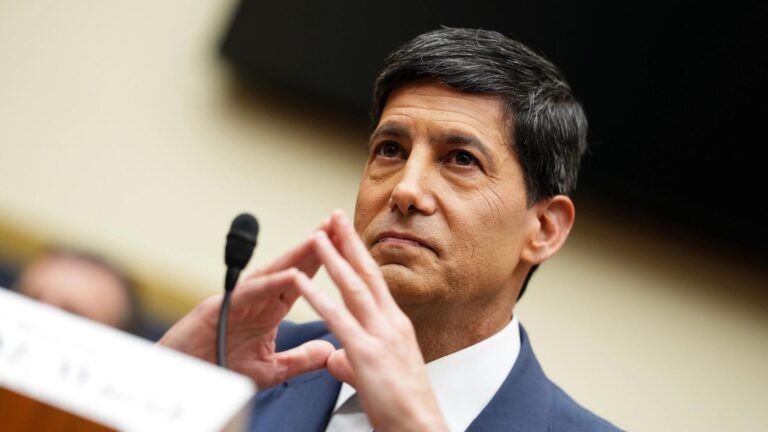
“Tomorrow’s FOMC meeting, Kevin Warsh’s second as chairman of the Fed, is one of the most uncertain in years,” said Thahbib Rahman, research analyst at Block Scholes. Looking at every Fed meeting since 2015, he noted that only two have seen markets more divided over the outcome.
Signs of decoupling
Even with that uncertainty hanging over markets, bitcoin has largely held its ground in July while chipmakers and other AI favorites have come under pressure, raising the possibility that crypto is beginning to diverge, at least at the margin, from traditional risk assets.
Cointelegraph is committed to providing independent, high-quality journalism across the crypto, blockchain, AI, and fintech industries.
All news, reviews, and analyses are produced with full journalistic independence and integrity. For more details on our standards and processes, please read our Editorial Policy.
Perpetual futures have become one of crypto’s defining financial products, but DRW CEO Don Wilson says much of what people think they know about them is wrong.
In a series of posts on X, Wilson argued that perpetual futures — or “perps” — are simply futures contracts without an expiration date. The features often associated with crypto perpetuals, such as high leverage, auto-deleveraging (ADL) and around-the-clock trading, are characteristics of how some crypto exchanges chose to implement the products, not the contracts themselves.
“Most of what people think they know about ‘perps’ … has nothing to do with the contract itself,” Wilson wrote.
His comments come as interest in bringing perpetual futures into regulated U.S. markets continues to grow. Several exchanges and market participants have explored launching perpetual futures beyond crypto, though questions remain over how the products should be regulated and whether they fit within existing futures or swaps frameworks. Kalshi, which saw perps trading explode shortly after launching, recently submitted a proposal with regulators to expand its offerings to precious metals.
Unlike traditional futures markets, crypto exchanges like Hyperliquid operate continuously, use digital collateral and can calculate margin requirements in real time. Those technological differences allowed exchanges to offer products with higher leverage and alternative liquidation mechanisms, including ADL, which automatically reduces winning positions when losing traders cannot cover their losses.
Wilson said those design choices should not be confused with perpetual futures themselves.
“I’m not a fan of ADL,” he wrote, adding that there is “no reason it needs to be used for perps.”
Instead, Wilson argued that digital payment rails create opportunities to improve risk management. Traditional clearinghouses generally calculate margin once a day, with market participants often having until the following business day to post additional collateral. Because markets can move significantly during that window, clearinghouses require relatively large initial margin buffers.
With real-time settlement, however, exchanges can recalculate margin continuously and require traders to post collateral immediately, reducing the need for large upfront margin requirements while maintaining the same level of protection, Wilson said. Whether exchanges choose to translate those efficiencies into higher leverage is a business decision, not a defining feature of perpetual futures.
Wilson said the real innovation of perpetual futures is that they eliminate the need for investors to repeatedly roll expiring contracts, reducing transaction costs, market impact and roll slippage while allowing positions to more closely track the front of the futures curve.
He also urged regulators to focus on economic substance rather than legal labels.
“There’s no reason to treat perpetuals as swaps simply because they don’t expire,” Wilson wrote. “Economically, they’re futures.”
Wilson concluded by calling for perpetual futures to be available across a broader range of markets, including commodities, securities and crypto, arguing that they should be viewed as another tool for price discovery and risk management rather than as a crypto-specific innovation.
XPlace has partnered with Credit Coop to finance card settlement through revolving on-chain credit, reducing its reliance on pre-funded capital.
The facility processed $459,000 in volume during its first three days and reached $100,000 in active loans.
XPlace, a digital-asset platform offering crypto-backed borrowing and card spending, is now using on-chain credit to finance card settlement as it seeks to expand transaction volumes without tying up the same amount of capital in advance.
The company has partnered with Credit Coop, an on-chain structured-finance protocol, to access revolving credit for purchases made through its Visa card.
The arrangement replaces part of the pre-funded balance that card programs typically maintain to meet settlement obligations.
XPlace said the facility processed $459,000 in transaction volume during its first three days. Active loans reached $100,000 over the period, according to the company.
Those early figures are limited and do not yet establish how the facility will perform across a longer period or during volatile market conditions.
Still, the structure offers an early indication of how decentralized credit markets may be used to finance conventional payment activity.
More From AlexaBlockchain
Moving Beyond the Pre-Funded Card Model
Moving Beyond the Pre-Funded Card Model. Image Credit: Credit Coop
Card programs generally need sufficient liquid capital available to cover transactions before customer repayments, collateral liquidations or other funding flows arrive.
That can create a working-capital constraint.
As card spending increases, operators may need to add more money to their settlement accounts. The requirement can restrict growth because additional transaction capacity depends partly on how much capital a provider can commit upfront.
Under the XPlace arrangement, Credit Coop provides credit when settlement funding is required. The facility can then be repaid through the cash flows connected to the card program.
Credit Coop’s secured credit lines are facilities collateralized by borrower cash flows. Its smart-contract system can direct revenue toward debt repayment, including after a default.
XPlace was built so digital wealth could function as everyday financial infrastructure, and that requires settlement capacity that can keep pace with our members,” XPlace founder and CEO Artem Ponomarev said in a statement shared with AlexaBlockchain.
“Credit Coop gives us a more capital-efficient foundation for scaling card volume. Instead of having our capacity capped by pre-funded float, we can finance settlement dynamically and expand alongside member demand.”
Why It Matters
The partnership addresses a less visible barrier to scaling crypto-linked cards: the funding gap between a customer making a purchase and the card program completing its settlement and repayment cycle.
Many crypto-card products focus their marketing on rewards, custody or the ability to spend digital assets. But their growth also depends on treasury management, liquidity and access to short-duration financing.
Reducing the amount held in settlement accounts could allow XPlace to direct more capital toward product development, liquidity reserves or customer credit.
The economic benefit will ultimately depend on the facility’s borrowing costs, utilization rate, default protections and repayment performance. XPlace did not disclose the interest rate, total credit limit, lender composition or collateral terms.
That makes it difficult to determine how much capital the company will save compared with maintaining a conventional pre-funded float.
The structure also introduces risks.
On-chain lending can make loan balances and repayments more transparent, but smart-contract vulnerabilities, collateral volatility and liquidity shortages can still disrupt funding. Credit facilities can also become more expensive or restrictive when market conditions deteriorate.
XPlace Is Extending a Model Already Used by Rain
XPlace is not the first payments company to use Credit Coop to finance card-related obligations.
Rain, a stablecoin-card infrastructure provider and Visa partner, has used Credit Coop to borrow against future cardholder receivables. The structure helps Rain meet daily Visa settlement obligations before customer repayments arrive later.
Visa said Rain had borrowed or repaid more than $175 million in USDC through Credit Coop as of September 2025. Credit Coop’s monthly lending volume exceeded $30 million in August 2025, while active loans surpassed $8.8 million.
That provides a more established comparison for XPlace’s facility.
Coinflow, a crypto-focused payment processor, has also used Credit Coop to finance immediate USDC disbursements to merchants while underlying card payments move through settlement.
Elsewhere, Huma Finance has developed stablecoin credit lines and receivables-backed financing for cross-border payments and card programs. Visa reported that Huma’s monthly lending and repayment volume had reached about $500 million by September 2025, with $98 million in payment-finance assets deployed in active loans.
These examples suggest that payment financing is emerging as one of the more commercially tangible uses of on-chain lending.
Crypto Infrastructure Moves Behind the Card
The partnership comes as card networks and infrastructure providers increasingly move blockchain settlement into the back end of familiar payment products.
Rain settles card transactions with payment networks using stablecoins and says the approach can reduce collateral requirements compared with multi-day fiat settlement.
Gnosis Pay similarly connects self-custodied stablecoin balances to Visa cards, allowing merchants to receive local currency without handling crypto directly. Its infrastructure was recently used to launch a MiniPay card for a wallet with more than 16 million activated users.
Mastercard has also expanded its settlement capabilities to include stablecoin and intraday settlement options, reflecting broader demand for payment systems that operate beyond traditional banking windows.
XPlace’s model differs because it is not primarily replacing the card network with blockchain payments. It is using on-chain finance to fund the settlement obligations created by activity on the existing card network.
That distinction is important.
The most immediate role for blockchain infrastructure may not be persuading consumers to abandon cards. It may instead be improving the capital, credit and settlement systems operating behind them.
XPlace presents itself as a non-custodial digital-wealth platform that allows customers to borrow and spend against crypto portfolios rather than selling their assets. Its app offers access to a Visa card, crypto-backed credit and yield products.
The Credit Coop facility could make that model easier to scale.
Whether the structure proves materially more efficient will depend on how quickly the loans turn over, what the financing costs and how it performs as customer spending increases.
The above article “XPlace Uses On-Chain Credit to Reduce Card Settlement Pre-Funding” was first published on AlexaBlockchain. Read the complete article here: https://alexablockchain.com/xplace-uses-on-chain-credit-to-reduce-card-settlement-pre-funding/
Read Also: This is the First U.S.-Chartered Depository Bank to Offer Stablecoin Invoicing
Disclaimer: The information provided on AlexaBlockchain is for informational purposes only and does not constitute financial advice. Read complete disclaimer here.
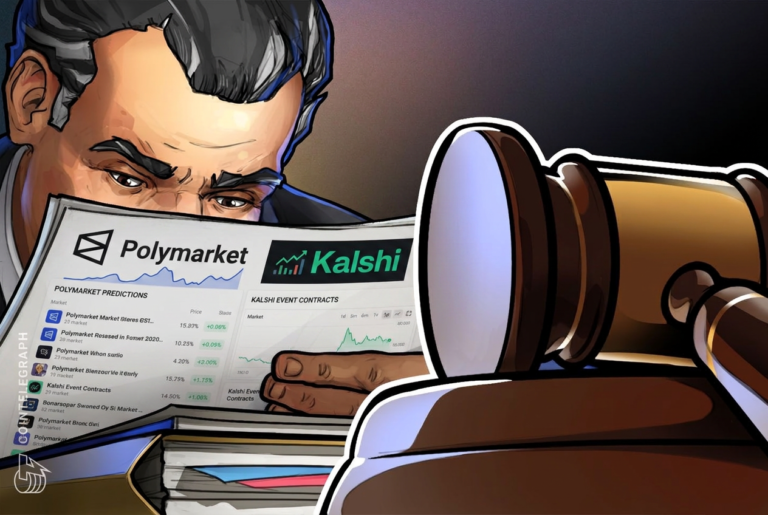
The preliminary injunction allows Kalshi and Polymarket US to continue operating in Minnesota while the court considers their challenge to the state law.
“I’m very supportive of moving the CLARITY Act forward, so we can get some market structure in place and start to move the innovation process along,” Solomon said.
SoFi CEO Anthony Noto welcomed Goldman Sachs’ support, noting on X that the two firms have taken a different stance than some banks on crypto regulation.
“Durable rules for digital assets are critical for U.S. global competitiveness,” Noto wrote. “It protects consumers and lets us build safely under homegrown regulation. Congress should pass it immediately.”
The growing chorus of support comes as the bill enters a critical stretch on Capitol Hill.
Senate negotiators recently unveiled updated legislative text that merges House and Senate proposals and, for the first time, outlined how ethics restrictions for senior government officials involved with crypto could work. That issue has become one of the biggest sticking points in negotiations, with lawmakers still debating whether the proposal goes far enough to address concerns surrounding President Donald Trump’s crypto business interests.
Even with revised language in hand, the Senate isn’t expected to take up the bill immediately. Majority Leader John Thune has shifted the chamber’s focus to judicial nominations and a Russia sanctions package, leaving the Clarity Act waiting for floor time.
Binance co-founder Changpeng “CZ” Zhao backed crypto license passporting across ASEAN, arguing that firms regulated in one market should be able to enter others through a simplified approval process rather than applying from scratch.
Speaking Tuesday during the “One ASEAN, One Digital Economy” fireside chat at the ASEAN Tech Summit Manila 2026, Zhao backed an idea raised by FinTech Alliance PH founding chair Lito Villanueva for regulatory passporting or license portability. Zhao said regulators could still review applicants but should not require them to complete another full licensing application from scratch.
A regional licensing framework could reduce compliance costs, encourage competition and make it easier for crypto and stablecoin services to operate across ASEAN’s fragmented regulatory markets. Member states regulate digital assets separately, creating multiple approval processes for companies seeking a regional presence.
“I think that’s mostly a political problem,” Zhao said of cross-border coordination, adding that the technology was simple. He said allowing more licensed platforms to compete could improve services and lower costs for consumers.
Binance co-founder Changpeng Zhao (left) with FinTech Alliance PH founding chair Lito Villanueva (right) at the ASEAN Summit in Manila. Source: Aubrey Paller
ASEAN has precedents for regional passporting
ASEAN does not currently have a bloc-wide passport for crypto companies, but regional regulators have created streamlined cross-border arrangements elsewhere in finance.
The ASEAN Capital Markets Forum’s (ACMF) operates the Collective Investment Schemes Framework, which allows a fund authorized in its home jurisdiction to be offered in participating host jurisdictions through a streamlined authorization process. The framework was first operationalized in Malaysia, Singapore and Thailand in 2014, while the Philippines joined in 2021, according to the ACMF.
The forum also introduced the ACMF Pass under its Professional Mobility Framework. The arrangement lets eligible investment advisers licensed in one participating jurisdiction receive fast-track registration to provide advisory services in another without obtaining another license.
Related: Philippine bank BPI plans stablecoin payments pilot
These programs are narrower than the passporting idea Villanueva raised and Zhao supported, and remain subject to host-market requirements, but they show that ASEAN regulators have previously used mutual recognition and simplified approvals to deepen integration.
A direct crypto comparison exists in the European Union. Under the Markets in Crypto-Assets Regulation, an authorized crypto-asset service provider can use passporting rights to provide services across EU member states after notifying its home regulator of the countries and services involved.
Zhao said differences in national policies and regulatory approaches make alignment harder than building common technical rails. Still, he argued that firms already licensed in one market should face a lighter application process when entering another ASEAN jurisdiction.
Magazine: Inside the ‘fake police raid’ that forced a $1M Bitcoin transfer
The Bank of Russia published its first draft rules as part of the introduction of cryptocurrency regulations in the country, including capital requirements for companies that hold and record digital assets.
The proposals would extend systems already used in Russia’s securities markets, including exchange trading, custody, record-keeping and disclosure rules, to digital assets.
The framework would create “digital depositories,” regulated companies that would record holdings of cryptocurrencies and other digital assets. They would need between 50 million ($570,000) and 250 million rubles ($2.8 million) in capital, depending on the services they provide.
Settlement depositories would require 250 million rubles ($2.8 million) in capital The requirement falls to 100 million rubles ($1.1 million) for firms that control crypto addresses or hold assets with foreign custodians, and 50 million rubles ($570,000) for other digital depositories.
Assets counted toward those capital requirements must be liquid, while eligible financial assets must meet the central bank’s credit-quality standards. The requirements would also apply to operators of electronic platforms that settle transactions involving digital financial assets.
The central bank will maintain registers of digital depositories, crypto exchange operators and companies that issue digital financial assets.
Under the policy, foreign law enforcement agencies must route certain requests through Mutual Legal Assistance Treaties, or MLATs. The treaties provide a formal process for governments to exchange evidence and information in criminal investigations, but requests can take considerably longer than direct cooperation with an exchange.
The change represents a departure from Binance’s previous approach, under which it worked directly with authorities to freeze suspicious accounts and provide information about users under investigation, the NYT said.
“Binance has not slowed its cooperation with global law enforcement,” a spokesperson said in an email to CoinDesk. “On the contrary, we have increased our cooperation year over year, while navigating the increasing complexity of government approaches to crypto regulation and data protection.”
The spokesperson said Binance continues to prioritize collaboration with law enforcement agencies worldwide, including in the U.S. and Europe. Binance said its assistance goes “beyond any legal obligation upon us and what traditional financial services firms typically do.”
“This is a deliberate strengthening of the controls and safeguards that govern how we cooperate, which is consistent with the standards expected of a regulated institution,” the spokesperson added.
The NYT’s report follows a similar account from The Information this month, which cited a Justice Department (DOJ) memo warning federal prosecutors handling crypto cases that they should prepare for less assistance from Binance when seeking to freeze or seize assets. Binance denied that its cooperation with U.S. authorities had changed.