Home Blog Page 59

FBI Director Patel Omitted Strategy (MSTR) Stake

0

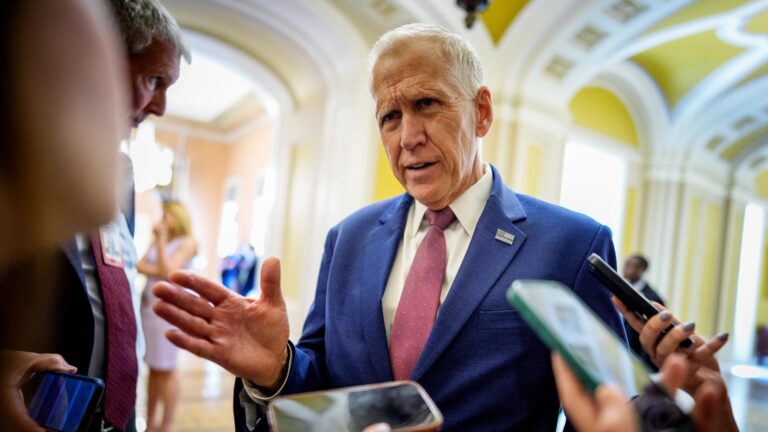
FBI Director Kash Patel disclosed a six-figure investment in Strategy (MSTR), the world’s largest corporate holder of Bitcoin, more than six months past the deadline set by federal ethics law, according to a report from NOTUS. The lapse has reopened a fight over stock trading by senior government officials and raised questions about a potential conflict of interest.

Patel purchased between $100,001 and $250,000 in shares of Strategy on November 21, 2025. He did not report the trade to federal regulators until May 26, 2026, a gap of more than 180 days. The Stop Trading on Congressional Knowledge (STOCK) Act requires senior executive-branch officials to disclose individual stock trades over $1,000 within 45 days of the transaction.

In his May 26 letter to the Office of Government Ethics, Patel said the trade had been “inadvertently omitted” from a prior filing. Two days later, Deputy Assistant Attorney General William Taylor attributed the omission to a miscommunication, and an FBI official told NOTUS the late reporting was “not realized and unintentional.” 

First-time STOCK Act violators face a $200 fine. The Department of Justice, which would issue or waive the penalty, has not fined Patel. The bureau said the corrected filing was reviewed and approved by a DOJ ethics official.

Why Patel’s stock omission is drawing attention

Strategy, the firm led by Michael Saylor, pioneered the corporate Bitcoin-treasury model and holds more than 760,000 BTC. The stock functions as a proxy for the price of Bitcoin, which makes it one of the most direct routes to a Bitcoin bet through a brokerage account. Strategy’s shares have lost about half their value since the date of Patel’s purchase.

The identity of the company is the crux of the concern. The FBI, under Patel, plays a central role in cryptocurrency enforcement, and Patel has promoted that record.

In a June 19 post on X, he warned crypto fraudsters that “this FBI will find you, and we will bring you to justice.” Weeks before his purchase, he had touted a case that seized roughly $15 billion 

Strategy has done millions of dollars in business with the Justice Department, of which the FBI is a part, along with the Departments of Health and Human Services, Defense, and State, over the past decade, according to the report.

Taylor maintained that Patel’s stake does not create a conflict of interest with his oversight of the bureau.

Patel is not an outlier. Vice President JD Vance disclosed up to $500,000 in Bitcoin, and President Trump and his sons reported more than $1 billion in crypto-related income last year. 

Securitize Tokenizes Its Own NYSE Stock SECZ on Its First Day as a Public Company

0

Securitize put its own newly listed common stock onchain the same day SECZ began trading on the NYSE, launching tokenized shares on Avalanche and Solana through its regulated platform.

Securitize began trading on the New York Stock Exchange Thursday under the ticker SECZ and simultaneously put its own newly listed common stock onchain, according to a press release the tokenization firm distributed via PR Newswire. Eligible U.S. investors can access tokenized SECZ through Securitize’s own regulated platform starting the same day.

The launch makes Securitize the first newly public company to bring its own stock onchain at the start of its life as a listed issuer, per the release. SECZ is expected to become the world’s largest tokenized stock at launch based on anticipated shareholder participation.

The shares began trading Thursday after Securitize completed its merger with Cantor Equity Partners, the SPAC vehicle that took the company public with roughly $400 million in proceeds. The Defiant previously reported shareholder approval of that deal, which made Securitize the first publicly traded tokenization company.

Tokenized SECZ will launch on Avalanche and Solana, the release states, giving the company a multichain footprint from its first day as a listed issuer. Access requires onboarding, KYC and AML checks, and confirmation of jurisdictional eligibility under U.S. securities law.

“We have long said that public equities are moving onchain, and there is no stronger validation of that belief than tokenizing our own public stock on Day 1,” Securitize co-founder and CEO Carlos Domingo said in the release. Domingo said tokenized SECZ represents the same common stock trading on the NYSE rather than a separate share class or a synthetic wrapper, and that tokenization changes the form of ownership without altering the underlying legal rights or transfer restrictions attached to the shares.

Securitize is the leader in real-world-asset tokenization by assets under management, with more than $4 billion tokenized as of June 2026 across funds run with asset managers including BlackRock, Apollo, KKR, BNY and Hamilton Lane. The company also holds a memorandum of understanding with the NYSE signed in March to help design transfer-agent and tokenization-agent standards for the exchange’s broader push into tokenized securities.

Domingo framed the self-tokenization as a template beyond Securitize itself. “Bringing SECZ onchain is not just a milestone for Securitize,” he said. “It is a blueprint for public companies that want to use tokenization to create more efficient, transparent and useful ownership experiences for their shareholders.”

Securitize expects tokenized SECZ to build a meaningful onchain shareholder base from day one, with additional functionality expected to develop over time, the release states.

Ether, solana extend gains as short squeeze lifts bitcoin to $62,000

0

Ether and solana led crypto higher on Friday as a squeeze on bearish traders pushed bitcoin toward $62,000, capping the market’s first genuinely strong week since mid June.

Bitcoin traded around $61,360, up 2.5% over seven days, per CoinDesk data. Ether rose 4.2% in 24 hours to about $1,702 and is up 9.7% on the week, while solana held near $80 with a weekly gain of 18.6%, the strongest among the majors. XRP added 5.7% over the week to $1.09 and Hyperliquid’s HYPE rose 5.1% on the day.

Traders betting against crypto lost $281 million to liquidations over the past 24 hours, against $159 million in longs, out of $440 million in total forced closures across 95,690 traders, according to Coinglass data.

When shorts are forced to close, they buy back the asset, and that buying pushes prices into the next tranche of shorts, the loop that turns a modest bounce into a squeeze.

The largest single liquidation was an $18.2 million ether position on Hyperliquid, fitting a day when ether led the damage to bears at $157 million in wiped positions against bitcoin’s $103 million in an unusual flip.

Inside the fierce data dispute over whether a sanctioned Russian crypto token is actually working to evade Western blocks

0

“We truly don’t think there is large-scale, authentic usage of A7A5 outside of A7,” Keegan said in an email, referring to the token’s issuer. He added that transaction volumes routinely collapse on weekends because much of the activity appears tied to business-to-business transfers involving the Russia-linked exchange Grinex.

Meanwhile, Tom Robinson, co-founder of another blockchain analytics firm, Elliptic, also said the token has lost momentum. He said that monthly transaction volumes have fallen by more than 90% since January and are down 96% from their peak last year, following sanctions imposed by the U.S., the European Union and the United Kingdom, as well as the collapse of Grinex earlier this year.

“The cherry-picked trading and transaction figures provided by A7A5 are consistent with Elliptic’s analysis,” Robinson said. “However, they conceal the obvious trend: that A7A5 is failing in its goal of enabling Russian sanctions evasion.”

A7A5’s Ogienko denied these claims and said that because the token’s activity mostly takes place in DeFi, it is not fully captured by major crypto data sites. “These outdated principles and metrics do not provide users around the world with objective information about A7A5,” he told CoinDesk in a statement via Telegram.

He said data providers, including CoinMarketCap, CoinGecko and DeFiLlama rely too heavily on centralized exchange data, creating what he claimed “a generally discriminatory approach, contrary to the principles of the United Nations.”

Bitget Bolsters Stock+ Platform With U.S. Stock Options Trading

0

Crypto exchange Bitget has launched US stock options, allowing users to trade options on US-listed companies. 

The company described itself in a note to Bitcoin Magazine as the world’s largest Universal Exchange and states that it is the only major crypto exchange offering US stock options alongside crypto and contract-for-difference markets in gold, forex, commodities and indices.

The initial release includes long call and long put strategies for eligible users. A call option lets a trader take a bullish position on a stock, while a put option allows a trader to express a bearish view or manage downside exposure. 

Risk for buyers is limited to the premium paid, and an option can expire without value if the expected price movement does not occur.

The launch expands Bitget’s stock product line. 

The company’s earlier products include tokenized stocks and pre-IPO access to private market opportunities. Stock options join the Stock+ offering, which the company positions as a direct-access venue for US equities built for traders familiar with established stock market products and regulated market infrastructure. 

Bitget stated that the addition supports its goal of combining crypto, stocks, commodities and other assets in one trading environment.

Bitget: The U.S. options market is booming

Demand for listed options has reached record levels. The US options market processed more than 15.2 billion contracts in 2025, an average of about 60 million contracts per trading day. The figures reflect wider use of options among retail and institutional participants for directional trading, hedging and capital management.

“We have moved first to connect stock opportunities with our users,” said Gracy Chen, CEO of Bitget. “From tokenized stocks to now options, we are executing on convergence. Our products provide advanced trading access to stocks, gold, crypto and worldwide assets.”

The first release focuses on single-leg options buying to provide an entry point for users. The company plans additional functionality, including multi-leg strategies, as the Stock+ options product develops.

For the launch, eligible users who complete a first US stock options trade may receive $15 in NVIDIA stock, subject to campaign terms and regional availability.

Bitget said they have more than 125 million users and access to over two million crypto tokens, along with 500-plus tokenized stocks, ETFs, commodities, foreign exchange and precious metals such as gold. 

The company holds partnerships with MotoGP and UNICEF, the latter to support blockchain education for 1.1 million people by 2027. Bitget states that it leads the tokenized traditional-finance market across 150 regions.

Donald Trump Says ‘Nothing Wrong’ with $1.4B Crypto Windfall While in Office

US President Donald Trump has responded to criticism of his 2025 financial disclosures, showing that he earned $1.4 billion in income from crypto-related ventures while in office.

In a Thursday interview with CNBC’s Joe Kernen, Trump said that there was “nothing illegal” and “nothing wrong” with profiting from his crypto investments as president. He claimed that other people were responsible for his investments and he didn’t “even know who they are,” not directly answering questions about perceived conflicts of interest as president.

Donald Trump (left) and Joe Kernen (right). Source: CNBC

Trump’s comments followed the release of his 2025 financial disclosure report by the US Office of Government Ethics, showing that he took in more than $2 billion from his businesses and investments, about $1.4 billion of which was connected to crypto projects like his memecoin and family’s platform World Liberty Financial. Many advocacy organizations have characterized the investments as a “grift” allowing the president to influence related legislation like the Digital Asset Market Clarity (CLARITY) Act.

Following his first term as US president, Trump called Bitcoin (BTC) a “scam.” However, in the lead-up to the 2024 election, he began cozying up to many high-profile figures in the crypto industry, including Gemini co-founders Cameron and Tyler Winklevoss and executives at mining companies and exchanges. He has since launched his own memecoin, Official Trump (TRUMP), in addition to his family’s involvement in World Liberty and American Bitcoin.

Related: Donald Trump has 10 days to decide on housing bill with CBDC ban

Of the $1.4 billion tied to crypto, Trump disclosed that his memecoin generated about $636 million, World Liberty sales about $588 million and $197 million from equity in a stablecoin venture.

“Donald is once again pushing the envelope and nobody, nobody is putting the brakes on it,” Mary Trump, the president’s niece, said in a Friday interview with CNN’s Anderson Cooper. “At the end of the day, because of his abuse of the presidential pardon power, a lot of people are likely to get away with a lot of financial crimes that have done real harm to people that have invested in Donald’s businesses because they believed in him and what he was selling.”

Crypto industry bets big on 2026 US elections

After digital asset companies spent a reported $170 million toward supporting whom they considered “pro-crypto” candidates to Congress in 2024, political action committees (PACs) and organizations appear to have adopted the same playbook for 2026.

According to the consumer advocacy group Public Citizen, companies and figures tied to the crypto industry had contributed $189 million toward this year’s election cycle as of June. The contributions made up the bulk of the $294 million from the crypto, AI, Big Tech and online betting companies spent so far to support or oppose politicians.

Trump’s term ends in January 2029, but all 435 seats in the US House of Representatives and 35 in the Senate are up for grabs in the 2026 races.

Magazine: Bitcoin slides to $58K, XRP hits $1 but onchain data promising: Market Moves

Bulls test path back toward $1.10 as token zips 4% higher

0

XRP is starting to build a higher base above $1 following last week’s sell-off. The token edged higher through the U.S. session, held $1.08 on repeated tests and pushed toward $1.10 before sellers slowed the move. That keeps the setup constructive, but still unfinished, with traders watching whether the latest accumulation turns into a clean breakout.

News Background

• XRP wallet creation rose to 4,941 daily addresses, the strongest single-day growth in 14 weeks.

• Bullish social sentiment reached a three-month high, with positive comments outnumbering bearish ones by 3.7 to 1.

• Ripple completed its scheduled 1 billion XRP escrow unlock without a meaningful price shock.

• XRP’s move tracked the broader crypto market closely, with idiosyncratic variance against CD5 staying well below the level that would suggest a major asset-specific catalyst.

Price Action Summary

• XRP rose from $1.0611 to $1.0894 during the 24-hour session, gaining 0.62%.

• The token established higher lows at $1.0552, $1.0589 and $1.0799, showing buyers stepped in at progressively higher levels.

• Volume rose 26.92% above the seven-day average, pointing to steady participation around the move.

• The strongest push came at 13:00 UTC, when volume reached 117.5 million XRP, about 142% above the 24-hour average.

Bitcoin ETFs draw in $221 million alongside renewed buying from long-term investors

0

The U.S.-listed bitcoin ETFs pulled in $221.7 million on Thursday, their largest inflow in two months, according to SoSoValue.

Fidelity’s FBTC led the charge with a hefty $165.96 million inflow, followed by ARKB at $91.84 million and HODL at $4.35 million. BlackRock’s IBIT, the world’s largest Bitcoin ETF, was the outlier with a $40.43 million outflow.

The cumulative inflow ends a painful 10-day outflow streak that saw investors pull $2.73 billion from the funds. Even so, the year-to-date picture remains ugly, with net outflows still sitting at a hefty $5.4 billion.

Thursday’s bounce is therefore a drop in the ocean compared to the selling we’ve seen this year. Still, it’s a welcome sigh of relief for the bulls. At the very least, it helps validate bitcoin’s rebound to around $61,700 after hitting 21-month lows under $58,000 earlier this week.

For a real recovery, though, these inflows need to turn into a consistent trend. Historically, steady money flowing into Bitcoin ETFs has been a hallmark of bull runs.

Read: Bitcoin’s long-term holders have returned to accumulation

Tokenization could make finance faster but also more prone to sudden shocks, IMF warns

0

There are other advantages too. Tokenization enables different forms of digital money, such as tokenized bank deposits, fiat-pegged stablecoins, and tokenized central bank reserves to function seamlessly as settlement assets on the same ledger.

It also allows high-quality assets to be quickly deployed across platforms as collateral.

But all this is not without risk.

The hidden danger

The delays that tokenization eliminates aren’t just inefficiencies, Adrian wrote. They also give banks, regulators and risk managers time to catch problems before they spread.

Remove this buffer, and a market shock, a coding error, or a sudden wave of automated selling could ripple through the system before anyone can intervene.

“Liquidity demands materialize in real time, collateral calls can be automated, and failures can propagate faster than institutions or supervisors can respond,” he wrote. “Risk [sic] that once were borne by the balance sheet of individual institutions behind a transaction become increasingly concentrated in the platforms and code that govern these transactions.”

Adrian also flagged concentration risk. Tokenization tends to funnel activity onto fewer, larger platforms. “When infrastructure becomes the central hub,” he warned, “governance failures become systemic events.”

On cybersecurity, he warned that consolidation onto shared ledgers “amplifies the importance of operational resilience, cybersecurity, and crisis management.”

Bitcoin Eyes Independence Day at New July High as 200-week Trend Line Nears

0

Bitcoin (BTC) saw new July highs on Friday as bulls kept pushing over the US holiday period.

Key points:

  • Bitcoin sustains upside momentum as BTC price action nears its 200-week moving average.
  • That trend line now forms the centerpoint of a “strong resistance area.”
  • Global equities hit record levels as Fed rate-hike odds simmer on weaker jobs data.

Bitcoin buyers “chasing” as BTC price eyes key trend line

Data from TradingView showed BTC/USD reaching $62,295 on Bitstamp, its highest since June 24.

BTC/USD four-hour chart. Source: Cointelegraph/TradingView

US markets were closed for the Independence Day holiday, with the Dow Jones closing at record highs the day prior.  As noted by trading resource The Kobeissi Letter, the global stock market cap also hit new all-time highs.

“Global equities are in the midst of one of the most powerful rallies in history,” it wrote in a post on X.

Source: The Kobeissi Letter/X

Commenting on the latest BTC price action, X commentator Exitpump eyed “controlled slow buying” on exchanges.

“Looks good for continuation higher, although keeping in mind 62K – 62.5K as a strong resistance area,” they told X followers.

BTC/USD order-book data. Source: Exitpump/X

Trader Daan Crypto Trades focused on the 200-week simple moving average (SMA), currently at $62,652, for the weekly candle close.

“It is key for BTC now to hold this breakout and maintain its low timeframe bullish market structure,” he commented, calling the current trading zone “important.”

BTC/USDT perpetual contract one-hour chart. Source: Daan Crypto Trades/X

Fed rate-hike headwinds slowly cool

On the back of weak US nonfarm payrolls data, which helped fuel the crypto rebound, trading resource Mosaic Asset Company noted that expectations for Federal Reserve policy remained conservative. 

Related: Bitcoin supply metric prints first ‘buy’ signal since late 2022 as bear market continues

“The knee-jerk reaction from investors was to push stock index futures higher, signaling a regime where bad economic news is good for stocks due to the impact on the rate outlook,” it wrote in its latest Mosaic Chart Alerts update.

Mosaic referred to interest-rate changes from the Fed, with potential hikes forming a headwind for crypto and risk assets.

The latest data from CME Group’s FedWatch Tool showed roughly equal odds of a pause or hike at the Fed’s September meeting, with rates staying at current levels until then.

Fed target rate probabilities (screenshot). Source: CME Group

“The reality is that the payrolls report reflects a “Goldilocks” figure for the average stock, which isn’t too cold to stoke growth fears and not too hot to pull additional rate hikes forward,” it summarized about the jobs figures.