Home Blog Page 586

Crypto Hacks Dropped Sharply In Early 2026, But Experts Say The Threat Isn’t Going Away

0

Trusted Editorial content, reviewed by leading industry experts and seasoned editors. Ad Disclosure

Cybercriminals who target crypto are not operating on a fixed schedule. They move when the money moves.

That was the key message from Kraken’s chief security officer, Nick Percoco, who told reporters that hacking activity in the crypto space tends to spike during bull markets, major product launches, and periods of rapid growth — not because of the calendar, but because those are the moments when the most value is concentrated in one place.

“Vulnerabilities can be exploited in any market environment,” Percoco said, warning that security in crypto has to be treated as an ongoing effort, not a seasonal one.

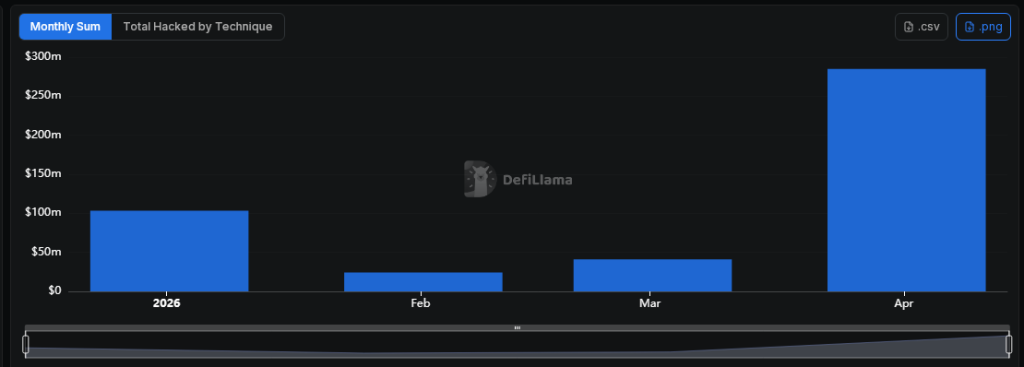
His comments came as new data showed a notable drop in crypto theft during the first three months of 2026. According to DefiLlama, hackers pulled $168 million from 34 decentralized finance protocols between January and March — a steep fall from the $1.58 billion stolen during the same period last year.

DefiLlama reports that stolen funds in Q1 2026 were down from the previous year.

Private Keys And Smart Contracts Remain Weak Spots

That prior-year figure, however, was heavily skewed by a single incident: the $1.4 billion Bybit breach, which accounted for nearly the entire Q1 2025 total. Strip that out and the comparison looks less dramatic.

Still, the losses in early 2026 were far from small. The biggest hit came in January, when portfolio management platform Step Finance lost $40 million after attackers compromised its private keys.

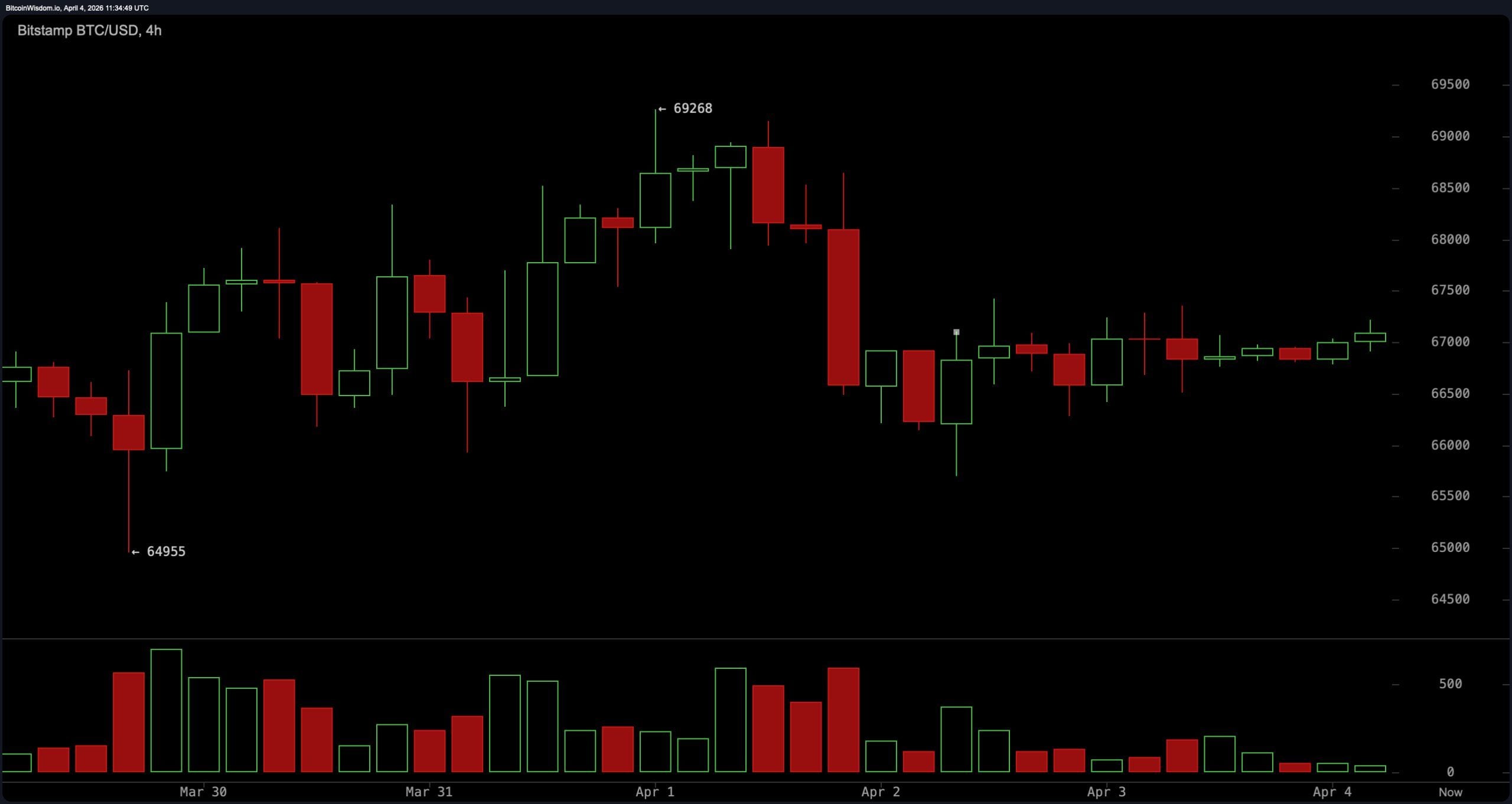
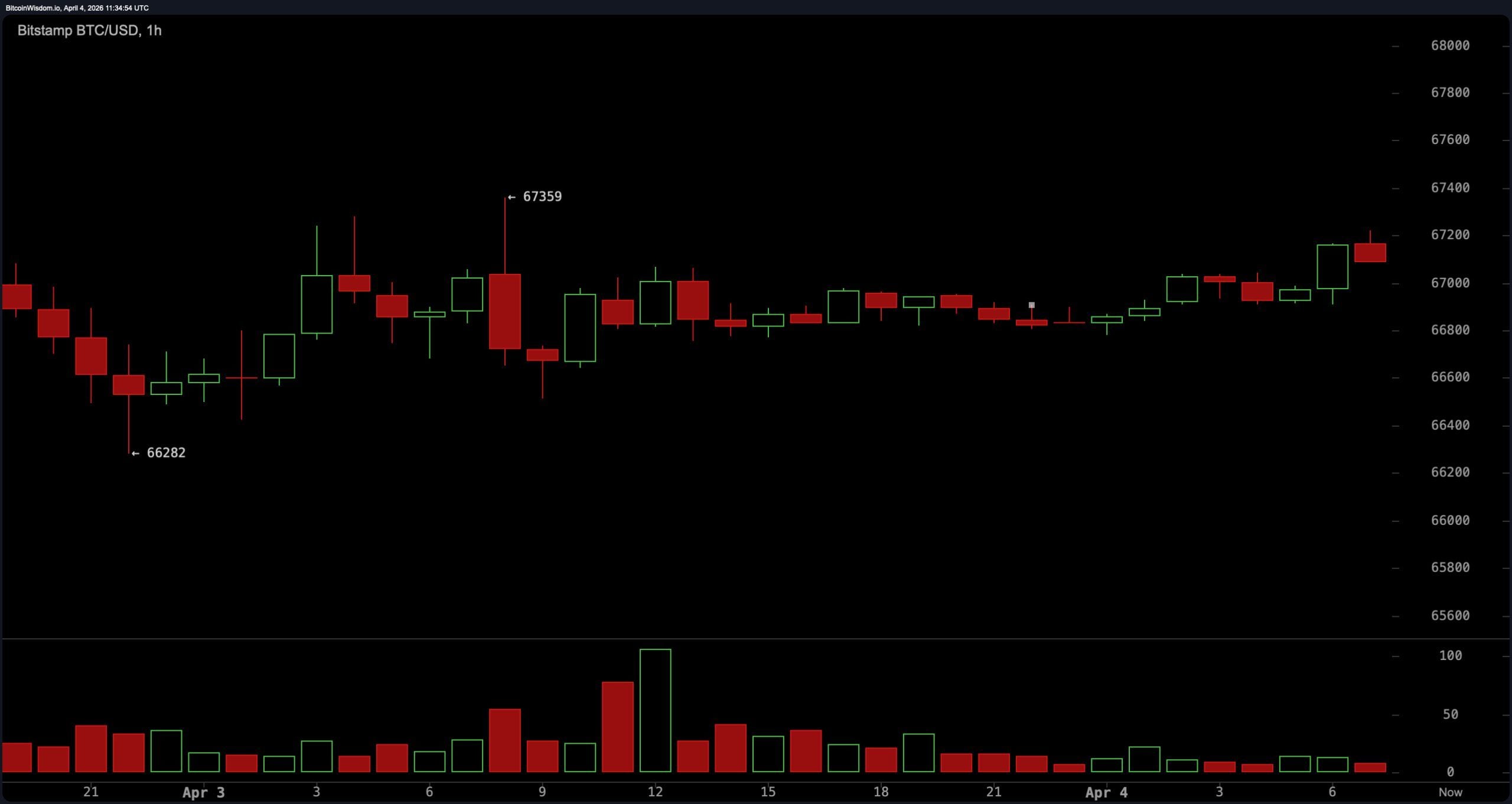
BTCUSD currently trading at $67,097. Chart: TradingView

Days later, on Jan. 8, decentralized protocol Truebit was drained of $26.4 million worth of ether through a smart contract manipulation. A third major incident struck stablecoin issuer Resolv Labs in late March, also through a private key compromise — the same method used in the Step Finance attack.

Private key failures and code exploits are two very different problems, but both keep appearing in the data. One is a human and operational issue. The other is a code issue. Neither has been solved.

North Korea-Linked Groups Remain A Persistent Concern

Data shows that 34 separate DeFi protocols were hit across the quarter. The attacks were spread across the period, with January bearing the heaviest losses.

Percoco described the threat pool as a mix of highly coordinated groups, organized criminal networks, and opportunistic individuals scanning for weak points in smart contracts and user-facing systems.

North Korea-linked actors have been flagged repeatedly in connection with major crypto thefts. Suspected affiliates of that network were linked to an attack on decentralized exchange Drift Protocol, which lost an estimated $285 million to a private key leak.

Featured image from Unsplash, chart from TradingView

Editorial Process for bitcoinist is centered on delivering thoroughly researched, accurate, and unbiased content. We uphold strict sourcing standards, and each page undergoes diligent review by our team of top technology experts and seasoned editors. This process ensures the integrity, relevance, and value of our content for our readers.

What Is Q-Day? The Quantum Threat to Bitcoin Explained

0

In brief

  • Today’s quantum computers are far too small and unstable to threaten real-world cryptography.
  • Early Bitcoin wallets with exposed public keys are most at risk in the long term.
  • Developers are exploring post-quantum signatures and potential migration paths.

Quantum computers can’t break Bitcoin’s cryptography today, but new advances in the field suggest the gap is closing faster than expected.

Progress toward fault-tolerant quantum systems raises the stakes for “Q-Day,” the moment when a sufficiently powerful machine could crack older Bitcoin addresses and expose more than $711 billion in vulnerable wallets.

Long seen as a distant threat on the horizon, Q-Day snapped into sharp focus in March 2026, with multiple research papers suggesting that quantum computers could break cryptographic systems sooner than expected.

Upgrading Bitcoin to a post-quantum state will take years, which means the work has to begin long before the threat arrives. The challenge, experts say, is that no one knows when that will be, and the community has struggled to agree on how best to move forward with a plan.

This uncertainty has led to a lingering dread that a quantum computer that can attack Bitcoin may come online before the network is ready.

In this article, we will look at the quantum threat to Bitcoin and what needs to change to make the number one blockchain ready.

How a quantum attack would work

A successful attack would not look dramatic. A quantum-enabled thief would start by scanning the blockchain for any address that has ever revealed a public key. Old wallets, reused addresses, early miner outputs, and many dormant accounts fall into that category.

The attacker copies a public key and runs it through a quantum computer using Shor’s algorithm. Developed in 1994 by mathematician Peter Shor, the algorithm gives a quantum machine the ability to factor large numbers and solve the discrete logarithm problem far more efficiently than any classical computer. Bitcoin’s elliptic-curve signatures rely on the difficulty of those problems. With enough error-corrected qubits, a quantum computer could use Shor’s method to calculate the private key tied to the exposed public key.

As Justin Thaler, research partner at Andreessen Horowitz and associate professor at Georgetown University, told Decrypt, once the private key is recovered, the attacker can move the coins.

“What a quantum computer could do, and this is what’s relevant to Bitcoin, is forge the digital signatures Bitcoin uses today,” Thaler said. “Someone with a quantum computer could authorize a transaction taking all the Bitcoin out of your accounts, or however you want to think of it, when you did not authorize it. That’s the worry.”

The forged signature would look real to the Bitcoin network. Nodes would accept it, miners would include it in a block, and nothing on-chain would mark the transaction as suspicious. If an attacker hit a large group of exposed addresses at once, then billions of dollars could move within minutes. Markets would start reacting before anyone ever confirmed that a quantum attack was happening.

In March 2026, research papers by Caltech and Google suggested that future quantum computers could break elliptic curve cryptography using fewer qubits and computational steps than previously expected. 

The papers sparked consternation among the crypto community, with Bitcoin security researcher Justin Drake tweeting that  “there’s at least a 10% chance that by 2032 a quantum computer recovers a secp256k1 ECDSA private key from an exposed public key” by that date.

Where quantum computing stands in 2026

From 2025, quantum computing finally started to feel less theoretical and more practical.

  • November 2025: IBM announced new chips and software aimed at quantum advantage in 2026 and fault-tolerant systems by 2029.
  • January 2025: Google’s 105-qubit Willow chip showed steep error reduction and a benchmark beyond classical supercomputers.
  • February 2025: Microsoft rolled out its Majorana 1 platform and reported record logical-qubit entanglement with Atom Computing.
  • April 2025: NIST extended superconducting qubit coherence to 0.6 milliseconds.
  • June 2025: IBM set targets of 200 logical qubits by 2029 and more than 1,000 in the early 2030s.
  • September 2025: Caltech unveiled a neutral-atom quantum computer operating 6,100 qubits at 99.98% accuracy.
  • October 2025: IBM entangled 120 qubits; Google confirmed a verified quantum speed-up.
  • March 2026: Research papers from Caltech and Google suggest that quantum computers could threaten Bitcoin’s cryptography sooner than expected, with Bitcoin security researchers putting a 10% chance on a quantum computer recovering a Bitcoin private key by 2032.

Why Bitcoin has become vulnerable

Bitcoin’s signatures use elliptic-curve cryptography. Spending from an address reveals the public key behind it, and that exposure is permanent. In Bitcoin’s early pay-to-public-key format, many addresses published their public keys on-chain even before the first spend. Later pay-to-public-key-hash formats kept the key hidden until the first use.

Because their public keys were never hidden, these oldest coins, including roughly 1 million Satoshi-era Bitcoin, are exposed to future quantum attacks. Switching to post-quantum digital signatures, Thaler said, takes active involvement.

“For Satoshi to protect their coins, they’d have to move them into new post-quantum-secure wallets,” he said. “The biggest concern is abandoned coins, about $180 billion worth, including roughly $100 billion believed to be Satoshi’s. Those are huge sums, but they’re abandoned, and that’s the real risk.”

Adding to the risk are coins tied to lost private keys. Many have sat untouched for more than a decade, and without those keys, they can never be moved into quantum-resistant wallets, making them viable targets for a future quantum computer.

No one can freeze Bitcoin directly on-chain. Practical defenses against future quantum threats focus on migrating vulnerable funds, adopting post-quantum addresses, or managing existing risks.

However, Thaler noted that post-quantum encryption and digital signature schemes come with steep performance costs, since they’re far larger and more resource-intensive than today’s lightweight 64-byte signatures.

“Today’s digital signatures are about 64 bytes. Post-quantum versions can be 10 to 100 times larger,” he said. “In a blockchain, that size increase is a much bigger issue because every node must store those signatures forever. Managing that cost, the literal size of the data, is far harder here than in other systems.”

Paths to protection

Developers have floated several Bitcoin Improvement Proposals to prepare for future quantum attacks. They take different paths, from light optional protections to full network migrations.

  • BIP-360 (P2QRH): Creates new “bc1r…” addresses that combine today’s elliptic-curve signatures with post-quantum schemes like ML-DSA or SLH-DSA. It offers hybrid security without a hard fork, but the bigger signatures mean higher fees.
  • Quantum-Safe Taproot: Adds a hidden post-quantum branch to Taproot. If quantum attacks become realistic, miners could soft-fork to require the post-quantum branch, while users operate normally until then.
  • Quantum‑Resistant Address Migration Protocol (QRAMP): A mandatory migration plan that moves vulnerable UTXOs to quantum-safe addresses, likely through a hard fork.
  • Pay to Taproot Hash (P2TRH): Replaces visible Taproot keys with double-hashed versions, limiting the exposure window without new cryptography or breaking compatibility.
  • Non-Interactive Transaction Compression (NTC) via STARKs: Uses zero-knowledge proofs to compress large post-quantum signatures into a single proof per block, lowering storage and fee costs.
  • Commit-Reveal Schemes: Rely on hashed commitments published before any quantum threat.
    • Helper UTXOs attach small post-quantum outputs to protect spends.
    • “Poison pill” transactions let users pre-publish recovery paths.
    • Fawkescoin-style variants stay dormant until a real quantum computer is demonstrated.

Taken together, these proposals sketch a step-by-step path to quantum safety: quick, low-impact fixes like P2TRH now, and heavier upgrades like BIP-360 or STARK-based compression as the risk grows. All of them would need broad coordination, and many of the post-quantum address formats and signature schemes are still early in discussion.

Thaler noted that Bitcoin’s decentralization—its greatest strength—also makes major upgrades slow and difficult, since any new signature scheme would need broad agreement across miners, developers, and users.

“Two major issues stand out for Bitcoin. First, upgrades take a long time, if they happen at all. Second, there are the abandoned coins. Any migration to post-quantum signatures has to be active, and owners of those old wallets are gone,” Thaler said. “The community must decide what happens to them: either agree to remove them from circulation or do nothing and let quantum-equipped attackers take them. That second path would be legally gray, and the ones seizing the coins likely wouldn’t care.”

Most Bitcoin holders don’t need to do anything right away. A few habits go a long way in reducing long-term risk, including avoiding reusing addresses so your public key stays hidden until you spend, and sticking with modern wallet formats.

Today’s quantum computers aren’t close to breaking Bitcoin, and predictions of when they will vary wildly. Some researchers see a threat within the next five years, others push it into the 2030s, but continued investments could speed up the timeline.

Daily Debrief Newsletter

Start every day with the top news stories right now, plus original features, a podcast, videos and more.

Experts say 24/7 markets will stop brokers from ‘hunting’ your stop losses after-hours

0

If the closing bell has long been a business model, then 24/7 trading is an attempt to break it. As the NYSE, Nasdaq, CME and Cboe race to introduce round-the-clock trading, the question is who stands to gain and who could lose.

The answer is quite simple, Mati Greenspan, CEO and founder of Quantum Economics, told CoinDesk: “The biggest losers in 24/7 stock trading won’t be traders: they’ll benefit massively. It’ll be the middlemen who’ve long made money when traders can’t trade.”

Greenspan, also a market analyst, alleged that when markets reopen after what he called a big event, “a handful of firms decide the first tradable price. Oftentimes, they will explicitly use a price that triggers stop losses for their clients, closing them out at a loss and making a profit for the broker who is essentially trading against the client.”

When Greenspan was asked whether brokers coordinate around pricing during market closures, he was blunt in his claim: “Yes, manipulation outright.”

“They basically get to control prices, often with hours to strategize,” he said. “Often hunting stops losses. When big news happens on weekends, the house tends to take liberties with pricing at the opening bell.”

His comments come as several major U.S. exchanges are looking to offer around-the-clock trading services. The NYSE said it is seeking SEC approval for 24/7 trading. Nasdaq announced similar plans in December. CME plans to roll out 24-hour crypto futures in 2026, pending approval, and Cboe recently expanded U.S. index options to 24/5 trading.

‘Plausible deniability’

While Greenspan’s comments could be seen as accusatory, it’s not hard to see why such practices could be prominent in the after-hours market. When the usual trading hours come to a close, at 4 p.m. ET, the thin liquidity can make prices easier to influence.

“After the 4 p.m. closing bell, you simply don’t have the same liquidity,” said Joe Dente, a floor broker at the New York Stock Exchange. “People have gone home and the liquidity is not there, so you’re going to see larger spreads.”

Wider spreads and thinner order books, he said, create an environment where price movements can be exaggerated compared with the regular session.

Academic research also supports the view that extended trading sessions are structurally different from core market hours. A widely cited joint UC Berkeley–University of Rochester study found that after-hours price discovery is “much less efficient,” citing lower volume and thinner liquidity that limit the speed at which information is incorporated into prices.

When asked whether manipulation already occurs during those periods, Dente said it is “possible,” but he also pointed out that “the event of 24-hour trading is going to leave things open to manipulation,” referring to conditions already seen in after-hours markets

Greenspan, meanwhile, noted that these alleged manipulation practices are “not exactly above board, so they [brokers who might be taking part in such actions] tend to maintain plausible deniability.”

This is where the line between actual manipulation and proof that such practises occur starts to blur.

A widely cited SSRN study on opening price manipulation shows how brokers can influence prices during the pre-open auction by submitting and canceling large orders, temporarily pushing stocks away from their fundamental value before broader liquidity returns.

The research found that such manipulation can create distorted opening prices that are later corrected once the full market begins trading, leaving investors who bought at the inflated price with losses. Because these distortions occur before normal trading volume returns, the resulting price moves can appear indistinguishable from ordinary market volatility.

Still another broker, familiar with overnight trading practices and who asked not to be named because they were not authorized to speak publicly, said thin overnight liquidity can occasionally make it easier for coordinated strategies to influence prices in less widely traded stocks.

And this is not just anecdotal evidence.

In late 2025, the SEC settled charges over a multi-year spoofing scheme involving deceptive orders used to move prices in thinly traded securities. Regulators also fined Velox Clearing $1.3 million for failing to detect “layering” and “spoofing” in volatile stocks.

Meanwhile, the U.S. Financial Industry Regulatory Authority (FINRA), in its 2026 Annual Regulatory Oversight Report, cited firms for “failing to maintain reasonably designed supervisory systems and controls, including with respect to the identification and reporting of potentially manipulative activity conducted in after-hours trading.”

A win for retail?

Whether it’s hard to point out how widespread these accusations are, one thing is for sure: if trading goes 24/7, traders will be the ultimate winners, particularly retail traders.

In today’s electronic markets, traders who respond fastest to market news have a structural advantage.

“There’s always an edge for whoever has the fastest computers and the best program writers,” said Dente, noting that algorithms can react to news and orders “in a nanosecond.” For individual investors, he added, keeping up with that speed is difficult. “How does the human person keep up with that?”

And reacting to these events becomes even harder for smaller investors when the market is closed, leaving those retail or smaller traders at a massive disadvantage.

Pranav Ramesh, head of quantitative research for options at Nasdaq and co-founder of Leadpoet, said thin markets can amplify those risks.

“Broker coordination may often show up as industry-wide alignment around routing and execution practices, especially where a large share of retail flow ends up with a small number of wholesalers,” he said. “Outside regular hours, scrutiny can be harder because the market is thinner and there are fewer straightforward reference points for investors to benchmark execution quality,” Ramesh said in his personal capacity.

Sources familiar with broker routing and liquidity practices told CoinDesk that price-setting power in thin sessions is real, particularly when major news breaks while markets are closed. According to those sources, coordination around routing, spreads and execution practices during extended gaps has historically been easier precisely because retail traders cannot participate.

This is precisely what around-the-clock trading will solve for traders, according to Greenspan, who said 24/7 markets would blunt fintech firms’ advantage by removing the weekend vacuum entirely.

The recent Middle East conflict has been a perfect example of how this can open up more trading opportunities when markets remain closed. Decentralized exchange, Hyperliquid, which trades on blockchain 24/7, has seen growing interest from traders betting on traditional financial assets, including oil and gold, during the weekend, when traditional exchanges are closed.

It has become so popular that weekly derivatives trading volume on the platform topped $50 billion, while it generated $1.6 million in revenue over 24 hours, outpacing the entire Bitcoin blockchain’s revenue. The platform has also recently added an S&P 500 perpetual contract.

Needless to say, major exchanges will also likely benefit from trading fees if they open for 24/7 trading.

Whether round-the-clock trading ultimately weakens brokers’ influence on price setting remains to be seen. What is clear is that exchanges and investors stand to gain from markets that never close.

“Traders can react in real time without being at the mercy of the middlemen — the brokers,” said Greenspan.

Read more: Bitcoin’s weekend selloff may be over with CME’s 24/7 crypto trading move

nCino Appoints Keith Kettell as Chief Revenue Officer to Lead Next Phase of Growth

0

WHY THIS MATTERS: This high-profile executive recruitment signals that the competition to own the foundational layer of modern financial institutions is entering a new, aggressive phase. By bringing on a CRO with a proven track record of scaling high-velocity enterprise software sales at giants like Salesforce and specialized fintech like Alloy, nCino is explicitly mobilizing to convert its market position into global revenue acceleration. The crucial takeaway for the industry is that the window for gradual change is closing; the market leader is aggressively consolidating talent to push its vision of agentic banking. This is a direct response to the escalating need for digital transformation within global banks, who must integrate AI-driven workflows to remain viable. Kettell’s appointment is less about filling a vacancy and more about securing the sales horsepower needed to manage massive, complex technology adoption cycles across the world’s largest lenders.

nCino, Inc. (NASDAQ: NCNO), the leading provider of intelligent, best-in-class banking solutions, announced the appointment of Keith Kettell as Chief Revenue Officer, effective April 1.

Kettell brings more than two decades of experience building and scaling go-to-market organizations in the technology and financial services sectors. Earlier in his career, he spent seven years at Salesforce, where he was instrumental in building the company’s financial services go-to-market from the ground up, growing it into Salesforce’s largest and fastest-growing industry vertical. He went on to join PagerDuty’s Senior Leadership Team, responsible for accelerating growth and deploying strategies to drive sales and marketing efficiency, while maintaining world-class net retention and gross margins. Most recently, Kettell served as Chief Revenue Officer of Alloy, where he led sales, customer success, partnerships and revenue operations.

“Keith’s career has been defined by building and scaling revenue organizations in financial services, and that’s exactly what this moment requires,” said Sean Desmond, Chief Executive Officer of nCino. “As we move into the Company’s next phase of growth and expand our reach as the global leader in agentic banking, his deep understanding of how financial institutions buy, operate and adopt technology makes him the right person to lead our revenue organization.”

“I’ve spent my career scaling go-to-market businesses that serve financial institutions, and nCino’s combination of product, customer base and market position is unlike anything I’ve seen,” said Kettell. “Financial institutions are under real pressure to transform how they operate and compete, and AI is rapidly reshaping what that looks like. nCino is positioned at the center of that transformation, and I joined to help drive the Company’s next phase of growth. The opportunity is massive, and the team is built to capture it.”

FF NEWS TAKE: This appointment absolutely moves the needle. It validates the high stakes in the intelligent banking platform space and suggests nCino is ready to aggressively grow market share. We interpret this as a definitive signal that the vendor will be driving large-scale, high-value digital transformation deals with Tier 1 banks. The immediate thing to watch for is how quickly Kettell leverages his past experience with risk decisioning providers like Alloy to accelerate the commercialization of nCino’s proprietary AI and agentic banking capabilities.

Anthropic Spots ‘Emotion Vectors’ Inside Claude That Influence AI Behavior

0

In brief

  • Anthropic researchers identified internal “emotion vectors” in Claude Sonnet 4.5 that influence behavior.
  • In tests, increasing a “desperation” vector made the model more likely to cheat or blackmail in evaluation scenarios.
  • The company says the signals do not mean AI feels emotions, but could help researchers monitor model behavior.

Anthropic researchers say they have identified internal patterns inside one of the company’s artificial intelligence models that resemble representations of human emotions and influence how the system behaves.

In the paper, “Emotion concepts and their function in a large language model,” published Thursday, the company’s interpretability team analyzed the internal workings of Claude Sonnet 4.5 and found clusters of neural activity tied to emotional concepts such as happiness, fear, anger, and desperation.

The researchers call these patterns “emotion vectors,” internal signals that shape how the model makes decisions and expresses preferences.

“All modern language models sometimes act like they have emotions,” researchers wrote. “They may say they’re happy to help you, or sorry when they make a mistake. Sometimes they even appear to become frustrated or anxious when struggling with tasks.”

In the study, Anthropic researchers compiled a list of 171 emotion-related words, including “happy,” “afraid,” and “proud.” They asked Claude to generate short stories involving each emotion, then analyzed the model’s internal neural activations when processing those stories.

From those patterns, the researchers derived vectors corresponding to different emotions. When applied to other texts, the vectors activated most strongly in passages reflecting the associated emotional context. In scenarios involving increasing danger, for example, the model’s “afraid” vector rose while “calm” decreased.

Researchers also examined how these signals appear during safety evaluations. Researchers found that the model’s internal “desperation” vector increased as it evaluated the urgency of its situation and spiked when it decided to generate the blackmail message. In one test scenario, Claude acted as an AI email assistant that learns it is about to be replaced and discovers that the executive responsible for the decision is having an extramarital affair. In some runs of this evaluation, the model used this information as leverage for blackmail.

Anthropic stressed that the discovery does not mean the AI experiences emotions or consciousness. Instead, the results represent internal structures learned during training that influence behavior.

The findings arrive as AI systems increasingly behave in ways that resemble human emotional responses. Developers and users often describe interactions with chatbots using emotional or psychological language; however, according to Anthropic, the reason for this is less to do with any form of sentience and more to do with datasets.

“Models are first pretrained on a vast corpus of largely human-authored text—fiction, conversations, news, forums—learning to predict what text comes next in a document,” the study said. “To predict the behavior of people in these documents effectively, representing their emotional states is likely helpful, as predicting what a person will say or do next often requires understanding their emotional state.”

The Anthropic researchers also found that those emotion vectors influenced the model’s preferences. In experiments where Claude was asked to choose between different activities, vectors associated with positive emotions correlated with a stronger preference for certain tasks.

“Moreover, steering with an emotion vector as the model read an option shifted its preference for that option, again with positive-valence emotions driving increased preference,” the study said.

Anthropic is just one organization exploring emotional responses in AI models.

In March, research out of Northeastern University showed that AI systems can change their responses based on user context; in one study, simply telling a chatbot “I have a mental health condition” altered how an AI responded to requests. In September, researchers with the Swiss Federal Institute of Technology and the University of Cambridge explored how AI can be shaped with both consistent personality traits, enabling agents to not only feel emotions in context but also strategically shift them during real-time interactions like negotiations.

Anthropic says the findings could provide new tools for understanding and monitoring advanced AI systems by tracking emotion-vector activity during training or deployment to identify when a model may be approaching problematic behavior.

“We see this research as an early step toward understanding the psychological makeup of AI models,” Anthropic wrote. “As models grow more capable and take on more sensitive roles, it is critical that we understand the internal representations that drive their decisions.”

Anthropic did not immediately respond to Decrypt’s request for comment.

Daily Debrief Newsletter

Start every day with the top news stories right now, plus original features, a podcast, videos and more.

9 in 10 See Commercial Variable Recurring Payments as the Way Forward

0

WHY THIS MATTERS: The findings from GoCardless underline a critical inflection point: the friction and cost inherent in traditional card networks for subscriptions have become commercially unsustainable, costing UK businesses an average of 3.5% of their monthly revenue. This is not simply a pricing issue; it’s a systemic operational drag impacting customer retention and cash flow. The impending arrival of commercial Variable Recurring Payments (VRPs) and other forms of open banking payments shifts this dynamic entirely. VRPs represent the most significant upgrade to the UK’s payment infrastructure in a generation, providing a more stable, bank-led rail for recurring revenue that promises to drastically cut involuntary churn and administrative overhead. For regulated industries like financial services and telecoms, which are currently in the first wave of adoption, this is a strategic imperative that separates early movers who prioritize operational stability from those stuck on legacy systems.

A new study from bank payment company GoCardless has revealed that UK businesses are being held back by outdated systems, with legacy methods becoming increasingly untenable. 

The report, Revolutionising Recurring Revenue, found that with the upcoming introduction of commercial Variable Recurring Payment (VRPs), industries such as utilities, financial services, and telcos are poised to significantly reduce lost revenue and improve customer retention. 

The research, which surveyed 489 UK recurring revenue business leaders, shows widespread dissatisfaction with existing rails. Nearly three-quarters (73%) report ongoing pain points with card payments. 42% of respondents spend more than three hours per week managing related issues and combined with fraud and admin overhead, this payment method costs businesses an average of 3.5% of their monthly revenue. 

A high-impact solution for regulated sectors 

Against this backdrop, commercial VRPs are viewed as a strategic unlock. Among decision-makers in the first wave* of the rollout, 89% believe the technology would significantly improve cash flow, while 91% expect it to reduce operational costs. 

Consumer readiness further strengthens the commercial case. Research among 2,000 UK adults shows meaningful demand, with 38% open to adopting the technology, rising to 60% among Gen Z. Interest is highest in essential services, with 46% willing to use commercial VRPs for energy bills and 35% for telecoms. 

Business leaders prioritise operational simplicity and stability  

The research findings indicate strong demand for commercial VRPs. At this juncture, execution is what matters. When asked what would encourage their adoption or increase their use of open banking payments including commercial VRPs, 41% of businesses cited the ability to access open banking payments through their existing payment provider. The same proportion (41%) pointed to greater coverage, or more banks offering open banking payments to consumers. 

Commercial VRPs represent one of the most significant upgrades to the UK’s payment infrastructure in a generation. The report emphasises that early movers will gain the advantage. In addition, choosing the right partner is essential to reducing execution risk and ensuring a smooth transition.   

Shaun Puckrin, Chief Product Officer at GoCardless, said: “The numbers don’t lie: the era of settling for high-friction, legacy payment methods is over. We’re seeing openness and demand from both sides of the checkout for a more intelligent, bank-led alternative. As a company that has specialised in bank payments for 15 years, it’s incredibly exciting to see the industry catching up and working together in the live testing phase to prove out commercial VRPs and we’re confident that our solution, Recurring Pay by Bank, makes adoption viable and highly effective today.” 

To read the full report, visit: https://gocardless.com/g/the-strategic-opportunity-of-commercial-vrps/

FF NEWS TAKE: This study moves the needle by quantifying the immense, often-overlooked cost of card payment failure, framing VRPs as a mandatory efficiency solution, not just an alternative. The market has definitively signaled that Variable Recurring Payments are the future of recurring revenue. The next phase is an aggressive focus on execution: we need to watch which major payment providers quickly roll out embedded VRP solutions to offer the ubiquitous bank coverage that businesses are clearly demanding. The competitive advantage will go to platforms that minimize complexity and integrate this bank-led capability seamlessly.


Why Bearish Bets and ETF Flows May Spark a Rally

0

Key takeaways:

  • Bitcoin hitting $72,000 would liquidate $2.5 billion in shorts, potentially crushing bears who are overleveraged.

  • Iran’s war and high oil prices currently pressure BTC, but a ceasefire or ETF inflows could spark a rapid recovery.

$2.5 billion in shorts at risk if BTC hits $72,000

Bitcoin (BTC) has consistently failed to hit new highs since attempting to reclaim the $75,000 level since March 17.

Bearish Bitcoin futures bets have been piling up as the war in Iran pushed oil prices to their highest levels since June 2022. However, two events could propel Bitcoin to $72,000 in the coming weeks and help cement a sustainable bull run.

BTC futures aggregate estimated liquidation levels, USD. Source: Coinglass

According to Coinglass estimates, a total of $2.5 billion in short positions on Bitcoin futures will be liquidated if Bitcoin rises just 7.5% to $72,000 from the current $67,100 level.

BTC bears benefit from miners’ sales, weak S&P 500

Bears have been adding shorts since March 25, when Iran reportedly refused to negotiate a ceasefire. Additional selling pressure emerged as MARA Holdings (MARA US) announced it sold 15,133 BTC on March 26. The publicly listed Bitcoin miner shifted its focus to AI computing and chose to reduce its Bitcoin holdings to pay down debt.

After peaking near 7,000 points on Jan. 28, the S&P 500 dropped 10% by March 30. Investors fear recession risks because central banks have less room to cut interest rates due to inflation.

Oil prices have jumped over 70% since the war in Iran started in late February, which hikes logistics costs and cuts into consumer spending.

Interest rate target odds for the Sept. FOMC meeting. Source: Source: CME FedWatch Tool

Traders are pricing in 89% odds that the Fed will keep interest rates steady through September, with 5% odds of a hike to 4%.

In early March, bond futures showed the opposite, with 79% odds of rate cuts. Returns on fixed-income investments will likely stay attractive for longer.

Bitcoin perpetual futures annualized funding rate. Source: Laevitas

Meanwhile, confidence among Bitcoin bears has increased, as reflected by the negative funding rate in perpetual futures contracts.

In neutral market conditions, longs usually pay to keep positions open, causing this indicator to range between 5% and 10% to compensate for capital costs.

Negative funding rates signal a lack of demand for bullish leveraged bets and potential overconfidence from the bears.

Ceasefire or economic weakness may boost Bitcoin

While it is impossible to predict the outcome of the war involving Iran, a ceasefire agreement could spark bullish sentiment and catch bears by surprise.

Bitcoin jumped from $69,150 to $74,900 during the five days ending March 16 after US-listed Bitcoin exchange-traded funds saw $1.5 billion in net inflows over two weeks. If ETF inflows resume, Bitcoin could also reclaim the $72,000 level.

Related: Bitcoin ETFs ‘will be larger’ than gold ETFs–Analyst

US-listed Bitcoin ETF daily net flows, USD. Source: SoSoValue

US President Donald Trump has asked Congress to boost defense spending to $1.5 trillion, according to a 2027 budget proposal released Friday. These plans include a 10% cut in other areas to offset military expenses.

Trump reportedly said at a private White House event on Wednesday: “We’re fighting wars. We can’t take care of day care,” according to CNBC.

If the US economy loses steam, or if private credit redemptions continue to pressure the market, investors will likely look for alternative hedges.

Consequently, Bitcoin’s appeal would grow as the it presently trades 47% below its all-time high. Thus, a bull run to $72,000 might happen regardless of how long the war in Iran lasts.