Home Blog Page 566

Here’s Why The Bitcoin Price Is Crashing, And Why It Could Continue

0

Trusted Editorial content, reviewed by leading industry experts and seasoned editors. Ad Disclosure

The Bitcoin price has been in a prolonged downtrend but saw a slight reprieve this week, rising a bit by 2%. Despite the minor gain, the cryptocurrency remains in a broader bear market, and as of today, its price is still in the red and could continue to decline if momentum does not improve. A major driver behind BTC’s weakness is the recent outflows from its Spot Exchange-Traded Funds (ETFs). Even as institutional demand declines, the market remains under bearish pressure and faces heightened volatility amid ongoing geopolitical tensions in the Middle East. 

Bitcoin Price Crash Continues As ETFs Record Outflows

Since debuting in 2024, Spot Bitcoin ETFs have played a significant role in driving BTC prices, with the volume and consistency of net daily flows often influencing the market’s direction. When these ETFs record major outflows, it typically suggests that institutional investors are reducing their exposure, likely due to profit-taking, risk management, or shifting market sentiment. Regardless of the reason, the reduced demand tends to place downward pressure on the Bitcoin price.

Notably, data from SoSoValue indicates that Spot Bitcoin ETFs recorded more outflows than inflows last week, a trend that has noticeably affected prices. On March 18 and 20, these ETFs saw total outflows of $305 million, followed by a modest influx of capital the next day. 

Bitcoin
Source: Chart from SoSoValue

The most recent outflows, which appear to be contributing to Bitcoin’s ongoing downtrend, occurred on March 26 and 27. On Thursday, withdrawals from Spot Bitcoin ETFs reached $171.22 million, further exacerbated by an additional $225.48 million outflow the following day. 

According to SoSoValue, the bulk of these outflows came from BlackRock’s IBIT, which alone saw $41.92 million exit on Thursday and a staggering $201.5 million outflow on Friday. Other funds, including Fidelity’s FBTC and Grayscale’s GBTC, also recorded outflows during the same period. 

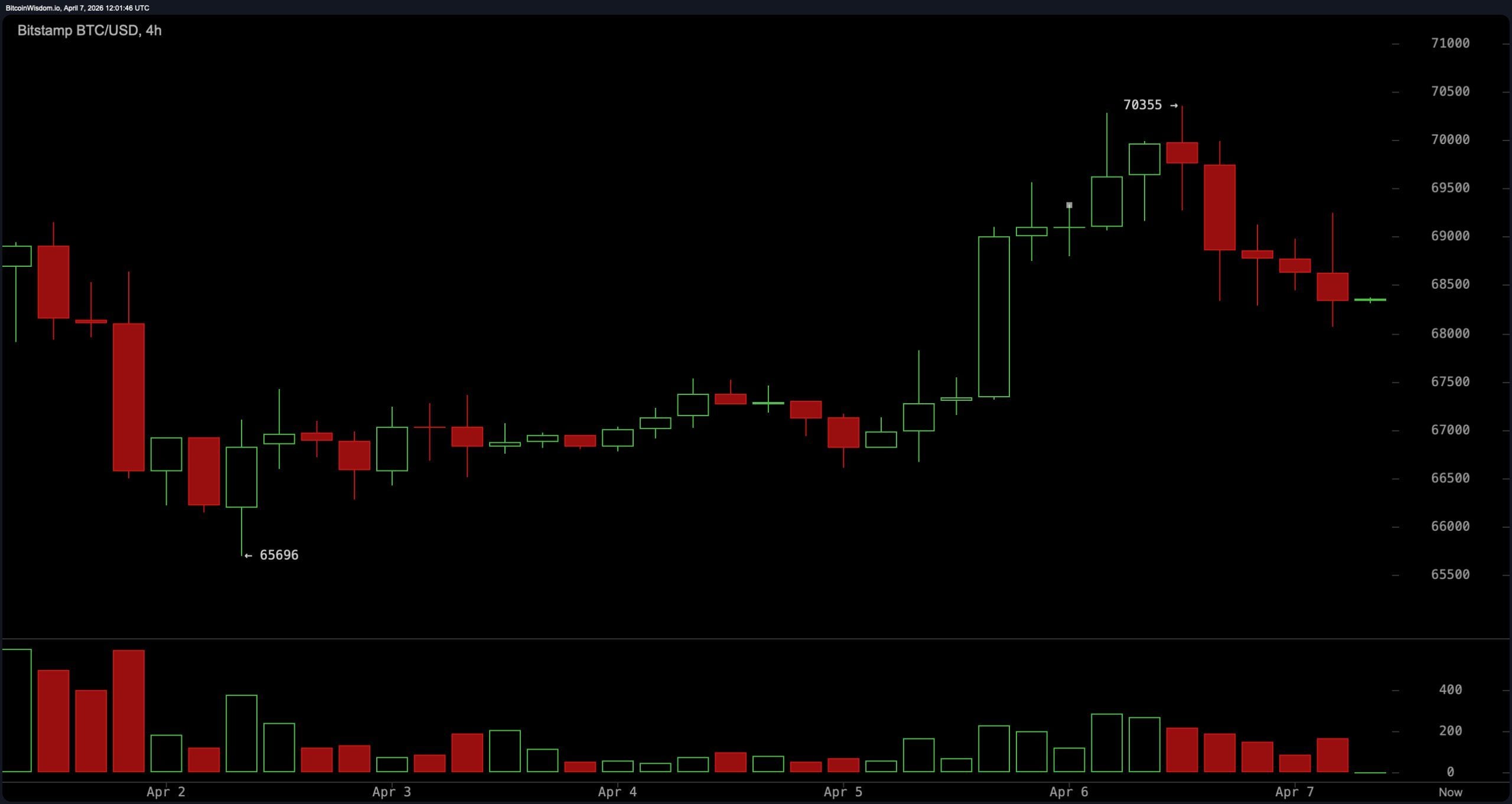
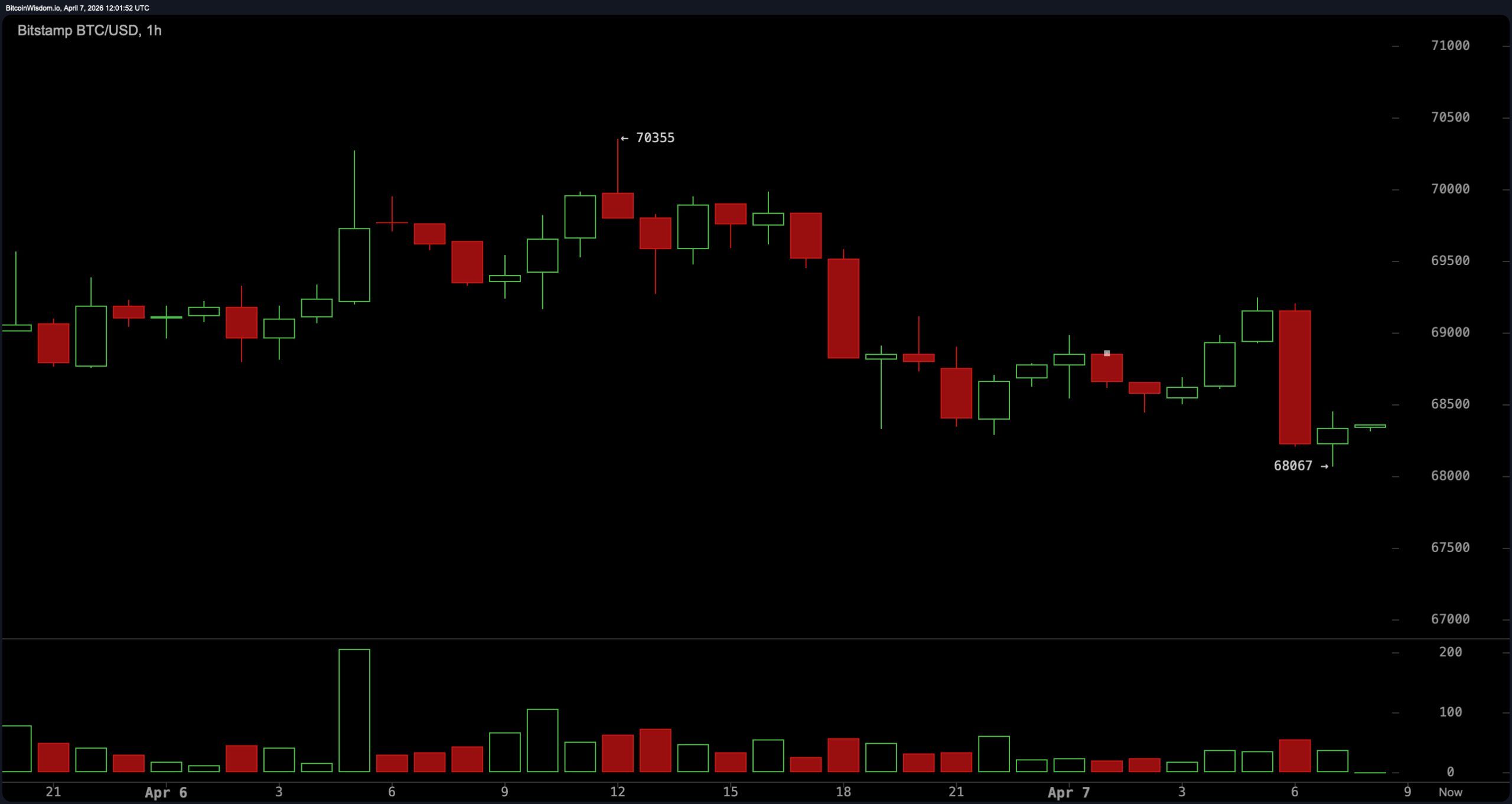
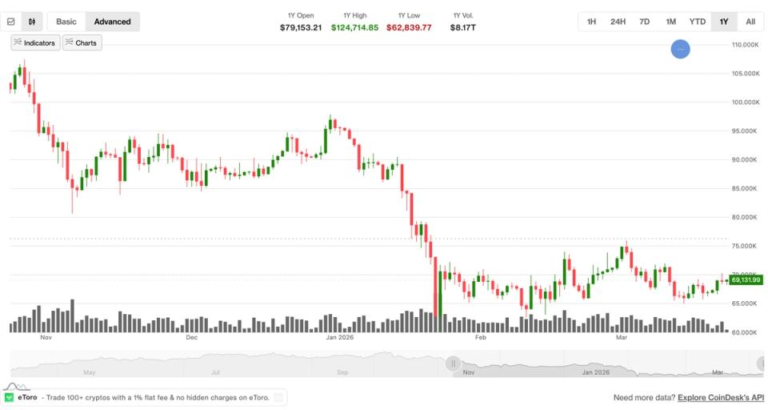
As of now, Spot Bitcoin ETFs have returned to net positive territory, with cumulative inflows totaling $56.12 billion after ending its two-day outflow streak and receiving over $187 million over the last two days. Despite renewed demand, Bitcoin’s price is down, recording a year-to-date decline of roughly 40%. The cryptocurrency is also trading below the $70,000 level, hovering just above $68,000, at the time of writing. 

Other Factors Influencing Price

In addition to the earlier decline in ETF demand, ongoing geopolitical tensions appear to be significantly influencing investor sentiment, further pressuring BTC’s price. The latest update regarding the US-Iran war reveals that no formal peace agreement has yet been reached, even as President Donald Trump’s April 6 deadline to resume strikes on Iran’s energy infrastructure approaches rapidly. 

As of now, Market watchers continue to monitor changes in oil prices, ETF inflows, and any diplomatic developments that could impact the prices of Bitcoin and other cryptocurrencies.

Bitcoin
BTC trading at $68,442 on the 1D chart | Source: BTCUSDT on Tradingview.com

Featured image from Getty Images, chart from Tradingview.com

Editorial Process for bitcoinist is centered on delivering thoroughly researched, accurate, and unbiased content. We uphold strict sourcing standards, and each page undergoes diligent review by our team of top technology experts and seasoned editors. This process ensures the integrity, relevance, and value of our content for our readers.

These Three Altcoins Just Got Leveraged Crypto ETFs

0

In brief

  • Volatility Shares debuted leveraged ETFs for Cardano, Stellar, and Chainlink.
  • The offerings dovetail with others offered by the firm that established the first leveraged crypto ETF in the U.S. in 2023.
  • Volatility Shares filed for 3x and 5x leveraged ETFs last year, which covered cryptocurrencies and firms like Coinbase.

Volatility Shares debuted three exchange-traded funds that amplify price swings for cryptocurrencies on Wednesday, adding to the growing list of vehicles enabling traders to speculate on the digital assets with leverage.

The ETFs offer 2x exposure to Cardano, Stellar, and Chainlink, representing some of the largest altcoins in the cryptocurrency market. Their respective market caps clock in at $9 billion, $6.3 billion, and $5.6 billion, as of Wednesday afternoon, according to CoinGecko.

In addition to the 2x ETFs, Volatility Shares debuted funds that offer traditional exposure to futures for Cardano, Stellar, and Chainlink. Previously, Volatility Shares moved to establish 2x ETFs for Bitcoin, Ethereum, Solana, and XRP.

Leveraged ETFs have become increasingly popular in recent years, amplifying daily returns for traders using financial derivatives and debt. In 2023, Volatility Shares debuted the first leveraged crypto ETF in the U.S., which tracks Bitcoin futures.

Since Volatility Shares’ 2x Bitcoin Strategy ETF (BITX) debuted, the product has seen notable adoption. On average, around 13 million BITX shares change hands each day, according to ETF Database. That’s twice the average daily trading volume of the Fidelity Wise Origin Bitcoin Fund (FBTC), a product from a legacy financial institution that tracks Bitcoin’s spot price.

“The debut of these six ETFs marks a strategic shift from broad market exposure toward granular asset exposure,” Sunny Sun, a marketing analyst at Volatility Shares, told Decrypt. “The target demographic for these ETFs consists of sophisticated traders seeking targeted exposure to specific digital asset ecosystems.”

In early 2024, the debut of spot Bitcoin ETFs represented a landmark moment for the digital assets industry, creating connective tissue between the cryptosphere and Wall Street. Bitcoin ETFs allow investors to gain exposure to the digital asset without buying and storing Bitcoin directly. Over time, they have emerged as a go-to tool among institutions for gaining exposure to the asset class.

Since U.S. President Donald Trump’s second term began, issuers have offered leveraged crypto ETFs for digital assets including Solana, XRP, and Dogecoin amid a more favorable regulatory environment. Still, the SEC has signaled that it has its limits.

In a group call earlier this month, the SEC asked ETF issuers not to bring products to market offering 5x exposure to assets and indexes, including cryptocurrencies, per Bloomberg. Late last year, the watchdog also sent warning letters to issuers interested in 3x leveraged funds, expressing concern regarding how they measured associated risks.

Months before, Volatility Shares filed for 27 products offering 3x and 5x exposure. Those applications covered crypto and related stocks, such as Coinbase and Strategy.

Daily Debrief Newsletter

Start every day with the top news stories right now, plus original features, a podcast, videos and more.


Bitcoin Reclaims $68,000 as Iran Ceasefire Hopes Fuel Risk-On Rally

0

Crypto markets rose as oil prices retreated under $100 a barrel on growing expectations that the conflict could wind down within weeks.

Crypto markets started April in the green, snapping a bruising first quarter with a late-March relief rally that continued into Wednesday as hopes of geopolitical de-escalation lifted risk assets across the board.

Bitcoin (BTC) is trading at around $68,000 after reaching as high as $69,200 earlier in the day. ETH climbed 2% to $2,140, and SOL was flat at $84 in the wake of the Drift exploit. Meanwhile, Ripple (XRP) was unchanged at $1.35.

BTC Chart

Total crypto market capitalization remained flat at $2.43 trillion, according to Coingecko.

President Donald Trump wrote on Truth Social early Wednesday that Iran “has just asked the United States of America for a CEASEFIRE,” though Tehran’s Foreign Ministry denied the claim.

Oil prices retreated under $100 per barrel. Crude oil surged more than 60% last month — the sharpest monthly rally since 1988 — after Iran effectively shut down shipping through the Strait of Hormuz.

Spot Bitcoin ETFs recorded $117 million in net inflows on Monday. March marked the first positive monthly inflow for Bitcoin ETFs since October, with $1.32 billion in net capital entering the funds, according to SoSoValue. That reversed four consecutive months of outflows stretching back to November 2025.

Big Movers

Most of the Top 100 digital assets posted gains over the last 24 hours.

Algorand (ALGO) and MemeCore (M) outperformed, rallying 12% and 5%, respectively.

Bitcoin Cash (BCH) and Canton (CC) are today’s biggest losers, down around 3%.

Around 117,000 leveraged traders were liquidated for $261 million in the past 24 hours, according to CoinGlass. Bitcoin accounted for $59 million, while ETH made up $57 million.

MEP Billy Kelleher Visits ACI Worldwide’s Limerick Data Centre, Marking A Decade Powering Europe’s Digital Payments

0

WHY THIS MATTERS: A ten-year milestone for dedicated physical infrastructure in Europe signals a pivotal market response to the twin demands of regulatory compliance and high-availability processing. As the continent pushes aggressively toward greater adoption of real-time payments and grapples with stringent EU data privacy laws, providers must guarantee data residency and rock-solid operational uptime. This long-term investment by ACI in its European hub reflects the critical importance of regionalized, high-security private cloud environments. For financial institutions and large merchants, relying on such a localized foundation is key to ensuring continuous, mission-critical services while confidently meeting requirements for data sovereignty and regulatory oversight across EMEA. This development underscores that infrastructure security remains a non-negotiable foundation for scaling digital commerce.

ACI Worldwide hosted MEP Billy Kelleher at its Limerick data centre at the National Technology Park. The visit comes as ACI marks ten years since opening its Limerick data centre, reflecting the company’s long-term investment in Ireland.

MEP Billy Kelleher met with ACI leadership and tour the data centre to learn more about the infrastructure supporting digital payments across Europe. The state-of-the-art European hub supports ACI’s customers across Europe, the Middle East and Africa (EMEA). Its purpose is to deliver secure and reliable infrastructure for real-time digital payments. A key function of the site is to extend ACI’s private cloud, allowing customers to access ACI’s payment software solutions without running their own on-site systems. This enables businesses to scale securely while benefiting from reliable, high-performance payment capabilities and guaranteed service levels. 

Through this, ACI Worldwide’s European headquarters provides the environment required to run real-time electronic banking, card processing merchant acquiring, and other mission‑critical payment services, supporting some of Europe’s largest merchants, intermediaries, and financial institutions including Ireland’s two biggest banks. Built to high security standards, the data centre includes full system backup across power, network and operations to ensure continuous uptime. It is also designed to meet European data privacy requirements, with data handled within the region to help customers comply with EU regulatory expectations.  ACI has had a presence in Limerick for more than a decade and continues to invest in the region. The European hub forms part of Ireland’s role as a global data centre hub and contributes to the country’s growing cluster of international data operations.

“Payments are the backbone of Europe’s digital economy, and from Limerick we power the secure, real‑time services that keep commerce moving. Our European data centre has grown into a dynamic hub for banks and payment providers across the region, ensuring millions of everyday transactions happen safely and seamlessly,” commented Martina Power, global head of professional services, ACI Worldwide. “The operation reflects the incredible expertise of our team in Limerick and ACI’s long‑term commitment to driving innovation in digital payments across Europe.” 

“Ireland continues to play an important role as a hub for technology investment, supporting jobs and innovation across the region,” said MEP Billy Kelleher. “Operations such as ACI Worldwide’s Limerick data centre demonstrate how long‑term investment, combined with skilled regional talent, contributes to the development of secure and reliable digital infrastructure. I welcome ACI Worldwide’s ongoing commitment to Ireland and the positive contribution this site makes to the local and national economy.”

ACI representatives attending the visit include Martina Power, Global Head of Client Delivery and Site Leader; Jimmy Hennessy, Global Head of AI & Data Science; Shane Blake, Regional Director, Human Resources; Peter Gorley, Regional Sales Director, UK & Ireland; and Mike Holden, Head of Data Centre Operations.

FF NEWS TAKE: The celebration of a decade of investment in a European processing hub confirms the strategic importance of physical data centers in the digital payments landscape. This move does not change the industry overnight, but it reinforces ACI’s foundation for future growth in mission-critical services. The next phase to watch is how ACI leverages this highly compliant, high-performance platform to deploy AI and machine learning tools, particularly in relation to fraud prevention and regulatory reporting, to gain a competitive edge in core payments processing as cross-border payment complexity increases.

U.S. Treasury Launches First GENIUS Act Rulemaking Proposal

0

The U.S. Department of the Treasury has formally begun implementing the Guiding and Establishing National Innovation for U.S. Stablecoins (GENIUS) Act, releasing its first notice of proposed rulemaking (NPRM) and opening a 60-day public comment period.

The 87-page proposal outlines how the Treasury will determine whether state-level stablecoin regulatory regimes are “substantially similar” to the federal framework—a key threshold allowing smaller issuers to remain under state supervision.

Under the GENIUS Act, stablecoin issuers with less than $10 billion in outstanding supply can opt for state-level regulation, provided those regimes meet or exceed federal standards. The proposed rule establishes broad principles to guide that determination, while leaving states flexibility in areas like licensing, supervision, and enforcement.

According to the document, the Treasury draws a clear distinction between “uniform requirements” — such as reserve backing and anti-money laundering compliance — and “state-calibrated requirements,” where local regulators retain discretion, including capital and risk management standards.

Notably, the proposal anchors the federal benchmark largely to rules and interpretations issued by the Office of the Comptroller of the Currency, signaling its central role in overseeing nonbank stablecoin issuers that transition to federal supervision after crossing the $10 billion threshold.

The rule also clarifies that state frameworks may exceed federal requirements, so long as they do not conflict with federal law or undermine overall comparability.

U.S. crypto legislation progress

The NPRM marks Treasury’s first formal step in translating the GENIUS Act — enacted in July 2025 — into an operational regulatory regime for payment stablecoins, with final rules expected after the public comment period closes.

State regimes would also be barred from weakening core disclosure standards, with issuers required to publish reserve composition reports at least monthly — matching federal frequency requirements. 

Naming restrictions would similarly apply across both frameworks, preventing state-regulated issuers from using prohibited terms in stablecoin branding. 

The proposal underscores that federal law remains the baseline, noting that any future legislation passed by Congress governing stablecoin issuers would automatically apply to state-regulated firms unless explicitly stated otherwise. 

The 2025 passage of the GENIUS Act marked a turning point in U.S. crypto policy, establishing the first federal framework for stablecoins and requiring full reserve backing, AML compliance, and regular disclosures. 

The law is widely seen as legitimizing dollar-backed stablecoins while reinforcing U.S. monetary dominance.

Since then, attention has shifted to implementation and follow-on legislation. Treasury reports issued under the GENIUS Act are expanding oversight tools, including measures targeting illicit finance and crypto mixers. 

At the same time, disputes between banks and crypto firms, especially over whether stablecoins can offer yield, have slowed broader market structure efforts.

Meanwhile, Congress is advancing complementary bills like the Clarity Act to define SEC and CFTC jurisdiction, signaling a broader push toward a comprehensive regulatory framework for digital assets.

Pro-Crypto PAC to be Headed by Tether Executive ahead of US Midterms

0

Jesse Spiro, the head of government affairs at stablecoin issuer Tether, will be chairing the organization of a crypto-backed Super political action committee (PAC) to “actively support candidates” in the 2026 US midterm elections and beyond.

In a Wednesday announcement, the Fellowship PAC, a committee that launched in August 2025 and later claimed to have raised “over $100 million” from undisclosed backers aligned with the crypto industry, said that Spiro would become chair ahead of its first political endorsements for the 2026 elections.

The PAC said that it would support candidates in favor of innovation, regulatory clarity for digital assets, and open markets.

”We have an opportunity to ensure the United States remains the global hub for builders, entrepreneurs, and technological progress,” said Spiro. “Fellowship PAC is committed to supporting leaders who understand what’s at stake and are willing to act.”

Source: Fellowship PAC

The addition of a crypto-aligned Super PAC with potentially hundreds of millions of dollars could be used to influence US elections. The Fairshake PAC, backed by Ripple Labs and Coinbase, spent more than $130 million on media buys in the 2024 elections, and reported having $193 million ahead of the 2026 midterms.

Related: Crypto awareness tops 80% among young people in UK: Coinbase survey

Fellowship filed a statement of organization with the US Federal Election Commission (FEC) on Aug. 7 and had reported no contributions or expenditures as of Dec. 31. Although the PAC has claimed to have more than $100 million in its war chest, it was unclear at the time of publication who may be responsible for funding the committee.

Cointelegraph did not receive an immediate response to requests for comment by the PAC.

Money from the crypto industry may already have been a factor in US state primaries, which kicked off in March. Although some industry-aligned candidates did not win their races in Illinois, it will be more than seven months before the 2026 general election, giving PACs like Fairshake, Fellowship, and others the opportunity to sway voters.

A debate on stablecoin yield is still shadowing a congressional crypto bill

Tether, the issuer behind the largest stablecoin by market capitalization, USDt (USDT), is likely to be affected by legislation being considered by US lawmakers in the Senate.

The House of Representatives passed a digital asset market structure bill in July 2025 called the CLARITY Act, which has effectively been stalled in the Senate amid debate over stablecoin rewards, tokenized equities, ethics and other issues.

As of Wednesday, the Senate Banking Committee had not rescheduled a markup on the bill which it postponed in January. It’s unclear if or when the bill could head to the full chamber for a vote.

Magazine: A newbie’s guide to surviving crypto winter