What are the key considerations for AI in payments testing? Where does it excel, and where are its limitations?
How can financial institutions use AI to create efficient, usable, and scalable testing setups without compromising the reliability and accountability required in regulated environments?
How can financial institutions leverage AI to test in ISO 20022-based environments? What are the opportunities for AI testing as we move towards the next ISO 20022 milestones?
What governance, controls, and auditability frameworks are required when integrating AI into payments testing within regulated financial environments?
How can financial institutions balance AI-driven test generation and optimisation with the need for explainability, reproducibility, and regulatory transparency?
Payments testing has historically been a complex challenge for financial institutions. Strict validation, reliable regression testing, full traceability, and intricate regulatory requirements leave little room for error, especially as payment methods continue to diversify.
AI can be a key enabler in streamlining testing, improving automation, usability, and contextualisation — but only if set up appropriately. Particularly in ISO 20022-based environments, the probabilistic nature of AI systems can clash with deterministic nature of regulated testing where validation rules need to be continuously applied.
So, how can financial institutions create payments testing setups that leverage the best that AI has to offer without adding risk or friction? Creating hybrid testing models enables organisations to use AI complement analysis, insight generation, and efficiency gains, while deterministic systems remain responsible for execution and validation under human oversight. Especially as the ISO 20022 era has begun, AI-augmented payments testing can become a key differentiator for financial institutions.
Register for this Finextra webinar, hosted in association with Unifits, to join our panel of industry experts who will discuss the key considerations of AI in payments testing, its opportunities and limitations, and how financial institutions can develop effective hybrid models.
ClearBank Europe plans to start offering euro- and U.S. dollar-pegged stablecoins after saying it’s the first Dutch credit institution cleared to provide crypto services under the European Union’s Markets in Crypto Assets (MiCA) regulation.
The bank, which has more than 270 institutional clients, 1.7 million individual customers and more than $13 billion in assets under management, received confirmation from the Dutch Authority for the Financial Markets (AFM) after notifying the regulator of its plans, allowing it to operate as a crypto asset service provider (CASP).
That approval allows ClearBank to begin rolling out digital asset services without applying for a new license. Clients will be able to convert between fiat currencies and stablecoins within a regulated banking environment. The setup links traditional clearing systems with blockchain networks, which can reduce settlement times and improve cross-border transfers.
ClearBank will connect to Circle Internet’s (CRCL) Mint platform to give its institutional clients access to EURC and USDC, which track the euro and U.S. dollar, respectively.
“Becoming a crypto-asset service provider under MiCAR, enables us to bring digital asset capabilities into a regulated clearing environment for the first time, putting us at the forefront of this new era of digital clearing,” said Tristan Kirchner, CEO of ClearBank Europe.
The rollout marks the bank’s first step into digital clearing in Europe, the bank said. ClearBank also said the move forms part of a broader strategy to connect banking infrastructure with digital asset markets, including separate efforts in the U.K. through a partnership with Coinbase (COIN).
In January, ClearBank chose digital asset infrastructure provider Taurus to support its push into stablecoin-related services, as the clearing bank prepared to expand its payments and digital asset offerings for clients across the U.K. and Europe. That move followed its previous announcement that it would join the Circle Payment Network, which seeks to allow for near-instant global value transfers using blockchain-based rails.
Trusted Editorial content, reviewed by leading industry experts and seasoned editors. Ad Disclosure
XRP pundits have drawn attention to Ripple CEO Brad Garlinghouse’s comments in which he made a Bitcoin prediction of $200,000. The Ripple CEO alluded to the current regulatory landscape and how it could drive BTC to this psychological level.
Ripple CEO’s Comments About Bitcoin Resurface
XRP pundits COACHTY and XRP Queen drew attention to a FOX interview by the Ripple CEO, in which he predicted last year that Bitcoin could reach $200,000. He noted that this was an upgrade from his earlier prediction of $175,000. Garlinghouse explained that he believed a BTC rally to $200,000 was not ‘unreasonable’ given the current regulatory landscape.
The Ripple CEO stated that people underestimate how the United States, the world’s largest economy, has gone from a headwind to a tailwind. It is worth noting that Garlinghouse was responding to a question highlighting that Cardano founder Charles Hoskinson had predicted Bitcoin could reach $250,000 by year-end 2025.
However, the Ripple CEO didn’t provide a timeline for when Bitcoin could reach $200,000, which means his prediction remains valid. The focus is currently on the CLARITY Act, which pundits have predicted could spark the next bull run for Bitcoin and the broader crypto market when it passes.
One of these pundits includes Fergani, who recently predicted that Bitcoin could rally to $200,000, in line with the CEO’s prediction, partly thanks to the CLARITY Act. The pundit also noted that institutional interest in crypto is increasing, which will also contribute to this rally to a new all-time high (ATH) for the leading crypto. The CLARITY Act is also expected to boost crypto adoption by providing regulatory certainty for institutional investors, who remain on the sidelines.
Garlinghouse Fails To Give XRP Prediction
The Ripple CEO said that he could not give an XRP prediction because the altcoin is too “close to home,” alluding to his company’s massive XRP holdings. Ripple also notably uses XRP for the majority of its operations, including its payment services, as a bridge currency. However, it is worth noting that Garlinghouse has become more vocal about XRP since the settlement of the SEC lawsuit last year.
On several occasions this year, the CEO has described XRP as their “North Star,” highlighting how important the token is to their operations. At the start of the year, he also reiterated that XRP has always and will remain the heartbeat of their vision. As part of this vision, it is worth noting that Ripple recently integrated XRP and RLUSD into Ripple Treasury, marking the first native on-chain enterprise treasury.
At the time of writing, the XRP price is trading at around $1.32, down in the last 24 hours, according to data from CoinMarketCap.
XRP trading at $1.32 on the 1D chart | Source: XRPUSDT on Tradingview.com
Featured image from iStock, chart from Tradingview.com
Editorial Process for bitcoinist is centered on delivering thoroughly researched, accurate, and unbiased content. We uphold strict sourcing standards, and each page undergoes diligent review by our team of top technology experts and seasoned editors. This process ensures the integrity, relevance, and value of our content for our readers.
A major XRP transfer to Coinbase occurred today, potentially signaling that an investor is preparing to sell.
The movement involved roughly 89,828,700 XRP, valued at about $119 million, and began from wallet address “rMWqYat3nJXSLoyqB5tUsfYp6KLgoMHXTN,” according to data source Whalealert.io. The funds were first sent to an intermediate wallet, “rwnYLUsoBQX3ECa1A5bSKLdbPoHKnqf63J,” before being forwarded to a Coinbase-associated address, rRmgo6NW1W7GHjC5qEpcpQnq8NE74ZS1P.
Such large-scale movements, often referred to as “whale transactions,” are closely monitored in crypto markets because they can hint at institutional or high-net-worth investor intentions. In many cases, inflows of this magnitude to centralized exchanges are interpreted as a potential signal that holders may be preparing to sell or rebalance their positions. This is because assets sent to exchanges are typically made more liquid and readily tradable than those held in direct custody in personal wallets.
That said, transfers to exchanges could also mean repositioning assets, engaging in over-the-counter settlement processes, or moving funds for custody-related purposes.
Still, the timing and size of the transfer is noteworthy for those trading the payments-focused cryptocurrency. As always in crypto markets, large movements can influence perception, even when their ultimate intent remains uncertain.
XRP is trading at about $1.33, flat over the past 24 hours, but down more than 60% since peaking in the summer of 2025.
The attacker exploited a vulnerability in Polkadot interoperability protocol Hyperbridge, minting over ~$2 billion in DOT and other tokens, but was only successfully able to cash out about $237K.
Polkadot confirmed on Monday, April 13, that an exploit occurred on Hyperbridge’s Ethereum gateway contract. The Polkadot team stated that native DOT and the broader Polkadot ecosystem remain fully secure and unaffected by the incident.
Hyperbridge also confirmed the exploit in an X post this morning and said that it has paused bridging “while the team contains the issue.”
CertiK first flagged the exploit, reporting that the attacker had minted 1 billion DOT, worth about $1.17 billion at current prices, but only successfully cashed out about $237K.
Hyperbridgeis a cross-chain interoperability protocol built on Polkadot. The exploit was isolated to the Ethereum-side gateway contract and did not compromise the integrity of the Polkadot network itself, its parachains, and native DOT on Polkadot, per Polkadot’s X post.
According to a detailed report from on-chain analyst Verso, the attacker didn’t only target DOT, but was able to mint multiple other wrapped assets on Hyperbridge, including another approximately $1 billion in ARGN, as well as MANTA and CERE.
The incident comes just two weeks after Hyperbridge posted an April Fool’s joke announcement that it had been hacked ”We’ve been breached We’re working hard to fix this!’“ Today’s announcement of the actual protocol breach opened cheerily with “Bridge update!” prompting numerous comments calling out the project for irresponsible comms.
Hyperbridge April Fool’s post on April 1
Sources: Polkadot, Hyperbridge
This article was generated automatically by The Defiant’s AI news system from publicly available sources.
For banks, modernisation has long been a priority — but often a slow-moving one.
In this conversation, Radha Suvarna, Chief Product Officer for Payments at Finastra, explains why that is beginning to change. The catalyst is not just new infrastructure or changing customer expectations, but the growing impact of artificial intelligence.
According to Finastra’s latest findings, 96% of institutions are already using or planning to use AI, reinforcing just how central it has become to banking strategy. But what stands out is not simply adoption — it is how AI is interacting with existing transformation agendas.
Modernisation and AI are no longer separate initiatives.
Traditionally, banks have focused on modernising their technology stack through cloud-native, microservices-based, and API-enabled platforms. These investments are designed to make systems more flexible and future-ready. At the same time, AI has been explored as a way to enhance data analysis, improve decision-making, and personalise customer experiences.
What is different now is the way these two trends are converging.
AI is accelerating modernisation by enabling faster experimentation. With the help of AI-driven coding tools and testing agents, banks can develop and iterate on new solutions more quickly than before. This reduces the time and cost associated with innovation, allowing institutions to test ideas, learn from failures, and refine approaches at speed.
At the same time, modern platforms are what make AI experimentation possible in the first place.
Without flexible, scalable infrastructure, deploying and scaling AI use cases becomes significantly more difficult. Cloud-native architectures and API-driven systems provide the foundation needed to integrate AI into core operations and customer-facing services.
The result is a reinforcing cycle.
AI drives faster modernisation. Modernisation enables more effective use of AI. Together, they create a multiplying effect that enhances both internal efficiency and customer experience.
This shift is also changing how banks approach innovation.
Experimentation is becoming a central theme. Institutions are recognising that not every AI use case will succeed, but the ability to test, fail, and iterate quickly is itself a competitive advantage. The organisations that can do this effectively — supported by modern infrastructure — are better positioned to capture the value of emerging technologies.
In that sense, the story is not just about AI adoption. It is about how banks are reshaping their entire approach to technology transformation.
The convergence of AI and modernisation is no longer theoretical. It is already underway — and it is redefining how banks build for the future.
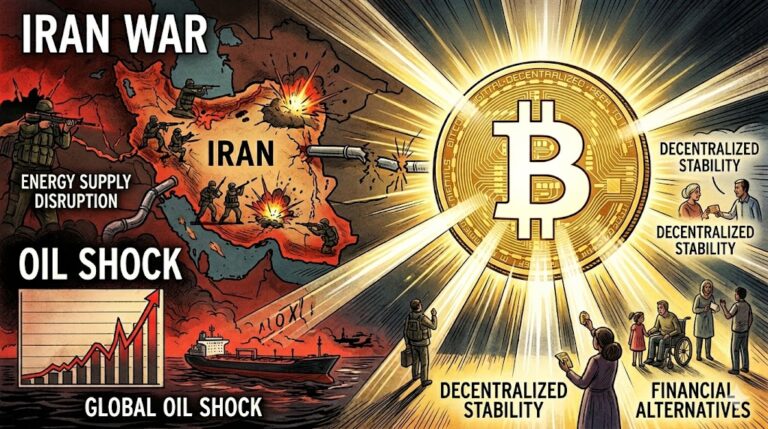
Since the U.S. and Israel began striking Iran on February 28, 2026, markets have had to wrestle with the financial and economic implications. The IEA described the disruption through Hormuz as the largest supply shock in the history of the global oil market. The strait normally carries about a quarter of maritime oil trade and is involved in about a fifth of global petroleum liquids consumption.
The Iran war has made monetary infrastructure visible again
The Strait of Hormuz is obviously a physical chokepoint. However, trade also depends on a monetary chokepoint. Cross-border payments usually move through correspondent banks, intermediary banks, screening layers, and trade-finance channels. Correspondent banking is an essential part of the global payment system for cross-border transactions, which involve a chain of linked correspondent banks. When that chain is stressed, settlement risk rises alongside freight and energy risk.
That is what this war has forced markets to confront. Reuters reported on April 9 that ship traffic through Hormuz was running at well below 10% of normal volumes, with just seven ships crossing in the prior 24 hours against roughly 140 normally. Iran’s posture around routing, permissions, and possible tolls made clear that access has become conditional.
Once trade access becomes conditional in the physical corridor, the other lever to pull is the monetary one. Here’s some important context.
OFAC prohibits U.S. banks from operating correspondent accounts for Iranian banks. In August 2025, the U.S. Treasury sanctioned the developer of Iran’s Cross-Border Interbank Messaging System, saying it had been built to let Iran and its partners route around controls on more widely used payment systems and to facilitate ties with foreign banks, including links involving Bank of Kunlun.
With the Iran war disrupting a major segment of global trade, it is practically inevitable that U.S. dollar rails will be used to try and force a resolution. If Iran wants money in exchange for Strait access, then it will need something else for monetary settlements.
Bitcoin really shines here
Bitcoin is an open settlement network. It does not require a correspondent bank, a reserve-currency issuer, or a central payments operator to authorize transfers. Although this does not remove friction from sanctions law, price volatility, or custody, Bitcoin nevertheless has a very different institutional dependency profile—one that could become extremely meaningful and useful in this context.
Consider that:
A kinetic conflict can freeze cargo and supply lines.
A banking crisis can freeze the payment for those items.
A sanctions regime can force transactions into narrower channels with more intermediaries and more approval points.
Yet Bitcoin remains an open monetary rail.
On March 3, researchers tracked millions of dollars worth of crypto leaving Iranian crypto exchanges after the strikes. Iran’s 2025 crypto transaction volume was roughly $8 billion to $11 billion. Clearly we see open digital rails attracting more use when domestic and cross-border financial channels are under pressure.
This is where Bitcoin shines. Gold is a neutral asset, but it is slow to move and impossible to trustlessly transmit in digital form (tokenizing the gold requires trust). Bank money is efficient inside the existing system, but fully dependent on that system. Stablecoins are useful, but they usually still depend on issuers, banks, and redemption channels. Stablecoin issuers will, if compelled, freeze addresses. Therefore, stablecoins are really just a fancy addendum to the existing financial system.
Bitcoin is the largest liquid non-sovereign bearer asset that can be transferred natively over its own network. This utility seems to be getting more valuable, as we’ll see below.
Why this creates an opportunity for BTC
Please consider the cumulative returns of assets since the Iran War started. I use the commodity spot ETFs to ensure an apples-to-apples comparison on elapsed time (so that everything is trading during U.S. market hours):
Asset
Cumulative Total Returns from Feb 27 to April 10
IBIT (Bitcoin)
11.75%
IWM (U.S. Small Caps)
0.14%
SPY (U.S. Large Caps)
-0.68%
VXUS (Global Equities, excluding U.S.)
-2.93%
TLT (Treasury Bonds)
-4.07%
GLD (Gold)
-9.64%
SLV (Silver)
-18.72%
Data from Yahoo Finance
This was an environment where long-duration bonds fell, gold fell, silver fell, international equities lagged, and Bitcoin exposure outperformed all of them.
This simply does not fit a “risk-off” narrative for Bitcoin. It does not fit a clean “inflation-hedge” narrative either.
The market appears to have priced several channels at once:
higher energy costs
inflation expectations (also exacerbated by recent PPI and CPI numbers)
weaker conviction around rate cuts
slower global activity
greater value assigned to neutral monetary mobility
Gold had fallen 10% since the war began, arguably because higher energy prices fed inflation fears and pushed out expectations for rate cuts. That same mechanism helps explain weakness in TLT (increasing inflation expectations would push long term rates higher). If the dominant transmission channel is an oil shock with inflation consequences, longer duration and metals do not behave like safe havens.
Bitcoin (IBIT) vs traditional safe havens like metals and U.S. T-Bonds since Iran War start.
Bitcoin was and is different. BTC-linked exposure outperformed while investors were confronting supply disruption, payment fragmentation, and more visible political control over access. That makes Bitcoin easier to price as strategic monetary optionality. The asset is scarce, portable, liquid, and non-sovereign. These features appear to have mattered more than the traditional safe-haven attributes associated with gold or long duration bonds.
Now, I want to be clear. This does NOT mean BTC is about to become a dominant trade currency (though this isn’t impossible either). The market might assign more value to an asset that remains transferable when institutional access becomes less predictable. This is all I am saying and, given the evidence, we can argue that this is happening right now.
Conclusion
The Iran war may have thrust a core feature of Bitcoin into the spotlight. It is a scarce asset and an open monetary rail. That combination matters more when trade routes, banks, sanctions, and state power start constraining one another.
If this really happens, Bitcoin stops looking like a speculative allocation to macro portfolios and starts looking more like resilient monetary infrastructure with valuable optionality. Every geopolitical fracture makes this easier to see.
World Liberty Financial minted 25 million USD1 stablecoins on Monday morning and burned 3 million through its TokenGovernor contract, on-chain data shows, as the Trump-linked venture continues managing the fallout from a lending position that trapped depositors on DeFi protocol Dolomite.
The activity follows WLFI’s statement last week, posted in response to CoinDesk’s reporting on the Dolomite transactions, that it had repaid $25 million of the roughly $75 million it borrowed against its own governance token.
The venture deposited billions of WLFI tokens as collateral and borrowed stablecoins that were partially routed to Coinbase Prime, pushing Dolomite’s USD1 lending pool to near-100% utilization and leaving other depositors unable to fully withdraw.
Monday’s mint was funded through BitGo Custody and executed via WLFI’s USD1 Mint Authority contract. The 3 million USD1 burn moved from an address starting 0x2ce to the TokenGovernor contract before being sent to the null address, permanently removing the tokens from circulation.
Smaller test transactions of $10, $10,000, and $40,800 in USD1 were sent to a previously inactive address in the hours before the mint, a pattern consistent with wallet verification ahead of larger transfers.
The net effect is a $22 million increase in USD1 circulation. The simultaneous mint and burn indicates active supply management rather than a simple expansion.
However, the burn raises its own question of where those 3 million USD1 came from and why they were retired rather than redeployed.
Stablecoin issuers routinely burn tokens when collateral is redeemed, but WLFI has not disclosed the specific reason.
It is not yet clear whether the newly minted USD1 is intended to replenish Dolomite’s lending pool, fund additional treasury operations, or serve another purpose.
WLFI’s governance token has fallen roughly 15% since CoinDesk first reported the Dolomite transactions on April 9. Dolomite co-founder Corey Caplan is an advisor to World Liberty Financial.
CoinDesk has reached out to World Liberty Financial for comment in European morning hours.
Strategy, the Virginia-based software company turned Bitcoin treasury vehicle, disclosed on Monday that it bought 13,927 Bitcoin for roughly $1 billion during the period April 6 to April 12 using proceeds generated from its at-the-market (ATM) program.
Strategy has acquired 13,927 BTC for ~$1.00 billion at ~$71,902 per bitcoin and has achieved BTC Yield of 5.6% YTD 2026. As of 4/12/2026, we hodl 780,897 $BTC acquired for ~$59.02 billion at ~$75,577 per bitcoin. $MSTR$STRC https://t.co/xVKjg2cEVP
With the latest purchase, Strategy’s total holdings now stand at 780,897 BTC, valued at over $55 billion at current market prices. The stash represents more than 3.7% of every Bitcoin that will ever exist.
How it was funded
Strategy didn’t tap its Class A common stock (ticker MSTR) for this purchase.
According to a recent SEC filing, the entire billion came from selling roughly 10 million shares of its variable-rate STRC preferred stock through an at-the-market program.
The MSTR equity ATM, which still has capacity to issue about 27 billion shares, went untouched. Three preferred stock programs, STRF, STRK, and STRD, also saw no activity, collectively retaining roughly 7.7 billion shares of additional issuance capacity.
The average price paid for this batch was around $71,902 per coin, slightly above the roughly $70,600 where Bitcoin was trading at the time of the announcement.
Executive Chairman Michael Saylor noted that Strategy has achieved a 5.6% “BTC Yield” year to date in 2026. That metric, which the company invented to track the growth of Bitcoin per diluted share, has become the primary way Saylor frames shareholder value.
Disclosure: This article was edited by Vivian Nguyen. For more information on how we create and review content, see our Editorial Policy.
The following is a fintech and wider digital and economic development of the Caribbean nation of the Bahamas in 2026.
The Bahamas’ fintech story in 2026 is one of quiet global significance. While small in population, the country has positioned itself at the forefront of digital currency innovation and financial modernisation in the Caribbean. In many ways, it offers a preview of how small island economies can leverage fintech not just for efficiency but for resilience.
With a population of only over 400,000 people, the Bahamas’ economy is valued at approximately $15 billion, driven primarily by tourism and financial services, which together account for the majority of gross domestic product (GDP) and tourism. GDP per capita stands at around $36,000, placing the country among the highest-income economies in the Caribbean.
Digital economic transformation: resilience through innovation
The Bahamas’ digital transformation is closely tied to its need for economic resilience. As a small island state vulnerable to external shocks, whether economic or environmental, the country has prioritised digital infrastructure and financial innovation as part of its broader development strategy.
Government priorities have included: expansion of digital public services, strengthening financial sector competitiveness, and supporting digital payments and financial inclusion
Internet penetration exceeds 90 per cent, and mobile usage is widespread, providing a strong foundation for digital services.
Financial services sector and fintech
The Bahamas is a popular tourist destination IMAGE SOURCE GETTY
The Bahamas’ financial services sector is well-developed and internationally connected, with a strong regulatory framework and a significant offshore financial services presence. However, digital transformation has accelerated markedly in recent years.
The Central Bank of The Bahamas (CBB) has been at the centre of this evolution, particularly within the last few years.
Key initiatives include:
Sand Dollar (CBDC) expansion – The Bahamas was the first country in the world to launch a retail central bank digital currency called the Sand Dollar. Since its introduction, the central bank has continued to expand its use cases, focusing on financial inclusion, government payments and retail transactions.
Digital payments ecosystem development – Efforts have been made to increase adoption of digital payments, including mobile wallets and electronic transactions, reducing reliance on cash.
Financial inclusion initiatives – The Sand Dollar and broader digital strategies have been used to extend financial services to underserved communities, particularly across the archipelago’s dispersed islands.
The Bahamas has strengthened its regulatory environment for fintech, including frameworks for digital assets and financial innovation.
For instance, the initial legislative framework to regulate digital assets businesses, the Digital Assets and Registered Exchanges Act, 2020 (“Prior DARE Act”), was initially introduced in 2020. Afterwards, in 2022, the Government released a White Paper, The Future of Digital Assets in The Bahamas. This outlined the country’s vison and framework for the country’s digital assets policy through to this year.
In 2024, a new Digital Assets and Registered Exchanges Act came into force and repealed and replaced the Prior DARE Act.
These initiatives reflect a forward-looking regulatory approach, where innovation is carefully structured and aligned with national priorities.
Financial inclusion: high access, targeted digital expansion
The financial hub is Nassau, home to domestic banks, international financial institutions and regulators. One of the largest banks is Bank of The Bahamas, which plays a key role in retail banking and financial inclusion initiatives.
According to the World Bank, the Bahamas has relatively high levels of financial inclusion, with approximately 90 per cent of adults holding a bank account. However, geographic dispersion across islands has historically created access challenges, particularly in remote communities. The focus is increasingly on ensuring consistent access across all islands, rather than simply increasing overall inclusion rates.
The Bahamas’ fintech ecosystem is relatively small, with an estimated 40 fintech and digital financial service providers, but it punches above its weight in terms of innovation and regulatory leadership.
Key players include the likes of Island Pay (digital payments provider and Sand Dollar wallet operator) and Kanoo (mobile payment solutions and financial services). These firms operate within a tightly regulated ecosystem, where innovation is closely linked to public infrastructure.
Conclusion: small scale, global relevance
The Bahamas’ fintech journey demonstrates that scale is not a prerequisite for leadership. By leveraging technology to overcome geographic constraints, the Bahamas is building a more resilient and inclusive financial system. It is offering lessons for both small states and larger economies alike.
Richie is a global economic development advisor and Managing Partner of Santos-Diaz LLC, specializing in international trade and foreign direct investment across the UK, Middle East, and North America. With over 15 years of experience and a Masters from SOAS University of London, he has advised high-level governments and multinational corporates while contributing to major outlets like Forbes and the World Economic Forum. Currently based in Dubai, he leverages his background in emerging markets and RegTech to bridge the gap between global policy and private sector growth.
View all posts
Executive Economic Development Advisor (Emerging Markets) | Contributor