Home Blog Page 510

Circle Launches Stablecoin Settlement Solution for TradFi Institutions

0

Circle Payments Network (CPN) Managed Payments let financial institutions operate in fiat, while using crypto rails behind the scenes via Circle.

Circle today launched Circle Payments Network (CPN) Managed Payments, a stablecoin settlement solution designed to simplify stablecoin transactions for traditional financial institutions, according to a press release from the firm.

The new managed solution is aimed at mainstream TradFi firms, including payment service providers, fintechs, banks, and global enterprises, per the release. The product’s core pitch is simplicity: participating firms interact solely in fiat, while Circle handles the the crypto rails in the background, namely USDC minting and burning, payment orchestration, compliance, and blockchain infrastructure.

Use cases include cross-border settlement, merchant stablecoin acceptance, high-volume payouts, and FX cost reduction, according to the releae. At launch, partners include Thunes and Worldline, alongside payments company Veem.

In recent months, UDSC has overtaken Tether’s USDT, the largest stablecoin by market cap, in terms of monthly transaction volume, per data from Visa and Allium.

Stablecoin transaction volume by asset. Source: Visa, Allium

The launch comes as stablecoins cement their role as mainstream financial infrastructure. Total stablecoin supply surged 50% in 2025 as enterprise adoption accelerated, with the GENIUS Act creating the first federal U.S. regulatory framework for the sector.

Major institutions have moved quickly: Visa launched USDC settlement on Solana in December, and the same month, Intuit struck a multi-year deal with Circle to embed stablecoin capabilities across TurboTax, QuickBooks, and Credit Karma.

Meanwhile, last month, Mastercard acquired stablecoin infrastructure firm BVNK with aims to bridge on-chain and fiat rails within the network.

This article was written with the assistance of AI workflows. All our stories are curated, edited and fact-checked by a human.

Fireblocks and Dynamic Bring Enterprise-Grade Wallet Infrastructure to TON and Telegram

0

Dynamic, a provider of embedded wallet infrastructure and a Fireblocks company, now supports The Open Network (TON). This strategic integration allows developers to build and launch payment, trading, and commerce applications directly inside Telegram Mini Apps without the burden of building or maintaining their own wallet infrastructure.

Removing development bottlenecks
Itai Turbahn, VP of embedded wallets at Fireblocks

As Telegram rapidly evolves into a hub for commerce and financial services, TON has emerged as the core infrastructure layer powering these digital asset applications. However, wallet infrastructure has historically remained a significant technical bottleneck for developers attempting to launch financial products at scale.

Dynamic addresses this friction by automatically provisioning fully functional TON wallets for users. Developers are no longer required to deploy wallet contracts, manage system upgrades, or construct custom transaction logic from scratch.

Combined with Fireblocks’ enterprise-grade custody, governance, and compliance infrastructure, the platform now offers a unified stack for both wallet deployment and transaction management on TON. This allows developers to launch blockchain-based financial services without needing to stitch together multiple vendors for asset security and operational controls.

Itai Turbahn, VP of embedded wallets at Fireblocks, highlighted the speed this brings to market deployment.

“TON gives developers access to nearly a billion users inside Telegram,” Turbahn stated. “Dynamic gives TON builders the embedded wallet infrastructure to actually serve those users, from generating wallets and accepting funds to managing security, without building any of it from scratch. That’s how you go from idea to live financial product in weeks, not months.”

Expanding the TON ecosystem

The TON ecosystem is experiencing rapid growth, currently boasting over 51 million active wallets and more than $500million in deployed stablecoins. Recent initiatives, such as the launch of TON Pay and integrations with global payment providers like Banxa, are further expanding the network’s capabilities for global payments.

The new infrastructure unlocks several critical applications across the TON ecosystem, including:

  • Stablecoin payment apps embedded directly inside Telegram Mini Apps.

  • Trading platforms accessible natively within Telegram.

  • Gaming ecosystems featuring automatically generated asset wallets.

  • Commerce platforms that enable seamless payments and settlements inside chat environments.

The shift to native digital payments

With stablecoins processing more than $46trillion in transaction volume in 2025, the race is intensifying to support financial applications inside widely distributed platforms like Telegram. By eliminating manual wallet deployments, Dynamic and Fireblocks are laying the foundation for agentic commerce, where bots, assistants, and Mini Apps can initiate and settle transactions natively.

Nikola Plecas, VP of Payments at TON Foundation, noted the changing landscape of digital transactions.

“Payments are becoming native to digital platforms, and messaging environments like Telegram are at the center of that shift,” Plecas said. “As TON evolves into the infrastructure for global money movement, developers need tools that remove complexity and allow them to build financial services at scale. This integration brings the wallet and custody infrastructure for making payments, trading, and commerce seamless inside Telegram.”

Bernstein Pushes Back On Bitcoin Quantum Threat Fears, Says It’s Not A Crisis: Report

0

Wall Street research firm Bernstein is pushing back on alarm over quantum computing’s threat to Bitcoin, framing the challenge as a scheduled protocol evolution rather than a crisis in waiting.

In a note to clients on Wednesday, analysts led by Gautam Chhugani acknowledged that cryptographically relevant quantum computers (CRQCs) pose a genuine challenge to Bitcoin and the broader digital asset ecosystem — but stopped short of treating that challenge as an emergency. The team estimates Bitcoin and other crypto protocols have three to five years to implement post-quantum security measures, a window they describe as sufficient given current technical and cost constraints.

The note arrives in the wake of fresh research from Google, which last month published a paper showing that future quantum machines could break the elliptic curve cryptography underpinning Bitcoin’s transaction signatures with fewer resources than earlier models suggested. 

Google’s team estimated the barrier could fall below 500,000 physical qubits — a reduction of roughly 20 times compared to prior estimates. The finding drew attention to a narrower category of risk: so-called “on-spend” attacks, where a transaction’s public key is exposed in the mempool before confirmation, creating a brief window of potential vulnerability.

Bernstein’s analysts did not dismiss Google’s findings. “Recent breakthroughs seem to have accelerated the timeline, as the challenge is no longer ‘a decade away’ as thought earlier,” the analysts wrote. 

At the same time, they noted that scaling from tens of logical qubits to the thousands required for a real attack involves breakthroughs across hardware, error correction, and manufacturing — dimensions that remain unsolved. 

“Quantum timelines may still be more optimistic than reality,” the note cautioned.

The firm placed particular weight on cost and scalability constraints, suggesting the transition could run into the tens to hundreds of billions of dollars. Those figures, they argued, point toward preparation time rather than panic. 

Bitcoin has evolved and will continue to do so

Bernstein also identified well-capitalized institutional players — Strategy, BlackRock, and Fidelity — as likely to take a “constructive role” in reinforcing security standards. That framing reflects a broader shift in how the Bitcoin ecosystem has evolved: institutional ownership has given the network stakeholders with both the resources and the incentives to support defensive upgrades.

Not all risks are equal. Chhugani pointed to an estimated 1.7 million BTC sitting in Satoshi-era legacy wallets as the highest-exposure segment. 

These addresses have permanently visible public keys, making them defined targets under certain attack models. For newer protocols and wallet structures, the exposure is more contained — dependent on specific unsafe practices that the developer community is working to address.

The emerging consensus, shared by both Bernstein and Google’s own research team, points toward 2029 as a target for post-quantum cryptography migration. 

BIP 360, a draft proposal already in experimental implementation, introduces transaction formats designed to reduce exposure to vulnerable cryptographic assumptions.

Editorial Disclaimer: We leverage AI as part of our editorial workflow, including to support research, image generation, and quality assurance processes. All content is directed, reviewed, and approved by our editorial team, who are accountable for accuracy and integrity. AI-generated images use only tools trained on properly license material. In Bitcoin, as in media: Don’t trust. Verify.

SEC Drops 30% Of Enforcement Actions, Calls Past Crypto Cases A Waste Of Resources

0

Trusted Editorial content, reviewed by leading industry experts and seasoned editors. Ad Disclosure

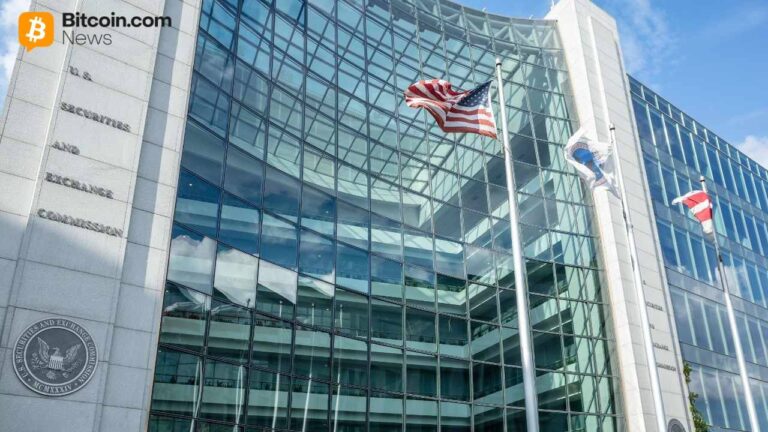
A Ponzi scheme worth $200 million. A fake token sale that pulled in $100 million from unsuspecting investors. These are the kinds of cases the US Securities and Exchange Commission says it now wants to focus on — not the pile of enforcement actions it quietly admitted this week were a waste of time.

SEC Turns On Its Own Track Record

The SEC released its 2025 enforcement results on Tuesday, and buried inside was a striking admission: a large number of cases brought in prior years against crypto companies produced no real benefit for investors.

According to the agency, 95 enforcement actions and $2.3 billion in penalties tied to record-keeping violations since fiscal year 2022 “identified no direct investor harm.”

The SEC added that seven cases involving crypto firm registrations and six others centered on the legal definition of a dealer also fell into that category.

Source: SEC

Those cases, the agency said, reflected a bias toward racking up numbers rather than protecting the people the commission exists to serve.

That self-criticism landed with force. It was a direct indictment of the approach taken under former SEC Chair Gary Gensler, who for years pursued what critics called regulation by enforcement — using legal action as a substitute for clear rules in the crypto space.

The agency itself used the phrase “unprecedented rush” to describe the push to file cases in the weeks before US President Donald Trump took office in January 2025.

Source: SEC

Atkins Refocuses The Agency

Paul Atkins took over as SEC chair in April 2025 and moved quickly to change course. Officials said the commission has since redirected its attention toward fraud, market manipulation, and breaches of trust — the categories of misconduct that cause the clearest damage to ordinary investors.

Atkins said the old model prioritized “volume and record-setting penalties” over genuine protection.

BTCUSD currently trading at $71,637. Chart: TradingView

Data shows the numbers back that up. Based on reports from consulting firm Cornerstone Research, SEC enforcement actions against public companies — including crypto firms — fell roughly 30% in fiscal 2025 compared to the year before.

Despite the pullback, the commission has not gone quiet. In May 2025, the SEC sued Unicoin and four of its executives, alleging the company raised $100 million by misleading investors about token rights and equity. Unicoin has disputed the agency’s version of events.

Featured image from Getty Images, chart from TradingView

Editorial Process for bitcoinist is centered on delivering thoroughly researched, accurate, and unbiased content. We uphold strict sourcing standards, and each page undergoes diligent review by our team of top technology experts and seasoned editors. This process ensures the integrity, relevance, and value of our content for our readers.

Cloudflare Targets 2029 for Quantum-Safe Internet as Threat to Bitcoin Looms

0

In brief

  • Cloudflare aims to make its platform fully post-quantum secure by 2029.
  • New quantum research is compressing security timelines across the tech industry.
  • The same cryptographic math protects internet authentication and Bitcoin signatures.

Cloudflare says it plans to make its entire platform resistant to quantum computing attacks by 2029, accelerating efforts to replace internet cryptography that powerful quantum machines could eventually break.

In a blog post on Tuesday, the web infrastructure company said it is prioritizing post-quantum authentication, warning that compromised authentication keys could allow attackers to impersonate servers, access systems, or distribute malicious software updates.

“The migration to post-quantum authentication is more complex than the transition for encryption because it involves more steps,” Sharon Goldberg, senior director of product management at Cloudflare, told Decrypt. “With post-quantum encryption upgrades to TLS, we only need to upgrade the TLS client and the TLS server.”

Transport Layer Security, or TLS, is the cryptographic protocol that secures internet connections between clients and servers, protecting data exchanged by websites, applications, and online services.

Cloudflare’s timeline reflects growing concern of ‘Q-Day,’ the theoretical yet increasingly plausible day when a practical quantum computer comes online. While experts once placed Q-Day decades away, new research, including by IBM and Google, puts the date closer to 2032.

“Our decision to accelerate our post-quantum roadmap–especially authentication–was triggered by recent breakthroughs in quantum computing, along with Google now also targeting 2029 for a full rollout of post-quantum authentication,” Goldberg said.

Cloudflare’s post echoed an announcement last month by Google, which said it plans to be quantum-resistant by 2029, which the company said helped trigger the accelerated timeline.

“All of this suggests that Q-Day might come sooner than expected,” warning that after Q-Day, an adversary armed with a quantum computer could break into any system not protected with post-quantum authentication,” Goldberg added.

Cloudflare joins a growing list of companies and developers sounding the alarm that quantum computing is advancing at a pace where it could become a cybersecurity risk, and the issue extends beyond websites.

Bitcoin relies on elliptic-curve digital signatures to prove ownership of coins and authorize transactions. Experts, including Ethereum co-founder Vitalik Buterin, Solana co-founder Anatoly Yakovenko, and Cardano founder Charles Hoskinson, have warned that a sufficiently powerful quantum computer running Shor’s algorithm could theoretically derive a private key from a public key, and that a move to post-quantum algorithms is necessary before Q-Day happens.

In March, researchers at Caltech and Oratomic published a study suggesting that breaking the cryptography used by Bitcoin would be done with as few as 10,000 qubits using a neutral-atom quantum computer. Experts say, however, that achieving that 10,000 mark is easier said than done.

“Just having 10,000 physical qubits is something that could happen within a year,” Oratomic co-founder and CEO Dolev Bluvstein previously told Decrypt. “But that’s really not the goalpost people think it is. It’s not like when you design a computer, you just put the transistors on the chip, wash your hands, and say you’re done. It’s a highly non-trivial, extremely complicated task to actually go and build one of these.”

Those developments have pushed companies to accelerate their migration schedules.

Cloudflare said it mitigated much of that risk by enabling post-quantum encryption across most of its products starting in 2022.

“While we’re proud that over 65% of human traffic to Cloudflare is post-quantum encrypted and the majority of our products also support post-quantum encryption,” Goldberg said, “our work is not done until we’ve also deployed post-quantum authentication.”

Cloudflare said plans include rolling out post-quantum authentication for origin connections in mid-2026, expanding it to visitor connections in mid-2027, extending support across its enterprise networking platform by early 2028, and then ultimately completing deployment across its services by 2029.

“The complexity of the upgrade means that we need to start now,” Goldberg said. “Other organizations should also begin acting with a sense of urgency, so they don’t run out of time to implement a safe and smooth upgrade as Q-Day approaches.”

Daily Debrief Newsletter

Start every day with the top news stories right now, plus original features, a podcast, videos and more.

Visa Rolls Out AI Agent Shopping Infrastructure Globally

0

Visa’s Intelligent Commerce platform lets AI agents shop, compare, and transact on behalf of consumers, and the company says the majority of business leaders are ready for it.

Payments giant Visa is opening its Intelligent Commerce platform to businesses worldwide, expanding the infrastructure that allows artificial intelligence (AI) agents to shop, compare, and complete purchases on behalf of consumers and enterprises.

The move comes one week after Visa published its Business-to-AI (B2AI) Report, which found that 53% of U.S. business leaders surveyed would allow AI agents to negotiate prices or terms directly with other AI agents on their behalf. The report also found that 71% of businesses said they are willing to optimize products, offers, and experiences specifically for AI agents, while 77% are already using or piloting AI in their operations.

On the consumer side, nearly 40% of Americans reported making a purchase they normally would not have considered as a result of using an AI agent or tool, an early signal that autonomous systems are actively shaping demand rather than merely filtering it.

Visa’s Intelligent Commerce framework provides a suite of integrated APIs spanning tokenization, authentication, payment instructions, and transaction signals, enabling AI agents to transact securely on behalf of users.

Pilot programs have already been running across multiple regions. In Asia-Pacific and Europe, pilots launched in early 2026, while readiness work is underway in Latin America and the Caribbean. In the Middle East, Visa is working with developer Aldar to allow customers in the United Arab Emirates to use AI agents to pay recurring fees like real estate service charges.

A core component of the framework is the Trusted Agent Protocol, an open framework introduced in October 2025 that helps merchants distinguish between malicious bots and legitimate AI agents acting on behalf of consumers.

Heated Race

Visa’s global push arrives amid intensifying competition over who will control the payment rails for AI agent commerce. Two crypto-native protocols are racing to become foundational infrastructure for AI payments: Coinbase’s x402 standard, which recently moved under Linux Foundation governance with backing from Google, Stripe, and Visa itself, and the Machine Payments Protocol (MPP), launched by Stripe’s Tempo blockchain.

On the crypto front, Visa has been hedging its bets. Visa Crypto Labs launched the CLI tool in March, a command-line payment interface that lets AI agents make payments without API keys or pre-funded accounts — directly targeting the same autonomous agent use cases that crypto protocols are pursuing. The company also expanded its stablecoin collaboration with Bridge in March, with plans to bring stablecoin-linked cards to over 100 countries.

The competing approaches highlight a growing fault line in the industry. Traditional payments players like Visa and Mastercard are building trust layers on top of existing card rails, while crypto proponents argue that blockchain infrastructure is better suited for a world in which AI agents are first-class economic actors.

Visa’s CMO Frank Cooper III framed the company’s vision in terms of its B2AI framework, describing a shift where commerce moves from market-to-human to market-to-machine, with AI agents evaluating, negotiating, and transacting on behalf of people.

This article was written with the assistance of AI workflows. All our stories are curated, edited and fact-checked by a human.

Yuga Labs settles Bored Ape NFT lawsuit, ending fight over alleged copycat tokens

0

Yuga Labs has settled its lawsuit against artist Ryder Ripps and Jeremy Cahen over their alleged copycatting of its non-fungible tokens (NFTs) from the Bored Ape Yacht Club collection.

The agreement ends a two-year dispute over whether the pair’s project, which reused Bored Ape imagery, crossed the line from satire into trademark infringement.

Proposed court orders would permanently bar Ripps and Cahen from using Yuga’s trademarks and imagery, according to a filing in California federal court. The terms of the settlement were not disclosed.

Yuga’s Bored Ape collection became one of the most recognizable NFT brands during the market’s peak. The firm sued in 2022, claiming Ripps and Cahen sold lookalike tokens in their RR/BAYC NFT collection and earned millions by confusing buyers. The defendants argued their work was a satirical response to the actual Bored Ape Yacht Club collection.

A district judge initially sided with Yuga and awarded nearly $9 million in damages and fees. But an appeals court later overturned that ruling, saying a jury should decide whether buyers were actually misled. The settlement avoids that trial.

Why AI Powered Trading Is Becoming Wall Street’s Secret Weapon

0

The Rise of Algorithmic Decision Making

Over the past decade, financial markets have undergone a dramatic transformation as technology has taken center stage in trading operations. Firms that once relied heavily on human intuition now depend on sophisticated systems capable of analyzing vast amounts of data in real time. These systems evaluate patterns, detect anomalies, and identify opportunities that would be impossible for a human to process at the same speed. As competition intensifies, the pressure to adopt advanced tools grows stronger across the industry. This shift has created an environment where firms that fail to innovate risk falling behind. The result is a landscape where technology is no longer optional but essential for survival.

How Data Became the New Market Currency

The explosion of digital information has fundamentally changed how traders understand market behavior. Every second, millions of data points flow through global exchanges, social platforms, economic feeds, and alternative sources. Traders who can interpret this information quickly gain a significant advantage over those who rely on traditional methods. The ability to process unstructured data, such as news sentiment or social trends, has become especially valuable. As firms race to harness these insights, they invest heavily in systems that can filter noise from meaningful signals. This data driven approach has reshaped the competitive dynamics of modern finance.

The Competitive Edge of Intelligent Automation

Automation has long been part of trading, but recent advancements have elevated it to a new level. Intelligent systems can now learn from historical patterns and adapt to changing market conditions with remarkable precision. These tools help traders execute strategies with greater consistency and reduced emotional bias. They also allow firms to operate around the clock, taking advantage of global opportunities without human limitations. As a result, even small improvements in execution speed or accuracy can translate into substantial financial gains. This relentless pursuit of efficiency has made automation a cornerstone of modern trading operations.

Why Wall Street Is Quietly Embracing New Tools

While the financial industry is known for its secrecy, it is clear that many firms are rapidly adopting advanced technologies behind the scenes. These tools offer a level of insight and responsiveness that traditional methods cannot match. Firms that integrate intelligent systems into their workflows often discover new ways to optimize their strategies and reduce risk. The ability to react instantly to market shifts provides a powerful advantage in volatile conditions. As more firms recognize these benefits, the adoption of advanced trading tools continues to accelerate. This quiet revolution is reshaping the industry from within.

The Role of Emerging Technologies in Market Evolution

New technologies are pushing the boundaries of what is possible in financial markets. Innovations in machine learning, cloud computing, and real time analytics are enabling traders to operate with unprecedented sophistication. These advancements allow firms to test complex strategies, simulate market scenarios, and refine their approaches with greater accuracy. As technology matures, it becomes more accessible to a wider range of market participants. This democratization of advanced tools is contributing to a more dynamic and competitive trading environment. Within this evolving landscape, firms are constantly searching for new ways to stay ahead.

AI crypto trading has become one of the most sought after tools for firms looking to enhance their performance and maintain a competitive edge.

Conclusion

The rapid rise of advanced technologies has fundamentally changed how Wall Street operates. Firms that once relied on traditional methods now depend on intelligent systems capable of processing information at extraordinary speed. As competition intensifies, the adoption of these tools has become essential for maintaining an advantage. While the industry may not openly discuss its reliance on advanced systems, their influence is undeniable. The future of trading will continue to evolve as technology advances, shaping a new era of market innovation.


Iran is Weighing Crypto Tolls for Ships using Strait of Hormuz: Report

0

Hours after US President Donald Trump claimed that Iran and the United States had agreed to a two-week ceasefire that included opening the Strait of Hormuz, Iranian authorities are reportedly considering charging ships using the waterway in cryptocurrency.

According to a Wednesday Financial Times report, a spokesperson for Iran’s Oil, Gas and Petrochemical Products Exporters’ Union said empty oil tankers will be able to pass through the Strait of Hormuz without incurring charges, but certain ships will need to pay a tariff of $1 per barrel of oil in Bitcoin (BTC).

The spokesperson, Hamid Hosseini, reportedly said Iranian authorities would also assess each ship using the waterway over the two-week period to ensure it wasn’t transporting weapons.

“Once the email arrives and Iran completes its assessment, vessels are given a few seconds to pay in Bitcoin, ensuring they can’t be traced or confiscated due to sanctions,” said Hosseini, according to the Financial Times.

Many ships have effectively been cut off from using the Strait of Hormuz to transport oil and other supplies after US-Israel air strikes on Iranian targets in February and March. Amid the move by Iran and geopolitical tensions, the price of crude oil exceeded $100 per barrel for the first time in four years and the prices of many cryptocurrencies were volatile, with BTC fluctuating between $65,000 and $75,000.   

Related: Bitcoin reclaims $72K after US, Iran agree to 2-week ceasefire

Trump claimed on his Truth Social platform on Tuesday that the ceasefire deal included  the suspension of the “bombing and attack of Iran for a period of two weeks” and the “complete, immediate, and safe opening of the Strait of Hormuz.” Iran’s state media reported that the country delivered a 10-point plan to the US president as a condition for the deal, including continued control of the waterway and the end of sanctions on Iran.

Prior to war, Iran still used crypto to bolster its currency

Before the escalation of hostilities between US-Israeli forces and Iran in February, reports suggested that Iran had been using digital assets to evade sanctions amid its currency, the rial, dropping against the US dollar.

Blockchain analytics platform Elliptic reported in January that Iran’s central bank acquired half a billion dollars worth of Tether’s USDt (USDT) stablecoin. TRM Labs also tracked about $3.7 billion in total crypto flows in Iran between January and July 2025.

Magazine: ‘Phantom Bitcoin’ checks, Drift hack linked to North Korea: Asia Express