Trusted Editorial content, reviewed by leading industry experts and seasoned editors. Ad Disclosure
Recent on-chain data shows that Bitcoin miner selling pressure may be approaching exhaustion, potentially setting the stage for the market’s next upward phase. This development comes amid a resilient bullish performance by the leading cryptocurrency in April.
Reduced Mining Selling Weakens Pressure On Bitcoin
In a recent QuickTake post, analysts at XWIN Research Japan postulated that Bitcoin is now entering a phase of demand-led price expansion as the market structure begins to experience supply exhaustion. According to the market experts, data from WuBlockchain shows that publicly listed Bitcoin miners offloaded over 32,000 BTC in Q1 2026, in the largest quarterly outflow ever, in line with a structural market alignment.
Contributing factors to such a selling spree can be traced to the Bitcoin halving in 2024, when block rewards were reduced from 6.25 BTC to 3.125 BTC, significantly cutting down revenue. Meanwhile, network hash rate continued rising, further squeezing profitability. As the hash price fell below breakeven levels, many miners were forced to liquidate holdings to maintain cash flow. In addition, some miners are diverting resources toward AI and high-performance computing (HPC) infrastructure, accelerating Bitcoin’s distribution.
Source: CryptoQuant
Notably, XWIN Research experts note that On-chain metrics also reinforce this narrative, as miners’ reserves have gradually declined, while net position change has remained negative. This combination confirms there has been sustained distribution over time. However, the more critical signal lies in recent flow dynamics. While the Miner Position Index (MPI) remains negative, the Miner Selling Power has dropped sharply, indicating that although miners have consistently offloaded their holdings, the intensity of selling is now weakening, i.e., the market is no longer facing increasing forced supply.
According to the analysts at XWIN Research Japan, this evolving structure creates a two-phase dynamic. On one hand, there has been a sustained period of structural selling driven by reduced rewards and rising costs. On the other hand, current data indicate that this phase may be nearing completion. Notably, Bitcoin cycles historically progress from supply expansion to supply exhaustion before transitioning to demand-driven growth. Therefore, as miner-driven supply constraints ease, future price direction is likely to depend more on demand-side catalysts, including ETF inflows, institutional participation, and broader macroeconomic conditions.
Bitcoin Price Overview
At press time, Bitcoin trades at $77,169, up 2.69% in the last 24 hours.
BTC trading at $77,126 on the daily chart | Source: BTCUSDT chart on Tradingview.com
Featured image from Unsplash, chart from Tradingview
Editorial Process for bitcoinist is centered on delivering thoroughly researched, accurate, and unbiased content. We uphold strict sourcing standards, and each page undergoes diligent review by our team of top technology experts and seasoned editors. This process ensures the integrity, relevance, and value of our content for our readers.
Wrapped XRP went live on Solana on Friday, issued by custodian Hex Trust and bridged through LayerZero, making the token available inside Solana’s DeFi apps for the first time.
XRP holders can now use the wrapped asset on Jupiter, Phantom, Titan Exchange, and Meteora without selling their underlying position.
Each wXRP is backed 1:1 by native XRP held in segregated custody accounts and is redeemable at any time, according to Hex Trust.
The Solana launch is one leg of a broader rollout Hex Trust disclosed in December 2025, which also targets Ethereum, Optimism, and HyperEVM. The move fits a pattern that has accelerated through 2025 and 2026, where tokens that started their life on one chain are being bridged to others to capture yield and liquidity that did not exist at launch.
XRP has historically functioned as a payment-rail token settled directly on the XRP Ledger. Solana has built the opposite use case, a throughput-optimized smart contract platform where the DeFi and memecoin activity actually lives.
The piece of infrastructure underneath this deal is LayerZero, the cross-chain messaging protocol that has quietly won most of the bridge volume that used to flow through Wormhole, Nomad, and Ronin before those protocols were exploited for more than $1 billion combined between 2022 and 2024.
Whether XRP generates meaningful DeFi volume on Solana is a separate question. The wrapped asset is live, but the test is whether holders actually use it.
Crypto’s next major inflection point is coming from artificial intelligence (AI).
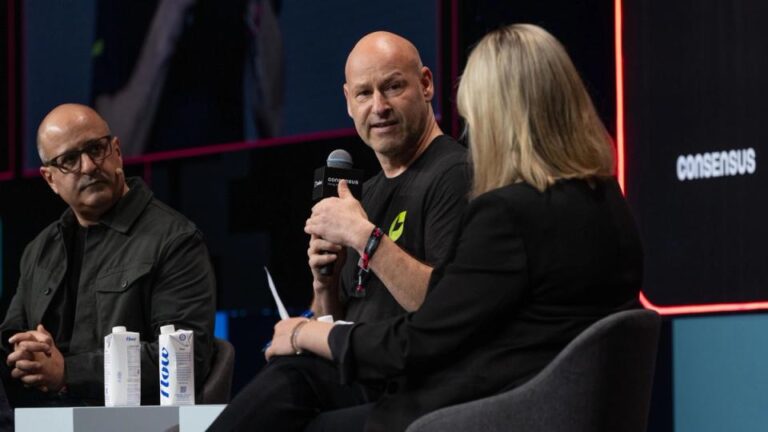
That’s according to Consensys CEO and Ethereum co-founder Joseph Lubin. He told CoinDesk that autonomous or semi-autonomous agents can transact, coordinate and verify one another on decentralized networks, using crypto rails as a foundation for machine-driven activity.
Lubin, who will be speaking at Consensus Miami 2026 next month, said he is “sympathetic to the idea that blockchain is for machine intelligences,” but does not see humans being displaced. Instead, increasingly intelligent interfaces will abstract away complexity, allowing users to interact with crypto systems through intent rather than manual inputs. In that model, AI becomes the intermediary layer between people and protocols.
That vision comes with risks. If AI infrastructure remains concentrated among large technology firms, “we could be in trouble,” Lubin warned. He argued that decentralized systems and cryptography will be essential in ensuring accountability, enabling machines to “check on one another” in transparent, verifiable environments.
Within that broader shift, products like MetaMask — a Consensys product — are evolving to reflect the change. Lubin said the wallet is being rebuilt as “a new kind of neobank that you own and control,” part of a transition toward what he described as a “personal money operating system.” AI-powered agents could act on behalf of users, managing assets, executing transactions and navigating a growing decentralized economy. “You can walk around with your personal financial system in your pocket,” he said.
The rise of corporate chains on Ethereum
Beyond interfaces, Lubin pointed to structural changes across the Ethereum ecosystem. The architecture of the blockchain is also shaping how institutions approach adoption. Lubin expects “corporate chains” to become more common as companies seek higher throughput and greater control over their infrastructure. Still, he argued that assets are best issued on Ethereum’s base layer, saying “the best way to ensure that an asset is durable… is to mint it on Ethereum layer one,” even if the asset is later used across other networks.
Stablecoins, one of crypto’s fastest-growing sectors, are part of that transition, but not the endpoint. Lubin described them as a “stepping stone” toward more fully decentralized financial systems, noting that current models remain heavily reliant on centralized issuers. Over time, he expects growth in decentralized collateral to enable more robust, crypto-native forms of money.
On tokenization more broadly, Lubin suggested that traditional finance and decentralized finance are entering a period of convergence, combining centuries of financial innovation with newer blockchain-based systems. The result, he said, will be a more granular and programmable global economy.
Even as these shifts accelerate, Lubin struck a measured tone on longer-term technical risks like quantum computing. While not an immediate concern, he said Ethereum developers have been preparing for years.
“A lot of us just see it as being folded into the natural evolution of Ethereum,” Lubin said.
Read more: Joe Lubin claims DeFi is as safe as traditional finance, adding that bitcoin is in crisis
Kenya’s fintech story in 2026 remains one of the most influential in the Global South. What began as a mobile money revolution has matured into a broader digital financial ecosystem.
This has been thanks to digital infrastructure, regulatory support and a growing innovation landscape.
Kenya stands as one of East Africa’s most dynamic economies. It has a diverse range of sectors that cut across agriculture, ICT, tourism, manufacturing and financial services. The country’s financial hub is Nairobi, often referred to as the “Silicon Savannah,” is a major hub in the region. In fact, Kenya in terms of fintech, is often referred to one of the “Big Four” – the others being Egypt, South Africa and Nigeria.
Digital economic transformation: from mobile money to digital economy
Kenya’s digital transformation has long been anchored in mobile money, but by this year it has broadened into a wider digital economic development strategy. The government’s Digital Economy Blueprint continues to guide investments in infrastructure, digital skills, innovation and platforms.
Mobile penetration exceeds 100 per cent, and smartphone adoption continues to rise, enabling a strong foundation for digital financial services.
At the core of Kenya’s transformation remains M-Pesa, the mobile money platform launched by Safaricom. At present, M-Pesa processes over USD 300 billion annually in transaction value and at one point was estimated to contribute at least 5 per cent of the country’s gross domestic product (GDP).
What is notable today is how this infrastructure has evolved into a broader ecosystem. It is beyond just payments but also savings, credit, insurance and cross-border transactions, and enabling digital commerce at scale.
Kenya’s financial services sector has undergone a profound shift from traditional banking to a mobile-first, digitally integrated system.
Financial inclusion has improved significantly. As of recent estimates, around 85 per cent of adults in Kenya have access to a formal financial account, up from around 26 per cent in 2006.
Mobile money accounts for the majority of this inclusion, with digital wallets often serving as the primary financial interface. Beyond just this, the expansion of agent banking networks, growth of digital credit and micro-lending, as well as integration of financial services into everyday products are also playing roles in the financial inclusion of everyday Kenyans.
Kenya’s fintech ecosystem has also grown rapidly, with as much as 450 fintech companies operating across payments, lending, insurtech and agritech subsectors. Besides M-Pesa, other examples include Cellulant, Pezesha, Jumo, Tala and Branch International.
Together, these firms highlight a shift from basic payments to a more diversified digital financial ecosystem.
To note, other key players and catalysts in the ecosystem include the likes of the Kenya Fintech Association (FINTAK)
Policy Led Growth Support
Nairobi is the main commercial and financial hub of Kenya. It is also the capital city IMAGE SOURCE GETTY
Rather than reacting to fintech disruption, the Central Bank of Kenya (CBK) has taken a proactive, policy-led stance, positioning regulation as an enabler rather than a constraint. This has allowed Kenya to scale digital finance while avoiding many of the fragmentation and risk issues seen in other emerging markets.
Its strategy can be understood across several interconnected pillars:
National Payments System Modernisation – At the foundation of Kenya’s fintech success is the continued modernisation of its National Payments System (NPS). The CBK has prioritised building an interoperable, resilient and efficient payments infrastructure that supports both banks and non-bank financial institutions.
At the same time, the central bank has continued to refine the regulatory framework governing payment service providers under the National Payment System Act, ensuring that innovation does not outpace oversight, according to the CBK.
Digital finance and regulatory frameworks – As digital lending, mobile banking and fintech platforms have proliferated, the CBK has moved to formalise and regulate these activities. This addresses risks while preserving innovation.
A key milestone has been the introduction and enforcement of the Digital Credit Providers (DCP) Regulations, which bring previously unregulated digital lenders under the CBK’s supervision.
In parallel, the CBK continues to license and supervise payment service providers (PSPs), ensuring that fintech firms operating in payments meet standards related to capital adequacy, governance and operational risk.
Beyond enforcement, the CBK has adopted a principles-based regulatory approach, allowing flexibility for innovation while maintaining core safeguards. This has helped Kenya avoid stifling early-stage fintech growth, while gradually increasing regulatory sophistication as the ecosystem matures
Open banking and data-sharing evolution – Kenya is now entering the next phase of its fintech journey: data-driven financial services. While open banking is still at a relatively early stage compared to markets such as Brazil or the UK, the CBK and broader regulatory ecosystem are actively exploring frameworks to enable secure data-sharing.
Early discussions around open finance in Kenya are closely tied to existing strengths, in particular the vast transaction data generated by mobile money platforms. If effectively harnessed, this data could significantly enhance credit scoring, small and medium enterprise (SME) financing and financial inclusion.
Not related directly with this topic per say, but in terms of wider collaboration, news highlighted this year with the CBK and the National Bank of Rwanda (NBR) signed a memorandum of understanding to develop a licence passporting framework for payment service providers, allowing regulators to recognise each other’s licencing regimes and coordinate supervision.
Challenges remain but overall hugely impactful success
Kenya is widely regarded as a global leader in financial inclusion, largely due to its early adoption of mobile money. However, the focus is now shifting from access to depth and quality of financial services.
At the same time, challenges remain – particularly around over-indebtedness from digital lending and the need for stronger financial literacy. It is also worth to note that, despite the progress Kenya has made, there is still much progress for the economy, which currently is a low-middle income economy of a gross domestic product (GDP) per capita of over $2,300, to achieve.
Despite this, Kenya’s fintech journey offers a powerful lesson for emerging markets. What began as a solution to financial exclusion has evolved into a platform for economic participation. By leveraging mobile technology, regulatory support and innovation, Kenya is demonstrating how fintech can move beyond inclusion towards meaningful economic empowerment at scale.
The US Securities and Exchange Commission has filed a lawsuit against crypto executive Donald Basile, accusing him and two companies he controlled of raising about $16 million from investors through false claims tied to a so-called “insured” crypto token known as Bitcoin Latinum.
In a complaint filed Friday in the US District Court for the Eastern District of New York, the SEC alleged that Basile ran the scheme between March and December 2021 through Monsoon Blockchain Corp. and GIBF GP Inc., offering investors Simple Agreements for Future Tokens (SAFTs) that promised future delivery of the token, according to a report from The Wall Street Journal.
Regulators said hundreds of investors were told the asset was backed and insured, but the SEC alleged no insurance company ever provided coverage or any proof that these claims were true, per the report.
The case marks one of the few SEC enforcement actions under the Trump administration, which has signaled a more crypto-friendly regulatory stance compared to previous administrations.
Related: Crypto market safe harbor lands at White House for review
Crypto funds spent on luxury
The SEC said Basile repeatedly represented that Bitcoin Latinum was an insured, asset-backed cryptocurrency and that investor funds would help support its underlying value. Instead, the complaint alleges, millions of dollars were diverted to personal spending, including real estate purchases, credit card payments and the acquisition of a $160,000 horse.
The regulator is seeking permanent injunctions, repayment of allegedly ill-gotten gains with interest, civil penalties, and a ban on Basile’s participation in securities offerings, according to the WSJ. It also wants an officer-and-director bar preventing him from leading public companies in the future.
The Bitcoin Latinum website currently shows a 404 error.
Bitcoin Latinum website not working. Source: Bitcoin Latinum
Related: SEC proposes certain crypto interfaces don’t need to register as brokers
SEC criticizes past crypto cases for lacking benefit
Last week, the SEC said many past enforcement actions against crypto firms did not directly benefit investors and reflected a focus on case volume rather than meaningful protection. The agency reported that since fiscal 2022 it brought 95 actions and collected $2.3 billion in penalties for “book-and-record” violations, but several cases involving crypto registration and dealer definitions did not identify clear investor harm.
The SEC also said this approach reflected a misinterpretation of securities laws and a misallocation of enforcement resources. Under Chair Paul Atkins, appointed in 2025, the agency says it has moved away from “regulation by enforcement” and is now prioritizing fraud, market manipulation and serious abuses of trust.
Magazine: Your guide to surviving this mini-crypto winter
Cointelegraph is committed to independent, transparent journalism. This news article is produced in accordance with Cointelegraph’s Editorial Policy and aims to provide accurate and timely information. Readers are encouraged to verify information independently. Read our Editorial Policy https://cointelegraph.com/editorial-policy
Trusted Editorial content, reviewed by leading industry experts and seasoned editors. Ad Disclosure
The US Securities and Exchange Commission (SEC) chairman and two Commissioners have highlighted the crypto industry as one of the top priorities in the regulatory agency’s pivot toward clearer and pro-innovation oversight.
Crypto Tops SEC’s Pro-Innovation Agenda
On Thursday, SEC Chairman Paul Atkins and Commissioner Hester Peirce discussed the regulatory agency’s shift towards pro-innovation regulation and their efforts to implement US President Donald Trump’s vow to make America the “crypto capital of the world.”
In the first episode of the SEC’s official “Material Matters” podcast, Atkins outlined the crypto industry as “one area now that is really top on our list to try to get right with respect to regulation.”
Peirce, who leads the Commission’s Crypto Task Force, affirmed that the shift toward a more welcoming environment for digital assets has made developing an “understandable” regulatory framework that is “fit for purpose” significantly easier.
The commissioner considers that under the SEC’s new approach, the regulator can better address the problems the crypto industry may face and open opportunities for innovation in this sector.
“We need to have financial regulations that are open to innovators because innovation is what makes the financial markets resilient. It’s what ensures that they serve people’s actual needs,” she stated.
To make the US a country where people want to innovate, she suggested that regulators must demonstrate they are willing to work with innovators to resolve ambiguities about how the law applies to their circumstances. This approach, Peirce affirmed, will benefit US investors and markets.
And there have been a lot of ambiguities in connection with crypto, which is a new technology that does things in new ways. Having a good regulatory structure in place is going to be helpful to us (…) to identify where the bad activity is and to go after that bad activity, and not to spend our enforcement resources where our regulatory resources could have done the job.
Federal Regulation At A ‘Very Important Inflection Point’
When asked what a top priority should be to address potential risks related to crypto assets, Peirce noted that there hasn’t been a regulatory framework around spot trading. She also noted that the Commodity Futures Trading Commission (CFTC) will address that in the future.
Notably, the SEC has published detailed guidelines to provide regulatory clarity, including rules for broker-dealers and retail investors on the custody of crypto assets. A month ago, the Commission also issued joint guidelines with the CFTC that clarified how federal securities laws apply to many digital assets, confirming that most crypto assets are not securities.
The Commissioner also noted that the recent cooperation between the two sister agencies has been helpful, as they want to ensure they are not spending unnecessary resources to address the same problem.
As reported by Bitcoinist, the SEC and the CFTC partnered in January to bring “coordination, coherence, and a unified approach” to the federal regulation of the industry through their joint Project Crypto initiative.
The agencies outlined their plan to clarify jurisdictional boundaries, remove redundant compliance requirements, and reduce regulatory fragmentation through their collaboration.
“I think having the close cooperation with the CFTC ensures that we’re monitoring markets which are very interrelated with one another, and then thinking about where it makes sense for products to be regulated, who the primary regulators should be,” the Commissioner argued.
During the podcast episode, Atkins and Peirce also noted that allocating the authority of the two agencies will help bring clearer regulation. This is expected to be addressed by Congress in the long-awaited crypto market structure bill, also known as the CLARITY Act.
The SEC chairman affirmed that “this is a very important inflection point, I think, in the American markets,” concluding that there are “a lot of opportunities ahead of us. So, it really is a historic time.”
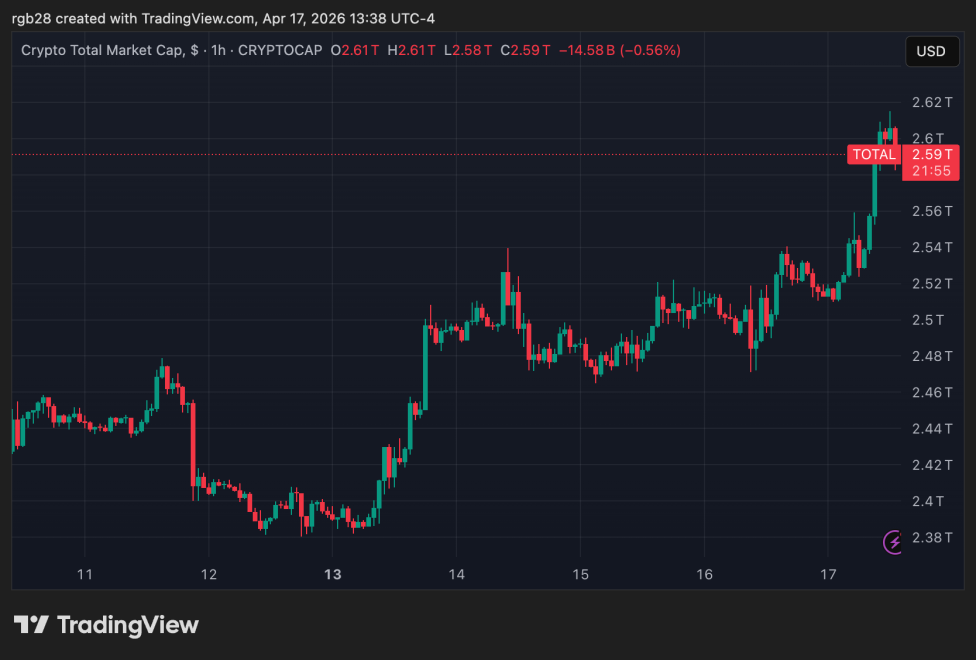
The total crypto market capitalization sits at $2.59 trillion on the one-week chart. Source: TOTAL on TradingView
Featured Image from NBC News, Chart from TradingView.com
Editorial Process for bitcoinist is centered on delivering thoroughly researched, accurate, and unbiased content. We uphold strict sourcing standards, and each page undergoes diligent review by our team of top technology experts and seasoned editors. This process ensures the integrity, relevance, and value of our content for our readers.
Confirmo, a stablecoin-first payment platform serving businesses globally, has officially received authorisation as a Payment Institution from the Central Bank of Ireland (CBI) under the Payment Services Regulations 2018 (PSR).
The new licence grants Confirmo’s Irish entity, Confirmo Limited, the regulatory permission to execute payment transactions, enabling the firm to process regulated stablecoin payments across Europe.
This latest regulatory approval builds directly upon the firm’s existing Markets in Crypto-Assets (MiCA) authorisation as a Crypto-Asset Service Provider, which was previously granted by the CBI in December 2025. By holding this dual regulatory authorisation, Confirmo has solidified its position as one of the most comprehensively licensed stablecoin payment providers currently operating in Europe.
Preparing for the MiCA deadline
Anna Štrébl, CEO of Confirmo Group
The dual authorisation comes at a critical juncture for the European crypto landscape. The transitional ‘grandfathering’ period under the MiCA regulation is set to officially expire on 1 July 2026.
After this looming deadline, any crypto payment providers operating without full regulatory authorisation will be legally required to cease all European operations. As a result, global businesses are currently under immense pressure to audit their existing payment infrastructure and ensure their chosen providers are fully compliant to avoid major operational disruptions.
Anna Štrébl, CEO of Confirmo Group, highlighted the significance of the upcoming regulatory shift.
“Confirmo has spent more than 12 years building crypto payment infrastructure, and our dual-authorisation by the Central Bank of Ireland marks the next chapter in that journey,” Štrébl stated. “We are now a fully regulated European platform purpose-built for enterprise-scale stablecoin payments.”
She added: “This comes at a key moment, as 1 July 2026 will separate the market into two groups: providers that are fully licensed and those that aren’t. The window for businesses to ensure their payment rails are fully compliant is narrowing fast, and we built Confirmo to be the partner that businesses can depend on when it matters most.”
A compliant European hub
The dual authorisations effectively establish Confirmo Limited as the fully regulated operational hub for the company’s entire European business. Crucially, under European Economic Area (EEA) passporting rules, the single authorisation from the CBI grants Confirmo the legal right to offer its crypto and payment services across all 27 EU member states.
Derek Corcoran, CEO of Confirmo Limited (Ireland), commended the CBI’s regulatory approach.
“We welcome the Central Bank of Ireland’s leadership in building a clear and robust regulatory framework for digital finance,” Corcoran said. “Stablecoins combine the relative stability of traditional currencies with the speed and security of blockchain networks – and as the MiCA compliance deadline approaches, having the right regulatory foundations in place is becoming increasingly critical.”
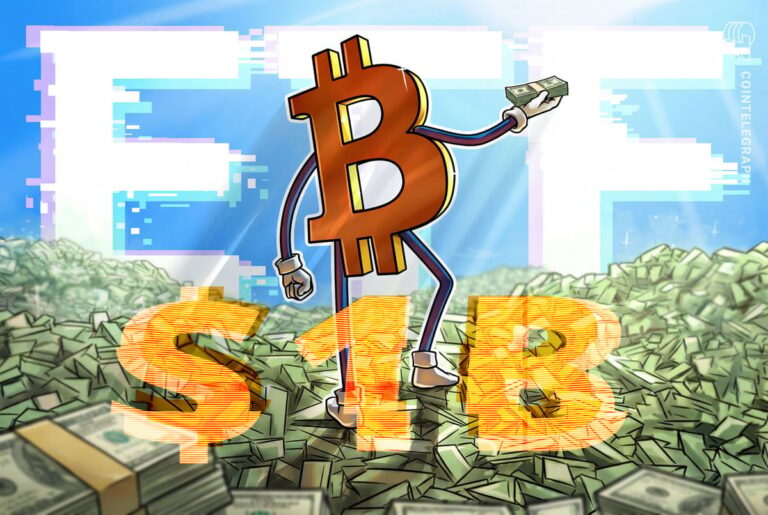
Spot Bitcoin exchange-traded funds (ETFs) recorded nearly $1 billion in net inflows over the past week, marking their strongest performance in more than three months as market sentiment shifts toward risk assets.
Data from SoSoValue shows that spot Bitcoin (BTC) ETFs attracted $996 muillion in total net inflows last week, the highest weekly intake since early January, when inflows reached about $1.4 billion.
Friday saw $663.9 million in inflows, the strongest single-day performance of the week. Earlier gains included $411.5 million on Tuesday and $186 million on Wednesday, followed by a more modest $26 million on Thursday. The period began with a $291 million outflow on Monday.
Spot Bitcoin ETFs see nearly $1 billion in weekly gains. Source: SoSoValue
Total net assets across spot Bitcoin ETFs climbed above $101 billion by Friday, alongside a sharp increase in trading activity, with daily volumes nearing $4.8 billion.
Related: Morgan Stanley’s Bitcoin fund overtakes WisdomTree after 6 trading days
Markets price in de-escalation
According to analysts at Bitunix, markets are increasingly pricing in how geopolitical tensions evolve rather than whether they persist. Signs of de-escalation, particularly around US–Iran relations, have reduced extreme risk scenarios, weakening demand for traditional safe havens like the US dollar, they said.
The analysts added that the Federal Reserve is still taking a cautious approach, and expectations for rate cuts remain limited. At the same time, concerns about US debt demand and high long-term yields are starting to weaken confidence in traditional “risk-free” assets. This has contributed to additional pressure on the dollar, further supporting flows into alternative assets, including Bitcoin.
“In crypto market structure, BTC is currently in a classic liquidity redistribution phase,” they wrote, adding that Bitcoin continues to trade in a defined range, with resistance above $75,000 and support forming near $72,000. “Liquidation heatmaps suggest the market is building a new equilibrium range rather than extending a directional trend,” they said.
Related: Three things Bitcoin must do to hold highs above $76K: Analysts
Bitcoin surges as Strait of Hormuz reopens
On Friday, Iran’s foreign minister announced that the Strait of Hormuz has been reopened to commercial shipping for the duration of the current ceasefire, a move quickly confirmed by US President Donald Trump. The decision eased immediate fears of supply disruption in one of the world’s most critical oil transit routes, triggering swift reactions across global markets.
Bitcoin surged above $77,000 following the news, while Brent crude fell roughly 10% to around $85 per barrel.
Magazine: Solana vs Ethereum ETFs, Facebook’s influence on Bitwise — Hunter Horsley
Cointelegraph is committed to independent, transparent journalism. This news article is produced in accordance with Cointelegraph’s Editorial Policy and aims to provide accurate and timely information. Readers are encouraged to verify information independently. Read our Editorial Policy https://cointelegraph.com/editorial-policy
Narrative-driven tokens are catching bids again as the broader memecoin sector attempts to recover from a bruising 2025.
The memecoin trenches are showing signs of renewed life this week, led by an unlikely catalyst, a Shiba Inu plush toy that once floated in zero gravity aboard a SpaceX spacecraft.
ASTEROID, an Ethereum-based memecoin named after the toy that flew on SpaceX’s Polaris Dawn mission in September 2024, surged more than 70,000% in 24 hours to a $28 million market cap on Friday. Trading volume spiked above $43 million, according to DexScreener data, with some early holders recording six-figure gains.
ASTEROID Chart
The rally was sparked by a viral post from Glenn Beck on X highlighting the story of Liv Perrotto, the 15-year-old cancer patient who designed the Asteroid plush. Perrotto, who passed away from cancer, had dreamed of meeting Elon Musk and had written a list of questions for him, including whether he would make Asteroid SpaceX’s official mascot. Her mother, Rebecca Perrotto, shared the story through Beck’s platform.
Musk replied to the post with “Will answer shortly,” and that response was all the memecoin market needed. Buying pressure flooded both the Ethereum and Solana versions of the token.
On-chain analyst Lookonchain flagged a wallet that spent 12 ETH (about $31,000) on ASTEROID back in September 2024 and held it for more than 580 days at near-zero value. After Musk’s engagement, that position swelled to roughly $292,000 in unrealized gains.
Arkham highlighted another wallet that is sitting on more than $400,000 in unrealized profits after spending 1 ETH ($2,400) on the token shortly after Musk’s response.
UNC Catches a Bid
ASTEROID is not the only micro-cap drawing attention. On Solana, the UNC memecoin surged above $21 million on Thursday with $15.3 million in trading volume, the highest on the chain that day.
The token, built around Gen Z “cool uncle” internet culture, caught fire after a trader known as fibonacki purchased 37.45% of UNC’s supply when its market cap sat at just $6,000. That trader then airdropped 33.85% of the total supply to over 2,000 on-chain addresses, including several well-known figures.
Broader Memecoin Sector Stirs
The micro-cap action comes as the broader memecoin sector attempts to stabilize after a punishing 2025, during which total memecoin market capitalization fell from $93.1 billion to roughly $36.5 billion.
Data from CoinGecko shows the sector currently sits near $39 billion, up 10% over the past 24 hours.
All of the top-10 memecoins by market cap, including DOGE, SHIB, PEPE, TRUMP, BONK, Pudgy Penguins (PENGU), and FLOKI, are green on the week as activity has picked up alongside the broader risk-on rotation earlier this week.
This article was written with the assistance of AI workflows. All our stories are curated, edited and fact-checked by a human.
April doesn’t just mark another month on the calendar. It signals the stretch where football turns electric. Stadiums fill faster, rivalries sharpen, and every match feels like it carries history on its shoulders. From the long road to the FIFA World Cup 2026 to the weekly drama of Europe’s elite clubs, this is where fans lean in and never look awa
The World Awaits: FIFA World Cup 2026
North America | Summer 2026
The countdown is no longer distant. It’s real, it’s loud, and it’s everywhere. The expanded 48-team format promises a tournament unlike anything we’ve seen before, stretching across the United States, Canada, and Mexico. Cities are already preparing for waves of supporters, and ticket conversations have quietly started, with early resale expectations beginning around $150 for group matches and climbing rapidly for knockout stages.
What makes 2026 special is scale. More teams. More stories. More underdogs ready to shake the script. The world is not just watching. It is preparing to travel, chant, and live every second.
Royal Nights: Real Madrid 2025–2026 Season
Spain
Few clubs carry expectation like Real Madrid. At the Santiago Bernabéu, every match feels like a final. Ticket prices for key fixtures typically start around $90, but for headline clashes, especially in Europe or against Barcelona, they surge well beyond $300.
This is the club of 14 Champions League titles. The home of eras defined by icons like Cristiano Ronaldo. Fans don’t just expect wins here. They expect dominance.
And then there’s El Clásico. The tension. The noise. The endless debate over who truly owns Spanish football. Every season writes a new chapter, and supporters around the world dissect every pass, every decision, every goal as if it changes history.
More Than a Club: FC Barcelona 2025–2026 Season
Spain
FC Barcelona is not just a football team. It is identity, philosophy, and pride woven into ninety minutes. Ticket prices for matches at Camp Nou redevelopment venues typically begin near $70, but high-stakes games easily triple that.
From the tiki-taka revolution to the magic of Lionel Messi, Barcelona has shaped how modern football is played. Now, a new generation carries that legacy, and fans are watching closely, hopeful for another golden era.
Online discussions are buzzing with one question: can Barça reclaim European glory? Or will their eternal rivals in Madrid continue to stand in the way?
Find your answer – grab your ticket now!
The Fighters: Atlético de Madrid 2025–2026 Season
Spain
If football had a heartbeat, it would sound like Atlético de Madrid on a big night. Ticket prices often start from $60, making them one of the most accessible ways to experience elite football in Spain.
Under the long-standing influence of Diego Simeone, Atlético has built a reputation on grit, discipline, and defiance. They are the team that refuses to bow to giants, the side that turns every match into a battle.
Their rivalry with Real Madrid carries a unique edge. It is not just about trophies. It is about identity. The underdog against the empire. And sometimes, the underdog bites back.
Bavarian Power: FC Bayern München 2025–2026 Season
Germany
Consistency at the highest level is rare. FC Bayern München makes it look routine. Bundesliga fixtures start from around $50, but European nights in Munich are a different story, often pushing well past $200.
Bayern is a machine built on excellence. From the dominance of Robert Lewandowski in recent years to a new wave of attacking talent, they remain one of Europe’s most feared sides.
Fans across Germany and beyond expect titles. Anything less feels like a shock. Yet in the Champions League, where giants collide, Bayern’s clashes with Spanish and English powerhouses continue to spark some of the most intense debates online.
Why This Season Feels Different
Across continents, there is a shared feeling that something special is building. Stadiums are fuller. Rivalries feel sharper. Younger stars are stepping into the spotlight while legends leave behind stories that still echo.
Fans aren’t just watching anymore. They are planning trips, securing tickets early, and marking calendars months in advance. From the road to the World Cup to the weekly drama in Madrid, Barcelona, and Munich, football right now feels alive in a way that is impossible to ignore.
If you have ever thought about experiencing it in person, this is the moment. The chants, the tension, the roar after a last-minute goal. It is not just a match. It is something you carry with you long after the final whistle.