A slight comedown into the Wall Street open meant that price continued to coil below a large area of resistance.
Mixed signals over the US-Iran war continued on the day, with Iran denying that its delegations had arrived in Pakistan for a new round of negotiations with the US. As Cointelegraph reported, markets offered only a muted reaction to the latest closure of the Strait of Hormuz oil route.
Among Bitcoin traders, a sense of cautious optimism was slowly growing.
“A period of consolidation, but clearly upwards pattern,” crypto trader Michaël van de Poppe wrote in an X post.
“This means that there’s likely more upside to come for Bitcoin towards the $85,000 area.”
Van de Poppe gave a time frame of “two to three weeks” for that level to come into focus, reiterating earlier comments about Bitcoin’s correlation with the Nasdaq.
BTC/USDT one-day chart. Source: Michaël van de Poppe/X
Others focused on ongoing negative funding rates on exchanges, despite price rising.
“We’ve never actually gotten one when the chart was grinding up. NEVER. It only occurred during the local BOTTOMS,” trader Osemka noted on X alongside charts showing past negative funding periods.
Osemka suggested that “something is brewing beneath” the surface, just as BTC/USD eyed a reclaim of lost support.
Responding, crypto market intelligence platform Decode agreed, seeing the potential for another short squeeze.
“What this tells you is that the market is heavily short and bearish, and Bitcoin is setting up for a short squeeze. The cannon is loaded, bulls just need to light the fuse…,” it told X followers.
CME gap thins with BTC up against resistance
Multiple lines in the sand for bulls lie immediately above the spot price.
Related: Bitcoin can grow ‘probably a lot bigger’ than $30T+ gold market — Analysis
These include the 21-week exponential moving average (EMA), true market mean, and average buy-in price for investors of the US spot Bitcoin exchange-traded funds (ETFs).
BTC/USD one-day chart with 21-week EMA. Source: Cointelegraph/TradingView
Trader Daan Crypto Trades observed that price had also filled the latest weekend “gap” in CME Group’s Bitcoin futures market.
“$BTC Closed a big part of the gap from this weekend but still not everything. Market still just following the headlines and no $STRC raises for now. So we will just patiently wait and see,” he commented.
This article is produced in accordance with Cointelegraph’s Editorial Policy and is intended for informational purposes only. It does not constitute investment advice or recommendations. All investments and trades carry risk; readers are encouraged to conduct independent research before making any decisions. Cointelegraph makes no guarantees regarding the accuracy or completeness of the information presented, including forward-looking statements, and will not be liable for any loss or damage arising from reliance on this content.
Bitcoin BTC$78,050.65 is breaking out of the Iran-headline chop.
The cryptocurrency topped $78,000 on Wednesday morning, up 2.2% over 24 hours and 4.3% on the week, after President Donald Trump said he would extend the Iran ceasefire indefinitely and Strategy disclosed the purchase of 34,164 BTC for $2.54 billion.
Ether rose 2.1% to $2,366, BNB climbed 1.3% to $640, and Solana gained 1.8% to $87. The only red in the top 10 was a trickle of 0.1% declines in stablecoins and Tron.
The S&P 500 futures rose 0.5% and Nasdaq 100 futures gained 0.6% after Trump’s extension, though the underlying benchmarks closed lower Tuesday as talks briefly wobbled. Brent crude hovered near $98 a barrel. The MSCI Asia Pacific Index slipped 0.7% as investors weighed how long the Middle East conflict runs.
Trump blamed negotiation collapses on what he called a “seriously fractured” leadership structure in Tehran, and said the U.S. would hold off on fresh attacks while keeping its Strait of Hormuz blockade in place.
Strategy’s buy is the largest bitcoin purchase by the company since November 2024. The 34,164 BTC acquisition at an average $74,395 per coin brings the firm’s holdings to 815,061 BTC, bought for $61.6 billion at an average cost basis of $75,527. With bitcoin at $77,541, the position is now modestly in profit for the first time in months.
Spot flows back the move. Global crypto funds pulled in $1.4 billion last week according to CoinShares, the strongest week of inflows since mid-January. Bitcoin took $1.12 billion, Ethereum $328 million, Chainlink $5 million, and Sui $2 million. XRP saw $56 million in outflows and Solana $2 million, despite both trading higher on price.
Two structural signals point the same direction. Bitcoin is now holding above the realized price of short-term holders at around $69,400 per analyst Darkfost, the level at which recent buyers are sitting on gains rather than losses, which historically reduces the odds of a cascade liquidation if sentiment reverses.
Separately, a Nomura survey found 65% of Japanese institutional investors now hold bitcoin for portfolio diversification, with 31% viewing the market outlook positively and most planning 2% to 5% allocations over the next three years.
Whether bitcoin can hold $77,000 through the European session depends on how markets price the ceasefire extension against continued Strait of Hormuz disruption.
A clean break above $80,000 would confirm the 46-day funding rate compression is flipping into a short squeeze. A reversal below $75,000 would mean the ceasefire extension is already priced in and the rally needs a fresh catalyst.
Chinese crypto billionaire Li Lin’s private trading empire will soon move into a Hong Kong-listed company he controls, in a move designed to cater to growing investor demand for digital assets.
That Hong Kong-listed firm is Bitfire, a wealth management company, where Li is the largest shareholder. Bitfire said Wednesday that it will pay $1.6 million to acquire a trading system and investment team from Li’s own family office Avenir Group, according to Reuters.
While structured as a purchase, the deal effectively transfers part of Li’s in-house crypto operation into a publicly listed vehicle, giving it a clearer path to attract institutional investors.
The timing reflects a broader shift in the region. Mainland China has banned crypto trading since 2021, but Hong Kong is positioning itself as a regulated hub for digital assets, drawing interest from firms looking for a compliant base. Hong Kong recently awarded stablecoin licenses to to HSBC and Standard Chartered.
By acquiring Avenir’s capabilities, Bitfire plans to roll out a bitcoin-focused strategy, “Alpha BTC,” targeting more than 10,000 bitcoins, worth about $760 million, in assets within a year.
The strategy will seek returns through derivatives trading, including options tied to bitcoin and products like the IBIT.
Avenir has built a significant position in bitcoin ETFs, holding 18.3 million shares of IBIT, issued by BlackRock, valued at about $908 million as of the end of 2025, as per the company’s regulatory filing.
Li founded Huobi, now known as HTX, and built it into one of the world’s largest crypto exchanges before selling a controlling stake to Justin Sun for about $1 billion in 2022. He has since focused on managing investments through Avenir.
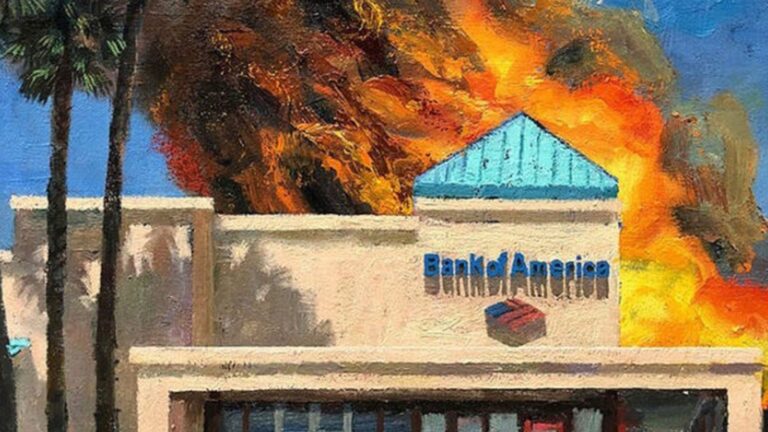
Revolutions leave behind artifacts. In the summer of 2011, a painter named Alex Schaefer set up an easel on a sidewalk in Van Nuys, California, and began painting the Chase Bank branch across the street. In his mind, the building was on fire — flames pouring from the windows, black smoke rising over the palm trees, the Chase logo still legible through the heat. He worked en plein air, the way the Impressionists had worked the Seine and the hay fields, except the subject was a branch of the largest bank in America three years after it had been bailed out with public money. A passerby called the police. When the artwork sold on eBay for $25,200 to a German collector, Schaefer did the only logical thing and painted more.
The artworks gathered in Relics of a Revolution at Bitcoin 2026 trace a lineage of dissent that connects street-level protest to the birth of Bitcoin itself — a Tokyo sidewalk in the snow with Kolin Burges, a Los Angeles overpass under wheat paste with Mear One, a botched police raid in Ohio answered with songs and a flag suit with Afroman. Schaefer’s Banks on Fire paintings belong to that same lineage, and they arrive with an art-historical pedigree that sharpens the point. Art critics have drawn the obvious line to Ed Ruscha’s Los Angeles County Museum on Fire (1965–68), the painting that put a cultural institution up in flames and hung it back on the museum’s own wall. Schaefer swapped the museum for the bank, the oil-crisis era for the bailout era, and took the painting out of the studio and onto the sidewalk in front of the building itself — a fact that earned him questioning by LAPD officers who wanted to know if he was a terrorist planning to follow through on his canvases. “Some might say the banks are the terrorists,” he told them. In July 2012 he was arrested outside a downtown Chase branch for chalking the word “Crooks” next to the logo, and spent twelve hours in jail on a misdemeanor vandalism charge.
Born in Los Angeles in 1969 and trained at ArtCenter College of Design in Pasadena, Schaefer spent eight years as a digital artist — including on the original Spyro the Dragon trilogy — before leaving the screen for the easel and returning to ArtCenter to teach the fundamentals of painting, drawing, and composition. Like Mear One, he spent years working out of downtown Los Angeles, a neighborhood that functioned as ground zero for a decade of American unrest — Occupy LA camped on the lawn of City Hall a few blocks from his studio, the 2012 chalk protests that swept across the country had one of their flashpoints outside a downtown Chase branch, and the area around 5th and San Julian stayed a visible stress test of every system the bailouts were supposed to have fixed.
The Banks on Fire series began in 2009, in the immediate wake of the financial collapse itself. “All the problems in America,” he has said, “to me seem to point to the same root problem. Which is: the money is bullshit.” The Bitcoin community found him quickly, and for obvious reasons. The Genesis Block’s embedded Times headline — “Chancellor on brink of second bailout for banks” — is the same diagnosis in text that Schaefer was making in oil, on the sidewalk, while the building still stood.
I sat down with Alex Schaefer ahead of his panel at Bitcoin 2026 to talk about plein air protest, the 2008 crash, the architecture of bailouts, and what it means to paint a building on fire while the building is still there.
BMAG: Alex, you started the Banks on Fire series in 2009 — not in a studio, but on the sidewalk, en plein air, in front of the actual buildings. For people encountering this work for the first time, can you set the scene? What was happening in the country when you first set up an easel across the street from a Chase branch, and what made the sidewalk the right place to paint it?
Alex: In 2009 I had been (and continue to enjoy) “plein air” painting which means working on location outdoors directly from life; it’s very much associated with the French Impressionists and it’s a very enjoyable thing to do. Since I was living in LA at the time, my favorite motif to paint was urban landscape and I was often set up with an easel and art supplies on the sidewalk so I was used to making art in public. Also in 2009 I was starting to really pay attention to financial news and began a learning process about it that continues to this day. At the time I slowly began to think that the 2008 FiNaNciAL cRiSiS!!1! and subsequent trillion dollar bailouts were not what we were made to believe. Add to this a friend telling me about a show called the Keiser Report. Now Max and Stacy, along with all sorts of news and information on YouTube, are educating me with wit and insight about what was exactly happening. I could only draw one conclusion: This was a crime spree and not only were the perpetrators getting away with it, they were getting paid. Outrageous. AntiAmerican, AntiCapitalist, Anti-Law and Order. A couple years later and duly radicalized, I was seeking a way to express my outrage. I was plein air painting a lot, especially with a friend who lived in Van Nuys. In his neighborhood I saw this Chase Bank that used to be a Washington Mutual that used to be a Home Savings and Loan and it was this beautiful Millard Sheets designed mid-century modern building. That was the eye chocolate falling into the peanut butter of my mind: I am going to paint en plein air this Chase bank like the roof is on fire. One day later I took the following photo:
BMAG: There’s an art-historical line that keeps getting drawn between your work and Ed Ruscha’s Los Angeles County Museum on Fire — a painting that set a cultural institution alight and then hung back on the walls of the institution itself. You swapped the museum for the bank, the oil-crisis era for the bailout era, and took the work out of the studio and onto the sidewalk. When you look at that lineage, do you see yourself as extending a conversation Ruscha started, or diagnosing something he couldn’t have seen yet in the 1960s — the specific rot of a financial system that now runs the culture that used to run it? Is it Deja Vu all over again with the current Middle East situation?
Alex: I think something that the two paintings share is they were born out of a sense of outrage. But different in that one is about financial terrorism and the other about lack of institutional representation for artists. Ruscha painted his piece from 1965 to 1968, which interestingly was when the French were putting tremendous pressure on the US dollar by swapping their paper dollars for actual gold, which at the time was an incredible bargain in a rigged market. Everyone was feeling the inflation, I’m sure even Ed Ruscha, from stupid foreign and domestic policy government spending, the French knew why (Vietnam), and a couple years later Nixon closed the gold window, letting loose wanton money creation on a scale never imagined. Ironically this turned out to be a benefit for the “Capital A” Art Market via the CIA flooding contemporary American Art auction houses with cash promoting this idea of American Exceptionalism; i.e., not only did America beat you commies to the Moon, our art is better too (read: more expensive). 1973 was the famous Bob Scull auction of his contemporary art collection that broke all price records at the time. The game was on.
BMAG: The LAPD questioned you as a possible terror suspect while you were painting, and in 2012 you were arrested for chalking the word “Crooks” next to a Chase logo — twelve hours in jail on a misdemeanor vandalism charge. Mear was censored and nearly cancelled. Kolin was told by Mt. Gox that if he kept protesting everyone would lose their bitcoin. Afroman had seven deputies with assault rifles kick in his door. What did being treated as a threat by the state teach you about the artwork itself — and about what the institutions you were painting were actually afraid of?
Alex: The powers that be, the institutions, want the public to be mad at each other. Picture those hierarchy pyramid illustrations and on one level is “The Public” and above them on the pyramid are layers like Police, the Justice System, Politicians, C-Suite Executives, Banks, Central Banks, Satan etc. Every layer above The Public over centuries has created ways to exert power over Us, for all sorts of reasons but mainly because they are afraid of Us directing the sum of all our anger at the aforementioned upper layers. They use their favorite trick and divide The Public into different factions with each side getting their own custom grievances and scapegoats. Then the mainstream media does its job of winding people up on both sides and voila: anger and outrage side to side and Us toward each other, but none of that directed above. As soon as someone in The Public layer starts calling out an injustice in an upper layer, troubles will come to them. Everyone you mentioned, Mear, Kolin, Afroman, 1st Amendment auditors, tax protestors etc., all know this. My experience with this ongoing Burning Banks series has taught me many things over the years about art, the art world, the financial world, Truth, Justice, the American Way etc. Great things, scary things, profound things… But the first thing it taught me is the power of spectacle and that when the spirit moves you powerfully to do something, even though it might seem a little weird or scary you gotta go with it.
BMAG: You’ve said, plainly, that “the money is bullshit” — that all the disconnected problems in America point back to the same root. How did you arrive at that diagnosis, and when you first encountered bitcoin, did it feel like confirmation of something you’d already been painting, or like a different kind of answer to the same question?
Alex: I think I would more accurately say that “fiat” money aka currency aka the federal reserve note, is bullshit. Fiat currency was invented centuries ago to wage war and the US PetroDollar is no different. Endless war, wars of aggression, the War on drugs, the War on cancer… you name it there’s a war going on either for or against it and at the end of the day it’s all funded by the Federal Reserve. Every terrible idea put forth by our so-called leaders gets funded. It’s true: “The love of money is the root of all evil’ but in the case of the US Dollar, it’s actually the money itself not just the love of it. The way that it’s created out of thin air and the implications of that fundamentally shows nothing but utter disregard and disrespect for the value of human life and human labor. Despite that, civilization needs “money”. Good money that is. The social construct that is money is older than capitalism, it’s frankly as old as society itself and is the means for complex and specialized societies to form, grow and flourish. For millennia that function was fulfilled by gold and silver, they possess the classical qualities of Sound Money in that they are scarce, fungible, transportable, divisible, durable, a unit of measurement and medium for exchange. Once you accept this as a fact, then you learn about bitcoin, it slowly then suddenly dawns on a person that it is the greatest form that the concept of Money has ever taken. And then you start to really think that if we can fix the money, we truly can fix the world! Defund Evil!
BMAG: This exhibition is called Relics of a Revolution, and it puts your work in conversation with Kolin’s Mt. Gox protest sign, Mear’s Occupy-era murals and wheatpaste protest posters, and Afroman’s flag suit — alongside an original copy of The Times from January 3, 2009, the newspaper Satoshi encoded into the Genesis Block. The dollar bill works you’re showing here take a different route to the same thesis. What do you want someone walking through this exhibition to take away — especially someone who knows bitcoin as a price ticker but has never thought of it as the continuation of a fight that artists, cypherpunks, and protestors have been in for decades?
Alex: Honestly, as with all my paintings, I want people to be visually struck by something first and foremost… Whether it’s the paint surface, the color, the contrast, the effect of light, the imagery, just be interesting to the eyes first, then the mind. I find the low resolution pixelated quality of the Devaluation series pieces to be fascinating to look at. There is an interesting interplay happening between the eye and mind of the viewer; the painting is complete but it is also “completed” in the viewer’s mind. The viewer gives more to the image by way of their imagination than is actually visually imparted by the painting itself. “Am I seeing what I think I’m seeing?” Then one might question the subject matter and how it’s depicted with the concept of Devaluation. At what point can the painting become so pixelated that you can’t even make it out for what it is anymore? Just like at what point can the Dollar become so watered down and extended and pretended that it entirely loses its “Tinkerbell Effect” and ceases to perform it’s crucial function around the World. We may find out.
This is Part IV of the Relics of a Revolution interview series accompanying the Relics of a Revolution exhibition. Part I features Kolin Burges, Part II Mear One, Part III Afroman.
Fix the money. Fix the world.
Clean and minimal: Schaefer will exhibit artwork on view at Bitcoin 2026, April 27–29, at The Venetian Resort, Las Vegas, and will appear on a speaking panel moderated by Dennis Koch titled “Looking at Bitcoin Art Through a Protest Lens” alongside Kolin Burges and Mear One. Bid on Schaefer’s work HERE.
The Bitcoin Museum & Art Gallery (BMAG) is the curatorial and cultural programming division of BTC Inc and the Bitcoin Conference. Since 2019, the BMAG conference art gallery has facilitated more than 120 BTC in art and collectible sales. Learn more about BMAG at museum.b.tc. Follow BMAG on twitter @BMAG_HQ.
Bundle your Bitcoin 2026 pass with a stay at The Venetian and get your fourth night free. Use code AFTERS for a free After Hours Pass, or get your pass alone here.
At InsurTech NY, Jeff Barsalou from QuickFacts explains how the company is helping brokers and agents manage the growing complexity of underwriting data.
Barsalou says one of the biggest challenges in the industry is that information is scattered across multiple systems and portals, making it difficult for brokers to stay up to date. Carrier appetite, coverage details, and underwriting criteria are constantly changing, and with the added pace introduced by AI, that change is happening even faster.
According to Barsalou, this creates a situation where brokers struggle to keep up.
QuickFacts aims to solve this by bringing all of that information together into one place.
Barsalou explains that the platform helps brokers quickly understand which carriers are suitable for a particular risk, reducing the need to search through multiple systems or rely on outdated information. This allows them to spend less time gathering data and more time focusing on advising their clients.
He adds that this shift is important because the role of the broker should be centred around providing guidance and recommendations, rather than managing administrative tasks.
Barsalou also highlights the role InsurTech NY has played in QuickFacts’ growth.
As a company that has worked closely with the organisation, he says the network has helped open doors in the U.S. market, particularly for Canadian companies looking to expand. The event itself provides access to a wide range of stakeholders, from carriers and brokers to startups and technology providers, all in one place.
Looking at broader industry trends, Barsalou points to the impact of AI.
He says the real opportunity lies in unlocking the potential of brokers and agents, allowing them to focus on high-value work while automation handles repetitive tasks. In his view, AI should be used to reduce time spent searching and compiling information, enabling more meaningful interactions with clients.
Overall, Barsalou’s message is focused on efficiency and clarity.
By simplifying access to underwriting data, brokers can operate more effectively and deliver better outcomes for their customers.
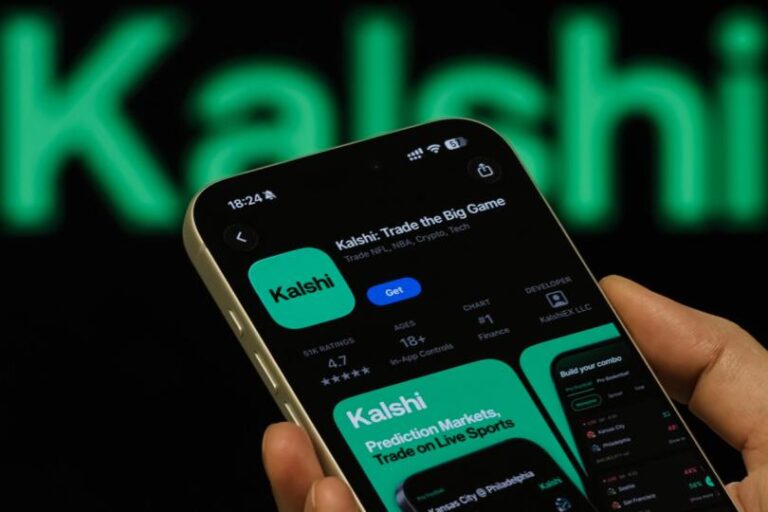
Prediction markets platform Kalshi is preparing to launch crypto trading in the U.S., according to a report from The Information, expanding beyond its core prediction markets business as competition intensifies across both sectors.
The platform plans to start by offering perpetual futures tied to crypto tokens such as bitcoin BTC$77,623.20, people familiar with the matter told the publication.
Perpetual futures are a type of derivatives contract that allow traders to bet on the price of an asset without owning it and without a fixed expiration date. Unlike traditional futures, which settle at a set time, perpetuals can be held indefinitely as long as traders maintain sufficient collateral. Prices are kept aligned with the underlying asset through funding payments between long and short positions, making them a core product on many offshore crypto exchanges.
Kalshi’s move would place it in more direct competition with crypto platforms such as Coinbase (COIN), which has been expanding its own derivatives and prediction market offerings. Coinbase does not yet offer true perpetual futures in the U.S., though it has introduced “perpetual-style” futures contracts with long-dated expirations and has signaled interest in bringing more advanced derivatives products onshore. Other exchanges are moving in a similar direction, underscoring a broader push to capture demand that has historically flowed to offshore venues.
Kalshi’s expansion comes as regulatory conditions in the U.S. begin to shift, opening the door for products that have largely traded outside the country. The company already holds multiple licenses from the Commodity Futures Trading Commission (CFTC) and recently secured approval to offer margin trading, positioning it to enter the derivatives market.
The firm is expected to begin with crypto-linked perpetuals but could extend the model to other asset classes over time, one of the people said.
Kalshi competitor Polymarket, on Tuesday, also announced plans to offer perpetual futures on its platform in a post on X, without providing additional details.
The move reflects growing overlap between prediction markets and crypto trading platforms, which are increasingly competing for the same users. Several major crypto exchanges, including Coinbase, Crypto.com and Gemini, have introduced prediction market products, while crypto trading volumes have declined in recent months following a market downturn.
At the same time, activity in prediction markets has surged, drawing both user engagement and investor capital. That convergence is pushing platforms like Kalshi to broaden their offerings as they compete for a shared base of traders.
UPDATE (April 21, 18:54 UTC): Added paragraph about Polymarket announcing it will offer perpetual futures.
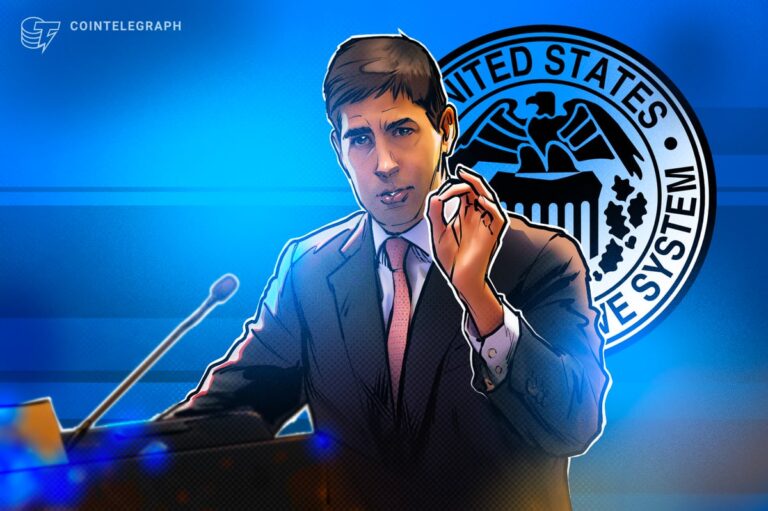
The nominee to lead the US Federal Reserve, Kevin Warsh, on Tuesday faced criticism and backlash from Democrats questioning his financial disclosures and potential conflicts of interest.
Heading into today’s Senate Banking Committee confirmation hearing, it was clear that the independence of the Fed remains a key issue for many lawmakers concerned about US President Donald Trump’s influence over any Senate-confirmed candidate.
With Jerome Powell’s term as the US Federal Reserve Chair set to expire next month, lawmakers are scrambling replace the long-serving official.
Under questioning from Massachusetts Senator Elizabeth Warren, the committee’s ranking member who repeatedly referred to Warsh as a “sock puppet” for the president’s policies, the prospective Fed chair sidestepped answering whether Trump lost the 2020 US election and identifying any issue on which the two disagree.
Warren said confirming Warsh could result in the Fed “granting special accounts to [the Trump family’s] crypto company or bailouts to his friends on Wall Street if they get into trouble” and create “more opportunities for Trump’s corruption.”
Warsh faced similar questions from Rhode Island Senator Jack Reed and other Democrats on his position on lowering interest rates — an action Trump has repeatedly called for and signaled his pick would push if confirmed.
“The president never once asked me to commit to any particular interest rate decision, period, and nor would I ever agree to do so if he had, but he never did,” said Warsh in response to a question from Republican Senator John Kennedy.
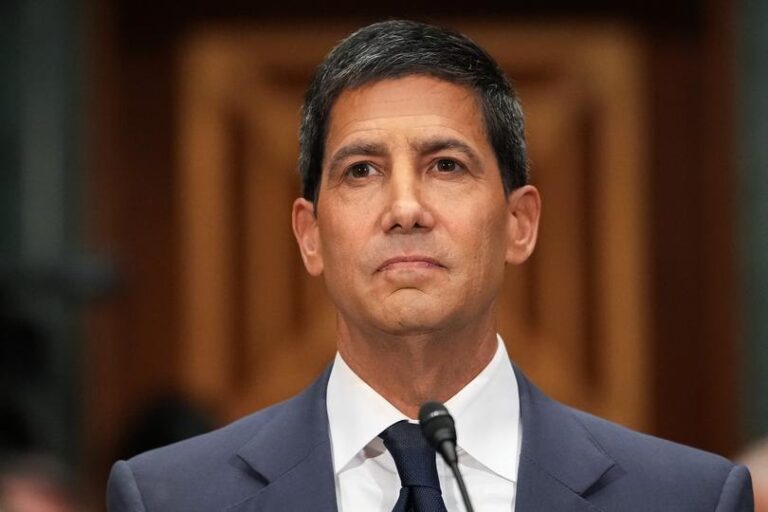
Kevin Warsh speaking at a Tuesday hearing. Source: Senate Banking Committee
Related: US senator urges delay of CLARITY Act Senate markup until May: Report
The nominee faced at least one direct question on crypto from Wyoming Senator Cynthia Lummis, responding that digital assets were “part of the fabric of our financial services industry in the United States.”
Warsh has pledged to divest from his financial holdings, which include investments in crypto and AI companies, before taking the oath of office if confirmed. The potential conflicts of interest, coupled with Trump’s repeated attempts to oust Powell before his term expires, have many questioning whether any Fed chair picked by the president could remain independent.
“While we want the Fed to be independent, we also recognize that there has to be collaboration between the administration, Congress and the Fed,” said Committee Chair Tim Scott in a Tuesday CNBC interview. “The independence is in making sure they do their job as it relates to the dual mandate.”
Prediction market users don’t anticipate a new Fed chair anytime soon
Powell’s term as chairman is set to end on May 15, giving lawmakers a matter of weeks to confirm Warsh or another Fed chair. He may be allowed to serve in a temporary capacity until his successor’s Senate confirmation, and will remain a member of the Fed’s Board of Governors until 2028.
The likelihood of a delay in Warsh’s confirmation is fueling an active event contract on prediction markets platform Polymarket, where many users are betting that the Senate may not act to confirm him until June. Some 37% of the positions gave took a chance he would be confirmed by May 15, while 78% are betting it won’t happen before June 30.
Active event contract on Kevin Warsh’s confirmation date. Source: Polymarket
Magazine: Will the CLARITY Act be good — or bad — for DeFi?
Cointelegraph is committed to independent, transparent journalism. This news article is produced in accordance with Cointelegraph’s Editorial Policy and aims to provide accurate and timely information. Readers are encouraged to verify information independently. Read our Editorial Policy https://cointelegraph.com/editorial-policy
Trusted Editorial content, reviewed by leading industry experts and seasoned editors. Ad Disclosure
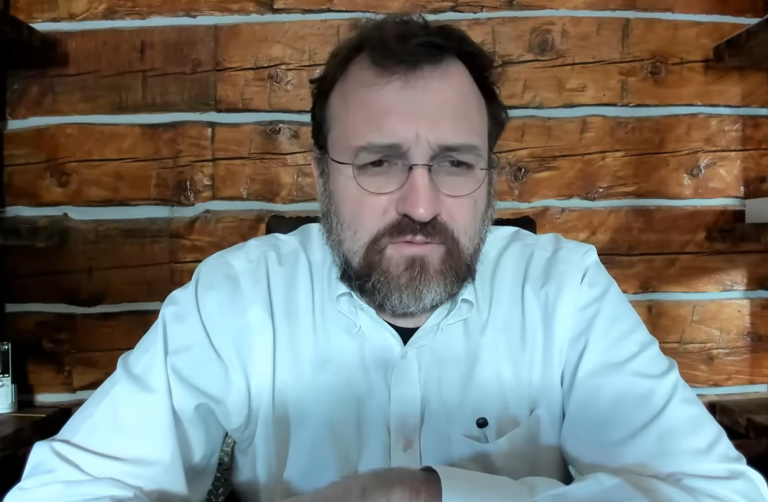
Cardano founder Charles Hoskinson used his latest livestream to argue that the roughly $292 million KelpDAO exploit was not just another bridge failure, but a broader warning about how Ethereum’s restaking, cross-chain messaging, and lending stack can turn a single compromise into system-wide contagion.
In Hoskinson’s telling, the April 18 attack exposed what he sees as the most fragile part of modern DeFi: not necessarily application-level smart contracts, but the verification layers and interdependencies that sit between protocols. He said the exploit, which involved about 116,500 rsETH drained from KelpDAO’s Ethereum escrow, should force a wider industry conversation about bridge trust assumptions, verifier design, and the speed at which bad collateral can spread through lending markets.
Cardano Founder Warns Of Dangerous Flaw At The Heart Of Ethereum DeFi
Rather than deliver a standard postmortem, Hoskinson said he took internal incident-report material and used AI to turn it into a website that walked viewers through the mechanics of the exploit. That structure framed his larger point: the failure, as he described it, did not begin with broken contract math inside KelpDAO itself, nor with an obvious accounting flaw at LayerZero. Instead, he said it centered on a forged cross-chain message that was accepted as legitimate and allowed funds to be released on Ethereum.
“So, this was not a smart contract issue with Kelp and this was not a smart contract issue with LayerZero, but this was a cross-chain message forgery,” Hoskinson said. “So this was something new and different.”
The Cardano founder repeatedly returned to one design choice in particular: the reported use of a one-of-one verifier configuration. In his explanation, best practice would be a multi-verifier model such as three-of-five, but KelpDAO’s setup relied on a single active DVN. That, he argued, created an unacceptable single point of failure in a system already layered with staking wrappers, restaking protocols, bridges, and lending venues.
“The failure was in the verification logic, not the application logic,” he said. “Kelp did everything right from their contracts. They’re audited. They’re working well. The application’s working well. It’s the bridge configuration.” Hoskinson also emphasized that the industry still lacks a settled account of exactly where responsibility lies.
According to his summary, three separate root-cause analyses emerged after the exploit: one from LayerZero, one from KelpDAO, and one tied to LlamaRisk and Aave governance discussions but none fully agree. That leaves open whether the break occurred in the messaging layer, verifier setup, KelpDAO’s acceptance logic, or in the seams between them.
What made the event especially significant, in his view, was not only the theft itself but what happened next. Instead of dumping the stolen rsETH on decentralized exchanges, the attacker allegedly used it as collateral in lending markets to borrow more liquid assets. That turned an exploit into a balance-sheet problem for other protocols, leaving what Hoskinson described as poisoned collateral behind.
He called that dynamic the real novelty of the incident. “It wasn’t just a bridge hack. It spread to lending which then created bad debt contagion inside these lending protocols. It created a bank run and we saw $13 billion of TVL pulled in a very short period of time for a $290 million hack.”
The Cardano founder said the broader DeFi liquidity shock reached far beyond KelpDAO itself. Citing public reporting referenced in his walkthrough, he pointed to at least nine directly affected protocols and said Aave alone saw between $6.6 billion and $8.45 billion in losses, while rsETH traded in a volatile range between about $1,600 and $2,500 during the 24 hours following the attack.
He also raised the possibility of Lazarus involvement, though he acknowledged attribution remains unconfirmed. “There’s a lot of evidence here that there’s Lazarus connections,” he said, before adding that no independent forensics firms had definitively proven it.
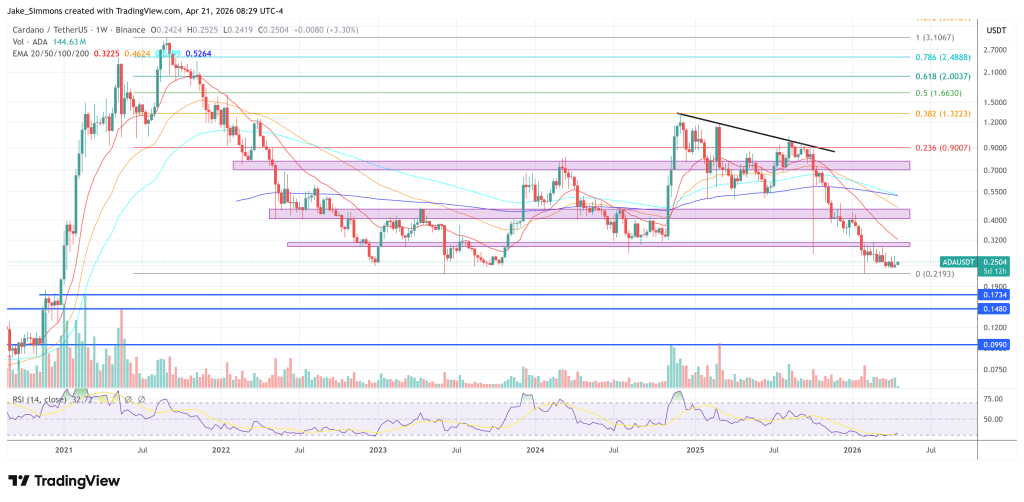
Featured image created with DALL.E, chart from TradingView.com
Editorial Process for bitcoinist is centered on delivering thoroughly researched, accurate, and unbiased content. We uphold strict sourcing standards, and each page undergoes diligent review by our team of top technology experts and seasoned editors. This process ensures the integrity, relevance, and value of our content for our readers.
Crypto and crypto markets pulled back Tuesday amid Federal Reserve chair nominee Kevin Warsh’s confirmation hearing and concerns around stalling Iran peace talks, weighing on markets.
Speaking before the Senate Banking Committee, Warsh emphasized the Federal Reserve’s independence, pushing back on speculation about political pressure on rate decisions.
Meanwhile, uncertainty around negotiations between Iranian and U.S. officials rose as the Wednesday ceasefire deadline approached and reports emerged that Vice President JD Vance’s trip to Pakistan for peace talks had been halted.
The U.S. government also implemented a set of sanctions targeting 14 individuals, entities, and aircraft for their alleged “involvement in procuring or transporting weapons or weapons components for the Iranian regime.”
Trading just below $77,000 earlier in the session, BTC slipped to near $75,000 during the U.S. session before bouncing back to $75,700, some 0.9% lower over the past 24 hours.
Bitcoin daily price (CoinDesk)
The Nasdaq and S&P 500 both gave up early morning gains and were 0.1%-0.2% lower in the afternoon session.
Crypto-related stocks declined more. Exchange Coinbase (COIN) dropped more than 6%, while Robinhood (HOOD), a retail brokerage with significant crypto trading exposure, fell 4.5% during the session. Galaxy (GLXY), a digital asset investment firm, slid 5.5%, while stablecoin issuer Circle (CRCL) plunged 8.3%.
Fed independence
During the Senate Banking Committee hearing, Fed chair nominee Warsh addressed questions on rate policy and policy independence from Trump’s pressure to lower rates.
“I never said to the President where I think rates should be… and I wouldn’t have even thought about doing so,” Warsh said.
“The President never asked me to predetermine, commit, fix, decide on any interest rate decision in any of our discussions, nor would I ever agree to do so,” he said. “[Trump] never once asked me to commit to any particular interest rate decision period, and nor would I ever agree to do so.”
However, Trump has repeatedly called publicly for lower interest rates, putting pressure on current Fed Chair Jerome Powell and raising concerns about the central bank’s independence.
The president even said on Tuesday during a CNBC interview that he would be disappointed if Warsh doesn’t cut rates right away.
Warsh also struck a constructive tone on crypto, saying digital assets are “already part of the fabric of our financial services industry.”
While Warsh’s remarks suggested that he felt less urgency to cut rates, he would likely still favor lower rates as chairman, according to Matt Mena, senior crypto research strategist at asset manager 21shares.
“While [Warsh] maintains a reputation for fiscal discipline, he has spent years arguing that the central bank’s reliance on lagging data has kept rates unnecessarily high, stifling growth and creating market volatility,” Mena said in a note.
He added that Warsh’s appointment could also prove positive for crypto policy, noting he would be the first Fed chair with deep ties to the digital asset industry. Warsh has invested in dozens of crypto and decentralized finance (DeFi) projects and views bitcoin as “the new gold for people under 40,” he added.
Looking towards the second half of 2026, Mena argued that a more proactive easing stance could create a “high-liquidity environment” that has historically supported risk assets like bitcoin, potentially pushing prices back toward $100,000.
A major decentralized finance (DeFi) hack could prompt Wall Street firms to reassess the pace of their blockchain and tokenization efforts, a Jefferies analyst wrote in a report.
The note follows a $293 million exploit of Kelp DAO on April 18, in which attackers minted unbacked tokens and used them as collateral to borrow other assets across lending platforms.
The incident, potentially linked to North Korea’s Lazarus Group, has already rippled through crypto markets, triggering sharp token sell-offs and a liquidity crunch in key protocols.
Jefferies analyst Andrew Moss said the fallout may extend beyond crypto-native firms to traditional financial institutions, which have been accelerating efforts to tokenize assets such as funds, bonds and deposits.
“TradFi tokenization initiatives are proliferating as institutional investment accelerates,” Moss wrote. However, the exploit and its “cascading implications” could “temporarily slow TradFi adoption as security risks are re-evaluated.”
The attack exposed vulnerabilities in blockchain “bridges,” which enable the transfer of assets between networks. In this case, the hackers exploited a verification setup that relied on a single validator, raising concerns about single points of failure in systems meant to be decentralized.
For banks and asset managers, these risks matter. Many tokenization efforts depend on cross-chain infrastructure to move assets and maintain liquidity across platforms. Without secure bridges, Moss warned, markets could become fragmented, limiting the usefulness of tokenized assets.
‘Nascent’ industry
The immediate impact has been severe inside DeFi.
Lending platform Aave AAVE$92.51 was left with roughly $200 million in bad debt, while total value locked dropped by about $9 billion as users withdrew funds. Liquidity in key markets has tightened, with some pools frozen or near full utilization, raising the risk of forced liquidations.
Aave TVL (DeFiLlama/CoinDesk)
While Moss does not expect the incident to spill into traditional financial markets, it said the loss of trust could weigh on adoption in the near term. Firms may pause or slow deployments as they review vulnerabilities and rethink system design.
At the same time, the longer-term outlook remains intact.
Regulatory progress and infrastructure improvements continue to support institutional interest. Stablecoins, in particular, are expected to play a growing role in payments, with use cases expanding from trading into areas such as cross-border transfers and payroll.
Still, the report highlights a key challenge: as Wall Street moves deeper into crypto, it must rely on infrastructure that is still maturing.
“The nascent digital asset industry still requires time to mature,” Moss said, pointing to the need for more robust systems before tokenization can scale safely.
Read more: ‘DeFi is dead’: crypto community scrambles after this year’s biggest hack exposes contagion risk