Home Blog Page 443

Russia’s Sberbank Ready To Enter Crypto Trading As Russia Moves Toward Regulation

0

Sberbank will provide access to crypto trading once regulation and organized exchange trading begin, Senior Vice President and Head of Wealth Management Ruslan Vesterovsky said at the Moscow Exchange forum, according to Russia’s TASS.

The Bank of Russia maintains a view of cryptocurrencies as a high-risk instrument under its policy framework.

In December 2025, the Bank of Russia published a concept for domestic cryptocurrency regulation that allows qualified and non-qualified investors to buy crypto assets. The concept defines digital currencies and stablecoins as currency assets permitted for sale and purchase, while domestic payments with them remain prohibited.

Under the proposal, non-qualified investors may access the most liquid cryptocurrencies after passing a test and within an annual limit of 300,000 rubles through a single intermediary.

Sberbank stated it will be prepared to provide clients access once regulation is enacted and exchange trading starts, in coordination with other market participants and regulators.

In 2025, Sberbank expanded digital financial asset issuance to 408 billion rubles, a level that exceeds 2024 output by a wide margin and reflects strong growth from 2023.

The bank issued a pilot crypto-backed loan to Intelion Data in December 2025, secured by mined bitcoin, and used a proprietary custody system for collateral storage. 

Authorities expect completion of legislation governing digital assets by July 1, 2026.

Russia’s crypto legislation bill

Earlier today, Russia’s State Duma advanced a sweeping crypto regulation bill in its first reading, with 327 of 340 deputies voting in favor. The proposed law, introduced by the government of Russia, establishes a comprehensive framework for issuing, trading, and storing digital currencies under licensed intermediaries supervised by the Bank of Russia.

It classifies cryptocurrency as property—allowing its use in legal disputes—while maintaining a ban on domestic payments but permitting cross-border transactions. 

The bill also introduces investor tiers, stricter controls on peer-to-peer activity, and a regulated custody system, alongside requirements for mining operations to use domestic infrastructure. 

Lawmakers still need to pass two additional readings, with some officials calling for revisions over concerns about market restrictions and asset protections.

Editorial Disclaimer: We leverage AI as part of our editorial workflow, including to support research, image generation, and quality assurance processes. All content is directed, reviewed, and approved by our editorial team, who are accountable for accuracy and integrity. AI-generated images use only tools trained on properly license material. In Bitcoin, as in media: Don’t trust. Verify.
Banks seek to slow down implementation of crypto’s GENIUS Act on stablecoin oversight

0

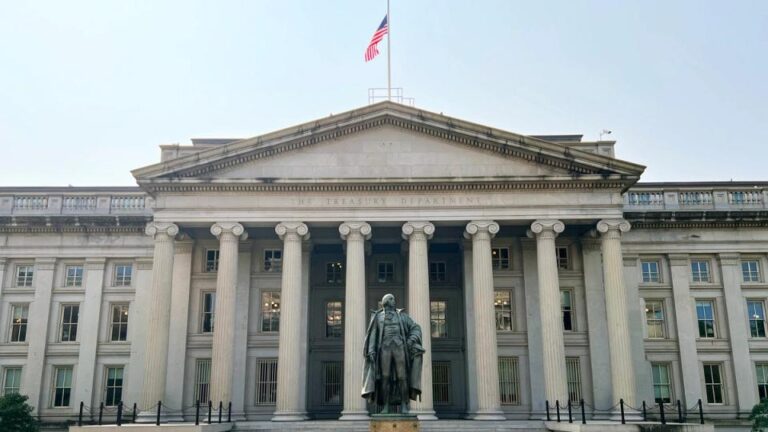
The crypto industry is frequently finding bankers involved in its top-priority regulatory efforts, and this time, a coalition of bank trade associations has asked the U.S. Department of the Treasury to extend the window in which the public can weigh in on implementation of last year’s Guiding and Establishing National Innovation for U.S. Stablecoins (GENIUS) Act.

In a letter sent this week to the Treasury Department and the Federal Deposit Insurance Corp., bankers in the U.S. are asking that three different GENIUS Act rule proposals get extended comment periods, at least 60 days after another rule effort (at the Office of the Comptroller of the Currency) is finished. The OCC’s push to implement its rule for policing stablecoin issuers is meaningful to the outcome of other rules being pursued at the Treasury’s Office of Foreign Assets Control (OFAC) and the Financial Crimes Enforcement Network (FinCEN), plus a related rulemaking at the FDIC.

All the efforts are “directly contingent on the OCC’s final framework,” the bankers contend. The collective efforts, in addition to regulatory proposals that haven’t yet emerged from the Federal Reserve and other agencies, “represent a body of regulatory work of extraordinary scope and complexity.”

The banking organizations, including the American Bankers Association and the Bank Policy Institute, said that their comments “will necessarily be more comprehensive, and therefore more useful to the agencies, if we have sufficient time to evaluate the proposed rules together and to evaluate each against the finalized OCC framework.”

The GENIUS Act is meant to be in place by 2027, though it’s not unusual for federal agencies to grant extensions of comment periods on complex rules. The Treasury Department didn’t immediately respond to a request for comment on the bank industry’s request.

The same bankers are also embroiled in a stablecoin-related debate with the crypto industry that’s so far managed to delay the Digital Asset Market Clarity Act for months, and potentially jeopardize its potential for becoming law this year.

Read More: U.S. Treasury proposes demands that stablecoin firms be set to police bad transactions

ClearBank Europe Secures First Dutch MiCAR Notification to Offer Digital Assets

0

ClearBank Europe has officially become the first Dutch credit institution to complete a notification under the EU Markets in Crypto-Assets Regulation (MiCAR).

The bank has received confirmation from the Dutch Authority for the Financial Markets (AFM) to legally operate as a Crypto Asset Service Provider (CASP). This critical regulatory milestone enables the bank to begin offering digital asset services, marking its formal entry into digital currency infrastructure as part of its broader, group-wide digital assets strategy.

Rolling out stablecoin services
Tristan Kirchner, CEO at ClearBank Europe

Operating as a licensed CASP, ClearBank Europe announced it will roll out Circle’s Mint platform directly to its clients. This integration will provide clients with access to stablecoins, including Euro Coin (EURC) and USD Coin (USDC)—stable digital currencies explicitly pegged to the Euro and the US Dollar, respectively.

This new capability will enable clients across Europe to convert seamlessly between traditional fiat currencies and digital assets within a secure, regulated banking environment. According to the bank, establishing this direct link between traditional payment systems and blockchain-based networks will ultimately support faster and more efficient cross-border transactions and settlement across the continent.

Tristan Kirchner, CEO of ClearBank Europe, emphasized the operational significance of the milestone.

“Becoming a crypto-asset service provider under MiCAR enables us to bring digital asset capabilities into a regulated clearing environment for the first time, putting us at the forefront of this new era of digital clearing,” Kirchner stated. “This is a significant step forward for both ClearBank Europe and our clients, as digital assets become an increasingly important layer of payments infrastructure.”

He added: “By providing access to stablecoins such as EURC and USDC, we are enabling new ways to move money across borders with greater speed, reduced cost and increased efficiency. As digital assets become more embedded in financial infrastructure, we are excited to play a leading role in that transition as we continue to innovate to meet evolving client needs.”

A broader digital assets strategy

The European launch represents the bank’s first major step in delivering digital clearing capabilities, which will progress in different markets in line with local regulatory frameworks.

The development reflects ClearBank’s overarching focus on digital asset innovation—both by integrating related activities within regulated banking environments and by actively enabling digital asset firms to access traditional financial services.

Separately, in the UK market, ClearBank recently announced a deepened partnership with cryptocurrency exchange Coinbase. That specific initiative was designed to support a savings account offering via the exchange, ensuring eligible customer cash benefits from Financial Services Compensation Scheme (FSCS) protection.

UK FCA raids eight illegal peer-to-peer trading hubs

0

The U.K.’s Financial Conduct Authority (FCA) has carried out its first coordinated crackdown on illegal peer-to-peer crypto trading, targeting eight locations across London in a joint operation with His Majesty’s Revenue & Customs (HMRC) and the South West Regional Organised Crime Unit (SWROCU).

Officials issued cease-and-desist notices at each site and gathered evidence that is now feeding into several criminal investigations, according to the FCA.

The FCA stated that the sites were suspected of facilitating peer-to-peer (P2P) crypto trading, where individuals buy and sell crypto directly with one another, without the required registration or anti-money laundering controls.

Under U.K. law, anyone operating as a crypto exchange provider must register with the FCA. The regulator confirmed there are currently no registered peer-to-peer crypto traders or platforms in the country.

“Unregistered peer-to-peer crypto traders operating in the U.K. are doing so illegally and pose a financial crime risk,” said Steve Smart, the FCA’s executive director of enforcement and market oversight.

Law enforcement agencies framed the operation as part of efforts to cut off routes used to move illicit funds. DI Ross Flay of SWROCU said unregistered traders can enable criminals to “move, disguise and spend illegal money.”

The action builds on earlier enforcement steps. The FCA has prosecuted operators of illegal crypto ATMs for several years and worked with police to arrest individuals linked to an unregistered crypto exchange in 2024.

Last year, it also took action against offshore platform HTX over unlawful financial promotions and expanded oversight of social media figures promoting high-risk crypto products.

The crackdown comes as the UK prepares to roll out a broader regulatory regime for crypto by October 2027, with a licensing window expected to open in September 2026. The current framework focuses mainly on anti-money laundering compliance and financial promotions.

The FCA urged consumers to check whether firms are registered using its online register. It also warned that users dealing with unregistered P2P traders lack access to the Financial Ombudsman Service or compensation schemes and may face risks if transactions involve stolen funds.

Bitget Opens IPO Prime for Subscription, Unlocking Pre-IPO to the Masses

0

Bitget, the world’s largest Universal Exchange (UEX), opened subscription for IPO Prime, marking the next phase of its pre-IPO access platform as users begin participating in its first offering, preSPAX.

The subscription window runs from April 18, 2026, 06:00 to April 21, 2026, 06:00 (UTC), followed by token distribution between April 21, 2026, 06:00 and 10:00 (UTC). Spot trading for preSPAX will commence at 12:00 (UTC) on April 21, enabling continuous market participation immediately after allocation.

IPO Prime is designed to provide structured access to pre-IPO opportunities through tokenized instruments that reflect the economic performance of underlying companies after listing. The first asset, preSPAX, is linked to SpaceX, offering users exposure to one of the most closely followed private companies globally.

Participation is conducted through a subscription-based model, where users commit capital in stablecoins and receive proportional allocations based on total demand. This replaces fixed allocation models with a transparent mechanism that adjusts dynamically to participation levels.

What distinguishes IPO Prime is the integration of early access with immediate liquidity. Once distribution is completed, preSPAX becomes tradable in a spot market, allowing users to enter, exit, or adjust positions ahead of a public listing event. This structure introduces continuous price discovery at a stage where traditional pre-IPO investments are typically locked.

“Early access has always been limited, but it’s not just about getting in early,” said Gracy Chen, CEO of Bitget. “It’s also about what you can do after that. Giving users the ability to act and adjust in real time changes how these opportunities are approached.”

Assets listed on IPO Prime are issued through our compliant partner, Republic, and are designed to track economic outcomes rather than represent direct equity ownership. This framework enables broader participation while maintaining a structured approach to exposure.

Within Bitget’s Universal Exchange model, IPO Prime reflects a broader shift in how trading environments are being designed. As users increasingly look to manage capital across multiple asset classes and stages of the market cycle, the ability to access early-stage opportunities alongside liquid markets within a single system is becoming more relevant. By extending its infrastructure to support both participation and trading in one place, Bitget continues to evolve UEX as a more complete environment for navigating global markets.

For more information, visit here.

About Bitget

Bitget is the world’s largestUniversal Exchange (UEX), serving over 125 million users and offering access to over 2M crypto tokens, 100+ tokenized stocks, ETFs, commodities, FX, and precious metals such as gold. The ecosystem is committed to helping users trade smarter with its AI agent, which co-pilots trade execution. Bitget is driving crypto adoption through strategic partnerships with LALIGA andMotoGP™. Aligned with its global impact strategy, Bitget has joined hands withUNICEF to support blockchain education for 1.1 million people by 2027. Bitget currently leads in the tokenized TradFi market, providing the industry’s lowest fees and highest liquidity across 150 regions worldwide.

Risk Warning: Digital asset prices are subject to fluctuation and may experience significant volatility. Investors are advised to only allocate funds they can afford to lose. The value of any investment may be impacted, and there is a possibility that financial objectives may not be met, nor the principal investment recovered. Independent financial advice should always be sought, and personal financial experience and standing carefully considered. Past performance is not a reliable indicator of future results. Bitget accepts no liability for any potential losses incurred. Nothing contained herein should be construed as financial advice. For further information, please refer to our Terms of Use.

Source: Bitget

The article “Bitget Opens IPO Prime for Subscription, Unlocking Pre-IPO to the Masses” was first published on AlexaBlockchain. Read the complete article here: https://alexablockchain.com/bitget-opens-ipo-prime-for-subscription/

Submit Your Blockchain and Crypto Press Release here.

Disclaimer: This is a press release, provided by the company/ company representative. AlexaBlockchain does not endorse, guarantee, or accept responsibility for the content, accuracy, quality, advertising, products, or other materials presented in this publication. Readers are advised to conduct their own due diligence before taking any actions related to the company mentioned herein. AlexaBlockchain expressly disclaims any liability for damages or losses, whether direct or indirect, arising from or related to the use of or reliance on any content, goods, or services referenced in this press release.

Image Credits: Bitget, Shutterstock, Canva, Wiki Commons

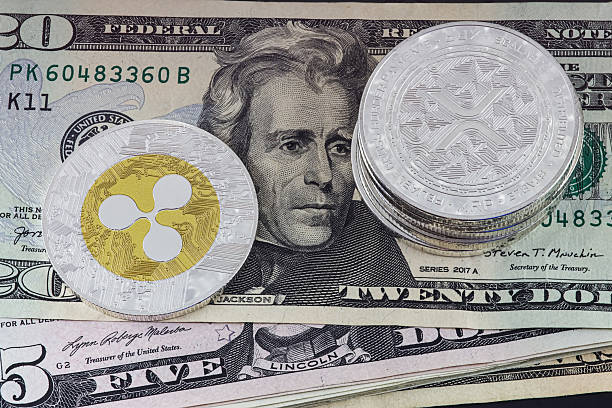
Pundit Shows How XRP’s Performance Has Outpaced Hedge Funds

0

Trusted Editorial content, reviewed by leading industry experts and seasoned editors. Ad Disclosure

Crypto pundit Vandell has highlighted how XRP has outperformed hedge funds since its launch despite criticism of its price appreciation. The pundit also declared that the altcoin is bound to increase over time, regardless of its utility. 

How XRP Has Outperformed Hedge Funds

In an X post, Vandell noted that XRP rose from its 2014 bottom of roughly $0.0028 to an all-time high (ATH) of $3.64 in 2025, representing roughly a 129,900% return. Additionally, the altcoin rose from a low of $0.11 in 2020 to the $3.64 high in 2025, marking a return of around 33x in just five years. 

The pundit stated that XRP has made the world’s top hedge funds look like “savings accounts,” having outperformed since its launch. He added that the bigger move for the altcoin is yet to come, suggesting the token could see astronomical gains. Vandell declared that utility and adoption are just “icing on the cake” for the token, creating more demand. 

He affirmed that the altcoin will appreciate regardless of utility as long as the money supply increases over time. Meanwhile, other pundits like X Finance Bull have highlighted that the passage of the CLARITY Act could serve as a catalyst for massive growth in XRP. Vandell also signaled that the crypto bill will boost it, with trillions of dollars flowing into the crypto industry. 

This came as he noted that trillions of deployable institutional capital remain constrained by regulatory clarity and macro conditions before meaningfully allocating to crypto. He added that the scale of inflows will be ‘historic’ once clarity improves and macro conditions align. On the macro side, there are currently inflation concerns, especially as the Iran war continues to drive oil prices higher. 

On Whether It Can Reach $1,000

In another X post, Vandell said that XRP can reach $1,000 overtime as long as the uptrend remains intact. He acknowledged that such a rally could take several years, or even decades, to reach this level. The pundit added that supply and demand will be key to determining when it can reach this level.

He noted that XRP has a limited supply, while the token has continued to see a sustained demand. Vandell explained that fiat debasement has contributed to this demand, while retail and institutional investors are also accumulating the token based on the token’s utility. The pundit concluded that it will likely continue to rise as long as it remains relevant in the crypto space and sustains this demand. As such, he believes market participants should be looking to position for this price surge rather than fixating on when exactly it will happen. 

At the time of writing, the XRP price is trading at around $1.44, up in the last 24 hours, according to data from CoinMarketCap.

XRP
XRP trading at $1.45 on the 1D chart | Source: XRPUSDT on Tradingview.com

Featured image from Getty Images, chart from Tradingview.com

Editorial Process for bitcoinist is centered on delivering thoroughly researched, accurate, and unbiased content. We uphold strict sourcing standards, and each page undergoes diligent review by our team of top technology experts and seasoned editors. This process ensures the integrity, relevance, and value of our content for our readers.

Aave Deposits Drop by $15B Following Kelp DAO Exploit

0

Aave, the largest decentralized lending protocol, has seen around $15 billion in deposits withdrawn since the Kelp Dao exploit on Saturday. 

Total value supplied to Aave fell from $45.8 billion on Saturday to $30.8 billion on Wednesday, according to Aavescan data.

The decline followed an attack that drained about 116,500 restaked Ether (rsETH), worth roughly $293 million, from Kelp DAO’s LayerZero-powered rsETH bridge. The exploiter then used part of the stolen funds to borrow on Aave.

Aave’s incident report said 89,567 rsETH were deposited on the protocol and that the resulting shortfall could range from about $123 million to $230 million, depending on how losses are ultimately allocated.

The outflows reflect fears of contagion from Aave’s bad debt and broader capital flight from decentralized finance (DeFi), according to institutional digital asset trading platform Talos.

The bad debt created by the Kelp exploiter resulted in Aave’s v3 Wrapped Ether (WETH) market temporarily reaching 100% utilization and leaving no liquidity available for immediate withdrawals, Talos said in a Tuesday report.

Total amount supplied in Aave, 3-month chart. Source: Aavescan

SparkLend’s total value locked (TVL) rose by $1.3 billion since the Kelp DAO exploit, signaling that the fourth-largest lending protocol was absorbing some of the funds withdrawn from Aave, blockchain analyst EmberCN said in a Wednesday post on X.

Related: Crypto hackers stole $17B over past 10 years: DefiLlama

Kelp exploit spreads through DeFi lending

The episode highlights how DeFi’s interconnectedness is a double-edged sword, as the Kelp DAO exploit spread across lending markets and escalated into a “broader liquidity crunch,” Tanay Ved, senior research associate at Talos, told Cointelegraph.

She said the asset bundled risks across restaking, bridging and lending layers, allowing the impact to spread far beyond the initial exploit, adding that the incident reinforces the need for a more robust collateral framework and a more holistic security approach to address the systemic vulnerabilities of yield-bearing assets.

Aave v3 Market Utilization Rate percentage across USDC, USDT, WETH, USDe. Source: Talos

Aave said it had unfrozen WETH reserves on the Ethereum Core V3 market on Tuesday, enabling users to supply WETH to the V3 lending protocol, but WETH reserves across Ethereum Prime, Arbitrum, Base, Mantle and Linea remain frozen.

Related: Kelp DAO attacker moves $175M in Ether after exploit: Arkham

Traders bet Kelp DAO won’t socialize losses

On Monday, Aave’s risk manager outlined two potential scenarios for addressing the bad debt. The first scenario involves spreading the losses across all rsETH token holders on Ethereum mainnet and layer-2s, leaving about $123 million in bad debt on Aave.

The alternative would shift the shortfall entirely to layer-2 networks, resulting in about $230 million in bad debt on Aave.

Traders took to prediction markets to bet on the outcome, with 20% of traders wagering on Kelp DAO socializing the losses across rsETH holders on mainnet, rather than L2 holders bearing the shortfall, Polymarket data shows.

Magazine: 53 DeFi projects infiltrated, 50M NEO tokens could be ‘given back’: Asia Express