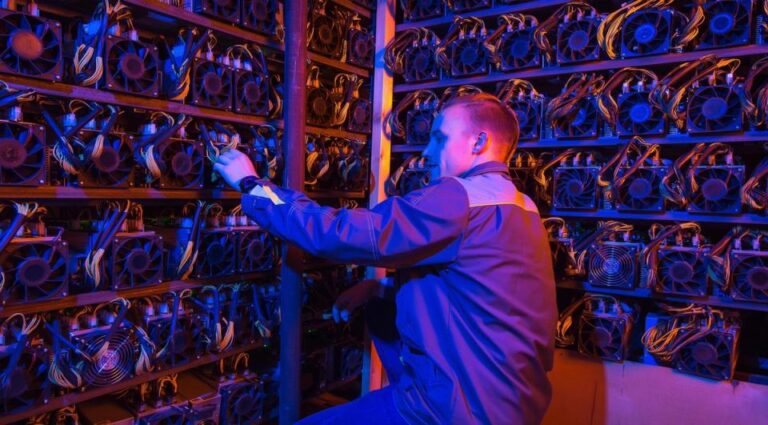
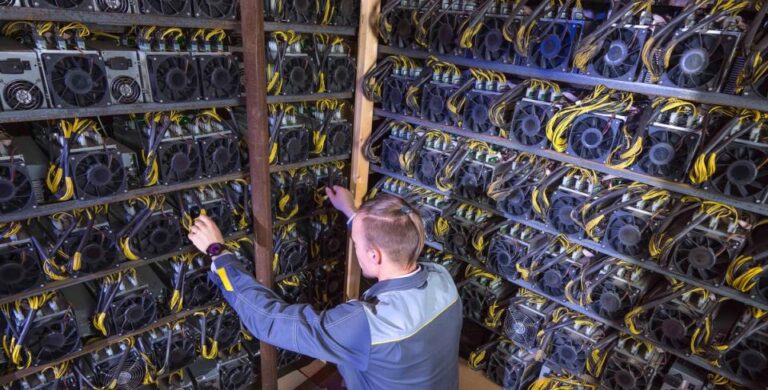
Mining firms HIVE Digital (HIVE) and Keel Infrastructure (KEEL) are doubling down on artificial intelligence (AI) infrastructure, which continues the theme of a broader shift across the sector away from bitcoin BTC$78,430.94 mining exclusively.
HIVE raised $115 million through a zero interest convertible note offering, with proceeds earmarked for expanding its global data center footprint and GPU capacity, according to an announcement on Wednesday.
The company has increasingly leaned into Tier III data centers across Canada, Sweden and Paraguay, positioning them for both bitcoin mining, AI and high-performance computing (HPC) workloads. The capital raise, paired with capped call protection to limit dilution, is aimed at accelerating that buildout.
Keel, meanwhile, is funding its transition by shrinking. The company completed the sale of its 70 MW Paraguay site for roughly $13 million, below initial expectations, citing deteriorating bitcoin mining economics. The move finalizes its exit from Latin America and follows its recent rebrand from Bitfarms to Keel Infrastructure.
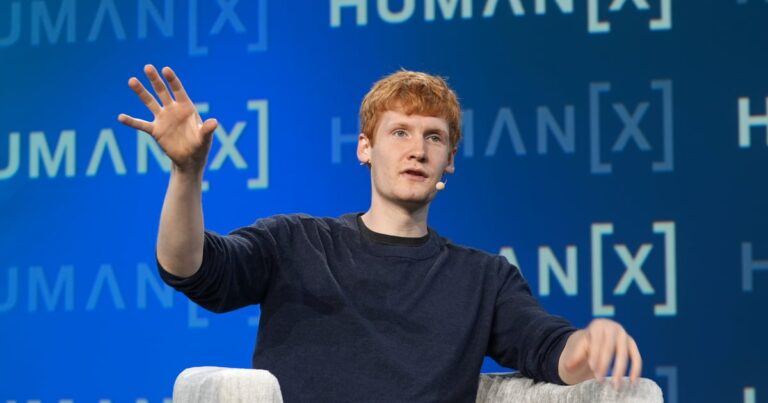
“This is a clean exit from Latin America,” CEO Ben Gagnon said. “We are focused and committed to building the infrastructure backbone to support the AI economy in North America.”
Gagnon added that the proceeds effectively bring forward “two to three years” of expected cash flow, which will now be redeployed into Keel’s HPC and AI pipeline.
Shares of both companies have risen roughly 7%, following the announcements.
Unveiled at Diligent’s Annual Conference, the new data highlights expanding risk responsibilities and persistent gaps in AI, governance, and board insight
Diligent Institute, the corporate governance research arm and think tank of Diligent, today released findings from its General Counsel (GC) Risk Index, revealing that senior legal leaders are operating in a persistently high-risk environment, rating overall organizational risk 7 out of 10. Two-thirds (67%) of GCs report spending more time on enterprise-wide risk and compliance than a year ago, as they are pulled deeper into enterprise oversight on top of traditional legal duties. The findings were unveiled at Elevate 2026, Diligent’s premier GRC conference.
Two-thirds (67%) of GCs report spending more time on enterprise-wide risk and compliance than a year ago, as they are pulled deeper into enterprise oversight on top of traditional legal duties.Share
“While AI is seen as a lever for efficiency, 48% of General Counsels say the impact hasn’t fully materialized yet,” says Dottie Schindlinger, Executive Director of the Diligent Institute. “As legal leaders take on broader enterprise risk responsibilities, fragmented systems and unclear ownership are becoming real blockers. If boards and senior management teams want decision‑ready insight, organizations must invest in integrated risk data, defined accountability across functions, and AI tools that are built for governance, not just efficiency.”
Risk remains elevated as GC responsibilities expand
GCs see an increasingly complex and interconnected risk landscape, driven by geopolitical conflicts (52%), regulatory changes (48%), AI-related risks (39%), cyber threats (39%), and supply chain disruptions (33%). Geopolitical conflicts, in particular, have risen to the top concern, up from third in October 2025.
As a result, nearly half of legal leaders devote up to 40% of their workload to enterprise-wide risk and compliance, while another quarter spend up to 60% of their time on these responsibilities, often in addition to traditional legal duties.
AI efficiency gains are real, but adoption remains inconsistent
Only 52% of respondents report significant or measurable efficiency improvements from AI tools in the last six months, while 48% say they have seen no meaningful improvement.
Those not seeing gains cite a lack of embedded tools, unclear KPIs, insufficient governance frameworks or tailored training, and ongoing concerns about security, cost and fit for purpose solutions.
Among those seeing results, AI is often credited with accelerating first-level legal work, contract review, document-heavy tasks, and research and administrative processes, leading to faster turnaround times and reduced external counsel spend.
Low confidence in board risk reporting
79% of GCs lack confidence that current board reporting strikes the right balance between clarity and overload.
As AI tools move into the boardroom, respondents identify key risks to manage, including data confidentiality and security, accuracy issues, overreliance on AI‑generated outputs, and lack of director familiarity with AI.
GRC systems lag rising expectations
Only 19% of respondents say their organization’s governance, risk and compliance (GRC) systems are fully integrated, while 65% describe them as only somewhat integrated, and 16% report no integration at all.
“Since launching the GC Risk Index in 2025, risk levels have risen and remain persistently high,” says Kira Ciccarelli, Senior Manager of Research at Diligent Institute. “General Counsels are being pulled to manage the front lines of increasingly complex risk, yet many are still operating without the tools and support needed to respond effectively.”
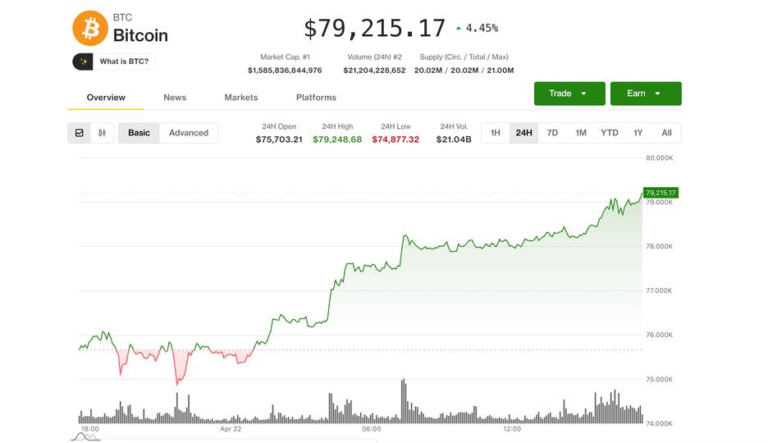
Bitcoin BTC$78,404.59 climbed above $79,000 on Wednesday, hitting its strongest level since early February as a long-awaited breakout attempt gathered momentum.
The largest crypto rose 4.5% over the past 24 hours, leading major altcoins ether (ETH), BNB BNB$638.36, Solana (SOL) and XRP higher. The broad-market CoinDesk 20 Index advanced 3.5%.
Crypto-linked stocks also rose. Strategy (MSTR), the largest corporate BTC holder, jumped 10% while stablecoin issuer Circle Internet (CRCL) gained 9% and crypto exchange Coinbase (COIN) rose 6%. Bitcoin miners MARA Holdings (MARA) and Riot Platforms (RIOT) added 6%-7%.
The broader macro backdrop also turned supportive. The S&P 500 rose 0.9%, and the Nasdaq added 1.3% to record highs, extending the risk-on environment.
The gains followed U.S. President Donald Trump’s remark late Tuesday that he would extend the Iran ceasefire while maintaining a naval blockade of the Strait of Hormuz. Still, uncertainty around peace talks remains.
“BTC’s near-term direction remains highly dependent on macro and geopolitical developments,” said Paul Howard, a senior director at Wincent. He pointed to $72,000 as key support, with upside potentially could be capped near $80,000 range as traders take profits.
Bitcoin short squeeze potential
While macro risks are still in place, derivatives positioning could fuel the rally higher.
Perpetual swap traders remain heavily skewed bearish, with seven-day funding rates at near three-year lows, noted Vetle Lunde, head of research at K33 Research. At the same time, open interest continues to trend higher, suggesting fresh leverage is entering the market.
BTC price and average perp funding rates (K33)
“Rising leverage alongside deeply negative funding suggests shorts are steadily building in perps, increasing both the likelihood and potential magnitude of a short squeeze,” he wrote.
“We continue to see strong breakout potential for BTC, with concentrated shorts providing ample fuel for a move higher,” Lunde added.
The $80,000 area, however, carries additional weight for bitcoin. It aligns with the short-term holder realized price — a measure of the average cost basis for newer market participants, who tend to be more sensitive to volatility and more likely to sell into strength.
For now, BTC is testing that hurdle. A clean move above it could signal stronger conviction behind the rally, but failing to hold could invite renewed selling pressure and profit-taking from shorter-term holders.
Trusted Editorial content, reviewed by leading industry experts and seasoned editors. Ad Disclosure
Shiba Inu (SHIB) is seeing renewed momentum as its Open Interest (OI) has surged more than 20% in a single day, surpassing both Bitcoin (BTC) and XRP. The meme coin appears to bestaging a recovery as trading volume continues to ramp up and price experiences short rebounds. Despite itsprolonged choppy action, the recent rise in Open Interest underscores a shift in sentiment, indicating that traders are beginning to move back into SHIB.
Shiba Inu Open Interest Surpasses BTC And XRP
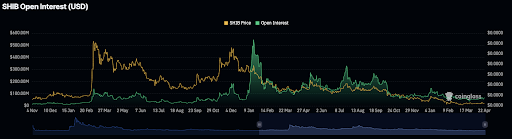
Shiba Inu has recorded a sharp increase in derivatives market activity afterits Open Interest surged by more than 20% on April 21. CoinGlass datashows that the metric climbed from approximately $56.27 million the previous day, reflecting a notable jump in trader participation and speculative positioning around the meme coin.
The latest spike in Open Interest reflects a growing concentration of capital flowing into SHIB futures contracts, signaling heightened engagement among derivatives traders despite market volatility. This shift also indicates that market participants are increasingly opening new positions in SHIB futures, rather than closing existing ones.
Source: Chart from CoinGlass on X
Notably, Shiba Inu’s Open Interest has now surpassed levels seen in major blue-chip assets such as Bitcoin and XRP during the same period. This surge suggests that traders may be shifting their focus away from larger cryptocurrencies to SHIB, highlightingrenewed interest in meme coins.
Importantly, Shiba Inu’s Open Interest closed around $61.1 million on April 21, indicating a more than 10% reversal from its earlier 20% surge. At the time of writing, the metric has increased again to $68.78 million, reflecting a more than 12.5% surge from the previous day. As Open Interest continues to rise,SHIB’s trading volume is also up by more than 95%, currently sitting at $205.78 million.
SHIB’s Open Interest Surges As Price Increases
Shiba Inu is not only seeing a rise in its Open Interest but also in its price. Over the past week, the meme coin has rebounded by more than 6%, and in the last 24 hours, it is up by over 2.5%, according to CoinMarketCap data. Usually, when a cryptocurrency’s price climbs alongside a surge in Open Interest, market data typically points tostrengthening bullish momentum supported by increased leverage.
This combination suggests that new capital is actively entering the market, with traders possibly positioning for further upside through long contracts. As more traders open long positions, the short-term uptrend continues due to increased buying pressure.
While this can be bullish and potentially supporta future price reversal under favorable conditions, the same setup also carries risks. If too many traders are all betting on prices going up at the same time, the market becomes overcrowded. When this happens, even the smallestdecline in price can trigger liquidations, forcing traders to close their positions and increasing the chance of a deeper pullback.
SHIB trading at $0.0000062 on the 1D chart | Source: SHIBUSDT on Tradingview.com
Featured image from Adobe Stock, chart from Tradingview.com
Editorial Process for bitcoinist is centered on delivering thoroughly researched, accurate, and unbiased content. We uphold strict sourcing standards, and each page undergoes diligent review by our team of top technology experts and seasoned editors. This process ensures the integrity, relevance, and value of our content for our readers.
Strategy’s (MSTR) perpetual preferred stock, STRC, is now one week past its April 15 ex-dividend date. With bitcoin BTC$78,294.85 now at $79,000 this marks the first time in six months that BTC has risen in the week following the payout event.
At the time of the ex-dividend date, bitcoin was around $75,000, highlighting continued strength in BTC despite the typical post dividend adjustment in STRC. STRC over the past few months has served as an aggressive funding instrument for the company’s bitcoin purchases.
Like most dividend paying securities, STRC declines on its ex-dividend date by approximately the value of the payout, since new buyers are no longer entitled to receive it.
Following that drop, the shares tend to recover gradually, often taking about two weeks to move back toward their $100 par value. STRC is currently trading at $99.47.
This recovery is important because once the stock returns to par, Strategy the largest publicly traded company holding bitcoin, can utilize its at the market (ATM) program, issuing new shares at and use the proceeds to buy additional bitcoin.
Strategy shares are more than 9% higher on Wednesday at $178 at the time of writing, with the company likely tapping its common stock ATM program to fund additional bitcoin purchases.
Strategy disclosed the third largest bitcoin purchase ever of 34,164 BTC, while the price initially stayed within its $75,000 range.
However, the bitcoin rally appears driven in part by positioning. Perpetual futures funding rates remain negative, meaning short sellers are paying long positions to hold their trades, a signal that bearish sentiment still dominates.
As prices rise in that environment, shorts are forced to close positions, creating a short squeeze that accelerates gains.
At the same time, a persistent Coinbase premium, where bitcoin trades slightly higher on the U.S. exchange than offshore platforms, points to steady spot demand.
At InsurTech NY, Chris Johnson from EarthDaily explains how the company is helping insurers better understand risk in a rapidly changing climate.
Johnson says one of the biggest challenges facing insurance companies today is making sense of data and analytics, particularly when it comes to environmental risks such as wildfire and flooding. Many insurers still assess risk at a broad regional level, which can lead to entire areas being labelled as uninsurable.
EarthDaily takes a different approach.
Johnson explains that the platform provides highly granular, property-level insights, allowing MGAs and excess and surplus insurers to assess risk much more precisely. This enables them to identify properties that may have been overlooked or incorrectly categorised, opening up new opportunities to insure risks that others might avoid.
He adds that this level of detail is becoming increasingly important as climate conditions change more quickly.
To support this, EarthDaily has launched a constellation of satellites, giving the company the ability to capture daily images of the Earth at high resolution. Johnson explains that this allows insurers to monitor changes on the ground in near real time, helping them respond more effectively to evolving risks.
For Johnson, the pace of climate change presents a clear challenge for the industry.
He believes insurers are aware of the issue, but often lack the tools needed to track and manage it effectively. By improving visibility and providing more timely data, EarthDaily aims to close that gap.
Johnson also notes that InsurTech NY provides an opportunity to stay close to innovation across the sector. He says the event helps the company understand new developments, including emerging AI models, while also building partnerships with carriers and other organisations that can benefit from its technology.
Overall, Johnson’s view is that better data leads to better decisions.
By giving insurers a clearer picture of what is happening on the ground, they can manage risk more accurately and expand coverage in areas that were previously considered too uncertain.
American Bitcoin (ABTC), a publicly traded mining company co-founded by United States President Donald Trump’s sons, has completed its energization of 11,298 application-specific integrated circuits (ASICs) at its Drumheller site in Alberta, Canada.
Following the acquisition of machines, the company now owns about 89,242 ASICs, the computers used to mine Bitcoin (BTC) and other proof-of-work (PoW) cryptocurrencies, according to the company’s announcement on Wednesday.
ABTC’s mining fleet now generates a total of about 28.1 exahashes per second (EH/s) of computing power, operating at an “average efficiency” of 16 joules per terahash, the company said.
Shares of ABTC surged by about 11.7% on Wednesday, rising to about $1.38 per share, according to data from Yahoo Finance.
ABTC’s share price surged following the announcement. Source: Yahoo Finance
The announcement followed a tough business quarter for the company, which posted a loss of $59.5 million in the fourth quarter of 2025, as the mining industry grapples with multiple economic challenges that are chipping away at revenue.
Related: Aluminum giant Alcoa to sell dormant smelter to Bitcoin miner NYDIG: Report
ABTC struggles amid challenging business environment for miners
Mining companies are grappling with reduced block rewards since the April 2024 halving, rising energy costs, and declining crypto prices from the ongoing crypto bear market.
The price of BTC declined by over 50%, reaching a low of about $60,000 in February, when ABTC filed its Q4 results with the United States Securities and Exchange Commission (SEC).
ABTC attributed its Q4 losses to a $227.1 million decline in the fair value of its BTC holdings as a result of the crash, but said it was able to “mine BTC at a 53% discount” to prices on the spot market.
American Bitcoin’s total reserve holdings of Bitcoin and Satoshis, the smallest unit of BTC, per share. Source: Company filing
Public BTC mining companies sold more BTC in the first three months of 2026 than all of 2025.
Mining companies MARA, CleanSpark, Riot, Cango, Core Scientific and Bitdeer collectively sold about 32,000 BTC in Q1, according to TheEnergyMag.
Sales in the period topped the previous record of 20,000 BTC sold by public mining companies during Q2 2022.
Magazine: AI may already use more power than Bitcoin — and it threatens Bitcoin mining
Cointelegraph is committed to independent, transparent journalism. This news article is produced in accordance with Cointelegraph’s Editorial Policy and aims to provide accurate and timely information. Readers are encouraged to verify information independently. Read our Editorial Policy https://cointelegraph.com/editorial-policy
American Bitcoin (ABTC), a mining and treasury firm tied to the family of U.S. President Donald Trump announced on Wednesday it had added nearly 11,300 bitcoin mining rigs at its Drumheller site. The news caused its share price to rise by about 12% to $1.38.
The firm said the miners were fully deployed at its facility in Alberta, Canada, increasing its fleet of ASICs (application-specific integrated circuits) to roughly 89,242. It also said that the new bitcoin mining rigs contribute an incremental 3.05 exahash per second (EH/s) at an efficiency of 13.5 joules per terahash (J/TH) to its current operational fleet.
This high efficiency rating (13.5 J/TH) is critical because it lowers the company’s electricity cost per coin, allowing ABTC to remain profitable even as rising network difficulty makes Bitcoin harder to mine, the firm explained in its statement. “Scaling hashrate is one of the ways we strengthen our position in Bitcoin,” the firm said.
“Bringing these miners online at Drumheller reflects exactly how we intend to lead: moving quickly, allocating capital with discipline, and growing our Bitcoin exposure efficiently at institutional scale,” said Eric Trump, co-founder and chief strategy officer at American Bitcoin, in a statement.
The American Bitcoin statement added that the new units at Drumheller represent the operational completion of a fleet expansion first announced on March 3, 2026, a sign that the company has decided to double down on bitcoin mining operations even as several other miners pivot capital and infrastructure to artificial intelligence and AI data centers.
On March 18, American Bitcoin raised its BTC holdings to 6,899, becoming the 16th-largest bitcoin holder, overtaking Mike Novogratz’s Galaxy Digital. By March 30, the Trump-backed firm raised its BTC treasury to 7,000.
Elon Musk’s SpaceX has secured the option to buy AI coding startup Cursor for $60 million later this year.
The agreement was made public in a post on Musk’s X platform, which said the companies are “working closely together to create the world’s best coding and knowledge work AI.”
The partnership will pair Cursor’s code-writing software with SpaceX’s Colossus supercomputer in Memphis, Tenn., which reportedly contains the equivalent of a million Nvidia H100 GPUs.
As part of that arrangement, SpaceX will have the opportunity to acquire Cursor for $60 billion before the end of this year. Should it not do so, it will pay Cursor $10 billion for the work they have completed together — a huge termination fee for a few months of partnership.
Cursor was founded in 2022 and has since emerged as one of Silicon Valley’s fastest-growing startups, achieving a valuation of $29.3 billion following a $2.3 billion Series D funding round in November of last year.
Related:ChatGPT Images Tool Upgraded With ‘Thinking’ Capability
While SpaceX was originally envisioned as a company that makes rockets and spacecraft, it has become increasingly involved in AI, as was illustrated by its $1.25 trillion merger with another of Musk’s companies, xAI, earlier this year.
With the firm now reported to be targeting an IPO, its ambitions appear to have evolved, with Musk apparently contemplating AI data centers in space following the success of the Starlink satellite program. “In the long term, space-based AI is obviously the only way to scale,” he told employees when the SpaceX/xAI merger went through.
How Cursor fits into this futuristic vision remains to be seen, but in the short term, the companies’ potential integration will be viewed as an attempt to bolster xAI’s ability to develop coding tools, given that the company has fallen well behind Claude Code and Codex in this area.
That certainly appears to be how Cursor is approaching the deal, with CEO and co-founder Michael Truell posting on X: “Excited to partner with the SpaceX team to scale up Composer [Cursor’s coding model]. A meaningful step on our path to build the best place to code with AI.”
A company blog post added more context, adding that attempts to advance its training efforts had been “bottlenecked by compute” and that leveraging Colossus would “dramatically scale up the intelligence of our models”.
SpaceX’s post was as notable for what it omitted as what it revealed. The company has not disclosed which metrics will be used to determine whether to proceed with a deal, how the deal would be paid for, or whether it would go through before or after the mooted IPO.
Related:Neura Robotics, AWS Collaborate to Bring Physical AI to the Real World
A panel titled “Code Is Free Speech: Ending The War On Bitcoin” has been announced for Bitcoin 2026, bringing together three figures from law, government, and the Bitcoin industry.
The panel features FBI Director Kash Patel, Deputy Attorney General Todd Blanche, and Coinbase Chief Legal Officer Paul Grewal.
Kash Patel was confirmed as FBI Director by the Senate in February 2025 and has disclosed personal holdings in Bitcoin ETFs and Bitcoin miner Core Scientific. Deputy Attorney General Todd Blanche directed the Department of Justice to end targeting of crypto mixers in April 2025, signaling a shift in how the DOJ approaches digital asset enforcement. Paul Grewal has served as Coinbase’s Chief Legal Officer since 2020, previously serving as a U.S. federal magistrate judge for the Northern District of California and as Deputy General Counsel at Facebook, and has been engaged in discussions with regulators around legal frameworks for the digital asset industry.
Bitcoin 2026 attendees can look forward to a conversation on where federal policy and Bitcoin development intersect covering topics including developer rights, privacy tools, and the evolving enforcement landscape.
Bitcoin 2026 is Returning to Las Vegas
Bitcoin 2026 will take place April 27–29 at The Venetian, Las Vegas, and is expected to be the biggest Bitcoin event of the year.
Focused on the future of money, Bitcoin 2026 will bring together Bitcoin builders, investors, miners, policymakers, technologists, and newcomers from around the world. The event will feature a wide range of pass types, including general admission passes designed specifically for those new to Bitcoin, alongside premium passes for professionals, enterprises, and institutions.
With multiple stages, immersive experiences, technical workshops, and headline keynotes, Bitcoin 2026 is designed to serve both first-time attendees and long-time Bitcoiners shaping the next era of global adoption.
Past Bitcoin Conferences in the U.S.
Bitcoin’s flagship conference has scaled dramatically over the past five years:
2021 – Miami: 11,000 attendees
2022 – Miami: 26,000 attendees
2023 – Miami: 15,000 attendees
2024 – Nashville: 22,000 attendees
2025 – Las Vegas: 35,000 attendees
🎟️ Get Your Bitcoin 2026 Pass
Bitcoin Magazine readers can save 10% on Bitcoin 2026 tickets using code ‘ARTICLE10‘ at checkout.
Stay at The official hotel of Bitcoin 2026, The Venetian, and get a guaranteed low rate plus 15% off your pass. Be in the middle of where the fun is all happening, and where the networking never ends.
And don’t forget:
Volunteer at Bitcoin 2026 and get Pro Pass access plus exclusive perks.
All students ages 13+ can apply for a Student Pass and get free general admission access to Bitcoin 2026.
📍 Location: The Venetian, Las Vegas 📅 Dates: April 27–29, 2026
For more information and exclusive offers, visit the Bitcoin Conference on X here.
Why Attend Bitcoin 2026?
Bitcoin 2026 is the definitive gathering for anyone serious about the future of money. With 500+ speakers, multiple world-class stages, and programming spanning Bitcoin fundamentals, open-source development, enterprise adoption, mining, energy, AI, policy, and culture, the conference brings every corner of the Bitcoin ecosystem together under one roof.
From headline keynotes on the Nakamoto Stage to deep technical sessions for builders, institutional strategy discussions for enterprises, and beginner-friendly Bitcoin 101 education, Bitcoin 2026 is designed for everyone—from first-time attendees to the leaders shaping Bitcoin’s global adoption.
Whether you’re looking to learn, build, invest, network, or influence, Bitcoin 2026 is where Bitcoin’s next chapter is written.
Bitcoin 2026 Pass Types: Something for Everyone
Bitcoin 2026 offers a range of pass options designed to meet the needs of newcomers, professionals, enterprises, and high-net-worth Bitcoiners alike.
🎟️ Bitcoin 2026 General Admission Pass
Ideal for newcomers and those looking to experience the heart of the conference.
Limited access on Days 2 & 3
Entry to Main Stage
Access to Genesis Stage
Full access to the Expo Hall
🎟️ Bitcoin 2026 Pro Pass
Designed for professionals, operators, and serious Bitcoin participants.
Includes all General Admission features, plus:
Full 3-day access, including Pro Day
Entry to the Pro Pass Reception
Access to Enterprise Hall, Enterprise Stage, and Networking Lounge
Conference App networking features
Access to the Bitcoin For Corporations Symposium
Entry to Compute Village and Energy Stage
Complimentary lunch, coffee, tea, and snacks
Dedicated registration and check-in
Reserved seating at Main Stage
Huge savings when you bundle your hotel and Pro Pass
🐋 Bitcoin 2026 Whale Pass
The all-inclusive, premium Bitcoin 2026 experience.
Includes all Pro Pass features, plus:
Reserved seating at Main Stage
All-inclusive gourmet food and beverages
Entry to Whale Night and Whale Reception
Access to all official after-parties
Networking app access to connect with other Whales
Premium access to The Deep — an exclusive networking lounge with intimate speaker sessions
Complimentary stay at The Venetian when you bundle your whale pass and hotel (use promo code ‘WHALEHOTEL’ here)
This is the most immersive way to experience Bitcoin 2026.
🎉 Bitcoin 2026 After Hours Pass
Your ticket to the night.
Most deals are done with a drink in your hand. Get exclusive access to 3 official Bitcoin 2026 after-parties across Las Vegas — each with a 2-hour open bar — where the real conversations happen and the best connections are made.
Access to 3 official Bitcoin 2026 after-parties
2-hour open bar at each event
Evening events across Las Vegas, April 27–29
Network with Bitcoiners, builders, and industry leaders after hours
More headline speaker announcements are coming soon.