Embedded finance company Froda has partnered with SpareBank 1 Østlandet, one of Norway’s largest banks serving over 433,000 customers. In what is being described as one of Europe’s first deployments of embedded SME lending through a bank-fintech collaboration, the bank will integrate Froda’s automated loan application directly into its existing customer journey.
The partnership targets a long-standing structural challenge in financial services: the €400billion SME financing gap across Europe. For decades, traditional banks have struggled with small-ticket lending because high operational costs and thin margins render these loans inefficient and uneconomical.
By integrating “Froda Embedded,” SpareBank 1 Østlandet aims to overcome these hurdles, reducing friction and manual steps to serve a broader segment of the SME market profitably.
Ecosystems over silos
Christian Fjestad, EVP of technology and development at SpareBank 1 Østlandet
Combining the 180-year-old trust and scale of the Norwegian savings bank with Froda’s data-driven automation opens up previously hard-to-reach market segments. The integrated solution also leverages Froda’s existing partnership with Visa. By utilizing Visa Direct, the platform enables the instant disbursement of approved funds alongside automated repayments.
Christian Fjestad, executive vice president of technology and development at SpareBank 1 Østlandet, emphasized the importance of collaboration.
“The financial solutions of the future are often created through the interaction between experienced professional environments and new technology,” Fjestad said. “By building ecosystems rather than silos, we can combine the bank’s trust and expertise with the innovative strength and scalability of fintech companies such as Froda.”
He added: “Together, we make it easier for small businesses to gain rapid access to capital and solutions that meet customer needs – today and tomorrow.”
A shift in traditional banking
Olle Lundin, co-founder and CEO of Froda
Olle Lundin, co-founder and CEO of Froda, noted that this milestone signals a broader industry shift.
“For a long time, banks and fintechs have worked in parallel,” Lundin explained. “Now, even the most established banks are ready for this shift. It shows that the technology is ready, the regulatory integration works, and that established banks see embedded lending as the path to reaching small businesses they haven’t been able to serve profitably before.”
The integrated lending solution is scheduled to launch by the end of Q1 2026, with Froda stating its ambition to expand into additional Norwegian banks.
This latest announcement follows a period of strong growth for the Swedish fintech. Over the past year, Froda secured a €20million Series C funding round and onboarded six new embedded lending partners. With its first traditional bank partnership now officially signed, the company’s partner network spans fintechs, platforms, and established banking institutions across the Nordics, the UK, Ireland, and Germany.
Trusted Editorial content, reviewed by leading industry experts and seasoned editors. Ad Disclosure
The price of Bitcoin has been enjoying significant bullish momentum over the past few weeks, with last week delivering the largest gains in over three months. According to different pundits, the flagship cryptocurrency’s latest rally above $79,000 was primarily driven by demand in the perpetual futures market rather than the spot market. Recent on-chain evaluation shows that the buying pressure on the Bitcoin derivatives side has yet to simmer down over the past few days.
BTC Net Taker Volume Surges To Around $145 Million
In an April 25th post on the X platform, pseudonymous analyst Darkfost revealed that the bulls have continued to dominate the Bitcoin perpetual futures market. This on-chain observation is based on a surge in the Net Taker Volume metric, which measures the difference between the volume of long (buy) and short (sell) orders in the derivatives market of a particular cryptocurrency.
The on-chain metric can be used to identify the market’s most dominant participant (buyers or sellers) at a given time. A positive Net Taker Volume metric indicates that buying volume exceeds selling volume, while a negative value suggests that sellers are overwhelming the buyers in the Bitcoin derivatives market.
Darkfost wrote on X:
Beyond simply showing whether buying or selling pressure is dominant, it also reflects the prevailing sentiment among traders.
Referencing CryptoQuant data, Darkfost revealed that the Net Taker Volume — smoothed over a month to show the real trend — stands at around $145 million. As the on-chain analyst highlighted, this metric has remained positive for nearly two months (since March 7).
Source: @Darkfost_Coc
In what appears to be a fairly established pattern in this cycle, Darkfost noted that whenever the metric shifts from largely dominant selling pressure and extremely negative sentiment to renewed buying pressure from the bulls, the Bitcoin price has consistently reacted with an upside move. And this has been the case for the premier cryptocurrency since the first week in March.
Looking at the prolonged duration and strength of the buy volume, Darkfost said investors could expect the current Bitcoin trend to continue for the foreseeable future, potentially pushing the price toward the $80,000 target. However, it is important to tread with caution, as the $80,000 region has proven to be a significant level of resistance over the past few days.
Bitcoin Price At A Glance
As of this writing, the price of BTC stands at around $77,508, reflecting no significant movement in the past 24 hours.
The price of BTC on the daily timeframe | Source: BTCUSDT chart on TradingView
Featured image from iStock, chart from TradingView
Editorial Process for bitcoinist is centered on delivering thoroughly researched, accurate, and unbiased content. We uphold strict sourcing standards, and each page undergoes diligent review by our team of top technology experts and seasoned editors. This process ensures the integrity, relevance, and value of our content for our readers.
The crypto market structure bill has not made much public movement in a month. While making a prognosis on the bill is difficult, it’s not hard to see that the clock for passage is running out.
You’re reading State of Crypto, a CoinDesk newsletter looking at the intersection of cryptocurrency and government. Click here to sign up for future editions.
The narrative
We won’t get the crypto market structure bill this month. That’s not the end of the process, but we’re approaching a timeline that’ll surely increase the amount of gray in people’s hair.
Why it matters
Much of what’s happened around market structure issues — Securities and Exchange Commission staff statements, for example — are not permanent guidance. The SEC has time to come up with rules that go through a notice-and-comment period, but that’ll take time. Market structure legislation was aimed at cementing crypto industry goals and regulations into law, making it that much more difficult for a future administration to undo those rules. In other words, without the Clarity Act, it’s entirely possible that we’ll have this same conversation in a few years. To be clear, this isn’t advocating for this bill, much as I might wish to write about anything else. This is just stating a likely future scenario.
Breaking it down
Memorial Day — May 25, or just about a month from now — has been seen since at least last December as a “drop-dead” date for legislation to advance, if it is to have a chance at passage before the election. As we get into the summer, lawmakers are going to leave town to run their campaigns and won’t have time to worry about a crypto bill (or much other legislation).
Before Congress leaves, it’s going to take up a bill to fund the Department of Homeland Security (House) and figure out if Kevin Warsh will become the next Fed chair (Senate).
CoinDesk’s Jesse Hamilton laid out the other steps necessary to get Clarity across the finish line — i.e. President Donald Trump’s desk — last week.
The crypto industry desperately wants this bill; more than 100 signed an open letter last week urging a markup hearing in the Senate Banking Committee, which would be the first step toward overall passage.
Still, at this point it’s unclear how close the committee is to moving forward. Stablecoin yield continues to dominate the conversation, but other outstanding issues have not been resolved either, at least publicly.
Even when these issues are resolved, the House will need to vote again on the bill.
Congressman French Hill, who chairs the House Financial Services Committee, told CoinDesk earlier this month that many of the outstanding issues around sales practices for stablecoins and decentralized finance had already been sorted out by the House in its version of the bill, meaning the Senate should be able to find common ground.
“I think the Senate’s relayed quite a bit on the House work on both FIT21 [the Financial Innovation and Technology for the 21st Century Act] from the previous Congress and CLARITY in this Congress,” he said. “I think you see that quite clearly in the Senate Agriculture markup, I think you see that in the basic draft of many of the components in the Senate bill.”
And, well, not to plug Consensus Miami again, but we are going to be discussing this next month. It’ll be a party, you should swing by.
This week
If you’ve got thoughts or questions on what I should discuss next week or any other feedback you’d like to share, feel free to email me at nik@coindesk.com or find me on Bluesky @nikhileshde.bsky.social.
You can also join the group conversation on Telegram.
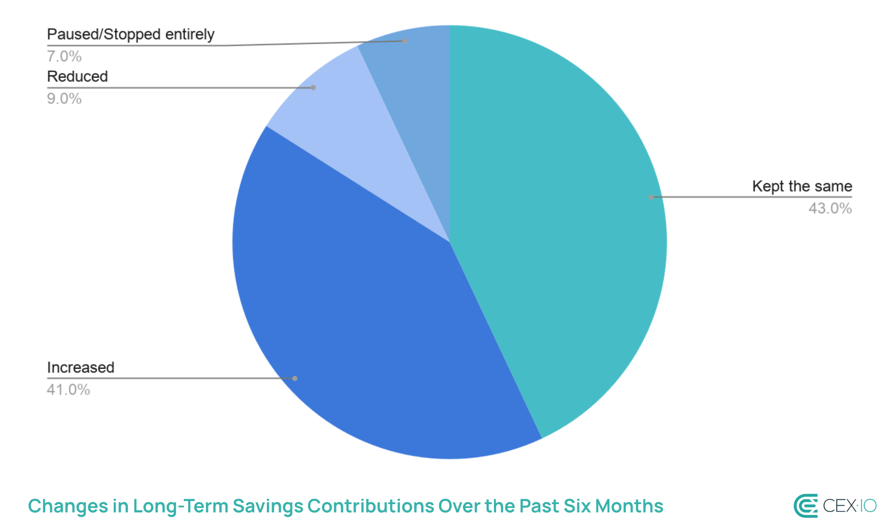
The recent crypto market downturn has forced more than one in three crypto traders to cut everyday spending, according to a new survey by CEX.IO.
The survey, conducted among 1,100 US-based active CEX.IO users, shows the current market slump is straining household finances, though it remains less severe than 2022, when Bitcoin fell by roughly 75% from its peak. Bitcoin is still about 40% below its October 2025 high, leaving many retail investors sitting on unrealised losses.
36% of respondents said they reduced everyday spending as a direct result of market conditions, with 10% describing those cuts as significant sacrifices made to maintain their positions. 37% also reported delaying or cancelling purchases due to crypto losses, including 21% who postponed major financial commitments such as buying a home, car or undertaking renovations.
Source: CEX.IO
“The 2025–2026 bear market has not produced the kind of systemic shock seen in past cycles (at least for now), but its effects appear to be showing up in quieter ways at the household level,” CEX.IO wrote.
Related: Crypto Market Sentiment Reaches 3-Month High
Crypto traders navigate downturn alone
The survey revealed that many traders are managing the downturn in relative isolation. Only 5% said someone else knows the full extent and value of their holdings, while the majority either share limited information or keep their positions entirely private.
Financial strain is also evident in cash flow trends. While 77% said they did not take on debt tied to crypto, 38% reported some form of financial disruption since October 2025. A quarter said they relied on savings to maintain stability, and 12% admitted to missing or delaying payments.
Source: CEX.IO
Even so, most respondents have not changed plans dramatically. Nearly half reported that crypto makes up more than 30% of their investable assets, yet 73% said their approach to earning income remains unchanged.
Looking ahead, a combined 79% said they plan to either hold or increase their positions over the next six months.
Related: Bitcoin Price May Go Under $70K Despite Strategy’s Latest Big BTC Buy
Crypto offerings shape bank choice
Another survey by Börse Stuttgart Digital earlier this week found that cryptocurrency services are starting to influence how European investors choose their banks, with 35% saying they would consider switching institutions for better crypto offerings.
The poll of around 6,000 investors across Germany, Italy, Spain and France also found that nearly one in five expects their primary bank to provide crypto access within three years, pointing to a gradual shift toward integrating digital assets into mainstream banking.
Magazine: How to fix suspected insider trading on Polymarket and Kalshi
Cointelegraph is committed to independent, transparent journalism. This news article is produced in accordance with Cointelegraph’s Editorial Policy and aims to provide accurate and timely information. Readers are encouraged to verify information independently.
Trusted Editorial content, reviewed by leading industry experts and seasoned editors. Ad Disclosure
Crypto-related kidnappings in France continue to be a major issue following recent information shared by the National Prosecutor’s Office for Anti-Organized Crime. In the last three years, authorities have reported over 100 of these incidents, describing a rapidly evolving criminal practice.
French Crypto-Kidnappings Rise To 46 In 2026 So Far
According to local media Lemonde, Vanessa Perrée, head of the National Prosecutor’s Office for Anti-Organized Crime, shares an update on cryptocurrency-related kidnappings in France. The chief prosecutor announced that 12 ongoing legal cases are related to these criminal events, involving 88 defendants, 75 of whom are in pre-trial detention.
Vanessa Perrée reports that there have been 46 cryptocurrency-related kidnappings so far in 2026, a growth rate that is alarming compared to the total 67 recorded in 2025. Earlier this week, on-chain sleuth ZachXBT and Binance security combined efforts to seize $800,000 demanded as ransom after the abduction of the father of a French influencer. In total, there have been 135 crypto-related kidnappings in the European nation since 2023.
In these cases, the French authorities have identified multiple instances of involvement by the same individuals, pointing to a defined criminal network. For example, three men between the ages of 25 and 30 were convicted last week for a kidnapping incident in Challes-les-Eaux in November 2025. However, two of these men were also involved in a similar incident in Dompierre-sur-Mer in December 2025, where they forcibly extracted 8 million euros from a couple.
Interestingly, Telegram Founder Pavel Durov has made some fiery claims on this developing phenomenon. Bitcoinist reported that Durov accuses French officials of being complicit in these crimes by selling crypto data to the kidnappers. The tech CEO alleges the tax database was poorly maintained and spoke out against the collection of social media data, which he claimed created more avenues for data leaks.
Meanwhile, Perrée has reiterated the government’s commitment to clamp down on these crypto-related kidnappings, which have been surging since January 2025. In addition, Jean Didier, a representative of France’s Interior Ministry, has also confirmed plans to introduce more stringent measures. According to data from TripleA, France represents a leading European crypto hub with 5% of its population (3.4 million) owning one cryptocurrency or another.
Crypto Market Overview
Data from CoinMarketCap shows the total crypto market cap is $2.59 trillion, down 0.08% over the last day. Meanwhile, total trading volume is valued at $101.01 billion.
Total crypto market cap valued at $2.58 trillion on the daily chart | Source: TOTAL chart on Tradingview.com
Featured image from Freepik, chart from Tradingview
Editorial Process for bitcoinist is centered on delivering thoroughly researched, accurate, and unbiased content. We uphold strict sourcing standards, and each page undergoes diligent review by our team of top technology experts and seasoned editors. This process ensures the integrity, relevance, and value of our content for our readers.
Lending platform Aave has raised about $160 million it needs to cover the $200 million in bad debt left behind by the year’s largest decentralized finance (DeFi) exploit, Arkham posted on X on Saturday.
“AAVE have so far raised $160M to cover the bad debt from the Kelp DAO Exploit, at defiunited.eth,” the blockchain analytics platform wrote. “The largest contributors are Mantle and AAVE DAO, who together raised 55,000 ETH or $127M.”
Last week, Aave and several major crypto firms announced a coordinated recovery effort to stabilize DeFi markets after a $292 million security breach left the crypto borrowing sector’s largest lender facing a financial crisis.
Called DeFi United and led by Aave service providers, the effort’s goal is to restore support for rsETH, the yield-bearing derivative token of ether (ETH) at the core of the exploit.
“I’m personally contributing 5,000 ETH to DeFi United as we continue working together with partners,” said Aave founder Stani Kulecho. His personal contribution at ether’s current price of roughly $2,346 is worth $11,730,000.
The exploit is traced back to a KelpDAO integration vulnerability with LayerZero, where an attacker minted 116,500 unbacked rsETH tokens. That left Aave with impaired collateral, triggering a run on deposits as lenders rushed to exit, ultimately withdrawing $10 billion.
The effort to erase the bad debt is focused mostly on stabilizing the system with a coordinated bailout to recapitalize rsETH and mitigate losses.
The second-largest exploit this year took place late March, when an attacker drained at least $270 million from the Drift Protocol on Solana by abusing a legitimate feature called ‘durable nonces,’ rather than exploiting a code bug or stolen keys.
The easiest take after a $290 million exploit and a roughly $13 billion slide in DeFi total value locked is that decentralized finance is broken again. It is also probably the laziest.
The KelpDAO exploit over the weekend was serious. It appears to have started with a targeted attack on infrastructure used in LayerZero’s verification stack, not a smart contract bug as commonly seen in other exploits. LayerZero has preliminarily linked the incident to North Korea’s Lazarus Group, and said the attack succeeded because Kelp had opted for a single-verifier setup despite repeated recommendations to use a more resistant configuration. The exploit left rsETH (a liquid staking token issued by KelpDAO) unbacked and triggered fears that bad debt would spill into lending markets, especially Aave’s WETH pool (where users borrow wrapped ether against collateral).
And yet the more interesting story is not that DeFi was hit. It is that DeFi is still here.
Capital fled quickly after the breach. Aave alone experienced $8.45 billion in outflows over 48 hours, while broader DeFi TVL fell into the mid-$80 billion range, roughly back to where the sector sat around this point last year. In other words, this was a sharp repricing of risk, not as destructive as some are making out.
Aave, the largest DeFi lending market, had accumulated significant rsETH as collateral in the weeks before the exploit as users built leveraged positions. The scale of that TVL drop also warrants some context. A $292 million theft does not directly produce a $13 billion decline unless a meaningful portion of that TVL was already recycled collateral. Much of Aave’s ETH exposure heading into the weekend was concentrated in looping strategies, where users deposit liquid restaking tokens, borrow ETH against them, swap for more restaking tokens, and repeat. In other words, the same pile of assets may be counted multiple times in the TVL calculation. That leverage inflates TVL on the way up and unwinds sharply during events like this. The actual net capital loss is likely a fraction of the headline figure, though the exact amount is difficult to isolate given how deeply looping strategies are embedded in DeFi’s TVL calculations.
DeFi TVL drop
Those strategies were themselves partly a product of a yield environment that had already stopped making sense. As of early April, Aave was offering 2.61% APY on USDC deposits, below the 3.14% available on idle cash at Interactive Brokers, a traditional financial brokerage. The risk premium that historically justified DeFi’s complexity and smart contract exposure had largely disappeared. With organic yield insufficient, leverage filled the gap, and that concentration is what made the rsETH contagion as damaging as it was. Data from DefiLlama shows that reETH balances on Aave had grown rapidly in the weeks leading up to the exploit, reaching nearly 580,000 tokens ($1.3 billion), evidence that the leverage buildup made the subsequent unwind so sharp.
Crypto has survived worse
The phrase “DeFi is dead” gets wheeled out after every hack because the failures are visible and immediate, while the recovery is slower and less cinematic. But crypto has seen worse. Terra collapsed and vaporized confidence across the sector. Wormhole and Ronin lost roughly $1 billion each. Multichain unraveled.
“DeFi didn’t die when Terra collapsed and caused billions in liquidations and losses,” wrote a pseudonymous trader on X. “DeFi didn’t die when Wormhole and Ronin got drained for around $1 billion. DeFi didn’t die when Multichain bridge assets were stolen.”
Historical DeFi hacks
More recently, Bybit suffered what was widely described as the largest crypto theft on record, losing around $1.5 billion last February, yet it continued operating, processed a surge in withdrawals, restored reserves and still handles billions of dollars in trading volume each day.
The repricing of trust
0xNGMI, founder of DefiLlama, told CoinDesk the losses are significant but unlikely to be existential. “Aave has many recourses to cover the loss, including its treasury and taking loans, and I think those will have to be used to protect the protocol,” he said. “Overall a significant loss but one that will be recovered. The biggest issue will be the impact on risk premiums that are assigned to DeFi.”
Those risk premiums are a real and lasting cost. Capital will demand more compensation for sitting in onchain systems whose attack surface now extends beyond code
Still, repricing is not the same thing as collapse. “Some of the money will come back,” 0xNGMI said. “We saw this before in Aave when rumors of a hack appeared. It’s always the best strategy to withdraw and redeposit later as the cost of that is tiny and the reward very large.” Some deposits will not return, but historically deposit outflows during stress events reverse as conditions stabilize, as evidence after Terra’s collapse in 2021.
There is also evidence that capital is not simply leaving DeFi. It is rotating. Spark offers one example. Spark’s strategy lead, who goes by monetsupply.eth,said the protocol delisted rsETH and other low-utilization assets in January, a move that may have cost it business and ETH-looping activity to Aave at the time. Under current conditions, however, SparkLend still has ample ETH withdrawal liquidity while Aave is experiencing shortages across several markets. Over the weekend Spark TVL jumped from $1.8 billion to $2.9 billion, demonstrating clear capital rotation.
Capital rotation from Aave
The more interesting critique, raised by some builders after the exploit, is not that DeFi failed but that it has become too timid. If the sector is going to ask users to bear infrastructure risk, smart contract risk and governance risk for low single-digit yields, the product set starts to look less compelling. With that in mind, Kelp is not the end of DeFi. It is a wake-up call for builders to build safer systems while continuing to offer real world use cases.
Snagging a Markets in Crypto Assets (MiCA) license to operate in Europe is great, but, alone, it won’t be enough to turn a profit, according to Ben Zhou, the CEO of Bybit, one of the largest cryptocurrency trading platforms.
MiCA doesn’t cover the full range of products, such as derivatives and tokenized assets, needed to be profitable, Zhou said in an interview. For those, companies also need a MiFID II (Markets in Financial Instruments Directive) license and an Electronic Money Institution (EMI) license.
“With the current MiCA framework, you can only do fiat-to-crypto, crypto-to-crypto,” Zhou said. “There are many elements of a profitable business you cannot do, so even as a MiCA holder — unless you’re Kraken or BItpanda or Bitvivo, who are already making money because they have multiple licenses.”
Even Bybit, the world’s second-largest cryptocurrency exchange by trading volume, is some way off from breaking even in Europe, Zhou said. That timeline depends on when the firm acquires the other licenses it needs.
“We don’t make money under the current MiCA license. But we’re able to afford it because we’re a big entity. For us, it’s a long-term investment,” Zhou said. “It could be five years away, but I think that is a bit long. I would assume we are probably going to be profitable within two years.”
Market consolidation is coming
A MiCA license issued by one country allows a crypto-asset service provider to operate across the European Economic Area (EEA): all 27 members of the European Union, as well as Norway, Iceland and Liechtenstein.
Now is a critical juncture for many small to medium-sized crypto companies in Europe, because the MiCA grandfathering period closes at the end of June. That means firms must have obtained MiCA authorization to operate across the region by July 1 — a cut-off point that is widely expected to be the death knell for many smaller crypto firms.
“There’s going to be market consolidation,” Zhou said. “That’s why these guys are shutting down. Because even if they know they could afford MiCA, they’re like, ‘WTF, I need [MiFID, EMI] to make money, and I need to make a whole lot of investment in compliance infrastructure to be able to be profitable?’”
MiCA itself is undergoing change, with some country regulators calling for tighter, more centralized control and granting increased oversight to bodies such as the European Securities and Markets Authority (ESMA). And when it comes to structured products, ESMA recently reminded crypto firms offering perpetual futures that some of these products may fall outside the rules.
Zhou said Bybit chose a stringent regulator in Austria’s FMA, a decision he said will pay dividends down the line. Each country interprets MiCA differently, he said: “Some countries interpret it as a way to attract new business; some want heavy regulation. So you actually have different levels of strictness.”
As for bringing ESMA into the mix, Bybit is neutral, Zhou said.
“There are talks about a more level playing field,” he said. “But there could be disadvantages. Because when you have a local regulator they are easy to get to. If we have any issues, we just send an email and go to FMA in Vienna. But if everyone’s in Paris, then you have to line up. There are more CASPs, increased bureaucracy, decreased efficiency.”
The Green Beret arrested for betting on a classified U.S. raid looked like a one-off scandal for prediction markets. A new study suggests he may be a more troubling data point: an extreme example of the small group of informed traders who, as the soldier is accused of doing, actually move prices on Polymarket, while the crowd loses money around them.
The study, part of a working paper released this week by Roberto Gómez-Cram, Yunhan Guo, Theis Ingerslev Jensen and Howard Kung of London Business School and Yale, directly tests the industry’s core claim that the markets work owing to the massed knowledge of their participants.
Using every Polymarket trade from 2023 to 2025, the authors conclude that it’s actually a small group of informed traders that moves prices. The researchers analyzed 1.72 million accounts and $13.76 billion in trading volume, and found that just 3% of traders account for most price discovery, meaning they are the ones moving prices toward the correct outcome.
These traders consistently predict outcomes and move prices in the right direction. The remaining 97% mostly do not. They provide liquidity and generate volume, but in aggregate, they are on the losing side of trades against the informed minority, whose profits come directly from those positions.
The hard part is telling skill apart from luck. With more than a million traders on Polymarket, plenty will rack up big winnings by chance alone.
To filter that out, the authors reran each trader’s bets 10,000 times, keeping everything the same except the direction.
Same markets, same moments, same dollar amounts — but a coin flip decided whether to buy or sell. That gave them a benchmark for what each trader’s profits would look like with no real edge. If the actual results consistently beat the coin flip, that’s skill. If not, it’s luck.
The findings show among the biggest winners by raw profit, only 12% beat the benchmark, and many apparent winners didn’t stay that way: Roughly 60% of “lucky winners” become losers when their performance is checked against a separate sample of events.
Their activity improves market accuracy. When skilled participants account for a larger share of trading, prices move closer to the correct outcome, especially in the final stretch before resolution. They are also the first to react when new information hits, shifting positions in response to events like Federal Reserve announcements or corporate earnings, while other traders show little consistent reaction.
The same edge that makes skilled traders valuable to price discovery raises a harder question when that information isn’t public, or isn’t supposed to be.
Both Polymarket and Kalshi have said that trading on non-public information is strictly against their rules.
The paper grounds that risk in a concrete case: The U.S. removal of Nicolás Maduro from power in Venezuela in January. In the days and hours before the operation, three newly created Polymarket accounts piled into a contract asking whether Maduro would be removed. At the time, the market priced the odds at roughly 10%.
The new accounts placed unusually large bets, including orders of tens of thousands of shares, before the price moved. When the raid happened, the accounts collectively made more than $630,000. Two stopped trading entirely soon after, and the third went mostly dormant. There is no evidence of any wrongdoing on these accounts.
Insider trades, when they occur, move prices even more aggressively per dollar, about seven-to-12 times more than typical skilled trades. But they are rare and concentrated in a handful of events, not the day-to-day engine of price discovery. Most of the time, the market’s accuracy still depends on repeat traders who consistently outperform rather than on one-off bets.
The findings challenge the idea that prediction markets work because of crowds. They appear to work because of who is informed.
The Ethereum Foundation has moved to unwind part of its staking position shortly after nearing its stated goal of 70,000 staked ETH.
On Saturday, the Ethereum Foundation unstaked 17,035.326 ETH, worth roughly $40 million, according to Arkham data. The move involved depositing wrapped staked ETH (wstETH) into Lido’s unstETH contract, with ETH expected to be returned once the withdrawal queue completes.
In Ethereum, unstaking is the process of withdrawing ETH that was previously locked to help secure the network through validators. When ETH is staked, it’s deposited into the Ethereum Beacon Chain, where it remains locked while earning rewards. To unstake, a withdrawal request is initiated, and the funds enter a queue period after which the funds are released.
Source: Arkham
Source: Arkham
The Ethereum Foundation has not yet revealed why it unstaked 17,000 ETH, prompting some users to speculate it could be preparing to sell. “The biggest seller of ETH continues to be the people who created ETH,” one user wrote.
Related: Another DeFi protocol hacked as Sui-based Volo hit by $3.5M exploit
Ethereum Foundation nears 70K staked ETH goal
The EF started staking ETH after updating its policy in June 2025. At the time, the foundation said that staking and decentralized finance participation would help fund protocol research, development and ecosystem grants.
Since February, the foundation has steadily expanded its position, staking 2,016 ETH initially, followed by 22,517 ETH in March. Earlier this month, the foundation staked more than 45,000 ETH in a series of transactions, bringing the total to around 69,500 ETH, just shy of its internal 70,000 ETH staking target.
However, concerns remain over governance risks. Ethereum co-founder Vitalik Buterin has cautioned that large-scale staking by the foundation could complicate neutrality during potential contentious hard forks, where competing chains may emerge.
Related: Ethereum Risks 10% Dip Versus Bitcoin Despite ETH Staking Milestone
DeFi protocols unite to back rsETH
As Cointelegraph reported, decentralized finance protocols have joined forces to stabilize rsETH after a $293 million exploit on the Kelp restaking platform triggered market disruption. The incident involved hackers stealing over 116,000 restaked ETH tokens and using them as collateral to borrow funds, leaving roughly $195 million in bad debt on Aave and straining the broader DeFi lending market.
Backers have pledged over 43,500 ETH (around $101 million) in a coordinated “DeFi United” effort led by Aave, with participation from Lido DAO, Golem Foundation and major contributions from EtherFi Foundation and Mantle.
Magazine: Ethereum’s Fusaka fork explained for dummies: What the hell is PeerDAS?
Cointelegraph is committed to independent, transparent journalism. This news article is produced in accordance with Cointelegraph’s Editorial Policy and aims to provide accurate and timely information. Readers are encouraged to verify information independently.