Home Blog Page 418

France faces the brunt of an increasing violent crime wave against the crypto community

0

France is facing a rise in crypto-related kidnappings as so-called “wrench attacks” become more frequent, brazen and violent.

That shift was visible this week amid the staging of an annual international blockchain and crypto conference. A police motorcade escorted VIP guests to a dinner at the Palace of Versailles. And security was also notably reinforced at the Carrousel du Louver, where the conference was taking place.

Wrench attacks in France have put the country so notably under the international spotlight that government officials took the stage at the conference in Paris to acknowledge their alarm at the scale of the problem. They said that this year alone, the country has suffered at least 41 crypto-related kidnappings and home invasions. That’s one every two to three days.

Jean-Didier Berger, Minister Delegate to the Interior Ministry, said a new set of measures is being prepared with Interior Minister Laurent Nuñez to tackle the growing issue. A prevention platform has already drawn thousands of registrations, but authorities say further steps are needed as incidents continue to rise.

Wrench attack epicenter

The country has become the epicenter of a global rise in wrench attacks. Across multiple jurisdictions, attacks on crypto holders are becoming more frequent and more violent, according to security researchers and law enforcement data.

Globally, the trend is also on the rise. In 2025, there were 72 verified physical coercion incidents globally, a 75% increase from the previous year, according to Certik and crypto researcher Jameson Lopp’s data, which tracks 188 attacks since 2014. Many more go unreported, he said. Cases involving physical assault rose even faster, up 250% year-over-year.

The term “wrench attack” refers to the use of physical force to extract access to digital assets. For some attackers, it is easier to coerce a person than to break encryption.

“Every time a wrench attack is successful, it tells the world that crypto owners are juicy targets,” Lopp told CoinDesk.

Unlike traditional bank transfers, crypto transactions cannot be reversed. Once a victim authorizes a transfer under duress, the funds can be moved quickly across wallets and chains.

Attackers seek points of weakness

Researchers say the way attackers identify victims has also changed.

“We’re seeing a shift from ‘find a wallet’ to ‘hunt a person,’” Phil Ariss of TRM Labs told CoinDesk. Rather than scanning for technical vulnerabilities, attackers build profiles, he added. They look at social media activity, public appearances and leaked datasets. They track routines and identify points of weakness.

“The biggest avoidable mistake is tying real-world identity, location and routine too tightly to visible crypto wealth,” Ariss said.

The problem is exacerbated when attackers get a helping hand from government officials. In one widely known case, in which a French tax official sold wrench attackers sensitive data. The case raised concerns among security experts that insider leaks and compromised state data were feeding directly into wrench attacks.

The pool of potential victims has widened, with mid-level holders increasingly being targeted, sometimes based on limited or indirect signals.

Anybody is a potential victim

Cases now include families, with children targeted alongside crypto-holding parents, making the attacks harder to categorize by severity.

In January 2025, Ledger co-founder David Balland was kidnapped in France along with his partner. During the attack, one of his fingers was severed and sent to associates as part of a ransom demand. He was rescued after a police operation.

Other cases have involved prolonged captivity and torture, such as one in New York, where a crypto investor was held for more than two weeks. In Canada, a home invasion escalated into waterboarding and sexual violence as attackers attempted to force access to funds.

Lopp said both opportunistic and organized groups are involved, but there are signs of increasing coordination. “We do seem to be seeing more organized groups now,” he said.

TRM Labs’s Ariss says his team has observed similar patterns, noting some groups operate with defined roles and pre-planning, including surveillance and follow-home tactics.

“These look less like one-off robberies and more like small kidnap or robbery crews specializing in crypto jobs,” Ariss said.

After funds are obtained, attackers tend to move quickly and frequently the crypto assets they attain are converted into stablecoins and routed across multiple chains, making recovery more difficult.

France’s role in this trend may reflect a mix of factors, Lopp said, including cases involving leaked personal data and cross-border criminal networks.

Rising prices, heftier loot

More broadly, rising asset prices have increased the potential payoff from a single attack, while improvements in digital security have reduced the effectiveness of purely technical exploits.

“It’s far easier than trying to rob a bank,” Lopp said.

Another issue is visibility: wrench attacks might be significantly underreported because many are reported as standard robberies or home invasions, with no mention of crypto.

“A large share of incidents are still recorded as simple robberies,” Ariss said, adding that the crypto element is often left out at the time of reporting, which can make it harder for authorities to connect cases or identify broader patterns.

The increase in attacks has raised questions about the risks of self-custody, a core principle of cryptocurrency.

Some security experts point to measures such as multi-signature setups, withdrawal delays and spending limits as ways to reduce risk by limiting how much can be accessed under duress.

“If coercion cannot produce immediate access to the majority of funds, the risk and return changes,” Ariss said. Such measures do not eliminate the threat but may reduce the incentive for attackers.

As crypto adoption grows, attacks are becoming more frequent and severe, turning what was once a niche concern into a broader security risk.

Nomura survey shows rising institutional crypto adoption driven by regulation and diversification

0

Institutional investors are warming to digital assets, with improving sentiment and broader use cases emerging as key drivers of adoption, according to a new survey from Tokyo-based bank Nomura and its crypto unit Laser Digital.

The study, based on responses from more than 500 investment professionals in Japan, found that 31% of respondents now hold a positive outlook on crypto over the next year, up from 25% in 2024. Meanwhile, negative sentiment has declined, pointing to a gradual shift in perception as the asset class matures.

A central theme is diversification. Some 65% of respondents said they view crypto as a portfolio diversifier, while 79% of those considering exposure plan to invest within three years. Most expect relatively modest allocations — typically between 2% and 5% — suggesting institutions are still in the early stages of adoption.

That shift is being supported by a changing regulatory and policy backdrop. In Japan, policymakers have spent the past year refining crypto frameworks, including discussions around classification, taxation and investor protections. Globally, clearer rules in major markets — alongside the approval and expansion of crypto investment products such as exchange-traded funds (ETFs) and tokenized assets — have reduced some of the uncertainty that previously kept institutions on the sidelines.

As a result, interest is expanding beyond simple price exposure. More than 60% of respondents expressed interest in staking, lending, derivatives and tokenized assets, reflecting growing demand for yield-generating strategies and more sophisticated portfolio construction.

Stablecoins are also gaining traction, with 63% of respondents identifying potential use cases ranging from treasury management to cross-border payments and investment in tokenized securities.

Still, barriers remain. Concerns around volatility, counterparty risk and the lack of established valuation frameworks continue to weigh on adoption. Regulatory uncertainty, while improving, has not fully disappeared.

Even so, the survey suggests the conversation is shifting. Rather than debating whether to invest in crypto, institutions are increasingly focused on how to do so — a sign that digital assets are moving closer to becoming a standard component of institutional portfolios.

Ethereum Price Holds $2,300 as Pepeto Presale Raises $9.2M Before Confirmed Binance Listing

0

Charles Schwab confirmed it will launch spot cryptocurrency trading for Bitcoin, Ethereum, and Solana through its brokerage arm in the first half of 2026, giving millions of retail investors direct access to crypto through a traditional trading account. The ethereum price holds above $2,300 on renewed risk appetite, and Cardano keeps grinding near cycle lows.

But if you are looking for the kind of returns that actually reshape a portfolio, the question is not whether ETH recovers slowly, it is whether a presale entry before a confirmed Binance listing can deliver the multiples that blue chips cannot, and Pepeto is making that case right now.

Schwab Launches Spot Crypto Trading as Retail Infrastructure Expands

Charles Schwab confirmed that its spot crypto trading product will go live in the first half of 2026, giving its millions of brokerage clients direct access to Bitcoin, Ethereum, and Solana through existing accounts, according to Fortune. The launch uses Zerohash as the liquidity and settlement layer. The same week, Goldman Sachs filed for a Bitcoin Premium Income ETF designed to bring monthly yield to institutional portfolios, according to CoinDesk.

The ethereum price benefits from this expanding infrastructure because every new on ramp brings fresh capital into the ecosystem, but the returns from ETH at $2,300 are measured in modest recovery multiples, not the asymmetric gains that presale entries create.

Ethereum Price: Tokens Positioned for Returns in 2026

Pepeto

While Schwab packages crypto for mainstream brokerage clients, Pepeto builds the exchange layer that protects individual traders, and the wallets entering this presale understand that retail infrastructure expansion and ground floor entries serve completely different purposes.

The PepetoAI risk scorer analyzes every trade from entry to exit and delivers a risk rating before a single dollar moves, giving wallets the kind of protection that most retail traders never had. The zero fee swap engine removes trading costs across every chain so every dollar stays in the position. Both tools run live, cleared by a SolidProof audit, designed by the architect of the first Pepe coin alongside a senior developer who previously worked at Binance.

The presale attracted more than $9.2 million with each token priced at $0.0000001865, and once Binance trading opens, every token bought now will be repriced by open market demand. The same wallets that recognized Solana at $0.22 before it reached $295 are the kind of capital that enters setups like this, because they spot the asymmetric math better than anyone.

Ethereum Price: $2,300 with a Familiar Cap

The ethereum price sits near $2,319 after rising 7% on the week as geopolitical relief lifted risk assets, according to CoinGecko. ETH remains roughly 51% below the $4,878 peak with the 200 day moving average still overhead. Schwab’s trading launch and the BlackRock staked ETH ETF provide genuine tailwinds, but the path from $2,300 to even $4,000 is roughly 67%, which is a solid recovery play but not the kind of multiple that presale entries generate.

Cardano: ADA Grinds Near Record Lows

ADA trades around $0.245 while sitting roughly 92% below the $3.09 peak it reached in 2021, according to CoinGecko. Staking participation stays high but the price reflects years of underperformance. Even a move to $0.50 from current levels would be a strong 94% gain, but ADA’s $9 billion cap means every rally meets heavy overhead supply from holders waiting to exit.

Conclusion

The ethereum price recovery to $2,300 is backed by real infrastructure expansion from Schwab’s trading launch and BlackRock’s staked ETH ETF, and that institutional traction benefits the wider crypto ecosystem by pulling fresh capital into the market. But the returns that flip a portfolio come from presale entries before a listing, not from waiting on a slow grind back to old highs that already carry years of market awareness baked into their price.

Pepeto raised $9.2 million with a confirmed Binance listing and working exchange tools, and the same wallets that recognized early Solana at $0.22 before it touched $295 are the kind of capital entering through the Pepeto official website right now, because they spot these setups better than anyone.

Click To Visit Pepeto Website To Enter The Presale

FAQs

What is the ethereum price prediction for 2026?

ETH trades near $2,300 with analyst targets ranging from $3,175 to $4,500 for 2026. Schwab’s trading launch and the BlackRock ETF provide tailwinds, but the ethereum price recovery path offers modest multiples compared to presale entries.

Is Cardano a good investment right now?

ADA trades at $0.245, roughly 92% below its peak. Staking rewards remain attractive, but the price action reflects prolonged underperformance. Traders seeking faster returns are watching presale tokens with confirmed listing catalysts.

What presale could outperform the ethereum price recovery?

Pepeto stands out with $9.2 million raised, working exchange tools, and a confirmed Binance listing ahead. The presale entry through the Pepeto official website targets the kind of returns that recovery coins at current levels cannot deliver.


Could Pepeto Be the Best Crypto to Buy Now as Whales Load 500M DOGE and BNB Holds Above $620

0

Whale wallets absorbed more than 500 million DOGE and $12 million in SHIB during April alone, according to on chain data from SpotedCrypto. The Fear and Greed Index bounced from 9 to 26 in one week, and the best crypto to buy now debate shifted from large caps to what whales are quietly stacking. While whales rotate into meme coins, Pepeto crossed above $9 million in presale capital with a confirmed Binance listing and a trading hub already live. The question is which entry captures the biggest returns when the market turns.

Whale Accumulation Confirms a Shift in the Best Crypto to Buy Now Debate

On chain trackers confirmed that 3 billion DOGE left Robinhood in mid April across three transfers, all moved into self custody according to SpotedCrypto.

PEPE whales added $4.36 million in the same window. BTC held near $75,500 with total crypto market cap at $2.7 trillion according to CoinGabbar. The meme coin sector sits 75% below its November 2024 peak, and large wallets loading at these levels is the clearest sign smart money sees a floor forming.

Where Whale Capital and Presale Entries Point This Cycle

Pepeto

Whales loading meme coins at cycle lows is the signal, but the biggest returns never came from buying what large wallets already hold at higher prices. Pepeto sits at $0.0000001864 with a confirmed Binance listing and a trading hub that already handles real transactions, and that is the best crypto to buy now for wallets looking at 100x math. Choosing a token where the product works before the listing opens is the fastest way to close the gap between entry and serious returns, and that setup almost never appears in 2026.

The risk scorer on the trading hub checks every contract before capital goes in, catching problems that hours of manual research would miss entirely. PepetoSwap runs zero fee trades right now, keeping every cent of a position intact instead of losing value to costs on each move. Both tools already run and serve holders who joined early, giving them access that most buyers only hear about after listing day.

The trading hub was built by a team with a confirmed Binance listing and a track record that includes the original Pepe coin launch. When wallets across networks begin using Pepeto for everyday checks and trades, the demand behind the token grows with each new user. Staking at 181% APY adds returns on top of the position while the listing gets closer. Above $9 million came in during a period where the market sat deep in fear, and that kind of capital during a downturn is how conviction looks on a chart. The best crypto to buy now is the one that the wallets already inside found first, and that search ends at Pepeto.

BNB

BNB trades near $623 as of April 19 according to Yahoo Finance, steady as Binance exchange volumes recover from March lows. The token sits roughly 58% below its January 2025 high near $1,500, and recovery from here faces resistance near $700. A return to highs delivers roughly 140%, solid for a top five coin but the best crypto to buy now needs multiplier math that large caps cannot offer.

DOGE

DOGE trades near $0.094 as of April 19, down roughly 85% from its 2021 peak according to CoinGape. Whale wallets added over 830 million DOGE in April, but the token still lacks any product behind the price. Support holds at $0.09 with resistance near $0.12, and the meme that once moved billions now competes with tokens that build real tools.

Conclusion

The search for the best crypto to buy now led through whale data and large cap forecasts, and every path pointed to the same gap: the tokens whales are buying sit below old highs, but the presale they have not finished loading sits at entry level with a Binance listing ahead.

Early wallets acted before the crowd had reason to look, and this entry has a higher ceiling because a working trading hub stands behind it. More than $9 million on the Pepeto official website proves that informed wallets already committed while the market was afraid. Missing this presale means watching the listing deliver returns to the wallets that found it first.

Click To Visit Pepeto Website To Enter The Presale

FAQs

What is the best crypto to buy now based on whale activity?

Whale wallets added 500 million DOGE and $12 million SHIB in April, but presale tokens like Pepeto with confirmed listings carry higher return potential from current entry levels.

How does whale accumulation affect the best crypto to buy now?

Large wallet buying confirms a floor, and the best crypto to buy now benefits from the rotation that follows, especially presale tokens with confirmed listings like Pepeto.

Why is Pepeto considered a strong presale entry?

Pepeto built a trading hub where swaps cost nothing and contracts get screened before entry, staking sits at 181% APY, and the Pepeto official website shows $9 million raised ahead of a confirmed exchange listing.


One person holds the keys to $200 million of a project’s crypto. His co-founder says that has to end

0

For years, NEO’s treasury was held in a setup that would be unusual for most financial institutions: hundreds of millions of dollars in crypto assets were controlled through personal wallets, with no multisig protections and little formal oversight.

That person, according to co-founder Da Hongfei, is Erik Zhang, NEO’s other co-founder and the architect of its core protocol.

“Around 85% is controlled by Eric alone with single signature,” Da said in an interview. “It had never been transferred to any individual or any multi-sig.” The native NEO and GAS tokens Zhang holds are currently worth between $200 million and $250 million, Da estimated. That’s more than NEO’s current $197 million market capitalization.

Zhang, for his part, has accused Da of separate problems. The two founders have been airing those disputes in public since December.

The fight has since produced rival governance plans and an unsuccessful mediation effort in Hong Kong.

Da published his restructuring proposal on GitHub on April 9. It calls for redomiciling the Neo Foundation from Singapore to the Cayman Islands, replacing the current two-founder governance with an independent five-member board, barring both founders from that board for 24 months, and redistributing roughly 26 million NEO and 40 million GAS to tokenholders.

Zhang’s counter-proposal called staying on the board keeping the Foundation in Singapore, not move it to the Cayman Islands.

Most pointedly, Zhang’s proposal calls for a formal investigation into historical asset management, including provisions to address potential corruption, improper asset transfers, and concealment of public assets.

Da dismissed those provisions flatly. “I think it’s a very blunt and empty accusation,” he said. “There is no corruption, no misuse of funds.”

For some observers, however, the numbers seem quite stark. NEO’s treasury holds ~$460 million in assets, roughly double the project’s $197 million market value, while the token has dropped 98% from its 2018 peak.

Mutual disarmament

NEO’s FY2025 financial report, its first comprehensive disclosure since 2020, revealed over 1,100 BTC, more than $100 million in stablecoins and cash, and a portfolio of venture investments including an unliquidated stake in Binance.

Da broke the treasury into two halves. The first, the native NEO and GAS tokens, sits largely under Zhang’s single-signature control. The second, bitcoin, ether, stablecoins, fund-of-fund investments, and bank balances, is managed by NGD, the entity Da runs.

Those non-token assets, once relatively modest, have grown to over $200 million, driven largely by the appreciation of its BTC and ETH holdings accumulated through early-stage investment returns.

The result is a treasury split almost evenly between two people who are no longer speaking productively, each holding leverage over the other, neither willing to move first.

Da framed his proposal as mutual disarmament.

“NGD will lose its control over most of the assets, including the BTC and stablecoins, which are over $200 million. And Eric will lose his personal control of the majority of the NEO tokens,” he said.

“Basically, me and Eric need to sacrifice our individual control over assets. I think that’s the fundamental change.”

He said he’s willing, but doesn’t know if Zhang is.

Da’s restructuring depends entirely on Zhang’s cooperation for its most critical step of transferring the single-signature token holdings to a multisig lock address. In an April 10 AMA, Da committed to a one-to-three month timeline.

Asked what happens if Zhang refuses, Da was candid.

“If there’s one person holding around half of a crypto native token and not willing to hand over to a multi-sig, constitutional governance, then what the community should do, I think the answer should come from the community itself.

CoinDesk reached out to Erik Zhang for comment and had not heard back by time of publication

Regulation isn’t slowing fintech down—it’s forcing it to operate like an industry: By Aaron Holmes

0

Fintech has long been defined by speed, but not always by control. For years, innovation has been driven by abstraction—removing friction, simplifying complexity and broadening access to financial services. That model is now being stress-tested under regulatory
pressure.

Across the UK and Europe, expectations are shifting. Frameworks like PSD3 are only one signal of a much broader change. Fintech is no longer operating alongside regulated industries. It is becoming the regulated industry.

A growing number of firms now operate as authorised e-money or payment institutions, holding customer funds and subject to safeguarding requirements, daily reconciliations and audit scrutiny. Others are running card programmes within scheme rules set by
Visa and Mastercard, where settlement accuracy and reporting discipline are non-negotiable. In each case, the expectation is the same: data must reconcile, positions must be defensible, and every number must stand up to scrutiny.

A regulated future

This is where the real pressure point sits. It is not access to data that is holding firms back, but whether that data holds together across systems and partners. Many fintech businesses have grown quickly on fragmented infrastructures, where reconciliation
is periodic, manual or treated as a downstream task. That approach is no longer sustainable.

Reconciliation, once treated as a back-office task, is now becoming a daily control point, underpinning safeguarding, reporting and audit readiness. It is moving closer to the centre of operations, not because of process improvement, but because it directly
supports regulatory compliance and financial integrity.

This shift is exposing a deeper issue across the market. Most firms are not failing because they misunderstand the rules. They are struggling because their operational data cannot reliably meet them. When figures need to be proven, not estimated, gaps become
visible quickly. Discrepancies that might previously have been absorbed over time are now risks that must be addressed immediately.

Control is the new competitive advantage

At the same time, fintech is being pulled into a wider set of regulatory frameworks. What was once seen as a distinct category is now overlapping with payments, banking and lending regulation. The result is a convergence around one core requirement: control—over
data, processes and outcomes.

For many firms, this represents a reset. The focus is shifting from rapid deployment to operational resilience. From building features to building foundations. From growth at pace to growth that can withstand scrutiny.

This does not reduce innovation—it makes it more viable. Businesses that invest in robust data infrastructure, real-time visibility and automated reconciliation are better positioned to scale, enter new markets and meet evolving regulatory demands without
disruption.

The firms that succeed in this next phase will not simply be the fastest. They will be the ones whose data stands up when it matters.

Why Skipping Routine Drain Maintenance Can Shorten Your Pipe’s Life

0

Most homeowners don’t think about their drains until something goes wrong. A slow drain, a strange smell, or, worse, a full backup usually serves as the wake-up call. By that point, the damage is often already done.

What many people overlook is that your plumbing system needs regular care just like any other part of your home. Ignoring routine maintenance may seem harmless at first, but over time it can seriously shorten the lifespan of your pipes.

Let’s break down why skipping routine drain maintenance can cost you more than you think and how investing in drain cleaning services and professional drain line maintenance can save your plumbing system.

The Hidden Buildup Inside Your Pipes

Every time you use your sink, shower, or toilet, small amounts of debris enter your drain system. This includes grease, soap residue, hair, food particles, and mineral deposits.

At first, these materials may seem insignificant. However, over time, they begin to stick to the inner walls of your pipes. This buildup narrows the pipe diameter, reducing water flow and increasing pressure within the system.

According to the United States Environmental Protection Agency, improper disposal of grease and household waste is one of the leading causes of clogged sewer systems. You can read more about it here and when buildup is left untreated, it creates the perfect environment for corrosion and long-term damage.

Increased Pressure Leads to Pipe Damage

When your drains are partially blocked, water no longer flows freely. This creates additional pressure in your pipes whenever water is used.

Over time, this constant pressure can weaken pipe joints, cause small cracks, and even lead to leaks. In older plumbing systems, this can accelerate wear and tear significantly.

Routine drain cleaning services help remove these blockages before they become serious enough to stress your pipes. Without that maintenance, your plumbing system is constantly working harder than it should.

Corrosion and Material Breakdown

One of the biggest risks of skipping maintenance is corrosion. When debris sits inside your pipes, it traps moisture and sometimes even harmful chemicals.

This environment speeds up the breakdown of pipe materials, especially in metal pipes. Rust and corrosion not only weaken the structure of your pipes but can also contaminate your water supply.

Regular professional drain line maintenance ensures harmful buildup is cleared before it can damage the internal structure of your plumbing.

Small Clogs Turn Into Major Blockages

A minor clog might not seem like a big deal. Maybe your sink drains a little more slowly than usual, or you notice occasional gurgling.

However, these small signs are often early warnings of a bigger problem forming deeper in your system. If left unchecked, these clogs can grow into complete blockages that stop water flow entirely.

When that happens, you’re no longer dealing with simple maintenance. You’re facing emergency repairs, potential water damage, and much higher costs. Investing in routine drain cleaning services helps catch these issues early before they escalate into expensive problems.

Sewer Line Issues Can Shorten Pipe Lifespan

Your main sewer line is one of the most critical components of your plumbing system. When routine maintenance is skipped, this line becomes vulnerable to serious issues like tree root intrusion, heavy blockages, and structural damage. Once the sewer line is compromised, the lifespan of your entire plumbing system can be affected. Repairs at this stage are often invasive and costly.

This is why consistent professional drain line maintenance is essential. It helps keep your sewer line clear, functional, and protected from long-term damage.

Bad Odors and Health Concerns

Clogged and poorly maintained drains don’t just damage your pipes. They can also create unpleasant odors and unhealthy conditions inside your home. Organic waste trapped in pipes can begin to decompose, producing foul smells and potentially harmful bacteria. Over time, this can impact indoor air quality and create an uncomfortable living environment. Routine maintenance ensures your drains stay clean, reducing both odor issues and potential health risks.

Higher Repair and Replacement Costs

One of the biggest misconceptions homeowners have is that skipping maintenance saves money. In reality, it does the opposite.

Ignoring routine care often leads to:

  • Emergency plumbing repairs
  • Pipe replacements
  • Water damage restoration
  • Increased utility bills due to inefficiency

Regular drain cleaning services are a small, predictable expense compared to the high costs of major plumbing failures.

Extending the Life of Your Plumbing System

Your plumbing system is a long-term investment. With proper care, pipes can last for decades. Without maintenance, that lifespan can be cut significantly short.

Routine professional drain line maintenance helps:

  • Prevent buildup and corrosion
  • Maintain proper water flow
  • Reduce stress on pipes
  • Identify issues early

By staying proactive, you are not just preventing problems; you’re actively extending the life of your entire plumbing system.

Final Thoughts

Skipping routine drain maintenance might seem like a minor decision, but over time, it can have major consequences. From hidden buildup and corrosion to costly repairs and shortened pipe lifespan, the risks are simply not worth it.

The good news is that these issues are completely preventable. With regular drain cleaning services and consistent professional drain line maintenance, you can keep your plumbing system running smoothly for years to come.

A little maintenance today can save you from major headaches tomorrow.

Contact RooterMan SC now!


Iran Ceasefire Drives Bitcoin Above $75,000, But Can It Push It To $100,000?

0

Trusted Editorial content, reviewed by leading industry experts and seasoned editors. Ad Disclosure

Bitcoin has climbed back above $75,000 as easing Middle East tensions helped reduce risk appetite and led to inflows into the crypto industry. A 10-day ceasefire linked to the Israel-Lebanon front and Iran’s declaration that the Strait of Hormuz is open to commercial shipping all helped cool oil prices and improve sentiment across stocks and cryptocurrencies.

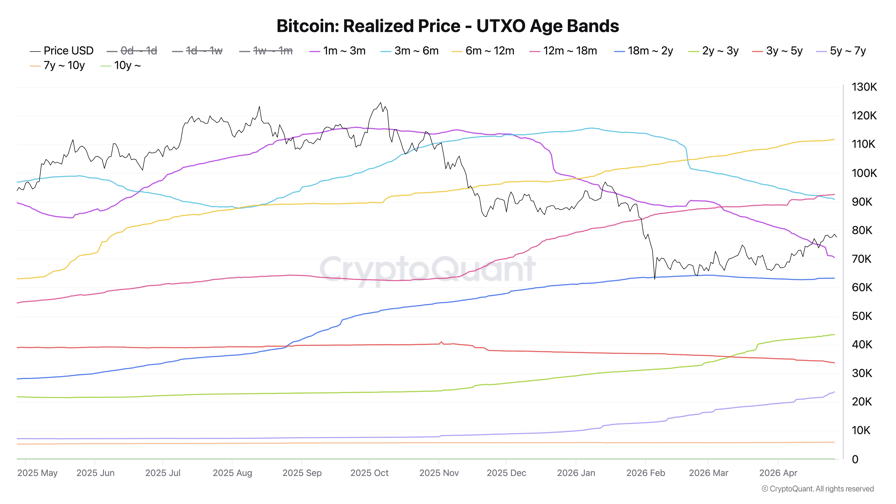
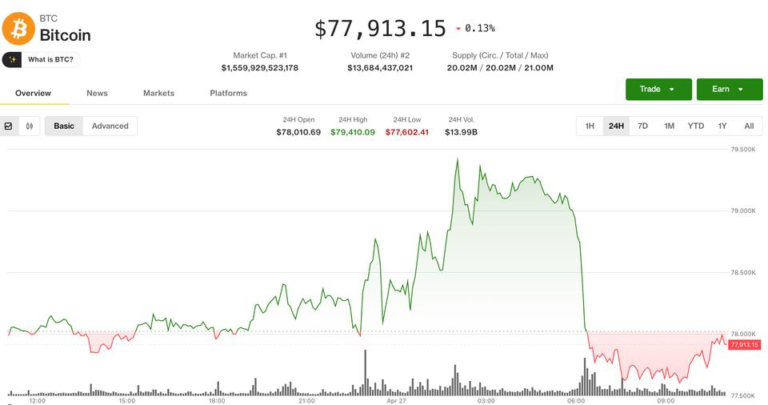
Bitcoin is now trading around $76,778, after touching an intraday high of $78,240. However, the most important question is whether this move is the start of a real run to six digits at $100,000.

Relief From Geopolitics Gave Bitcoin The Push It Needed

The chain of events that lifted Bitcoin began in early April. Hours before the deadline set by US President Trump, the US and Iran reached a two-week temporary ceasefire agreement mediated by Pakistan, with formal peace talks scheduled in Islamabad. 

Interestingly, major exchanges and market makers also moved quickly. Binance purchased approximately 29,344 BTC, Coinbase bought 20,756 BTC, Kraken bought 8,600 BTC, and Wintermute and Bybit adding additional positions, transactions that together totaled close to $4.5 billion in Bitcoin. 

The latest Bitcoin price breakout above $75,000 in the past 48 hours is a result of traders reacting to signs that geopolitical pressure may be easing, at least temporarily. At the same time, Spot Bitcoin ETFs recorded strong demand this week, including $663.91 million in inflows on Friday alone, pushing the weekly total to $996.38 million. That steady influx of capital helped Bitcoin recover levels it had struggled to hold earlier in April.

Sentiment Data Shows Fear Still Dominating The Market

Even as Bitcoin is trading its highest level in 11 weeks, on-chain sentiment data suggests the rally is not being backed by positive optimism. According to data from Santiment, bearish commentary is still dominating social discussions, with three negative comments for every two positive ones.

BTCUSD currently trading at $75,969. Chart: TradingView

The data shows that even during recent price pushes, skepticism is still outweighing excitement. It is important to note that that type of environment has often aligned with continuation moves. When price rises without a surge in crowd optimism, rallies tend to face less immediate selling pressure from overheated positioning. 

Bitcoin Sentiment Chart. Source: @santimentfeed On X

The question now is whether these geopolitical tailwinds are sufficient to carry Bitcoin from the current $76,000 to $78,000 band all the way to six figures. The price advance crossed a descending trendline that had capped rallies since October 2025, when Bitcoin reached approximately $126,000, but the 50-day exponential moving average is still below the 200-day EMA.

The path to $100,000 will likely depend on more than just geopolitical relief. Sentiment trends suggest that many traders expect Bitcoin to stall somewhere around the mid-$80,000 region. However, this is also a good sign that the rally could move past small traders’ expectations and rise above $90,000.

Featured image from Pexels, chart from TradingView

Editorial Process for bitcoinist is centered on delivering thoroughly researched, accurate, and unbiased content. We uphold strict sourcing standards, and each page undergoes diligent review by our team of top technology experts and seasoned editors. This process ensures the integrity, relevance, and value of our content for our readers.

RaveDAO Denies Manipulation as Binance, Bitget Probe RAVE Trading Activity

0

RaveDAO has denied any role in the recent surge and sharp collapse of its RAVE token, as major crypto exchanges open probes into trading activity following allegations of market manipulation.

In a thread posted on X, the project said it was “not engaged in, nor responsible for, recent price action,” responding to mounting scrutiny after RAVE soared from roughly $0.25 to nearly $28 within days before plunging more than 80%.

The denial comes as onchain investigator ZachXBT accused the project of orchestrating a pump-and-dump scheme, pointing to concentrated token holdings and suspicious exchange flows. He claimed that more than 90% of the token supply may be controlled by insiders, calling on exchanges to take action.

Source: ZachXBT

Both Binance and Bitget confirmed they are reviewing the situation. “We’re looking into it,” Binance CEO Richard Teng wrote, while Bitget CEO Gracy Chen said the exchange had “started investigating” RAVE trading activity.

Related: Study finds almost no crypto protocols disclose market-maker terms

RaveDAO plans token sales to fund growth

RaveDAO also outlined plans to sell portions of unlocked tokens to fund operations, marketing and hiring. The team said it is exploring “price-triggered or performance-triggered locks” to better align incentives.

“Building a movement requires resources,” the project wrote, adding it aims to do so “sustainably and transparently.”

RaveDAO is a Web3-based entertainment project that combines electronic music events with blockchain technology, aiming to onboard users into crypto through real-world experiences like festivals and parties. It operates as a decentralized community where attendees receive NFTs for participation, while its RAVE token is used for governance, ticketing and access to events.

At the time of writing, RAVE is trading at $1.36, down by 94.95% over the past day, according to data from CoinMarketCap.

Related: Stablecoins behave like FX markets as liquidity splits: Eco CEO

DeFi hacks surge in April

As Cointelegraph reported, more than a dozen DeFi protocols and crypto firms have been hit by exploits in just over two weeks, starting with the massive $280 million Drift Protocol attack on April 1.

Other affected projects include CoW Swap, Hyperbridge, Bybit, Silo Finance, Aethir and Rhea Finance, along with exchanges and liquidity pools across multiple chains. The attacks range from smart contract bugs and oracle manipulation to access control failures and liquidity pool exploits.

Magazine: Bitcoin may take 7 years to upgrade to post-quantum — BIP-360 co-author