Home Blog Page 391

Banks push to slow stablecoin law as Agora races for charter

0

Latest developments: Banking groups want regulators to pump the brakes on the Genius Act rollout.

  • Major U.S. banks have asked for extended public comment periods before full implementation.
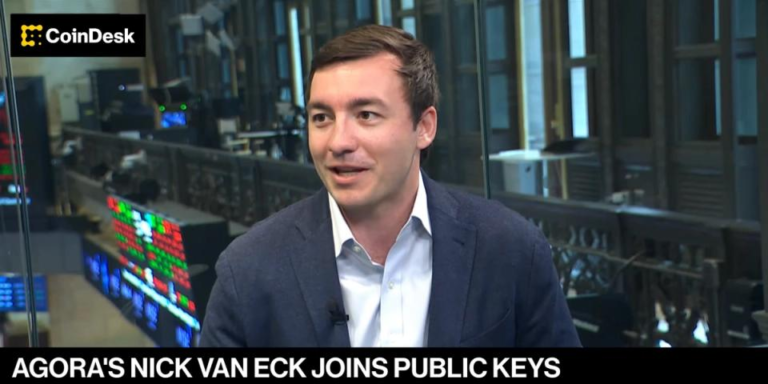
  • Agora CEO Nick van Eck said the move is “not much of a surprise,” calling the law one of the most significant in banking history
  • Van Eck expects continued efforts to slow the process over the next year as banks assess risks to their business models

Reading between the lines: The fight centers on deposits and yield economics.

  • Van Eck argued banks’ real concern is “deposit flight” if stablecoin issuers can pass through rewards to users
  • Traditional banks currently profit from the spread between near-zero deposit rates and higher returns at the Fed, he said

Why it matters: A unified federal framework could reshape U.S. finance.

  • Van Eck said a national regime would boost innovation and global dollar adoption
  • The Genius Act would require stablecoin issuers to operate as banks, raising the bar for entry
  • The outcome could determine whether crypto firms or traditional banks dominate digital dollar infrastructure

Closer look: Agora is betting on a bank charter to compete.

  • The firm filed for a national trust bank charter with the OCC last week, aiming for approval by year-end
  • A charter would allow Agora to issue stablecoins directly under federal oversight
  • Van Eck said direct issuance could eliminate “egregious fees” in fiat-to-crypto on/off ramps

What comes next: Agora is eyeing a broader financial stack.

  • The company plans to expand beyond issuance into custody, compliance, and infrastructure services
  • Van Eck said the goal is to bring businesses “on-chain without them knowing it,” emphasizing seamless integration

From Cathie Wood to Cantor Fitzgerald, the big money is betting that Robinhood’s (HOOD) crypto slump is just a temporary speed bump

0

Robinhood’s (HOOD) nearly 12% drop since its big earnings miss is being waived off by some big investors and Wall Street analysts.

The popular trading platform missed its first-quarter earnings and revenue estimates on April 28, mainly due to weaker crypto trading activities. The market punished the stock on the miss, but Cathie Wood’s Ark Invest saw that as an opportunity and bought roughly $39.7 million worth of shares the next day, signaling confidence in the trading platform’s future. Robinhood remains a meaningful position across Ark’s portfolios, accounting for roughly 3% and ranking among the top holdings in all three funds.

The contrarian move seems to have come at the same time as Wall Street analysts, who agreed that the miss was just a blip for the company, and early April data points to improving momentum. They added that equity and options trading volumes are trending toward some of the strongest levels this year, offering a potential counterbalance to continued softness in crypto.

Cantor Fitzgerald, which reiterated its ‘Overweight’ rating and $110 price target, said recent activity suggests stabilization. “Preliminary April equity/option trading volumes are tracking toward the highest monthly level this year,” the firm wrote, adding that the earnings miss was tied more to market conditions than core business issues.

Another firm, Compass Point, echoed that view, maintaining a ‘Buy’ rating while slightly lowering its price target to $107. The firm said the market reaction appears “backwards looking,” given expectations for a stronger second quarter.

While both brokers are bullish on Robinhood’s outlook, some analysts cautioned that there are still risks, particularly in crypto trading, which is likely to continue weighing on results in the near term amid lower volumes and pricing pressure across the sector.

Investment bank Keefe, Bruyette & Woods (KBW), which already had the lowest price target on the stock, according to FactSet data, cut it further. The firm’s analysts, who rate the stock a ‘Hold,’ warned that declining transaction fees could persist and cut its target to $65 from $75.

“Capture rates [are] missing across the board,” the firm’s analysts said, noting that both crypto and options take rates have continued to fall into the second quarter. That trend has led to lower long-term forecasts, with KBW trimming earnings estimates through 2028.

That concern didn’t seem to deter one of the top bullish analysts. Bernstein’s analysts, who maintained their ‘Outperform’ rating and a $130 price target, pointed to signs that crypto activity may be stabilizing, as April hasn’t shown any further declines in prices while equities and options remain strong.

Moreover, beyond trading, bullish investors are now turning their attention to new revenue streams.

Prediction markets are emerging as a key area, with firms highlighting growth in event-based contracts and upcoming catalysts such as product launches and global events. Robinhood’s planned prediction markets platform, Rothera, is viewed as a potential driver of future revenue and margin expansion, Cantor said.

For now, the outlook hinges on whether recent gains in trading activity can continue. If they do, Robinhood may return to growth sooner than expected. If not, pressure on transaction revenue could persist into the second half of the year.

The stock was up about 3% on Thursday, but fell about 37% this year. One of its crypto peers that tends to partially trade in tandem, Coinbase (COIN), rose about 3% on the day and is down about 19% year-to-date.

Read more: Why Cantor Fitzgerald thinks Robinhood and Coinbase are the best ways to play the prediction market boom

IXOPAY on Preparing Merchants for Agentic Commerce and the Rise of AI

0

At MPE 2026, Marco Conte from IXOPAY highlighted how merchants can successfully navigate todays complex payment landscape and prepare for the massive shift toward Agentic Commerce and AI. Conte joined IXOPAY following the 2025 acquisition of the data and payments intelligence company he founded, Congrify. With 13 years of experience spanning operations, strategy, and data roles, he is a true expert in the field.

Conte explains that payments are inherently complex, a challenge merchants face through what he calls the complexity curve. As a business grows from a local e-commerce entity to a global player, it must integrate multiple payment service providers (PSPs) for different regions, along with various risk and compliance solutions. This complexity forces merchants to adopt a multi-PSP strategy, leading to the pivotal question: do you build your own in-house solution, or do you buy a third-party service?

IXOPAY offers a compelling answer by providing orchestration solutions like tokenization and payment orchestration gateways. Beyond the core functions, the company offers Payments Intelligence products that fundamentally help businesses, regardless of size, understand their payment data. Conte notes that even companies who build their own internal orchestration still face serious complexities around monitoring fees, authorization rates, and risk. IXOPAY steps in with data science tools like anomaly detection and recommendation engines, giving merchants the insights they need to stay on top of their data.

Looking ahead, the top priority for the industry is preparing for Agentic Commerce and the continued rise of AI. Conte believes this future is less a question of ‘if’ and more a question of ‘when’ and ‘how.’ Since there is already a multitude of approaches and protocols emerging, this actually puts payment orchestrators like IXOPAY in a great position to simplify the overall complexity for merchants. From an internal perspective, Conte’s goal for this year is to enhance the use of AI within payments, focusing on practical applications such as anomaly detection, financial forecasting, and simulations, which allow AI agents to manage and optimize data and settings for merchants.

Conte praises MPE 2026 as an invaluable gathering, calling it one of the best places in Europe to meet merchants and have meaningful conversations. The conference’s value, he explains, comes from its size, which fosters honest, detailed discussions about the current challenges and priorities of the industry. This environment allows Conte to have hundreds of powerful interactions over a few days, providing the critical touchpoints needed to stay ahead in the rapidly evolving payments sector.

Analyst Says XRP Fundamentals Are Accelerating, What Does This Mean?

0

Trusted Editorial content, reviewed by leading industry experts and seasoned editors. Ad Disclosure

The XRP price has been on a steady decline for months, reflecting weak structure and underlying negative sentiment. Even as its price action remains muted, a crypto analyst has announced that XRP’s fundamentals are accelerating. According to the analyst, XRP is currently centered around several bullish developments that strengthen its underlying outlook. He believes that these events are also solidifying XRP’s fundamentals and could help support a breakout in the future. 

Analyst Points To Strengthening XRP Fundamentals

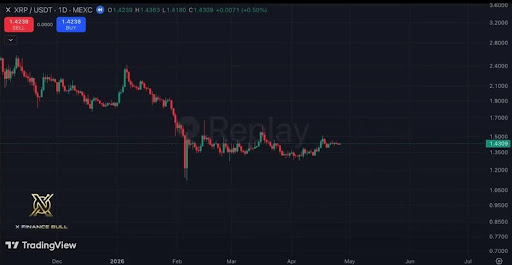
X Finance Bull, a crypto analyst, has taken to X to share a bullish forecast for XRP while addressing concerns about its underperforming price. In his post, the analyst noted that XRP has been stuck in a range between $1.1 and $2.4 for four months straight, showing no clear signs of a sustained uptrend. 

He stated that this steady downtrend and prolonged consolidation can be frustrating for investors and traders, as it tests their patience, conviction, and belief in XRP’s bullish outlook. X Finance Bull added that this frustration becomes even worse when major bullish developments unfold and the price shows little to no reaction. 

XRP
Source: Chart from X Finance Bull on X

Some of the bullish events he described include the launch of XRP ETFs and the Ripple Treasury. He also mentioned the RLUSD stablecoin surpassing $1.56 billion in market value, Goldman Sachs’ recent $153 million XRP investment, and ongoing progress on the CLARITY Act. Despite these developments, X Finance Bull noted that XRP continues to trade around $1.37. 

From his perspective, XRP’s downtrend was intentionally made brutal to shake out weak hands. X Finance Bull noted that the current price slump was designed to make traders doubt and sell before a potential uptrend. He also said that it was normal for fundamentals and price movements to be completely disconnected in a bear market. He added that every market cycle has a phase in which price action enters a boring, painful consolidation before a strong bullish reversal. 

Accelerating Fundamentals May Drive XRP Price Breakout

Looking at the market more positively, X Finance Bull noted that the disconnect between XRP’s price and ongoing bullish developments is not a sign of weakness. He pointed out that even as the price looked weak, it did not break when oil crashed 12%, or when XRP’s legislation was delayed for months, or even after attempts by the banking lobby to cancel the CLARITY Act compromise. 

According to him, this resilient foundation is a testament to XRP’s underlying strength over the past four months. As a result, he believes that XRP’s current price action reflects controlled accumulation rather than weakness. He added that the cryptocurrency’s fundamentals are also still improving and could eventually influence price action. As such, he urges investors to remain patient until a potential breakout occurs.

XRP
XRP trading at $1.37 on the 1D chart | Source: XRPUSDT on Tradingview.com

Featured image from Adobe Stock, chart from Tradingview.com

Editorial Process for bitcoinist is centered on delivering thoroughly researched, accurate, and unbiased content. We uphold strict sourcing standards, and each page undergoes diligent review by our team of top technology experts and seasoned editors. This process ensures the integrity, relevance, and value of our content for our readers.

Senator Warren questions Commerce Secretary Lutnick on Tether loan to family

0

U.S. Secretary of Commerce Howard Lutnick, the former CEO of Cantor Fitzgerald that handles Tether’s finances in the U.S., has been questioned by Senate Democrats on reports that a trust tied to his children received a loan from Tether meant to help finance Lutnick’s divestiture of his company stake that went to his children.

Senators Elizabeth Warren, who is the ranking Democrat on the Senate Banking Committee, and Ron Wyden, who is the top Democrat on the Finance Committee, asked the leading global issuer of stablecoins whether it helped finance Lutnick’s multi-billion-dollar transfer of the financial-services company through trusts tied to his adult children when Lutnick complied with government ethics requirements after taking the Cabinet position.

“If reports of this loan are accurate, it would raise serious questions about the relationship between Secretary Lutnick and Tether, and the influence of Tether on Mr. Lutnick’s policy decisions,” the lawmakers wrote in both letters, which responded to reporting about the loans of unspecified amounts that first appeared in Bloomberg News.

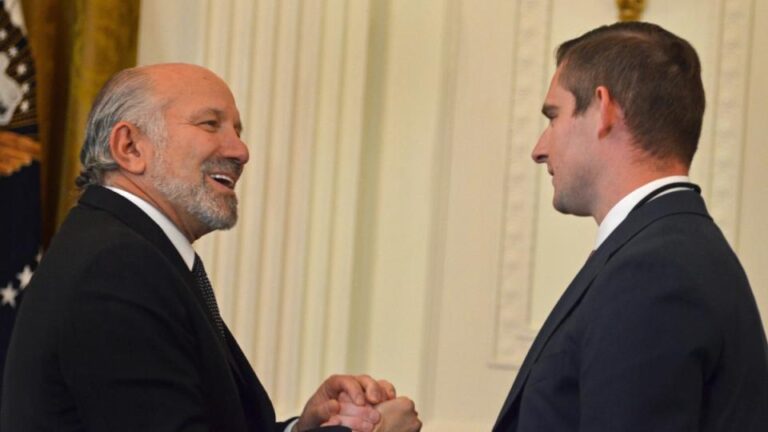
Congress, with help from the administration of President Donald Trump, helped usher in a new law last year to govern stablecoin issuers, including Tether. CEO Ardoino was a front-row guest at a White House signing of that law, known as the GENIUS Act. Lutnick was also present for the celebration and has been a member of the President’s Working Group on Digital Assets that’s outlined and driven U.S. crypto policy.

“It is critical that you make decisions because they are in the best interest of the American public, not in the financial interest of your family or Tether,” the senators wrote to Lutnick.

Representatives for the Department of Commerce and Tether didn’t immediately respond to requests for comment on the letters.

Lutnick’s Cantor is now under the watch of sons Brandon Lutnick, chairman & CEO, and Kyle Lutnick, executive vice chairman.

Tether, with a headquarters in El Salvador, has been pursuing a U.S. strategy, with the launch of its USAT stablecoin and a U.S. arm of the company that’s led by Bo Hines, a former crypto adviser for Trump.

Cantor is so far the biggest donor to the Fellowship PAC, a relatively new political action committee that’s so far spent a few million dollars supporting Republicans in various Senate, House and governor races. The expenditures from Fellowship, which is led by a Tether U.S. executive, have been through a media firm whose co-founders include Hines and his father.

Announcing Cohort 7 of the Ethereum Protocol Fellowship

0

TL;DR:


We are excited to announce that applications are now open for the seventh cohort of the Ethereum Protocol Fellowship (EPF7).

EPF provides a pathway for aspiring protocol developers to make meaningful contributions to Ethereum. In each cohort, a diverse group is assembled to work toward advancing Ethereum’s roadmap focused on the core properties that define Ethereum; censorship resistance, open source, privacy, and security. This includes the development of client implementations, testing and specifications, and engaging with the latest core protocol research. With an overarching goal of finding placement for fellows in R&D teams working on core protocol development, EPF gives participants a unique opportunity to collaborate with talented peers, engage with current Ethereum core developers, and make a lasting impact on the Ethereum ecosystem.

EPF7 Updates

After reflecting on each cohort, we make adjustments to better serve both R&D teams and program participants. For cohort 7, we are running a smaller, more focused cohort, prioritizing depth of engagement over breadth. This allows fellows to work more closely with mentors and make higher-impact contributions to the projects they take on.

Program Details

  • Applications accepted through May 13 | APPLY HERE
  • The seventh cohort runs from June through November
  • Participants will have access to mentors from the core development community
  • Select participants will be provided with a monthly stipend to focus on the program
  • Review all program details in the EPF7 repo
  • Study.epf.wiki to build your protocol knowledge

Every cohort has surprised us. Fellows ship real work joined client teams, and stuck around as long-term contributors to the ecosystem. Explore past fellows’ projects from previous cohorts and see what the fellowship has produced.

Applications are open until May 13. For more information, review the program details in the GitHub repository. On May 6th at 1500 UTC, the EPF team will hold a town hall to discuss the program and answer questions.

EPF7 is going to be a small cohort and we’re looking for people who are genuinely ready to dig in. If that’s you, apply and join us.

Clearwater Analytics on Delivering Transparency for Private Portfolio Risk Management

0

At TSAM London, Kaushik Punjabi from Clearwater Analytics shared some great insights into the rapidly shifting asset management world. With traditional asset managers increasingly eyeing alternative assets like private market portfolios, the landscape is looking more diverse than ever. Punjabi highlighted how Beacon is stepping up to help firms price and risk-manage these specific portfolios, which is a huge win for asset managers who are looking to sharpen their operational efficiency.

One of the standout points Clearwater Analytics made was about moving away from those tricky “black box” systems as Clearwater Analytics’ approach with Beacon is all about transparency, allowing asset managers to really get under the hood of their data. This makes it much easier to explain the numbers to regulators, providing a flexible framework to demonstrate exactly how and why portfolio movements happen. It’s a refreshing, clear-cut way to handle complex market demands with confidence.

Bitcoin Is Behind Recent Steak ‘n Shake Success, Exec Says

0

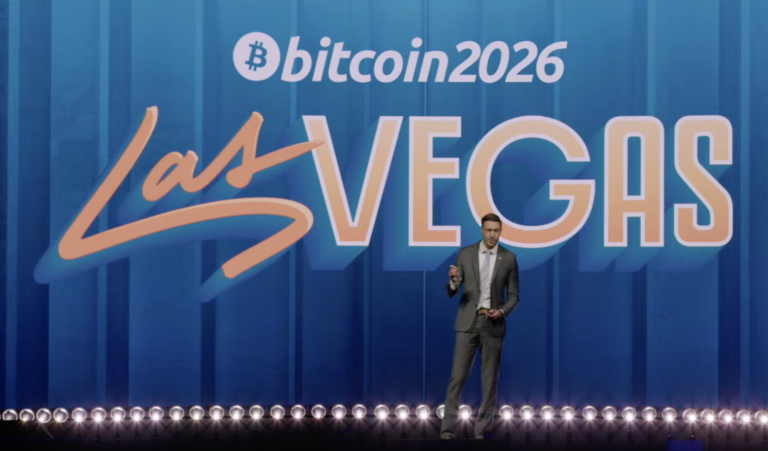
Steak ‘n Shake Chief MAHA Officer Michael Boes told attendees at the Bitcoin 2026 Conference in Las Vegas that Bitcoin has become a core driver of the chain’s business performance, pointing to 2 million new customers, dramatic cost reductions, and a sweeping menu overhaul tied directly to savings from bitcoin payments.

Boes cited how the chain launched its Bitcoin payment platform on May 16, 2025, via the Lightning Network, and the results came fast. Same-store sales rose 11% quarter over quarter in Q2 2025 and accelerated to 15% in Q3 2025, outpacing major rivals including McDonald’s, Taco Bell, and Domino’s. 

He called it the highest same-store sales growth of any restaurant in the industry.