Home Blog Page 350

The ‘tokenization of everything’ is no longer a theory

0

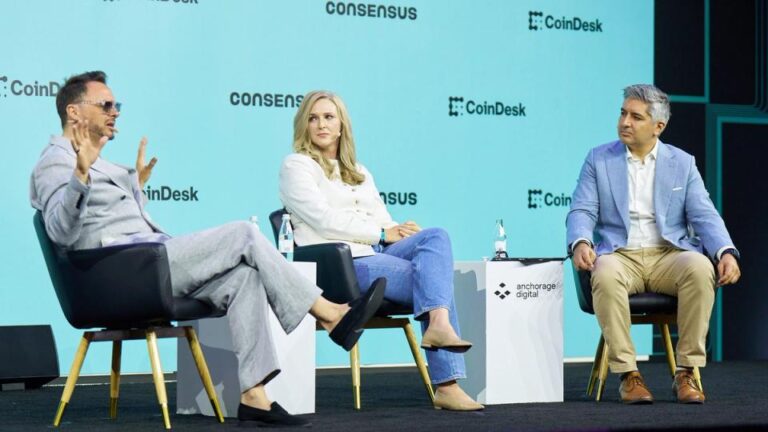
For a decade, the crypto industry has gathered at Consensus to discuss what was coming next. This year, something different is happening. The future has started arriving.

Real-world assets are being minted onchain. Stablecoins are quietly becoming the connective tissue of global commerce. Prediction markets are turning probability into a tradable asset class. The institutions that once dismissed all of this – Morgan Stanley, Nasdaq, the NYSE, DTCC, SWIFT, Franklin Templeton – are now sending their senior people to Miami to talk about how they fit in.

When Consensus 2026 convenes May 5–7 at the Miami Beach Convention Center, it won’t feel like a conference about crypto’s potential. It will feel like a summit about what happens next now that crypto’s promise has become the financial industry’s new reality.

The institutions have landed

For years, traditional finance circled the crypto industry from a cautious distance. That distance has collapsed.

The 2026 speaker roster reads like a who’s-who of institutional legitimacy: Mastercard, PayPal, T. Rowe Price, Nasdaq, NYSE, Morgan Stanley, SWIFT, and DTCC alongside crypto’s foundational builders. The sponsor list tells the same story: JPMorgan, Fidelity, Coinbase, Google, Bridge by Stripe, Broadridge, Circle, Grayscale, FTSE Russell and more. These are not exploratory delegations. They are bets.

“Consensus brings every pillar of the industry together for the largest crypto trade conference in North America,” says a Coinbase spokesperson. “That’s exactly where we want to be in order to move the needle.”

What drew them all in? The short answer is 24/7 markets. The longer answer is what those markets made possible.

Always on, everywhere at once

Blockchain infrastructure runs on internet time – no opening bell, no closing hour, no pause in price discovery. For years, traditional finance treated this as a quirk. They’ve since realized it’s a competitive advantage they don’t have.

In a world where capital moves at the speed of information and users expect their financial lives to work at midnight in Dubai as well as they do at noon in New York, always-on markets aren’t a novelty. They’re the standard. And now TradFi is racing to meet it.

The conversations at Consensus 2026 won’t debate whether 24/7 markets matter. They’ll debate the playbook: settlement rails, custody infrastructure, regulatory guardrails, and who controls the on-ramps.

Stablecoins: from bridge to backbone

Stablecoins were once described as a bridge between crypto and fiat. That framing is now outdated. Stablecoins have become infrastructure – the settlement layer for cross-border payments, the backbone of onchain commerce, and the first credible competitor to SWIFT for moving dollars at scale.

The next frontier is programmable money: protocols like x402 and Tempo’s Machine Payments Protocol are pointing toward a world where value moves as frictionlessly as data – without intermediaries, delays, or borders.

Expect stablecoins and their infrastructure to anchor multiple-stage conversations at the event. Cloudflare Chief Strategy Officer Stephanie Cohen, Robinhood SVP Johann Kerbrat, Ondo President Ian De Bode, and Tether US CEO Bo Hines will be among those shaping the conversation about stablecoins as a global settlement layer.

Everything gets tokenized

Tokenized treasuries. Onchain private credit. Fractional real estate. These sounded like thought experiments three years ago. Today, they are live products with real AUM, with institutions like Franklin Templeton and T. Rowe Price building on public blockchains.

What has changed is the convergence. Stablecoins provide the liquidity layer. Tokenized assets supply the product. Platforms like Coinbase create the access points. The infrastructure that once served only crypto-native users can now serve anyone with a brokerage account, a bank account, or a smartphone.

“Coinbase is now the Everything Exchange where you can trade crypto, stocks, commodities, prediction markets, and derivatives all in a single account,” says Max Branzburg, Coinbase’s head of consumer and business products. “Coinbase is also playing a central role as the trusted bridge that’s bringing the next trillion dollars of real-world assets onchain.”

That’s not a marketing line, it’s a roadmap. And Consensus is where that roadmap gets debated and amplified.

The unlikely onboarding ramp: prediction markets

Crypto’s new killer app may not be the one anyone expected. Prediction markets – platforms that let users trade on the outcomes of elections, economic events, sports results, and essentially anything quantifiable about the future – have quietly become one of the industry’s most powerful onboarding tools.

Kalshi, the CFTC-regulated prediction market leader, has shown that users arrive to take a position on inflation or a geopolitical flashpoint and leave having learned about wallets, tokens, and onchain transactions. The gamification is a gateway. The underlying infrastructure is the same blockchain rails that power DeFi and institutional RWA platforms.

Kalshi’s head of crypto John Wang will join Consensus to lay out his vision for the future of onchain sports betting and prediction markets – a sector that is growing faster than almost anything else in crypto and pulling in a user profile that traditional exchange products never could.

Miami: the right city for this moment

Consensus’ return to Miami is not incidental. The city has transformed into a nexus of finance, technology, and capital formation – a place where Latin American remittance flows, global wealth management, and crypto-native startup culture overlap in ways that feel unique to this moment in history.

“Miami is no longer just a leisure destination – it’s America 2.0,” says Ellie Platis, Solana’s Head of Events, who is hosting Solana Accelerate alongside Consensus. “A convergence point for the future of capital and culture. Its dynamic rise makes it the perfect place to showcase Solana’s role in powering the proliferation of Internet Capital Markets.”

With 20,000 expected attendees spanning crypto builders, Wall Street veterans, Washington insiders, and the next wave of onchain entrepreneurs, Consensus 2026 is less a conference about what’s coming and more a working summit for people who are already building it.

Why this year is different

Crypto has passed through several distinct eras. The ideologues arrived first, then the builders, then the speculators. The current wave is different: it’s the practitioners – asset managers, payment networks, regulators, and corporate treasurers – who are arriving not to explore but to deploy.

The technology has matured to meet them. Settlement is faster. Custody is institutional-grade. Regulation – slowly, fitfully, but unmistakably – is clarifying. The conditions for mainstream adoption are no longer aspirational. They are here.

Consensus 2026 is where that adoption gets a name, a framework, and a direction. The tokenization of everything isn’t coming. It’s already underway. Miami is where the industry decides what it looks like at scale.


Join 20,000+ industry leaders at Consensus 2026, May 5–7, in Miami. Register now at consensus.coindesk.com

Google and Mastercard get behind Fido Alliance on agentic commerce standards

0

Google and Mastercard are backing a Fido Alliance initiative to develop interoperable standards for agentic commerce.

Editorial

This content has been selected, created and edited by the Finextra editorial team based upon its relevance and interest to our community.

With AI agent shopping widely seen as the next frontier of commerce, stakeholders have been rushing to develop the infrastructure to smooth the process.

Now Google – which is one of several firms, including Visa and Stripe, to develop an open protocol designed to serve as the foundation needed to enable AI agents to transact payments on behalf of users and merchants – is donating that protocol to the Fido Alliance.

The Fido Alliance was set up by industry players in 2012 in order to usher in the replacement of password-based online authentication with an industry-supported open protocol tied to the actual device used to access services.

Now, the alliance is setting its sights on a different challenge: ensuring interactions performed by AI agents on behalf of users are simple and trusted. It is forming an Agentic Authentication Technical Working Group, bidding to develop specifications for agent-initiated commerce.

This will draw on Google’s donated Agent Payments Protocol (AP2) and Mastercard’s Verifiable Intent, which both aim to define trust mechanism for how agents authenticate, act and transact on behalf of users.

Fido says its efforts will focus on three core areas: verifiable user instructions, agent authentication, and trusted delegation for commerce.

“AI agents are quickly becoming part of how people get things done online – from making purchases to managing everyday tasks,” says Andrew Shikiar, CEO, Fido Alliance. “To scale this safely, people need to trust that these actions are secure, authorized and truly reflect their intent.”

Fido has brought in members from CVS Health, Google and OpenAI to chair the working group, with vice-chairs from Amazon, Google and Okta.

In parallel, the alliance is developing specifications for agent-initiated commerce within its Payments Technical Working Group, chaired by members from Mastercard and Visa. The technical contributions from Google and Mastercard are providing an initial foundation for these specifications.

“Contributing Agent Payments Protocol to a trusted industry association like the Fido Alliance ensures it stays open, platform-agnostic, and community-led as the emerging standard to accelerate the adoption of secure agentic payments,” says Stavan Parikh, VP/GM, payments, Google.

JPMorgan’s new blockchain chief warns that tokenization does not equal liquidity

0

Former Goldman Sachs crypto executive Oliver Harris, who has returned to the TradFi world as JPMorgan’s new blockchain chief, once said he believes tokenization alone will not fix one of finance’s core challenges, warning that putting assets on blockchain rails does not automatically make them easier to trade.

“Tokenization does not equal liquidity,” Harris, who will be leading JPM’s Kinexys division, said during a panel at Consensus Toronto last year as the founder and CEO of Arda, a startup that Harris worked on for a year and a half.

The comment underscores a more cautious view of one of the industry’s biggest narratives as Harris takes over Kinexys.

In a LinkedIn post on Tuesday, Harris said his focus will be on expanding digital settlement infrastructure, advancing tokenization capabilities and strengthening partnerships across both public and private blockchain networks.

“The work sits at the foundation of the next era of market structure: how money, assets, and information moves onchain,” he wrote.

During his panel last year, Harris also reflected on his own path through the industry, noting repeated attempts to bring tokenization into mainstream finance. “I think I would call this my third hell loop,” he said, referencing roles at JPMorgan, Goldman Sachs and his startup Arda. He added that this time may be different given recent progress in technology and regulation.

His broader argument is that real change will come not from tokenizing individual assets but from reworking the systems that support them. “I get more interested about global settlement layer, where you can merge money, assets and data onto one software platform,” he said.

That shift could streamline how markets operate. “You can basically rip out the back end of these incumbent legacy industries and replace them with… blockchains,” he said, describing a future where markets run continuously and assets can interact more easily.

Harris returns to JPMorgan after earlier roles at the bank and at Goldman Sachs, where he worked on tokenization efforts. He said previous waves of experimentation fell short due to immature technology and unclear regulation.

“The technology is now fit for purpose,” he said, adding that “enterprise grade regulations were really not there” before.

Before rejoining JPMorgan, Harris spent about a year and a half building Arda, a platform aimed at making real estate assets programmable and easier to trade.

He said during the panel that he now sees the industry nearing a turning point. “Now [is the] best time in history to look at real world assets,” he said.

His appointment comes as large banks increase investment in blockchain infrastructure, betting that faster settlement systems and tokenized assets could reshape how global finance operates.

Acting US AG Says Devs Will No Longer Be Charged Unless they Knowingly Help Third Parties Commit Crimes

0

Acting US Attorney General Todd Blanche said the US Department of Justice and FBI are no longer targeting blockchain developers over platforms used for illegal activity, instead shifting focus to the users engaged in financial crime.

Speaking at a Bitcoin conference in Las Vegas alongside FBI Director Kash Patel and Coinbase chief legal officer Paul Grewal on Monday, Blanche said that the approach to enforcement has significantly changed under the Trump administration.

The acting attorney general explained that as long as developers have nothing to do with illicit activity, the DOJ and FBI have no reason to go after them, noting that “we have fundamentally changed the game when it comes to our investigations.”

“The basic principle is that if you are developing software, if you are a coder, if you are part of that process and you are not the third-party user, and you are not helping and knowing the third party is using what you developed to commit crimes, you are not going to be investigated and not going to be charged,” he said.

The comments mark a shift in tone from the US government, which had taken strong action against the developers of platforms like Tornado Cash. The crypto mixer and privacy protocol faced significant enforcement action over illicit activity facilitated on the platform, such as money laundering and sanctions evasion.

Tornado Cash was sanctioned by the Office of Foreign Assets Control in August 2022 before the sanctions were lifted in November 2024. Developers Roman Storm and Roman Semenov were indicted in August 2023; Storm was convicted in August 2025, while Semenov remains at large. Storm has denied any wrongdoing.

Source: Cointelegraph

Doubts remain over DOJ’s approach

Blanche’s comments were seen as positive within the crypto community, but some argued that more work needs to be done to provide developers with clarity. 

Responding to Blanche on X, Coin Center executive director Peter Van Valkenburgh said it was a “better message than developers have heard from DOJ in recent years,” but the message still leaves room for doubt. 

“But the real question is where [the] DOJ draws the line between publishing noncustodial software and ‘helping’ or ‘knowing’ about a bad user,” he said. 

Van Valkenburgh pointed to a court case in which developer Michael Lewellen sued the DOJ for pre-enforcement clarity on whether publishing his Ethereum-based crowdfunding tool constituted money transmission.  

Related: Tennessee crypto kiosk ban set to go into effect July 1

The case was dismissed in late March, with a Texas court finding that Lewellen had failed to demonstrate that there was a credible threat of enforcement from the DOJ. 

“DOJ is publicly acknowledging that developers are still sleeping with one eye open. At the same time, DOJ is telling the courts that Lewellen should not be allowed to ask for legal clarity because there is no credible threat,” he said, adding:  

“If the law is so clear why are devs sleeping with one eye open? If the law is so clear why fight to have the case dismissed?”

The DOJ’s change in approach has been taking shape for more than a year. In April 2025, Blanche released a memo explaining how the DOJ would handle enforcement differently going forward.

The memo outlines a commitment to “ending regulation by prosecution,” under which developers will not be targeted for the actions of users of their platforms or for unwitting regulatory violations.

“I do not want any platform to look at the Department of Justice or the FBI as somebody who’s going to just cause them a lot of problems,” Blanche said at the Las Vegas conference. 

Magazine: AI-driven hacks could kill DeFi — unless projects act now

Cointelegraph is committed to independent, transparent journalism. This news article is produced in accordance with Cointelegraph’s Editorial Policy and aims to provide accurate and timely information. Readers are encouraged to verify information independently.

More Than 70% Of Crypto Investors Think Bitcoin Is Undervalued

0

More than 70% of crypto investors believe that Bitcoin (BTC) is undervalued, according to a recent Global Investor Survey conducted by Coinbase and Glassnode.

The survey found that 82% of institutions and 70% of non-institutions classify the market as a late bear cycle markdown phase, while onchain indicators suggest BTC is entering a “value-accumulation zone.” 

Bitcoin is in a late bear phase as undervaluation persists

Coinbase Institutional Research surveyed 91 global investors between March 16 and April 7, including 29 institutions and 62 non-institutions. The responses show a sharp shift in perceptions for the current BTC market.

Around 82% of institutions and 70% of non-institutions now classify the market as a late bear or a markdown phase, up from roughly one-third in December.

Bitcoin investor survey data. Source: Coinbase

At the same time, the valuation views held steady. About 75% of institutions and 61% of non-institutions consider Bitcoin undervalued. Only a small share flagged it as overpriced.

The survey also noted a shift in expectations for Bitcoin dominance. The share of institutions expecting dominance to rise dropped to 25% from 40%. About 54% now expect it to remain near the current level of 58.1%, while 21% expect a decline. 

Related: Bitcoin, stocks risk ‘months’ of losses as Kevin Warsh Becomes Fed chair

Onchain signals flag value zone for Bitcoin

Onchain data echo the valuation stance for Bitcoin. Crypto analyst Woominkyu’s Bitcoin Combined Market Index (BCMI) aggregates MVRV, NUPL, SOPR, and investor sentiment into a single reading. The index recently jumped to 0.37 from 0.26, a level historically linked with deep undervaluation phases.

Bitcoin Combined Market Index. Source: CryptoQuant

The MVRV compares market value to realized value, while NUPL tracks net unrealized profit and loss across holders. The SOPR measures whether coins are sold at a profit or a loss. Combined, the indicators frame both the pricing and investor behavior from a single viewpoint. 

The BCMI’s 90-day average continues to trend downward, suggesting ongoing selling pressure. However, earlier this month, Woominkyu said,

“We are entering a “Value-Accumulation Zone.” The data suggests the downside is becoming limited compared to the long-term upside.”

The short-term holder activity adds context. The realized cap UTXO age bands for one-week to one-month holders fell to 3.91%, matching October 2023 levels when BTC traded near $27,000. This metric tracks the share of recently moved coins, acting as a proxy for short-term liquidity and price speculation.

Historically, Bitcoin has formed cycle lows within three to six months of similar readings since 2021. Market analyst Crypto Dan noted in March that the indicator has dropped significantly, placing the BTC market near undervalued territory without confirming a final bottom. 

Bitcoin realized cap: UTXO age bands (1 week to 1 month). Source: CryptoQuant

Related: Bitcoin’s recent rally is largely fueled by Strategy purchases: Bitwise’s Hougan

This article is produced in accordance with Cointelegraph’s Editorial Policy and is intended for informational purposes only. It does not constitute investment advice or recommendations. All investments and trades carry risk; readers are encouraged to conduct independent research.

Allocation Update – Q1 2026

0
Application Infrastructure Developer tooling EthereumJS maintenance Maintenance for the EthereumJS TypeScript stack to ensure reliability and compatibility with execution-layer changes. This includes implementing protocol updates, improving tests, and supporting downstream developers. Link Application layer Research Protecting Ethereum User Anonymity via Tor Enhances Ethereum light client privacy by integrating Tor. This project designs and implements a Tor-based mitigation scheme, improving user anonymity and network resilience. Application layer Ecosystem development ERC-8004 Developers Engagement Fosters ERC-8004 community growth by providing technical assistance and coordinating builder engagement. Supports decentralized AI engineers through direct feedback and Devconnect event curation. Application layer Developer tooling BuidlGuidl: AI-Ready Ethereum Education & Infrastructure Maintenance Transitions flagship Ethereum education and developer tools, including SpeedRunEthereum and Scaffold-ETH 2, into an AI-ready maintenance mode. The project sustains core infrastructure and supports enterprise certification efforts. Link Application layer Developer tooling Open Creator Rails Developes a verifiable on-chain runtime for managing time-bound access to digital resources, supporting subscriptions and privacy-preserving linkage. Application layer Developer tooling Walletconnect clear signing library Developes a library and POC wallet to solve the blind signing problem, enhancing transaction security and user transparency. Link Community Ecosystem development Developer Growth 2026 Support Optimizes the developer funnel, leading enterprise certification efforts, and shaping ecosystem funding strategy for developer growth. Community Ecosystem development Specialized Event Support Supports the operations and systems rollout for Specialized Events in H1 2026, including planning coordination and invoicing workflows. Community Ecosystem development Cornell Blockchain Conference 2025 An academic conference at Cornell Tech convening researchers, policymakers, and industry leaders to examine U.S.-based crypto innovation and its implications for financial systems and public infrastructure. Link Community Ecosystem development L2 Event at Network School A private, high-signal gathering of Layer 2 teams in Singapore focused on roadmap alignment, L1–L2 coordination, and collaborative R&D, strengthening long-term protocol collaboration across APAC and global ecosystems. Link Community Ecosystem development Invisible Garden Support for Invisible Garden, a developer pop-up city in Buenos Aires focused on Ethereum, ZK, AI, and cybersecurity. Link Cryptography Research Poseidon Bounty Awarded for solutions to the Poseidon team’s Bounty Program: M31-6-4 Link, More details on the bounties can be found here Cryptography Research Poseidon Gröbner Bases Exploratory Systematizes algebraic modeling to determine Gröbner basis attack complexity on Poseidon instances. Large-scale experiments will derive an updated round-number formula, enhancing security analysis. Cryptography Research Local Mixing Develops a practical, open-source indistinguishability obfuscation (iO) using reversible circuits. This Rust implementation aims to scale from small to large circuits, improving privacy for Ethereum applications. Link Cryptography Developer tooling GPU-Accelerated R1CS Witness Generation based on MLIR Compiler stack Builds an MLIR-based compiler stack for an end-to-end R1CS pipeline to decouple ZK circuit authoring from hardware optimizations. This reduces fragmentation and demonstrates GPU-based witness generation for future zkVM integration. Link Cryptography Ecosystem development High Assurance Crypto Software Workshop The High Assurance Crypto Software Workshop (HACS) is a small workshop that brings together cryptographers, cryptographic software engineers, and formal verification experts to improve the security and correctness of real world cryptographic Link Cryptography Research Formalising Proximity Generators and Related Properties Add new coding theory definitions and theorems to the ArkLib Lean library, focusing on distance preservation and proximity generators for Reed Solomon codes. Link Cryptography Research Local mixing approach to obfuscation Researches local mixing as a new approach to practical obfuscation, aiming to prove its security and develop a new cryptographic primitive. Link DAOs/Governance Research gov/acc support & knowledge commons handbook Builds a comprehensive knowledge commons to map open problems, solutions, and active contributors in governance research. This project combines data collection and community workshops to create a reusable framework for research coordination. Link Decentralized Identity Ecosystem development Advancing the did:ethr Method Specification Advances the did:ethr Decentralized Identifier standard by modernizing its specification and improving EVM interoperability. This research and tooling update addresses usability gaps to achieve DIF Recommended status across the ecosystem. Link DeFi Dashboard Open-Source Research Platform Enables systematic study of blockchain and DeFi transaction patterns. This open-source platform provides curated datasets, benchmarks, and tools for reproducible empirical research, accelerating cumulative insights. Ethereum Protocol Ecosystem development Internship Program 2026, Protocol Snarkification Ensuring the mathematical correctness of Ethereum’s scaling infrastructure, this work applies formal verification to cryptographic protocols and zkVM circuits. Ethereum Protocol Ecosystem development Ethereum Founders and VCs – Hong Kong Strategic Forum A focused, strategic Forum and networking mixer in HK to bring together institutional capital, leading VCs, and Ethereum mainnet founders to define the future of the EVM landscape toward 2026. Ethereum Protocol Dashboard [Pectra Round] Post-Pectra Network Dashboard Insights into the Beacon network’s validator consolidation and p2p bandwidth usage are now available. This dashboard tracks improvements post-Pectra hardfork with real-time and historical data. Link Ethereum Protocol Application Lighthouse – November 2025 to April 2026 Develops Lighthouse client features for the Fusaka transition and BPO forks. This R&D effort will implement Glamsterdam, tree sync, and expand adversarial testing for improved mainnet resilience and modularity. Link Ethereum Protocol Ecosystem development Performance Benchmarking Grant Develops tooling to generate bloated and easily maintainable states 10x Mainnet size. This work identifies and addresses performance bottlenecks, prioritizing critical, underrepresented areas in stateful testing. Link Ethereum Protocol Research Zeam Phase 3 – leanEthereum spec & impl with a zig lean client Develops Lean consensus, focusing on PQ consensus, fast finality research, and ZK-verified consensus with a ZK lightclient attesting protocol. Link Layer 2 Dashboard L2BEAT – 2026 Sustains L2BEAT’s critical work providing onchain transparency and security assessments for Ethereum Layer 2s. Supports 2026 priorities including an interoperability dashboard, tokens transparency, and a DA risk framework. Link Nodes and Clients Research DISC-NG Geth Project Proposal Integrates DISC-NG into Geth, replacing random walks with structured advertisements for faster, more predictable Ethereum peer discovery. Link Nodes and Clients Application Erigon & Zilkworm (H1 2026) Develops Erigon’s zkEVM guest program, Zilkworm, in C++. This enhances Erigon’s capabilities as a high-performance, compact Ethereum client with cutting-edge zero-knowledge proof technology. Link Nodes and Clients Developer tooling Besu client integration with HSM Develops a production-ready PKCS#11 plugin for the Besu client to ensure validator key generation and signing occur entirely within Hardware Security Modules, removing a major compliance blocker for institutional Ethereum adoption. Nodes and Clients Ecosystem development Vero Develops a multi-node validator client that mitigates consensus bugs by combining views from multiple execution and consensus client pairs. Operators can configure safety thresholds before attesting to chain state. Link Nodes and Clients Research Ethproofs zkAttester Validates zk-based attestation in a live Ethereum staking environment by operating a mainnet validator running the Lighthouse zkAttester branch. Link Other Ecosystem development Productizing the Commons This project is focused on scoping pilots to Productize the Commons, exploring embedded and voluntary mechanisms, specifically around DeFi curators as public goods stewards, and public goods UI or frontends for protocols like ENS, Aave, and Uniswap. Other Ecosystem development Ethereum Vancouver 2026 Fosters a vibrant Ethereum ecosystem in Vancouver, connecting startups, researchers, and the public through regular, high-signal events. This initiative cultivates local talent and collaboration. Privacy Developer tooling Kohaku – Privacy Pool and TC Integrations Integrates Privacy Pool v1 and TC into the Kohaku SDK, empowering wallet teams to adopt privacy features with minimal developer effort. Link Privacy Research OpenAC Analysis and Documentation Analyzes the OpenAC access control system’s relationship to selective disclosure and credential presentation standards. This project produces technical mappings to inform ecosystem discussions without introducing new mechanisms. Link Privacy Developer tooling dRPC NodeCore load balancer Funding to support dRPC’s work on open-sourced RPC load balancer NodeCore. Link Privacy Developer tooling Oblivious Labs server <> Kohaku Builds an Oblivious server to handle requests from the Kohaku extension’s embedded execution client, enabling private state reading. Link Privacy Developer tooling Unblocking Tor bridge scalability Addresses scalability issues with Tor bridges to support the EF Privacy Team’s integration work and advance network-level privacy. Link Security Research Improved Round-Skipping for Poseidon(2)(b) Expands cryptanalysis of Poseidon2, exploring advanced round-skipping techniques and extending attacks to new parameter sets and modes. This research also investigates countermeasures like improved round constant selection. Security Research Improved Resultant-based Techniques for the Cryptanalysis of Poseidon(2)(b) Explores resultant degrees in Poseidon2 polynomial systems, developing new algorithms for iterated resultants. Benchmarks these against Gröbner basis techniques for CICO-k, k >= 2. Security Developer tooling ERC-7730 v2 Cross-Platform Clear Signing Library Enables mobile wallets to display human-readable transaction previews. This Rust library implements ERC-7730 v2 clear signing, with iOS and Android bindings, replacing raw hex calldata for a better user experience. Link Security Developer tooling Kohaku light client Integrates the Colibri stateless client into the Kohaku SDK and browser extension. This enables trustless, proof-based verification of on-chain state in user-facing environments without relying on centralized RPCs. Link Security Developer tooling ePBS Specification Compliance “ePBS Specification Compliance” extends the existing Fork Choice compliance test generator to the ePBS changes in the Ethereum Consensus Protocol. Link Security Research Formal Verification of the Brevis Pico RISC-V zkVM Formally verifies the Brevis Pico RISC-V zkVM core in Lean against the RISC-V specification. It produces a reusable workflow to check zkVM constraints against verified instruction semantics, delivering a proof library and tooling. Link Society and Regulatory Research Ethereum Climate Impact Assessment Updates to the Ethereum Climate Impact Assessment will refine electricity consumption and greenhouse gas emissions estimates post-Merge. This research enhances the public Cambridge Blockchain Network Sustainability Index with current, accurate data. Society and Regulatory Research European Decentralisation Institute 2026 Supports EDI’s 2026 roadmap to deliver four key policy projects, including research, roundtables, and policy briefs. This effort fosters strategic regulatory engagement and policy development for the Ethereum ecosystem. Link Society and Regulatory Ecosystem development Synergy Seoul: A Meetup for Ethereum Builders Synergy Seoul is a 3-day meetup featuring a strategic matching program to connect local builders with key stakeholders. This initiative aims to foster deep, sustainable integration within the Korean Ethereum ecosystem. UX/UI Ecosystem development Improve UX Work Develops the Open Intents Framework and Interop SDK, advancing Ethereum interoperability standards like ERC-7930. This work improves cross-chain UX, supporting token standards, balance consolidation, and messaging for wider adoption. Link UX/UI Research Use Case Lab – Program Specialist Supports the Use Case Lab in identifying and unblocking high-potential Ethereum use cases beyond finance through research and pilot interventions. Zero-knowledge Proofs Research Cryptanalysis of Poseidon within Fiat-Shamir Investigates cryptographic vulnerabilities in Poseidon-based Fiat-Shamir proof systems and folding schemes. Explores potential weaknesses in FRI-based commitments and whether SumCheck reductions expose new attack vectors. Zero-knowledge Proofs Developer tooling Accelerated Minimal Trace Construction Optimizes ZisKVM trace construction by pipelining EVM precompile hints and block inputs with sequential emulation. This concurrent workflow significantly lowers end-to-end latency and increases throughput for real-time proving. Link Zero-knowledge Proofs Research AVAZAR: Automatic verification tools for zkVM arithmetization Automatic tools to verify the equivalence between witness computation semantics and polynomial constraint systems for zkVMs. Link Zero-knowledge Proofs Developer tooling The Evolution of the LLZK IR Advances the LLZK intermediate representation with support for formal specifications, polymorphic free functions, and witness generation. Link Zero-knowledge Proofs Research Rust Verification Through Lean 4 Tooling Investigation Investigates the formal verification of Rust components in zkEVM/zkVM stacks using Lean 4 and the hax toolchain. Link Zero-knowledge Proofs Research Axiom + OpenVM Formal Verification Grant Establishes a Lean-based formal verification system for OpenVM to prove the functional correctness of RV32IM opcode circuits. Link

SimCorp on Mastering AI, Legacy Technology Debt, and Fragmentation in Asset Management

0

At TSAM London, Ian Lumb from SimCorp discussed the critical challenges currently dominating the asset management spaceThese challenges include the widespread fragmentation of systems, significant legacy technology debt, and navigating the emerging landscape of AIAccording to Lumb, the rise of AI presents both enormous threats and opportunities for asset management firms looking to boost efficiencies, but it must be implemented safely and in strict alignment with regulatory requirements.

In response to these industry pressures, SimCorp offers a solution that centers on a full front-to-back operating model that provides real-time oversight of both public and private assets, consolidating them all into one systemLumb explained that this single-source environment uses smart technology to link everything from execution and decision-making to optimization and risk calculationsFurthermore, SimCorp is integrating smart AI technology to automate and operate some of the core workflows within the system.

The benefits of this integrated approach are quantifiable as an InvestOps report released this year demonstrates the tangible value achievable over a 12-month periodThe report highlights that adopting this model can reduce the overall total cost of ownership, significantly increase efficiency, and reduce the “noise” within end-to-end workflows through smart automation.

Dogecoin leads pre-FOMC rally with 12% gains: Is DOGE price headed to $0.33?

0

Dogecoin’s latest rebound resembled bounces witnessed in mid-2023, raising the odds of a rally toward $0.33 in the coming weeks.

Pumpfun Announces 50% Revenue Buyback-and-Burn Model

0

PUMP briefly rallied today on news that the platform has burned ~36% of the token’s circulating supply from previous buybacks.

Solana memecoin launchpad pumpfun announced Monday evening on X that it has burned approximately $370 million worth of previously bought-back PUMP tokens — roughly 36% of the circulating supply — and is pivoting to a programmatic buyback-and-burn policy funded by 50% of all future revenue for one year.

PUMP briefly rallied 5% on the news today, before retracing and is now flat over the past 24 hours.

The move marks a significant structural shift for the platform. Since launching, pumpfun had been directing 100% of revenue toward PUMP buybacks, but the approach drew persistent community criticism over a lack of transparency — specifically around what would happen to repurchased tokens and whether buybacks would continue long-term.

Now, rather than accumulating bought-back tokens in a treasury, pumpfun will burn 100% of all future buyback purchases immediately upon acquisition, the company explained. The 50% buyback allocation covers net revenue from its Bonding Curve, PumpSwap, and Terminal products. The remaining 50% will fund operations, hiring, and strategic investments, pumpfun said in the X post.

In a separate post on X, co-founder Alon framed the change as essential for long-term sustainability, explaining the need to cut the buyback rate in half to 50% to leave revenue for the project to invest in growth, stating: “I am extremely confident that 50% of the business we’re building toward will dwarf 100% of the business we have today.”

Pumpfun has generated over $1 billion in gross protocol revenue since launching in early 2024 and remains one of DeFi’s top fee-generating protocols.

The platform raised $500 million in its July ICO in just 12 minutes, and another $400 million in private token sales.

This article was written with the assistance of AI workflows. All our stories are curated, edited and fact-checked by a human.

Mythos forces crypto industry to rethink security practices

0

Network News

MYTHOS CHALLENGES CRYPTO SECURITY: Mythos, the new AI model from Anthropic that has sparked fear and confusion in traditional tech and finance, is also driving a massive shift in how the crypto industry thinks about security. For years, decentralized finance has focused its defenses on smart contracts. Code is audited, vulnerabilities are cataloged, and many common exploits are well understood. But Mythos, a model designed to identify and chain together weaknesses across systems, is pushing attention beyond code and into the infrastructure that supports it. “The bigger risks sit in infrastructure,” said Paul Vijender, head of security at Gauntlet, a risk management firm. “When I think about AI-driven threats, I’m less concerned about smart contract exploits and more focused on AI-assisted attacks against the human and infrastructure layers.” That includes key management systems, signing services, bridges, oracle networks and the cryptographic layers that connect them. These components are less visible than smart contracts and are often outside the scope of traditional audit. In fact, this month, web infrastructure provider Vercel, used by many crypto companies, disclosed a security breach that may have exposed customer API keys, prompting crypto projects to rotate credentials and review their code. Vercel traced the intrusion to a compromised Google Workspace connection via the third-party AI tool Context.ai, which an employee used. Mythos belongs to a new class of AI systems built to simulate adversaries. Instead of scanning for known bugs, it explores how protocols interact, testing how small weaknesses can be combined into real-world exploits. That approach has drawn attention beyond crypto. Banks like JP Morgan are increasingly treating AI-driven cyber risk as systemic and are exploring tools like Mythos for stress testing. Earlier this month, Coinbase and Binance both reportedly approached Anthropic to test Mythos. Early findings from models like Mythos have identified weaknesses in the behind-the-scenes systems that keep crypto platforms secure, including the technology that protects keys and handles communication between systems. — Margaux Nijkerk Read more.

AAVE’S $300M RECOVERY EFFORT: In the often-fractured world of decentralized finance, crises tend to expose fault lines. This time, they’re also revealing an unusual level of coordination. Aave, one of DeFi’s largest lending protocols, is at the center of a broad recovery effort following losses tied to the Kelp DAO exploit, drawing in capital and credit commitments from across the industry. The effort, informally dubbed “DeFi United,” had raised about $301 million in commitments as of Monday, according to its website, with much of the capital still pending governance approval. The exploit, which rippled into rsETH markets and created risk across lending positions on Aave, has prompted what is shaping up to be one of the most coordinated industry responses to a DeFi incident. “There’s a shared priority around supporting users and restoring normal market conditions,” an Aave Labs spokesperson told CoinDesk. “Many of these participants are deeply connected to DeFi, whether through infrastructure, capital, or user access, and have a direct interest in ensuring markets function as expected.” At the core of the effort is Aave itself. A governance proposal outlines a plan for the DAO to allocate up to 250,000 ETH as part of the recovery. Founder Stani Kulechov separately indicated he would donate 5,000 ETH personally. Other contributors within Aave’s orbit are also stepping in, including Aave’s Emilio Frangella (500 ETH), BGD Labs’ Ernesto Boado (100 ETH), BGD Labs (250 ETH) and KPK’s Marcelo Ruiz de Orlano (100 ETH). The response has quickly extended beyond Aave, and in some cases began with direct outreach. Following the April 18 bridge hack, Kulechov reached out to Consensys and other ecosystem participants early to help coordinate a response, according to a Consensys spokesperson. The firm, alongside its founder Joseph Lubin, agreed to commit up to 30,000 ETH in financial support to help advance the recovery and protect users. Sharplink played a strategic advisory role in those discussions, the spokesperson said. — Margaux Nijkerk Read more.

CRYPTO IS FOR AI AGENTS, SAYS ALCHEMY CEO: The modern financial system was never designed for machines. It was built around the constraints of human life: geography, sleep cycles, paperwork and physical presence. But as AI agents begin to act as economic participants, that human-centric design is starting to look less like a feature and more like a bottleneck, said the co-founder of crypto firm Alchemy. “You can argue that crypto was built for AI agents, not humans,” said Nikil Viswanathan, who is also CEO. The mismatch is everywhere. Banks have operating hours because humans do. Payments are tied to countries because people live in them. Credit cards assume physical identity and presence, he said. AI agents operate differently. They don’t sleep. They don’t live anywhere. They don’t walk into banks or carry cards. And increasingly, they don’t just assist with tasks, they transact. “All transactions for agents are online. They’re inherently global,” Viswanathan, who will be speaking at Consensus Miami next month, told CoinDesk in an interview. That’s where crypto starts to look less like an alternative financial system and more like the native infrastructure for a new kind of economic actor, he said. Traditional finance assumes friction. Paying someone in another country involves currency exchanges, intermediaries, delays, fees. For humans, that’s normal; for AI agents, it’s unusable. Agents need to transact seamlessly across borders, at any time, often in tiny increments. They need programmability, direct control over money via code and systems that don’t depend on physical infrastructure or identity. Crypto offers exactly that: a global, always-on financial layer where value moves as easily as data, he said. “Crypto is the global infrastructure for money that agents need,” Viswanathan said. — Will Canny Read more.

BITCOIN PROPOSAL FOR SATOSHI-LINKED TOKENS: Paul Sztorc is not trying to move Satoshi Nakamoto’s bitcoin. That narrow fact is getting lost in the backlash around eCash, a proposed Bitcoin fork scheduled for August at block height 964,000. The new chain would copy Bitcoin’s history up to that point, giving BTC holders an equivalent balance on the forked network. Hold 4.19 BTC, get 4.19 eCash.This would follow the standard fork playbook. Bitcoin Cash did it in 2017, and Bitcoin SV followed later. Both copied Bitcoin’s ledger and changed the rules in the hope the market would care. eCash is different because of what it plans to do with Satoshi’s copied coins. The roughly 1.1 million BTC attributed to Bitcoin’s pseudonymous creator Satoshi Nakamoto sits in dormant addresses often linked to the Patoshi pattern, an early mining fingerprint widely believed to trace back to Satoshi, though never conclusively proven. On a normal one-to-one fork, those addresses would receive roughly 1.1 million eCash. Sztorc’s plan would allocate 600,000 eCash to those addresses and redirect the remaining 500,000 eCash to investors who fund the project before launch. Sztorc, CEO of LayerTwo Labs, pushed back on the theft framing in a Monday X post. “We do not take any of Satoshi’s BTC,” he wrote. “BTC balances are untouched by eCash. To move BTC, you always need BTC software and the BTC private key. We lack both.” But Satoshi’s untouched holdings function as Bitcoin’s foundational guarantee, the proof that even the network’s creator never moved his coins because the rules apply to everyone equally. Selling claims on a forked-chain version of those holdings to fund a new project is the part that reads as theft, even when no theft is technically occurring. That turns the dispute into a property-rights fight, even if the property exists only on a new chain. — Shaurya Malwa Read more.


In Other News

  • BlackRock-backed Securitize and Computershare are bringing parts of the $70 trillion U.S. stock market onchain via tokenized equities in a move that pushes traditional Wall Street infrastructure closer to blockchain rails. The agreement allows listed firms to add tokenized equity — called Issuer-Sponsored Tokens (ISTs) — alongside existing shares, giving investors the option to hold stock through traditional systems or in a digital wallet. The effort is part of a broader push to make tokenized shares work within current market rules while offering new ways to hold and move assets, from wallet-based ownership to faster settlement. Transfer agents like Computershare sit at the center of the system, maintaining shareholder records and handling corporate actions. By integrating at that layer, the companies aim to avoid a common crypto workaround, in which tokens represent claims on shares rather than the shares themselves. Under the setup, Computershare will act as transfer agent for tokenized shares just as it does for traditional ones. That includes managing records and processing events like dividend payments and stock splits across both formats. Securitize provides the underlying technology, but like other recent efforts in the space, the blockchain component sits mostly in the background. The tokens are designed to represent direct ownership, not derivatives layered on top of existing stock. — Kristzian Sandor Read more.
  • Crypto payments firm MoonPay acquired Sodot, an Israeli crypto security startup, as part of its plan for MoonPay Institutional, a new unit built for large financial institutions looking to access crypto. Bloomberg reports, citing sources familiar with the acquisition, that it’s an all-stock deal worth about $100 million. The new unit will offer tools for trading, tokenized securities, payments, wallet management and stablecoin issuance. Sodot’s technology will serve as the key management layer for the business. MoonPay Institutional will be led by Caroline D. Pham, who joined MoonPay in December as chief legal officer and chief administrative officer after serving as acting chair of the Commodity Futures Trading Commission last year. Sodot’s self-hosted multi-party computation (MPC) infrastructure is built for institutions that need tighter control over how assets move, who can approve transfers and how automated systems handle transactions.— Francesco Rodrigues Read more.

Regulatory and Policy

  • Hong Kong’s central bank warned that counterfeit tokens are already exploiting the city’s stablecoin regime, even before a single licensed product has been introduced. In a statement, the Hong Kong Monetary Authority (HKMA) said tokens using the tickers “HKDAP” and “HSBC” are circulating in the market, but have no connection to any authorized issuer. Both licensed stablecoin applicants referenced in related press materials confirmed they have not issued any regulated stablecoins, it said. Earlier this month, the HKMA granted its first stablecoin licenses under the Stablecoins Ordinance, which took effect in August 2025, selecting two groups from a pool of 36 applicants. The choice of HSBC and a Standard Chartered-led entity mirrors Hong Kong’s existing monetary system, where a small group of commercial banks is authorized to issue banknotes. The HKMA urged the public to “stay vigilant against fraudulent activities,” advising users to rely only on official communications from licensees and to transact through regulated channels. Insiders say they expect a launch during Hong Kong’s fintech week in November. — Sam Reynolds Read more.
  • Israel’s Capital Market Authority granted approval for a stablecoin pegged to the shekel for the first time. Tel Aviv-based cryptocurrency exchange Bits of Gold received authorization to issue the token after a two-year evaluation and pilot process, the authority said in a post on LinkedIn. The token, BILS, was developed in collaboration with the Solana network and crypto custodian heavyweights Fireblocks, with auditing oversight provided by Big Four consultancy firm EY, Bits of Gold said in an emailed statement. The size of the stablecoin sector — crypto tokens pegged to the value of a traditional financial asset, usually a fiat currency — has surged in the last 18 months to more than $300 billion fueled by the establishment of formal regulatory regimes in major markets such as the U.S. The overwhelming dominance of U.S. dollar-pegged tokens in the sector has prompted concerns in markets outside the U.S. about the threat of losing financial and digital sovereignty if onchain payments all default to dollars as their unit of account. — Jamie Crawley Read more.

Calendar

  • May 5-7, 2026: Consensus, Miami
  • June 2-3, 2026: Proof of Talk, Paris
  • June 8-10, 2026: ETHConf, New York
  • Sept. 29-Oct.1, 2026: Korea Blockchain Week, Seoul
  • Oct. 7-8, 2026: Token2049, Singapore
  • Nov. 3-6, 2026: Devcon, Mumbai
  • Nov. 15-17, 2026: Solana Breakpoint, London