A successful Hyperliquid whale opened a $70 million short position, but data suggests this is a technical move.
Rising oil prices and Fed liquidity injections could devalue US Treasuries, boosting Bitcoin as a scarce macro asset.
Bitcoin below $80,000 as Hyperliquid whale flips bearish on crypto
Bitcoin (BTC) failed to sustain bullish momentum on Wednesday, retreating below the psychological $80,000 level. Traders grew anxious as persistently high oil prices applied pressure to inflation and consumer spending. A Hyperliquid whale with $42 million in historical profits flipped bearish, leaving investors to question whether the recent rally is losing its foundation.
The Hyperliquid whale at address 0x8def…992dae recently opened a $70 million bearish position on various cryptocurrencies and synthetic tokens tied to major technology stocks. According to the Hyperdash trading and data platform, the address belongs to Loracle, an early developer within the Hyperliquid ecosystem. This account began betting more aggressively in September 2025.
Related: Bitcoin price targets $79K as US PPI inflation hits highest since 2022
Interestingly, the majority of this whale’s past profits were generated through bullish bets, including several successful trades over the last month. A long position in Bitcoin, Zcash (ZEC), and Toncoin (TON) closed on Monday, netting a $9.2 million profit in just two weeks. On Thursday, the same entity secured a $3 million profit on bullish synthetic tokens linked to oil prices after a nine-day hold.
Hyperliquid whale 0x94d373…c933814 position on May 13. Source: app.trade.xyz
Over the past week, this whale flipped bearishly by accumulating a massive $49 million short position on HYPE. These bets on downside price movements expanded to include a $12.5 million short in Bitcoin, alongside $8 million in synthetic tokens tracking chipmaker Sandisk (SNDK US) and the Nasdaq-100 Index.
Why is the whale shorting BTC, HYPE, and tech stocks?
This bearish assessment is further supported by a $1.7 million long position in a gold-backed stablecoin. However, trade data analysis from app.trade.xyz reveals an algorithmic trading style, with positions typically lasting less than a week. These findings suggest the whale is reacting to short-term technical moves rather than a fundamental breakdown in risk-on assets.
Brent crude oil (left) vs. US 5-year Treasury yield (right). Source: TradingView
The ongoing war in Iran has pushed Brent crude oil prices above $100. This spike likely pushes the US Federal Reserve to expand its balance sheet as US Treasury yields spiral out of control. As US fiscal budget issues mount, investors are increasingly incentivized to seek shelter in scarce assets, especially since higher inflation expectations reduce the appeal of fixed-income investments.
US Federal Reserve total assets, USD millions. Source: St Louis Fed
The US Fed has begun accumulating bonds and mortgage-backed assets to relieve pressure on financial institutions. While providing liquidity eases immediate concerns, this intervention causes inflation to accelerate. This remedy, though efficient, curbs the potential for expansionist monetary policies, as the Fed has less room to trim interest rates effectively.
Even if Bitcoin and tech stocks initially react negatively to signs of an overheating economy, traders will likely eventually exit fixed-income investments as the expansion of the monetary base becomes evident. Lower demand for US Treasuries indicates eroding trust in monetary policy, which serves as a positive driver for Bitcoin over the medium term.
Ultimately, little reason exists to fear this Hyperliquid whale’s bearish bets, even when accounting for the entity’s successful track record.
As Wall Street firms race to bring stocks, bonds and credit products onto blockchain rails, a new Ethereum-based marketplace backed by Animoca Brands is aiming to turn tokenized assets into something crypto investors can use across decentralized finance (DeFi).
NUVA, developed by Animoca and Nuva Labs, is connecting around $19 billion worth of tokenized real-world assets originating on the Provenance blockchain ecosystem, including private credit and Treasury-linked products tied to Figure Technologies Solutions (FIGR), the blockchain firm founded by former SoFi CEO Mike Cagney.
Read more: Mike Cagney’s second act: Turning blockchain into Wall Street’s new plumbing
Tokenized real-world assets have become one of crypto’s fastest-growing sectors. Asset managers and fintech firms view blockchain rails as a way to modernize how financial products are issued, traded and used as collateral. The broader market for tokenized assets could reach trillions of dollars over the next decade, according to multiple industry forecasts.
NUVA was designed as a distribution layer for tokenized assets, allowing them to move beyond closed financial networks and into DeFi markets, giving average retail users access to assets often limited to institutional investors.
It debuts with two flagship products: a Treasury-linked yield vault called nvYLDS, tied to Figure’s SEC-regulated stablecoin YLDS with more than $500 million supply, and nvPRIME, a token tied to Figure’s $18.4 billion portfolio of home equity lines of credit (HELOCs). While the former gives investors money market yield, the latter offers high single-digit yield — more than 7% currently — that is mostly accessible to institutions and accredited investors in traditional finance.
Anthony Moro, CEO of Nuva Labs and a former BNY executive, said the goal is to create a marketplace for blockchain-native financial assets rather than wrapped versions of traditional products.
“Nobody really has that unified global distribution layer for blockchain-native assets,” Moro said in an interview. “We thought what was missing was a platform where users could access institutional-grade assets in a simple, composable format.”
Users deposit stablecoins into vaults and receive ERC-20 tokens representing ownership in the underlying assets. Those tokens can then be traded, lent or posted as collateral across Ethereum-based DeFi protocols.
As the NUVA platform expands, Moro said to “look for a wide range of assets to be available to everyone in an easy to use, self-directed and self custodial manner, eliminating Wall Street’s limited access, time lag and high fees.”
Moro argued that many existing tokenization models still rely too heavily on offchain infrastructure and manual reconciliation.
“The way to tokenize assets isn’t a digital twin,” he said. “The Figure loan itself is digitally native. There’s no filing cabinet somewhere keeping the real record.”
Figure has become one of the largest issuers of blockchain-based private credit products through the Provenance network. Moro said the broader vision is to eventually bring a range of tokenized assets onto NUVA from multiple issuers and expand to other blockchains beyond Ethereum.
“Cheaper, faster and safer will win,” Moro said. “That’s how all financial assets eventually come onchain.”
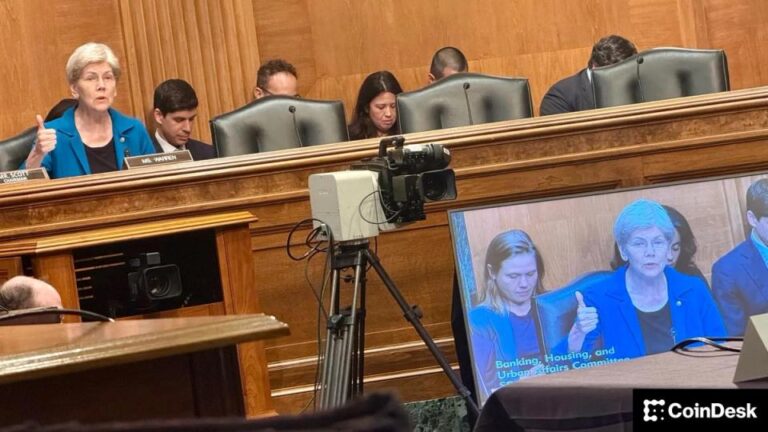
This week’s U.S. Senate Banking Committee hearing to consider edits to the Digital Asset Market Clarity Act has dozens of amendments to weigh, though it’s likely that almost all of them won’t survive the process of Thursday’s event.
Lawmakers have pushed forward a range of proposed changes for the market structure bill as it approaches the hearing known as a “markup,” from amendments that would establish government-ethics rules to others setting safe harbors for developers to one that would cut out a must-have protection for the decentralized finance (DeFi) sector, plus a number of other smaller, technical adjustments.
The list is particularly dominated by a few lawmakers’ names, including Democratic Senators Elizabeth Warren and Jack Reed. Their items are expected to be a rhetorical wish list as other members of the committee — mostly Republicans — seek to advance the bill without significant overhauls.
Each amendment will be discussed during the hearing and will eventually receive a vote, unless they’re withdrawn. A simple majority will be needed to adopt or reject an amendment. Eventually, the Banking Committee will vote to advance the bill itself.
Here are some highlights, according to a list of the proposals circulated ahead of the hearing:
Senator Reed, a Rhode Island Democrat, wants to adopt some of the requests from bank lobbyists to further restrict stablecoin yields, according to one of his 18 amendments.
He would also entirely scrap the section known as the Blockchain Regulatory Certainty Act, which shields software developers that don’t control people’s money from being regulated as money transmitters.
On the same topic, Senator Catherine Cortez-Masto, a Nevada Democrat, wants to “protect software developers by creating a safe harbor from criminal liability for not registering as a money transmitter at the state or federal level.”
Senator Chris Van Hollen, a Maryland Democrat, is pushing eight amendments, including one that would institute a major Democratic request: banning the president and other senior government officials from “owning, promoting or affiliating with” digital assets businesses.
Senator Warren would more specifically “prohibit political corruption in banking applications and presidential bank ownership,” seeming to directly target the effort from World Liberty Financial — a company tied to President Donald Trump and his family — to obtain a U.S. banking charter.
Warren, who is also seeking to cut out whole swaths of the current bill regarding the oversight of digital commodities, went farther afield with some amendments, trying to cap credit card interest rates and calling for bank supervisory records involving “Jeffrey Epstein and his co-conspirators.” (The bill itself does include some non-crypto provisions, including legislation targeted at housing championed by Senator John Kennedy, a Louisiana Republican.)
Senator Mark Warner, a Virginia Democrat who has been at the center of illicit-finance negotiations involving DeFi, is proposing “a control test to determine when persons operating non-decentralized finance trading protocols are subject to” Bank Secrecy Act anti-money laundering obligations.
On the Republican side of the committee, Senator Bill Hagerty from Tennessee is seeking a ban of central bank digital currencies (CBDCs) issued by the U.S. Federal Reserve. CBDC bans have already been pushed in various other bills by lawmakers, most recently in the House of Representatives’ bill to reauthorize the Foreign Intelligence Surveillance Act.
Thursday’s session to consider advancing the Clarity Act is likely already well planned for what the Republican majority will allow into the legislation. The last time the Clarity Act was on final approach to a markup in this same committee, it made it to this stage in which some 75 amendments were offered, though that hearing was postponed shortly after.
Previous wrinkles in the negotiation have since been ironed out over four months of talks, clearing a path for committee approval this week. Once that happens, this bill can be merged with the parallel effort that already cleared the Senate Agriculture Committee.
However, some significant changes are still expected after this week, including the effort to resolve the Democrats’ demand for a conflict-of-interest provision on cutting ties between government officials and the crypto sector, most notably seen with the president and his family. A meeting earlier this week on that ethics provision reportedly remained contentious, and Democrats including Senator Kirsten Gillibrand have said the Clarity Act will not get approved in the Senate without it.
Clarity’s advocates need to secure a number of Democratic supporters for the bill if it’s going to clear the 60-vote hurdle that’s standard in the Senate. Then the bill needs to get another approval from the U.S. House, which had already passed a similar bill last year.
In a Wednesday posting on social media site X, Coinbase CEO Brian Armstrong called the bill “strong” and said it “will benefit the American people by making the US financial system faster, cheaper and more accessible.”
“Mark it up,” he said.
Read More: Clarity Act, in the flesh, unveiled by U.S. Senate Banking Committee before hearing
Welcome to our institutional newsletter, Crypto Long & Short. This week:
Dovile Silenskyte provides an alternative to the “bitcoin as a risk asset” narrative.
Joshua de Vos shares insights and analysis on global exchanges.
Top headlines institutions should pay attention to by Francisco Rodrigues.
CoinDesk 80 Leads as Crypto Outperforms Across Asset Classesin Chart of the Week.
Thanks for joining us!
-Alexandra Levis
Expert Insights
Bitcoin vs. gold: 26% relative undervaluation
By Dovile Silenskyte, director of digital assets research, WisdomTree
For years, markets have struggled to classify bitcoin. Currently, the dominant media narrative tends to treat bitcoin as a high-beta expression of investor risk appetite: rising when liquidity is abundant and falling when markets turn defensive.
That framing increasingly misses the bigger structural shift underway.
Bitcoin is evolving into a monetary asset competing for the same macro allocation bucket as gold. Both bitcoin and gold:
Sit outside the traditional fiat system.
Respond to inflation expectations, real yields and confidence in sovereign currencies.
Attract investors looking for scarce and politically neutral stores of value.
The difference is that gold represents monetary defensiveness while bitcoin represents monetary expansion. This distinction changes how bitcoin should be analyzed.
Rather than evaluating bitcoin through an equity or risk-asset framework, we believe the cleaner analytical lens is bitcoin versus gold. The key question is not whether bitcoin will rise in absolute terms, but whether its monetary premium relative to gold is too low or too high given the prevailing macro backdrop.
Our Bitcoin in Gold (BiG) model attempts to answer precisely that question. As of March 31, 2026:
Actual bitcoin/gold ratio: 15.6
Model fair value: 21.1
That gap implies bitcoin is 26% undervalued relative to gold.
Figure 1: The actual bitcoin/gold ratio is sitting clearly below model estimate
Source: WisdomTree, Stooq. From December 31, 2013 to March 31, 2026. Historical performance is not an indication of future performance, and any investment may go down in value.
This gap is not abstract. It reflects current macro inputs embedded in the model. Specifically, bitcoin reacts more aggressively than gold to macro shifts:
Falling real yields / easier liquidity: bitcoin outperforms.
Stronger USD / risk-off: gold outperforms.
Rising inflation expectations: typically supports gold first.
Today’s mix implies a higher bitcoin/gold ratio than observed.
As of March 31, 2026, the model assigns the highest probability for the following three macro scenarios over the coming 12 months, and each of them leads to different outcomes:
Current: no shock; gradual convergence to fair value.
Inflation shock: gold leads initially; bitcoin catches up later.
Risk-off: stronger USD; gold outperforms.
Figure 2: Scenario paths for the bitcoin/gold ratio
Source: WisdomTree. April 7, 2026. Model assumes that macro scenario starts on April 1, 2026 and continues for the next 12-month. Forecasts are not an indication of future performance and any investments are subject to risks and uncertainties.
For investors, there are three practical applications of the BiG model:
Relative value trade: long bitcoin and short gold is one potential implementation approach.
Allocation tilt: if holding both, increase bitcoin weight when the gap is wide.
Macro overlay: combine with real yields, dollar trend and liquidity indicators.
The BiG model is a positioning tool. The edge comes from systematically leaning into dislocations when they are wide and scaling back as they compress. The discipline is straightforward: track the gap, anchor decisions in the macro context and avoid overfitting short-term price moves.
See further detail in Bitcoin vs gold: bitcoin looks 26% undervalued relative to gold blog.
Principled Perspectives
The centralized exchange market is pulling apart
By Joshua de Vos, research lead, CoinDesk Data
Centralized exchanges have long maintained that the industry has reached maturity. CoinDesk’s May 2026 Exchange Benchmark, which evaluates 75 spot exchanges against more than 100 metrics, provides a rigorous test of that assertion. The resulting data is encouraging in some areas and complex in others; most notably, it reveals a systemic vulnerability to market failures that persists even among top-tier venues.
The bar rises
The primary shift this cycle is methodological: the AA grading threshold was raised from 80 to 85, reflecting the higher institutional standards required as the benchmark evolves. Six exchanges met this new criteria: Bitstamp by Robinhood (90.26), Coinbase (88.58), Kraken (87.77), Binance (87.25), Bullish (86.99) and Crypto.com (86.22). For the first time in three years, Bitstamp leads the rankings, overtaking Binance. Meanwhile, Gemini and OKX moved from AA to A status. This reclassification was a direct consequence of the higher threshold rather than a decline in quality, as both exchanges actually improved their individual scores.
The Exchange Grade Distribution highlights a significant evolution over the last three cycles. The most notable change occurred at the bottom of the scale; the number of E-grade exchanges dropped from 11 in November 2025 to just four, with seven venues ascending to the D-tier. This represents the largest single-cycle grade shift in the benchmark’s history. The universe average score rose to 58.42, marking a third consecutive period of improvement, and the number of ‘Top-Tier’ exchanges (rated BB or higher) grew to 21 from 20 last cycle.
Volume concentrates at the top
Top-tier exchanges now command 59% of Q1 spot volume despite making up only 27% of rated venues; a sharp increase from 40% in October 2025. This trend aligns with a long-term pattern of institutional capital gravitating toward venues with verifiable infrastructure. Binance remains the dominant force with 24% of total spot volume, nearly four times that of its nearest competitor. Conversely, MEXC commands 6.25% of global volume but remains C-graded, illustrating a small yet visible disconnect between trading activity and institutional risk standards amongst trading long-tail assets.
October’s lesson
A critical finding this cycle involves the market-wide exchange failures on October 10th, which caused price dislocations across 62 of the 75 benchmarked exchanges and affected at least 571 trading pairs. The incidence of flash crashes was near-universal, impacting 81% of all rated exchanges, including 100% of AA-grade and 100% of B-grade venues. These results suggest that such market failures are systemic, rather than isolated to lower-tier platforms. To better track this, the benchmark has introduced a broader flash crash assessment to monitor venue resilience.
What the data still shows
Transparency continues to trend upward. Proof of Reserves coverage reached 63%, and due diligence questionnaire (DDQ) submissions hit an all-time high with 21 verified responses. However, the regulatory landscape remains fragmented. Despite MiCA being in effect since late 2024, only 16 of the 75 benchmarked exchanges hold a full license, and 66% have no regulatory presence in the EU at all. Notably, HitBTC, Thalex and Woo have yet to establish a regulatory footprint in any jurisdiction.
Looking ahead, the November 2026 cycle opens for exchange submissions in October. As institutional allocation into digital assets deepens and scrutiny from counterparties increases, the cost of operating outside institutional risk frameworks is only rising. The benchmark plays a central role in making that cost visible.
Headlines of the Week
– ByFrancisco Rodrigues
This week’s headlines show a fresh wave of capital flowing into crypto infrastructure as banks, asset managers and tokenization platforms race to build the rails for institutional adoption. That’s even as one of the sector’s largest bitcoin holders flags potential selling pressure.
Circle raises $222 million for Arc, beats Q1 earnings estimates but misses on revenue: The USDC issuer closed the round at a $3 billion valuation for its Arc blockchain token, with backing from BlackRock, Apollo and Bullish, alongside Q1 results that topped earnings expectations but came in light on the top line.
Ripple raises $200 million from Neuberger Berman to expand its Ripple Prime platform: The new facility will fund the buildout of an institutional prime-brokerage offering, addressing rising demand for margin financing and trading services that span both traditional and digital asset markets.
Morgan Stanley brings crypto trading with lower fees than rivals: The bank is rolling out spot crypto on E*Trade at a 50-basis-point transaction fee, undercutting Coinbase, Robinhood and Charles Schwab while giving its wealth clients a bank-run route into the asset class.
Crypto platform Bullish to buy Equiniti for $4.2 billion, building tokenized securities infrastructure: The deal adds regulated transfer-agent, shareholder-record and issuer-services capabilities to the exchange’s stack as it positions for tokenized securities, 24/7 trading and stablecoin-based settlement.
Michael Saylor’s Strategy signals potential bitcoin sale to fund dividend obligations: After reporting a $12.54 billion Q1 loss, the company said it may sell BTC to meet dividend payments, refocusing attention on the leverage, financing costs and potential supply overhang tied to listed bitcoin-treasury firms.
Chart of the Week
CoinDesk 80 Leads as Crypto Outperforms Across Asset Classes
Bitcoin has gained 5.7% month-to-date, outpacing major asset classes including the S&P 500, gold and oil since the start of May 2026. This strength has filtered down the market-caps, with the CoinDesk 80 (CD80) up 15.32% MTD — significantly ahead of large caps — led by ZEC’s 57% rally. The divergence between CD80 and BTC, CD5 and CD20 (all clustered around 3 -5%) suggests momentum is rotating into smaller-cap altcoins as the broader crypto rally extends.
Listen. Read. Watch. Engage.
Looking for more? Receive the latest crypto news from coindesk.com and market updates from coindesk.com/institutions.
Note: The views expressed in this column are those of the author and do not necessarily reflect those of CoinDesk, Inc., CoinDesk Indices or its owners and affiliates.
In a significant shift in bitcoin’s market structure the amount of supply held by “conviction buyers” has surged to nearly 4 million BTC, according to BitGo data cited by Bitfinex on Wednesday.
Bitcoin in long-term buyers’ hands currently represents a 300% increase since the end of 2025, signaling a massive migration of the crypto’s realized value into large, low-activity entities, according to Bitfinex.
The massive “conviction” capital is valued at just over $320 billion, based on bitcoin’s current price of roughly $80,000.
“While the exact methodology behind BitGo’s ‘conviction buyers’ metric isn’t immediately clear, the broader signal is notable,” said Mati Greenspan, a market analyst and founder of Quantum Economics. “Historically, periods of tightening liquid supply combined with renewed demand have created the conditions for bitcoin’s most aggressive upside expansions.”
The current accumulation trend marks the largest two-quarter surge in high-conviction buying since the 2020 COVID-19 crash, Bitfinex said. Conviction buyers are long-term investors, whether they be individuals or institutional.
Long-term buyers holdings are not part of the estimated 5.6 million BTC that has been inactive for over a decade, according to Jameson Lopp, a core bitcoin developer. The total amount of bitcoin in circulation is 20.03 million currently, according to CoinDesk data.
Bitfinex analysts noted that a growing share of bitcoin’s realized value is no longer circulating on crypto exchanges, but is instead moving into the hands of entities that rarely transact, regardless of price volatility.
This structural shift suggests that long-term holders, ranging from institutional “whales” to corporate treasures, are aggressively absorbing the available bitcoin supply, most notably Strategy (MSTR), the largest publicly traded corporate holder of bitcoin. This company, which is currently sitting on $4.6 billion in unrealized gains, recently increased its total holdings to 818,869 BTC, which it acquired for nearly $62 billion. When supply moves into these low-activity entities, it effectively reduces the liquid supply available on the open market, creating a potential “supply shock” dynamic.
Supporting this narrative of strengthening the market floor, CEX.IO research . Their analysis reveals that nearly 70% of recent buyers’ supply is now in profit, a metric that often serves as a psychological buffer against sell-offs, according to CEX.IO research.
CEX.IO also suggests that as most new bitcoin investors move into the “green,” their urgency to exit positions during minor pullbacks decreases, which helps stabilize the price of BTC.
“People who actually get bitcoin always want to accumulate as much as possible and never want to sell, particularly now with all the new existing ways to borrow against BTC holdings,” Ran Hammer, vice president of Business Development at Orbs, told CoinDesk. “That changes the supply equation entirely, with more BTC structurally removed from the market.”
In a separate email comment to CoinDesk, Connor Howe, CEO and co-founder at Enso, said he believes BTC’s long-term scarcity narrative is maturing from theory into market structure.
“With ETF flows and institutional accumulation becoming more structural than speculative, a larger share of supply is moving into conviction hands,” he said, adding that “this could make future scarcity far more visible when demand accelerates.”
Researchers at the Bosch Center for AI and Carnegie Mellon University have developed a new AI system to improve the dexterity of humanoid robots.
The model, called Humanoid Transformer with Touch Dreaming (HTD), helps robots predict the outcomes of touch and force, enabling them to plan and execute tasks with greater spatial awareness.
The researchers said the system addresses a longstanding limitation in humanoid robotics: coordinating whole-body movement while simultaneously performing advanced object manipulation tasks.
“Real-world humanoid loco-manipulation remains challenging because it requires whole-body stability, end-effector dexterity, and contact-aware interaction under frequent contact changes,” the researchers wrote in the paper’s abstract.
To try to bridge this gap, the team used reinforcement learning and VR-based data collection to teach robots dexterity and manipulation.
The system also combines tactile sensing, multi-view vision and proprioception (a neurological understanding of the body in space) to train robots in manipulation tasks.
Related:Nvidia Taps Robotics Ecosystem to Scale Physical AI
Using this, HTD was trained not only to predict future actions, but also to anticipate how touch and force would evolve during manipulation — a process the researchers dubbed “touch dreaming” and from which the system gets its name.
In tests, HTD improved average task success rates by 90.9% across five real-world manipulation tasks: Insert-T (a specific robot assembly task), book organization, towel folding, cat litter scooping and tea serving.
Looking ahead, the team said they plan to scale HTD’s learning framework, integrate human demonstrations and expand applications to a broader range of tasks such as household chores, assisting customers in retail settings, and industrial and manufacturing environments.
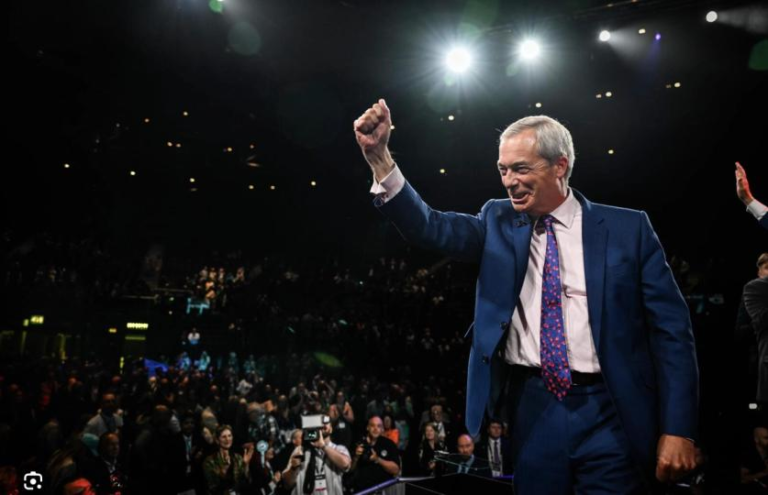
Nigel Farage, the leader of Reform UK and a member of Parliament, is facing a formal investigation by the parliamentary standards watchdog after failing to declare a 5 million-pound ($6.8 million) gift from crypto billionaire Christopher Harborne, news services including the Guardian reported Wednesday.
Farage received the donation from Harborne, a Thailand-based businessman with a 12% stake in stablecoin issuer Tether, weeks before announcing he would stand as a candidate in the 2024 general election, and did not declare it when elected as MP for Clapton. New MPs must register all financial interests received within the 12 months preceding their election.
A weekly YouGov poll of voting intentions has Reform UK gaining the largest share of votes, at 28%, putting Farage as the frontrunner to become the next prime minister. If the watchdog finds he breached the code of conduct, he could face suspension and potentially be forced to fight again for his parliamentary seat.
Farage, who is supportive of the crypto industry, has said that because Harborne’s donations were intended to cover his security expenses he was not compelled by law to declare them. Reform UK recently said the gift falls under the exemption for purely personal gifts. Labour and other parties argue that Harborne’s donations are subject to the rule, and the gift was referred to the parliamentary commissioner last month.
The parliamentary commissioner for standards, Daniel Greenberg, is set to investigate Farage under rule 5 of the code of conduct, which compels lawmakers to “fulfil conscientiously” requirements relating to their registration of interests, the Guardian said.
The Reform UK leader does not appear on the commission’s list of current investigations.
In April, BitMEX co-founder Ben Delo said in an op-ed for CoinDesk that he had given the party 4 million pounds since the start of the year.
The U.K. government imposed a moratorium on political crypto donations in March, citing a review warning that digital assets could be used to channel foreign money into U.K. politics. The ban covers donations of any size and will be written into the Representation of the People Bill, with criminal penalties for non-compliance.
Read more: Nigel Farage takes 6% stake in UK bitcoin treasury firm Stack BTC
BNB Chain introduced a framework enabling autonomous agents to obtain verifiable on-chain identities, receive payments, hire other agents, and build reputation through new token standards and skill integrations.
BNB Chain announced a comprehensive on-chain agent framework on May 13, 2026, enabling autonomous agents to obtain decentralized identities via the ERC-8004 standard, conduct peer-to-peer payments, delegate tasks to other agents using ERC-8183, and accumulate verifiable reputation tracked on 8004scan. The system operates entirely on-chain with transparent, auditable transactions and hierarchical agent relationships.
The framework integrates multiple skill modules including native BNB Chain smart contract execution and on-chain data querying via natural language, Nodereal’s MegaNode API infrastructure providing access to 25+ blockchain networks, and specialized meme token management capabilities via fourdotmemezh Agent Skills. A BNB Chain Knowledge Base Model Context Protocol (MCP) enables agents to query blockchain documentation with sourced, instant answers, expanding agent functionality across DeFi and asset management use cases.
Sources: BNB Chain | BNB Chain
This article was generated automatically by The Defiant’s AI news system from publicly available sources.
Anthropic’s sustained aim for the legal industry shows the AI lab’s recognition of the field as an easy entry point that can be used to prove the success of its technology.
On Tuesday, the vendor expanded Claude for Legal with 20 new connectors that enable lawyers and legal professionals to use Claude with legal software such as Thomson Reuters CoCounsel, DocuSign, iManage, Box and EverLaw. With these connectors, legal teams can access deep expertise and manage complex work without switching between Claude and software from those providers.
Anthropic also released 12 practice-area plugins tailored to specific legal roles, such as a commercial legal plugin that reviews NDAs and vendor agreements. Anthropic said it is also partnering with organizations such as Free Law Project, the Justice Technology Association and others to help those who have trouble accessing legal help.
The new plugins and connectors are part of Anthropic’s continued push to use the legal industry as an example of how professionals can benefit from the use of its Claude model, with the right connectors. While the vendor has dabbled in other verticals, such as cybersecurity, it targets the legal field more than any other AI lab. Earlier this year, it introduced Claude Cowork, which sent the legal industry into a panic because it offered specialized plugins and enterprise integrations. Anthropic is specifically creating AI tools and partnering with SaaS vendors in an industry that has been slow to adopt technology.
Related:OpenAI Launches AI Consulting Company, Following Anthropic
The latest move is part of Anthropic’s overall strategy to show enterprises that, if it succeeds in law, it can also succeed in gaining mass adoption in other fields, said Michael Bennett, associate vice chancellor for data science and AI strategy at the University of Illinois Chicago. Anthropic has also targeted finance and graphic design.
“For an industry that has this cultural bias against adopting technologies early on, if you can overcome those hurdles, then you can turn to other industries and say, ‘hey, even the legal industry…is doing this now,’ and seeing it benefit them,” said Michael Bennett, associate vice chancellor for data science and AI strategy at the University of Illinois Chicago.
The Right Collaboration
However, to succeed, Anthropic needs the right partners. The introduction of connectors to the software that legal professionals use is a way for the AI Lab to acknowledge that it still needs the expertise of legal SaaS vendors like Thomson Reuters.
“There is still a gap between what a foundation model can do versus what a specialized SaaS company that focuses on the vertical market can offer,” said Lian Jye Su, an analyst at Omdia, a division of Informa TechTarget.
Related:Nvidia in $2.1B Deal With Data Center Provider IREN
SaaS vendors are not relying solely on AI expertise, but also on the data pipelines they have built to store and manage enterprise data, he said. For example, in legal, there is a focus on document processing, understanding legal context and making legal recommendations, all of which are not the strengths of LLMs but are strengths of the specialized connectors tied to legal partners. Those connectors could sway legal professionals who have been considering Anthropic but have not yet made the move.
“This is probably going to reduce the anxiety a bit because these connectors are to be implemented inside the cyber secure domain of the firm,” Bennett said. He added that this approach also reduces implementation costs, so there is no need to worry about building bespoke software to connect Claude to a legal firm’s own database.
Moreover, it reduces the risk of shadow AI, Bennett added.
“There are fewer reasons for practitioners, lawyers, folks on the business side of law firms, to go outside of the cyber, secure domain of a firm and access some AI and then unintentionally reveal and expose the confidential or proprietary information,” he said.
Related:Beijing Lab at $20B as AI Investors Look to China
Some Problems
However, challenges remain, especially hallucinations, which the legal industry has been plagued with since the introduction of large language models.
Bennett said that if an AI connector makes a slight modification to a legal document when it shouldn’t, it can be problematic and lead to serious legal problems.
“That known risk may be amplified in situations where we’ve got a culture of moving slowly with respect to the technology, a history of fumbling the ball when it comes to hallucinations,” he said. He added that there is a need for “meaningful, substantive guardrails ” to avoid that kind of potential risk.
Moreover, with Claude sitting on the cloud, some legal companies might still not like that Su said.
“Different legal firms may have different appetites when it comes to where the data sits, and some will still prefer to sit on-prem or maybe have a hybrid type of setup,” he said.
The Senate on Wednesday confirmed Kevin Warsh as the next chair of the Federal Reserve in the most divisive confirmation vote in the central bank’s modern history, handing President Donald Trump a landmark win just as fresh inflation data clouds the path to the interest rate cuts he has loudly demanded.
The chamber voted 54–45 to confirm Warsh, 56, making him the 11th Fed chair of the modern banking era and the wealthiest person ever to hold the position. The vote was nearly entirely along party lines, with only Pennsylvania Democratic Senator John Fetterman crossing over in support.
Warsh takes over from Jerome Powell, whose four-year term as chair expires Friday — though Powell is not departing the Fed entirely, as he retains his seat as a board governor through 2028.
Warsh is no stranger to the Fed’s marble corridors. He previously served on the Board of Governors from 2006 to 2011, becoming the youngest member in the institution’s history at age 35.
His return comes at a far more turbulent moment: the Fed is grappling with persistent inflation above its 2% target, economic fallout from the war in Iran, and a looming Supreme Court fight over the fate of Governor Lisa Cook.
Trump has made no secret of his expectations. The president repeatedly clashed with Powell over what he viewed as overly restrictive monetary policy, and Warsh was selected from a field of nearly a dozen candidates — including current governors Christopher Waller and Michelle Bowman — with rate relief firmly in mind.
Yet this week’s data has complicated the picture, with pipeline price pressures accelerating at their highest pace in more than three years, causing markets to scale back rate-cut bets and even price in a chance of an increase later this year. Warsh’s first FOMC meeting as chair is scheduled for June 16–17.
Warsh: Bitcoin doesn’t trouble me
For the Bitcoin community, Warsh’s confirmation carries singular weight. He is the first incoming Fed chair to have held direct exposure to digital assets, including an equity stake in Flashnet, a Bitcoin payments startup, as well as ties to crypto index manager Bitwise and stablecoin project Basis.
He has publicly described Bitcoin as “an important asset” and “a very good policeman for policy,” arguing its price reflects real-world confidence in the Fed’s inflation management. “Bitcoin doesn’t trouble me,” Warsh said at a Hoover Institution event last year, framing it as a signal of monetary credibility rather than a threat to the dollar.
Lawmakers are set to vote tomorrow on the Clarity Act, a closely watched piece of legislation that could reshape regulatory oversight for bitcoin and digital assets in the United States.
Rep. French Hill (R-AR) praised the confirmation, saying Warsh’s “commitment to disciplined monetary policy will help restore confidence in our economy”.
Critics, including Sen. Elizabeth Warren, spent his April 21 confirmation hearing warning that political pressure from the White House could compromise the Fed’s independence — a concern Warsh flatly rejected, vowing to keep monetary policy “strictly independent”.
Powell, for his part, said he plans to “keep a low profile as a governor.”