Home Blog Page 302

Crypto for Advisors: beneath the crypto surface

0

In today’s newsletter, Andy Baehr from GSR examines how, beneath the stalled market, advisors are quietly building durable crypto allocations, moving beyond BTC and gaining more comfort in this asset class.

Then, in “Ask an Expert,” Patrick Velleman of Valdora offers commentary on how financial advisors can navigate the growing trend of durable crypto allocations.

Sarah Morton


Summer is coming. Build your core.

Crypto markets feel low-energy and ambivalent. But, beneath the surface, investors are searching for the right long-term home in crypto. It’s time to position for the next change of the season.

The question finds every crypto person, eventually. A friend, a relative, a client asks: ”I want to add some crypto. What should I actually own?”

Before answering, let’s be honest about the current environment.

Rallies with no booster rocket

The good news: crypto prices are drifting higher. The less-good news: they’re only drifting. Bitcoin has moved from the mid-$60,000s to the high $70,000s, ether (ETH) from around $1,800 toward $2,300, and Solana (SOL) in the mid-$80s. Movement without momentum. Progress without pulse — and more than a few sad-trombone rallies that faded before they could build on themselves.

The feeling of … ambivalence ... was so palpable, we developed a Conviction/Ambivalence gauge. In Q1 2026, we hit maximum ambivalence. Other signals point the same way. Funding rates on perpetual futures, a clean read on leveraged appetite, have been persistently low or negative. DeFi borrow rates on Aave drifted toward 3% ahead of a recent exploit, versus 20%+ in the weeks after the 2024 election and 5–7% in more typical conditions. The fast money is elsewhere: oil, equities, prediction markets. Volatility is both a magnet and a product of hot markets, and right now, crypto has a shortage of both.

The Conviction Gauge measures an average ratio of weekly returns to daily returns. Source: GSR

That stands in stark contrast to last year’s Q2 and Q3 rally, which had velocity, power, and breadth. ETH led. SOL pushed hard in August and September. The GENIUS Act added fuel. That was a market with real conviction.

The slower shift that matters more

And yet beneath the surface, something more durable is happening: longer-term investors and their advisors are quietly getting more comfortable allocating to crypto. That shift doesn’t flood X the way a funding rate spike does. Nobody is posting charts about advisors quietly building allocations, but it’s the iceberg that matters. Over time, the effects will be felt, and they will be durable.

And for those allocators, BTC alone is no longer the answer. Its role has been clarified as the macro asset, something that may even behave defensively when markets contract. But advisors are being asked to go further. Clients want exposure to the blockchain growth story: tokenization, stablecoins, the layer-one infrastructure that’s now top-of-fold business news.

So what should the core actually be?

Our answer is straightforward: BTC, ETH and SOL. The power trio. The cycle survivors. Two distinct themes across three assets: BTC as the major macro asset, with ETH and SOL as the layer-ones on which blockchain’s growth story settles. Neck and neck, genuinely competing and we believe, likely to both win.

A solid core holding though, should do more than just sit there. Proof-of-stake assets like ETH and SOL can generate yield through staking, a return stream that passive holders often leave on the table. And you want a product that tilts toward the market: one that reads different environments and adjusts weights to seek excess return, rather than holding fixed weights through every regime.

That’s a lot to ask. So we launched an ETF to make it easy.

The GSR Crypto Core3 ETF (BESO) packages the core BTC, ETH and SOL, with staking rewards on ETH and SOL, and active, research-driven weekly rebalancing. Over time, investors will seek satellite holdings — sectors, themes and factors. But Core3 is designed to do the first job well: core crypto market beta, with staking and active management built in.

gsretps.io/etf/beso

– Andy Baehr, managing director, Asset Management at GSR *


Ask an Expert

Q. How is digital asset investing and trading different from traditional assets?

The biggest practical difference is that everything happens on the blockchain. Holdings, transactions, strategies, even the behaviour of a protocol over time, all of it is visible. Anyone with a wallet address and a block explorer can see what you own and what you have done. That is a level of transparency traditional markets simply do not offer. This changes the information environment clients/users are operating in.

The second difference is that price discovery runs 24/7, which means volatility never takes a break either. Then there is self-custody. In traditional finance, custody is someone else’s problem and quite often insured. In digital assets, it’s going to be your problem whether you want it or not. That is empowering, because you genuinely own the asset and no intermediary can gate your access to it. It is also more dangerous because the responsibility for keys, backup and operational security falls on the holder. A lost phrase is a permanent loss and it’s one of the reasons people like CZ (Changpeng Zhao, former CEO of Binance) vouch for storing assets on centralized exchanges.

For advisors this means the conversation with clients is broader than allocation because it also covers custody setup, key management and operational risk in a way it never has before.

Q. How do vaults and onchain finance change the investing vs trading debate?

It is no longer a question of invest versus trade, what I see the market actually debating is which yields are real and which are not. After a few cycles of degen farming, triple-digit APYs and protocols that collapsed, most serious participants have moved on from the question of “how much can I earn” to “how durable is this.”

This is why vaults have been increasing in popularity. A well-designed vault lets capital stay in the market with less manual rotation. So if you deposit into a strategy, and the strategy runs, there is less movement, less clicking, less emotional decision-making. For someone who does not want to trade, that is a clear improvement over what was previously available on-chain, which was mostly either passive holding or active yield farming.

The other important piece is liquidity. A lot of traditional yield products lock your capital up. Private credit funds for example, have redemption windows that run anywhere from a week to a quarter. A vault that issues a liquid token against your deposit gives you something different. Your capital is earning, but you can still move if you need to. That is a real change in how long-term allocations can be structured.

The path this sets up is yield that is perhaps a bit more boring than what crypto has historically offered, but more sustainable. But at least boring doesn’t get you REKT.

Q. As automated vaults handle the technical ‘trading’ (rebalancing, compounding, liquidating), does an advisor’s value-add shift from ‘picking winners’ to ‘curating risk profiles’?

Yes, and a good one at that.

When the mechanics of a strategy are handled by a smart contract, the execution work is no longer where the advisor adds value. Rebalancing happens automatically and compounding happens automatically. Liquidation triggers run on their own logic where none of it needs a human in the loop.

What it does need is a human in the loop as the judgment layer on top. Someone has to look at what is actually available in the market, vet it and decide what is worth putting client capital into. That is more of a due diligence question. Who built this vault? What is the strategy doing underneath? What are the custody arrangements? How has it performed in stress? Is the team credible? Is the audit credible? What happens if a dependency breaks?

You then take the risk appetite of the client and adapt it to the risks the available vaults actually carry. A conservative client might want a tokenized Treasury vault and a stablecoin yield vault. A more adventurous client might accept a DeFi yield vault or an FX strategy vault. Curating risk is human in the loop work.

– Patrick Velleman, chief marketing officer, Valdora CMO


Keep Reading


* Risk Disclosure

Investors should consider the investment objectives, risks, charges and expenses carefully before investing. For a prospectus or summary prospectus with this and other information about the Fund, please call 888-999-5958 or visit our website at gsretps.io/etf/beso. Read the prospectus or summary prospectus carefully before investing.‍Investments involve risk. Principal loss is possible.

‍Crypto Currency Risk (Bitcoin (“BTC”), Ether (“ETH”), and Solana (“SOL”) (together, the “Reference Assets”)). The Reference Assets are relatively new innovations and are subject to unique and substantial risks. Crypto currencies are a subset of digital assets, representing blockchain-based tokens that function primarily as mediums of exchange, stores of value, or units of account, whereas digital assets more broadly include any electronically represented asset with economic value, such as tokens, stablecoins, and other distributed-ledger-based instruments.‍Digital Assets/Cryptocurrency Market Volatility Risk. The prices of the Reference Assets have historically been highly volatile. The value of the Fund’s exposure to the Reference Assets—and therefore the value of an investment in the Fund—could decline significantly and without warning, including to zero.


Market Beta Risk. The Fund seeks to provide core exposure to the cryptocurrency market (‘market beta’) through allocations to BTC, ETH, and SOL. As a result, the Fund’s performance may be significantly influenced by overall digital asset market movements, and the Fund may decline in value when the broader cryptocurrency market declines. The cryptocurrency market is highly volatile and subject to rapid changes.Staking and Validator Risk. When the Fund stakes Reference Assets that utilize proof-of-stake consensus (currently, Ethereum and Solana), the assets are subject to risks attendant to staking generally, such as illiquidity, reliance on third-party service providers, slashing, missed rewards, validator problems, and errors. Staking is the process of putting digital assets to work on a blockchain network to receive rewards and enhance protocol security. By helping the blockchain run more smoothly and securely, rewards are earned in the native blockchain token. Potential staking rewards are earned by the Trust and not issued directly to investors. ‍Liquidity Risk. Unbonding periods for staked Reference Assets may range from several days to several weeks depending on network conditions.
Concentration Risk. The Fund’s assets will be concentrated in the sector or sectors or industry or group of industries that are assigned to the Reference Assets, which will subject the Fund to the risk that economic, political or other conditions that have a negative effect on those sectors and/or industries may negatively impact the Fund to a greater extent than if the Fund’s assets were invested in a wider variety of sectors or industries.
Foreign Securities Risk. To the extent the Fund invests in foreign securities they may be subject to additional risks not typically associated with investments in domestic securities.‍Indirect Investment Risk. None of the Reference ETFs or the Reference Assets are affiliated with the Trust, the Adviser, or any affiliates thereof and is not involved with this offering in any way, and has no obligation to consider the Fund in taking any corporate actions that might affect the value of the Fund.‍New Fund Risk. The Fund is a recently organized management investment company with no operating history. As a result, prospective investors do not have a track record or history on which to base their investment decisions.‍Non-Diversification Risk. Because the Fund is non-diversified, it may invest a greater percentage of its assets in the securities of a single issuer or a smaller number of issuers than if it was a diversified fund.

Foreside Fund Services, LLC (the “Distributor”)

Kalshi confirms $1 billion raise that values the firm at $22 billion amid prediction market boom

0

Prediction market platform Kalshi said it raised $1 billion in fresh funding at a $22 billion valuation, as institutional investors increasingly turn to event contracts for trading and hedging.

The Series F round was led by Coatue and included Sequoia Capital, Andreessen Horowitz (a16z), Paradigm, IVP, Morgan Stanley and ARK Invest, according to a Thursday press release. The news confirmed a Bloomberg report in March about the investment round and valuation.

The firm said it plans to use the capital to expand institutional services, including block trading tools, broker integrations and new risk products aimed at asset managers and insurance firms.

The fundraising comes as prediction markets have gained momentum in crypto and traditional finance alike as firms look for alternative ways to gauge probabilities and manage risk. Hedge funds and proprietary trading firms increasingly use event contracts alongside conventional derivatives to hedge exposure or express macroeconomic views.

The company operates a regulated marketplace where users trade contracts tied to real-world outcomes, from elections and economic data to sports and weather events. Traders buy contracts that pay out if a specific event occurs, turning forecasts into tradable markets.

Kalshi said institutional trading volume on the platform jumped 800% over the past six months, while annualized trading volume more than tripled to $178 billion during the same period.

Amid staggering growth, prediction markets have also drawn growing scrutiny from U.S. regulators and state authorities. Nevada, New Jersey, Illinois and several other states have issued cease-and-desist orders or launched legal challenges against Kalshi, arguing that some event contracts resemble unlicensed sports betting products. Kalshi has pushed back, saying its federally regulated exchange falls under the oversight of the Commodity Futures Trading Commission (CFTC) rather than state gambling regulators.

Kraken’s Parent Company Acquires Stablecoin Payments Firm Reap for $600M

0

The deal is payable in cash and stock and values Payward at $20 billion.

Payward Inc., the parent company of U.S. crypto exchange Kraken, has agreed to acquire Reap Technologies — a stablecoin-native card issuing and payments infrastructure company — for up to $600 million in cash and stock.

The deal, which values Payward at $20 billion, is expected to close in the second half of 2026, pending regulatory approval.

According to the announcement, the acquisition expands Payward Services, the company’s B2B infrastructure platform, adding card issuance, cross-border payments, and stablecoin treasury services to its existing suite of crypto trading, custody, and derivatives offerings.

Within the Payward ecosystem, Reap will continue operating as a standalone platform under its existing brand and leadership, the announcement notes.

“Reap is the payments layer for what comes next. Card networks, banking rails, and blockchains on a single API, settling in stablecoins,” said Payward co-CEO Arjun Sethi. Reap CEO and co-founder Daren Guo noted the company nearly tripled revenue and volumes in 2025, and expanded its regulated business from Asia to South America.

The deal is the latest in a string of aggressive moves by Payward. Last month, the company closed its $550 million acquisition of CFTC-licensed derivatives exchange Bitnomial. Rival Coinbase has also been active in M&As, acquiring options giant Deribit for $2.9 billion last year, one of the largest crypto M&A deals on record.

This article was written with the assistance of AI workflows. All our stories are curated, edited and fact-checked by a human.

BTC tests Bollinger Bands breakout as its creator flips bullish

0

The creator of the popular technical analysis indicator Bollinger Bands has taken a position in bitcoin, an asset his own indicator is currently flashing bullish on.

John Bollinger, who developed the indicator in the 1980s, said in an X post that one of his investment fund’s proprietary trading models had flipped positive on bitcoin and taken a position accordingly.

Bollinger bands are volatility bands that sit two standard deviations above and below the 20-day moving average of a token’s price. A wider gap between the two bands indicates volatile conditions, while a tighter band indicates calm.

A break above the upper band traditionally signals strong upward momentum, especially after a period of compression.

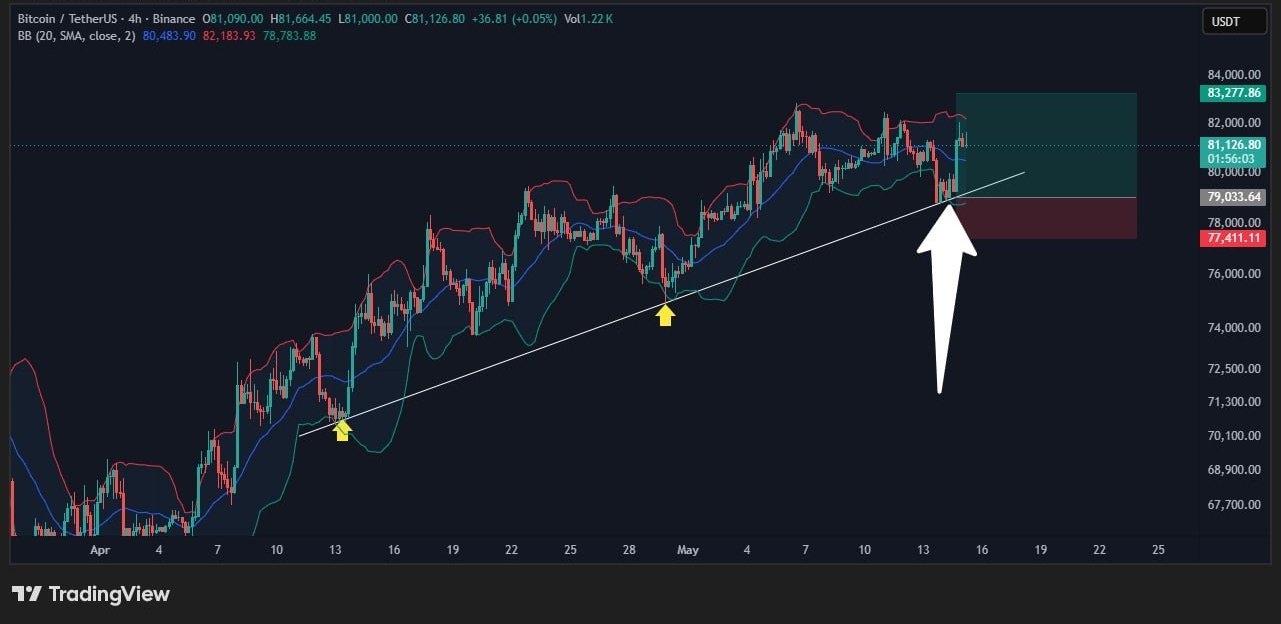
Bitcoin closed above its upper Bollinger Band on the daily chart on Wednesday, the second such close since mid-January, with the price sitting at $80,484 against an upper band reading of $81,549, per TradingView data. The breakout followed the asset’s tightest-ever band reading. These so-called squeezes often set the stage for big moves in either direction.

The chart shows bitcoin’s daily price swings in candlestick format with Bollinger bands.

The setup heading into the weekend is whether bitcoin establishes a foothold above the upper band. That would be a bullish technical signal, while a rejection here puts the price back in the chop zone.

Bitcoin traded above $80,000 at press time. The token is up roughly 9% over the past 30 days but remains 36% below its October 2025 all-time high of $126,000.

Real-time coverage and highlights from on the ground

0

It’s the third and final day of Consensus Miami.

To recap yesterday, ICYMI, Patrick Witt, the Executive Director of the President’s Council on Digital Assets, told the audience at day 2 of Consensus Miami that if the Senate Banking Committee holds a markup this month, it would give the Senate four weeks to merge the bill with the Senate Agriculture Committee version and June to work out issues with the House of Representatives. It’s an aggressive timeline, “but it is an achievable timeline,” he said.

Michael Saylor followed up to lay out his case for yieldcoins, laying out a vision for the potential future of the digital assets sector.

And the time is now to start working on post-quantum security, Project Eleven CEO Alex Pruden said.

Catch up on all of the coverage here.

Today will see panels addressing prediction markets and sports betting, stablecoins, banking and more. Privacy and agentic payments will again take the stage.

Tom Lee will present a keynote, while stablecoin executives will weigh in on recent regulatory advancements. World Liberty Financial’s Donald Trump, Jr. and Zach Witkoff will take the main stage right after lunch, while payments executives will lay out how crypto cards and other tools will work.

CoinDesk will host its Policy & Regulation Summit, diving deep into the key regulatory issues you should be paying attention to: DeFi regulation, the 2026 election and more. The day will end with a debate on prediction markets. Are they just gambling products dressed up in a fancy costume? Or are these contracts actually a novel financial product? And what does that all mean for you? Come through and find out.

Bitwise to Take Over Superstate’s $267M Tokenized Crypto Carry Fund

0

Bitwise will become the investment manager of USCC on June 1, marking its first tokenized fund and Superstate’s second handoff to a major asset manager this year.

Bitwise Asset Management will take over investment management of the Superstate Crypto Carry Fund (USCC), a tokenized cash-and-carry strategy with roughly $267 million in assets, the two firms announced today.

The fund will be renamed the Bitwise Crypto Carry Fund, with the transition expected to close on June 1, according to a press release viewed by The Defiant. USCC will keep its existing ticker, smart contracts, and token address, while Bitwise assumes portfolio duties and Superstate continues to operate the onchain rails, including tokenized issuance and digital transfer agency services.

It is Bitwise’s first tokenized fund. For Superstate, the deal cements a deliberate pivot away from running funds toward operating FundOS, its tokenization infrastructure platform.

Invesco took over Superstate’s $967 million tokenized treasury fund USTB on similar terms in March, a deal Superstate founder and CEO Robert Leshner described at the time as “the blueprint for how funds and ETFs will come onchain.”

USCC, which Superstate launched in July 2024, seeks to capture yield from the persistent premium of crypto futures prices over spot, primarily on Bitcoin and Ether. Its investor base spans hedge funds, corporate treasuries, and DeFi protocols, per the press release.

“Capital markets are moving onchain. It’s happening fast, and tokenized investment strategies are a core part of this platform shift,” said Hunter Horsley, CEO of Bitwise.

FundOS already powers external funds beyond USCC. Coinbase Asset Management’s Crypto Yield fund (CUSHY) launched on the platform last week as the first external fund issued on FundOS from inception.

Tokenized real-world assets (RWAs) have grown to over $30 billion globally, with tokenized U.S. Treasuries alone surpassing $15 billion, according to RWAxyz.

Global RWA Growth

The deal lands amid a broader institutional push into tokenized finance. Standard Chartered last week called the recent DeFi turmoil an “antifragile moment” for the sector and reaffirmed its forecast that tokenized RWAs will hit $2 trillion by the end of 2028.

A separate report from Keyrock and Securitize last month projected the distributed RWA market will reach $400 billion by 2030, with Treasuries leading near-term growth and equities representing the largest long-term upside.

The IMF, meanwhile, recently described tokenization as a “structural shift in financial architecture.”

This article was written with the assistance of AI workflows. All our stories are curated, edited and fact-checked by a human.

SAP Plans to Turn Spreadsheet AI Startup Into Top Frontier Lab

0

SAP has agreed to acquire startup Prior Labs as part of an ambitious plan to turn it into what SAP called a “globally leading” frontier lab.

No financial details of the deal were revealed, but SAP confirmed it intends to invest more than about $1.18 billion over the next four years in its effort to transform the Freiburg-based startup.

The size of the investment is noteworthy given that Prior Labs’ only previous funding was around in February 2025.

The transaction is subject to regulatory approval, with the deal expected to close in either the second or third quarter of this year.

At the heart of Prior Labs’ appeal is its pioneering development of tabular foundation models (TFMs), AI tools that are significantly more capable than large language models of understanding the tables, numbers and statistics that are key to how modern businesses operate.

This capability enables TFMs to make accurate predictions for enterprises — such as payment delays, supplier risks and opportunities to upsell — based on tabular data.

Related:OpenAI Launches Training Spec to Boost Large-Scale AI

The founders of Prior Labs said in a May 4 blog post that their development of TFMs was born of “a conviction that ran against the grain of where most of the AI world was looking.”

“While the field poured its energy into language, we believed an untapped opportunity in AI sat somewhere else entirely: in the tables, spreadsheets, and structured records that actually run the world’s businesses and scientific discoveries,” they said.

SAP itself has already enjoyed success with its own SAP-RPT-1 TFM, while Prior Labs’ open source TabPFN has been downloaded more than three million times, with TabPFN-2.6 currently ranked first on TabArena, a benchmark for tabular foundation models.

Once the deal is closed, Prior Labs will continue to operate as a separate entity, while benefiting from SAP’s scale and resources, including SAP AI Core and SAP Business Data Cloud.

According to SAP, Prior Labs’ work will enable SAP to deliver TFMs with top predictive capability, in turn enabling it to power ever more sophisticated agentic AI systems.

SAP CTO Philipp Herzig hailed Prior Labs in a statement as “one of the leading research teams in this category.”


Is The Bitcoin Bottom In After Showing A Total Of 7 Bear Flags?

0

Trusted Editorial content, reviewed by leading industry experts and seasoned editors. Ad Disclosure

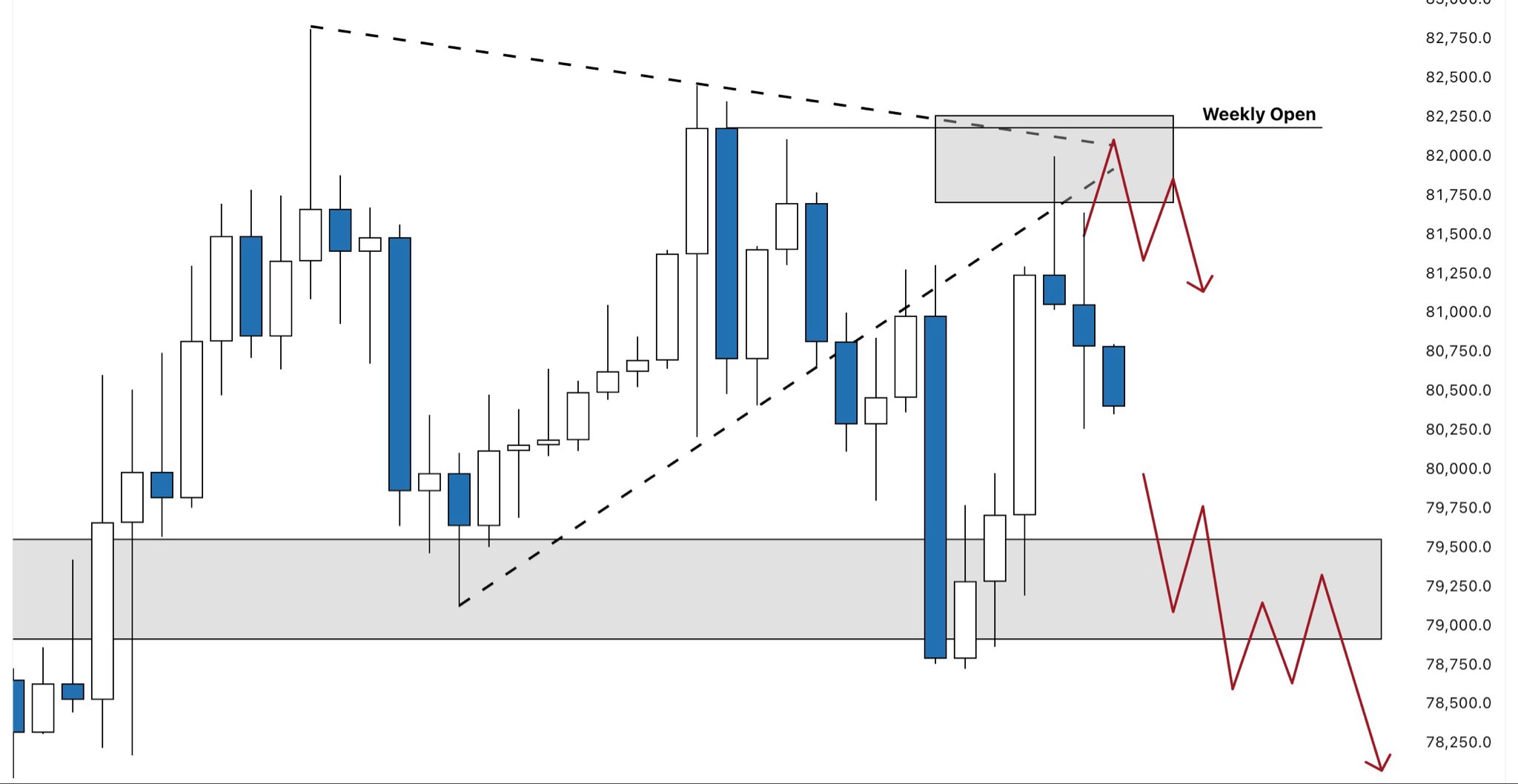
Crypto analyst CryptoCon has suggested that the Bitcoin bottom isn’t in despite the recent rally to around $82,000. He pointed to a bear flag, with BTC currently retesting the top of the channel but likely to break to the downside once the retest fails. 

Bitcoin Bottom Unlikely In As A Bear Flag Still In Play

In an X post, CryptoCon indicated that Bitcoin was likely to see another move to the downside. This came as he noted that the predominant pattern right now is still very much a bear flag, and that Bitcoin is now at the top of the channel. The analyst added that this is typically the point at which market participants begin to question whether the bottom is in. 

CryptoCon then mentioned that this current bear flag has been in play for 86 days, while the longest bear flag time since November 2021 is 100 days. During this period, a total of seven bear flags is said to have formed. The analyst explained that it is typical to see bear flags finally break to the downside after Bitcoin’s second major retest of the top of the channel, which is what is happening now. 

Bitcoin
Source: Chart from CryptoCon on X

As such, another downtrend may be on the cards for Bitcoin following this relief rally to as high as $82,000. In another X post, the analyst explained that he is just supporting the bear cycle to play out in full, based on historical patterns, and that a bottom is unlikely until year-end. He added that Fear and Greed have returned to neutral, similar to other cycles at this time, after the same set of moves. 

Furthermore, the analyst noted that the short-term cycle is repeating itself, in which price makes a big move to the downside and market participants become bearish. After that, the Bitcoin price balances, and then market participants become neutral while bullish sentiment returns as BTC rebounds into a local high, which could be happening now. 

BTC In The Final Stage Of The Bull Trap

Crypto analyst Doctor Profit, who called the Bitcoin top last year, said that Bitcoin is entering its final stage of the bull trap before it continues its downtrend with force to new lows. He added that the next downside move starts from this region and that he plans to keep his long open until BTC hits between $83,000 and $85,000. 

Once that happens, the analyst plans to start building short positions while taking profits on the long position. Doctor Profit had previously stated that the Bitcoin bottom is likely to occur towards the end of this year, with BTC still on course to drop to around $50,000 before then. 

At the time of writing, the Bitcoin price is trading at around $80,900, down in the last 24 hours, according to data from CoinMarketCap.

Bitcoin
BTC trading at $81,393 on the 1D chart | Source: BTCUSDT on Tradingview.com

Featured image from Pixabay, chart from Tradingview.com

Editorial Process for bitcoinist is centered on delivering thoroughly researched, accurate, and unbiased content. We uphold strict sourcing standards, and each page undergoes diligent review by our team of top technology experts and seasoned editors. This process ensures the integrity, relevance, and value of our content for our readers.

Purge of millions of crypto tokens underway, BTC needs it for sustainable bull cycle: Ben Cowen

0

The urgent need for a “mass extinction” of “junk coins” from the crypto market is not at all a new topic. Cardano Founder Charles Hoskinson and Ethereum co-founder Vitalik Buterin predicted that over 90% of the initial coin offering (ICO) era would fail. Ripple CEO Brad Garlinghouse in 2019 agreed 99% of all cryptocurrencies would vanish.

The sentiment remains unchanged. Arthur Hayes said in his keynote at Consensus Miami 2026 that “99% of altcoins could eventually go to zero,” citing a shift in fiat liquidity as the only real driver for the few that survive.

Ben Cowen, a market analyst and founder of Into the Cryptoverse, told CoinDesk the purge has been underway since 2021, but a more meaningful “junk-coin cleansing” is necessary before bitcoin can enter a sustainable bull cycle.

With bitcoin hovering over $81,000 on Thursday for the first time since late January, many might believe the crypto winter is over, as Michael Saylor recently suggested. However, a growing chorus of analysts warns this might be a “relief rally” built on apathy rather than euphoria. They point to untouched liquidity sitting below $60,000 and the 200-day hurdle.

The junk coin purge must occur

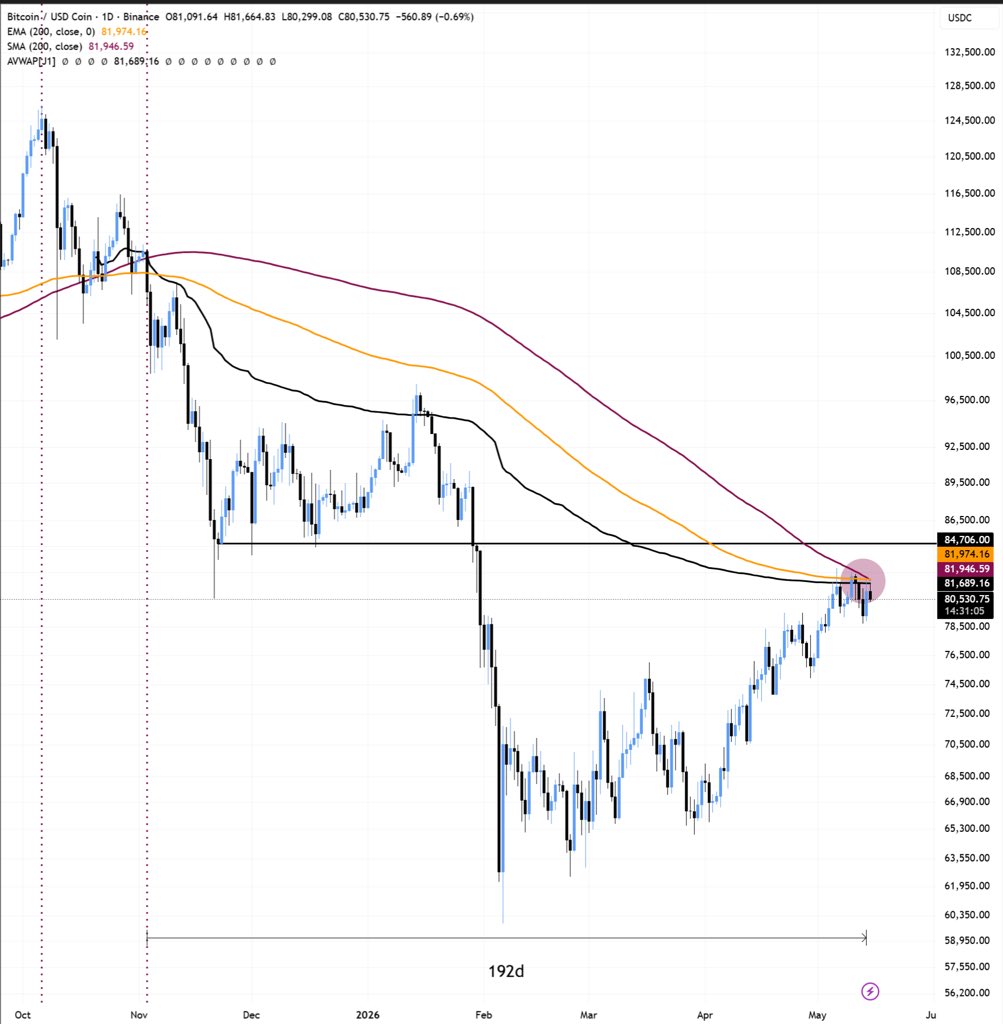
Bitcoin is currently bumping up against its 200-day moving average of roughly $82,300. Historically, failing to settle above these lines leads to a sharp “drawdown” as buyers lose confidence. If bitcoin fails to flip $88,880 into support in the coming days, a pullback toward $58,000–$62,000 is the most probable outcome, according to Cohen?

“For the bottom to be confirmed, price needs to clear 88,880 and hold—not wick through, not retest and fail. That puts the most recent cohort back in profit and removes the first layer of sell pressure,” technical analysts at CryptoQuant posted on X Thursday,

“For the global cryptocurrency market to achieve a genuine, sustainable bull run, a painful but necessary purge of thousands of speculative ‘junk coins’ must occur first,” said Cowen.

That shift is reflected in capital concentrating into bitcoin as weaker projects disappear. While GeckoTerminal has seen more than 25 million token deployments, the “mortality rate” has reached record highs. According to its data, over 11.6 million failed in 2025 alone, largely due to the collapse of the over-saturated memecoin sector.

“A clear indication of that is bitcoin’s dominance, which has been increasing since then,” Cowen said.

While bitcoin dominance gradually fell with the rise of altcoins from over 99% in 2013 to roughly 33% in 2018, it has since trended higher, reclaiming 60% in late April. Ark Invest recently suggested it could reach 70% by 2030.

“Bitcoin dominance when seen with stablecoins included is misleading,” Cowen said. When stablecoins are excluded, his firm estimates dominance is already above 67%, reflecting capital rotating out of weaker tokens. “Capital is not rotating into higher-risk assets, but instead consolidating into Bitcoin or moving to the sidelines,” Cowen wrote in his April 2026 Crypto Risk Memo.

The data of decay

Cowen’s report added that “the current cycle has been defined by a persistent downtrend in participation since 2021,” with bitcoin dominance rising while the advance-decline index for the top 100 cryptocurrencies trends lower

Matthew Pinnock, COO at Altura DeFi, noted that the explosive growth of automated launchpads like Pump.fun has ballooned the number of weak tokens, leading to an 86% failure rate among 2025’s new launches.

Luke Nolan, senior researcher at CoinShares, said the token-level purge has “already largely happened,” pointing to a collapse in memecoin market capitalization from about $150 billion in December 2024 to under $50 billion. “Ninety-five percent of tokens being worthless is fair,” Nolan said.

A gloomy short-term bitcoin outlook

Despite the $81,000 milestone, Cowen remains cautious. “I think BTC is in a bear market and will likely drift lower as the year goes on, with headwinds like geopolitical tensions and the Fed delaying rate cuts,” Cowen doubts “bitcoin will see an ATH in 2026. This is more of a reset year with time-based capitulation.”

Veteran trader Peter Brandt said Monday he believes bitcoin will rise to $250,000 in 2029, but only after a prolonged bottoming phase that may last until September and October. Michael Terpin, known as the “Crypto Godfather”, said bitcoin needs to fall to roughly $57,000 in the next four to five months before entering a bull phase. He dismissed a BTC ATH this year.

“I think this business cycle is a tough one as in order for the higher risk assets – like bitcoin and ether – to do well, we would need a crisis to justify much looser monetary policy,” Cowen stated. “But until that crisis happens, crypto will likely bleed to other asset classes.”

Bitcoin has already declined from a cycle high near $126,000 to a low near $60,000, a drawdown of over 50%, consistent with prior late-cycle environments, Cowen concluded.

American Express launches new AI training and scholarship programs for small businesses

0

American Express today announced two new AI training and education initiatives, in collaboration with nonprofits Generation and Scholarship America, to help small businesses build practical AI skills in their day-to-day operations. AI Upskilling for Small Business, an AI training program created by Generation, is open to small businesses globally, with courses offered in English and Spanish. Smart Futures for Small Business Scholarships, administered by Scholarship America, provides eligible U.S.-based small business employees with scholarship funding for AI certification programs offered by vendors or accredited educational institutions nationwide.

“AI can be a powerful tool for small businesses when it’s used in practical, everyday ways,” said Jennifer Skyler, Chief Corporate Affairs Officer at American Express. “These initiatives were designed to help small businesses move from Gen AI exploration to practical application, equipping them to drive productivity and help unlock new opportunities for growth.”

An Applied Approach to AI for Small Businesses
Developed in partnership with Generation, AI Upskilling for Small Business is a training program designed for small businesses and grounded in real-world applications. Informed by pilot programs, the curriculum reflects common operational needs and helps teams quickly apply AI in ways that drive impact.

“Generation programs support participants to practice and master the skills that make the biggest difference to them in their day-to-day work,” said Bonni Theriault, Chief Partnerships Officer at Generation. “We are delighted to partner with American Express to offer small business owners a chance to hone their AI skills and see real benefits in their work.”

The program offers three training tracks tailored to different roles and levels of AI familiarity:

  • AI Generalist: A foundational primer plus targeted “Mini Missions” to apply AI across everyday tasks, with modules designed for seamless workflow integration.
  • Digital Marketing: Applies AI to content creation, campaign optimization, and insight generation to support efficiency and impact.
  • Digital Customer Success: Uses AI to streamline customer interactions, resolve inquiries faster, and deliver more personalized experiences.

Across all training, the flexible, self-guided curriculum helps participants to use AI to work more efficiently. Topics include drafting customer communications, supporting marketing content and campaigns, streamlining daily tasks like summaries and organization, and turning research into insights, all while applying human judgment to review and refine outputs.

“One of the biggest program takeaways for me was realizing how powerful AI can be when used the right way, because it allowed me to do things that typically require a full team,” said Katy Kinch, Owner of Buttermilk Bakeshop. “I was able to analyze customer feedback, identify trends, and track retention patterns from my living room, which gave me insights I wouldn’t normally have access to as a small business owner.”

Expanding Access Through the Smart Futures for Small Business Scholarship
To complement the training program, the American Express Foundation is also supporting Scholarship America to offer Smart Futures for Small Business Scholarships providing up to $1,000 for eligible U.S. small business employees who plan to pursue courses or certificate programs in AI.

“AI tools give small businesses a world of opportunity, and education and training ensure that their workforce is ready to meet the moment,” said Mike Nylund, President & CEO at Scholarship America. “We are proud to work with American Express to deliver scholarships to small business employees who are working to evolve their careers.”

Small business employers can nominate a member of their teams to apply for a scholarship and build new skills in AI that can have a ripple effect on both the business and employee’s potential.