Home Blog Page 288

Bitcoin Can’t Be Broken By Wall Street, CEO Says

0

Trusted Editorial content, reviewed by leading industry experts and seasoned editors. Ad Disclosure

Morgan Stanley is now undercutting Coinbase, Robinhood, and Charles Schwab on Bitcoin and crypto trading fees — and Strike CEO Jack Mallers isn’t worried about it one bit.

Wall Street’s Growing Footprint

The bank recently launched a crypto trading pilot through its E*Trade platform, charging clients 50 basis points per transaction. That’s less than what the biggest US crypto and brokerage platforms charge for standard retail trades.

It’s one of the more concrete signs yet that traditional financial giants are moving deeper into digital asset territory.

But Mallers, whose payments company Strike is built around Bitcoin, pushed back hard against the idea that this trend spells trouble for the asset.

Asked on the What Bitcoin Did podcast whether institutional involvement threatens Bitcoin’s core principles, his answer was short: no.

“If Wall Street getting into Bitcoin kills it, it was never going to be successful in the first place,” Mallers told host Danny Knowles in the episode published Thursday on YouTube.

Bitcoin: Money For Everyone — Including Your Enemies

His argument rests on what he sees as Bitcoin’s foundational promise. The asset, he said, was built on the idea of being money for all people — not just those who share the same politics, values, or background.

He extended that to include rivals and adversaries. A network that claims to be open to everyone can’t logically draw a line at Wall Street, in his view.

Large institutions buying in was always going to happen, Mallers said, because Bitcoin is competing for global capital. He described a future where real estate, fine art, and government debt all lose value relative to Bitcoin as the asset gets increasingly adopted worldwide.

BTCUSD currently trading at $80,339. Chart: TradingView

Spot Bitcoin ETFs launched in the US in January 2024 have drawn close to $60 billion in net inflows across 11 funds as of Friday, based on data from Farside.

A Different Concern Among Bitcoiners

Not everyone in the Bitcoin community shares Mallers’ calm. Some argue that concentrated ownership by large institutions creates a different kind of risk — one that plays out through influence, not code.

Venture capitalist and Bitcoiner Nic Carter raised that concern in February. He warned that major institutional holders may eventually grow frustrated with Bitcoin developers over unresolved issues such as quantum computing threats.

According to Carter, those institutions could push to replace the current developers entirely.

“I think the big institutions that now exist in Bitcoin, they will get fed up, and they will fire the devs and put in new devs,” he said.

Featured image from Pexels, chart from TradingView


Editorial Process for bitcoinist is centered on delivering thoroughly researched, accurate, and unbiased content. We uphold strict sourcing standards, and each page undergoes diligent review by our team of top technology experts and seasoned editors. This process ensures the integrity, relevance, and value of our content for our readers.

It might be too late for bitcoin’s quantum migration, Project Eleven report argues

0

More than $3 trillion in digital assets could eventually become vulnerable to theft within the next four to seven years, according to a new report from Project Eleven.

Project Eleven focuses on post-quantum security and migration for digital assets and recently announced a collaboration with the Solana Foundation to prepare its network against the threat of quantum computing.

“The digital asset industry holds over $3 trillion in aggregate value, and virtually all of it is secured by the same class of cryptographic primitive: elliptic curve digital signatures,” which are vulnerable to quantum computing attacks, the report said.

But it is not only crypto that is at stake here. The report states that the same public-key cryptography security used by bitcoin, ether and stablecoins also underpins banking systems, cloud infrastructure, authentication networks and military communications.

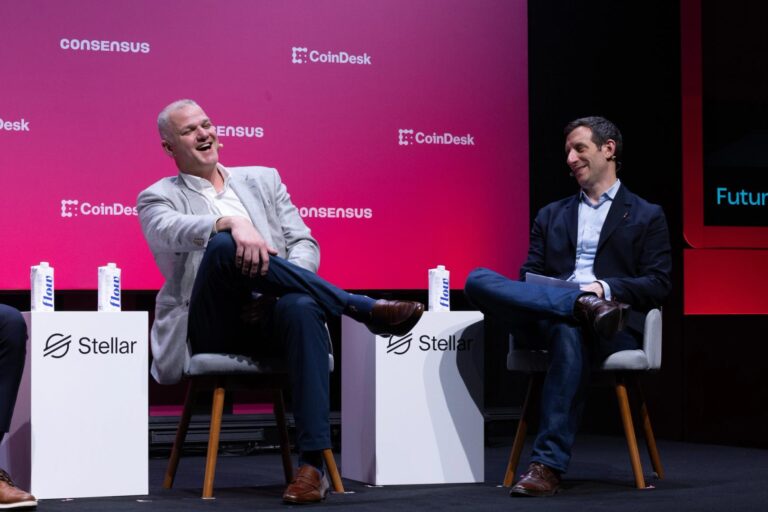
The 110-page report by Project Eleven, whose CEO Alex Pruden was on stage at Consensus Miami 2026, also states that sufficiently powerful quantum computers could use Shor’s algorithm to derive private keys from public keys, allowing attackers to forge signatures and take over control of wallets and digital accounts secured by the elliptic curve cryptography.

This means blockchains, banking infrastructure, cloud systems, military comms and other digital identity systems are also vulnerable, not just bitcoin, ethereum, stablecoins, and other blockchains, the report emphasizes.

Project Eleven says a “Q-Day” scenario, the arrival of cryptographically relevant quantum computer cable of breaking widely used public-key cryptography, could be as early as 2030, no later than 2033.

“Our analysis suggests that, based on current trends, Q-Day is more likely to occur than not by 2033, and potentially even as soon as 2030,” the report reads. “The window for the world to migrate to post-quantum cryptography is narrowing.”

And here is why it is becoming so complicated, the report explains: large systems often take between five to more than 10 years to migrate, depending on how complex their networks are.

Another difficult challenge is how the transition actually takes place, as migrating all quantum vulnerable systems and blockchains to secure networks involves a process that requires a coordinated, simultaneous transition from all users, exchanges, custodians, wallet providers and miners.

Read more: To freeze or not to freeze: Satoshi and the $440 billion in bitcoin threatened by quantum computing

“The gap is not technical,” the report says. “The gap is entirely coordination, urgency, and willingness to accept the costs of migration.”

When it comes to Bitcoin, things get even more complicated because upgrades historically move slowly and often become politically contentious.

“The Bitcoin SegWit upgrade — a relatively modest change compared to PQC migration — took over two years from proposal to activation (2015-2017) and triggered a contentious chain split,” the report recalled.

Read more: What the Fork? Why Bitcoin Tech Changes Impact Price

“The distributed nature of blockchain networks means that migration to post-quantum cryptography may take the better part of a decade, longer than other centralized systems.”

Pruden, who authored the report along with CTO Conor Deegan, warned that Bitcoin’s migration to post-quantum cryptography could prove even harder than Taproot because it would require coordinated action across users, exchanges, custodians and miners. He also said he personally leaned toward “recycling” the 5.6 million to 6.9 million vulnerable BTC tokens, worth up to roughly $500 billion at current prices back into the bitcoin’s supply curve rather than allowing a quantum attacker to eventually sweep them.

The report by Pruden’s Project Eleven ultimately acknowledges that the issue creates tension between bitcoin’s fixed-supply ethos and its commitment to property rights.

Read more: Bitcoin’s quantum debate splits as Adam Back pushes optional upgrades over forced freeze

Emerging-market users are treating crypto exchanges like banking apps, Binance says

0

Emerging markets accounted for 77% of Binance users in 2026, up from 49% in 2020, as users in those countries increasingly used the exchange for savings, payments and investment access, the exchange said.

Binance Research’s latest report frames crypto adoption as a financial-access story rather than a trading story. Binance said 83% of users engaging with two or more products on the platform are based in emerging markets, while users in those markets show savings rates more than twice as high as users in developed markets.

About 36% of emerging-market Binance users with balances of at least $10 hold at least half of their portfolio in stablecoins, according to the report, which points to the pattern as “consistent with savings-oriented usage.” Globally, 28% of users meet that threshold, up from 4% in 2020.

The data points to growing use of crypto platforms as substitute financial infrastructure in markets where banking access remains limited.

The World Bank says 1.3 billion adults still lack access to financial services, while 900 million unbanked adults own a mobile phone and 530 million own a smartphone.

Binance said 4.7 billion adults lack access to credit or loans, 3.6 billion adults in low- and middle-income countries do not use digital payments or cards, and 1.4 billion savers in those countries earn no interest on deposits.

Stablecoins are central to the argument. Binance said transfers on high-performance networks can cost as little as $0.0001 and settle almost instantly, compared with a minimum of $20 for cross-border SWIFT transactions. The World Bank’s Remittance Prices Worldwide database puts the global average remittance cost above the UN target of less than 3%.

Stablecoins are, in fact, increasingly being used in emerging markets for remittances, savings and cross-border commerce, while also drawing warnings from Moody’s, the IMF and other institutions over monetary-sovereignty and financial-resilience risks.

Data from Brazil’s tax authority, for example, has shown stablecoins drive 90% of the country’s crypto volume.

1inch Resolver TrustedVolumes Drained for $6.7M on Ethereum

0

Blockchain security firm Blockaid linked the exploit to the same operator behind the March 2025 1inch Fusion V1 incident, though it stems from a different vulnerability.

Liquidity provider TrustedVolumes, a market maker and resolver used by 1inch Fusion and other protocols, confirmed on Thursday that it had been drained for roughly $6.7 million in an exploit on the Ethereum network.

Web3 security firm Blockaid first flagged the attack, putting initial losses at $5.87 million. Blockaid said the vulnerability sat in a TrustedVolumes-controlled custom request-for-quote swap proxy, separate from the Fusion V1 bug exploited last March.

Stolen assets include 1,291 wrapped Ether, 16.9 wrapped Bitcoin, 206,282 USDT, and roughly 1.27 million USDC, per Blockaid.

In a statement, TrustedVolumes confirmed the exploit and updated the loss figure to about $6.7 million, split across three wallets, with two holding roughly $3 million each and a third with about $700,000. The team said it was open to “constructive communication” and a “mutually acceptable resolution,” language that echoes the bug bounty negotiations which recovered most of the funds drained from TrustedVolumes resolvers during the March 2025 attack.

1inch moved quickly to distance itself. In an X post, the DEX aggregator called reports linking it to the breach “misleading,” adding that “neither 1inch nor any of the 1inch protocols are involved” and that there was “no impact on 1inch systems, infrastructure or user funds.” 1inch co-founder Sergej Kunz separately noted that TrustedVolumes operates independently across multiple protocols.

The incident is at least the fifth major DeFi exploit since the start of May, following an April that DefiLlama logged as the worst month on record by incident count, with 28 separate hacks totaling $635.2 million. That tally was headlined by the $293 million Kelp DAO bridge breach and the $285 million Drift Protocol drain.

This article was written with the assistance of AI workflows. All our stories are curated, edited and fact-checked by a human.

Soon, traders will be able to bet on BTC volatility, not just price, on CME

0

To most people, trading in cryptocurrencies like bitcoin , boils down to a simple question: Will prices go up or down?

But there’s another dimension to trading, which is volatility, a measure of how volatile prices could be regardless of direction. It’s already a hugely popular trade in stock markets, and now CME wants to bring it to bitcoin.

The world’s leading derivatives marketplace announced this week its plan to debut Bitcoin volatility futures on June 1, pending regulatory approval.

Unlike traditional bitcoin futures, the new contracts will not track the cryptocurrency’s price directly. Instead, they will refer to the CME CF Bitcoin Volatility Index (BVX), which represents the market’s expectations for bitcoin volatility over the next 4 weeks.

In simple terms, traders will be able to bet on whether bitcoin markets are about to become more chaotic or more stable, without necessarily taking a view on whether prices themselves are heading higher or lower.

“Crypto market participants are seeking regulated products that provide opportunities to gain digital assets exposure when markets move,” Giovanni Vicioso, global head of cryptocurrency products at CME Group, said in the press release. “With our new Bitcoin volatility futures, traders will be able to invest or hedge against the future volatility of bitcoin, allowing them to access a critical new layer of risk management.

Note that offshore exchanges such as Deribit offer futures tied to their own bitcoin volatility indices, but these volatility markets remain relatively small and outside the scope of participation for most U.S. institutions. Moreover, the onshore crypto market still lacks a mature, CME-style bitcoin volatility futures product, so volatility exposure and hedging is primarily achieved through options and other synthetic structures.

CME’s latest offering will expand the exchange’s existing product suite, which includes bitcoin futures and options. Futures went live in December 2017 and have since become the preferred instrument for institutions seeking directional exposure and arbitrage opportunities. They have generated billions in trading volume and open interest, even surpassing offshore giant Binance at one point last year.

This trend of the institutionalization of bitcoin accelerated with the debut of 11 spot-listed bitcoin ETFs in January 2024, and the subsequent debut and rapid rise in popularity of options tied to BlackRock’s IBIT.

So, CME’s volatility futures seem like the next logical step, helping institutions manage risk beyond price direction into volatility itself, according to Sam Gaer, chief investment officer of Monarq Asset Management’s Directional Fund.

“IBIT options open interest surpassing Deribit is a clear signal of institutional demand, and vol futures are the natural next step,” Gaer told CoinDesk in a Telegram message.

Gaer pointed to the way volatility trading evolved in traditional markets, noting that the CBOE Volatility Index, VIX, also known as the fear gauge, didn’t become a deeply liquid asset class on its own. Instead, liquidity accelerated only after exchange-traded funds and broader structured products built around VIX futures created a self-reinforcing ecosystem.

In other words, the growth in volatility trading was driven by derivatives linked to the spot VIX index. Once those products existed, volume attracted more volume, eventually turning volatility into a standalone market in its own right.

“VIX futures did not reach escape velocity until the ETF ecosystem developed around the futures (not the spot index, notably), and the same flywheel dynamic applies here. Volume begets volume. If CME’s product construction and composition are clearly defined and easily disseminated, this has the potential to be a watershed moment for Bitcoin volatility as an asset class,” Gaer said.

How DeFi is changing the financial landscape for Latin Americans

0

For decades, Latin Americans have lived with financial constraints that citizens of more developed economies rarely think about: periodic currency devaluations, inflation shocks, limited access to credit and banking systems that often fail to reward savers.

A new layer of innovation is now reshaping the region’s financial landscape. Decentralized finance — DeFi — is quietly moving from a niche crypto experiment to a practical set of tools that expand financial opportunity across the region.

Historically, navigating DeFi required technical expertise, and that kept adoption limited to early crypto enthusiasts. But major protocols such as Aave are increasingly working with Latin American companies to make their infrastructure usable for everyday consumers. In other words, Latin America is starting to use DeFi primitives thanks to the abstraction provided by local firms.

Enhancing access to DeFi

For most of its existence, DeFi has been the domain of the technically fluent. You needed a self-custody wallet, a working understanding of blockchain mechanics and a tolerance for complex interfaces. For the average person in Mexico City or São Paulo, that was an almost insurmountable barrier.

But things are changing. Latin American fintech companies are now building the abstraction layer that DeFi has always lacked: user-friendly interfaces, peso- and real-denominated stablecoins, fiat on-ramps that let users move seamlessly between cash and crypto and custody solutions that don’t require understanding what a private key is.

The result is a hybrid model. Global protocols provide the rails; local companies provide the on-ramp. It’s not pure decentralization in the ideological sense, but it’s something arguably more valuable: decentralization that actually gets used.

Latin America, which has long lagged behind other regions in DeFi adoption, is beginning to catch up — not because the underlying technology changed, but because the access to it became easier.

The new tools that DeFi provides

The specific tools DeFi offers are remarkably well-suited to the financial realities of the region.

Take dollar savings. In Brazil, holding U.S. dollars in a bank account earns essentially nothing — most Brazilians have no practical way to generate yield on foreign-currency savings. But DeFi lending markets change that equation. By depositing USDC into a protocol like Aave, users can earn yield generated by global demand for dollar liquidity. For the first time, a saver in Recife can access the same basic financial product that a saver in New York has long enjoyed: a dollar account that actually works for them.

Then there is the question of liquidity. Across the region, a significant number of people hold bitcoin or ether as a long-term store of value, particularly in countries with volatile local currencies. Until recently, accessing that value meant selling, which triggers tax events and comes with loss of exposure.

DeFi protocols have eliminated that trade-off. Users can now deposit BTC or ETH as collateral and borrow stablecoins against it, accessing liquidity without surrendering the asset. It’s the equivalent of a home equity line of credit, except the collateral is digital, and the loan can be executed in minutes at any hour of the day.

These aren’t exotic financial instruments. They are basic tools of modern financial life that many Latin Americans have never had access to.

Bringing broader financial inclusion

Traditional financial systems have always had a geography problem. Credit markets are local, and yield depends on where you happen to live. A saver in Lima has never been able to earn the same return on her dollar deposits as a saver in London, simply because the infrastructure connecting her to global capital markets doesn’t exist.

DeFi removes that geography problem. As long as you have an Internet connection, you can participate in the same lending markets, earn the same yields, and access the same liquidity as anyone else. Latin American fintechs are making the global DeFi market easier to tap into.

Traditional lending in Latin America is also burdened by underwriting infrastructure built for a different era. There are strict income documentation requirements, and credit scoring systems usually exclude large segments of the population.

DeFi lending is collateral-based rather than identity-based. If you have assets, you have access — regardless of whether you have a credit history or a formal employment contract. The market is always available to you, no matter what.

This doesn’t mean DeFi is without risk. Smart contract vulnerabilities, protocol failures and the volatility of collateral assets are real concerns that the industry is still working to address. But the trajectory is clear. As Latin American firms continue to build accessible interfaces and regulatory bridges, and as protocols mature and accumulate track records, the barriers to entry will keep falling.

Sustainable Innovation and the Commercialisation of Stablecoins

0

At the Money20/20 Asia event in Bangkok, the discussion regarding the APAC financial landscape highlighted two transformative shifts. Steven Qin, Relationship Manager at DBS, identified these as the transition of Artificial Intelligence from experimentation to a core infrastructure component and the rising adoption of stablecoins following new legislative frameworks. While AI brings significant gains in efficiency and productivity, Qin emphasized that it also demands greater responsibility, particularly in managing multifaceted cybersecurity threats. Consequently, DBS is focusing on sustainable innovation that balances rapid advancement with robust controls.

The second major shift involves the commercial adoption of stablecoins, accelerated by the passing of the Genius Act. This legislation has led Asian financial institutions to explore and commercialise stablecoins for practical business purposes, a topic that is now seeing significant traction and discussion on the ground. Together, the deep integration of AI and the emergence of stablecoins represent the two most influential changes currently shaping the region’s financial sector.

For banks and employees, the impact of these technologies is already visible in daily operations. At DBS, internal procedures that once spanned multiple departments have been encapsulated within AI chatbots. Employees can now receive immediate direction on complex processes through these interfaces rather than manually consulting various colleagues. From a client perspective, AI is being utilized to curate investment opportunities with precision. By automating the analysis of news and investment ideas, the system presents tailored insights directly to the client, significantly increasing productivity and ensuring that advisors can focus on the most relevant interests of their customers.

Key Highlights from Steven Qin:

  • AI as Core Infrastructure: Qin discusses how AI has moved beyond a phase of experimentation to become a fundamental part of financial infrastructure, driving productivity.

  • Sustainable Innovation: The importance of balancing the adoption of powerful new technologies with increased cybersecurity controls and institutional responsibility.

  • Commercialisation of Stablecoins: How the Genius Act is driving Asian institutions to explore the adoption of stablecoins for commercial purposes.

  • Enhanced Client Advisory: A look at how AI curates investment ideas and news, delivering highly personalized touchpoints to clients while saving advisors significant time.

Here’s What The Cardano Founder Has To Say About The Widespread Criticism

0

Trusted Editorial content, reviewed by leading industry experts and seasoned editors. Ad Disclosure

Cardano founder Charles Hoskinson has reacted to Flare founder Hugo Philion’s comments, in which Philion highlighted his network’s growth relative to Cardano. Notably, Flare has achieved this growth as one of the largest DeFi providers in the XRP ecosystem. 

Cardano Founder Reacts To Flare Founder’s Comments

In an X post, the Cardano founder remarked that attacking his network to get attention and media coverage is an old marketing tactic. He urged the Flare founder to update his marketing strategy and possibly try “TikTok reaction videos.” Hoskinson was reacting to an X post, in which Philion highlighted his network’s growth while criticizing Cardano. 

The Flare founder cited DeFiLlama data showing that the Cardano network has $132 million in total value locked in DeFi, while Flare has $159 million. Philion noted that the network launched in 2017, while Flare launched six years later. He added that ever since they launched, Cardano has been trying and “miserably failing” to copy their strategy. 

Philion further mentioned that the network has far lower statistics across the board in DeFi than Flare does, despite having a massive head start and a vast treasury at one point. With his network ahead now, the Flare founder declared that ADA will not win BTC. Instead, he believes that his network will win by creating a unified DeFi layer for FXRP, FBTC, FXLM, RWAs, and stables. 

The Flare network has notably gained ground in the XRP ecosystem, with Philion recently describing his network as the largest DeFi provider. CoinGecko data shows that FXRP currently has a market cap of just over $220 million, with 155 million tokens in circulation. 

Not An Attack On The Network

In another X post, the Flare founder said that he wasn’t attacking Cardano and was just simply stating numbers from DeFiLlama. However, he questioned how nothing has materially changed for ADA despite the attacks against the network in 2022. He teased the founder by asking if he would like an advance copy of Flare’s 2027 strategy, so that he could try to implement it. 

However, the Cardano founder indicated that he didn’t have time to go back and forth with the Flare founder. It is worth noting that, like Flare, Cardano aims to be the DeFi layer for Bitcoin. Hoskinson had previously said they wanted to make BTC programmable in ADA’s smart contracts. That way, market participants will be able to earn BTC yield on the network. 

The founder highlighted how this could be huge for his network, given that the U.S. government and top organizations currently hold BTC. By becoming the DeFi layer for Bitcoin, Cardano could enable companies such as BlackRock to deploy their holdings to generate yields. 

At the time of writing, the ADA price is trading at around $0.27, up over 5% in the last 24 hours, according to data from CoinMarketCap.

Cardano
ADA trading at $0.27 on the 1D chart | Source: ADAUSDT on Tradingview.com

Featured image from YouTube, chart from Tradingview.com

Editorial Process for bitcoinist is centered on delivering thoroughly researched, accurate, and unbiased content. We uphold strict sourcing standards, and each page undergoes diligent review by our team of top technology experts and seasoned editors. This process ensures the integrity, relevance, and value of our content for our readers.

Crypto Markets Slide While S&P 500 Notches Fresh Record on Iran Peace Hopes

0

Strategy’s Q1 earnings call signaled a departure from Saylor’s “never sell” mantra, with Bitcoin slipping below $81,000 in the aftermath.

Bitcoin and Ethereum traded lower on Thursday as Consensus Miami 2026 entered its final session, with the broader crypto market giving back some of this week’s gains even as US equities pushed to fresh record highs.

BTC is changing hands at $80,268, down 1.5% over the past 24 hours but still up 5.2% on the week, according to CoinGecko. The leading crypto asset climbed to an intraday high above $82,500 earlier in the day before pulling back. ETH dropped 2.5% to $2,300, holding on to a 1.7% weekly gain.

BTC Chart

The total cryptocurrency market capitalization slipped to roughly $2.75 trillion, down 1.3% on the day.

Most Top 10 assets followed BTC and ETH lower. Solana trades at $88, flat on the day but up 6.1% for the week. XRP slipped 2.1% to $1.39, while Dogecoin was the day’s biggest loser, falling 3.4%.

TRON bucked the trend, gaining 1.4% and extending its weekly advance to 7%. Hyperliquid’s HYPE fell 3.2% on the day but remained the best weekly performer in the Top 15, up 8%.

Bitcoin’s slide below $81,000 followed Strategy Executive Chairman Michael Saylor signaling that the firm may sell Bitcoin to cover dividend obligations on its STRC preferred stock, a departure from his long-held “never sell” stance.

“Buy more bitcoin than you sell,” Saylor posted earlier today.

Spot ETFs Extend May Inflow Streak

Spot Bitcoin and Ethereum ETFs continued to absorb capital through the week, reversing a string of late-April outflows.

US spot Bitcoin ETFs took in $1.68 billion across the four trading days from May 1 to May 6, led by a $629.7 million haul on May 1 and a $532.2 million day on May 4, according to SoSoValue. Daily inflows tapered to $46.3 million yesterday.

Spot Ethereum ETFs took in $271.6 million over the same window, with a $101.2 million inflow on May 1 marking the strongest day.

Stocks Hit Record High as Crypto Diverges

The crypto pullback runs counter to traditional markets, where major US indexes extended Wednesday’s record close on hopes of a US-Iran peace deal. The S&P 500 closed at 7,365 on Wednesday and traded modestly higher on Thursday, while the Nasdaq Composite added 0.2% above 25,800.

Oil prices have continued to slide on the same backdrop. WTI crude dropped roughly 3% to about $91 per barrel as Iran reviewed a 14-point US peace proposal expected to include a moratorium on nuclear enrichment. The decoupling places crypto’s softness in sharper relief, suggesting Thursday’s move reflects the Saylor headline more than broader risk-off sentiment.

Court Lets Arbitrum DAO Transfer $71M in ETH Tied to North Korea Hack to Aave

0

A Manhattan federal judge has allowed Arbitrum DAO to move $71 million in frozen Ether to Aave, clearing the path for the DeFi protocol’s recovery effort following a North Korea-linked exploit.

Judge Margaret Garnett of the Southern District of New York issued the order on Friday, modifying a restraining notice that had locked the assets inside Arbitrum DAO. The modification permits an onchain governance vote to send the funds to a wallet controlled by Aave LLC, and explicitly protects anyone who participates in the transfer from being held in violation of the freeze.

The order still keeps the terrorism victims’ legal claim on the funds, meaning Aave can’t use the funds freely and could be forced to hand them over if the court ultimately rules in the terrorism victims’ favor.

Judge allows Arbitrum to move funds to Aave. Source: Courtlistener

The decision came after Arbitrum delegates showed strong support for the move through an off-chain Snapshot vote as part of Aave’s broader recovery plan following last month’s North Korea-linked rsETH exploit. Any actual transfer still requires a separate binding onchain governance vote.

Related: Arbitrum vote to release $71M in frozen Kelp exploit ETH set to pass

Aave asks court to lift freeze on funds

Last week, Aave filed an emergency motion in a New York court seeking to vacate a restraining notice that had blocked Arbitrum DAO from transferring the funds to victims of the Kelp DAO exploit. The notice was served by Gerstein Harrow LLP, which represents families holding $877 million in unpaid terrorism judgments against North Korea and claims the funds belong to its clients because North Korean hackers stole them during the April 18 hack.

Aave pushed back hard, arguing that a thief doesn’t gain lawful ownership of stolen property and that attributing the hack to North Korea relies on little more than internet speculation. It also warned that if the court upholds the restraining notice, it could deter future DeFi recovery efforts and give bad actors a roadmap to exploit legal uncertainty following hacks.

Gerstein Harrow has previously pursued similar claims. In January, they sued Railgun DAO, alleging the privacy protocol was used to launder proceeds from prior North Korean hacks, including the $1.5 billion Bybit exploit.

Related: Aave deposits fall by $15B as Kelp exploit sparks flight from DeFi lender

Kelp exploit leaves $174 million hole in rsETH backing

The Kelp DAO exploit left rsETH’s backing with a significant shortfall. The hack caused 116,500 rsETH to be released on Ethereum without a corresponding burn on the source side, leaving only 40,373 rsETH in the adapter contract against confirmed backing for 152,577, a gap of roughly 76,127 rsETH, worth around $174.5 million at current prices.

The 30,765 ETH frozen by Arbitrum has been flagged as a meaningful step toward closing that gap, with proponents arguing that even partial restoration of rsETH’s backing would help stabilize conditions for users across Arbitrum and the wider DeFi ecosystem.

Magazine: 53 DeFi projects infiltrated, 50M NEO tokens could be ‘given back’: Asia Express