Home Blog Page 273

Startup That Aims to Widen Access to Compute Draws $1.3B

0

A company that aims to develop an “AI grid” that will make compute capacity more widely available, has attracted $1.3 billion in funding.

Amp, which is based in Menlo Park, California, is the brainchild of Anjney Midha, a tech entrepreneur who was previously a partner at venture capital firm Andreessen Horowitz.

Midha says Amp’s approach is required because so much of the computing power necessary for AI is being gobbled up by tech giants such as Google, Amazon and Meta and well-funded startups like OpenAI and Anthropic, who have repeatedly shown they are prepared to spend billions of dollars on AI data centers.

Where that leaves those without such deep pockets is Amp’s concern. Its aim is to acquire extra compute capacity from data center operators — in both the U.S. and further afield — and make it available to those who need it for their own AI projects, but can’t afford it.

This would be done by creating a pool of chips that could be used by those without extensive funding or resources, such as universities or small startups.

Related:Nscale Gets $790M in Financing for Norway AI Buildout

Amp is a public benefit corporation. Among those already intrigued by Midha’s vision are Andreessen Horowitz and startup incubator Y Combinator, which contributed to the funding.

“Some companies just can’t get the computing power they need. The world’s wealthiest and most powerful companies are hoarding the infrastructure for themselves,” as Midha told the New York Times, which, along with The Information, reported the funding.

In practical terms, Amp said it will used the funding to purchase capacity, which will be added to a pool made available to organizations or startups that choose to join the “coalition” the company is putting together.

The aim is to mirror the concept of an electrical grid, where power is shared among various customers.

Members of the coalition will also be encouraged to contribute funds, or, underscoring the collective nature of the enterprise, share other useful resources. These could be the data used to train models, or even the models themselves.

Among the founding grid members, according to Amp, are France’s Mistral, voice AI vendor ElevenLabs, and Germany’s Black Forest Labs, while the company is targeting a pool of 1.9 gigawatts over the next five years, with 200 megawatts online by the end of 2026.

Separately, Amp’s goal to ensure the benefits of AI are more widely distributed extends to the foundation of a public wealth fund, which will provide backing to local communities affected by the transition. Amp says it plans to put aside up to $500 million of Amp’s profits through 2030 for the fund.

Related:Once Trendy Shoe Company Allbirds Pivots to AI Infrastructure


MARA Dumps $1.5B In Bitcoin As Miner Trades Treasury Hoard For AI Power Bet

0

MARA Holdings has begun to shed its pure-play bitcoin miner identity, unloading $1.5 billion worth of bitcoin in the first quarter as it refocuses on power infrastructure and artificial intelligence data centers.

The shift comes as the company reports weaker financial results and leans on its bitcoin treasury to retire debt and fund a large energy acquisition in Ohio.

The company reported first-quarter revenue of $174.6 million, an 18% drop from a year earlier, and a net loss of about $1.3 billion. Management tied that result to a roughly $1 billion negative change in the fair value of its digital assets after a double-digit slide in the bitcoin price over the period.

MARA produced 2,247 bitcoin in the quarter and lifted energized hashrate 33% year over year to 72.2 exahash per second, but those operational gains did not offset the mark-to-market hit on its holdings.

To strengthen its balance sheet, MARA sold about $1.5 billion worth of bitcoin during the quarter, including a $1.1 billion block near the end of the period used to repurchase convertible notes. 

The miner sold 20,880 bitcoin and ended the quarter with 35,303 coins, down from 38,689 earlier in the year. That sale pushed the company from the second- to the fourth-largest publicly traded holder of bitcoin, according to Bitcoin Treasuries data.

Management framed the move as a use of bitcoin as “ammunition” on the balance sheet rather than an untouchable reserve.

MARA is pivoting from bitcoin to AI 

Even as it continues to mine, MARA is signaling a strategic pivot away from aggressive expansion of dedicated mining capacity. In its earnings statement the company said it does not expect to make large purchases of new ASIC miners, a sharp contrast with the playbook miners used during the last cycle to chase hashrate growth.

Instead, MARA is steering capital toward energy and data infrastructure that can support both bitcoin mining and high-performance computing workloads.

A centerpiece of that plan is the pending $1.5 billion acquisition of the Long Ridge Energy & Power campus in Hannibal, Ohio, which includes a 505-megawatt gas-fired power plant and extensive land for expansion.

MARA says the site could support more than 600 megawatts of AI and critical IT loads through staged buildouts, with its existing mining footprint integrated into the campus. 

The company has also partnered with Starwood Capital to convert selected mining sites into AI and high-performance computing data centers, broadening its revenue base beyond block rewards.

Around 90% of MARA’s non-hosted mining capacity could eventually support AI and IT infrastructure, according to company disclosures. 

The strategy positions MARA at the center of two energy-hungry sectors, bitcoin mining and AI compute, while giving it the option to tilt power toward whichever market offers stronger returns at a given time. 

ABA Pushes Banks to Lobby Senators Over Stablecoin Yield Provisions

The American Bankers Association is lobbying US senators ahead of this week’s Senate Banking Committee markup of crypto legislation, warning that proposed stablecoin rules could incentivize consumers to move deposits out of banks.

In a Sunday message to member bank CEOs shared on X by Punchbowl News reporter Brendan Pedersen, ABA president and CEO Rob Nichols said the current version of the CLARITY Act does not adequately prevent crypto companies from offering interest-like rewards tied to payment stablecoins.

Nichols urged bankers to contact senators and encourage employees to do the same before Thursday’s committee markup, describing the issue as an “urgent advocacy fight” for the banking industry.

“The legislation would permit stablecoin issuers and associated business partners to pay interest or interest-like incentives to stablecoin holders,” Nichols wrote, adding that the provision could create “a digital asset loophole” that would allow deposits to migrate outside the traditional banking system.

Source: Brendan Pedersen

Source: Brendan Pedersen

Nichols said the ABA had been “working hard behind the scenes for months” on the issue and warned that allowing non-bank stablecoin issuers to offer interest-like incentives could threaten “economic growth and financial stability.”

The latest lobbying effort follows a Friday letter from the ABA and other major US banking associations urging Senate lawmakers to strengthen the bill’s stablecoin yield restrictions, arguing the current language still allows structures that could incentivize users to move deposits out of banks.

Related: 7 Democrats seen as ‘key’ to advancing CLARITY Act: Galaxy

CLARITY Act stablecoin yield fight continues ahead of Senate vote

The CLARITY Act, which aims to establish a federal regulatory framework for digital assets and is scheduled for a Senate Banking Committee vote on Thursday, has fueled months of debate between banks and the crypto industry over stablecoin yield provisions.

In April, the ABA criticized a White House report that said banning stablecoin yield would have only a limited impact on bank lending, while Bank of America CEO Brian Moynihan warned earlier this year that such products could pull as much as $6 trillion out of the banking system.

Crypto companies, meanwhile, have pushed back against the banking industry’s position, with Coinbase CEO Brian Armstrong among the most vocal critics of banks for offering near-zero interest rates on customer deposits while opposing yield-bearing stablecoin products.

X post September 29, 2025. Source: Brian Armstrong

X post Sept. 29, 2025. Source: Brian Armstrong

Earlier this month, lawmakers attempted to strike a compromise by publishing updated stablecoin yield provisions prohibiting crypto companies from offering interest or yield solely for holding payment stablecoins while still permitting rewards tied to “bona fide activities.” However, some banking groups argued the revised restrictions did not go far enough.

While debate over stablecoin yield provisions continues, recent polling suggests support for broader crypto legislation is growing across party lines. 

A HarrisX survey of 2,008 registered US voters found that 52% support the CLARITY Act, while 47% said they would consider voting across party lines for a candidate who backed the legislation.

Prediction market Polymarket at last look gives the CLARITY Act a 65% chance of being signed into law before the end of the year, up from around 46% at the end of April. Platform users have staked $672,289 on the outcome, at last look.

Source: Polymarket
Source: Polymarket

Source: Polymarket

Magazine: XRP ‘probably going to $12,’ Bitcoin ETFs add $1B: Market Moves

Anthropic Flags Unauthorized Tokenized Shares

0

The developer of Claude has updated its terms of service, warning against the third-party sale or transfer of its private equity.

Anthropic has updated the privacy and legal section of its support documentation today, May 12, with a direct warning against unauthorized sales of its private stock.

In its updated terms, the AI developer, known for creating the LLM Claude, states that any third-party offering of Anthropic shares, whether in the form of tokenized securities, special purpose vehicles (SPVs), or forward contracts, should be considered void and will not be recognized by the company. Anthropic also noted that all share transfers require explicit Board of Directors approval.

The updated policy explicitly lists eight firms it says are not authorized to buy or sell Anthropic shares: Open Door Partners, Unicorns Exchange, Pachamama, Lionheart Ventures, Hiive, Forge, Sydecar, and Upmarket.

That covers both on-chain and traditional secondary market venues. Jupiter’s PreStocks and Ventuals are not named, but presumably also fall under the broader SPV and tokenized securities prohibition.

RedStone co-founder Marcin Kazmierczak put numbers to the valuation disconnect in an X post this morning, noting that on PreStocks, tokenized Anthropic shares implied a $1.5 trillion valuation. “Anthropic’s last priced round in February closed at $380B post-money. The on-chain mark was effectively 4x the most recent negotiated price, on a venue holding 0.0015% of the market cap it was implying,” Kazmierczak wrote.

RedStone’s co-founder concluded that pricing private equity needs a different approach than pricing assets like Bitcoin or Ethereum: “illiquid assets need a different methodology. Primary sources. Last verified funding round. Authorized secondary trades.”

Meanwhile, Securitize recently partnered with Computershare to enable Issuer-Sponsored Tokens representing direct equity ownership — authorized by the issuer, with no SPV intermediary.

“Tokenization of equities is happening,” Kazmierczak wrote on X. “The question is whether it gets built on authorized rails with proper pricing infrastructure.”

This article was written with the assistance of AI workflows. All our stories are curated, edited and fact-checked by a human.

Nokia Launches Agentic AI for Networks

0

Nokia on Tuesday unveiled new agentic AI capabilities for its home and broadband networks, which it says will improve user experience, productivity and operational efficiency.

Under its agentic push, the company said it will embed AI agents and natural language interfaces across its x` to streamline planning and operations.

According to Nokia, the capabilities can improve first-contact helpdesk resolution rates to more than 50%, qualify network incidents within five minutes and reduce repeat visits to homes and construction sites by 50%.

Conversational AI assistants will provide technicians and support teams with instant access to product and troubleshooting knowledge, while AI-powered voice, text and image guidance will assist field engineers during fiber surveys and installations.

Sandy Motley, president of fixed networks at Nokia, said the company’s AI strategy is focused on improving both operational efficiency and customer experience.

Related:Prompt: AI Agents Are Becoming Operational Infrastructure

“AI makes your end-users less likely to churn, your engineering and helpdesk teams more productive, and your field teams connect more homes more quickly,” Motley said in a release

The Finnish telecommunications conglomerate is also using computer vision technology to validate installation quality and create digital twins of fiber-to-the-home networks.

Additional capabilities include automated diagnostics that detect network degradation before outages occur, and AI troubleshooting agents that perform root-cause analysis in home and access networks.

The launch comes as the telecom sector ramps up investment in autonomous AI systems, with Nokia predicting that spending on agentic AI in telecom will reach $6.2 billion by 2030.


Ripple-linked ETFs attract biggest inflows since January

0

XRP exchange-traded funds (ETF) drummed up their biggest inflows since January amid a slew of developments at related company Ripple and favorable price action for the world’s fourth-largest token by market capitalization.

The five U.S.-listed spot XRP exchange-traded funds reported a combined $25.8 million in net inflows on Monday, the largest single-day haul since Jan. 5, when they drew $46 million in their first week of trading, according to SoSoValue data.

Franklin Templeton’s XRPZ led with $13.6 million, followed by Bitwise’s XRP at $7.6 million and Grayscale’s GXRP at $4.6 million. Canary’s XRPC and 21Shares’ TOXR reported no flows for the day.

Cumulative net inflows across all XRP spot ETFs now sit at $1.35 billion, with total net assets at $1.18 billion, representing about 1.3% of XRP’s market cap. Every XRP fund rose more than 4% on Monday alongside the underlying token, which climbed 1.2% over 24 hours to $1.47.

The flows come as Ripple announced the successful closing of a $200 million debt facility from funds managed by Neuberger Specialty Finance, the dedicated asset-based investment team within Neuberger, a global investment management firm.

The facility will support the continued growth of Ripple’s multi-asset prime brokerage platform, Ripple Prime, amid rising client demand for institutional-grade prime services and margin financing solutions.

Last week, Ripple said it completed a pilot tokenized U.S. Treasury settlement on the XRP Ledger with JPMorgan, Mastercard, and Ondo Finance, processing the redemption in under five seconds and bridging public blockchain rails with traditional interbank settlement infrastructure.

Separately, Ripple unveiled a four-phase plan to make the XRP Ledger quantum-resistant by 2028, positioning it for a potential “Q-day” when quantum computers can break current cryptography.

The roadmap included an emergency “Q-day readiness” phase that would force a migration to quantum-safe accounts and enable fund recovery using zero-knowledge proofs if quantum threats arrive sooner than expected.

Such institutional use cases may boost sentiment among ETF buyers, because they give XRP a function beyond speculative trading.

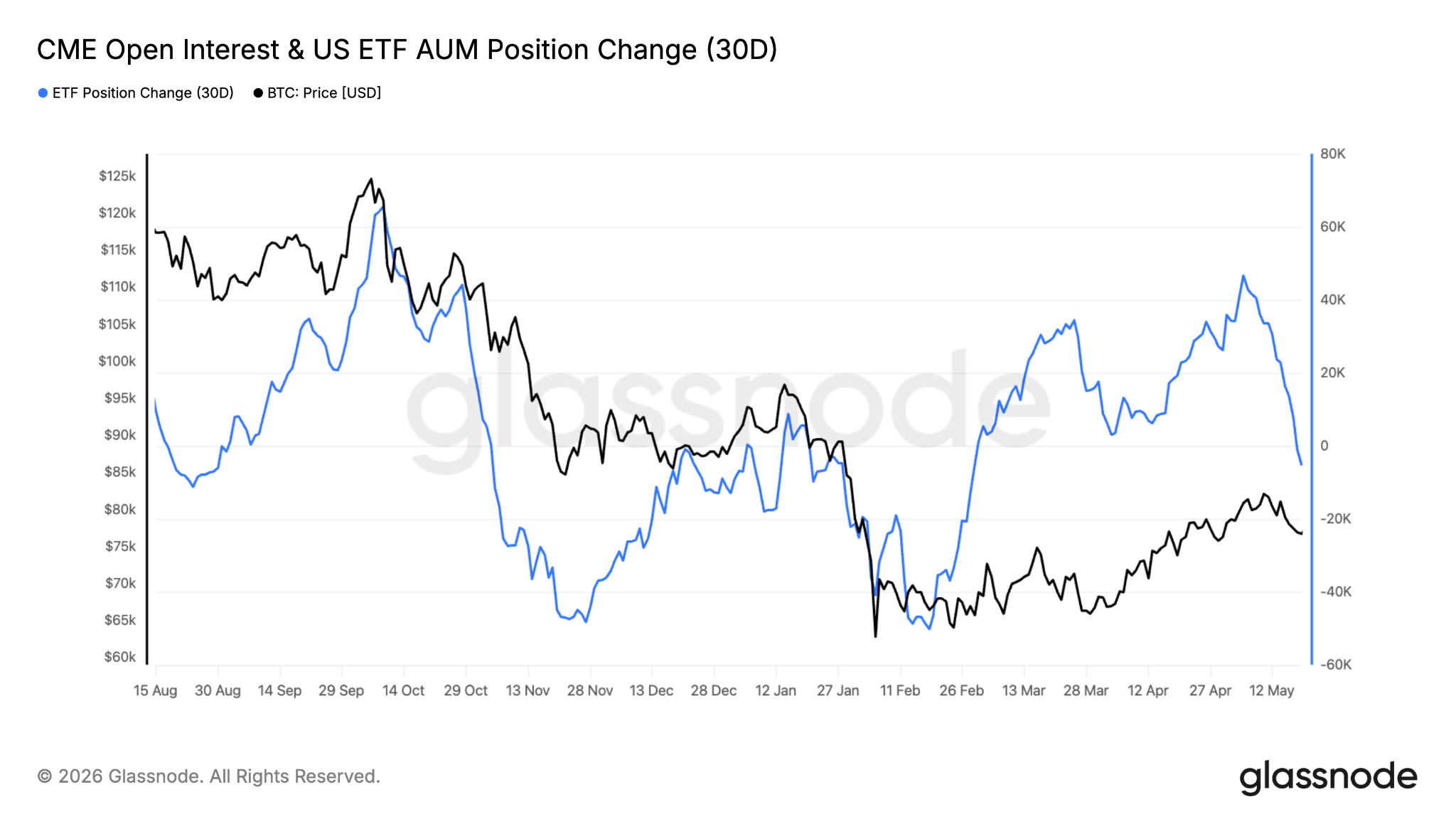
Meanwhile, spot bitcoin ETFs are on track for their seventh consecutive week of net inflows, with over $3.4 billion absorbed during the streak. The pattern of bitcoin leading, altcoin ETFs catching the spillover, and ether lagging behind has held through most of the year.

XRP remains down 39% over the past six months despite the ETF interest, with the token still well off its July 2025 all-time high near $3.65.

AI Is Making Fake Diplomas Easier. This Barcelona School Is Using Blockchain to Push Back

0

St. Peter’s School Barcelona is deploying blockchain-verified academic records across its full student body, as schools face rising pressure to protect transcripts, diplomas and certificates from AI-assisted forgery.

The system will cryptographically certify grade reports, official certificates and parental consent forms.

It is being implemented through CertiEDUCA, a trust infrastructure product from BLOOCK, using Billions Network’s privacy-preserving identity technology, according to the announcement.

The rollout follows a limited pilot in 2023 and began school-wide at the start of the 2025–2026 academic year. St. Peter’s expects to issue more than 2,500 certified academic reports to over 600 student families this year.

St. Peter’s claims itself as the only international school in Barcelona offering the full International Baccalaureate Continuum in English, from nursery through the Diploma Programme.

The move comes as credential fraud is becoming easier to scale.

Credentialing experts have warned that AI tools can generate fake diplomas, certificates and even fake credential-issuing websites, making conventional document checks harder for schools, employers and universities.

Under St. Peter’s system, each document is digitally signed by the institution, timestamped and linked to a blockchain-based integrity proof.

Parents, universities or authorized third parties can verify a document through a validation page without contacting the school.

The school says no student personal data is published onchain. The blockchain is used as an evidence layer, while sensitive information remains inside the school’s controlled systems.

Dr. Teresa Ferrer, curriculum coordinator at St. Peter’s School, said the school believes “it’s essential that the certifications students receive can be verified and validated while safeguarding their privacy.”

“This system allows students to demonstrate their academic achievements without any risk of their personal data being traceable,” Ferrer said. “What surprised us was just how important certified, verifiable academic records are for students applying to the world’s most reputable universities.”

She said the system gives graduates “a real advantage” and gives the school “a more reliable and efficient way to manage trust at scale.”

Billions Network, formerly Polygon ID, positions itself around privacy-preserving verification for humans and AI agents. The company says its technology is based on zero-knowledge and identity infrastructure used across Web3 identity projects.

Evin McMullen, CEO and co-founder of Billions Network, said academic credentials remain among the most important documents a person carries, but the systems behind them have not kept pace with the digital world.

“St. Peter’s has built a secure credential system where the school retains full control, parents gain confidence, and students’ data is never exposed,” McMullen said. “You own your records, you decide what to share, and no one stores what they don’t need.”

The initiative reflects a broader shift in education technology: moving verification from manual confirmation to cryptographic proof.

MIT began issuing blockchain-based digital diplomas in 2017, allowing graduates to receive recipient-owned virtual credentials and allowing verifiers to authenticate diplomas written to the blockchain.

Blockcerts, an open standard for blockchain credentials, has also been used for academic, professional, workforce and civic records. Its model allows institutions to issue tamper-resistant credentials that can be verified independently.

In Europe, the trend is being reinforced by public-sector credential frameworks.

The European Digital Credentials for Learning framework defines digital credentials as verifiable versions of diplomas, certificates, micro-credentials and other learning records, issued by organizations and signed with an electronic seal.

DC4EU, a European digital credentials project, is testing education and professional qualification credentials under the EU’s eIDAS trust framework.

The European Blockchain Services Infrastructure, established by EU member states, Norway, Liechtenstein and the European Commission, is designed to support cross-border trusted services for public administrations, citizens and businesses.

The practical benefit for schools is speed. A university, parent or employer can check whether a document was issued by the school and whether it has been altered, without sending emails to administrators or waiting for a manual confirmation.

For students, the value is portability. A verified record can be shared with admissions offices or other third parties while reducing the need to expose underlying personal data.

That privacy distinction is central to the St. Peter’s deployment. The blockchain does not store student data, documents or personally identifiable information. Instead, it stores an integrity reference that allows a verifier to confirm authenticity without seeing more information than needed.

BLOOCK said the same CertiEDUCA model can support diplomas, course certificates, professional accreditations, micro-credentials and modular learning records.

Lluís Llibre, CEO of BLOOCK, said education is one of the sectors where “the gap between digital distribution and digital trust is widest.”

“Schools issue thousands of documents every year, and until now there has been no scalable way for parents or institutions to independently verify their authenticity,” Llibre said. “The architecture follows the same principle we apply across all our deployments: blockchain should be used to certify truth.”

The St. Peter’s deployment is not Billions Network’s only privacy-focused institutional project in Spain.

Earlier this year, the Spanish Red Cross worked with Billions Network and BLOOCK on RedChain, a blockchain-based aid platform designed to provide donor transparency while protecting recipient identities.

The education rollout shows a different use case for the same underlying logic.

Rather than using blockchain to store personal information, the system uses cryptography to verify that a trusted institution issued a document and that the document has not been modified.

That distinction may matter as schools try to adopt digital trust tools without weakening privacy protections under European data rules.

St. Peter’s is the flagship deployment for CertiEDUCA. The broader test is whether verified academic records can move beyond pilots and become standard infrastructure for schools that increasingly operate across borders, digital platforms and AI-driven fraud risks.

The article “AI Is Making Fake Diplomas Easier. This Barcelona School Is Using Blockchain to Push Back” was first published on AlexaBlockchain. Read the complete article here: https://alexablockchain.com/st-peters-school-barcelona-rolls-out-blockchain-verified-academic-records/

Read Also: MoneyGram, Pairpoint and eToro Back Midnight’s Privacy Blockchain Before Mainnet

Disclaimer: The information provided on AlexaBlockchain is for informational purposes only and does not constitute financial advice. Read complete disclaimer here.

Image Credits: Shutterstock, Canva, Wiki Commons
Here’s Why Bitcoin Analysts Say BTC’s ‘Full’ Bullish Momentum is Back

0

Market analysts said Bitcoin’s (BTC) upside remained intact despite the 2.5% correction from its multi-month high of $82,800 reached on May 6.

Key takeaways:

  • Bitcoin has successfully re-entered expansion territory as the Bull Market Support Band turned to support.
  • Bitcoin’s Stablecoin Supply Ratio has recovered from historic lows, indicating fresh liquidity is returning.
  • Bitcoin’s spot taker CVD flips positive, suggesting real spot demand is back

Bitcoin’s price momentum is expanding

Private wealth manager Swissblock stated that Bitcoin is “still at full momentum,” despite the slight correction from recent highs.

Swissblock said that the latest rally saw the Bitcoin price momentum “successfully reignited and pushed back into full expansion territory.”

Related: Bitcoin funding rates turn positive: Is BTC rally to $85K next?

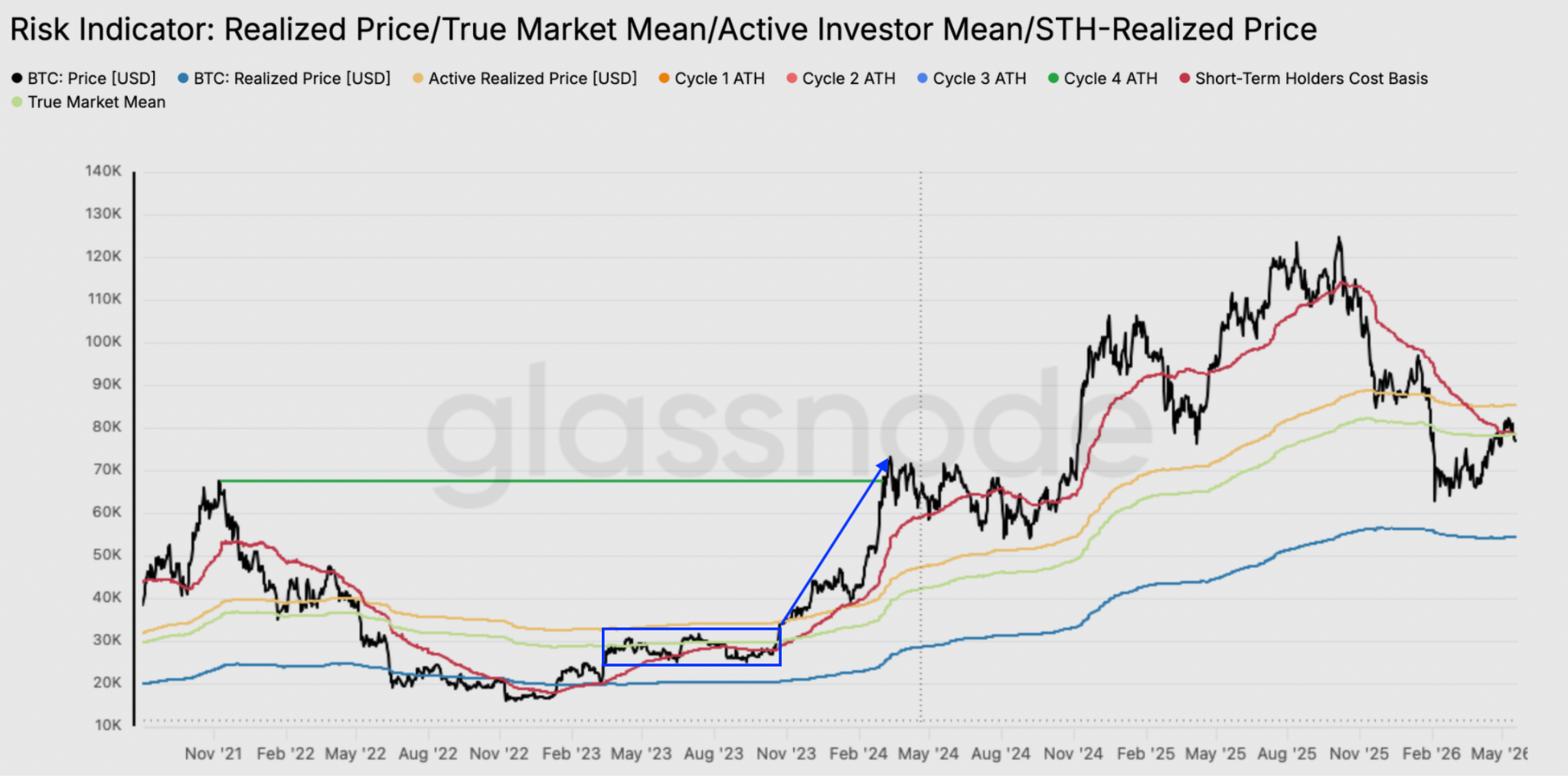
Bitcoin is now consolidating inside the cost-basis battlefield, with the true market mean and the short-term holder cost basis around $80,000 acting as support and the active realized price at $85,000 as resistance

Meanwhile, “momentum remains structurally strong,” the wealth manager said, adding:

“As long as momentum stays above the transition area, bulls retain control.”

Bitcoin price momentum. Swissblock

Echoing this observation, analyst The Great Mattsby pointed out that Bitcoin’s Bull Market Support Band has now turned into support, while the 21-week exponential moving average has crossed back above the 20-week simple moving average.

“The trend has officially flipped back to bullish.” 

BTC/USD weekly chart. Source: X/The Great Mattsby

Bitcoin liquidity signals “strong recovery”

The Stablecoin Supply Ratio (SSR) has recovered from its lower historical range below 10, the same zone that marked market bottoms in mid-2021, 2022 and mid-2023. 

Each time the SSR recovered from these lows, Bitcoin broke out of range and staged a strong rebound, as shown in the chart below.

Bitcoin Stablecoin Supply Ratio: Source: CryptoQuant

The recovering SSR suggests that stablecoin liquidity is returning to exchanges again, potentially setting the stage for another bull run for BTC price.

The Binance Stablecoin Supply Ratio Oscillator tells the same story. The chart below shows that Bitcoin’s 90D Stablecoin Supply Ratio Oscillator has moved back into positive territory, reaching 12-month highs at 2.8.

“This reflects a strong recovery from the negative zone, with stablecoin purchasing demand becoming more active during the current rebound,” CryptoQuant analyst Zizcrypto said in a Tuesday QuickTake note, adding:

“For context, the oscillator previously reached 2.43 in May 2025 and 4.00 in November 2024 — both during stronger market phases.”

Stablecoin supply ratio oscillator. Source: CryptoQuant

Bitcoin’s transaction activity is at 20-month highs

The strength in BTC price is reflected in Bitcoin’s network activity, with daily transaction count rising by 116% in May to 831,450 on May 9.

This metric was last at similar levels in September 2024, before Bitcoin later rallied above $100,000 during the broader market surge following the US presidential election.

Bitcoin’s network activity is “more active than when it was at $100K,” analyst CW8900 said in an X post on Saturday, adding:

“The network is already showing signals of a bull market.”

Bitcoin daily transaction count. Source: CryptoQuant

Bitcoin’s daily active address count has also climbed, increasing by 7.1% over the last week to 707,719, while total fee volume surged 37% to $279,300 over the same period, according to Glassnode’s latest Market Pulse report.

“Such a significant increase suggests heightened onchain activity, potentially signaling bullish market conditions.”

Bitcoin daily active address count. Source: Glassnode

Increasing transaction count, daily active addresses and fees means more users are interacting with the network. It suggests high network activity, often correlating with increased interest and market confidence.

Bitcoin’s “real demand” is back

Bitcoin’s 90-day spot taker cumulative volume delta (CVD), a measure of the difference between buy and sell volume over three months, shows a “significant shift in capital flow structure,” according to CryptoQuant analyst Rei Researcher. 

The metric flipped positive (green bars in the chart below) in early May as the price broke above the $78,000 resistance and has remained positive since. 

“Taker Buy Dominance in the spot market indicates buying pressure from ‘major players’ (Whales/Institutions) looking to hold $BTC rather than just speculating via derivatives,” the Rei Researcher said in a recent Quicktake note, adding: 

“Real demand has prevailed. When bulls are willing to pay higher prices to own $BTC, a sustainable uptrend usually follows.”

Bitcoin spot taker CVD. Source: CryptoQuant

If the CVD remains green, it could set the stage for another rally as seen in the past. A similar occurrence in May 2025 accompanied 65% BTC price gains. 

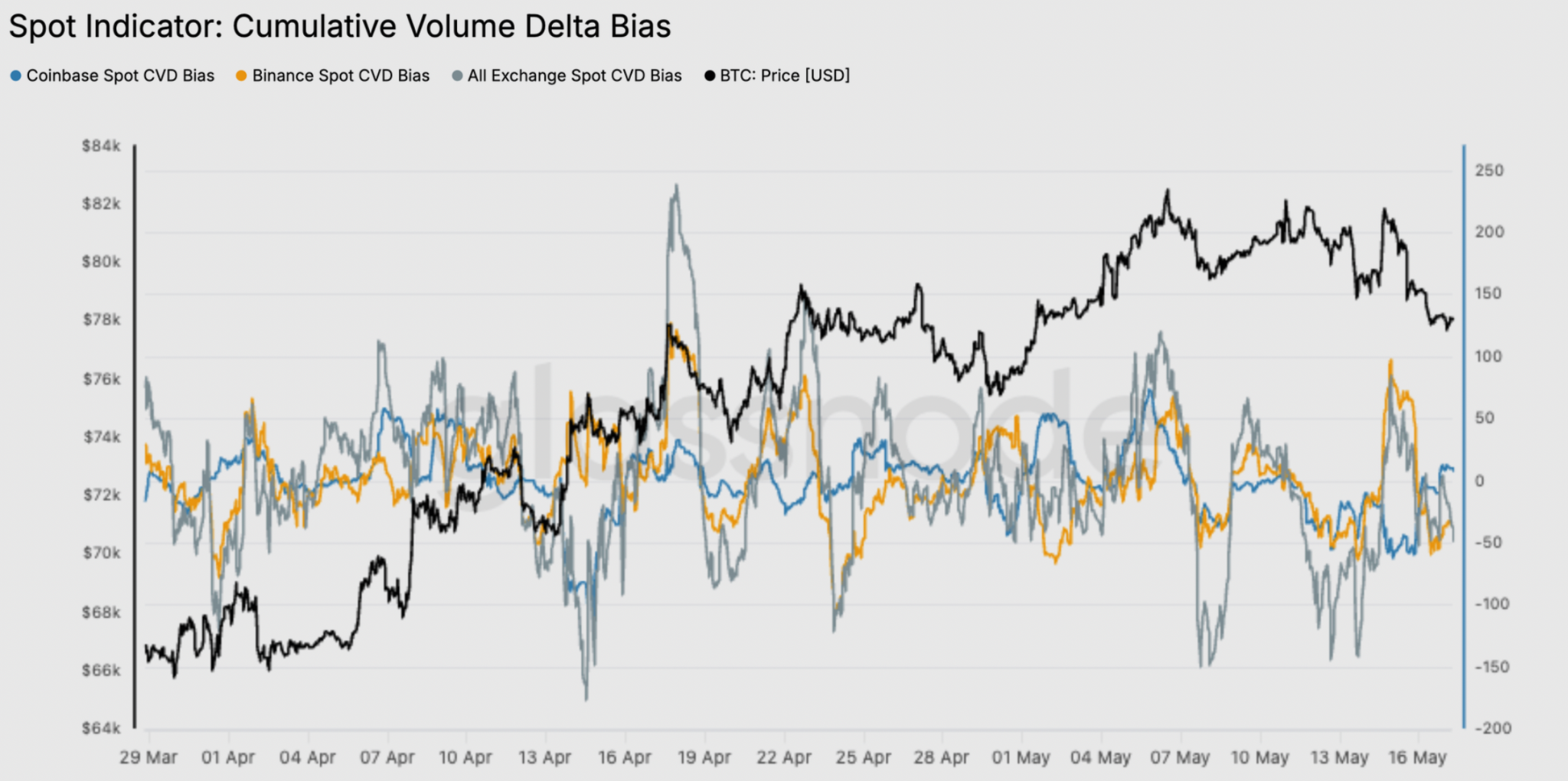
Meanwhile, Bitcoin’s spot demand is also accelerating, with spot CVD rising 47% to $62 million from $42 million a week ago, additional data from Glassnode shows.

“This increase indicates a significant uptick in buying aggression among market participants,” the onchain data provider said, adding:

“This behavior implies heightened conviction, with aggressive traders actively setting higher market prices, potentially signaling continued bullish momentum.”

Bitcoin: Spot CVD. Source: Glassnode

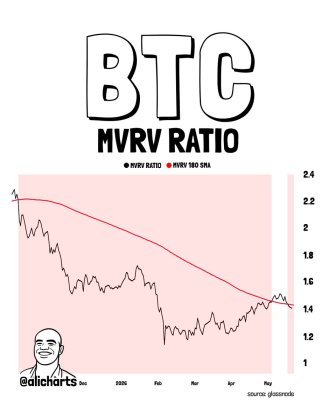
As Cointelegraph reported, Bitcoin’s market value to realized value (MVRV) ratio suggests BTC’s market structure is strengthening, which may be an early sign of a new bull market.

The Weaponization of AI and the Rise of Deepfake Fraud

0

At the Money20/20 Asia event in Bangkok, the primary trend identified in the financial sector was the alarming “weaponization” of Artificial Intelligence for the purposes of fraud. Louis Michelet, Chief Operating Officer at OZ Forensics, noted that while this is a global issue, the APAC region is particularly exposed due to its exceptionally high level of digitization. Financial institutions are now facing massive scale and highly sophisticated attack vectors that are increasing at an exponential rate. Specifically, Michelet highlighted the increasing prevalence of deepfake attacks on biometrics within the region, posing a significant threat to traditional security protocols.

To counter these evolving threats, OZ Forensics provides a solution designed to secure the biometric flow for institutions within the financial and public sectors, as well as other critical business processes. The platform is built to distinguish between genuine users and sophisticated AI-generated fraud, ensuring that the identity verification process remains robust against modern attack methods. By focusing on the biometric entry point, the company helps organizations build a defensive layer that specifically targets the most advanced tools currently utilized by digital fraudsters.

For banks and fintechs adopting this solution over the next 12 months, the results are twofold: total security and improved user experience. The immediate impact is the prevention of fraudulent access, effectively reducing fraud on the biometric flow to zero. Crucially, this high level of security does not come at the expense of the user journey. Because the product is designed to be frictionless, it ensures that genuine users are not blocked by overly aggressive security measures. Consequently, clients can expect an increase in conversion rates, allowing them to grow their business and expand their operations in a more secure environment.

Key Highlights from Louis Michelet:

  • Weaponized AI: Michelet discusses how AI is being used to create massive, exponential increases in fraud sophistication across the APAC region.

  • The Deepfake Threat: A specific look at the rise of deepfake attacks on biometric systems and the risk they pose to digital-first financial markets.

  • Zero-Fraud Biometric Flow: How the OZ Forensics solution aims to eliminate biometric fraud entirely without impeding legitimate customer access.

  • Balancing Conversion and Security: Why a frictionless approach is essential for increasing business growth while maintaining a hardened security posture.

Hot inflation data pours cold water on Federal Reserve rate cut hopes

0

U.S. inflation data came in hotter than expected on Wednesday, reinforcing expectations that the Federal Reserve will keep interest rates steady at 350-375bps not only at its June 17 meeting, but also likely through the end of the year.

The Consumer Price Index (CPI) year-over-year rose 3.8% in April, according to a report from the Bureau of Labor Statistics. Economists’ forecasts had been for a rise of 3.7% following March’s 3.3% increase.

On a month-over-month basis, CPI rose 0.6%, above expectations of 0.3% and up from March’s 0.2%.

Core CPI, which excludes food and energy costs, rose 0.4% in April versus forecasts of 0.2% and March’s 0.3%. Year-over-year core CPI was higher by 2.8% versus forecasts of 2.7% and March’s 2.6%.

Under pressure this morning, bitcoin traded at $80,700 following the report, down 1.2% over the past 24 hours.

U.S. stock index futures were down across the board, and the 10-year treasury yield came in higher at 4.44%. WTI crude oil is posing a threat to the markets, and is higher by 3% on the day at $101.

Ahead of the CPI data, markets were pricing in a 98% probability that the Federal Reserve would leave interest rates unchanged at its March meeting, according to the CME Fed Watch tool.

Kevin Warsh is set to be confirmed as the next Federal Reserve Chair this week, as he is expected to take over from Jerome Powell on May 15.