Home Blog Page 208

Crypto and the Fed: State of Crypto

0

The Federal Reserve published the latest version of its proposal to create a “skinny” master account, updating the proposal first published last December. In the same week, President Donald Trump signed an executive order directing the greater integration of digital assets with existing payment networks.

You’re reading State of Crypto, a CoinDesk newsletter looking at the intersection of cryptocurrency and government. Click here to sign up for future editions.

The narrative

U.S. President Donald Trump signed two executive orders this past Tuesday. One directed the broader government to update existing regulations to better integrate crypto into payment systems, while the other directed the Treasury Department and regulators to strengthen Bank Secrecy Act regulations. The next day, the Federal Reserve Board published its updated proposal for a skinny master account, laying out more detail about its approach to granting crypto firms access to its payment rails.

Why it matters

The crypto industry’s integration with the broader federal payments system is certainly a goal for the industry at large. Last week’s proposals may bring that a step closer.

Breaking it down

The Federal Reserve’s proposal on Wednesday updates its skinny master account request for information first published in December 2025, laying out how the central bank envisions granting fintech and crypto firms access to its payment rails without requiring them to be full fledged, Office of the Comptroller of the Currency-chartered banks.

The fintech-focused order directed federal regulators to review their existing policies to evaluate how they regulate financial institutions and identify rules that might block fintech firms from partnering with regulated entities.

The order also directed the Fed to review how it handles uninsured depository institutions and their access to payment accounts.

Part of that review includes having the Federal Reserve member banks evaluate if they can independently grant payment accounts to entities.

The Fed cannot necessarily do all of this on its own; Congress may need to pass legislation further detailing what types of entities may be qualified for an account.

The BSA-focused order directs the U.S. Treasury Department and regulators to issue guidance to banks and other entities.

“My Administration will not tolerate national security and public safety risks caused by illicit cross-border financial activity, nor will it permit risks to our financial system posed by the extension of credit or financial services to the inadmissible and removable alien population,” Trump’s order said.

This would include an advisory that notes “payroll tax evasion,” shell companies and “the strategic use of unregistered money services businesses, third-party payment processors, or peer-to-peer platforms to facilitate ‘off-the-books’ wage payments intended to bypass Bank Secrecy Act reporting thresholds or tax obligations,” among other types of entities.

While the order did not explicitly mention cryptocurrency or decentralized finance trading platforms, they could get caught up in any ultimate guidance, said Nicholas Anthony, a research fellow at the Cato Institute.

The next question is what might be in the guidance and advisory.

“Right now it’s in the hands of the Treasury, and the Treasury is able to apply it not only however it sees fit, but also to whoever it sees fit, because of the broader power that the Treasury has under the Bank Secrecy Act,” he said.

Senate shenanigans

The Senate Banking Committee voted to advance the Clarity Act just over a week ago.

The expectation was the overall Senate might get to this sometime in the next month, to sort out ethics and other outstanding issues and then vote on whether to send the bill to the House of Representatives. That timeline took a bit of a hit Thursday, when the Senate left town for the Memorial Day recess without voting on a reconciliation bill to fund the Department of Homeland Security, among other things.

The issue is this: There’s really only so much time to get stuff done on the Senate floor. There are 19 working days in June and 15 in July. There’s another five in August and then everyone’s gone for the rest of the summer.

In that time, the Senate has to sort through reconciliation, a renewal of the Foreign Intelligence Surveillance Act (which will expire in mid-June) and possibly a housing bill.

Adding to the tension is the reason why the Senate left town. President Donald Trump’s administration wanted $1 billion for his planned East Wing ballroom and more recently another $1.8 billion for a weaponization fund, which members of both parties have referred to as a “slush fund.” The Senate had already dropped the ballroom funding from the bill, but the other $1.8 billion appeared to be too much to negotiate this week.

Negotiations over these issues — if there isn’t any backroom dealing through the recess — can draw out the negotiation process, further limiting floor time for Clarity. And of course, there’s still the ethics provision itself in the market structure bill. The White House hasn’t yet indicated what exactly it might accept, so that’s another negotiation to watch out for.

This week

  • The House and Senate are on recess this week.

If you’ve got thoughts or questions on what I should discuss next week or any other feedback you’d like to share, feel free to email me at nik@coindesk.com or find me on Bluesky @nikhileshde.bsky.social.

You can also join the group conversation on Telegram.

See ya’ll next week!

Former FTX Legal Advisor Fenwick & West Settles Lawsuit for $54M

Fenwick & West LLP, the principal law firm that advised former cryptocurrency exchange FTX, agreed on Friday to pay $54 million to settle a 2023 class action lawsuit, filed by former customers of the defunct exchange.

The plaintiffs allege that Fenwick “facilitated FTX’s fraud” by playing “a key and crucial role in the most important aspects of why and how the FTX fraud was accomplished,” according to the original complaint. 

Plaintiffs argue that the Silicon Valley law firm helped the now-bankrupt FTX obscure the misuse of customer funds by creating legal entities, structures and other strategies to hide the commingling of funds, including transfers between the exchange and its trading arm, Alameda Research.

Court filing excerpt from $54 million settlement Fenwick & West LLP has agreed to pay. Source: PACER

These strategies also included advising FTX on creating legal structures that would alleviate the exchange from having to acquire money transmitter licenses. 

Fenwick initially sought to have the lawsuit dismissed before agreeing to settle with the plaintiffs in February. However, the settlement must still be approved by a US judge.

The settlement marks the latest development in the legal fallout from the 2022 collapse of the FTX exchange, which sent shockwaves through the crypto industry at the time and exposed the sector to greater scrutiny from US regulators and lawmakers.

Related: Law firm Fenwick & West sued for $525M over alleged role in FTX collapse

FTX estate pays former customers and creditors at steep discount 

In March, the FTX Recovery Trust, which oversees the distribution of assets to former creditors and customers of the exchange, distributed $2.2 billion to the damaged parties.  

The next tranche of reimbursements is scheduled for May 29.

However, customers and former creditors of the exchange say the Trust has mismanaged the liquidation of assets, often selling the recovered assets at a steep discount or below all-time high values reached that were reached following the collapse of FTX. 

Source: SpaceX

The Recovery Trust sold a 5% stake in AI company Cursor for about $200,000 in April 2023, missing out on windfall profits when the value of that 5% stake ballooned to about $3 billion in April 2026. 

Magazine: Are DeFi devs liable for the illegal activity of others on their platforms?

Tom Lee’s Ethereum Portfolio Sits on $7.35B Loss as ETH Price Slumps

0

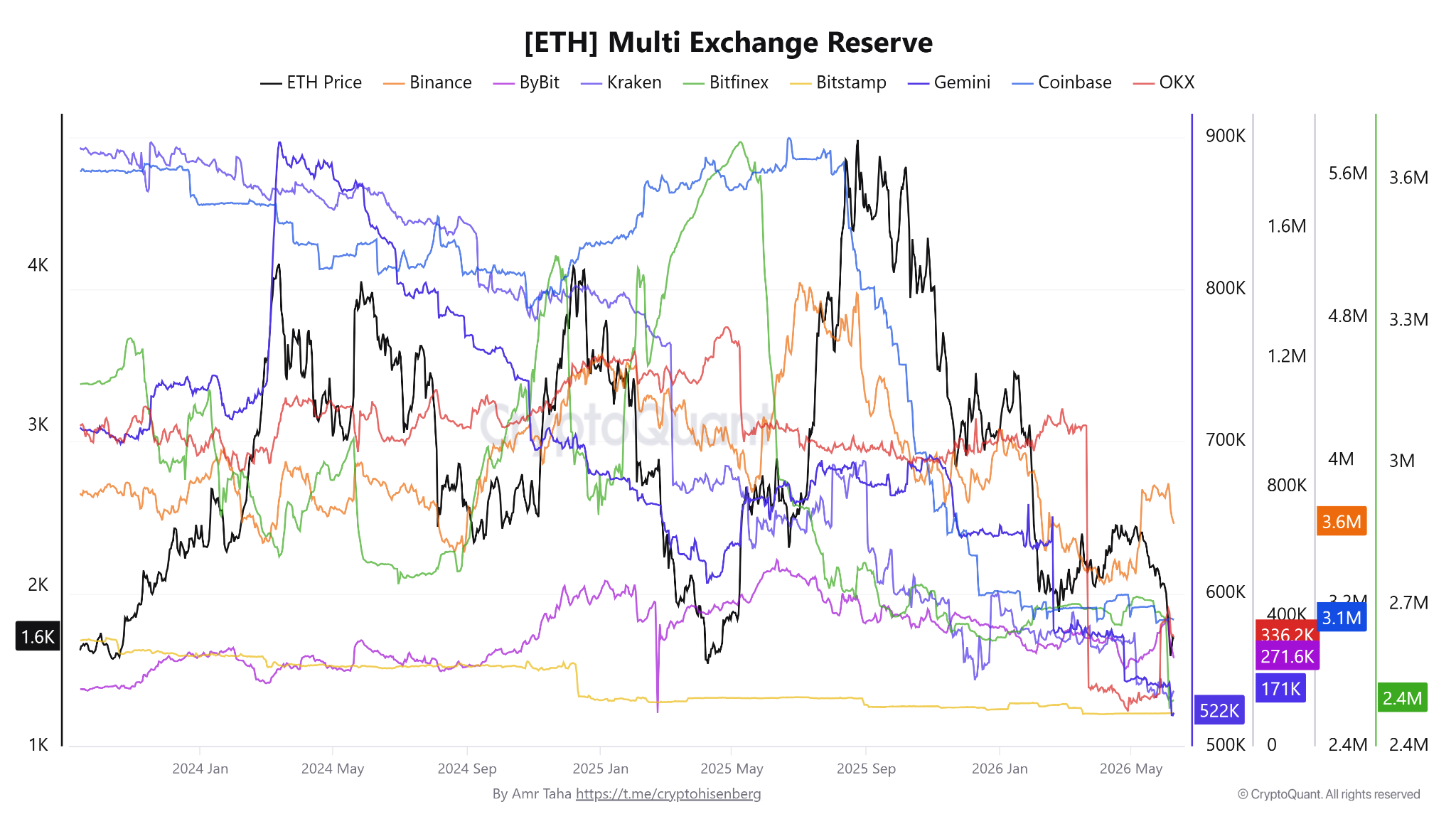
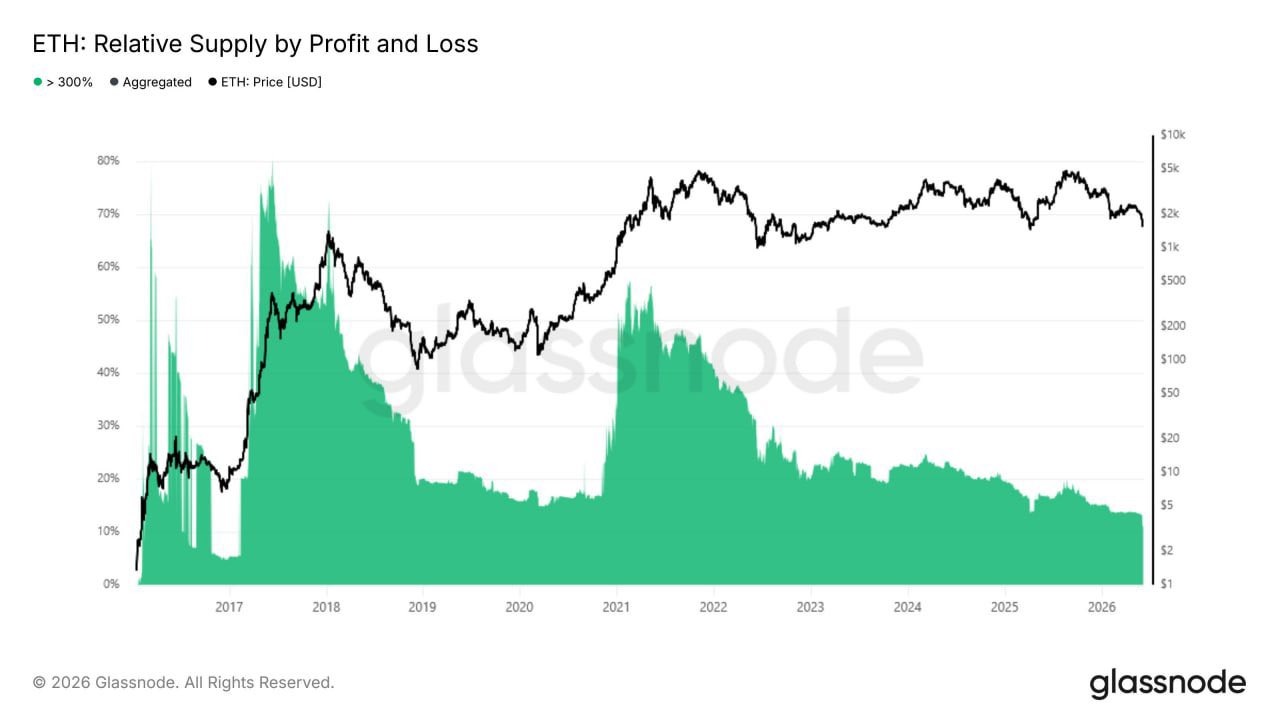
Tom Lee’s BitMine faces about $7.3 billion in paper losses on its Ethereum treasury as Ether (ETH) traders weigh worsening sentiment, ETF outflows and a bearish chart setup pointing toward $1,600.

Key takeaways:

  • Bitmine keeps buying ETH even as its losses mount amid the 57% price drawdown from the August 2025 high.
  • ETH price technicals warn of a 25% drop, which would push Bitmine’s losses over $10 billion.

Bitmine’s ETH treasury dashboard. Source: DropStab.COM

Lee continues buying ETH despite mounting losses

Ether has fallen more than 57% from its October 2025 peak near $4,955 on Coinbase, with the sell-off also eroding Ethereum’s market share. ETH’s dominance (ETH.D) has dropped to about 10%, down from roughly 15% in August 2025.

ETH.D vs. ETH/USD daily performance chart. Source: TradingView

BitMine began building its Ethereum treasury in July 2025, days after closing a $250 million private placement to fund the strategy. By July 14, the company disclosed holdings of 163,142 ETH, worth about $500 million at the time.

As of last week, BitMine held 5.28 million ETH, or about 4.37% of Ethereum’s total supply, making it the world’s largest publicly traded Ether treasury company. That means Tom Lee’s firm kept accumulating ETH through the drawdown, even as its losses widened.

Lee has not treated the losses as a reason to retreat. In February, he argued that ETH’s steep drawdown may offer another buying opportunity, citing Ethereum’s history of V-shaped recoveries after 50%-plus declines.

Related: Ether pullback was ‘attractive opportunity’ for 71,672 ETH buy: Bitmine’s Lee

In May, BitMine said it would moderate the pace of its ETH purchases, but not abandon the strategy.

The company still expects to reach its goal of owning 5% of Ethereum’s total supply by December, signaling that Lee’s strategy remains focused on long-term accumulation despite widening paper losses.

Bitmine’s losses may swell to over $10 billion if ETH falls further

BitMine could see its Ethereum paper losses swell to over $10 billion if ETH’s prevailing bearish setup plays out as intended.

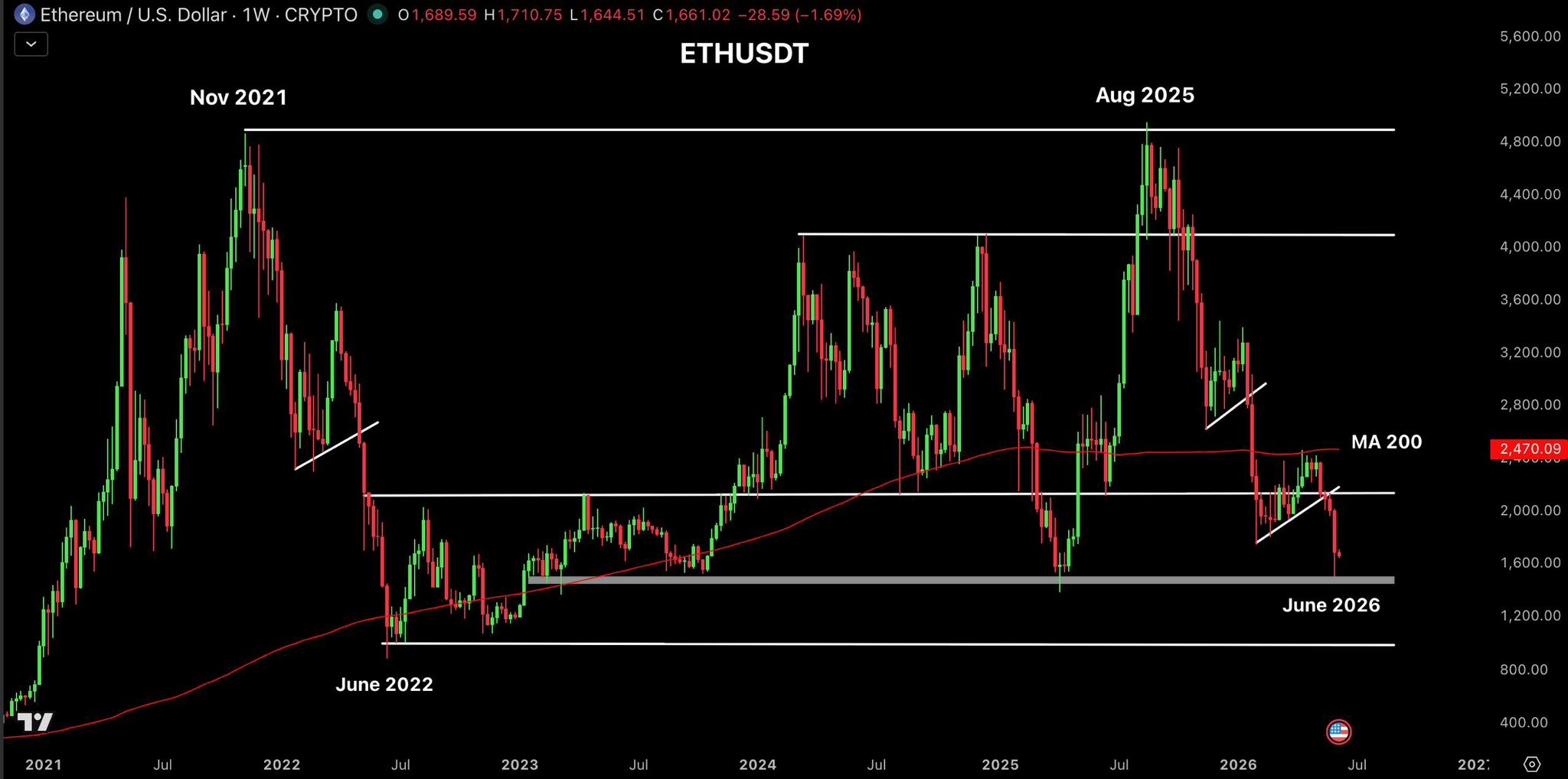
As of Sunday, ETH was hovering near the lower trend line of its prevailing rising wedge, a bearish reversal pattern that often signals fading buyer momentum.

ETH/USD daily chart. Source: TradingView

A confirmed breakdown below that support could trigger a measured move toward the $1,600 area, down about 25% from current prices, by July or August. The target comes from subtracting the wedge’s maximum height from the breakdown point.

Conversely, a decisive rebound from the lower boundary may increase the odds of a 19%–20% rise toward $2,530, aligning with the wedge’s upper boundary and the 200-day exponential moving average (200-day EMA, blue line).

The breakdown scenario would raise BitMine’s unrealized losses to nearly $10.1 billion, based on its reported 5.28 million ETH holdings and average purchase price of $3,513.

Ethereum traders flip bearish

Ether’s bearish technical setup overlaps with several other headwinds, such as recent Ethereum Foundation departures, persistent ETH ETF outflows, and weakening social media sentiment.

ETH sentiment deteriorated sharply in May, with the bullish-to-bearish comment ratio falling from above 2:1 in late April to nearly 1:1, according to on-chain data platform Santiment.

Ethereum social media sentiment. Source: Santiment

“Historically, this kind of deterioration tends to happen when traders lose confidence in an asset’s short-term direction,” it said in a Friday report, adding:

“Crypto traders tend to become highly emotional during periods of underperformance, and ETH has increasingly become viewed as ‘dead money’ compared to assets that have shown much stronger momentum in 2026.”

A massive $1 trillion hidden market is waiting to be unlocked in bitcoin, says new report

0

Crypto lender Ledn says the consumer bitcoin-backed loan market could grow nearly 300-fold to as much as $1 trillion within the next decade, as demand for borrowing against digital assets far outpaces actual usage.

The forecast accompanied new research conducted by consumer insights firm Protocol Theory, which surveyed 1,244 cryptocurrency holders across the U.S. and Australia between February and March this year. The study found that while 88% of respondents said they would consider using a crypto-backed loan or credit product, only 14% currently do so, revealing what Ledn described as a “6-to-1 consideration-to-adoption gap.”

Ledn estimates the bitcoin-backed consumer lending market currently stands at roughly $3 billion. By comparison, Galaxy Research previously estimated the broader crypto lending market reached an all-time high of $73.6 billion in the third quarter of 2025.

The sector, however, still carries the scars of the 2022 crypto credit collapse, when major lenders including Celsius Network, Voyager Digital and BlockFi either filed for bankruptcy or were forced into restructuring after crypto prices plunged and liquidity evaporated. The failures wiped out billions of dollars in customer funds and severely damaged trust in centralized crypto lending models, prompting regulators globally to tighten scrutiny of the sector. Ledn’s report suggests rebuilding that trust remains the industry’s biggest challenge.

“The demand side of the equation is solved,” Ledn co-founder Mauricio Di Bartolomeo said in a statement. “What’s still catching up is the trust infrastructure that gives borrowers the confidence to act.”

The report argues that crypto-backed lending remains underdeveloped relative to the scale of digital asset ownership globally. The global cryptocurrency market capitalization stood at approximately $2.68 trillion as of May 2, according to data cited in the research.

The findings suggest the main obstacles preventing wider adoption are not lack of awareness or understanding, but confidence-related concerns. Among non-borrowers, the most commonly cited barriers were worries about managing crypto price volatility, liquidation risk and regulatory uncertainty surrounding crypto-backed loans.

Respondents also said platform reputation, transparency around loan terms, custody safeguards and risk management practices mattered more than rates or product features when selecting a lending provider.

The report frames crypto-backed borrowing as a digital asset equivalent of securities-backed lending or home equity borrowing in traditional finance: accessing liquidity without selling a long-term asset position.

StablR Stablecoins Exploited, EURR and USDR Depeg After Minting Key Compromise

0

Estimates of losses range from $2.8 million to $10 million.

StablR, a European stablecoin issuer backed by Tether, suffered an exploit on Saturday that drained funds from its minting contract and sent both its euro and dollar-pegged tokens sharply below their pegs.

Security firm Blockaid, which first flagged the attack on-chain, said roughly $2.8 million had been extracted. Marcin Kazmierczak, co-founder of RedStone Oracles, and on-chain monitoring account PharosWatch put the figure closer to $10 million. The disparity could not immediately be reconciled; the situation was still developing as of the time of writing. Both EURR, pegged to the euro, and USDR, pegged to the U.S. dollar, depegged by more than 20%, according to multiple observers.

StablR had positioned itself as a fully compliant, 100%-collateralized stablecoin issuer, one of a growing class of regulated euro stablecoin projects targeting European markets ahead of the EU’s Markets in Crypto-Assets (MiCA) framework coming into full effect.

StablR confirmed the exploit in a post on X on Saturday, saying it had “identified an exploit” and was “actively working to contain it and minimize impact.” The company said it would share “verified details and next steps as soon as possible” but had not provided further on-chain specifics by the time of publication.

Key Compromised

Blockaid’s automated detection system identified the attack and issued an alert naming the two token contract addresses on Ethereum. On-chain analysts attributed the breach to a compromised key on StablR’s minting multisig, a security setup that required only one of three authorized signers to approve minting transactions. Kazmierczak described it as “another key compromise attack, this time a 1-of-3 minting multisig.”

PharosWatch noted that funds were withdrawn via CCTP — Circle’s Cross-Chain Transfer Protocol — on Noble, a Cosmos-based chain, and said on-chain investigator ZachXBT had confirmed the attack.

Tether, the issuer of the world’s largest stablecoin USDT, made a strategic investment in StablR in 2024.

The StablR exploit is the latest in a series of weekend security incidents that have hit crypto protocols. Kazmierczak said, “Seems like no weekend this year without a hack.”

Users holding EURR or USDR were advised to proceed with caution. StablR has yet to announce a recovery plan or provide an updated assessment of total losses.

AI is speeding up the quantum threat to crypto, security experts warn

0

The crypto industry has spent years debating whether quantum computing poses an existential threat to blockchains like Bitcoin and Ethereum. Now, researchers and builders believe artificial intelligence may be accelerating that timeline, and forcing a broader rethink of how digital security works altogether.

Leaders working on post-quantum cryptography and blockchain security described a rapidly changing landscape in which AI is simultaneously becoming a weapon for attackers, a defensive tool for developers, and an accelerator of quantum computing research.

“The security landscape of the future is going to be different,” said Alex Pruden, CEO of Project Eleven, a company focused on quantum-resistant infrastructure for crypto.

“Between quantum and AI, we’re going to go into a world where security, and this is more broadly than just crypto, you simply cannot count on the way you’ve always done things,” Pruden said.

The convergence of AI and quantum computing has become increasingly urgent following warnings from major technology firms and researchers that cryptographically relevant quantum computers may arrive sooner than previously expected. While experts remain divided on exactly when a quantum computer capable of breaking modern encryption will emerge, many believe AI could dramatically compress development timelines.

“AI is definitely being used to accelerate the development of quantum computing,” Pruden said. Researchers are already using machine learning systems to optimize quantum error correction, one of the field’s biggest engineering bottlenecks.

Illia Polosukhin, co-founder of NEAR Protocol and a former Google AI researcher, said AI has already been accelerating scientific discovery for years.

“AI is becoming more and more of an accelerator,” Polosukhin said. “The rate of research is going to accelerate from here, and we have already seen progress that people didn’t expect would come this early.”

Polosukhin pointed to his time at Google in 2016, when machine learning systems were already being used to discover new materials. “It might be that the next generation quantum computer will be built with AI and quantum computers of this generation,” he said. “It’s feeding into itself.”

For security researchers, the threat is no longer simply theoretical. The growing concern is that governments and sophisticated actors are already collecting encrypted internet traffic today with the expectation that future quantum computers will eventually be able to decrypt it, a strategy often referred to as “harvest now, decrypt later.” “If I know quantum computers are coming in a couple of years, I will start trying to capture all possible data that’s going around,” Polosukhin said.

“Everything we’re putting on the internet, if you’re identifiable as a person of interest, you can assume will be decrypted in two years,” he added. “It’s most likely happening already.”

The implications for crypto are especially severe because most blockchain networks rely on the same elliptic curve cryptography used across the broader internet. A sufficiently powerful quantum computer could theoretically derive private keys from public keys, allowing attackers to compromise vulnerable wallets and systems.

But researchers increasingly argue the bigger story is not quantum alone, it is the combination of quantum computing and AI creating a permanent security arms race.

Artificial intelligence is already becoming increasingly effective at identifying software vulnerabilities and implementation flaws. “I would expect the advent of AI to accelerate… even more hacks,” Pruden said. “You have these AI models that are able to find either implementation bugs in the underlying cryptography or increasingly, I think, break the cryptography itself.”

At the same time, developers are deploying AI defensively for code auditing, testing and formal verification, mathematical techniques used to prove software behaves as intended. “AI can help with formal verification of post-quantum systems,” Pruden said. “That theoretically makes them more secure.”

The result, researchers say, is a future where security can no longer be treated as static infrastructure that gets upgraded once every decade. “Nothing is going to be as static as it’s been in the future,” Pruden said. “Either a quantum computer comes online to break some fundamental assumption, or AI gets smart enough to break that assumption too.”

That shift is already beginning to force blockchain networks to rethink how quickly they can evolve. Several ecosystems, including Ethereum, Zcash, Solana, Ripple and NEAR, are actively researching or implementing post-quantum migration strategies.

NEAR recently announced plans to integrate post-quantum cryptography directly into its account infrastructure, allowing users to rotate cryptographic schemes without migrating assets to entirely new wallets. “Back in 2018, when we were designing [NEAR], we were like: ‘Hey, quantum will come, we should have an easy way to do it,’” Polosukhin said.

Still, the transition remains technically difficult. Post-quantum cryptographic systems are often significantly larger and slower than current standards. “The cryptography that’s currently standardized for post-quantum is very big and slow,” Polosukhin said.

The broader implication, according to researchers, is that both AI and quantum computing are undermining a foundational assumption of the digital age: that encryption remains reliable for long periods.

Instead, security may increasingly become an adaptive, continuously evolving process, in which systems must constantly upgrade just to survive.

Read more: Here’s how bitcoin, Ethereum and other networks are preparing for the looming quantum threat

CFTC Officials Who Questioned Prediction Markets Were Suspended: NYT

Senior officials at the Commodity Futures Trading Commission who raised concerns about prediction market companies were suspended, investigated and eventually pushed out of the agency.

According to a New York Times investigation published Sunday, the officials had flagged concerns about Polymarket, Crypto.com and a Gemini affiliate, each with alleged business ties to the Trump family. Career staff worried that Crypto.com was not treating small bettors fairly, that Polymarket lacked adequate fraud protections and that Gemini’s affiliate had not completed the required regulatory review to operate.

Despite those concerns, then-acting CFTC chair Caroline Pham and her senior counsel intervened to help the firms get what they wanted, sources told the NYT. By the end of 2025, two officials who had raised questions were placed on administrative leave and under internal investigation. Three others who had enforced crypto laws faced the same fate. None were told what they had done wrong.

“But current and former agency staffers said in interviews that the commission’s work force took away a clear message: Don’t cause trouble for those industries,” the report wrote.

Related: US Senate Banking Committee votes to advance CLARITY Act

CFTC pulls back on crypto enforcement

The report noted that the CFTC has significantly pulled back on crypto enforcement. The agency dropped at least five crypto investigations and went from filing more than 80 crypto enforcement actions under Biden to just two under Trump. Both of the recent cases targeted individual operators, not major firms.

Pham left the agency to join MoonPay, a crypto firm partnered with Polymarket. Her senior counsel, Brigitte Weyls, became general counsel at Gemini Titan, the same company whose application she helped approve, the NYT claimed. Current chair Michael Selig, the agency’s sole commissioner, previously represented crypto firms as a corporate lawyer.

Crypto.com is a business partner of Trump Media. Polymarket received investment from Donald Trump Jr-backed venture capital firm 1789 Capital. Gemini’s founders are financial backers of American Bitcoin Corp, a crypto firm co-founded by Eric Trump.

“President Trump only acts in the best interests of the American public,” Davis Ingle, a White House spokesman, told the outlet. “There are no conflicts of interest.”

Cointelegraph reached out to Polymarket, Crypto.com and Gemini for comment, but had not received a response by publication.

Relateed: CFTC no-action letter eases event contract reporting rules

CFTC sues states over prediction markets

As Cointelegraph reported, the CFTC has filed lawsuits against over their legal proceedings against prediction market platforms, launching action against regulators in Wisconsin, Minnesota, New York, Arizona, Connecticut and Illinois.

Source: Fairplaygov

Last week, the House Agriculture Committee urged Trump to nominate four commissioners to the CFTC, warning the agency is ill-equipped to handle its growing responsibilities with only one member in place.

Magazine: Guide to the top and emerging global crypto hubs — Mid-2026

AI agents are starting to pay with crypto as Coinbase, Stripe and Visa want in, Keyrock report says

0

Artificial intelligence (AI) agents autonomously spending money online is still a tiny market, but some of the world’s largest tech, payments and crypto firms are already racing to build the infrastructure for it, Keyrock said in a new report.

The crypto trading and investment firm estimated that AI agents settled over $73 million across roughly 176 million transactions on blockchain rails between May 2025 and April 2026.

The volumes remain negligible compared to traditional finance (TradFi). Visa, for example, alone processes $14.5 trillion annually. But the significance lies less in the headline U.S. dollar value and more in how quickly the infrastructure stack is forming, the report argued. Global firms such as Coinbase (COIN), Stripe, Google (GOOG) and Visa (V) all rolled out competing systems for machine-to-machine payments.

The broader idea behind agentic payments is that software increasingly consumes digital services autonomously rather than through human-managed subscriptions and accounts. An AI trading agent, for example, could continuously purchase market data, cloud computing or AI-generated analysis in tiny increments throughout the day without a human authorizing each payment manually.

That potential is driving ambitious forecasts how big the agentic payment sector could grow. Gartner projects AI agents could intermediate $15 trillion in purchases by 2028, while McKinsey estimated retail agentic commerce could reach $3 trillion-$5 trillion by 2030, according to the Keyrock report.

Those projections imply growth rates even faster than stablecoins experienced during their breakout years, the report said, but said the pace of infrastructure deployment already signals the market is moving beyond its experimentation phase.

Coinbase’s x402 protocol has emerged as one of the leading crypto-native systems. The protocol allows AI agents to pay directly with USDC for services such as blockchain analytics or cloud infrastructure without creating accounts or subscriptions.

Stripe, with its Tempo blockchain, launched a competing framework called Machine Payments Protocol (MPP), while Google introduced AP2, a system focused on delegated spending authorization for AI agents. Visa has extended its card network with tokenized credentials designed for AI-driven commerce.

Crypto rails and stablecoins are emerging as the preferred settlement layer, and the economics help explain why.

Some 76% of agent transactions fall below the 30 cent fixed-fee floor common in card payments, according to the report. Most payments ranged between one and 10 cents, making traditional rails impractical for automated software agents buying data, AI inference or API access. Meanwhile, stablecoin settlement on some blockchains like Base and Tempo costs fractions of a cent.

Currently, 98.6% of machine payments settle in USDC, the stablecoin issued by Circle (CRCL). That solidifies Circle’s position in crypto payments, but also introduces risk of concentration, creating dependency on a single issuer.

Regulation could be a source of constraint for the growth. MiCA in Europe, the U.S. GENIUS Act and the EU AI Act are all expected to take effect around mid-2026, yet none of them directly address autonomous machine-to-machine transactions or questions around liability and agent identity, the report noted.

Blockchain Researcher Defends Ethereum Foundation, Says It’s ‘Exactly’ Doing Its Job

0

A blockchain researcher has pushed back against growing criticism of the Ethereum Foundation, arguing that the organization is doing “exactly” what it was designed to do, which the critics keep getting wrong.

In a post on X titled “Leave the Foundation Alone,” William Mougayar, a Toronto-based blockchain investor, researcher and best-selling author, argued that the EF is a protocol steward, not a marketing engine.

Mougayar said that ETH, Ethereum and the Ethereum Foundation are three separate entities with three separate trajectories. “The asset is money. The infrastructure is shared compute. The Foundation is a non-profit that is steering the protocol toward irrelevance for its own founders,” he wrote, adding that confusing the three leads to bad predictions and misplaced anger.

Source: William Mougayar

The post comes as the foundation has faced a wave of criticism from the crypto community in recent months. ETH sales, unstaking moves and public silence have drawn repeated accusations that the organization is harming ETH’s price performance.

Related: Ethereum is still a good long-term buy, according data: Analyst

EF is hardening the protocol

Mougayar said the EF is on a “subtraction path,” working to become less central to Ethereum over time. “ It is hardening the protocol so the world does not need it so much. It is shipping upgrades. It is funding the research that nobody else funds,” he wrote.

He suggested that the criticism comes from people who want a king. He claimed that expecting the EF to market ETH or court institutions is “like expecting the IETF to run Super Bowl ads for TCP/IP.”

ETH is currently trading at $2,117.09, up by 4.67% over the past day. However, the token is down more than 57% compared to its all-time high of $4,953 recorded in August last year, according to data from CoinMarketCap.

Related: Harvard dumps entire ETH position after just one quarter

EF sells, unstakes ETH

Earlier this month, the foundation completed its third OTC sale of ETH to BitMine Immersion Technologies, offloading 10,000 ETH at an average price of $2,292, worth roughly $22.9 million. Combined with two earlier transactions, 5,000 ETH in March and another 10,000 ETH the previous week, the Foundation has sold approximately $47 million worth of ETH to BitMine in recent weeks.

The sale also came shortly after the foundation unstaked 17,035 ETH worth around $40 million. The EF also unstaked another 21,270 Ether from Lido, worth nearly $50 million, earlier this month.

Market Moves: Why is Ethereum Foundation selling? BTC futures warning signs

Why is Bitcoin Down Despite Pro-Crypto Kevin Warsh Becoming Fed Chair?

0

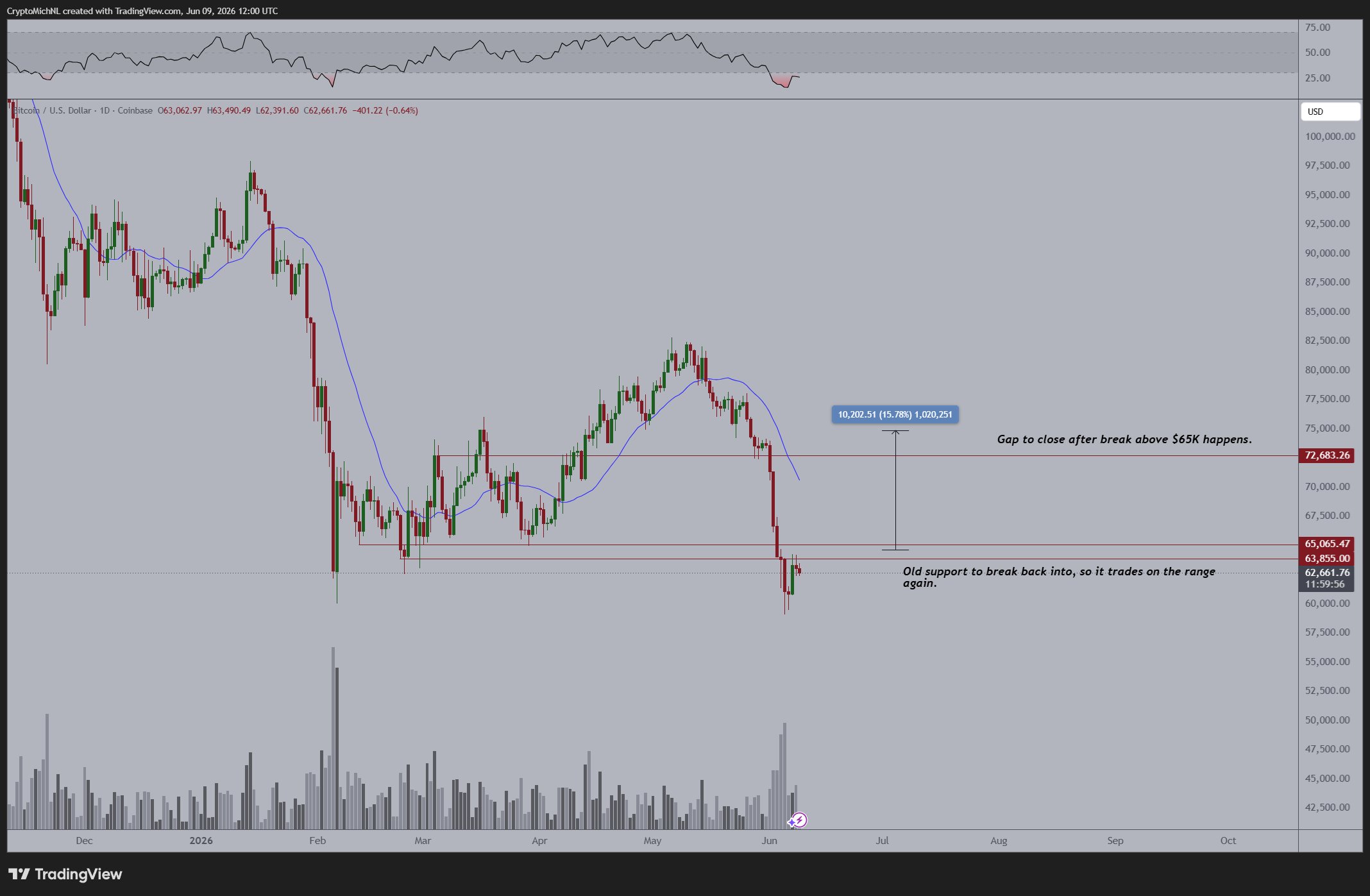
Bitcoin (BTC) fell to $74,190 on Saturday, its lowest level in more than a month, despite pro-crypto Kevin Warsh being sworn in as Federal Reserve chairman a day earlier.

BTC/USD daily chart. Source: TradingView

Key takeaways:

  • Higher odds of a rate hike in 2026 are pressuring the Bitcoin market.
  • Bitcoin has historically struggled during years marked by Federal Reserve leadership changes.

Why is Bitcoin down despite a pro-crypto Fed chair?

Bitcoin’s sell-off came as the 2-year US Treasury yield climbed to 4.14%, its highest level since February 2025.

US 2-year bond yield daily chart. Source: TradingView

The 2-year yield is closely tied to where traders expect the federal funds rate to move in the near term. Its move above the Fed’s current 3.50%–3.75% target range suggests markets are no longer betting on quick easing under Warsh.

CME data shows traders now expect the Fed to keep rates unchanged for most of 2026, with futures pricing pointing to a possible 25 basis point hike in December.

Target rate probabilities for the December Fed meeting. Source: CME

Over the past three decades, the Fed has typically raised rates when the 2-year Treasury yield moved above the federal funds rate, as the gap suggested markets were pricing in tighter policy ahead, according to data provided by BCA Research.

US 2-year Treasury yield vs. US Fed fund target rate. Source: BCA Research

Conversely, when the 2-year yield fell below the Fed funds rate, it often signaled expectations for future rate cuts.

Related: Bitcoin ETFs snap 5-day inflow streak as BTC dips under $80K

Such a shift weakens the bullish case for BTC, which typically benefits from falling yields, lower real rates and easier liquidity conditions.

Warsh is “a known inflation hawk”

In the past, Warsh has spoken favorably about Bitcoin, criticized central bank digital currency, and backed a larger role for private-sector financial innovation. For crypto traders, that checks several bullish boxes.

But from a monetary-policy perspective, Warsh may still challenge the bullish Bitcoin narrative, according to analyst Crypto Patel.

In a Saturday post, Patel noted that Warsh is “a known inflation hawk,” not a dove, adding that a difficult macro backdrop, including Iran war-driven inflation risks and labor-market pressure, may keep him from slashing rates.

“Crypto-friendly on regulation is NOT the same as dovish on rates,” he said.

Bitcoin underperforms in years of Fed leadership changes

Another warning comes from Bitcoin’s historical reaction to Fed leadership changes.

In a Saturday post, analyst Lucky noted that BTC has struggled during previous chair transitions: it fell 84% after Janet Yellen took over in January 2014, 73% after Jerome Powell started in February 2018, and 60% after Powell began his second term in May 2022.

Source: X

Warsh’s takeover has so far coincided with a sharp BTC decline, suggesting traders may again be de-risking as they wait for policy clarity from the new Fed chief.