
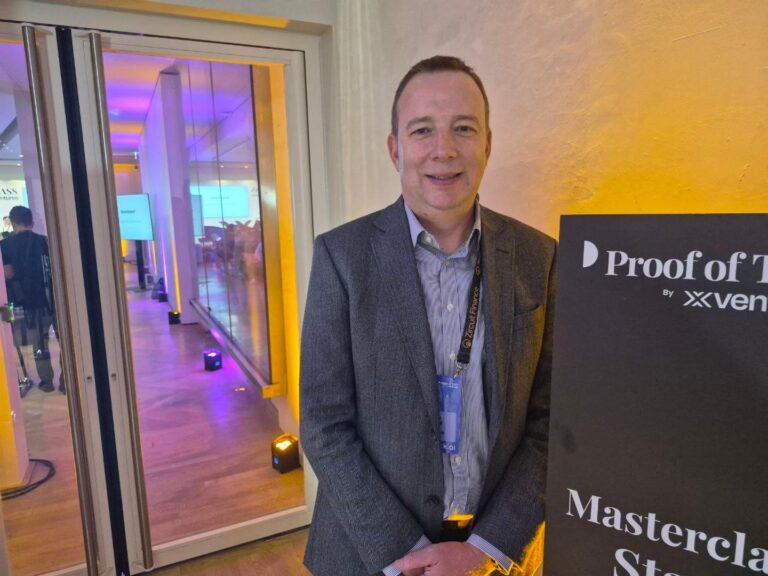
Sawyer will become a strategic adviser rather than take the helm of Zodia Solutions, as previously announced.
India's richest state is exploring tokenizing its own assets to fund new infrastructure
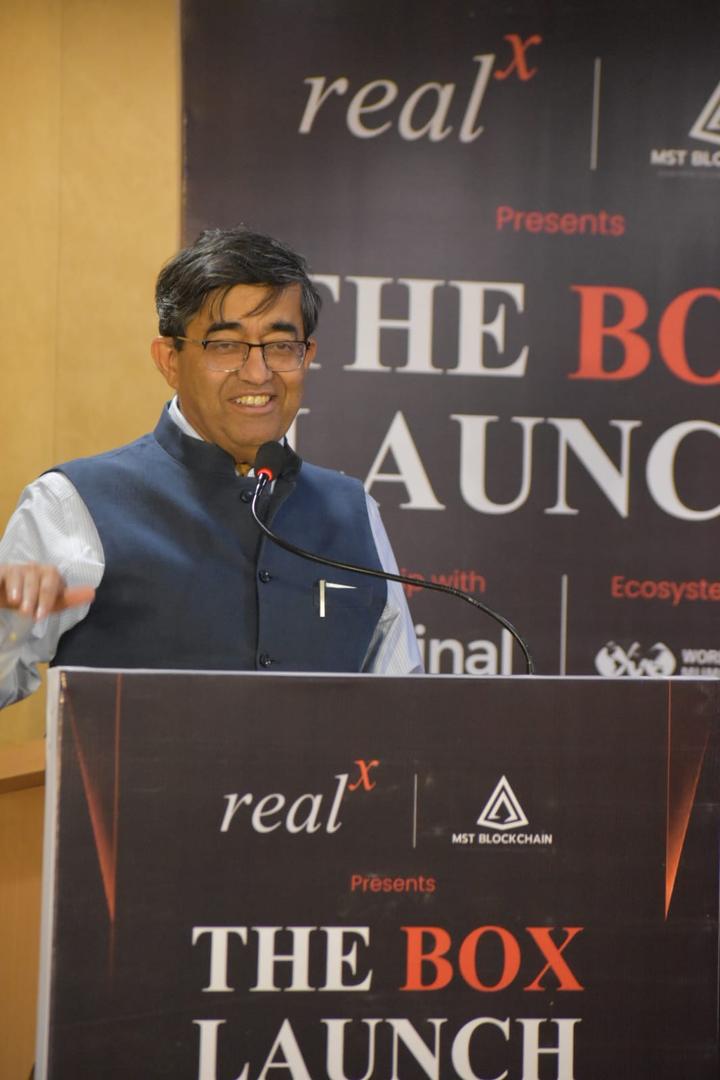
Maharashtra is drafting a policy to tokenize the state’s assets, including the electricity transmission infrastructure.
Ethena launches USDe and sUSDe on TRON
GENEVA and LISBON, Portugal, Sept. 11, 2026 (GLOBE NEWSWIRE) — TRON DAO (“TRON”) and Ethena Labs (“Ethena”) today announced that USDe and sUSDe are live on the TRON network, expanding access to Ethena’s digital dollar products across one of the world’s largest stablecoin settlement networks.
Users can now bridge USDe and sUSDe to TRON through Stargate Finance and hold or transfer both assets across the network. Support across TRON’s core DeFi applications, including JustLend DAO and SUN.io, is expected to roll out over the coming weeks, with broader adoption across wallets, exchanges, and payment applications to follow. USDe on TRON will also remain connected to liquidity across Ethena’s other supported networks, supporting interoperability across Ethena’s broader multichain ecosystem.
USDe brings an additional dollar-denominated asset to TRON, while sUSDe gives TRON’s global user base exposure to Ethena’s rewards-bearing digital dollar product. In turn, Ethena connects with TRON’s global base of over 403 million accounts, where dollar-denominated assets already move at significant scale.
“Millions of people rely on the TRON network every day to make payments, save, and move value globally,” said Justin Sun, Founder of TRON. “Bringing USDe and sUSDe to TRON broadens the options available to users and further strengthens the network as decentralized infrastructure for everyday use.”
“TRON has a massive user base that already holds and moves digital dollars in significant size,” said Guy Young, Founder of Ethena Labs. “Bringing USDe and sUSDe to that ecosystem means those users can hold a dollar that accrues rewards on the network they already use. This integration is the latest step in our effort to bring our digital dollar products to as many people as possible, and we look forward to continuing to work with the TRON DAO team to find new ways to bring value to TRON’s users.”
The integration marks the latest step in USDe’s multichain expansion, with the asset now supported across more than a dozen networks and integrated with leading centralized exchanges and DeFi applications.
About Ethena Labs
Ethena Labs is the development team behind USDe and USDtb and a contributor to the Ethena protocol. Ethena’s USDe is the fastest growing USD-denominated crypto asset in history, encompassing integrations across some of the largest centralized exchanges and major DeFi applications. Ethena is backed by Fidelity, Franklin Templeton, Dragonfly, Binance Labs, Bybit, and OKX among others.
Media Contact
Nate Johnson
Ethena-August@AugustCo.com
About TRON DAO
TRON DAO is a community-governed DAO dedicated to accelerating the decentralization of the internet via blockchain technology and dApps.
Founded in September 2017, the TRON blockchain has experienced significant growth since its MainNet launch in May 2018. Today, TRON hosts the largest circulating supply of USD Tether (USDT) stablecoin, which currently exceeds $94 billion. As of September 2026, the TRON blockchain has recorded over 403 million in total user accounts, more than 15 billion in total transactions, and over $28 billion in total value locked (TVL), based on TRONSCAN. Recognized as the global settlement layer for stablecoin transactions and everyday purchases with proven success, TRON is “Moving Trillions, Empowering Billions.”
TRONNetwork | TRONDAO | X | YouTube | Telegram | Discord | Reddit | GitHub | Medium | Forum
Media Contact
Yeweon Park
press@tron.network
Disclaimer: This sponsored content is provided by the content provider and does not necessarily reflect the views of this media platform or its publisher. The information is shared for general informational purposes only and should not be considered financial, investment, or trading advice. Cryptocurrency and mining-related activities carry risks, including the potential loss of capital, and readers are encouraged to conduct their own research and seek professional advice where appropriate. Speculate only with funds that you can afford to lose. The media platform and publisher assume no responsibility for any losses or claims arising from reliance on this content. GlobeNewswire does not endorse any content on this page.
Legal Disclaimer: This article is provided on an “as-is” basis, without warranties or representations of any kind, express or implied. The media platform assumes no responsibility or liability for the accuracy, content, completeness, legality, or reliability of the information presented. Any complaints, claims, or copyright concerns related to this article should be directed to the content provider mentioned above.
Source: TRON DAO
With Fed rate hike all but assured, here's how markets might react
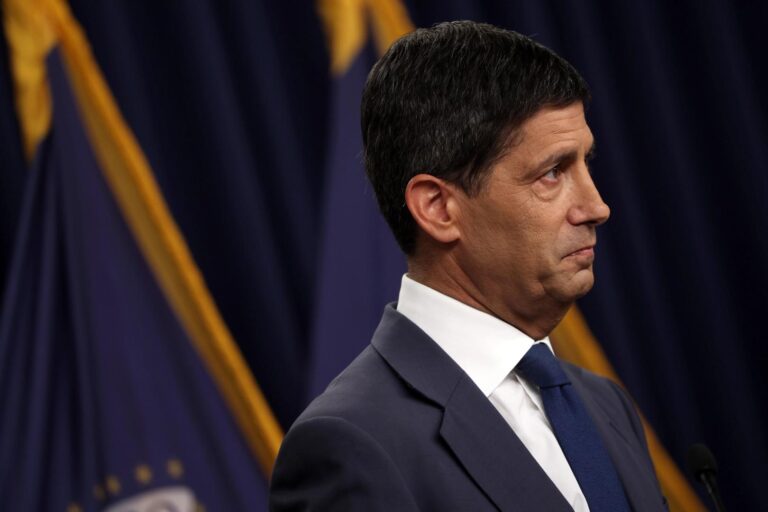
Traders could look past an expected Fed hike and weigh what higher rates are signaling about the economy.
Robinhood CEO says companies shouldn't get veto over stock tokens in AMC feud

In a post on Friday, Vlad Tenev said securities issuers should control shareholder rights, but not separate products that track their publicly traded shares.
Bitget Wallet Joins Japan Blockchain Collaborative Consortium BCCC
SAN SALVADOR, El Salvador, Sept. 11, 2026 (GLOBE NEWSWIRE) — Bitget Wallet, the leading self-custodial crypto wallet for everyday finance, has joined the Blockchain Collaborative Consortium (BCCC), Japan’s largest blockchain industry consortium, as the country enters a new phase of digital asset regulation. The membership brings Bitget Wallet, a global self-custodial wallet serving more than 100 million users, into Japan’s industry policy discussions for the first time, while regulators and market participants are increasingly examining how services that let users directly control their own assets should be treated.
Founded in 2016, BCCC was Japan’s first blockchain industry association and brings together more than 270 companies and organizations across the country’s blockchain ecosystem. Its committees cover areas including technology, financial services, DeFi and stablecoins, providing a forum for industry participants to develop use cases, discuss regulatory issues and engage with policymakers.
The move comes as Japan refines its regulatory framework for crypto services. New rules covering cryptocurrency service intermediaries took effect in June 2026, bringing renewed attention to the distinction between custodial platforms, which hold assets on users’ behalf, and self-custodial platforms, where users retain control of their private keys. Through BCCC, Bitget Wallet plans to contribute operational experience from supporting users across global markets and integrations with more than 130 blockchains, while participating in discussions around wallet standards, DeFi regulation and consumer understanding of self-custody.
“Japan is one of the few markets where technology development and regulatory clarity are advancing in parallel,” said Alvin Kan, COO of Bitget Wallet. “As self-custody becomes part of the formal policy discussion, the industry needs standards that protect users without losing sight of how these products actually work. We want to bring practical experience from global markets into that conversation and help build frameworks that are useful for users and workable for the industry.”
For more information, visit the Bitget Wallet website.
About Bitget Wallet
Bitget Wallet is a self-custodial crypto wallet built for everyday finance, trusted by over 100 million people to save, send, and spend digital dollars — and access global markets. It brings together stablecoin payments, Visa and Mastercard crypto cards, local buying and cash-out options, support for more than 100 fiat currencies, earning products, and access to more than 1 million crypto and tokenized real-world assets across 130+ blockchains in one account. Users retain full ownership of their assets, protected by hardware-backed key security, independent security audits, real-time risk monitoring, and a $300 million user protection fund. For more information, visit web3.bitget.com.
X | Telegram | LinkedIn | YouTube | Instagram | TikTok | Facebook
For media inquiries, contact media@bitgetwallet.io
About Blockchain Collaborative Consortium (BCCC)
Established in 2016, BCCC is Japan’s first industry association dedicated to promoting blockchain technology, with over 270 member companies and organizations. Through theme-specific committees including the Technology Committee, Financial Committee, DeFi Committee, and Stablecoin Promotion Committee, the council conducts technical verification, information dissemination, and dialogue with government authorities. https://bccc.global/
Disclaimer: For informational purposes only. Cryptocurrencies are subject to high market risk and volatility. No profit is guaranteed. You are strongly advised to conduct own research before investing at your own discretion. Nothing on this page shall be construed as financial advice or solicitation. Past performance does not indicate future results.
Source: Bitget Limited
The legal drama of imprisoned Sam Bankman-Fried is waiting on its last act

The fallen leader of the former top exchange FTX is looking for answers from the U.S. Supreme Court.
Metaplanet cuts executive reward pool by 41%, extinguishes $220 million in value

The bitcoin treasury firm cut the potential Series 10 share pool to 188.2 million.
Robinhood Reports Operating Data for August 2026
MENLO PARK, Calif., Sept. 10, 2026 (GLOBE NEWSWIRE) — Robinhood Markets, Inc. (“Robinhood”) (NASDAQ: HOOD) today reported select monthly operating data for August 2026.
- Funded Customers at the end of August were 28.6 million (up approximately 120 thousand from the end of July 2026, up approximately 1.90 million year-over-year).
- Total Platform Assets at the end of August were $384 billion (up 8% from the end of July 2026, up 26% year-over-year).
- Net Deposits were $4.0 billion in August, or a 14% annualized growth rate relative to July 2026 Total Platform Assets.
- Over the last twelve months, Net Deposits were $74.1 billion, or an annual growth rate of 24% relative to August 2025 Total Platform Assets.
- Trading Volumes in August:
- Equity Notional Trading Volumes were $335 billion (up 1% from July 2026, up 68% year-over-year). Average daily volumes (“ADVs”)3 were $16.0 billion (up 6% from July 2026, up 68% year-over-year).
- Options Contracts Traded were 293 million (down 10% from July 2026, up 50% year-over-year). ADVs were 13.9 million contracts (down 5% from July 2026, up 49% year-over-year).
- Crypto Notional Trading Volumes were $17.5 billion (up 61% from July 2026, down 38% year-over-year), including Robinhood App Notional Trading Volumes of $7.4 billion (up 72% from July 2026, down 46% year-over-year) and Bitstamp Notional Trading Volumes of $10.1 billion (up 53% from July 2026, down 30% year-over-year). Robinhood App ADVs were $239 million (up 72% from July 2026, down 46% year-over-year), and Bitstamp ADVs were $326 million (up 53% from July 2026, down 30% year-over-year).
- Event Contracts Traded were 4.7 billion (down 23% from July 2026, up 15x year-over-year). ADVs were 152 million contracts (down 23% from July 2026, up 14x year-over-year).
- Interest Earning Assets in August:
- Margin balances at the end of August were $21.5 billion (up 4% from the end of July 2026, up 72% year-over-year).
- Cash and Deposit balances at the end of August were $19.6 billion (up 1% from the end of July 2026, up 37% year-over-year).
- Cash Sweep balances at the end of August were $31.2 billion (up 7% from the end of July 2026, down 9% year-over-year).
- Total Securities Lending Revenue in August was $36 million (down 10% from July 2026, down 32% year-over-year). This includes Securities Lending, Net revenues of ($8) million.
| August 2026 |
July 2026 |
M/M Change |
August 2025 |
Y/Y Change |
|
| (M – in millions, B – in billions) | |||||
| Funded Customer Growth (M) | |||||
| Funded Customers1 | 28.6 | 28.5 | – | 26.7 | +7% |
| Asset Growth ($B) | |||||
| Total Platform Assets1 | $383.7 | $355.0 | +8% | $303.9 | +26% |
| Net Deposits1,2 | $4.0 | $5.6 | NM | $4.8 | NM |
| Trading | |||||
| Equities and Options Trading Days | 21 | 22 | (5%) | 21 | – |
| Crypto and Prediction Markets Trading Days | 31 | 31 | – | 31 | – |
| Total Trading Volumes | |||||
| Equity ($B) | $335.4 | $332.8 | +1% | $199.2 | +68% |
| Options Contracts (M) | 292.5 | 324.2 | (10%) | 195.5 | +50% |
| Crypto ($B) | $17.5 | $10.9 | +61% | $28.1 | (38%) |
| Robinhood App ($B) | $7.4 | $4.3 | +72% | $13.7 | (46%) |
| Bitstamp ($B) | $10.1 | $6.6 | +53% | $14.4 | (30%) |
| Event Contracts (B) | 4.7 | 6.1 | (23%) | 0.3 | +15x |
| Average Daily Trading Volumes3 | |||||
| Equity ($B) | $16.0 | $15.1 | +6% | $9.5 | +68% |
| Options Contracts (M) | 13.9 | 14.7 | (5%) | 9.3 | +49% |
| Crypto ($M) | $565 | $352 | +61% | $906 | (38%) |
| Robinhood App ($M) | $239 | $139 | +72% | $442 | (46%) |
| Bitstamp ($M) | $326 | $213 | +53% | $465 | (30%) |
| Event Contracts (M) | 152 | 197 | (23%) | 10 | +14x |
| Daily Average Trades (DATs) (M) | |||||
| Equity | 4.7 | 4.8 | (2%) | 3.6 | +31% |
| Options | 2.0 | 2.1 | (5%) | 1.2 | +67% |
| Crypto | 0.7 | 0.6 | +17% | 1.0 | (30%) |
| Interest Earning Assets ($B) | |||||
| Margin Book | $21.5 | $20.7 | +4% | $12.5 | +72% |
| Cash and Deposits4 | $19.6 | $19.5 | +1% | $14.3 | +37% |
| Cash Sweep4 | $31.2 | $29.2 | +7% | $34.1 | (9%) |
| Securities Lending ($M) | |||||
| Total Securities Lending Revenue | $36 | $40 | (10%) | $53 | (32%) |
| Securities Lending, Net | ($8) | $1 | NM | $24 | NM |
1. Starting in July 2026, Total Platform Assets include Trump Account assets custodied by Robinhood, and Net Deposits include Trump Account contributions. Funded Customers do not include Trump Accounts.
2. Starting in June 2025, Net Deposits include results from Bitstamp. Starting in March 2026, Net Deposits include results from TradePMR. Starting in June 2026, Net Deposits include results from WonderFi.
3. Average daily volumes (“ADVs”) defined as Total Trading Volume in a given period divided by the applicable number of trading days in said period.
4. In February 2026, we updated our brokerage High-Yield Cash program to fund growth in margin lending. Under the updated program, the first $10 thousand in enrolled balances per eligible customer are held as free credit balances where the customer continues to earn the same interest rate. This resulted in over $6 billion of Cash Sweep balances moving to free credit balances in February 2026.
Note: Robinhood Chain revenue is shared with its launch partners, with Robinhood retaining 50% of sequencer revenue until a total of approximately $50M; then 70% until a cumulative total of approximately $150M; and finally 85% of any additional sequencer revenue in excess of approximately $150M. Robinhood Chain volumes are not included in Crypto Trading Volumes.
For definitions and additional information regarding these metrics, please refer to Robinhood’s full monthly metrics release, which is available on investors.robinhood.com.
The information in this release is unaudited and the information for the months in the most recent fiscal quarter is preliminary, based on Robinhood’s estimates, and subject to completion of financial closing procedures. Final results for the most recent fiscal quarter, as reported in Robinhood’s quarterly and annual filings with the U.S. Securities and Exchange Commission (“SEC”), might vary from the information in this release.
About Robinhood
Robinhood Markets, Inc. (NASDAQ: HOOD) is a global leader in financial services offering retail brokerage, crypto, advisory, digital banking services, and private markets access to a new generation of investors. Additional information about Robinhood can be found at robinhood.com.
Robinhood uses the “Overview” tab of its Investor Relations website (accessible at investors.robinhood.com/overview) and its Newsroom (accessible at newsroom.aboutrobinhood.com), as means of disclosing information to the public in a broad, non-exclusionary manner for purposes of the SEC Regulation Fair Disclosure (Reg. FD). Investors should routinely monitor those web pages, in addition to Robinhood’s press releases, SEC filings, and public conference calls and webcasts, as information posted on them could be deemed to be material information.
“Robinhood” and the Robinhood feather logo are registered trademarks of Robinhood Markets, Inc. All other names are trademarks and/or registered trademarks of their respective owners.
Contacts
Investor Relations: ir@robinhood.com
Press: press@robinhood.com
Source: Robinhood Markets, Inc.
Kalshi wants 24/7 Tesla and Nvidia perps as Wall Street fights over who regulates them
The prediction-market operator plans to seek U.S. approval for about 60 stock and ETF perps, taking one of crypto’s biggest trading products into equities.