The chairman of BitMine, the largest corporate holder of Ether, brushed off a former Ethereum Foundation contributor’s warning that core development could run short of money within nine months.
Tom Lee, chairman of BitMine Immersion Technologies, the largest corporate holder of Ether, dismissed a warning from a former Ethereum Foundation contributor that the network’s core development faces a funding crisis, saying there is “zero chance” of a shortfall.
“In my opinion, zero chance of this ‘crisis’ happening for $ETH,” Lee wrote on X, adding “zero” and the line “Funding secured.”
Lee was responding to Trent Van Epps, who coordinated core protocol development and the Protocol Guild funding effort at the Ethereum Foundation from 2021 until April 2026. In an article published Thursday, Van Epps warned that Ethereum’s core development could slide into a “slow-burning funding crisis” within three to nine months. He estimated that sustaining the network’s more than 10 client teams, researchers and coordination groups costs roughly $30 million a year, and said the main sources covering that bill are tightening at once with no replacement in place.
The concerns Van Epps raised also echo turmoil inside the Foundation. On the same day Van Epps published, Hsiao-Wei Wang stepped down as co-executive director and board member, leaving Bastian Aue as effectively the sole executive director. Her exit followed at least eight senior researcher and contributor departures in 2026, including Van Epps’ own, and the February resignation of co-executive director Tomasz Stańczak. The Foundation has said its treasury plan keeps it solvent for the medium term.
Largest ETH Corporate Treasury
BitMine holds about 5.4 million ETH, or roughly 4.5% of the circulating supply, the largest corporate Ethereum position tracked by CoinGecko. The company has staked about 85% of that stash through its own validator network and projects annualized staking rewards of more than $230 million, giving Lee a direct financial stake in the network whose health he was defending.
The exchange distills the central tension in Ethereum’s funding model. The Ethereum Foundation, the nonprofit that has bankrolled protocol work for a decade, is deliberately shrinking its role under a philosophy it calls “Subtraction.”
Van Epps argues the institutions meant to replace it have not been built or scaled. Lee’s bet is that corporate validators like BitMine are already filling the gap. Which view holds will shape who pays to maintain Ethereum, the second-largest blockchain by market value, as it readies its biggest upgrade since the 2022 Merge.
Client Incentive Program Ends
Van Epps pointed to two converging pressures. The Client Incentive Program, a four-year effort that paid client teams through staking rewards, expired in April 2026 with no successor announced. At the same time, the Foundation has begun executing a treasury plan, announced in June 2025, that charts a path from spending 15% of its treasury a year toward a 5% endowment-style baseline by 2030.
He framed the gap as a symptom of deeper structural problems rather than a one-off episode. Without steady funding, Van Epps wrote, Ethereum risks losing “people with critical context built up over years,” falling behind on challenges such as quantum computing and scaling, and ultimately denting the mainnet’s reputation for reliability.
Ethereum’s Glamsterdam upgrade, its largest since the Merge, is in final testing. It introduces enshrined proposer-builder separation and block-level access lists and is expected to raise the network’s gas limit, work that demands experienced engineers to ship and audit safely.
‘Funding Secured’
Lee’s “Funding secured” jab echoed Elon Musk’s 2018 post about taking Tesla private, and doubled as a nod to his own thesis: that profit-seeking corporate stakers, not the Foundation, will underwrite Ethereum’s future. He has called the wave of Foundation departures “short-term noise” and argued the network is maintained by dozens of independent client teams beyond the EF payroll.
Lee has put that thesis to work. BitMine bought 126,971 ETH in June and has built much of its position through open-market and over-the-counter purchases. The Foundation has itself sold treasury ETH over the counter to fund operations. Lee, a co-founder and head of research at Fundstrat Global Advisors, has set a long-term price target of $250,000 for ETH.
The ‘Subtraction’ Bet
Much of Van Epps’ article traced the Foundation’s Subtraction policy, which dates to at least 2019 and holds that the EF should resist accumulating value and influence so that the broader ecosystem can grow instead. The Foundation’s March 2026 Mandate restated the goal as reducing its relative influence over time so Ethereum can “outgrow and outlast” it.
That aim has support at the top. Van Epps cited a recent post by Ethereum co-founder Vitalik Buterin, who wrote that the EF was designed to complete a limited scope of work, finished in 2022, and “was not designed to be an eternal steward.” Van Epps’ point is that the policy succeeded in signaling the EF would not be the sole center of power, but left unresolved who funds the shared work once the Foundation pulls back.
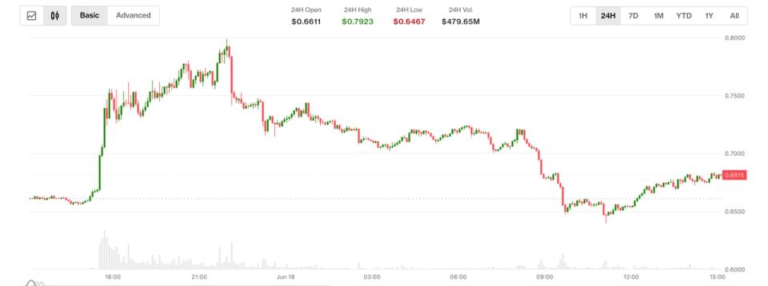
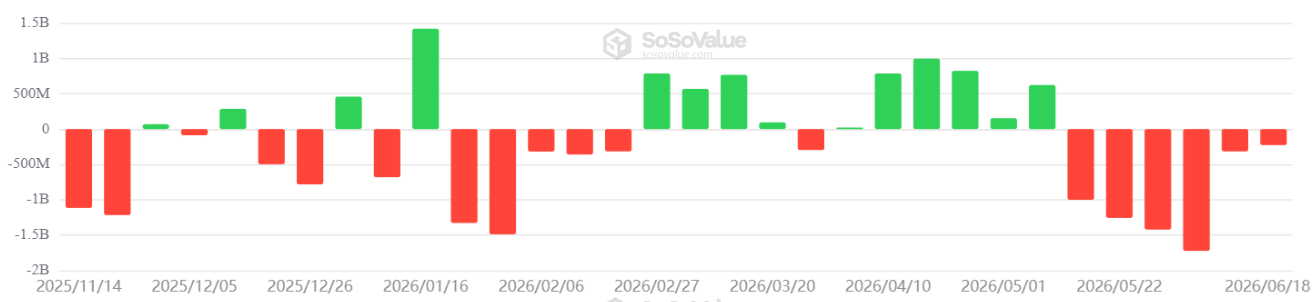
The warning did little to move the market. ETH was little changed over the 24 hours after Van Epps’ post, tracking a roughly flat Bitcoin, according to data from CoinGecko. The token is down about 20% over the past 30 days, a slide that gives the funding question added weight.