Bitcoin holder Strategy Inc.’s perpetual preferred stock, known as STRC or “Stretch,” is showing an increasingly tight link to bitcoin’s BTC$59,538.26 price moves. This weakens its appeal as a relatively steady income provider.
The 90-day correlation coefficient between the two has climbed to nearly 0.70, the highest level since the instrument debuted in July 2025, according to data source TradingView. The correlation has been rising since early this month, with both STRC and BTC losing ground. While STRC has tanked 23% to $76 this month, BTC’s price has slipped nearly 20% to under $60,000, hitting levels last seen in October 2024.
This tightening correlation changes the risk profile for investors seeking steady income from the preferred stock of the world’s largest corporate BTC holder, which owns 847,363 BTC worth $50.4 billion, according to BitcoinTreasuries.net.
STRC was designed as a hybrid product: a variable-rate perpetual preferred stock with a $100 par value that pays monthly cash dividends. The current annualized rate is 11.5%, and the board adjusts it monthly to encourage trading near par. When shares trade above $100, the firm can issue additional shares through at-the-market offerings and use the proceeds to purchase additional bitcoin.
The startup formerly known as Story Protocol raised $140 million to secure internet rights and is now building an audit layer for data consent, licensing, and provenance for tech firms.
“As intelligent machines become increasingly autonomous and operate around people, the requirements for safety, security, reliability and real-time determinism become even more important,” CEO John Giamatteo said during an earnings call. “Unlike probabilistic AI systems, QNX technology is deterministic and safety certified, which is exactly why it is so hard to replicate and why customers trust it for systems where failure is not an option.”
Investors are taking notice, and the stock is up nearly 23% on Thursday, after a massive earnings beat and a revised upward guidance. Meanwhile, sell-side analysts are falling over themselves to praise BlackBerry’s mission-critical infrastructure for the artificial intelligence boom.
One thing to note is that BlackBerry’s physical devices were so popular among governments and executives because they were secure and unhackable. Their encryption relied on the same fundamental math and cryptographic principles used by modern cryptocurrency. Of course, the way the company applied that math served a different purpose entirely.
Now, it has evolved to provide similar security for AI systems. While QNX isn’t exactly the same system as it used before, the software still relies heavily on the same cryptography library.
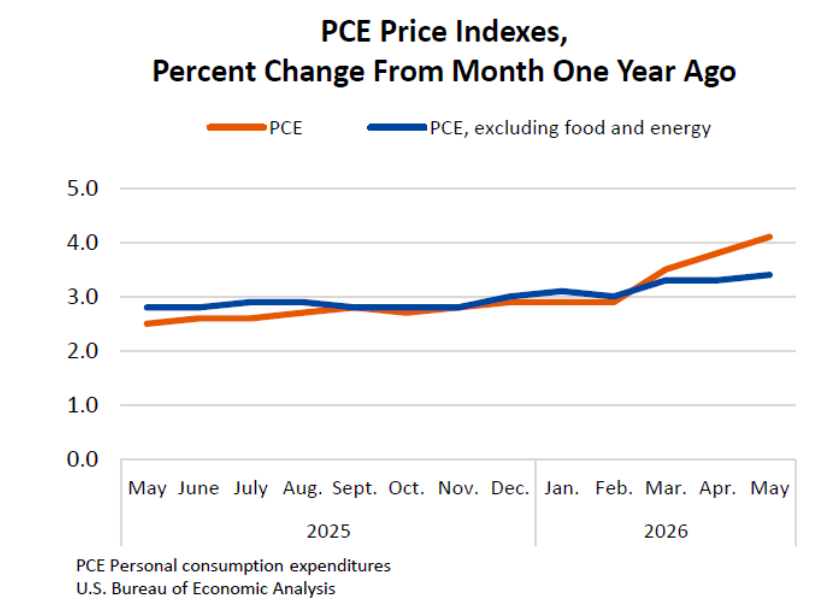
The May print of the US Personal Consumption Expenditures (PCE) index came in at 4.1%, setting a new three-year record.
“From the preceding month, the PCE price index for May increased 0.4 percent. Excluding food and energy, the PCE price index increased 0.3 percent,” a data release from the Bureau of Economic Analysis (BEA) stated.
“From the same month one year ago, the PCE price index for May increased 4.1 percent. Excluding food and energy, the PCE price index increased 3.4 percent from one year ago.”
US PCE one-month % change (screenshot). Source: BEA
Stocks reacted with volatility, with the Nasdaq Composite Index down 0.5% at the time of writing, while the S&P 500 managed to eke out a gain.
The Nasdaq 100, meanwhile, saw a larger snap decline of 2% in just 30 minutes at the open.
“What a chart,” trading resource The Kobeissi Letter responded on X.
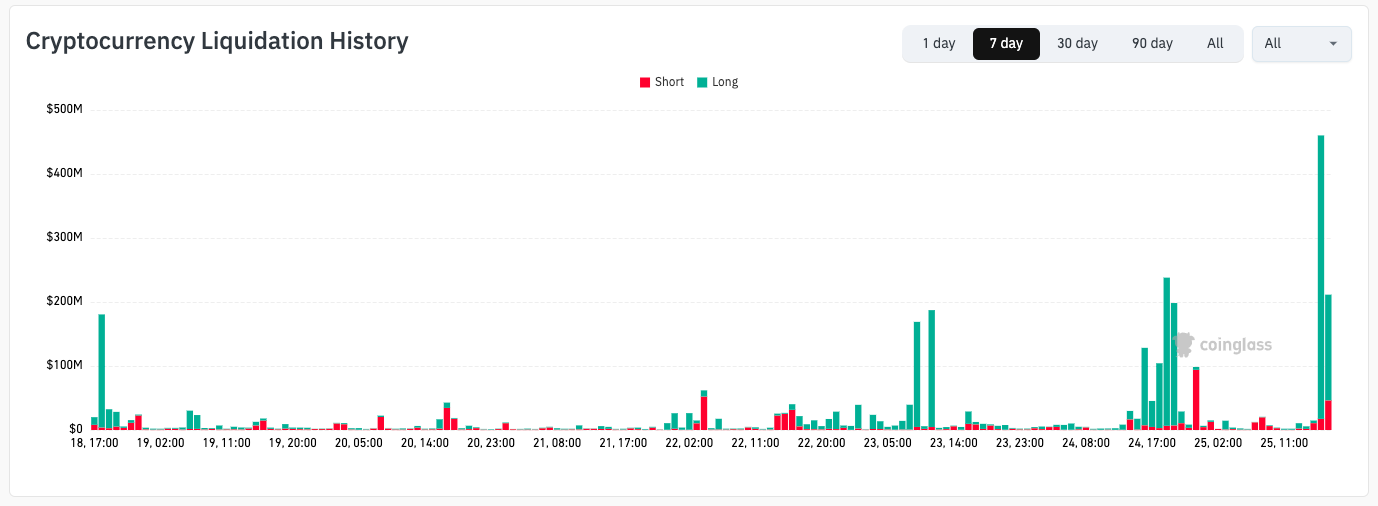
Bitcoin itself sparked considerable long position liquidations, with CoinGlass putting the cross-crypto liquidation total at $600 million over a single hour.
Crypto liquidation history (screenshot). Source: CoinGlass
Commenting, market participants suggested that price moves were being artificially managed to squeeze positions.
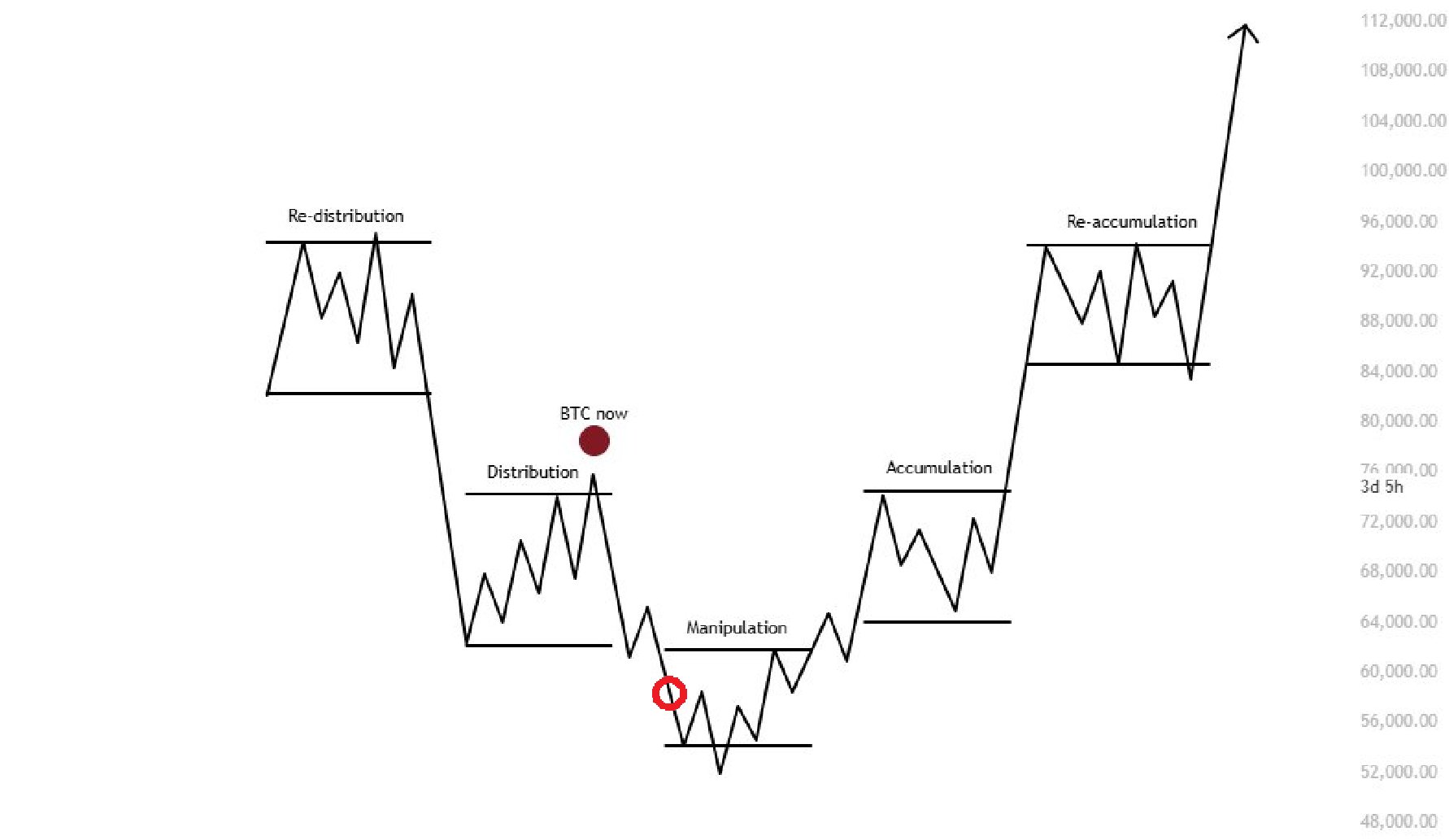
“$BTC is in the manipulation phase,” pseudonymous trader Killa told X followers.
“Every time $BTC trades sub-$60K, that is our manipulation beneath the significant $60K swing low on the weekly and quarterly. Precisely the reason why the orderbook is stacked below us.”
Source: Killa/X
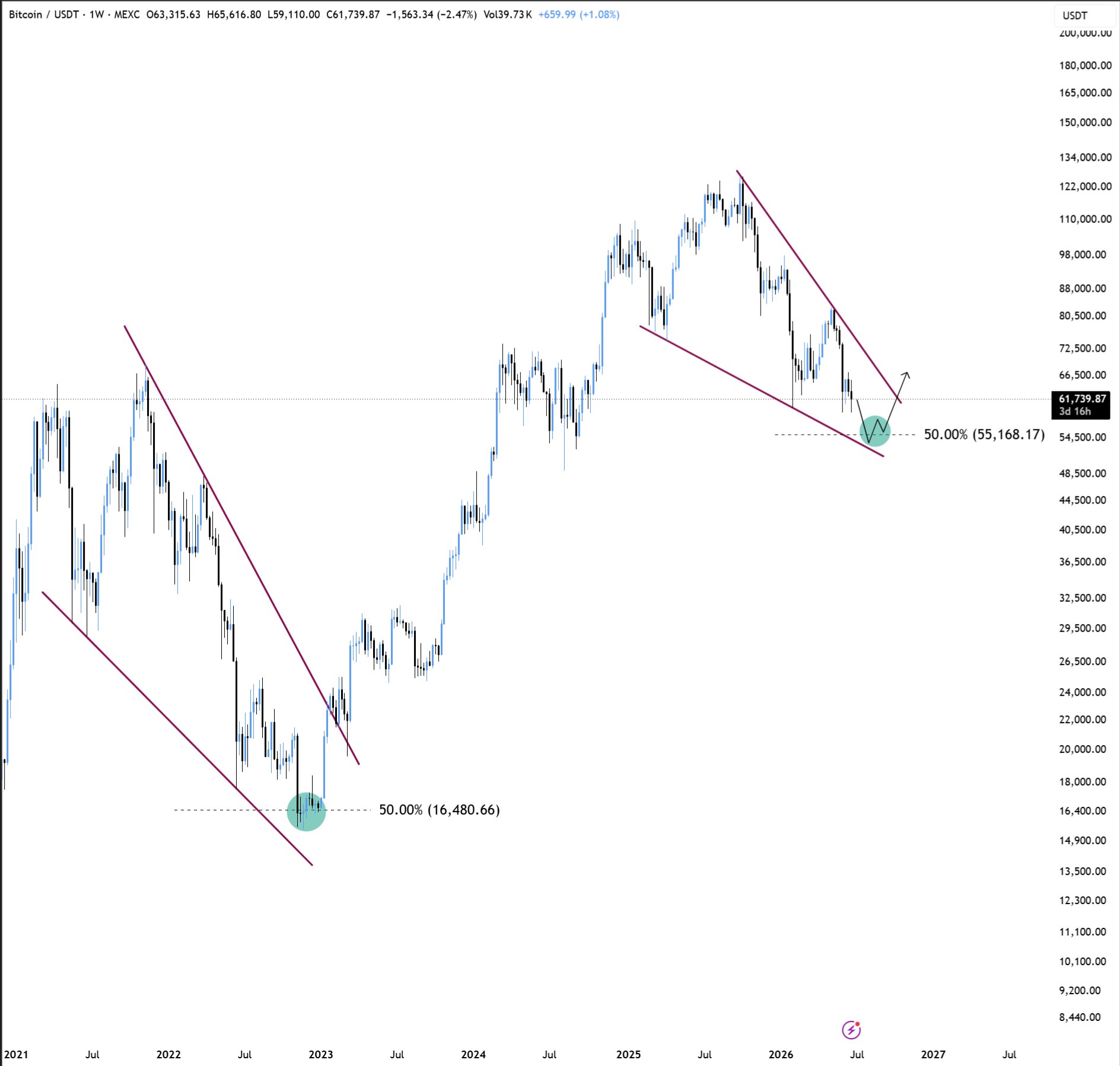
Niels Klaver, cofounder of crypto platform STABL Agency, suggested that BTC/USD “seems to be going for its final leg down of this bear market.”
“$55K remains the target,” he added, referring to an increasingly popular short-term price goal.
BTC/USDT one-week chart. Source: Niels Klaver/X
Bitcoin analysis sees new resistance near $65,000
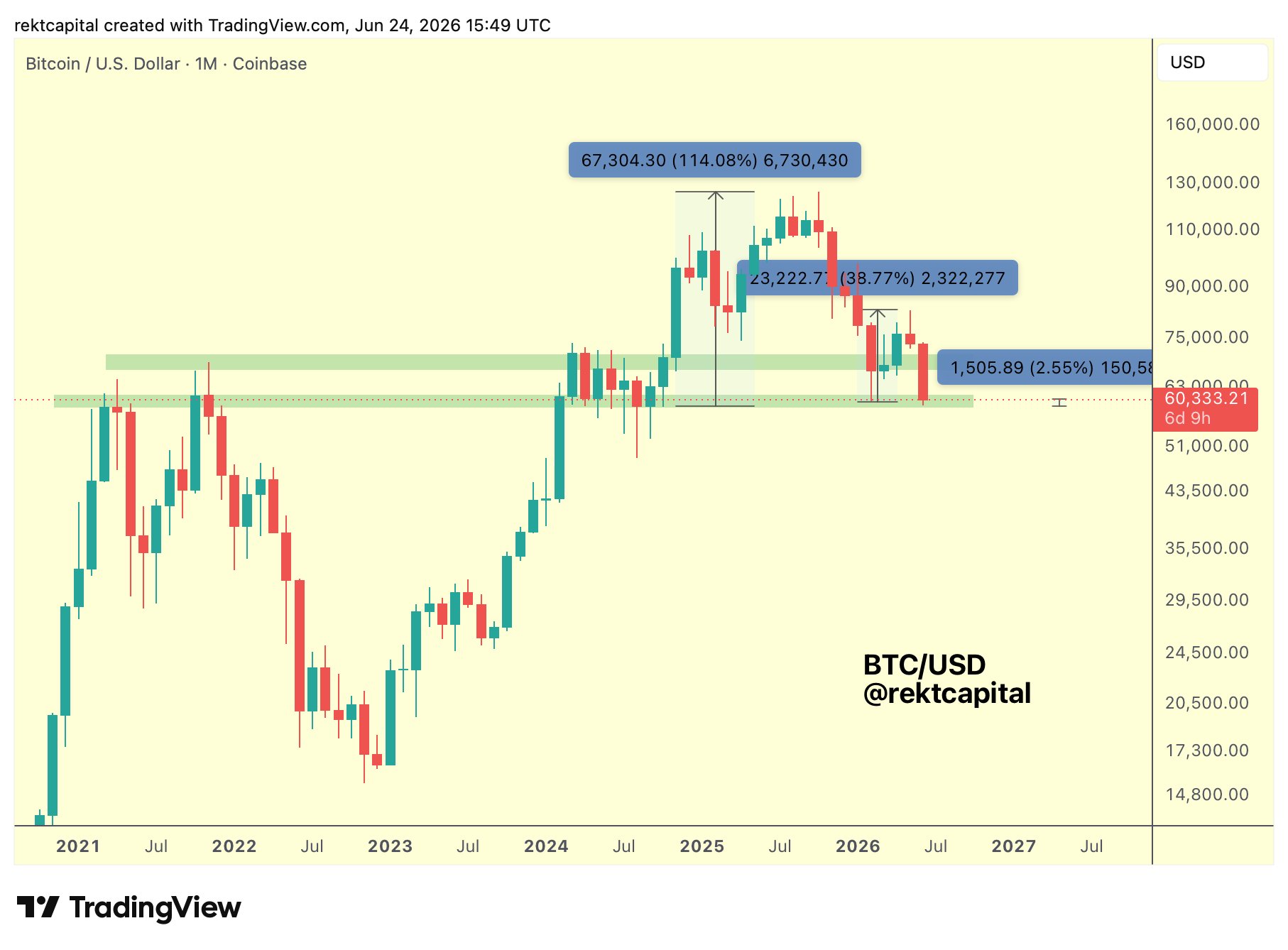
As BTC price action attempted a modest rebound, trader and analyst Rekt Capital had already described $60,000 support as “clearly weakening.”
Related: BTC price four-year trend calls for $76K as analysis says Bitcoin ‘not broken’
“Once June Monthly Closes, we’ll know from which price July will be able to potentially spring into a post-breakdown relief rally,” an X post read.
BTC/USD one-month chart. Source: Rekt Capital/X
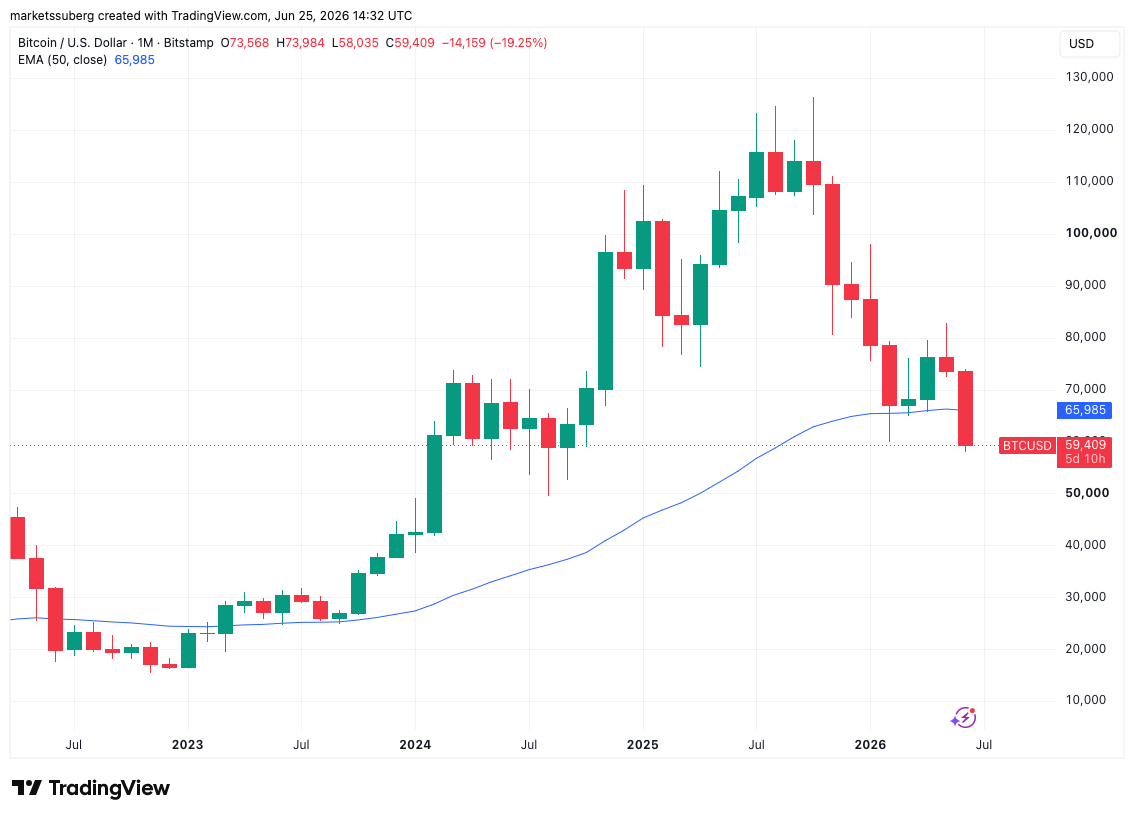
Rekt Capital maintained that the market was acting similarly to 2022, with the 50-month exponential moving average (EMA) tipped to become new resistance next.
BTC/USD one-month chart. with 50EMA. Source: Cointelegraph/TradingView
Decentralized finance (DeFi) protocol Spark has deployed approximately $150 million in stablecoin liquidity across two Uniswap v4 pools on Ethereum as part of a collaboration aimed at creating shared liquidity and exchange infrastructure for stablecoin issuers.
A Spark spokesperson told Cointelegraph that the initial deployment is live in two pools pairing USDS with PayPal USD (PYUSD) and USDT, with USDS serving as the foundation. Spark described the deployment as one of the largest automated market maker (AMM) liquidity migrations in DeFi.
“These pools represent the initial deployment of approximately $150 million of liquidity and establish the first phase of the Stablecoin FX Layer,” the spokesperson said. “This initial deployment focuses on bootstrapping shared liquidity on Uniswap v4.”
Earlier this month, Standard Chartered identified Uniswap as a potential beneficiary of tokenized assets moving into DeFi. It forecast that total assets held in DeFi could reach $2.7 trillion by 2030, with Uniswap potentially emerging as a liquidity venue for the growing market.
The deployment announced Thursday lays the groundwork for a planned programmable liquidity system that could reduce the need for banks, financial technology firms and stablecoin issuers to build separate liquidity networks while testing whether Uniswap can make onchain capital more efficient without weakening market depth.
Spark plans programmable liquidity expansion
Spark said it plans to introduce its Shared Liquidity Layer and DualPool hook in subsequent phases using Uniswap v4’s programmable architecture to coordinate how liquidity is distributed across stablecoin markets.
A liquidity hook enables protocols to seamlessly integrate with platforms for capital access and developing yield and trading strategies.
Spark said a hook is intended to allow capital not immediately needed for trades to be deployed into governance-approved products, liquidity venues and yield-generating strategies.
The implementation of the DualPool hook will go through a separate security review, testing and production-readiness process before deployment. The first phase uses standard Uniswap v4 pools rather than the planned programmable framework.
Related: Aave positioned to capture tokenized asset growth in DeFi: Standard Chartered
Spark said the planned framework is intended to give future stablecoin issuers access to shared liquidity rather than requiring them to individually bootstrap pools, coordinate market makers and manage inventory across different venues.
The spokesperson told Cointelegraph that Spark is working with additional partners across the stablecoin ecosystem but is not yet ready to disclose those integrations.
Uniswap seen as winner as tokenized assets move onchain
In a June 15 note to clients, StanChart’s bank’s head of digital assets research, Geoff Kendrick, said that tokenized treasures, equities, bonds and other assets could bring more trading activity and liquidity to decentralized exchanges as their DeFi use expands.
DeFi total value locked as of June 25. Source: DefiLlama
This new $150 million migration offers a more immediate test of StanChart’s infrastructure thesis, though it involves stablecoins rather than tokenized securities.
The migration also follows Uniswap’s push into institutional tokenized-asset trading. On Feb. 12, BlackRock said it would bring its $2.1 billion tokenized Treasury fund, BUIDL, to Uniswap, allowing eligible institutional investors and market makers to trade the security through decentralized infrastructure.
Magazine: Japanese pension fund tips 1% in crypto, G7 urges action on NK hackers: Asia Express
Jiang Zhuoer, one of China’s best-known bitcoin BTC$59,300.56 miners and founder of the LeBit mining pool, predicted that the current bear market will bottom in the fourth quarter at roughly $42,000-$44,000.
The forecast, made in Chinese on X, puts the low some 30% below bitcoin’s current level near $60,700, and rests less on the cryptocurrency’s performance than on Strategy, the largest corporate holder of the token, according to an automated translation.
Jiang analyzed Strategy’s market net asset value (mNAV), the ratio of the company’s stock price to the per-share value of the bitcoin it holds, which has dropped to 0.72. A number above 1 means investors value the company at a premium to its bitcoin stack; below 1 means they value it at less.
Jiang’s figure has the market pricing Strategy about 28% below the bitcoin it owns, a sign of deep pessimism toward the trade.
That reading is close to the 0.7 low Strategy hit on May 11, 2022, during the last bull-to-bear turn, he said, which leads him to think mNAV is near its floor for this cycle.
Sharplink, Bitmine and Joe Lubin are backing Ethlabs as the Ethereum Foundation cuts its budget 40%, but no one will say how much money is behind the new lab
Ethlabs, a new Ethereum research lab backed by the network’s two largest corporate holders, launched this week with a pitch to complement the Ethereum Foundation.
Its own funders concede it will also compete as Ethlabs is “playing to win.”
“I think they will be complementary,” Joseph Chalom, chief executive of Sharplink and a former longtime BlackRock executive, said of Ethlabs and the Foundation on a livestream The Defiant hosted this week. He then added that the two would “over time” be “in some ways overlapping,” with “the densest talent” concentrated at Ethlabs.
Where the Mandates Meet
The overlap is visible in what each group says it will do. The Foundation reorganized this week into five units, including a protocol layer focused on scaling and hardening Ethereum’s base layer and an institutional layer aimed at enterprise adoption. Ethlabs describes its own work in nearly the same terms: faster settlement, cross-chain interoperability and readiness for institutional and AI-driven activity. Both invoke credible neutrality and censorship resistance.
Viktor Bunin, a protocol specialist at Coinbase who is listed as an Ethlabs contributor, said the rivalry is built into how Ethereum ships code.
“There’s a natural competition between every single EIP, every single effort that goes into it,” he said, using the shorthand for Ethereum Improvement Proposals. Each network upgrade holds only so many changes, he said, so independent groups end up competing for the same slots.
The launch is the clearest sign yet that Ethereum is betting on a fragmented, multi-organization model of development. That is a deliberate contrast with rival blockchains such as Solana, where a single foundation drives the roadmap, the funding and the marketing. Supporters say spreading the work across independent groups keeps Ethereum harder to capture or censor. The risk is slower, messier coordination as several well-funded teams pull in different directions over a fixed upgrade schedule. For a network worth about $194 billion, the open question is which model better serves the institutions now moving onchain.
A Bet on Many Hands
Not everyone building Ethlabs is convinced the model is the right one. Bunin, despite backing the lab, said he would prefer a single organization closely attuned to its users.
“I actually don’t like the structure,” he said. He called the Foundation’s retreat from the network’s most pressing problems “a little bit of a failure,” arguing the EF has chosen to work on what it wants rather than what users are asking for.
Chalom defended the fragmented approach. He likened it to Winston Churchill’s description of democracy as the least-bad system: imperfect and harder to coordinate, but genuinely censorship-resistant and impossible for any single party to override. He said Ethereum has run without downtime since its 2015 launch, a record he argued more centralized chains cannot claim.
Big Backers, No Number
The structural debate sits on top of a money problem. Trent Van Epps, who coordinated Ethereum Foundation core development until April, warned last week that the network’s core development faces a funding gap within three to nine months, as the Foundation’s treasury cuts and the expiry of its four-year client-funding program converge. He estimated core development costs about $30 million a year.
Bitmine chairman Tom Lee, whose firm is now an Ethlabs anchor, dismissed the warning, putting the odds of a crisis at “zero chance” and arguing that profit-seeking corporate stakers, not the Foundation, will underwrite Ethereum’s future. It’s nw clear Lee was referring to Ethlabs.
The squeeze tightened this week. The Foundation said it would cut its 2026 budget by about 40% and eliminate 54 jobs, or roughly 20% of its staff. Co-founder Vitalik Buterin framed the cuts as a deliberate shift to an endowment model, lowering annual spending from about 15% of the treasury toward 5% by 2030.
ETH fell about 3% over the past 24 hours, underperforming a 2.6% slide in Bitcoin, according to CoinGecko, and trades roughly 67% below its August 2025 record.
Against that backdrop, Ethlabs arrives with heavyweight support. Bitmine Immersion Technologies, which holds about 5.7 million ETH, and Sharplink, which holds roughly 876,000 ETH, anchored the funding alongside Lubin. Neither the lab nor its backers stated the total funding behinf Ethlabs. The only public figure is the contributor wallet Ethlabs listed, eth-labs.eth, which held about 49 ETH, or roughly $80,000, as of this week.
Pressed for a dollar figure, Chalom declined to give one.
“Trust us on this,” he said, describing “multi-year funding” drawn partly from the staking rewards on the backers’ ETH and partly from personal contributions. “This is not here to fund five people for a year,” he said. He said Ethlabs would operate as a nonprofit with annual outside audits and openly published research.
“If you can’t audit it, you can’t trust it,” he said.
‘Alignment,’ or Capture?
The funding model raises a question the Foundation’s structure was built to avoid: whether backers who are themselves large ETH holders could steer development toward their own interests. The interests are tightly linked. Lubin, an Ethlabs anchor in his own right, chairs Sharplink, and Chalom previously led digital assets at BlackRock, whose iShares Ethereum Trust is the largest US spot-ETH fund.
Chalom said the design prevents capture. Backers hold observer seats and can verify how money is spent but cannot direct research, amend governance or block disbursements, he said. Board seats rotate among independent members, neither Sharplink nor Bitmine chairman Tom Lee sits on the board, and grants are administered externally. “This is the opposite of a conflict of interest,” he said. “It’s an alignment of interest.”
Bunin argued capture is impractical regardless. A proposal that plainly favored one party “would never even pass the sniff test” with client teams and the wider community, he said.
The deeper tension is one Ethereum has wrestled with before: what is best for ETH the asset is not always what is best for the protocol. The decision to push activity onto Layer 2 networks lowered fees and weakened the fee burn that underpinned the case for ETH as scarce, “ultrasound” money. Daily base-layer fees that once ran near $30 million have spent much of 2026 in the single-digit millions. Both Chalom and Bunin said Ethereum has to win as a network before the token can, and Ethlabs says it will keep prioritizing adoption and scaling over near-term value capture — the same path the Foundation has taken.
A Foundation Pulling Back
Ethlabs is the most prominent product of a broader unwinding at the Foundation. At least eight senior figures have left this year, including both co-executive directors: Tomasz Stańczak departed in February and Hsiao-Wei Wang resigned this month, leaving board member Bastian Aue as effectively the sole executive director. A mandate the Foundation published in March recast it from Ethereum’s primary steward to one of several, and this week’s reorganization sorted it into five units and wound down its privacy and scaling research lab.
Lubin has described the shift as a move toward multiple “steward nodes” sharing responsibility for the network. Chalom said Ethlabs is the first of several private-sector initiatives that would be announced “over the next several weeks.”
The First Test
The first real test comes with Glamsterdam, Ethereum’s next major upgrade, now in final testnet preparation and targeted for the second half of the year. It centers on changes to how blocks are built and executed, the base-layer scaling work that both the Foundation and Ethlabs claim as a priority and the first place their roadmaps will meet a finite upgrade queue.
Bitcoin price is trading near $61,500 today, extending a decline that has erased more than half its value since the token hit a record high in October 2025. The sell-off is rippling through publicly traded crypto companies, where losses have at times outpaced Bitcoin itself.
The token fell to $61,877 earlier this week — its lowest level since June 11 — before sliding further. Bitcoin price briefly broke below $60,000 on June 5, a level not seen since late 2024, before a partial recovery that has since stalled.
Deutsche Bank attributed Bitcoin’s weakness to a convergence of institutional pressures. A shift in Federal Reserve expectations — the bank now forecasts two rate hikes in 2026, reversing earlier expectations for cuts — has removed a key pillar of institutional demand. Higher rates make risk assets less attractive relative to cash and bonds.
Spot Bitcoin ETFs have seen six consecutive weeks of net outflows totaling roughly $6 billion, with $2.4 billion leaving in June alone. Deutsche Bank analyst Marion Laboure described Bitcoin as “increasingly trading like an institutional risk asset,” with the marginal buyer now an ETF allocator or corporate treasury rather than a retail participant. When those buyers exit, the price follows.
Competition from artificial intelligence has added pressure. U.S. tech giants are on track to spend more than $700 billion on AI infrastructure in 2026, and investors are treating Bitcoin and AI-linked equities as competing destinations for speculative capital. A tech stock sell-off that began Monday pulled Bitcoin price lower in tandem, with the Nasdaq 100 falling as much as 3.4%.
Blood in the streets for the bitcoin price and for crypto stocks
The pain has been acute for companies that built their business models around Bitcoin accumulation.
Strategy, the largest corporate Bitcoin holder, has fallen for five consecutive trading sessions and is down more than 20% over the past week.
The stock is off 26% over the past 30 days. A major catalyst came in late May when Strategy sold 32 BTC for approximately $2.5 million — its first Bitcoin sale since 2022 — to cover distributions on its preferred stock. The move shattered the company’s “buy only, never sell” identity and spooked investors.
Strategy carries five series of preferred stock with combined annual dividend obligations estimated at $750–$800 million, and its cash reserves have fallen from $2.25 billion at the start of 2026 to around $900 million.
Strive, the Bitcoin treasury company backed by Vivek Ramaswamy, has also taken a hit. The company purchased 2,500 BTC for $185 million at an average price of $74,092 — well above current levels — leaving it sitting on paper losses. Shares of Strive (ASST) dropped after the purchase was disclosed, a sign that investors are skeptical of aggressive accumulation strategies at elevated cost bases.
Strive now holds roughly 19,864 BTC valued at approximately $1.3 billion, and like Strategy, carries preferred dividend obligations that must be paid regardless of where Bitcoin price trades.
Coinbase fell 2.5% on Tuesday. Stablecoin issuer Circle dropped more than 4%.
At the time of writing, the bitcoin price is $61,205.
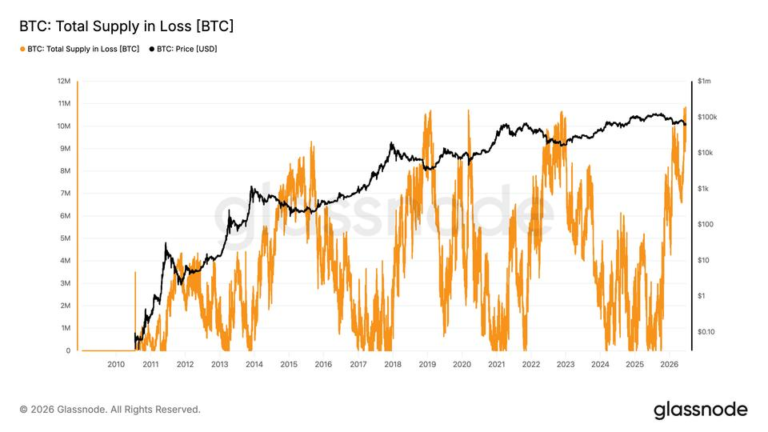
As bitcoin BTC$61,646.55 fell below $59,100 on Wednesday, the number held at a loss rose to a record 10.83 million BTC, data from Glassnode shows.
The largest cryptocurrency has tested the $60,000 level repeatedly since February, briefly falling below it several times. Four months ago, the supply in loss peaked at 9.8 million BTC. It climbed to 10.78 million in early June.
Looking at previous bear market bottoms, around 10.5 million BTC in loss is broadly consistent with the levels seen near cycle lows in 2019, 2020 and 2022.
Breaking this down further, 5.58 million BTC are held at a loss by long-term holders (LTHs), defined by Glassnode as investors who have held their coins for at least 155 days. This is the second-highest level on record, behind only March 2020, when more than 5.6 million of the cohort’s bitcoin were held at a loss.
Even so, long-term holders now control approximately 14.8 million BTC, another all-time high. With roughly 20 million BTC in circulation, these investors hold close to 75% of the circulating supply, 37% of which are in the red,
Historically, long-term holders tend to accumulate and continue holding throughout bear markets, increasing their share of the supply. During periods of peak bull-market euphoria, they typically begin selling into market strength.