

Strategy’s preferred stock, STRC, sees a familiar ex dividend dip below the $100 par level.
Bitcoin rises, oil falls as global tensions ease: Crypto Daybook Americas

Your day-ahead look for Jan. 15, 2026
OpenAI, SoftBank Invest $1B in SB Energy as AI Buildout Continues

OpenAI and Japan’s SoftBank Group are investing $1 billion in SB Energy in the ongoing effort to develop and construct data centers.
Each will pump $500 million into the infrastructure companies, which is part-owned by the Japanese conglomerate. The deal builds on the Stargate initiative, a public-private collaboration unveiled nearly a year ago by President Donald Trump and aimed at delivering world-leading AI infrastructure for the U.S.
The launch of Stargate saw SoftBank CEO Masayoshi Son and OpenAI CEO Sam Altman join Trump to announce a $500 billion project hailed as the one of the largest in American history.
SB Energy was formed in 2019 as an energy company and is now focused on the frantic data center buildout required to deliver the infrastructure needed as the AI revolution gathers momentum.
The latest swathe of funding follows an $800 million investment from Los Angeles-based Ares Management Infrastructure Opportunities in 2025. It is not clear what SB Energy’s current valuation is.
As part of the agreement, SB Energy will build and operate OpenAI’s new 1.2 gigawatt data center site in Milam County, Texas that was revealed in September.
Aside from the Milam facility, SB Energy is developing other multi-gigawatt data center campuses, with some already under construction and expected to start service later this year.
Additionally, OpenAI, SoftBank and SB Energy have formed “a non-exclusive preferred partnership” to develop a new model for data center builds, according to a press release. This is claimed to combine the ChatGPT maker’s first-party center design with SB Energy’s “expertise in speed, cost discipline, and integrated energy delivery,” according to the release.
SB Energy cited its work in Milam County, where the data center has been designed to minimize water usage, as an example of its efforts to develop new facilities efficiently without causing problems for local residents.
“Partnering with SB Energy brings together their strength in data center infrastructure and energy development and OpenAI’s deep domain expertise in data center engineering,” Greg Brockman, OpenAI co-founder and president, said in the release. “The result is a fast, reliable way to scale compute through large, highly optimized AI data centers.”
With SB Energy’s commitments continuing to grow, it has confirmed the acquisition of California-based Studio 151, a company that has already been involved in the development of 20 data center campuses.
Bitcoin consolidates above key support as profit-taking hits altcoins: Crypto Markets Today

Crypto markets paused on Thursday after bitcoin’s decisive breakout earlier this week, with BTC holding key support levels while altcoins saw profit-taking.
What Will Trigger BTC Price Breakout?

Bitcoin (BTC) rallied 10% from its yearly open near $87,500 before stalling below resistance, but analysts say the price remains positioned for higher targets if key supply levels are reclaimed and spot demand continues to build.
Key takeaways:
-
Bitcoin must take out resistance at $98,000 to trigger a rally to a six-figure BTC price.
-
Spot demand and spot ETF inflows must persist for a breakout to $100,000.
BTC price must take out resistance at $98,000
BTC’s price rebounds since November 2025 have repeatedly been rejected by a supply zone at $93,000 to $110,000.
This represents the lower boundary of the long-term holder (LTH) supply clusters, according to Glassnode’s Cost Basis Distribution Heatmap.
Related: Bitcoin price tags $97K despite high producer price inflation, no US tariff ruling
“This region has consistently acted as a transition barrier, separating corrective phases from durable bull regimes,” Glassnode said in its latest Week On-chain report, adding:
“With price once again pressing into this overhead supply, the market now faces a familiar test of resilience, where absorbing long-term holder distribution remains a prerequisite for any broader trend reversal.”
Bitcoin’s bullish case hinges on its price cracking through immediate resistance at $98,300 — the short-term holder (STH) supply basis.
This level represents the aggregate entry price of investors who have held Bitcoin for less than 155 days, and serves as a critical gauge of market confidence.
“Sustained trading above this threshold would indicate that new demand is absorbing overhead supply, allowing recent buyers to remain profitable,” Glassnode said, adding:
“Historically, reclaiming and holding above the Short-Term Holder cost basis has marked the transition from corrective phases into more durable uptrends.”

Therefore, the ability of the BTC/USD pair to reclaim $98,000 remains a vital prerequisite for restoring confidence in the sustenance of the rally.
“It’s even possible we hit that $100K mark this week,” MN Capital founder Michael van de Poppe said in a recent analysis on X, adding:
“The trend is upwards.”
As Cointelegraph reported, holding above the daily order block between $90,000 and $92,000 would strengthen the case for a sustained push above $100,000 before the end of the month.
Bitcoin bulls must sustain spot and ETF demand
Bitcoin’s ability to push above $100,000 appears plausible due to the return of spot demand and inflows into spot Bitcoin ETFs.
The chart below shows that Bitcoin’s spot market activity has begun to improve, with Binance and aggregate exchange cumulative volume delta (CVD) measures returning to a buy-dominant regime.
This reflects a shift away from persistent sell-side pressure, signaling that traders are once again “absorbing supply rather than distributing into strength,” Glassnode said, adding:
“The transition back into a net-buying posture across major venues represents a constructive structural shift.”

Meanwhile, demand for spot Bitcoin ETFs is showing signs of coming back, with these investment products recording inflows over three straight days, totaling $1.7 billion, per data from SoSoValue
The $843.6 million recorded on Wednesday was the highest since Oct. 7, 2025, and marked the largest single-day inflows of 2026.

“Bitcoin’s price will go parabolic if ETF demand persists long-term,” Bitwise CIO Matt Hougan said in an X post on Tuesday, adding:
Hougan said just as gold rallied 65% after its supply was absorbed, a similar move could happen with Bitcoin because ETFs are buying more BTC than the new supply being created.
“If ETF demand persists – and I think it will – eventually, sellers will run out of ammunition.”
This article does not contain investment advice or recommendations. Every investment and trading move involves risk, and readers should conduct their own research when making a decision. While we strive to provide accurate and timely information, Cointelegraph does not guarantee the accuracy, completeness, or reliability of any information in this article. This article may contain forward-looking statements that are subject to risks and uncertainties. Cointelegraph will not be liable for any loss or damage arising from your reliance on this information.
Post-quantum crypto startup Project Eleven raises $20 million in funding round
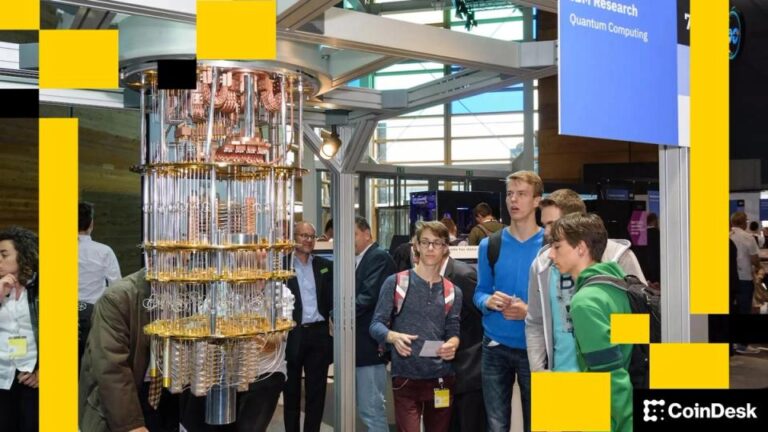
The Series A round was led by Castle Island Ventures with participation from Coinbase Ventures.
BVNK to Power Stablecoin Payments for Visa Direct

BVNK will provide stablecoin infrastructure for Visa Direct pilot programs, enabling stablecoin pre‑funding and payouts. BVNK and Visa announce a strategic partnership on 14 January in San Francisco under which BVNK will power stablecoin payments for Visa Direct, Visa’s $1.7 trillion money‑movement network, supporting stablecoin pre‑funding and payouts to recipients’ wallets in select approved markets. […]
The New Real Estate Workflow and How VAs and AI Work Together

By the end of most real estate workdays, little appears technically unfinished. Calls have been returned, messages answered, listings nudged forward, and deals remain active, creating the outward impression of a productive day.
Inside, the experience is different.
There is a low-level tension that lingers even after the laptop is shut. It is the sense that something smalll may have slipped through, not because it was ignored, but because it arrived at the wrong moment. A follow-up that went out later than it was intended. An update that came in during a showing and never quite received the attention it needed. A decision was made quickly, without the quiet confidence that usually comes from having full context.
This is not exhaustion caused by volume alone. It is fatigue produced by fragmentation. What many real estate professionals are experiencing is not burnout from work, but the cumulative strain of carrying too many unresolved decisions at once.
Modern real estate work no longer moves in a straight line. It unfolds across CRMs, inboxes, text threads, portals, transaction platforms, calendars, vendor calls, and client conversations, often within the same hour. Each task is manageable in isolation. What wears people down is the constant need to decide what matters most right now, repeatedly, without a pause long enough to reset.
- Should this lead be followed up before or after a showing?
- Is a document actually complete, or does it still need one more confirmation?
- Canan item wait until the next day , or will the delay quietly compound into something larger?
None of these decisions are particularly difficult. They are simply unending. The real shift in today’s real estate workflow is not an increase in workload. It is the rising number of judgment calls per hour than any one person can comfortably carry.
Why the Traditional Workflow Model Is Quietly Breaking
Most real estate operations were built around linear motion. A lead comes in, someone responds; a listing moves forward, and a deal progresses step by step, with clearly defined roles, visible handoffs, and the assumption that attention will be available when it is needed.
That assumption no longer holds true. Most real estate workflows were designed for a world in which attention was intermittent but available. Today, attention is fragmented and constantly interrupted, while the workflow itself remains largely unchanged.
Agents juggle showings, negotiations, and client conversations while updates continue to arrive in the background. The operations team manages multiple listings, contracts, and vendors in parallel. Nothing stops long enough to feel finished. The work keeps moving, but control over timing slowly erodes.
This is why many brokerages feel busy without feeling effective. Tasks are completed, and accountability exists. Yet weeks get compressed; days stretch, and closings feel rushed at the end, even when timelines look comfortable at the start. Since nothing fails loudly, the slowdown is normalized and often blamed on market conditions, seasonality, or transaction volume.
However, the real bottleneck sits elsewhere.
Decision Residue: The Hidden Cost Nobody Tracks
What actually slows modern real estate operations is not execution. It is decision residue. Decision residue is what remains when dozens of small, time-sensitive judgments accumulate without closure. In real estate, it accumulates faster than deals close, which is why even productive days can feel mentally unfinished. Each decision is minor on its own, but together they leave the mind partially occupied long after the task should feel complete.
A follow-up that went out later than planned. A listing draft was nearly complete but still carried uncertainty. A lender update arrived mid-conversation and was never fully resolved. None of these break the workflow. They linger within it.
Over time, decision residue changes how people work. Teams stop shaping the day and begin reacting to it. The business remains busy, but confidence quietly erodes. People replay their days not because something went wrong, but because too many decisions were made too quickly to feel settled.
This is the layer most real estate workflows never formally address. No one is explicitly responsible for protecting attention or managing the flow of decisions. Everyone assumes someone else is watching closely enough to catch up on what matters. That assumption rarely holds true. This is also where conversations about AI and Virtual Assistants often miss the point.
What AI Actually Changes, and What It Doesn’t
AI is frequently introduced into real estate operations as a speed tool, promising faster replies, faster data entry, and faster summaries. Those benefits are real, but they are not the primary value.
AI works best where judgment is repetitive, pattern-based, and time-sensitive. In real estate operations, this includes lead triage, data cleanup, document classification, timeline alerts, draft responses, and summarization. When used well, AI reduces the number of decisions a human has to make in a day. It flags what matters, organizes information before interpretation is required, and turns noise into signal.
What AI does not do well is ownership. AI can surface information, but it cannot feel urgency, assess risk, or determine when delay becomes dangerous rather than merely inconvenient. It cannot read between the lines of a client’s conversation or judge when a follow-up needs to feel human rather than efficient. It does not hold responsibility for outcomes. That gap is where many workflows continue to struggle, even after new tools are added.
Where Virtual Assistants Fit Within the New Workflow
A well-embedded Virtual Assistant protects judgment and doesn’t replace it. This is the difference between generic admin support and teams who hire Real Estate Virtual Assistants specifically trained to operate inside transaction timelines, client communication, and multi-system workflows rather than outside them. Their role sits in the space between systems, where most workflows quietly lose momentum. Before this role exists, every update waits for attention. After it exists, someone is explicitly responsible for noticing the wait itself.
A Virtual Assistant notices when something has stalled because the rhythm feels off. They ensure updates carry usable context rather than just completion status. They close loops with vendors and lenders instead of letting work drift forward unfinished. They track what moved, what did not, and what needs attention next.
Unlike automation, a Virtual Assistant adapts to the day as it unfolds. This distinction matters because modern real estate workflows rarely break due to forgotten tasks. They break because timing slips quietly. A Virtual Assistant owns that timing in a way no dashboard can.
When AI and Virtual Assistants work together, the division becomes clear. AI reduces cognitive noise before it turns into distraction. Virtual Assistants manage flow and continuity while agents and brokers focus on decisions that require experience, judgment, and trust. This is also why brokerages that hire Real Estate Virtual Assistants see smoother handoffs and fewer late-stage surprises, because continuity stays anchored even as AI handles the background sorting.
How the New Real Estate Workflow Actually Functions
In practice, the new real estate workflow is layered rather than linear. AI handles pattern recognition, sorting, alerts, drafts, and data hygiene. It shortens the distance between information arriving and becoming usable.
A Virtual Assistant owns continuity. They track movement across leads, listings, contracts, and vendors. They ensure handoffs are clean and notice when something needs attention before it becomes urgent. Agents and brokers remain focused on negotiation, strategy, and client relationships without carrying the full weight of operational memory.
Nothing about the work itself changes dramatically. What changes is how much mental load each role carries. As fewer things remain unresolved at the end of the day, people stop mentally replaying their work after hours. When this balance is right, days feel calmer without being slower. Closings feel less compressed. Communication feels deliberate rather than rushed.
Why the Model Matters More Than the Task List
Not every Virtual Assistant setup delivers this outcome. Most failures occur not because the assistant was ineffective, but because continuity was never designed into the role.
This distinction becomes clear when these models are observed across different operating environments. When these workflows are observed in organizations like Virtual Employee, an India-based outsourcing company operating since 2007, the same operational signals begin to repeat. When continuity is designed into the role, workflows stabilize. When it is not, the same tasks are completed, but timing, context, and follow-through continue to drift.
When assistants are treated as short-term help or interchangeable resources, context resets frequently and patterns must be re-learned. Timing slips again, even though tasks continue to be completed. Support feels busy, but the workflow remains fragile.
Stability emerges only when Virtual Assistants are embedded as long-term operational support within supervised environments where workflows, handoffs, and responsibilities are clearly documented and reviewed. Over time, operational memory compounds. An assistant who supports the same workflows day after day begins to recognize where delays usually occur and why.
Timing improves not because work is rushed, but because it is anticipated in advance. At that point, support stops functioning as labor and starts behaving as infrastructure.
Why This Shift Matters Now
Real estate teams are operating with thinner margins, higher client expectations, flatter staffing structures, and increasingly complex transactions. There is less tolerance for reactive chaos, both internally and from clients.
Working harder does not solve this and adding more tools does not solve it either. What changes outcomes is designing workflows that respect human attention as a finite resource.
The brokerages that adapt are not chasing speed. They are building systems that absorb decision residue before it turns into stress. They are using AI to reduce noise and Virtual Assistants to protect flow. The real competitive advantage in modern real estate is not speed, tools, or volume. It is how little mental residue an operation leaves behind.
Bitcoin rallies past $97,000 as investors seek haven assets
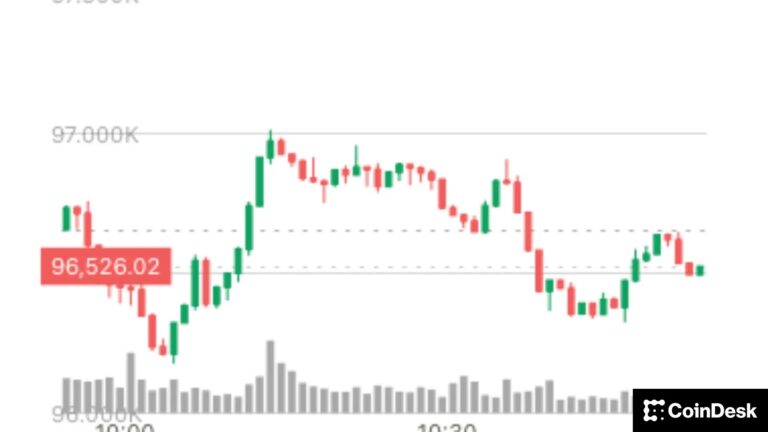
The largest cryptocurrency extended its rally, pushing related equities higher as well.
Crypto Long & Short: Markets at Highs, Crypto Still Waiting

In this week’s Crypto Long & Short Newsletter, Josh Olszewicz of Canary Capital writes about equities, liquidity and crypto’s early — but still tentative — signs of a bullish turn. Then, Joshua de Vos examines ten major blockchain ecosystems and the trends to watch as we head into 2026.