

Bitmine Immersion Technologies has announced a $200 million equity investment in MrBeast-backed Beast Industries. The deal signals growing crossover between crypto-focused firms and mainstream digital entertainment platforms. Ethereum Treasury Firm Bitmine Invests in Beast Industries Bitmine Immersion Technologies, an Ethereum-focused treasury and digital asset strategy firm, has announced a $200 million equity investment in Beast […]
What happens to card economics when stablecoins stroll up to the till in SA?: By Nkahiseng Ralepeli

The idea is not theoretical, South African retailers have already piloted crypto acceptance at the till through wallet partners and QR flows, and global processors are wiring the same capability into their gateways. The question is not whether this will
touch Main Street, it is how quickly it becomes invisible plumbing behind a familiar tap or scan.
Why merchants care, instant settlement, lower MDR, fewer breaks
Card economics were built for batch reconciliation and risk externalities, interchange, scheme fees, acquirer margins, chargeback operations, and cross-border spreads if FX is involved. Stablecoin settlement compresses that stack. When a purchase clears
as a token transfer with finality in seconds, acquirers can price merchant discount rates lower, marketplaces can pay sellers instantly, and treasury teams can sweep funds in near real time. Chargeback exposure drops for low risk categories because the flow
looks more like cash, with consumer protection handled by policy rather than a long dispute window.
How it works at the till, from wallet to receipt
Two patterns dominate. In the first, native on chain, a customer pays from a compliant wallet to a merchant address that sits behind a payment gateway, the gateway listens for an on chain event, confirms receipt after a policy threshold, and posts an approval
to the POS. The merchant can hold stablecoins, or auto convert to fiat through a liquidity partner, with settlement to the bank account on a cadence the retailer chooses. In the second, a hybrid, the customer experience looks like card or QR as usual, while
the processor settles to the merchant using stablecoins behind the scenes, particularly across borders, replacing slow correspondent legs with instant token transfers. Compliance sits at the edges, KYC at wallets and off-ramps, travel rule messages between
providers, and issuer controls for freeze and recovery where law requires them.
In practice, a shopper scans a QR at checkout, their wallet constructs a stablecoin transfer on a low fee network, pays to a merchant collection address controlled by a regulated provider, and shows a paid status to the cashier within a few seconds. The
provider can post a fiat settlement to the merchant’s bank account the same day, or keep proceeds in a stablecoin sub-account for instant onward payouts to suppliers. The POS simply sees “approved”, the cashier hands over the groceries, and accounting receives
a perfectly matched ledger entry with the chain transaction ID embedded.
Case study, how Pick n Pay made crypto at the till feel normal
Pick n Pay’s rollout showed that you do not need to rewire the store to accept digital assets. The retailer kept its existing QR and POS flows, then plugged a crypto gateway into the same orchestration that handles card and instant EFT. At the front end,
the customer scans a dynamic code, authorises payment in a supported wallet, and gets confirmation in seconds. In the middle, the gateway handles chain selection, gas management, mempool monitoring, and risk thresholds, then calls back into the POS when settlement
conditions are met. At the back end, funds either convert to rand automatically, or remain in a segregated stablecoin collection account until a sweep rule executes, with all movements reflected in the retailer’s ERP. The store never touches private keys,
never takes market risk beyond a very short window, and never changes cashier behaviour. The practical lesson is that crypto acceptance can be implemented as a new tender type, not a new store system.
The practical value for a retailer is threefold. First, lower acceptance cost on eligible transactions, because settlement is on chain and reconciliation is atomic. Second, faster cash conversion, since weekend and after-hours funding becomes standard. Third,
cleaner operations, because every receipt is linked to an on chain reference and every refund can be automated through the same channel. For finance, that means fewer suspense entries, for customer care, that means fewer “where is my refund” tickets, and for
procurement, that means supplier payments can be triggered directly from sales flows when inventory thresholds are hit. The kinks will continue to be massaged as the solutions proliferate, but these are incredibly exciting times.
Card plus stablecoin, not either or
Most retailers will not rip and replace card acceptance, they will layer stablecoins where they reduce cost or friction. One common hybrid keeps card rails for authorisation at the front end, while using stablecoins for back-end settlement between the acquirer
and the merchant, which lowers cross-border costs and speeds merchant funding without changing the customer’s habit of tapping plastic. Another offers dual rails at checkout, customers can pay by card or by wallet, with the merchant discount rate priced lower
for stablecoin to nudge adoption. A third routes refunds over stablecoin regardless of the original tender, because it is cheaper and faster to get money back to the customer, especially for international shoppers. All three deliver benefits quickly while
preserving the acceptance footprint that took years to build.
Compliance and risk, treated like cash equivalents, engineered like systems
For retail POS, the right stance is to treat fiat-backed stablecoins as cash and cash equivalents from a policy perspective, with issuer credit risk handled the same way we handle any counterparty. KYC sits with wallets and off-ramps, sanctions screening
and travel-rule messaging sit between regulated providers, and suspicious activity monitoring uses both on chain analytics and traditional signals. Treasury exposure can be minimised by converting to fiat intra-day, or by holding only within bank custody accounts
that enable segregation, freeze and recovery workflows, and clear attestation of reserves. We keep the singleness of money, we just move it on faster tracks.
Why this will proliferate, three reinforcing flywheels
Economics, as volume grows, reserve yield and lower processing costs allow providers to price acceptance below traditional MDR while improving time to cash, merchants follow incentives. Infrastructure, networks with predictable fees and high throughput,
plus bank-grade custody and gateway tooling, have crossed the threshold for consumer-grade experiences. Demand, cross-border commerce and tourism keep rising, customers expect instant refunds and real-time balances, and merchants expect weekend settlement
and programmable reconciliation. Add that banks and networks are now piloting stablecoin settlement themselves, and the path to mainstream looks more like a rollout plan than a hypothesis.
Acquiring businesses can fund merchants faster with less operational drag. Transaction banking can offer merchants stablecoin collection accounts with policy engines, spend controls, and instant supplier payouts. FX desks can monetise the bridge between
rand and dollar stablecoins with transparent spreads. Custody becomes core, providing segregation, recovery, and attestation that large retailers demand. Processors and gateways gain a new differentiator, instant cross-border settlement and programmable refunds,
without asking merchants to re-platform. The winning posture is partnership, banks provide the regulated perimeter and treasury, providers supply the wallet UX and chain connectivity, retailers get lower fees and happier customers.
A measured outlook
This shift will not happen overnight, and card rails are not going away. What will change is the default settlement path for use cases where speed and cost matter most, tourism hubs, marketplaces, high return categories, and cross-border merchants. As acceptance
blends into existing POS flows, questions become operational rather than philosophical, how to price MDR tiers, which refund rules to automate, which networks meet incident response standards, how to report stablecoin positions into liquidity and ALM. The
answer, repeatedly, is that money behaving like software makes checkout smarter, cheaper, and faster, and that is hard for any retailer to ignore. Pick n Pay proved the front end can stay familiar, MoneyBadger and peers show the back end can be safe and compliant,
and together they point to a checkout experience that finally settles as quickly as it sells.
Bitcoin is Still in Bear Market Territory Below $101,000, Says Research

Bitcoin market research warned that BTC faced another bear market in 2026 if it was unable to reclaim its yearly moving average.
Bitcoin (BTC) bulls risk a reality check as BTC price action mimics the 2022 “bear market rally.”
Key points:
-
Bitcoin “appears” to be at the start of another bear market as price remains below its yearly moving average.
-
The latest rebound makes clearing the trendline at $101,000 all the more important.
-
Exchange inflows show sellers exiting in advance throughout this week.
Bitcoin bear market risk remains below $101,000
New research from onchain analytics platform CryptoQuant warns that 2026 remains similar to Bitcoin’s previous bear market year.
“Bitcoin has risen 21% since November 21 in what appears to be a ‘bear market rally,’” it wrote in its latest Weekly Report issued Friday.
Bitcoin may be up more than 20% since its $80,500 lows in November 2025, but that is not enough to guarantee a lasting rebound. The reason, CryptoQuant says, lies with the 365-day moving average.
“The price of Bitcoin fell by 19% as it confirmed the start of a bear market after crossing below its 365-day moving average (MA). Since then, it has rallied by 19% to as high as $97.9K, approaching its 365-day MA that sits at $101K,” it continued.
“A similar scenario played out in 2022, as the previous bear market unfolded. The Bitcoin price declined by 27% after crossing below its 365-day MA, to then rally by 47%, and be rejected at its 365-day MA.”
The findings add more significance to the area around $101,000, which is already home to multiple resistance hurdles.
As Cointelegraph reported, bear market comparisons to 2022 have gained popularity in recent weeks and months, with forecasts including a retreat toward $65,000 during 2026.
Exchange BTC inflows ramp up
CryptoQuant thus suggested not putting too much faith in short-term BTC price strength.
Related: Bitcoin loses to gold as debasement trade with BTC at 2-year lows: Analysis
“At the time, many market participants believed the bear market was over, the four-year cycle was invalidated, and a super-cycle was imminent, sentiment not unlike what we’re seeing today,” it said about 2022.
“However, fundamental and technical indicators still point out that we remain in a bear market.”

An accompanying chart shows that the price trajectory is playing out similarly to four years ago, with 2022 and 2026 diverging from the prior bear market in 2018.
As a sign of what awaits bulls, the research also flagged multimonth highs in exchange inflows on a rolling weekly basis.
“Total Bitcoin flowing into exchanges has picked up to a 7-day average of 39K BTC today, the largest inflow volume since November 25, 2025. Higher inflows to exchanges can indicate escalating selling pressure ahead,” CryptoQuant concluded.

This article does not contain investment advice or recommendations. Every investment and trading move involves risk, and readers should conduct their own research when making a decision. While we strive to provide accurate and timely information, Cointelegraph does not guarantee the accuracy, completeness, or reliability of any information in this article. This article may contain forward-looking statements that are subject to risks and uncertainties. Cointelegraph will not be liable for any loss or damage arising from your reliance on this information.
Market Structure Bill Doesn‘t ‘Serve Industry Interests‘

Cryptocurrency industry leaders, US lawmakers and experts are weighing in on a digital asset market structure bill set for a markup in the Senate Banking Committee on Thursday, and each group has voiced different views about whether to support or oppose certain aspects of the legislation.
In a Tuesday notice, Republicans on the Banking Committee, led by Senator Tim Scott, released a “myth vs. fact” sheet on the market structure bill, called the CLARITY Act. According to lawmakers in majority control of Congress, it was a “myth” that the legislation “was written by industry and serves industry interests,” claiming that it focused on investor protection.
“The bill has been shaped by years of bipartisan work, extensive engagement with regulators and law enforcement, and a focus on public-interest outcomes,” said Senate Republicans. “It strengthens national security, protects investors, and ensures that innovation occurs under clear, enforceable rules.”
Republicans face pushback from some companies in the crypto industry ahead of the markup, which was initially expected last year. However, concerns from lawmakers about ethics guardrails and decentralized finance, coupled with the longest US government shutdown in history in late 2025, likely delayed consideration of the bill.
Related: Crypto market structure rulemaking could take years: Paradigm exec
In a research note released on Tuesday, Galaxy Digital expressed significant concerns about the bill potentially expanding the government’s ability to conduct surveillance and enforcement on crypto users. Other companies, including Coinbase, may still withdraw support for the bill unless provisions on stablecoin rewards are addressed.
An amended draft of the CLARITY Act released by lawmakers on Monday suggested a middle-ground approach by barring passive returns on stablecoin balances, but not outright banning rewards. It’s unclear whether the amended version will pass in committee or on the Senate floor, should it advance for a vote.
Coinbase chief policy officer Faryar Shirzad said in a Wednesday CNBC interview that the draft bill had a few provisions within it causing the company “enormous concern.” This included text that could block the US Securities and Exchange Commission (SEC) from allowing the “tokenization of equity markets.”
The Thursday markup will see how much support some of the amendments proposed by Senate Democrats and Republicans have and whether they advance to be officially added to the bill.
Senate Agriculture Committee to hold its own markup
While the Senate Banking Committee reviews amendments and potentially finalizes its draft of the market structure bill, Republicans in control of the Senate Agriculture Committee announced this week that they would release draft legislation on Jan. 21, with a markup hearing on Jan. 27.
Both committees are expected to address different aspects of the bill, including how US financial agencies like the SEC and Commodity Futures Trading Commission (CFTC) would handle regulation and enforcement.
Magazine: Big questions: Would Bitcoin survive a 10-year power outage?
Cointelegraph is committed to independent, transparent journalism. This news article is produced in accordance with Cointelegraph’s Editorial Policy and aims to provide accurate and timely information. Readers are encouraged to verify information independently. Read our Editorial Policy https://cointelegraph.com/editorial-policy
Two solo bitcoin miners hit rare $300,000 jackpots in the same week
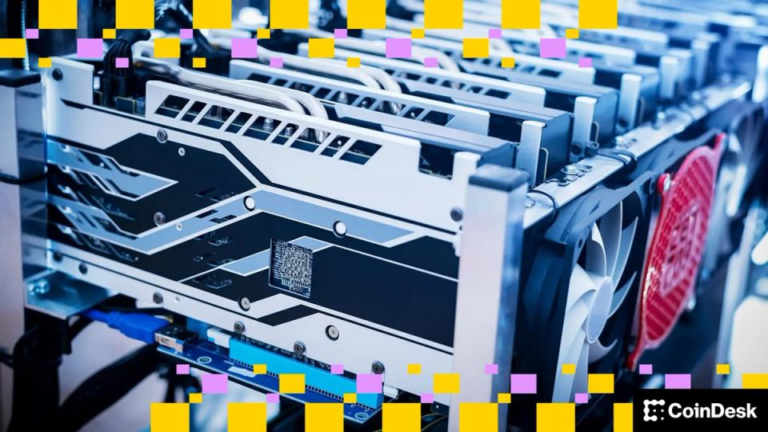
Two independent miners mined full blocks and collected roughly 3.15 BTC each, an uncommon outcome in a network dominated by large pools.
Bitcoin Seized From Samourai Wallet Has Not Been Sold, White House Says

In brief
UPDATE: we have received confirmation from DOJ that the digital assets forfeited by Samourai Wallet have not been liquidated and will not be liquidated, per EO 14233. They will remain on the USG balance sheet as part of the SBR. https://t.co/v2GchC3vk8
— Patrick Witt (@patrickjwitt) January 16, 2026
Daily Debrief Newsletter
Start every day with the top news stories right now, plus original features, a podcast, videos and more.
Crypto Cards Rival Stablecoin Transfers as Spending Tops $18 Billion: Artemis

Crypto-linked cards are emerging as a key channel for stablecoin usage, with annualized volumes now catching up to peer-to-peer on-chain transfers.
Crypto-linked payment cards have become one of the fastest-growing bridges between stablecoins and everyday commerce, according to Artemis, a blockchain analytics firm.
In a Jan. 15 research report compiling estimates from on-chain settlement data and card network disclosures, Artemis found that monthly crypto card volume surged from about $100 million in early 2023 to more than $1.5 billion by late 2025.
“Annualized, the market now exceeds $18 billion, rivaling peer-to-peer stablecoin transfers ($19 billion), which grew just 5% over the same period,” the report reads.
While crypto cards can be funded with a range of assets, the report notes that Circle’s USDC and Tether’s USDT account for nearly 96% of deposited collateral on cards issued via Rain, an infrastructure platform that enables businesses to issue Visa cards.

Visa has also emerged as the dominant payment network in the sector, capturing more than 90% of on-chain card volume despite having a similar number of programs as Mastercard. As Artemis explains, this divergence is likely thanks to Visa’s “early partnerships with infrastructure providers.”
Visa’s stablecoin-linked card spending alone reached a $3.5 billion annualized run rate in late 2025, growing about 460% year over year, according to the report.
A geographic breakdown of stablecoin usage shows India and Argentina as “true global outliers,” where USDC accounts for 47.4% and 46.6% of usage, respectively.

By comparison, USDT dominates stablecoin activity across most other markets, including Turkey, China and Japan, according to the data.
However, even with the rapid growth of crypto cards, Artemis doesn’t expect direct crypto acceptance to fully replace card networks in the near term, citing their “slow relative growth in volume in comparison to cards.”
How to Create a “Tech Drop Zone” in Your Entryway: The TESSAN Charging Station Reset Guide

A fresh new year is a great time to reevaluate more than just the calendar — it is also a great time to take a step back at how tech fits into daily life. Many people don’t notice that their work spaces have become inefficient until they step out of them. From over cluttered desks to tangled charging cables and not enough outlets, which is all too common. That is what TESSAN Fast Charging Station is for; it provides a simple yet powerful solution for a true new year tech reset.
For today’s multi-device user, which is the norm, the TESSAN Fast Charging Station brings speed and reliability to any charging routine. If someone is looking to upgrade a home office, simplify a nightstand charge station, or pack a compact charge hub for travel, this device is designed to make charging a no-think process and very organized.
Designed for a Fresh Start
Less cables, less adapters, and a setup that really works. The TESSAN Fast Charging Station is designed with that in mind. Instead of having chargers all over the desk or searching for open wall outlets, this single charging station is a clean solution.
In the design, it includes 2 AC outlets, 1 USB-A port, and 3 USB-C ports, which in turn supports a large variety of devices at the same time. Laptops, smartphones, tablets, wireless earbuds, smartwatches, and accessories can all be charged from this one compact unit. This in turn reduces desk clutter and creates a more intentional workspace.
100W GaN Fast Charging for Modern Devices
In the case of TESSAN Fast Charging Station, a top feature is its 100W GaN fast charging. What makes this charger stand out is that it uses Gallium Nitride, which enables it to put out high power in a more compact and efficient package as opposed to the traditional silicon-based chargers.
In practical use, this means faster charge times for power-intensive devices like laptops, at the same time it provides better performance in smaller electronics. USB-C ports adapt to connected devices, which in turn means devices charge fast and also won’t overheat or get overloaded.
For many professionals who live plugged in between tasks, fast charging is a must-have feature. During a lull in action, that is when devices are plugged in, and by the time work resumes, they will be fully charged.
Non-Blocking Outlet Design for Maximum Usability
Anyone who has used large adapters knows the issue of blocked outlets. TESSAN presents a non-blocking outlet design, which in turn allows all ports to be used at the same time without interference.
This careful design choice means larger plugs will not dominate space, which in turn makes the station much more practical than the average power strip. It’s a small detail with large results in terms of ease of use in tight spaces like at a desk, nightstand, or in a hotel room.
Wide Compatibility for Everyday Tech
A true one-stop charge solution for all devices. The TESSAN Fast Charging Station supports a wide range of products from top brands, including phones, laptops, tablets, cameras, and their accessories.
Whether a USB-C laptop, a USB-A powered accessory, or an AC-powered device is plugged in, that is what the station does in a flash. It is perfect for homes that play host to mixed devices or shared workspaces, which in turn support a variety of tech platforms that may be exclusive to certain users.
Compact, Travel-Friendly Design
Although it has large output and many ports, the TESSAN Fast Charging Station is still compact and travel-friendly. It has a sleek design which allows it to be put in a backpack or carry-on and also, in that it replaces many chargers and adapters with one which is very efficient.
Travelers see this as a way to reduce the amount of luggage they bring and in turn also to reduce conflicts over electrical outlets at hotels and at the airport. For minimalists, it is a chance to own fewer things while at the same time still getting full functionality out of each device they own.
Built-In Multi Protection for Peace of Mind
Charging several devices at the same time requires dependability and safety. TESSAN has included in it a variety of protective features, which include over-current, overheat, and short-circuit protection. These safeguards also look after the charging station and connected devices during extended use.
This level of protection is a must for overnight charging and during very busy work weeks when many devices are on at the same time. Users can put their full attention into what they are doing without the risk of electrical issues.
Why It Fits a New Year Tech Reset
A New Year tech refresh is about establishing routines and structures that support goals. The TESSAN Fast Charging Station does what this is all about by getting rid of chaos and in turn bringing in efficiency.
Instead of a clutter of cords and slow charging times, it presents a central power solution which cleans up desks, keeps devices charged, and ensures that workflow is not interrupted. It’s not just a charger — it is a little upgrade that changes how technology is interacted with every day.
Final Thoughts
TESSAN has designed a complete solution for all those looking to get off to a smart and organized start to the year. The fast charging station uses 100W GaN technology, a range of ports, a non-obstructive design, wide compatibility, compact portability, and very strong safety features — in essence, it has thought of everything for today’s charging needs.
For anyone looking to improve productivity and declutter for the new year, this charging station is a great option. A cleaner workspace, less mess from cords, and fully charged devices is what the TESSAN Fast Charging Station provides — a simple tech refresh that truly pays off.
US Official Says Seized Bitcoin From Samourai Case Was Not Sold

Trusted Editorial content, reviewed by leading industry experts and seasoned editors. Ad Disclosure
According to a senior White House crypto adviser, the Bitcoin tied to the Samourai Wallet forfeiture was not liquidated by federal authorities. The assets will remain held by the government under its strategic reserve plan, the adviser said on social media.
White House Advisor Confirms No Sale
Reports have disclosed that about 57.55 BTC — roughly $6.3 million at recent prices — moved through addresses that some observers tracked, which sparked claims the coins had been sold.
The White House adviser, Patrick Witt, stepped in to clear up the matter, saying the Department of Justice confirmed there was no sale.
The coins will be kept in the Strategic Bitcoin Reserve in line with Executive Order 14233, signed in March 2025 by US President Donald Trump. That order directs that seized Bitcoin be held rather than auctioned off.
UPDATE: we have received confirmation from DOJ that the digital assets forfeited by Samourai Wallet have not been liquidated and will not be liquidated, per EO 14233. They will remain on the USG balance sheet as part of the SBR. https://t.co/v2GchC3vk8
— Patrick Witt (@patrickjwitt) January 16, 2026
Movement Of Coins Triggered Questions
Based on reports from blockchain analysts, a transfer to a Coinbase Prime address led to speculation about a disposal. Market watchers noticed the trail and raised alarms because a sale could have put extra downward pressure on prices.
Some traders reacted quickly to the noise. But officials explain that transfers between custody systems do not always mean liquidation. In this case, the DOJ and related agencies say the transfer was an internal custody step and not a sale to private buyers.
Background On The Case
The legal action against the Samourai Wallet developers centered on charges tied to running an unlicensed money-transmitting service and aiding money laundering through mixer tools.
Those charged pleaded guilty. The forfeiture order followed those convictions, and the Bitcoin in question became part of the assets the government controls after the court rulings.
How the government manages such holdings has been a fast-moving policy issue since Executive Order 14233 was issued, which set new rules for seized crypto.
Policy And Market Effects
According to officials, holding seized Bitcoin in a national reserve is meant to avoid sudden market shocks that could follow large government sales.
Some critics argue the reserve gives the government a powerful financial tool, while supporters say it prevents volatile swings.
The announcement eased some short-term market worries because uncertainty about a possible sale had been cited as a potential pressure point for crypto prices.
Reactions From Industry Observers
Based on reports and social posts from crypto advocates, opinions remain split. Some welcomed the clarification as stabilizing.
Others want more transparency on how the Strategic Bitcoin Reserve will be run and when, if ever, coins might leave it.
Lawmakers on both sides of the aisle may ask for hearings or written briefings to get clearer answers about custody practices and future plans.
Featured image from Unsplash, chart from TradingView

Editorial Process for bitcoinist is centered on delivering thoroughly researched, accurate, and unbiased content. We uphold strict sourcing standards, and each page undergoes diligent review by our team of top technology experts and seasoned editors. This process ensures the integrity, relevance, and value of our content for our readers.
Arthur Hayes piles on as crypto startups raise $588m – DL News

- Venture capitalists doled out $588 million to crypto firms in the first two weeks of 2026.
- Key sectors include payments, trading, and other infrastructure.
- Privacy tools underpin institutional adoption, analysts say.
Venture capitalists are kicking off 2026 with a bang.
They doled out $588 million to crypto startups in the first two weeks of January, according to DefiLlama data.
Top investors this month include Arthur Hayes’ Maelstrom Fund, Revolut’s Vlad Yatsenko, Citadel Securities, and a slew of VCs, including Lightspeed, Paradigm, and YZi Labs.
Their targets?
Payments, trading, and centralised exchanges across a variety of venture investment rounds, underscoring robust investor appetite for institutional-grade tools.
And as crypto increasingly converges with traditional finance, privacy plays a central role, analysts say.
Privacy is “a prerequisite for traditional institutions to migrate on-chain at scale,” Tim Sun, senior researcher at HashKey Group, told DL News.
“Interest in privacy is clearly rising, with a stronger focus on building privacy infrastructure capable of supporting institutional-grade financial use cases,” Sun said.
Key technical areas attracting investor interest include zero-knowledge proofs, fully homomorphic encryption, multi-party computation, compliant privacy computing, and privacy-preserving payments, Sun said.
Here are the top raises so far in 2026.
Rain, $250m
Leading the charge is crypto payments startup Rain, which secured a gargantuan $250 million capital injection in its Series C round.
This raises the company’s value to nearly $2 billion and positions the technology as core infrastructure for stablecoin commerce.
Often compared to Stripe but for stablecoins, Rain provides the rails for businesses to issue customised payment cards accepted anywhere Visa is supported.
The platform says it now processes more than $3 billion in annualised transaction volume, with major partners including Western Union.
Fresh capital will be deployed to accelerate international expansion across five continents as the firm pushes stablecoins deeper into mainstream commerce.
Alpaca, $150m
Trading infrastructure firm Alpaca raised $150 million in a Series D, lifting its valuation to $1.2 billion.
Investors included Citadel Securities, Revolut’s Vlad Yatsenko, and a slew of VCs.
Built as an API-first business, Alpaca underpins trading, data and custody for millions of accounts across 40 countries, serving clients such as Kraken.
“This milestone comes after a busy 2025, where we launched several key products and features, including 24/5 trading, fixed income, Instant Tokenisation Network, Fully Paid Securities Lending, and Omnibus Subaccounting technology,” the company said.
ICEx, $70m
Indonesian centralised exchange ICEx raised $70 million to expand its spot trading infrastructure and deepen its digital asset services for retail and institutional clients.
The exchange says it is positioning itself as a regulated gateway for South East Asia, anchored by compliant fiat off-ramps aligned with local banking rules.
The raise underscores the growth of localised products as regional exchanges in many countries compete with international giants like Coinbase.
You’re reading the latest instalment of The Weekly Raise, our column covering fundraising deals across the crypto and DeFi spaces, powered by DefiLlama.
Lance Datskoluo is DL News’ Europe-based markets correspondent. Got a tip? Email at lance@dlnews.com.