Home Blog Page 126

Strategy (MSTR) Spends $100 Million On 1,587 Bitcoin, Lifts Total Holdings To 846,842 BTC

0

Strategy (Nasdaq: MSTR) has purchased 1,587 bitcoin for approximately $100 million, bringing the company’s total bitcoin holdings to 846,842 BTC, according to an 8-K filing with the Securities and Exchange Commission on Monday morning.

The purchase, executed between June 8 and June 14, was made at an average price of $63,024 per bitcoin and funded through at-the-market sales of the company’s Class A common stock. Last week, Strategy sold approximately 1.73 million MSTR shares, raising about $209 million through the ATM program. As of June 14, $25.75 billion worth of MSTR shares remain available under that program.

Strategy’s 846,842 BTC was acquired at an average cost of $75,656 per coin, for a total outlay of roughly $64.1 billion including fees and expenses. 

At current prices near $66,000, the company carries approximately $8 billion in paper losses. The position represents more than 4% of bitcoin’s hard-capped supply of 21 million coins, making Strategy by far the largest corporate bitcoin holder on the planet.

In addition to the bitcoin purchase, Strategy confirmed its USD Reserve rose to $1.1 billion as of June 14, up from $1 billion the previous week. The reserve, established in December 2025, exists to cover dividend payments on the company’s preferred shares and interest on its debt. 

Strategy ‘spooked’ the markets 

JPMorgan analysts flagged the reserve last week, noting that Strategy’s rare sale of 32 BTC on June 1 “spooked” markets and that the company needed to rebuild the dollar cushion to restore confidence — at the time, the buffer only covered about 6.3 months of dividend obligations.

The announcement came with a familiar signal. Executive Chairman Michael Saylor posted his bitcoin acquisition tracker chart on Sunday with the caption “Still adding dots” — a phrase the market has come to recognize as a preview of a Monday purchase disclosure.

The STRC preferred stock, a variable-rate, cumulative offering with monthly dividends designed to hold near its $100 par value, had been the primary engine for bitcoin accumulation earlier in 2026, offering an annualized rate of 11.5%. 

However, STRC has struggled to reclaim par since mid-May and has not been used for bitcoin purchases over the past month. 

At last week’s annual shareholder meeting, investors approved shifting STRC dividend payments from monthly to twice monthly. “Paying dividends on STRC twice a month is designed to stabilize price, dampen cyclicality, drive liquidity, and grow demand for STRC, while giving STRC holders a faster reinvestment opportunity,” Strategy President and CEO Phong Le said in a statement. 

Strategy also recently expanded its ATM programs to include up to an additional $21 billion of MSTR shares, alongside $21 billion of STRC preferred stock and $2.1 billion of STRK preferred stock.

Bitcoin catches a bid

Bitcoin itself climbed over the weekend, touching above $66,000 on Sunday after President Donald Trump announced a peace deal with Iran, set to be signed June 19. The agreement includes the lifting of the U.S. naval blockade and the reopening of the Strait of Hormuz, which sent oil prices down roughly 5% to around $80 per barrel. 

Bitcoin’s 24-hour advance was concentrated in the hours after Trump’s Saturday announcement, with the asset trading around $65,600 to $66,300 as of Monday morning — still below the $75,656 average price at which Strategy holds its stack. 

Technical notes from Bitcoin Magazine Pro show that bitcoin bounced off the 0.618 Fibonacci retracement level near $60,000, but the RSI remains weak at 37, and a sustained weekly close above $66,000 would be required to signal a credible trend change. 

A break higher would face resistance at $68,900 and then the $80,000 to $82,500 zone. MSTR shares rose roughly 6% in pre-market trading Monday as the purchase was disclosed alongside the broader market rally.

Kraken and Coinbase Bring Perps Onshore as US Derivatives Markets Shift

0

Kraken and Coinbase each launched perpetual futures products Monday, with Kraken going live on CFTC-regulated crypto contracts via Bitnomial and Coinbase introducing four thematic equity-index perpetuals on US soil.

Kraken and Coinbase each launched new perpetual futures products on Monday, marking the broadest single-day expansion of US-regulated derivatives in the crypto era.

Kraken activated CFTC-regulated perpetual futures for eligible US clients through Bitnomial, a crypto derivatives exchange owned by Kraken’s parent Payward. The products are live on Kraken Pro, covering BTC, ETH, SOL, XRP, ADA, LINK, DOGE, LTC, and AVAX. On the same day, Coinbase Derivatives activated four perpetual-style equity index futures priced against AI, defense, China, and Nasdaq-100-style thematic baskets, the first such contracts listed on a US regulated exchange.

How Kraken Got Here

Kraken’s path to CFTC-regulated perps runs through its April acquisition of Bitnomial. As The Defiant reported at the time, Payward agreed to pay up to $550 million for the exchange, which over a decade of operations had accumulated the full set of CFTC licenses: exchange, clearinghouse, and brokerage.

“US traders have been waiting for a regulated, domestic way to trade the product that defines global crypto derivatives markets,” said Darius Tabatabai, Head of Kraken Pro, in Kraken’s announcement. “Perpetuals, spot, margin and CME-listed futures now sit on one interface, and that changes how US clients build and manage crypto positions.”

The contracts run on an 8-hour funding cycle, with payments exchanged between longs and shorts at 7:00 p.m., 3:00 a.m., and 11:00 a.m. CT. They sit within the same futures wallet as Kraken’s existing CME-listed contracts, so traders can manage both positions from one account. Brokerage services are provided through NinjaTrader Clearing, LLC d/b/a Kraken Derivatives US, a CFTC-registered Futures Commission Merchant.

Perpetual futures carry no expiry date, letting traders hold leveraged long or short positions indefinitely without rolling contracts. Kraken’s announcement noted that the format generated more than $60 trillion in global trading volume in 2025, with most of that activity on offshore platforms.

Coinbase Pushes Into Equity Territory

Coinbase’s launch takes the perpetual structure in a different direction. The four contracts cover thematic equity baskets rather than individual cryptocurrencies: the AI10 index tracks the top 10 US-listed AI companies; Defense10 tracks the top 10 aerospace and defense companies; China10 tracks the 10 largest US-listed Chinese ADRs; and Tech100 tracks the top 100 Nasdaq-listed companies.

All four index contracts use MarketVector indices, a unit of VanEck. Each contract is cash-settled and trades 24/7, with a funding mechanism designed to keep the futures price aligned with the underlying index.

Coinbase had previewed the launch in May, initially targeting a June 14 date. The products are listed on Coinbase Derivatives, a CFTC-regulated exchange, and the announcement described them as the first perpetual-style equity index futures on any US regulated exchange.

The Onshore Shift

Both launches are downstream of the CFTC’s May 29 approval of Kalshi’s Bitcoin perpetual futures contract. The Defiant covered that approval, the first time the agency had cleared a true perpetual structure for US trading. The CFTC also issued a no-action position for Coinbase on the same day, providing a legal path for designated contract markets to convert perpetual-style contracts.

Kalshi launched its own perpetual futures on May 29, describing the products as its most significant expansion beyond prediction markets. The Defiant reported on Kalshi’s subsequent filing to add 12 altcoin perps, three days after that approval.

CFTC Chair Michael Selig said in January that the agency would use its existing authority to support perpetual futures, arguing that regulatory uncertainty had pushed trading offshore. He followed that at the Milken Institute’s Future of Finance conference by describing a framework for “true perpetuals” in the US.

Not everyone in the incumbent exchange industry is receptive. CME Group CEO Terry Duffy has called the push to bring crypto perpetual futures onshore a “disaster waiting to happen,” citing leverage risk and market-structure concerns. CME itself launched 24/7 crypto futures trading in May and processed 7,200 contracts in its first weekend.

What Offshore Venues Built, Onshore Venues Now Offer

The product category both Kraken and Coinbase are entering was built by offshore exchanges. Binance, Bybit, and Hyperliquid have dominated global perp volume without access to US retail. Hyperliquid in particular has taken an increasing share of global perp volume through builder-deployed markets. Neither Kraken nor Coinbase published leverage limits for the new products in their launch announcements, a detail regulators and the CME have flagged as central to systemic risk debates.

Coinbase’s equity-index contracts extend the perp template beyond crypto entirely. The Defiant previously covered Coinbase launching SpaceX pre-IPO perpetual futures, another signal that the exchange sees the perpetual structure as broadly applicable. OKX has pursued a parallel strategy in Europe, adding Magnificent 7 stocks and commodities to its X-Perps lineup.

The degree to which US retail traders migrate to onshore venues will test whether CFTC-regulated perps can compete on price, liquidity, and leverage with the offshore platforms that built the market.

Strive (ASST) Acquires 73 Bitcoin For $4.7 Million, Pushes Treasury To 19,105 BTC

0

Strive, Inc. (Nasdaq: ASST) has purchased 73 bitcoin at an average cost of approximately $63,646 per coin, for a total of roughly $4.7 million, the Dallas-based bitcoin treasury company disclosed in a Form 8-K filing with the Securities and Exchange Commission on Monday. 

The purchase was made between June 8 and June 14, pushing Strive’s total bitcoin holdings to 19,105 BTC. The acquisition marks continued, methodical accumulation from a company that has built one of the fastest-growing bitcoin treasuries among publicly traded firms. 

Alongside the bitcoin purchase, Strive’s cash and cash equivalents rose modestly from $139.2 million as of June 5 to $141.4 million as of June 12. The company’s holdings of Variable Rate Series A Perpetual Stretch Preferred Stock of Strategy (STRC) held flat at 505,000 shares, with fair value ticking up slightly from $47.2 million to $47.9 million over the same period.

Strive’s Class A common stock share count increased by approximately 483,400 shares to 69,894,045 during the week, reflecting issuance through the company’s at-the-market equity program. Class B common stock and SATA preferred shares remained unchanged. The SATA stock, Strive’s Variable Rate Series A Perpetual Preferred Stock, has been a key instrument in the company’s capital strategy. 

As of June 16, Strive plans to transition SATA’s 13% APR monthly dividend to a daily schedule, paying the same annual yield every business day — a move designed to increase liquidity and attract capital for further bitcoin acquisition.

Strive’s public merger

Strive entered the public bitcoin treasury space at speed. In September 2025, the company announced a merger with Semler Scientific (Nasdaq: SMLR), an all-stock deal that brought Semler’s 5,048 BTC onto Strive’s balance sheet upon close. The transaction closed in January 2026, giving Strive 12,797.9 BTC and positioning it as one of the top corporate bitcoin holders globally, surpassing both Tesla and Trump Media & Technology Group at the time of closing.

Since then, Strive has continued to layer on purchases. By late January, the company had secured $225 million through its SATA preferred stock issuance and used part of the proceeds to add 333.89 BTC at an average of $89,851 per coin, bringing holdings past 13,131 BTC while clearing most of its outstanding debt. 

In early May, the company crossed the 15,000 BTC threshold after acquiring 444 bitcoin for $33.9 million at an average of $76,307 per coin, and added another 381.61 BTC between May 13 and May 18 at roughly $79,348 each. The company’s treasury tracker shows a June 1 purchase of roughly 2,500 BTC at approximately $74,092, which represented one of its largest single-week acquisitions to date.

The company’s bitcoin strategy carries the broader philosophy of its founder. Strive positions bitcoin not just as a treasury reserve but as the capital allocation benchmark for the entire enterprise — a “bitcoin-first” framework that sets BTC as the hurdle rate against which all other investments are measured. That approach, built out of the Semler Scientific acquisition and an expanding preferred equity program, has taken Strive from under 8,000 BTC in late 2025 to more than 19,000 BTC today.

Bitcoin and the weekend rally

The timing of Strive’s disclosure coincides with a notable bitcoin recovery. Bitcoin climbed above $66,000 on Sunday after President Trump announced a U.S.-Iran peace deal, with the formal signing set for June 19. 

The geopolitical breakthrough — which includes the lifting of the U.S. naval blockade and the reopening of the Strait of Hormuz — sent oil prices down roughly 5% to $80 per barrel and pushed risk assets higher across the board. Bitcoin’s gains were concentrated in the hours after the Saturday announcement, with the asset up roughly 3% over 24 hours by Monday morning. 

Bitcoin Price Claws Back From The Brink To $66,500.

0

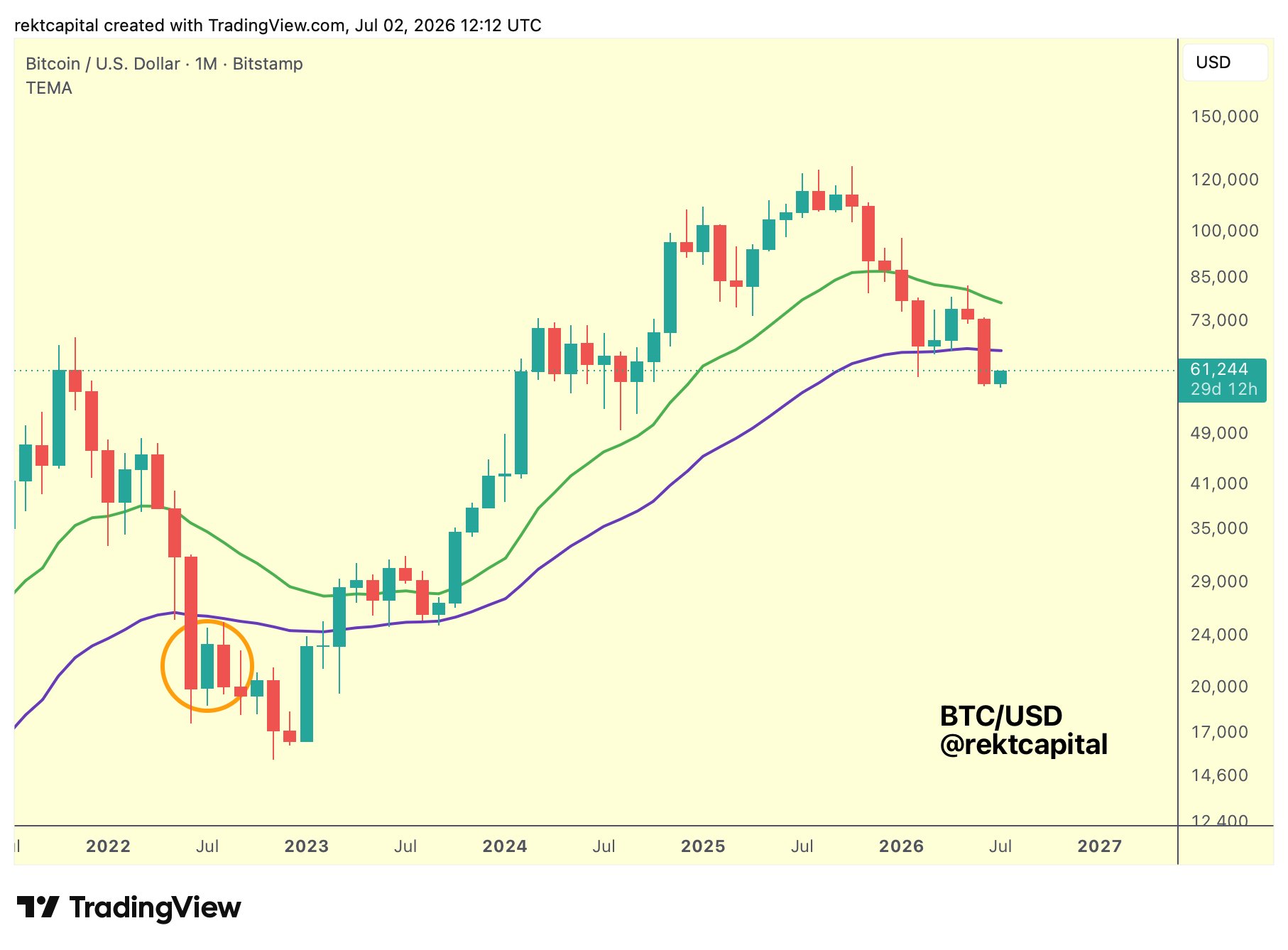
Bitcoin price entered the weekend somewhat battered and bruised, fresh off a gut-punch to $59,000 on June 5 — its weakest footing since October 2024 — and with no shortage of skeptics ready to call the bull market dead.

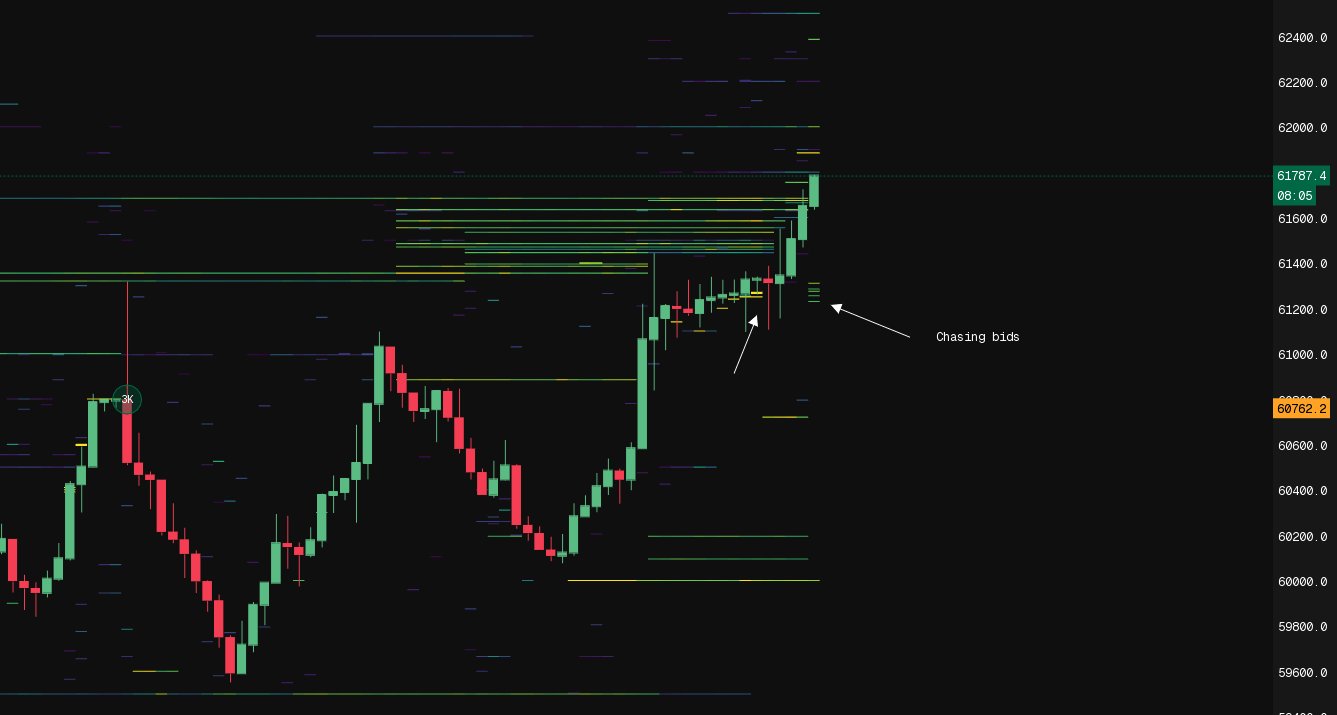
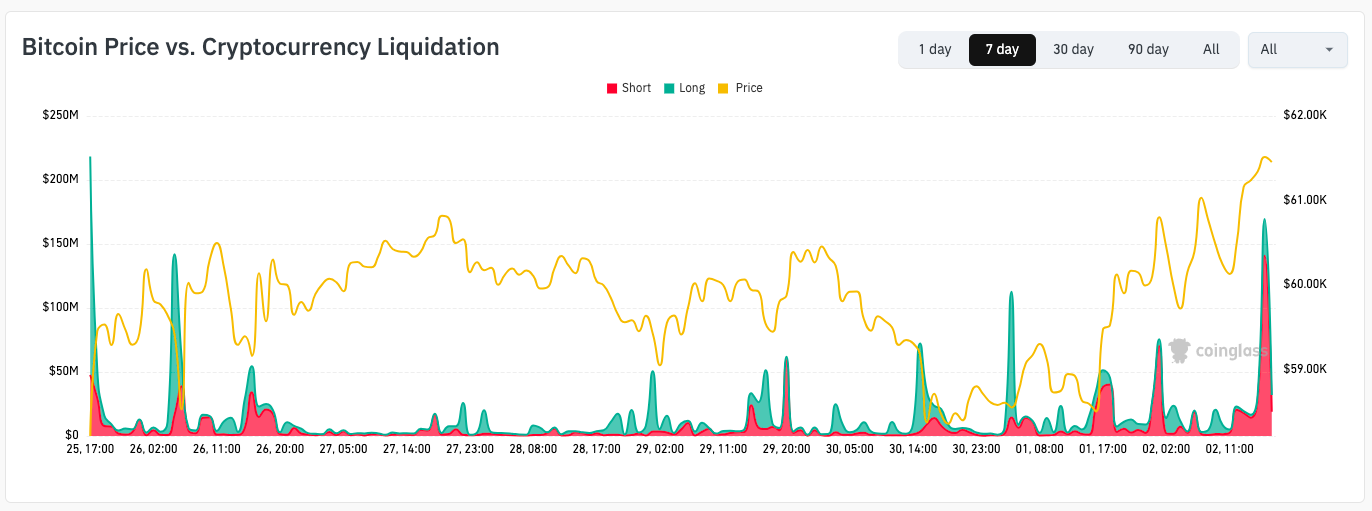
But by Monday morning, the picture looked different. The world’s largest cryptocurrency clawed its way to $66,800 on the day, printing a 7-day low of $60,909 before staging a textbook recovery that carried it through $66,000 and toward the 7-day high of $66,888. 

The chart told the story of a market caught between fear and conviction: a sharp slide toward $61,000 by June 9–10, choppy consolidation between $62,000 and $63,000 through mid-week, then a decisive push higher that accelerated into the weekend close and carried into Monday’s open.

On Sunday, President Donald Trump announced via Truth Social that a peace deal with Iran was “complete,” authorizing the toll-free reopening of the Strait of Hormuz and bringing nearly four months of armed conflict to an immediate halt.

Pakistani Prime Minister Shehbaz Sharif confirmed that all military operations across every front — including Lebanon — would cease, with a formal signing ceremony scheduled for June 19 in Switzerland. Brent crude slid more than 4% toward $84 a barrel.

For Bitcoin, the deal dismantled three layers of macro pressure at once. The conflict had driven oil higher, stoked inflation expectations, and hardened the Federal Reserve’s rate-hike narrative — a toxic cocktail for risk assets. With the Strait reopening, all three headwinds began unwinding simultaneously. Bitcoin climbed to $65,844 on June 15, its highest level in nearly two weeks, as the broader crypto market cap recovered above $2.3 trillion.

While retail sentiment remained fragile, the institutional buyers were already deep in accumulation mode well before the geopolitical relief arrived.

At the time of writing, the bitcoin price is near $66,500.

Bitcoin price predictions and BTC acquisitions

Michael Saylor’s Strategy disclosed Monday that it had acquired an additional 1,587 BTC between June 8 and June 14 for approximately $100 million at an average price of $63,024 per coin. The purchase brings Strategy’s total Bitcoin reserve to 846,842 BTC — a stack accumulated at a cumulative cost of roughly $64.07 billion, or $75,656 per coin on average. 

The firm also sold 1,732,553 shares of common stock during the same window, generating $209 million in net proceeds as it simultaneously rebuilt its USD reserve to $2.25 billion. Saylor’s playbook hasn’t changed: buy weakness, build the treasury, hold forever.

Strive, the Dallas-based asset management firm that has made Bitcoin its primary treasury asset and business identity, continued its own accumulation, picking up 32 BTC between June 2 and June 7 at an average of $63,911 per coin. The purchase represented a roughly 14% improvement in cost basis compared to its prior round — a sign that Strive’s treasury team was putting fresh capital to work during the drawdown, not flinching from it. As of its most recent disclosures, Strive held 15,391 BTC valued near $1.2 billion.

Coinbase CEO Brian Armstrong also stepped into the conversation with a measured but unmistakable bottom call.

“My instinct is we probably have bottomed at this point, maybe at the 60k number, but nobody can say for sure,” Armstrong said. He remains long Bitcoin and expects prices to be “much higher” by 2030, repeating a view he has held for years: “I think bitcoin is the new digital gold”. 

Armstrong pointed to Bitcoin’s four-year halving cycle as the structural framework for reading the current drawdown, noting that the swings always feel more extreme than they turn out to be in hindsight.

Bitcoin is currently trading roughly 47% below its all-time high of $126,277, set in October 2025. The recovery from the June 5 low represents a more than 11% bounce in ten days. 

U.S.-Iran peace deal sparks global risk-on rally as oil falls: Crypto Daily

0

President Donald Trump said over the weekend that the U.S and Iran had reached a peace deal and will sign it on June 19.

Among other conditions, the agreement sees the removal of the U.S. naval blockade and the reopening of the Strait of Hormuz. Crude oil fell 5% to around $80 per barrel. It is now down roughly 33% from its early March high of $120.

Equity markets rose on the news. Indexes advanced worldwide, except in Tel Aviv, and U.S. stocks rallied in pre-market trading. The Invesco QQQ ETF, which tracks the Nasdaq 100 index, added 2% in pre-market trading.

Bitcoin and precious metals also gained. The largest cryptocurrency briefly topped $66,000, and was recently 2.7% higher over 24 hours, with most of the advance occurring on Sunday shortly after Trump’s announcement. Gold has risen nearly 3% over 24 hours to trade above $4,330 per ounce.

This extended ceasefire will remain in place for another 60 days, while talks on a final deal proceed. It’s worth keeping in mind the numerous shifts in negotiations over recent months, including ceasefires, breakdowns and renewed agreements, which suggest the path to a lasting resolution is unlikely to be straightforward

Strategy (MSTR) expands bitcoin treasury With 1,587 BTC purchase

0

Strategy (MSTR) last week acquired 1,587 bitcoin for approximately $100 million, increasing its total holdings to 846,842 BTC, according to a Monday morning filing.

The latest purchase was made at an average price of $63,024 per bitcoin. The company disclosed it had also increased its USD Reserve by $100 million to $1.1 billion via the sale of common stock.

The purchase ran from June 8 to June 14, the same week Strategy raised $209 million by selling about 1.73 million MSTR shares through its at-the-market program.

The reserve is the money Strategy set aside in December 2025 to cover dividends on its preferred shares and interest on its debt. Building it up while continuing to buy bitcoin signals the company is funding both its accumulation and its obligations through equity issuance rather than touching its bitcoin or its cash cushion.

The buy lifts Strategy’s holdings to 846,842 BTC, worth about $56 billion at current prices and bought at an average of $75,656 per coin for a total of around $64 billion. The company remains the largest corporate holder of bitcoin, at roughly 4% of the supply that will ever exist.

Strategy disclosed on June 1 that it had sold 32 bitcoin to fund preferred dividends The company’s shares are up 5% pre market with bitcoin trading above $66,000.

SEC Crypto Task Force Adviser to Join CFTC in Move toward Blockchain Forensics

0

The US Commodity Futures Trading Commission (CFTC) has hired a new chief data innovation officer with deep experience in blockchain forensics in what could be seen as the regulator’s move toward greater focus on the technology.

In a Monday notice, CFTC Chair Michael Selig said that Donald Battle, an adviser to the US Securities and Exchange Commission (SEC) crypto task force, would be the commission’s chief data innovation officer. Battle was appointed as an SEC crypto task force adviser in January 2025 with the incoming Trump administration, and previously worked as a blockchain data adviser for the CFTC and crypto enforcement specialist with the Treasury Department’s Financial Crimes Enforcement Network.

Source: CFTC

Selig cited Battle’s experience in “data science, blockchain forensics, programming interfaces, and cutting-edge AI solutions” among his reasons for his pick.

The appointment signaled the agency moving closer to addressing crypto regulation and enforcement at a time when Congress is seeking to overhaul the CFTC’s and SEC’s roles with a digital asset market structure bill, the CLARITY Act.

The CFTC chair remains the sole commissioner at the financial agency responsible for many aspects of digital asset regulation and enforcement. Under Selig, the CFTC has claimed exclusion jurisdiction over regulating prediction market platforms like Kalshi and Polymarket, resulting in many lawsuits against state-level authorities seeking to crack down on what they called illegal gambling.

Related: Kraken rolls out perpetual futures for US traders through CFTC-regulated venue

Public comment period opens for proposed CFTC framework on sports event contracts

The CFTC last week released a proposed rule that could distinguish sports event contracts offered on platforms like Kalshi and Polymarket from what it called “games of random chance,” referring to gambling. The public has 45 days to comment on the draft rule that could influence how the financial agency addresses regulation of sports events contracts and betting at the state and federal levels.

Magazine: Bitcoin, the ‘canary in the coal mine,’ XRP transaction demand falls 91.5%: Market Moves

Cointelegraph is committed to independent, transparent journalism. This news article is produced in accordance with Cointelegraph’s Editorial Policy and aims to provide accurate and timely information. Readers are encouraged to verify information independently.

Tom Lee’s Bitmine (BMNR) buys 76,881 ETH as preferred equity sale fuels expansion

0

BitMine Immersion Technologies (BMNR), the largest Ethereum-focused treasury company, continued its purchase streak after raising fresh capital through a preferred stock sale.

The firm acquired 76,881 ether (ETH) over the past week, worth roughly $136 million based on ETH’s current price, lifting Bitmine’s treasury to 5.62 million ETH.

The company also held 204 bitcoin, $502 million in cash and marketable securities and stakes in Beast Industries and Eightco Holdings, bringing total crypto, cash and investment holdings to $10.4 billion.

The latest purchase was smaller than the previous week’s 126,971 ETH acquisition, its largest weekly haul of 2026. Still, it suggests the company remains committed to accumulating ETH despite Lee’s comments last month about slowing purchases as the firm neared its goal of owning 5% of Ethereum’s supply.

“We are maintaining a somewhat elevated pace of buying as we believe this pullback in ETH prices does not reflect the strengthening of Ethereum fundamentals,” Bitmine Chairman Thomas Lee said.

Bitmine’s preferred equity debut

The purchase comes on the heels of raising $274 million by issuing preferred equity that offers 9.5% annualized dividend. The move resembles financing tools pioneered by bitcoin treasury firm Strategy (MSTR), which have increasingly turned to preferred equity and other yield-bearing securities to fund crypto purchases.

Bittensor (TAO) surges 31.9%, leading index higher

0

CoinDesk Indices presents its daily market update, highlighting the performance of leaders and laggards in the CoinDesk 20 Index.

The CoinDesk 20 is currently trading at 1812.32, up 5.9% (+100.88) since 4 p.m. ET on Friday.

All 20 assets are trading higher.

Leaders: TAO (+31.9%) and NEAR (+22.2%).

Laggards: BNB (+2.5%) and BTC (+4.2%).

The CoinDesk 20 is a broad-based index traded on multiple platforms in several regions globally.

FalconX Brings Prime-Broker Credit to Taurus’ Interbank Digital Asset Network

0

FalconX has joined Taurus-NETWORK, adding a prime-brokerage credit and liquidity layer to Taurus’ institutional digital asset settlement system. Taurus said FalconX is the first prime broker to join the network and the first to extend financing solutions across it.

The agreement gives Taurus-NETWORK members access to FalconX’s liquidity, credit and financing capabilities through the network’s infrastructure. FalconX will also support new use cases around collateral management, lending, borrowing and derivatives.

Why does it matter? Taurus-NETWORK is built for institutions that want to trade and settle digital assets without moving collateral to an intermediary.

Members can transact and pledge collateral directly between their Taurus custody environments. Taurus offers an interbank settlement and collateral system with real-time settlement and collateral management capabilities.

That structure addresses a key weakness in crypto market plumbing.

Many institutional trading models still require pre-funding platforms, transferring assets to third parties or accepting counterparty exposure. Taurus’ model keep custody control with the institution while allowing bilateral trading, collateral pledging and settlement across a shared network.

FalconX adds the credit layer on top of that rail.

“We’re pleased to welcome FalconX to Taurus-NETWORK,” Lamine Brahimi, Co-founder and Managing Partner at Taurus, said in a statement shared with AlexaBlockchain.

“FalconX’s proven track record in institutional trading and lending aligns” with Taurus’ goal of building a secure environment where financial institutions can do business while retaining end-to-end control of their digital assets.

FalconX said institutional adoption needs infrastructure that improves trading, financing and collateral workflows across digital assets.

Through Taurus-NETWORK, FalconX said it can extend its liquidity and credit capabilities to a wider set of institutional counterparties and help capital move more efficiently across the digital asset ecosystem.

Taurus launched Taurus-NETWORK in April 2025 with members including Arab Bank Switzerland, Capital Union Bank, Flowdesk, ISP Group, Misyon Bank and Swissquote. At launch, Taurus said the network connected more than 35 banking institutions across 4 continents and 10 countries.

The network has since expanded.

According to Taurus’ announcement, Taurus-NETWORK now spans more than 40 counterparties across 12 countries and four continents. Members include Swissquote, Arab Bank Switzerland and Capital Union Bank.

The timing is also important for FalconX.

CoinDesk reported on May 28 that FalconX had confidentially filed a draft S-1 registration statement with the US SEC and hired Cantor to advise on a potential IPO. The report said FalconX was last valued at $8 billion in 2022 and serves institutional clients including hedge funds, asset managers and market makers.

For a pre-listing prime broker, the Taurus deal shows a shift beyond trading spreads.

FalconX is building around financing, credit, custody-linked settlement and institutional workflow infrastructure. Those businesses can create more recurring revenue than spot execution alone.

FalconX has already been expanding in that direction.

In August 2025, FalconX expanded Prime Connect with Copper’s ClearLoop for Bybit, allowing direct-market-access clients to trade while keeping assets off-exchange. In December 2025, it added a similar integration for Deribit, targeting derivatives liquidity with off-exchange custody.

FalconX has also moved deeper into regulated investment products.

In October 2025, FalconX agreed to acquire 21shares, a crypto ETP provider managing more than $11 billion across products. Reuters reported that FalconX had facilitated more than $2 trillion in trades and served over 2,000 institutional clients.

The Taurus integration fits a broader post-FTX trend in institutional crypto.

After exchange failures exposed custody and counterparty risks, more infrastructure providers have focused on off-exchange settlement, collateral segregation and bank-grade control over assets. Copper’s ClearLoop, for example, allows settlement between clients and exchanges while funds remain in Copper custody.

Fireblocks has pursued a similar model.

Its Off Exchange product lets trading firms and asset managers trade on centralized exchanges while keeping custody of their assets. Fireblocks said early users allocated more than $100 million to collateral accounts through the product in September 2024.

Traditional finance is moving in the same direction.

DTCC said in April 2026 that its collateral experiment showed tokenized assets, stablecoins, tokenized money market funds and Bitcoin could operate within a unified collateral framework without forcing firms to abandon existing infrastructure.

JPMorgan has also tested tokenized collateral in live market conditions.

BlackRock and Barclays used JPMorgan’s Tokenized Collateral Network for a collateral settlement tied to an over-the-counter derivatives transaction. The system was designed to mobilize collateral without requiring transfer of the underlying asset.

That is why the Taurus-FalconX announcement carries broader market significance.

It shows institutional crypto infrastructure becoming more like the core back-end systems used in traditional capital markets: custody separated from trading platforms, credit added to settlement rails, and collateral managed across regulated counterparties.

For banks, brokers and asset managers, that could be more important than another trading platforms.

The next phase of institutional digital asset adoption may depend less on access to tokens and more on whether firms can finance, pledge, settle and manage collateral without losing custody control.

The above article “FalconX Brings Prime-Broker Credit to Taurus’ Interbank Digital Asset Network” was first published on AlexaBlockchain. Read the complete article here: https://alexablockchain.com/falconx-brings-prime-broker-credit-to-taurus-interbank-digital-asset-network/

Read Also: 

Disclaimer: The information provided on AlexaBlockchain is for informational purposes only and does not constitute financial advice. Read complete disclaimer here.