Home Blog Page 1240

Memecoin Market Cratered More Than 60% in 2025: Report

0

Dogecoin and Shiba Inu still account for the bulk of memecoin market capitalization.

The global memecoin market lost more than 60% of its value in 2025, even as the broader crypto market hit new highs, according to a new report from analysis platform BestBrokers.

Data from the report shows total memecoin market capitalization fell from $93.1 billion in January 2025 to $36.5 billion by January 2026, a decline of around 61%. The drop came even as the broader crypto market stayed above $3 trillion for much of late last year and briefly reached $4 trillion in market cap.

Trading activity also fell sharply, with memecoin trading volume peaking near $20 billion in mid-2025 before sliding to under $3 billion by December. Volume has since recovered slightly to about $3.4 billion, the report said.

The data suggests that the memecoin surge was fueled mainly by short-term trading. Once activity slowed, prices fell fast, showing that many tokens lacked long-term demand.

“What we’re seeing is a textbook post-hype unwind,” said Alan Goldberg, an analyst at BestBrokers. “Throughout early 2025, memecoins were sustained by heavy speculative inflows, but once trading activity began to thin, market capitalization had little underlying support.”

13 Million Coin Launches

BestBrokers said more than 13 million memecoins were launched in 2025, including TRUMP, a high-profile token linked to U.S. President Donald Trump, but most of these new tokens failed to retain meaningful value. TRUMP is currently trading at $5.43, up 8% on the week, but down 81% over the past year.

Moreover, the memecoin market remains highly concentrated, with Dogecoin and Shiba Inu together accounting for about 84% of total memecoin market capitalization, with valuations of roughly $25.3 billion and $5.2 billion, respectively.

Activity on Solana-based memecoin launchpad pumpfun also slowed sharply, with daily new wallet sign-ups falling about 66% over the year. This is a drop from a peak of nearly 186,000 per day in early 2025 to around 30,000 by December.
The United States Could Start Buying Bitcoin In 2026

0

Cathie Wood is betting that politics, not just markets, could be the catalyst that pushes the United States into actively buying bitcoin.

The ARK Invest founder said this week that cryptocurrency has become a durable political issue for President Donald Trump, one that could shape policy decisions as the White House looks ahead to the 2026 midterm elections. 

In Wood’s view, that dynamic increases the odds that the federal government eventually moves beyond holding seized BTC and begins purchasing BTC outright for a national strategic reserve.

Crypto was “part of the reason he won the presidency,” Wood said on a recent episode of ARK’s Bitcoin Brainstorm podcast. With midterms looming, she argued, Trump has incentives to keep the industry onside and to deliver visible progress. 

“The most important one is that he doesn’t want to be a lame duck. He wants to have another one or two productive years, and I think he sees crypto as a path to the future,” Wood said. 

The U.S. BTC reserve was created by executive order less than a week into Trump’s second term, alongside a broader digital asset stockpile and a new interagency working group chaired by Special Advisor for AI and Crypto David Sacks. 

So far, however, the reserve has been capitalized only with bitcoin seized through criminal forfeitures — assets Trump has pledged not to sell.

“It seems as though there has been reticence about actually buying bitcoin for the strategic reserve,” Wood said. “So far, it’s confiscated [bitcoin].” That posture, she suggested, may not last. “The original intent was to own one million bitcoins, so I actually think they will start buying.”

Crypto has emerged as a more organized political constituency over the past election cycle. Industry-backed political action committees poured money into congressional races, while prominent executives publicly endorsed Trump and, in some cases, donated personally. Wood herself was among those supporters.

The administration has also made a point of signaling engagement with the sector. The White House has hosted crypto-related events, and firms including Coinbase, Tether and Ripple are among those contributing to the construction of a new White House ballroom. 

Bitcoin as a ‘scarce value’

On the policy front, Trump has signed executive orders establishing the bitcoin reserve and crypto stockpile, and backed legislative efforts such as the GENIUS Act, which would formalize stablecoin rules.

A July report from Sacks’ working group laid out additional recommendations, including granting the Commodity Futures Trading Commission authority over spot markets in non-security digital assets. It reaffirmed that the bitcoin reserve and crypto stockpile would be administered by the Treasury Department and, at least initially, funded with forfeited assets. The order also directed the Treasury and Commerce Departments to explore “budget-neutral” ways to acquire additional bitcoin.

Wood sees that constraint as the key hurdle, but not an insurmountable one. She framed potential government buying as a market inflection point, especially as bitcoin’s supply tightens. Nearly 20 million of bitcoin’s 21 million cap have already been mined.

“If we get the U.S. not just adding confiscated bitcoin to a strategic reserve but actually out there buying,” Wood said, “that would set off what we’re all waiting for — the scarcity value to reassert itself.”

Bitcoin Price Holds $90,000 After Trump Tariff Ruling Delay

0

The bitcoin price was trading near the $90,000 mark on Friday as crypto markets steadied following a delay from the U.S. Supreme Court on a closely watched ruling tied to President Donald Trump’s tariff policy, temporarily easing near-term macro uncertainty.

The price of bitcoin stood at $90,443 at the time of writing, down about 1% over the past 24 hours, according to market data. Daily trading volume totaled roughly $45 billion, while bitcoin’s total market capitalization slipped to approximately $1.80 trillion, also down 1% on the day.

Despite the modest pullback, the bitcoin price remains tightly rangebound near recent highs. The asset is currently about 2% below its seven-day high of $91,839 and roughly 1% above its seven-day low of $89,671, per Bitcoin Magazine Pro data. 

Bitcoin’s circulating supply now stands at 19,973,659 BTC, inching closer to its fixed cap of 21 million coins — a structural feature that continues to underpin long-term bullish narratives. 

Tariff uncertainty weighs, then lifts the bitcoin price

Crypto prices initially wavered this week as traders positioned ahead of a potential Supreme Court decision on the legality of Trump-era global tariffs, widely viewed as a major macro catalyst. 

However, markets moved higher on Friday after the court delayed its ruling until next week, reducing immediate downside risk across equities, bonds, and digital assets.

The bitcoin price hovered around $90,000 near the U.S. equity market open as investors reassessed risk exposure. 

Analysts said the delay eased concerns about abrupt fiscal disruptions, including the possibility that the U.S. Treasury could be forced to refund more than $130 billion to importers if the tariffs were struck down.

Bitcoin has increasingly traded as a macro-sensitive asset, reacting to shifts in policy expectations, liquidity conditions, and geopolitical uncertainty. 

As a result, major legal or political developments continue to influence short-term price action, even as long-term adoption trends remain intact.

Bitcoin price in consolidation following early-year rally

The current price reflects a cooling period after the bitcoin price surged in the opening days of the year, briefly pushing toward new short-term highs. 

That early-January rally reignited bullish sentiment but also triggered profit-taking as momentum faded near resistance.

Technically, traders are watching the $90,000–$91,000 zone as a key support area. A sustained break lower could expose downside toward the high-$80,000 range, while a move back above $92,000 would likely reopen the path toward higher resistance levels.

For now, bitcoin remains locked in consolidation, with volatility compressed and traders awaiting a clearer catalyst.

Will the United States buy Bitcoin?

Cathie Wood of ARK Invest said in a podcast recently that politics could drive the U.S. to actively buy bitcoin in 2026. Wood argues that crypto has become a durable political issue for President Trump, potentially shaping policy ahead of the midterm elections.

While the U.S. currently holds a bitcoin reserve made up of seized assets, Trump has pledged not to sell any of the bitcoin, and the original goal was to acquire one million BTC.

Wood suggested in her conversation that the administration may move from holding only confiscated bitcoin to purchasing BTC outright for a national strategic reserve.

Crypto has also emerged as a more organized political constituency, supporting Trump and engaging with the White House through events and donations. On the policy side, executive orders have established the reserve and stockpile, with recommendations for Treasury-led expansion.

Wood sees government purchases as a potential market inflection point, reinforcing bitcoin’s scarcity as nearly 20 million of its 21 million cap have already been mined. If the United States would start buying bitcoin, its safe to assume that the bitcoin price would react positively.

At the time of writing, the bitcoin price is $90,814. 

Insiders Say DeepSeek V4 Will Beat Claude and ChatGPT at Coding, Launch Within Weeks

0

In brief

  • DeepSeek V4 could drop within weeks, targeting elite-level coding performance.
  • Insiders claim it could beat Claude and ChatGPT on long-context code tasks.
  • Developers are already hyped ahead of a potential disruption.

DeepSeek is reportedly planning to drop its V4 model around mid-February, and if internal tests are any indication, Silicon Valley’s AI giants should be nervous.

The Hangzhou-based AI startup could be targeting a release around February 17—Lunar New Year, naturally—with a model specifically engineered for coding tasks, according to The Information. People with direct knowledge of the project claim V4 outperforms both Anthropic’s Claude and OpenAI’s GPT series in internal benchmarks, particularly when handling extremely long code prompts.

Of course, no benchmark or information about the model has been publicly shared, so it is impossible to directly verify such claims. DeepSeek hasn’t confirmed the rumors either.

Still, the developer community isn’t waiting for official word. Reddit’s r/DeepSeek and r/LocalLLaMA are already heating up, users are stockpiling API credits, and enthusiasts on X have been quick to share their predictions that V4 could cement DeepSeek’s position as the scrappy underdog that refuses to play by Silicon Valley’s billion-dollar rules.

This wouldn’t be DeepSeek’s first disruption. When the company released its R1 reasoning model in January 2025, it triggered a $1 trillion sell-off in global markets.

The reason? DeepSeek’s R1 matched OpenAI’s o1 model on math and reasoning benchmarks despite reportedly costing just $6 million to develop—roughly 68 times cheaper than what competitors were spending. Its V3 model later hit 90.2% on the MATH-500 benchmark, blowing past Claude’s 78.3% and the recent update “V3.2 Speciale” improved its performance even more.

Image: DeepSeek

V4’s coding focus would be a strategic pivot. While R1 emphasized pure reasoning—logic, math, formal proofs—V4 is a hybrid model (reasoning and non-reasoning tasks) that targets the enterprise developer market where high-accuracy code generation translates directly to revenue.

To claim dominance, V4 would need to beat Claude Opus 4.5, which currently holds the SWE-bench Verified record at 80.9%. But if DeepSeek’s past launches are any guide, then this may not be impossible to achieve even with all the constraints a Chinese AI lab would face.

The not-so-secret sauce

Assuming the rumors are true, how can this small lab achieve such a feat?

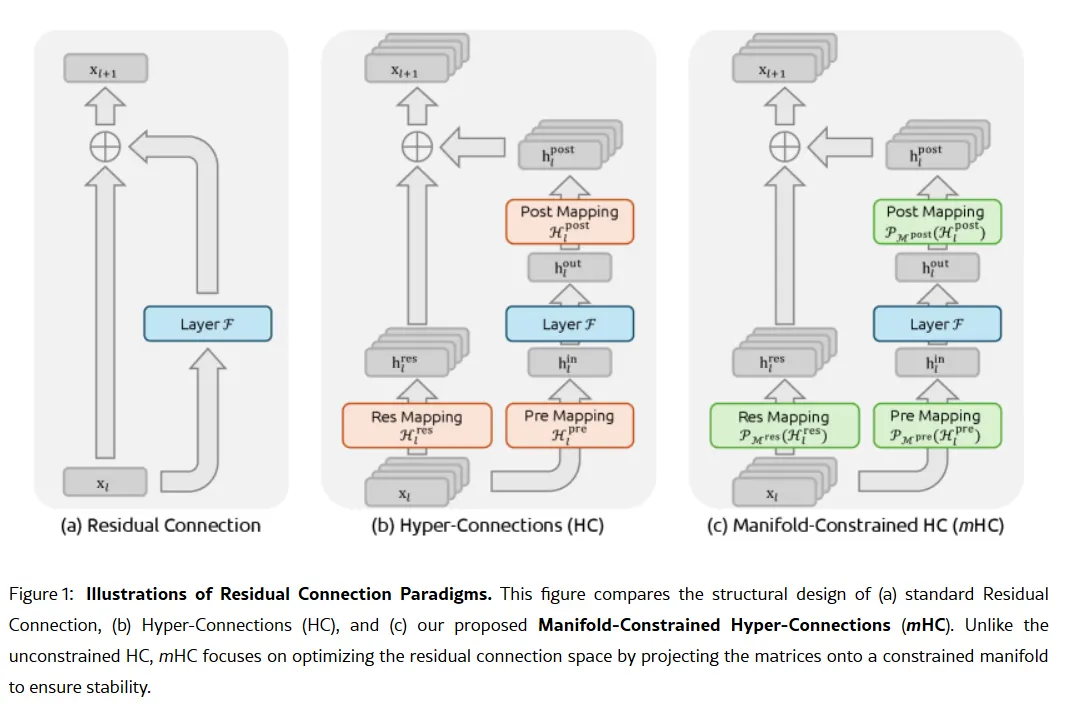
The company’s secret weapon could be contained in its January 1 research paper: Manifold-Constrained Hyper-Connections, or mHC. Co-authored by founder Liang Wenfeng, the new training method addresses a fundamental problem in scaling large language models—how to expand a model’s capacity without it becoming unstable or exploding during training.

Traditional AI architectures force all information through a single narrow pathway. mHC widens that pathway into multiple streams that can exchange information without causing training collapse.

Image: DeepSeek

Wei Sun, principal analyst for AI at Counterpoint Research, called mHC a “striking breakthrough” in comments to Business Insider. The technique, she said, shows DeepSeek can “bypass compute bottlenecks and unlock leaps in intelligence,” even with limited access to advanced chips due to U.S. export restrictions.

Lian Jye Su, chief analyst at Omdia, noted that DeepSeek’s willingness to publish its methods signals a “newfound confidence in the Chinese AI industry.” The company’s open-source approach has made it a darling among developers who see it as embodying what OpenAI used to be, before it pivoted to closed models and billion-dollar fundraising rounds.

Not everyone is convinced. Some developers on Reddit complain that DeepSeek’s reasoning models waste compute on simple tasks, while critics argue the company’s benchmarks don’t reflect real-world messiness. One Medium post titled “DeepSeek Sucks—And I’m Done Pretending It Doesn’t” went viral in April 2025, accusing the models of producing “boilerplate nonsense with bugs” and “hallucinated libraries.”

DeepSeek also carries baggage. Privacy concerns have plagued the company, with some governments banning DeepSeek’s native app. The company’s ties to China and questions about censorship in its models add geopolitical friction to technical debates.

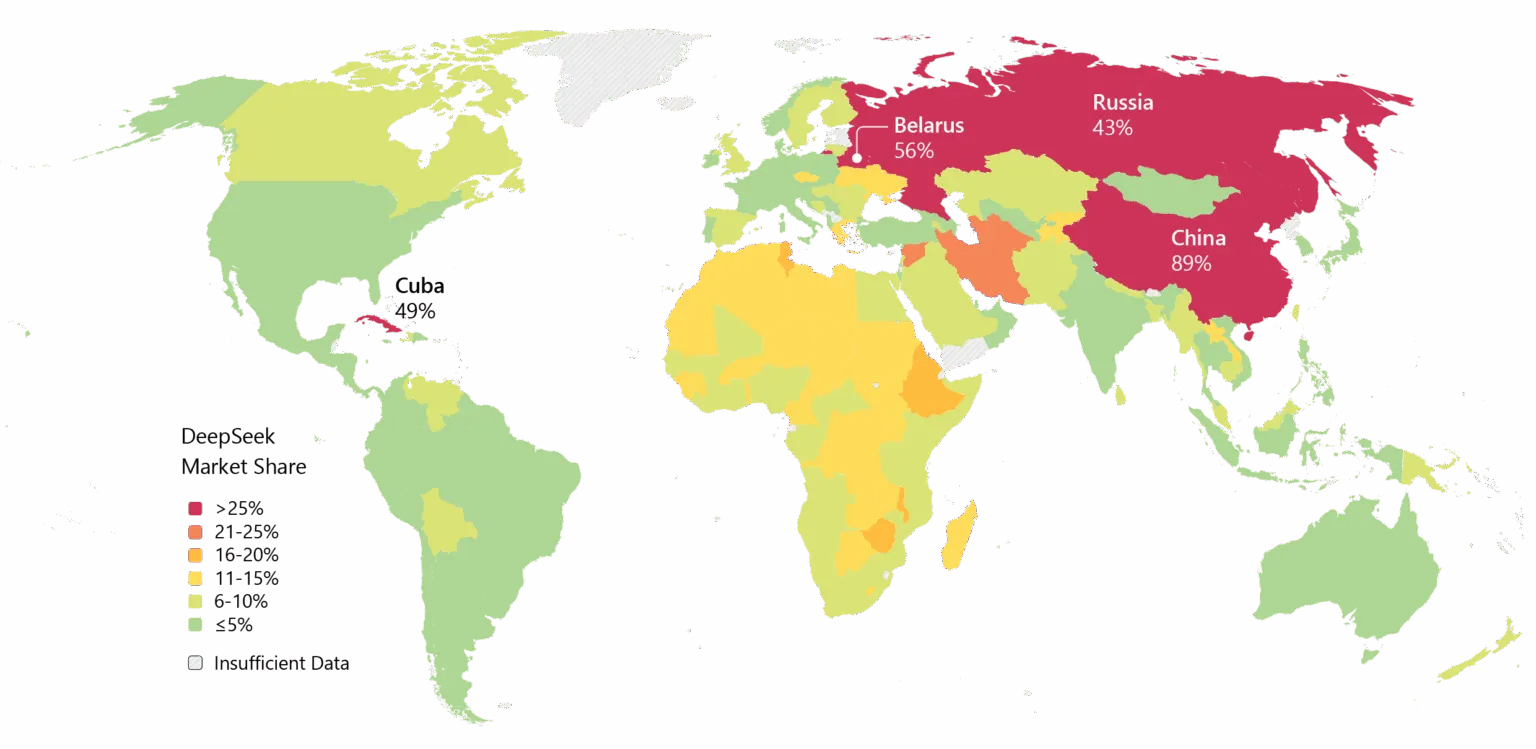
Still, the momentum is undeniable. Deepseek has been widely adopted in Asia, and if V4 delivers on its coding promises, then enterprise adoption in the West could follow.

Image: Microsoft

There’s also the timing. According to Reuters, DeepSeek had originally planned to release its R2 model in May 2025, but extended the runway after founder Liang became dissatisfied with its performance. Now, with V4 reportedly targeting February and R2 potentially following in August, the company is moving at a pace that suggests urgency—or confidence. Maybe both.

Generally Intelligent Newsletter

A weekly AI journey narrated by Gen, a generative AI model.

Stablecoin firm Rain boosts valuation to $1.95b in latest fundraise – DL News

0

  • Stablecoin firm Rain has just raised another $250 million.
  • The firm now has a $1.95 billion valuation.
  • Fintech companies focusing on stablecoins are having more success.

Fintech company Rain announced Friday that it had raised $250 million in a funding round, bringing the stablecoin-focused firm’s valuation to $1.95 billion.

New York-based Rain, a company backed by Visa that issues spending cards, said that it had brought its total funding to over $338 million, just four months after its Series B and 10 months after its Series A.

The latest round was led by ICONIQ with participation from Sapphire Ventures, Dragonfly, Bessemer, Lightspeed and Galaxy Ventures, Rain said.

“Stablecoins are quickly becoming the way money moves in the 21st century, but adoption by users worldwide requires cards and apps that just work,” Farooq Malik, the firm’s CEO and co-founder, said in a statement.

He added that in the last year, the firm’s active card base had increased thirtyfold and that the company’s annualized payment volume has increased by 38 times.

Rain provides companies with the infrastructure to issue stablecoin-linked debit cards so that the digital tokens can be “instantly usable anywhere Visa is accepted.”

Stablecoins and the fintech companies issuing them are now a major topic in the world of finance since US President Donald Trump last year signed the GENIUS Act into law, establishing a framework for issuing the digital tokens.

Now major banks and companies are focused on issuing stablecoins with the hope of speeding up payments.

A number of top crypto companies are pushing even further into the traditional finance space, with the likes of Coinbase, Circle, and Ripple receiving conditional approval from the Office of the Comptroller of the Currency to obtain national trust bank charters.

The charter will allow the companies to operate like banks by allowing them to oversee their own reserves and take custody of assets for institutions.

Mathew Di Salvo is a news correspondent with DL News. Got a tip? Email at mdisalvo@dlnews.com.

Tennessee targets Kalshi, Polymarket, and Crypto.com over sports betting

0

Key Takeaways

  • Tennessee’s Sports Wagering Committee has issued cease-and-desist orders to Kalshi, Polymarket, and Crypto.com.
  • Regulators want the companies to immediately stop offering sports contracts in Tennessee.

Share this article

The Tennessee Sports Wagering Council (SWC), which oversees the regulation and licensing of online sports betting and fantasy sports, has issued formal cease-and-desist demands to Kalshi, Crypto.com, and Polymarket, accusing the platforms of violating state gambling laws by offering sports-related contracts without authorization.

The orders were first reported by sports betting attorney Daniel Wallach on X.

The regulator contends that allowing users to risk money on the outcome of sporting events meets the statutory definition of sports wagering, regardless of whether the products are described as prediction markets or derivatives.

According to the letters, operating such products in Tennessee requires a state license and compliance with consumer-protection and tax obligations, which the council says the companies lack.

Tennessee directed each platform to halt sports contract offerings to Tennessee residents, cancel existing contracts, and refund user balances by January 31. The state also warned that continued operations could trigger escalating fines and court action.

Kalshi and Polymarket both operate as federally regulated prediction market platforms under CFTC oversight, enabling users to trade contracts on various real-world outcomes. Crypto.com, primarily a crypto exchange, also offers prediction market features.

17 Years On and Hal Finney’s ‘Running Bitcoin’ Post Is Still Celebrated

0

The Bitcoin (BTC) community is celebrating the anniversary of cypherpunk and Bitcoin pioneer Hal Finney’s post on January 10, 2009, telling the world that he was running the Bitcoin node software

“Running Bitcoin,” Finney said on X, formerly known as Twitter. Finney was the recipient of the first Bitcoin transaction on the network.

He was born on May 4, 1956, and pursued a career in computer science and cryptography, and was one of the first people to respond to Satoshi Nakamoto’s publication of the Bitcoin whitepaper. 

Source: Hal Finney

Satoshi sent Finney 10 BTC, valued at over $900,500 at today’s prices, and was also one of the earliest individuals in contact with Nakamoto, which has led to speculation that Finney is actually Satoshi Nakamoto. 

Unfortunately, Finney passed away in 2014 to amyotrophic lateral sclerosis (ALS), a degenerative neurological illness that gradually breaks down motor functions. He was 58 years old. 

The 2009 post from Finney is now a core piece of Bitcoin lore, marking the earliest phases of the decentralized peer-to-peer electronic cash network. 

Related: US national debt crosses $38.5T, as Bitcoiners celebrate ‘Genesis Day’

Is Hal Finney Satoshi? The speculation continues

In 2024, media network HBO aired a documentary series titled Money Electric: The Bitcoin Mystery, which claimed to have discovered Nakamoto’s identity.

The documentary spurred debate about the true identity of Satoshi, with some arguing that Finney was Satoshi based on his skill set, several published cryptography research papers, and being the first person to receive BTC from Satoshi.

Laszlo Hanyecz, a developer famous for being the first individual to use BTC in a commercial transaction by sending 10,000 BTC for two pizzas, previously said that Satoshi was not familiar with Mac OS, Apple’s operating system for computers. 

Satoshi Nakamoto, Hal Finney, Bitcoin Adoption
Polymarket odds for who HBO would out as Satoshi. Source: Polymarket

Both Finney and his wife owned Mac OS computers, according to a 2010 online post from Finney.

Jameson Lopp, co-founder of crypto custody company Casa, also presented evidence in 2023 casting doubt on Finney being Satoshi.

Finney ran a marathon race during a back-and-forth email string between Satoshi and another software developer.

The last email was sent about two minutes before Finney crossed the finish line — decisive evidence that Finney was not Satoshi, according to Lopp.

Magazine: 6 reasons Jack Dorsey is definitely Satoshi… and 5 reasons he’s not